

P0605 on 2008-2014 Subaru Impreza WRX: ECM ROM Error Causes and Fixes
P0605 on a 2008-2014 WRX indicates a critical internal error in the Engine Control Module (ECM). This is most often caused by a failed attempt at aftermarket tuning or a faulty ECM. The fix is almost always replacing the ECM, which is costly and requires professional programming.
- P0605 is a critical error indicating your car's main computer has failed a self-test.
- On a 2008-2014 WRX, the most likely cause is a failed aftermarket tune or a faulty ECM.
- Do not continue to drive the vehicle, as it can stall or behave unpredictably at any time.
- The fix almost always involves replacing the ECM, which is an expensive repair that requires professional programming.
- Before condemning the ECM, always check its power and ground connections and rule out issues from recent tuning attempts by trying to flash the stock map.
What's Unique About the 2008-2014 Subaru Impreza WRX
On a stock, unmodified WRX, this code is very rare and points to a random hardware failure of the ECM. However, the 2008-2014 WRX is one of the most popular enthusiast cars for aftermarket tuning. A significant portion of P0605 codes on this platform are self-inflicted, caused by an interrupted or improper ECU flash using tools like EcuFlash or a Cobb Accessport. Incorrectly modifying a ROM file (e.g., using an incorrect definition file to disable a CEL), a voltage drop during flashing, or a bad cable connection can 'brick' the ECU and trigger a P0605.
Generation note: This range covers the third generation Impreza WRX (2008-2014, known as GE, GH, GR, GV), which had distinct 'narrow body' (2008-2010) and 'wide body' (2011-2014) versions. The fundamental cause of a P0605 error (ECM internal failure) is the same for both, but ECU part numbers differ by year, transmission, and emissions specifications. The engine for this generation is the EJ255.
Symptoms You May Notice
- Check Engine Light is on
- ABS or Traction Control lights may also illuminate
- Vehicle enters 'limp mode' (won't rev past a certain RPM, like 2000)
- Engine stalls, hesitates, or runs rough
- Engine misfires
- Vehicle will not start at all (crank-no-start)
- Transmission may not shift correctly
- Sudden loss of power while driving
- Poor fuel economy
- Replacing sensors like the Mass Airflow or O2 sensors. A P0605 is an internal module fault; it is not caused by an external sensor. Other codes may be present, but P0605 points to the ECM itself as the core problem.
Most Likely Causes
- Failed or Improper Aftermarket ECU Tune 🔴 High Probability The WRX is a very popular platform for tuning. A user error during the flashing process is a well-documented cause of this code. Using an incorrect XML definition file in EcuFlash when attempting to disable other trouble codes is a specific, known trigger.
How to confirm: If the code appeared immediately after attempting to flash a new map or modify the ROM, this is almost certainly the cause. Attempting to re-flash the stock/original map may resolve it. If the flash is successful but the code returns, the ROM modification itself was invalid. If the ECU no longer communicates with the flashing tool, it is 'bricked'.
Typical fix: If reflashing the stock map doesn't work, the ECM must be replaced and programmed by a dealer or specialist. In some cases, a specialized ECU recovery service may be able to restore it.
Est. part cost: $700-$1300 - Faulty Engine Control Module (ECM) 🟡 Medium Probability → Shop Engine Control Module (ECM) Electronic components can fail over time due to heat cycles, vibration, or internal manufacturing defects. Solder points on the circuit board can become brittle and crack.
How to confirm: This is the diagnosis when all other possibilities are exhausted. The ECM's power, ground, and communication lines must be tested and confirmed to be good before condemning the ECM itself. A visual inspection of the ECM board for burnt components or a burnt electronic smell can sometimes confirm failure.
Typical fix: Replace the Engine Control Module and have it programmed to the vehicle.
Est. part cost: $700-$1300 - Poor Power or Ground Connection to ECM ⚪ Low Probability While not exceptionally common, corrosion or loose connections at the main ECM harness or chassis grounds can cause a voltage drop or instability, leading to unpredictable electronic behavior and memory errors.
How to confirm: Inspect the ECM connectors for corrosion or damage. Use a multimeter to verify stable battery voltage (12.0-14.8V) and a solid ground connection (near 0 ohms to the negative battery terminal) at the ECM's power and ground pins according to the factory service manual.
Typical fix: Clean, repair, or tighten the affected wiring or ground points.
Est. part cost: $0-$50
Rare But Worth Checking
- Voltage Spike: A significant voltage spike from a faulty alternator or an improper jump-start can potentially damage the sensitive electronics within the ECM.
- Low Battery Voltage During Flashing: → Shop Vehicle Battery If the vehicle's battery voltage drops significantly during an ECU flash, the write process can be interrupted, corrupting the ROM and causing a P0605. This is why using a dedicated power supply during flashing is highly recommended by professionals.
Diagnosis Steps
- Scan for Codes: Confirm P0605 is the primary or only code. Note any other codes, especially U-series communication codes.
- Consider Recent Actions: If you attempted to flash the ECU recently, this is the most likely cause. Try flashing back to the stock map. If the flash fails or the code remains, the ECU is likely bricked or the ROM definition used was incorrect.
- Check Battery and Charging System: Ensure the battery is fully charged and terminals are clean. Test the alternator output to rule out under-voltage or over-voltage conditions that can cause electronic havoc. A healthy system should show 13.5-14.5 volts when running.
- Inspect ECM Connections: Locate the ECM (typically in the passenger-side footwell area). Disconnect the battery. Unplug the ECM connectors and inspect for any signs of corrosion, moisture, or bent pins.
- Verify Power and Ground: With the battery reconnected and key on, use a multimeter and the factory service manual's wiring diagram to test for proper voltage and ground at the ECM's main connector pins. Unstable voltage or a bad ground can mimic ECM failure.
- Attempt Professional Reflash: Before replacement, a dealer or qualified shop can attempt to reflash the ECM with the latest official Subaru firmware. This will rule out a simple software corruption issue. This is a mandatory step before condemning the hardware.
- Replace and Program ECM: If all previous steps fail, the ECM is confirmed to be faulty and must be replaced. A new or remanufactured ECM will need to be programmed to your vehicle's VIN and immobilizer system by a Subaru dealership or a qualified independent shop with the necessary tools (like the Subaru Select Monitor).
Parts You'll Likely Need
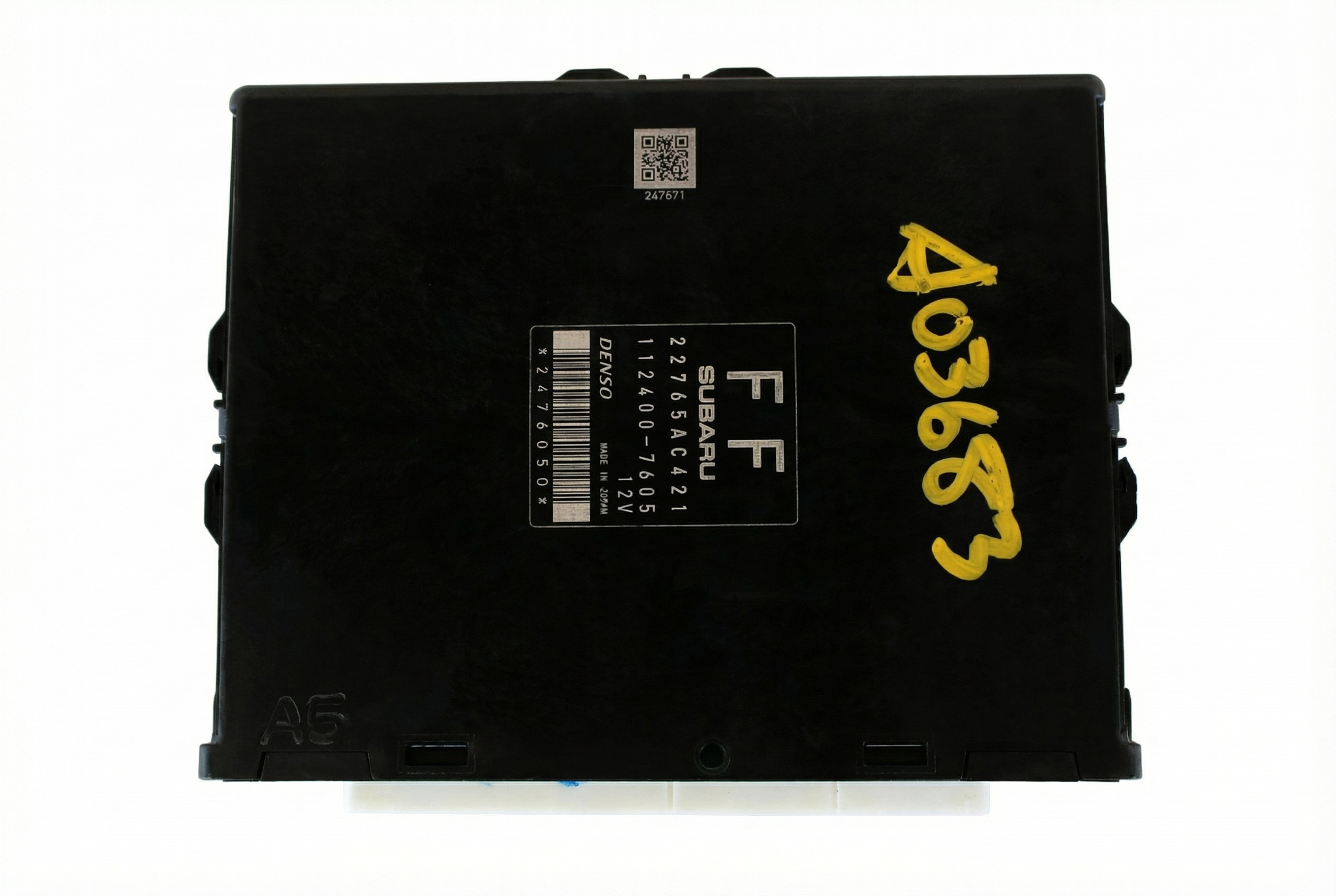
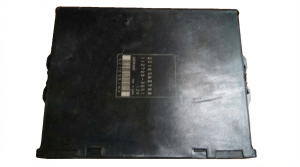
- Engine Control Module (ECM)
(OEM #22765AF741 (Example for 2011 WRX, many variations exist))— This is the 'brain' of the engine, and P0605 indicates a fatal internal error. For this specific vehicle, it is the most common and often only fix.
Trusted brands: Subaru (Genuine OEM)
OEM price range: $700-$1300
Aftermarket price range: $450-$800 (Remanufactured/Programmed)
Related Codes That Often Appear With This One
- U-series codes (e.g., U0100, U0140) indicating a loss of communication with other modules, which can be a symptom of the ECM failing.
Technical Service Bulletins (TSBs) & Recalls
- While no specific TSB for P0605 on this platform was found, Subaru has issued numerous bulletins for other models regarding ECM reprogramming to fix various DTCs, such as TSB 09-136-25R for P062F (a similar internal memory error). This highlights the manufacturer's practice of resolving ECU logic issues via software updates, reinforcing the need for a professional reflash as a diagnostic step.
Platform-Specific Known Issues
- A high incidence of this code is related to user error during aftermarket tuning with EcuFlash, where incorrect ROM definitions or an interrupted flash process corrupts the ECM's memory, resulting in a 'bricked' unit.
- Owner Experience: A user on Reddit's r/ECU_Tuning described getting a P0605 and limp mode immediately after disabling a CEL in EcuFlash. Flashing the original ROM fixed it, indicating the ROM definition file for the CEL table was incorrect for their specific ECU, causing the checksum to fail on the modified file.
Mechanic-Grade Diagnostic Values
- ECM Power Supply Voltage Drop — expected: < 0.5V. Failure: A reading higher than 0.5V indicates excessive resistance in the power supply circuit to the ECM.
- ECM Ground Circuit Voltage Drop — expected: < 0.2V (ideally < 0.1V). Failure: A reading higher than 0.2V indicates high resistance in the ground circuit, which can cause erratic module behavior. This is tested by connecting a multimeter between the ECM ground pin and the negative battery terminal.
Scan Tool Commands That Help
- Subaru Select Monitor (SSM) or equivalent professional tool: VIN Writing / Programming — This function is mandatory after installing a *new* OEM ECM. The dealer tool writes the vehicle's VIN to the blank module, pairing it to the car. The SSM tool often refuses to write a VIN to a *used* ECU that already has one stored.
- Specialized Bench-Top Tools (e.g., K-TAG, PCMflash): ECU Cloning / Virginizing / IMMO OFF — When the original ECU is 'bricked' and cannot be read, a used donor ECU can be made to work. 'IMMO OFF' disables the immobilizer check to allow the engine to start. 'Virginizing' a used ECU erases its stored VIN and immobilizer data, making it like a new unit that can then be programmed by the dealer tool. These services are performed by specialized shops.
Wiring & Ground Locations
- ECM Power Supply Pins — On the main ECM connectors (B134, B137) in the passenger footwell. Specific pins vary by year.. According to wiring diagrams, key power supply pins include B137 Pin 2, Pin 3, Pin 10, and B134 Pin 14. A loss of stable voltage on these pins can cause internal memory errors like P0605.
- ECM Ground Pins — On the main ECM connectors (B137, B136) in the passenger footwell.. Key ground pins include B137 Pin 15 and B136 Pin 17. Poor ground connection is a known cause of erratic electronic behavior and can trigger memory-related fault codes.
- Main Engine Ground Strap — Typically connects from the engine block (often near the starter or on the intake manifold) to the chassis/firewall.. A loose or corroded main engine ground can cause a host of electrical issues, including problems with sensitive electronics like the Tumble Generator Valves (TGVs) and the ECM itself. This is a critical check.
- Battery Ground to Chassis — The main negative battery cable connection to the vehicle's body, often near the battery tray.. This is the primary ground reference for the entire vehicle's electrical system. Corrosion or a loose connection here can cause widespread, hard-to-diagnose electrical problems, including ECM faults.
Real Owner Repair Stories
- Reddit user on r/subaru (2016 Subaru STI (similar EJ25 engine and TGV system)) — Erratic Check Engine Lights for EVAP and Tumble Generator Valves (TGV) sticking open or closed, engine felt like it was misfiring.
❌ Tried (didn't work) Initial diagnosis pointed to faulty TGV motors or sensors.
✅ What actually fixed it The owner had previously installed an aftermarket exhaust header and failed to reconnect a grounding cable that attached the chassis to the factory exhaust manifold. After measuring high resistance from the engine block to the battery negative terminal, they re-attached the missing ground strap, which instantly resolved all TGV and CEL issues.
Model Year Variations Within This Range
- 2008-2010 vs 2011-2014 (USDM): The ECU pinout changed significantly for the 2011 model year in the US market, even though the connectors are physically the same. Some late 2010 models may have the newer pinout. A quick check is to inspect connector B134: if wires are present in pins 1, 2, and 3, it requires the 2011+ USDM ECU. If those cavities are empty, it uses the earlier international pinout.
- 2008 vs 2009+: The 2008 WRX used a smaller TD04 turbo, while the 2009+ models received the larger VF52 turbo from the STI, along with a corresponding change in the factory ECU tune. While the ECUs may be physically swappable, the tune would be incorrect for the hardware.
- 2008-2010 vs 2011-2014: The body style changed from 'narrow body' (GH/GE) to 'wide body' (GR/GV) in 2011 for the WRX, matching the STI. While this is primarily cosmetic, it coincides with the significant ECU pinout change, making it a useful visual identifier for the likely ECU type.
Diagnostic Flowchart
Other Known Issues on This Vehicle
Issues unrelated to this code that are worth knowing about as an owner of this generation:
- Piston Ringland Failure 🔴 High — Common, especially on modified vehicles, but also occurs on stock engines. Caused by detonation, often attributed to the factory tune running lean for emissions purposes. A class-action lawsuit was filed regarding this issue for 2009-2018 models.
- Turbocharger Failure (VF52) 🟠 Medium — Can occur at higher mileage (100k+ miles). Often precipitated by a clogged oil feed line banjo bolt filter, which starves the turbo of oil.
- Firewall Spot Weld Failure 🟠 Medium — Very common on 2008-2014 Impreza-based models with a manual transmission. The spot welds holding the clutch pedal assembly bracket to the firewall break, causing a squeaking/clicking clutch pedal, excessive flex, and eventually difficulty shifting.
- Rod Bearing Failure 🔴 High — A known weak point of the EJ255/EJ257 engines, often linked to oiling issues (pickup tube failure, small oil filter capacity) and aggressive driving or tuning.
Used vs. New Parts: Buying Guide for This Vehicle
When a used part is the smart pick: A used ECU is a viable, cost-effective option if the original ECU is physically damaged (e.g., water intrusion, fire) or completely uncommunicative ('bricked'), preventing cloning. It's also a good choice when new OEM units are on backorder or discontinued. However, it is NOT a simple plug-and-play solution.
Donor-vehicle mileage cap: roughly under 150000 miles for the part to have meaningful remaining life.
What to inspect on the donor part:
- Match the part number EXACTLY. Pay close attention to model year, transmission type (MT/AT), and market (USDM).
- Verify the donor vehicle's year. For USDM models, 2011-2014 ECUs are not backward compatible with 2008-2010 models due to pinout changes.
- Inspect connectors for corrosion, bent pins, or damage.
- If possible, buy from a reputable salvage yard that offers a warranty and guarantees the part is from a running vehicle.
OEM-only on this vehicle (don't cheap out):
- Engine Control Module (ECM) - While used OEM units are an option, avoid no-name aftermarket 'rebuilt' ECUs. Stick with a used Subaru OEM part or a new one from the dealer.
Aftermarket brands forum-validated for this vehicle:
- For ECU replacement, the only 'aftermarket' options are specialized services that virginize or clone your existing data onto a used OEM unit. Companies like Karman Auto offer these mail-in services.
Brands owners have reported issues with on this vehicle:
- Avoid generic, pre-programmed aftermarket ECUs that claim to be plug-and-play without immobilizer service. The Subaru immobilizer system is complex and requires specific pairing of the ECU, BIU (Body Integrated Unit), and keys.
Real Owner Stories
Aggregated from forums and TSBs cited above. Mileages and costs reflect what owners reported in those sources.
2008-2014 Subaru WRX
Symptoms: The vehicle went into limp mode and threw a P0605 (ROM Error) immediately after the owner attempted to disable a Check Engine Light using EcuFlash.
What fixed it: Flashing the original ROM back to the ECU fixed the issue, as the previous attempt used an incorrect ROM definition file for the CEL table.
Source hint: r/ECU_Tuning - 'Subaru - Goes into limp mode with P0605 (ROM Error) when flashing with EcuFlash'
Subaru Forester XT (Platform Mate)
Symptoms: The vehicle entered limp mode with a P0605 ROM error code following an EcuFlash session.
What fixed it: The owner had to address the incorrect ROM modification that caused the checksum to fail.
Source hint: r/subaru - 'Forester goes into limp mode with P0605 (ROM error) after flashing with EcuFlash.'
Related OBD-II Codes
Frequently Asked Questions
I just tried to disable a CEL using EcuFlash on my WRX and now I have a P0605 and limp mode. What happened?
My WRX won't rev past 2000 RPM and has a P0605 code. Is this normal?
Is there a TSB for internal memory errors like P0605 for my Subaru?
Can a bad battery cause a P0605 on a 2008-2014 Impreza WRX?
If I need to replace my ECM to fix P0605, can I just plug in a used one?
Could my ABS and Traction Control lights be related to the P0605 code?
Helpful Videos

We Have This Part in Stock

The information in this article is provided for general reference and educational purposes only. Vehicle specifications, procedures, and part compatibility can vary by production date, trim level, and region. Always consult your vehicle's factory service manual and verify part numbers before purchasing or performing repairs. Safety-critical components such as airbags, seat belts, and braking systems should be installed by a qualified professional.
- Subaru Impreza WRX:
- 🧭 Diagnostic Flowchart
- 🎬 Helpful Videos
- 🛍️ Shop This Part
- What's Unique About the 2008-2014 Subaru Impreza WRX
- Symptoms You May Notice
- Most Likely Causes
- Rare But Worth Checking
- Diagnosis Steps
- Parts You'll Likely Need
- Related Codes That Often Appear With This One
- Technical Service Bulletins (TSBs) & Recalls
- Platform-Specific Known Issues
- Mechanic-Grade Diagnostic Values
- Scan Tool Commands That Help
- Wiring & Ground Locations
- Real Owner Repair Stories
- Model Year Variations Within This Range
- Other Known Issues on This Vehicle
- Used vs. New Parts: Buying Guide for This Vehicle
- Real Owner Stories
- 2008-2014 Subaru WRX
- Subaru Forester XT (Platform Mate)
- Related OBD-II Codes
- Frequently Asked Questions
- 🎟️ Get 5% Off