

P0605 on 2004-2006 Toyota Prius: Internal Computer Failure Causes and Fixes
P0605 on a Gen 2 Prius indicates a critical internal failure of the main Engine Control Module (ECM). While rare on this vehicle, the most common fix is replacing the ECM after first ruling out a weak 12V auxiliary battery or bad ground connections. This repair is costly and requires professional programming.
- P0605 is a critical code indicating your car's main computer has failed its internal self-test.
- Before spending money on a new ECM, ALWAYS test the 12V auxiliary battery and check all main power and ground connections. A simple electrical issue is a very common trigger on a Gen 2 Prius.
- The vehicle should not be driven, as it can stall or lose power at any time.
- This is not a DIY repair for most owners. Replacing the ECM requires expensive programming tools to match the new computer to your car.
- Spontaneous failure of the ECM on a 2004-2006 Prius is rare; look for an external cause first, including the common Combination Meter failure.
What's Unique About the 2004-2006 Toyota Prius
The 2004-2006 Toyota Prius (second generation) is known for its reliability, and spontaneous ECM failure is not a common, well-documented problem on enthusiast forums for this model. Unlike some other vehicles, there are no widespread TSBs or recalls for P0605. Therefore, when this code does appear, it's crucial to first suspect an external cause, such as an issue with the 12V auxiliary battery or its charging system, before assuming the ECM has failed on its own. A failing 12V battery is a well-documented cause of numerous, seemingly unrelated electrical faults on this platform.
Symptoms You May Notice
- Check Engine Light is on
- Vehicle will not start or has an extended crank time
- Engine stalls unexpectedly, sometimes when coming to a stop
- Noticeable loss of power and poor acceleration
- Rough or erratic idling
- Other warning lights, such as for the ABS or traction control, may illuminate simultaneously
- Multiple warning lights flickering, radio cutting out, and loss of power steering as the 12V battery dies, which can precede the P0605 code.
- Replacing other electronic modules before verifying the ECM is the source.
- Replacing sensors like oxygen or airflow sensors, as ECM failure can sometimes mimic sensor issues.
- Mistaking symptoms of a failing Combination Meter for a primary ECM failure, as both can cause no-start and bizarre electrical behavior.
Most Likely Causes
- Failed Engine Control Module (ECM) 🔴 High Probability → Shop Engine Control Module (ECM) While not exceptionally prone, this is the direct cause indicated by the code once external factors are eliminated. Internal components can fail from age, heat, or vibration.
How to confirm: After confirming stable power, ground, and wiring integrity, the diagnosis is made by exclusion. If all external inputs are correct, the module itself is faulty. A professional scan tool may be able to perform a ROM integrity test.
Typical fix: Replace the Engine Control Module and program the new unit to the vehicle.
Est. part cost: $200-$800 - Weak or Defective 12V Auxiliary Battery 🟡 Medium Probability → Shop Vehicle Battery The 12V battery in a Prius can go unnoticed as it doesn't start the engine directly. A failing 12V battery can provide unstable voltage to the vehicle's electronics, potentially corrupting module memory or triggering false codes during startup. This is a very common issue on the Gen 2 Prius.
How to confirm: Test the 12V battery with a digital multimeter or electronic battery tester. 🎬 Watch: How to access and test your 12V battery. A healthy, resting battery should be above 12.4V. Check voltage while the car is in 'Ready' mode to ensure the DC-DC converter is charging it correctly (should be ~14.0V). A user on PriusChat reported multiple warning lights and eventual shutdown, which were all resolved by replacing a 12V battery that tested at 11.9V.
Typical fix: Replace the 12V auxiliary battery. Use a memory saver if possible to avoid losing vehicle settings.
Est. part cost: $150-$250 - Poor ECM Power or Ground Connection ⚪ Low Probability Corrosion can develop on ground straps and power connections over time, leading to intermittent or low voltage at the ECM, which can mimic internal failure.
How to confirm: Visually inspect the ECM connectors for corrosion or damage. Use a multimeter to perform a voltage drop test on the main power and ground wires to the ECM. Any significant voltage drop (typically >0.2V) indicates high resistance that must be corrected.
Typical fix: Clean or repair the corroded or loose connections. This may involve cleaning ground points on the chassis or repairing the wiring harness.
Est. part cost: $5-$50
Rare But Worth Checking
- Failed Software Reflash: If the code appeared immediately after a failed attempt to update or reprogram the ECM, the software was likely corrupted. This is not a spontaneous failure but a result of a service procedure gone wrong.
- Voltage Spike: Improperly jump-starting the vehicle or a fault in the DC-DC converter (the Prius's equivalent of an alternator) can create a voltage spike that damages the ECM's sensitive internal circuits. There are forum reports of other major hybrid component failures immediately following an improper jump start.
Diagnosis Steps
- Scan for Codes: Confirm P0605 is the primary code. Note any other 'U' (network) or 'B' (body) codes, especially B1271, which points to the combination meter.
- Check the 12V Auxiliary Battery: This is the most critical first step for a Prius. Test the battery's health, voltage (should be >12.4V at rest), and clean the terminals. Ensure the charging system (DC-DC converter) is outputting ~14.0V when the car is 'Ready'.
- Inspect ECM Power and Grounds: Visually inspect the ECM connectors for corrosion or damage. Check that the main chassis and engine ground straps are clean and tight.
- Verify Power at the ECM: Using a wiring diagram, confirm with a multimeter that the ECM is receiving correct battery voltage and has a solid ground connection at its connector. Perform a voltage drop test on these circuits.
- Attempt a Hard Reset: Disconnect the 12V battery for 30 minutes to clear all module memory. Reconnect and see if the code returns. This is a long shot but costs nothing to try.
- Investigate Combination Meter: Given its high failure rate on this platform, check for symptoms of a bad combination meter: blank dash display, car won't power off, etc. A failure here can cause network issues that might be misdiagnosed.
- Condemn the ECM: If all previous steps check out and the code persists, the ECM is internally faulty and must be replaced.
Parts You'll Likely Need
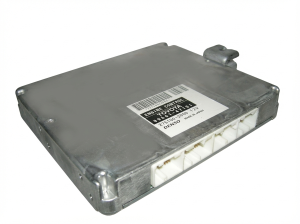
- Engine Control Module (ECM)
(OEM #89661-47071 (superseded by 89661-47104))— This is the component that has failed internally when a P0605 code is confirmed after ruling out external electrical issues.
Trusted brands: Toyota (OEM), Denso (OEM supplier), Flagship One (Remanufactured), Dorman (Remanufactured)
OEM price range: $650-$1200
Aftermarket price range: $200-$600 (Remanufactured)
Related Codes That Often Appear With This One
- U0100 — Lost Communication With ECM/PCM. This code often appears with P0605 because as the ECM fails, it stops communicating with other modules on the vehicle's network.
- B1271 — Combination Meter ECU Communication Malfunction. If you see this code alongside P0605, it may point towards the common Combination Meter failure as a contributing factor or the primary issue.
Technical Service Bulletins (TSBs) & Recalls
- T-SB-0172-09 Rev2: Acknowledges the intermittent Combination Meter display failure in cold weather and provides the repair procedure, which is to replace the unit with an updated part.
Platform-Specific Known Issues
- Combination Meter Failure Mimicking ECM issues: A very common failure on the 2004-2009 Prius is the combination meter (the main dash display). When it fails, the car may not start, may not shut off, or the display will be blank. These symptoms can be confused with a catastrophic ECM failure. The associated code is often B1271. Toyota issued a TSB (T-SB-0172-09) and a warranty enhancement for this part. Always investigate this possibility before condemning the expensive ECM. 🎬 See how to replace a failing combination meter yourself.
Mechanic-Grade Diagnostic Values
- ECM Power Supply Voltage (+B) — expected: Approximately 12V with power switch ON (IG).. Failure: Voltage significantly below 12V indicates a power supply issue upstream of the ECM.
- ECM Switched Power Voltage (IGSW) — expected: Approximately 12V with power switch ON (IG).. Failure: 0V indicates a problem with the IG2 relay or the Power Source Control ECU.
- ECM Ground Circuit Resistance — expected: Below 1 Ω between the ground pin on the ECM connector and body ground.. Failure: High resistance indicates a corroded or loose ground connection, which can cause intermittent faults.
- EFI or IGN Fuse Resistance — expected: Below 1 Ω.. Failure: High or infinite resistance indicates a blown fuse that must be replaced before further diagnosis.
Scan Tool Commands That Help
- Toyota Techstream: Module Self-Test / ROM Integrity Test — After verifying power and ground are good, this OEM-level function can be used to command the ECM to check its own ROM checksum. A failure here definitively condemns the module.
- Paperclip / Jumper Wire: Immobilizer ECU Communication ID Registration — After installing a used ECM, this procedure is required to sync the immobilizer system. It involves jumping terminals TC (13) and CG (4) on the DLC3 connector for 30 minutes with the ignition on. This allows the car to recognize the 'new' ECM and start.
Wiring & Ground Locations
- Engine Control Module (ECM) — Behind the right side of the dashboard, typically behind the glove box assembly.. This is the component that sets the P0605 code. Physical access is required for inspection of connectors, voltage testing, and replacement.
- Ground Point EE / EF — On the left rear of the engine compartment.. These are primary ground points for the engine control system. Corrosion or looseness here can cause unstable voltage to the ECM, potentially triggering a P0605.
- DLC3 (OBD-II Port) — Behind the lower left side of the dash, above the driver's kick panel.. This port is used for all scan tool communication and is where terminals must be jumped for the immobilizer reset procedure after ECM replacement.
Real Owner Repair Stories
- PriusChat user 'AZ_2005_PRIUS' (2005 Toyota Prius) — All dash warning lights illuminated.
❌ Tried (didn't work) Initial diagnosis by the dealership pointed to a bad ECM.
✅ What actually fixed it The user inquired about swapping a used ECM and performing the immobilizer reset procedure. Another user confirmed this is possible by jumpering pins on the OBD port for 30 minutes to pair the used module, avoiding expensive dealer programming.
OEM Part Supersession History
89661-47070, 89661-47071, 89661-47072→89661-47100, 89661-47101, 89661-47102, 89661-47103, and finally 89661-47104.— Revisions to address hardware or software issues, including potential fixes for performance or reliability.
Heads up: The final part number, 89661-47104, is specified for models built up to November 2005. A 2006 Prius built after this date may require a different part number. Always verify compatibility by matching the number on the original ECM.
Model Year Variations Within This Range
- 2006: A production change occurred in November 2005. For 2006 models, it is critical to check the vehicle's production date. ECMs like 89661-47104 are listed for vehicles built 'To 11/05'. A later 2006 model may have a different, incompatible ECM.
Diagnostic Flowchart
Other Known Issues on This Vehicle
Issues unrelated to this code that are worth knowing about as an owner of this generation:
- Combination Meter Failure 🔴 High — Very common, especially in high-mileage vehicles or those in climates with extreme temperatures. The display can fail to illuminate, and the car may not power on or off correctly. (Ref: T-SB-0172-09 Rev2 acknowledges the issue and provides a part number for an updated meter. Toyota also issued a Warranty Enhancement Program (ZEP) for this issue.)
- Brake Actuator Assembly Failure 🔴 High — A frequent and costly failure. Symptoms include a buzzing/barking noise from the actuator, multiple brake-related warning lights (ABS, VSC, BRAKE), and a hard brake pedal. (Ref: Toyota issued a Warranty Enhancement Program (ZG1) extending coverage for this component due to high failure rates.)
- Inverter Coolant Pump Failure 🔴 High — Extremely common. The electric pump that cools the hybrid inverter fails, leading to overheating of hybrid components, warning lights (Master Warning, Check Engine), and potential vehicle shutdown. (Ref: Safety Recall (NHTSA #12V536000) and a Limited Service Campaign (A0N) were issued to replace the faulty pumps free of charge.)
- Excessive Oil Consumption 🟠 Medium — Some 1NZ-FE engines (related to the 1NZ-FXE) were known for this, and the issue can affect the Prius as it ages. It's often caused by stuck piston rings. (Ref: While TSBs like EG045-07 address lean conditions that can be related, and other Toyota engines had specific oil consumption campaigns, the 1NZ-FXE in the Prius was not part of a major, specific oil consumption recall.)
- HID Headlight Failure 🟡 Low — On models equipped with High-Intensity Discharge (HID) headlights, the bulbs or ballasts can fail prematurely, causing flickering or complete loss of one or both headlights.
Used vs. New Parts: Buying Guide for This Vehicle
When a used part is the smart pick: A used ECM from a junkyard or eBay is a very smart choice for this repair, as the part itself has a low failure rate and can be purchased for a fraction of the new price ($50-$100 vs. $800+). The key is that a DIY immobilizer relearn procedure exists, which avoids costly dealer programming.
Donor-vehicle mileage cap: roughly under 200000 miles for the part to have meaningful remaining life.
What to inspect on the donor part:
- Match the OEM part number EXACTLY. Do not rely on model year alone.
- Purchase from a reputable seller with a return policy.
- Inspect the connector pins on the used unit for any signs of corrosion, moisture, or physical damage.
- If possible, get the VIN of the donor car to confirm its production date, especially for 2006 models.
OEM-only on this vehicle (don't cheap out):
- Engine Control Module (ECM) - While a used OEM part is recommended, avoid non-branded, no-name 'new' aftermarket modules with no reputation. Stick to genuine used Toyota/Denso parts or reputable remanufacturers like Flagship One.
Aftermarket brands forum-validated for this vehicle:
- Flagship One (Remanufactured)
- Dorman (Remanufactured)
Brands owners have reported issues with on this vehicle:
- Unbranded, generic ECMs from online marketplaces with no warranty or programming support.
Real Owner Stories
Aggregated from forums and TSBs cited above. Mileages and costs reflect what owners reported in those sources.
2005 Toyota Prius 1.5L
Symptoms: Multiple warning lights including ABS, loss of power steering, radio cutting out, and eventual vehicle shutdown.
What fixed it: Replacing the 12V auxiliary battery which tested at 11.9V.
Source hint: PriusChat.com thread titled '2005 Prius 12 Volt Battery Failure Experience'
2004-2009 Toyota Prius 1.5L
Symptoms: Blank dash display, car will not power off, or car may not start.
What fixed it: Replacing the combination meter with an updated part or replacing a single capacitor on the circuit board.
Source hint: PriusChat.com threads discussing TSB T-SB-0172-09 and DIY capacitor repair
Related OBD-II Codes
Frequently Asked Questions
Could my 2005 Prius's blank dashboard display be related to the P0605 code?
Is there a specific TSB for the combination meter issues that mimic ECM failure?
My Prius has multiple warning lights and the power steering cut out; do I need a new ECM?
What voltage should I see on my 2004-2006 Prius 12V battery to rule it out as a cause for P0605?
Are there any warranty extensions for the components that often fail alongside these symptoms?
Helpful Videos

We Have This Part in Stock

The information in this article is provided for general reference and educational purposes only. Vehicle specifications, procedures, and part compatibility can vary by production date, trim level, and region. Always consult your vehicle's factory service manual and verify part numbers before purchasing or performing repairs. Safety-critical components such as airbags, seat belts, and braking systems should be installed by a qualified professional.
- Toyota Prius:
- 🧭 Diagnostic Flowchart
- 🎬 Helpful Videos
- 🛍️ Shop This Part
- What's Unique About the 2004-2006 Toyota Prius
- Symptoms You May Notice
- Most Likely Causes
- Rare But Worth Checking
- Diagnosis Steps
- Parts You'll Likely Need
- Related Codes That Often Appear With This One
- Technical Service Bulletins (TSBs) & Recalls
- Platform-Specific Known Issues
- Mechanic-Grade Diagnostic Values
- Scan Tool Commands That Help
- Wiring & Ground Locations
- Real Owner Repair Stories
- OEM Part Supersession History
- Model Year Variations Within This Range
- Other Known Issues on This Vehicle
- Used vs. New Parts: Buying Guide for This Vehicle
- Real Owner Stories
- 2005 Toyota Prius 1.5L
- 2004-2009 Toyota Prius 1.5L
- Related OBD-II Codes
- Frequently Asked Questions
- 🎟️ Get 5% Off