

P0606 on 2012-2018 Audi A6 3.0L: ECM Processor Fault Causes and Fixes
P0606 on a 2012-2018 Audi A6 almost always means the Engine Control Module (ECM) has an internal failure and needs to be replaced. The most common cause of this failure is water damage due to clogged plenum drains under the windshield. This is not a DIY job, as the new module requires special online programming by a dealer or qualified independent shop to remove 'Component Protection'.
- P0606 is a critical code indicating a likely failure of the Engine Control Module (ECM).
- The most common cause on the 2012-2018 A6 is water damage from clogged plenum drains; check this area first.
- Do not continue to drive the vehicle, as it may shut down unexpectedly.
- Replacement of the ECM requires expensive and specialized programming by a dealer or qualified shop.
What's Unique About the 2012-2018 Audi A6
On the C7 generation Audi A6 with the 3.0L TFSI engine, the P0606 code is a straightforward but serious issue. Unlike some codes that have numerous potential causes, this one heavily points towards the failure of the ECM itself. A primary vehicle-specific cause is water intrusion; the ECM is located in the plenum chamber below the windshield, and if the drains in this area become clogged with leaves and debris, the chamber can fill with water, flooding the module and its connectors. Replacement is complicated by Audi's 'Component Protection' system, which requires online synchronization with factory servers (using ODIS/GeKo), making a simple swap impossible and necessitating professional service.
Symptoms You May Notice
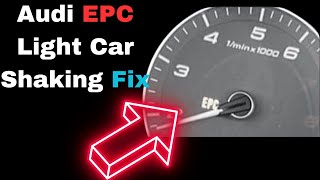
- Check Engine Light and/or EPC (Electronic Power Control) light illuminated. 🎬 Watch: How to diagnose and reset the Audi EPC light
- Engine will not start or is difficult to start.
- Sudden stalling or rough idling.
- Vehicle enters 'limp mode' with reduced engine power.
- Multiple, seemingly unrelated warning lights on the dashboard (e.g., stability control, electronic brake, headlamp failure).
- Erratic automatic transmission shifting.
- Cooling fans running constantly at high speed.
- Scan tool cannot communicate with the ECM. 🎬 See this diagnostic walkthrough for an ECM with no communication
- A/C may stop working as the engine enters a protection mode.
- Replacing sensors or other components when the ECM is the root cause. Because a failing ECM can cause other codes to appear, it's easy to start chasing symptoms instead of the primary failure.
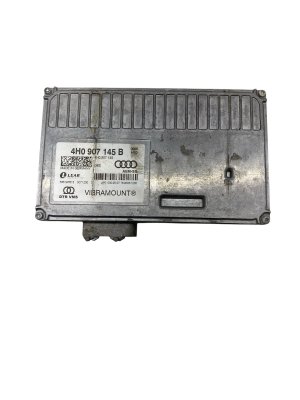
- Mistaking the Engine Mount Control Module for the main Engine Control Module (ECM). They are separate components.
Most Likely Causes
- Internal ECM Failure 🔴 High Probability The #1 cause for this platform is water intrusion from clogged plenum drains under the windshield cowl, which floods the ECM box. Heat cycles, vibration, and age also contribute to internal processor faults.
How to confirm: After confirming all power, ground, and network connections to the ECM are perfect, and no software update is available or solves the issue, the ECM is condemned by exclusion. Visually inspect the ECM and its connectors for green or white corrosion, which is a clear sign of water damage.
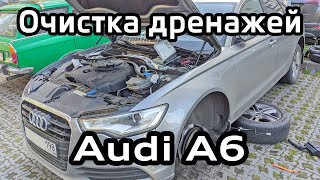
Typical fix: Replace the Engine Control Module and have it professionally programmed to the vehicle. Preventative maintenance includes regularly cleaning the plenum drains. 🎬 Watch: How to clean your Audi A6 C7 plenum drains
Est. part cost: $1000-$2000 - ECM Software Anomaly ⚪ Low Probability Software glitches can sometimes cause the processor to report a fault when the hardware is okay. Manufacturers occasionally release updates to fix these bugs. While less common for a hard P0606, it's a required diagnostic step.
How to confirm: A dealership or specialized shop can check if a software update (reflash) is available for the ECM using their diagnostic tools (ODIS).
Typical fix: Reprogram the ECM with the latest factory software. If the code returns, the hardware is faulty.
Est. part cost: $0 - Poor Power or Ground to ECM ⚪ Low Probability While not specific to this platform, all control modules are sensitive to voltage fluctuations. A weak battery, failing alternator, or corroded ground strap can cause unpredictable behavior and trigger a P0606 code.
How to confirm: Test the battery and charging system. Load test the battery and verify alternator output is stable (typically 13.5-14.5V). Visually inspect and perform a voltage drop test on the main ECM power and ground wires to ensure clean, stable power is reaching the module's connector pins.
Typical fix: Replace the weak battery, faulty alternator, or clean/replace the corroded ground connections.
Est. part cost: $20-$600
Rare But Worth Checking
- CAN Bus Communication Fault: A short or open in the Controller Area Network (CAN) wiring can sometimes cause modules to report internal faults when the issue is actually a communication breakdown between them.
Diagnosis Steps
- Read all fault codes from all modules, not just the engine. Note any communication (U-series) or other ECM-internal codes like P060C.
- Crucial Step for C7 Platform: Inspect the plenum chamber under the windshield cowl for water, leaves, and debris. The ECM is located in a plastic box in this area. If water is present, clogged drains are the likely cause of the ECM failure.
- Check and verify battery health and charging system operation. Ensure voltage is stable and within specification (12.6V+ key off, 13.5-14.5V while running).
- Visually inspect the ECM connectors and nearby wiring for any signs of corrosion (green/white powder), moisture intrusion, or physical damage.
- Perform a voltage drop test on the ECM's main power and ground circuits to ensure it's receiving clean, stable power, ruling out wiring issues.
- Consult a dealer or specialist to see if there are any available software updates (reflash) for the ECM. Some P0606 issues can be resolved with a software update.
- If all external factors (power, ground, water ingress, network) are confirmed good and a software update does not fix the issue, the ECM is faulty and must be replaced.
Parts You'll Likely Need
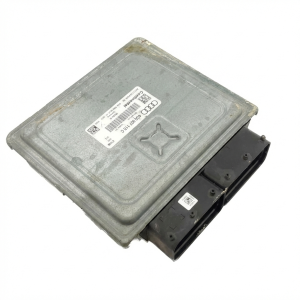
- Engine Control Module (ECM)
(OEM #Varies by VIN. Look for numbers starting with '4G0' or '4G1' for the C7 platform (e.g., 4G0907115). The '8K5' number from Pass 1 is for the B8 platform (A4/S4).)— This code indicates an unrecoverable internal processor fault, often caused by water damage on this specific vehicle, making replacement the only viable solution.
Trusted brands: Bosch (OEM supplier), Genuine Audi
OEM price range: $1200-$2200
Aftermarket price range: $800-$1500 (Remanufactured)
Related Codes That Often Appear With This One
- P060C — Internal Control Module Main Processor Performance. This is another code that points directly to an internal ECM processing error and is often seen with P0606.
- U-series codes (e.g., U0100) — Communication codes like 'Lost Communication With ECM/PCM' may be present if the failing ECM is disrupting the entire vehicle network.
- P0603 — Internal Control Module Keep Alive Memory (KAM) Error. This often appears alongside P0606 as it also indicates an internal memory/processor issue within the ECM.
Platform-Specific Known Issues
- ECM Failure due to Water Ingress: The most prevalent cause of P0606 on the C7 A6/A7 platform is water damage. The ECM is housed in the plenum (the area under the windshield wipers), which has drains that are prone to clogging with leaves and debris. When clogged, this area fills with rainwater, submerging the ECM and its wiring harness, leading to corrosion and failure. A user on AudiWorld forums described this exact scenario on their 2013 C7, where rainwater was observed pouring directly onto the ECU loom from a drain hole, causing corrosion on the connector pins. Regular cleaning of these drains is the best preventative measure.
Technical Service Bulletins (TSBs) & Recalls
- TSB Bulletin #2079890_1: While specifically referencing the V8 TFSI engine in other Audi models like the SQ7, this manufacturer bulletin confirms that the MIL (Check Engine Light) being on with DTC P0606 stored in the ECM is a recognized condition requiring diagnostic attention.
Mechanic-Grade Diagnostic Values
- Battery Voltage (Key Off, Engine Off) — expected: ~12.6 Volts. Failure: Voltage below 12.2V indicates a discharged or failing battery which can cause spurious module faults.
- Charging System Voltage (Engine Running) — expected: 13.5 - 14.5 Volts. Failure: Voltage below 13.2V or above 14.8V indicates a faulty alternator or voltage regulator, which can damage control modules.
- CAN Bus Resistance (at diagnostic port or module connector, battery disconnected) — expected: ~60 Ohms. Failure: A reading of ~120 Ohms indicates one of the two terminating resistors is offline. A reading near 0 Ohms indicates a short between CAN High and CAN Low.
- CAN Bus Voltage (Key On, Engine Off) — expected: CAN High: ~2.7V, CAN Low: ~2.3V. Failure: Voltages that are stuck high, low, or equal to each other indicate a bus wiring fault.
- Power supply at Motronic Engine Control Module Power Supply Relay (J271) — expected: Battery voltage at terminals 1 and 3.. Failure: No voltage at these terminals indicates a wiring or fuse issue upstream of the relay, preventing power from reaching the ECM.
Hidden / Shadow Codes Worth Checking
- VCDS Freeze Frame Data: VCDS can show additional fault details, such as 'Fault Frequency' and whether the code is 'Intermittent - Not Confirmed'. A high fault frequency for P0606 points towards a hard hardware failure, while a frequency of 1 may indicate a one-time glitch. (see via Ross-Tech VCDS Software)
- P068A00 (and others): A faulty ECM power supply relay (J271) can trigger a primary code like P068A00 (ECM/PCM Power Relay De-Energized Too Early) along with a cascade of dozens of unrelated communication (U-series) and system faults. Seeing many random codes with a power-related one points to a power supply issue, not a failure of every module. (see via ODIS or VCDS)
- P1603, P1681, P1609: These codes, for Internal Control Module Malfunction, Control Unit Programming Not Finished, and Crash Shut-Down Activated, respectively, can appear alongside P0606 and further confirm a critical internal ECM issue rather than an external sensor fault. (see via ODIS or VCDS)
Scan Tool Commands That Help
- ODIS (Offboard Diagnostic Information System): Component Protection Removal — This is mandatory after installing a new or used ECM. ODIS connects to Audi's online GEKO/FAZIT database to authorize the new module's serial number and pair it to the vehicle's immobilizer and gateway. Without this, the car will not start and/or will have limited functionality.
- ODIS: SVM (Software Version Management) — After Component Protection is removed, SVM is used to automatically check and apply the correct software version and coding to the new ECM based on the vehicle's factory configuration.
- ODIS or VCDS: Full System Scan & Fault Clear — This should be the first and last step. A preliminary scan reveals all stored faults across all modules, which can provide clues (like widespread communication faults). A final scan after repair confirms the issue is resolved.
Wiring & Ground Locations
- ECM Location — In a black plastic box within the plenum chamber, located under the plastic cowl panel at the base of the windshield.. This location is highly susceptible to water damage if the plenum drains clog, which is the leading cause of P0606 on this platform.
- Main Engine Ground — A primary ground point is located in the right side of the engine compartment, near the alternator.. A poor main engine ground can cause unstable voltage and electrical noise, potentially confusing the ECM and triggering a processor fault.
- Bulkhead Grounds (645, 646) — On the firewall (bulkhead) separating the engine bay from the passenger cabin.. These are key grounding points for various harnesses. Corrosion here can lead to intermittent electrical issues for multiple systems, including the ECM.
- J271 Relay (Motronic Engine Control Module Power Supply Relay) — In the engine compartment electronics box (E-box), often in the same plenum area as the ECM.. This relay supplies main power to the ECM. A failure here will cut power to the ECM, causing a no-start and potentially a P0606 or related power supply codes.
Real Owner Repair Stories
- AudiWorld Forums (2013 Audi A6 C7) — Car would not start, multiple errors on the dashboard including gearbox fault, TPMS, and lights.
❌ Tried (didn't work) Initial diagnosis was inconclusive.
✅ What actually fixed it The dealer found corrosion on the ECU pins. The cause was water ingress from a leaking/clogged drain in the windscreen shield area that directs water onto the ECU wiring loom. The fix required replacing the ECU and repairing the connector pins. - Ross-Tech Forums (Unknown year Audi) — Car jerking with loss of power, EPC light on. P0606 was intermittent.
❌ Tried (didn't work) Restarting the car would temporarily clear the issue.
✅ What actually fixed it The user was advised that for intermittent faults, the first step is to meticulously check the power and ground pins on the ECU for corrosion or looseness before condemning the module. The car had also been in an accident, which can strain wiring and connections. - NHTSA ODI #10913848 — An owner of a related Audi model reported researching technical service bulletins and diagnostic code P0606 after encountering recurring issues, noting that many complaints and class action lawsuits exist regarding this specific internal control module fault.
OEM Part Supersession History
4G0907115→Varies (e.g., 4G0907115P, 4G1907115x, etc.)— Hardware revisions, software updates, and changes for different engine codes (e.g., CGXB vs. CREC).
Heads up: Part numbers must be matched carefully. An ECM from a 2013 model will not work in a 2016+ model due to the engine change from CGXB/CTUA to CREC. Even within the same year range, different letters (e.g., 'P', 'B') signify different calibrations or hardware and are generally not interchangeable without professional cloning or programming.
Model Year Variations Within This Range
- 2012-2015 (C7): These models use the earlier version of the 3.0L TFSI supercharged engine (e.g., CGXB, CTUA) with a press-on supercharger pulley. Their ECUs (e.g., Bosch MED17.1) are specific to this engine architecture.
- 2016-2018 (C7.5 Facelift): These models use the updated CREC 3.0L TFSI engine, which features a dual-injection system (direct and port) and a 4-bolt supercharger pulley. They use a different ECU (e.g., Simos 16) with different hardware and software to manage the new fuel system. ECUs are not cross-compatible between C7 and C7.5 generations.
Diagnostic Flowchart
Other Known Issues on This Vehicle
Issues unrelated to this code that are worth knowing about as an owner of this generation:
- Water Pump & Thermostat Failure 🔴 High — Very common, especially on pre-2013 models. The plastic components crack, leading to coolant leaks and potential overheating. Failure can occur from 50k miles onward. (Ref: Audi issued updated parts, but no widespread recall. A class action investigation was initiated for later model years.)
- PCV Valve Failure 🟠 Medium — Common failure item. The diaphragm inside the PCV (crankcase ventilation valve) tears, causing a vacuum leak, high/rough idle, whistling noises, and increased oil consumption. (Ref: Updated PCV part numbers were released to address oil consumption issues.)
- Upper Timing Chain Tensioner Rattle 🟠 Medium — A brief (~1-2 second) chain rattle on cold starts is common. While Audi has stated it's often not damaging, it's caused by tensioners losing oil pressure. It can worsen over time. (Ref: TSB 2039995/2 was released, which involves replacing the upper tensioners with updated parts to resolve the noise.)
- Carbon Buildup on Intake Valves 🟠 Medium — As a direct-injection engine, carbon buildup on the back of the intake valves is inevitable, typically requiring cleaning every 60k-80k miles to prevent rough idle and power loss.
- Motor Mount Failure 🟡 Low — The fluid-filled engine mounts are a common wear item and can fail, leading to clunking noises during acceleration or braking.
Used vs. New Parts: Buying Guide for This Vehicle
When a used part is the smart pick: A used ECM is a cost-effective option ONLY if you send both your original (faulty) ECM and the used donor ECM to a specialized mail-in 'cloning' service. This is contingent on the original ECM being communicable on the bench, even if it's faulty in the car.
Donor-vehicle mileage cap: roughly under 120000 miles for the part to have meaningful remaining life.
What to inspect on the donor part:
- Match the OEM part number EXACTLY, including the trailing letters, unless compatibility is explicitly confirmed by the cloning service.
- Source from a vehicle that was not involved in a flood or fire.
- Ensure the seller guarantees the part is functional and was removed from a running vehicle.
- Visually inspect the connector pins on the donor unit for any signs of corrosion or physical damage upon receipt.
OEM-only on this vehicle (don't cheap out):
- Engine Control Module (ECM). While you can use a 'used' OEM part via cloning, there are no reliable third-party 'aftermarket' manufacturers of the complete ECM unit itself. The choice is between new Genuine Audi, a remanufactured OEM unit, or a used OEM unit.
Aftermarket brands forum-validated for this vehicle:
- For cloning services: ECU Team, ECU Medics, DUDMD Tuning, The Vehicle Check.
Brands owners have reported issues with on this vehicle:
- Any unknown eBay/Amazon seller offering a 'new' or 'unlocked' ECM without a clear history or guarantee of compatibility and programming support.
Real Owner Stories
Aggregated from forums and TSBs cited above. Mileages and costs reflect what owners reported in those sources.
2012 Audi A6 3.0T
Symptoms: Check engine light and EPC light appeared during acceleration, causing the vehicle to enter limp mode.
What fixed it: The issue could be temporarily reset by restarting the car, but the source indicates the primary solution for a confirmed processor fault is replacing the control module.
Source hint: AudiWorld Forums: A user with a 2012 A6 3.0T reported P0606 along with an EPC light during acceleration
2013 Audi A6 C7
Symptoms: Car failed to start and displayed multiple errors; dealer found corrosion on the ECU pins due to a leak.
What fixed it: The dealer diagnosed corrosion on the ECU pins caused by a design flaw where a drain hole in the windscreen shield directs water onto the ECU loom.
Source hint: AudiWorld Forums: A detailed thread from a 2013 A6 C7 owner whose car failed to start and threw multiple errors
2012 Audi A6 3.0T
Symptoms: Sudden cascade of faults including P0606, limp mode, and a no-start condition.
What fixed it: Replacement of the Engine Control Module (ECM) after confirming internal processor failure.
Source hint: Reddit (r/MechanicAdvice): A user with a 2012 A6 3.0T experienced a sudden cascade of faults
Audi A6 C7
Symptoms: Multiple electrical faults appearing followed by a no-start condition.
What fixed it: The garage confirmed corrosion on the ECU due to water damage.
Source hint: Boards.ie: Another C7 A6 owner reports the exact same water ingress issue
Related OBD-II Codes
Frequently Asked Questions
Why is my 2012-2018 Audi A6 3.0T experiencing a P0606 code after a heavy rainstorm?
Can a software update fix the P0606 'Internal Control Module' fault on my A6?
My A6 has an EPC light and is in 'limp mode' with code P0606; can I just reset it?
Are there any other common engine issues on the 3.0L TFSI V6 I should check while diagnosing the ECM?
Does the Audi A7 share this same P0606 risk as the A6?
How can I prevent the ECM from failing on my 2013 Audi A6?
Helpful Videos

We Have This Part in Stock

The information in this article is provided for general reference and educational purposes only. Vehicle specifications, procedures, and part compatibility can vary by production date, trim level, and region. Always consult your vehicle's factory service manual and verify part numbers before purchasing or performing repairs. Safety-critical components such as airbags, seat belts, and braking systems should be installed by a qualified professional.
- Audi A6:
- 🧭 Diagnostic Flowchart
- 🎬 Helpful Videos
- 🛍️ Shop This Part
- What's Unique About the 2012-2018 Audi A6
- Symptoms You May Notice
- Most Likely Causes
- Rare But Worth Checking
- Diagnosis Steps
- Parts You'll Likely Need
- Related Codes That Often Appear With This One
- Platform-Specific Known Issues
- Technical Service Bulletins (TSBs) & Recalls
- Mechanic-Grade Diagnostic Values
- Hidden / Shadow Codes Worth Checking
- Scan Tool Commands That Help
- Wiring & Ground Locations
- Real Owner Repair Stories
- OEM Part Supersession History
- Model Year Variations Within This Range
- Other Known Issues on This Vehicle
- Used vs. New Parts: Buying Guide for This Vehicle
- Real Owner Stories
- 2012 Audi A6 3.0T
- 2013 Audi A6 C7
- 2012 Audi A6 3.0T
- Audi A6 C7
- Related OBD-II Codes
- Frequently Asked Questions
- 🎟️ Get 5% Off