

P0606 on 2013-2017 Cadillac ATS: ECM Processor Fault Causes and Fixes
The P0606 code on a 2013-2017 Cadillac ATS indicates a critical internal processor fault in the Engine Control Module (ECM). This usually requires replacing and programming the ECM, a job for a professional. Before condemning the ECM, it is crucial to check all power and ground connections and investigate a potential faulty camshaft position sensor, as these are known issues that can falsely trigger a P0606 code.
- P0606 is a critical code indicating an internal failure of your Cadillac ATS's main engine computer (ECM).
- Do not drive the vehicle, as it can stall or lose power at any time, creating a serious safety hazard.
- Before paying for a new ECM, ensure your mechanic rules out simpler issues like bad battery connections, faulty grounds, a failing alternator, and a potential camshaft sensor fault as described in GM TSB #17-NA-132.
- ECM replacement is expensive and must be done by a professional with the correct programming tools.
- Check with a Cadillac dealer about potential emissions warranty coverage for the ECM, which can extend beyond the standard bumper-to-bumper warranty.
What's Unique About the 2013-2017 Cadillac ATS
For the Cadillac ATS and other GM vehicles on the Alpha platform, the P0606 code is a known issue with specific factory guidance. GM has issued Technical Service Bulletins (TSBs) related to this code. One important TSB, #17-NA-132, warns technicians that a faulty camshaft position sensor can sometimes incorrectly trigger a P0606 code without setting a specific sensor code. This is a critical diagnostic point, as it can prevent the unnecessary and expensive replacement of the ECM. The issue can stem from an open circuit or corrosion in the sensor's connector, causing electrical noise or a voltage drop during cranking that the ECM misinterprets as an internal processor failure.
Diagnostic Flowchart
Tap your situation to follow the diagnostic path that matches what you're seeing on this vehicle.
Symptoms You May Notice
- Check Engine Light is on
- Vehicle won't start or is hard to start (cranks but no start)
- Engine stalls unexpectedly, sometimes while driving
- "Reduced Engine Power" message on the dash
- Erratic automatic transmission shifting or feeling 'clunky'
- Decrease in fuel economy
- Instrument cluster gauges behaving erratically or going dark
- Service StabiliTrak message may appear 🎬 See these diagnostic tips if your car won't start alongside other warnings
- Replacing the ECM without first checking for the faulty camshaft position sensor issue described in TSB #17-NA-132.
- Replacing other sensors (like O2 or MAF sensors) that may have set codes alongside P0606. A faulty ECM can generate false codes for other components.
- Overlooking a simple but critical broken or corroded engine ground strap, which is a known issue on many GM vehicles.
Most Likely Causes
- Failed Engine Control Module (ECM) 🔴 High Probability → Shop Engine Control Module (ECM) Internal component failure is the most frequent reason for a true processor fault. This can include cracked solder joints on the processor or other board-level failures. GM has issued TSBs like #20NA144 specifically to address correcting a P0606 by repairing the ECM.
How to confirm: After all other potential causes (wiring, grounds, other sensors, charging system) have been definitively ruled out, the ECM is condemned. This requires professional diagnostic equipment and methodical testing.
Typical fix: Replace the Engine Control Module and program the new unit to the vehicle using GM-specific tools. Alternatively, a cloning service can be used to transfer data from the old module to a replacement.
Est. part cost: $600-$1050 - Poor Power or Ground Connections 🟡 Medium Probability GM vehicles of this era are known for having critical ground points that can corrode or break. A key ground for the ECM is often located on the engine block or cylinder head and can become loose or corroded, causing unstable voltage that tricks the module into reporting an internal fault.
How to confirm: Visually inspect and clean all battery terminals, the main engine-to-chassis ground strap, and the ECM-specific grounds on the cylinder head. Use a multimeter to perform a voltage drop test on the main power and ground circuits to the ECM to check for high resistance.
Typical fix: Clean, tighten, or replace corroded terminals and ground straps. A common failure point is the ground wire terminal breaking at the cylinder head.
Est. part cost: $10-$100 - Faulty Camshaft Position Sensor or Circuit ⚪ Low Probability → Shop Engine Camshaft Position Sensor A specific GM TSB (#17-NA-132) notes that an open in the camshaft position sensor circuit can cause a P0606 to set during cranking *instead* of the correct sensor code. This can be due to a bad sensor or corrosion in the sensor's electrical connector pins.
How to confirm: Even without a specific camshaft sensor code, follow the diagnostic procedure outlined in TSB #17-NA-132 to test the sensor and its circuit if the vehicle has a crank/no-start issue with P0606. Inspect the sensor connector for green corrosion.
Typical fix: Replace the faulty camshaft position sensor and/or clean or replace the connector pigtail.
Est. part cost: $40-$120
Rare But Worth Checking
- Faulty Charging System: An alternator producing voltage spikes (e.g., over 15-16 volts at WOT) or low voltage can confuse or damage the sensitive electronics within the ECM, triggering a P0606 code. A Reddit user with a platform-mate Camaro fixed a recurring P0606 at wide-open-throttle by replacing the alternator.
- ECM Software Glitch: Occasionally, the issue can be resolved by updating or re-flashing the ECM's software with the latest calibration from GM, which is less expensive than a full replacement. This is often a first step for a dealership technician.
- Aftermarket Engine Tuning: Improperly modified software or a 'canned tune' that is not written correctly for the specific vehicle can cause processor rationality errors, leading to a P0606 code, especially under high load.
Diagnosis Steps
- Scan the vehicle for any other DTCs. Note them, but be aware that P0606 can cause other false codes.
- Check for any applicable TSBs, especially #17-NA-132 (cam sensor issue) and #20NA144 (ECM repair).
- Fully charge and test the battery. Low voltage during cranking can cause various module errors.
- Thoroughly inspect, clean, and tighten all battery terminals and the main power and ground cables. Pay special attention to the engine-to-chassis ground strap and the smaller ECM ground wires often located on the cylinder head(s).
- Test the charging system. With the engine running, use a multimeter to ensure the alternator voltage is stable and within the 13.5V-14.5V range, checking for spikes under load.
- Inspect the ECM connectors for any signs of corrosion, moisture, or bent/damaged pins.
- If a crank/no-start condition is present, perform diagnostics on the camshaft position sensor and its circuit as per GM guidance in TSB #17-NA-132.
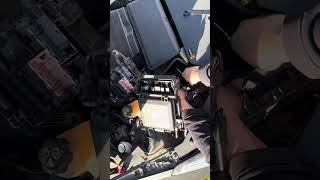
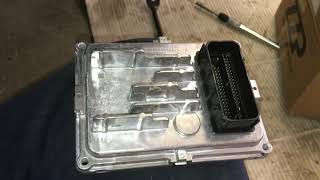
- If an aftermarket tune is installed, consider flashing the ECM back to the stock calibration 🎬 Watch this walkthrough for installing a new ECM or tune to see if the fault clears.
- If all wiring, grounds, related sensors, and the charging system test good, the ECM is the likely culprit.
- Confirm with a professional shop, as ECM replacement requires programming.
Parts You'll Likely Need
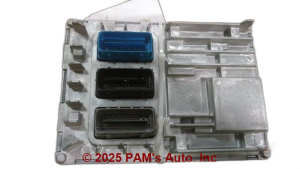
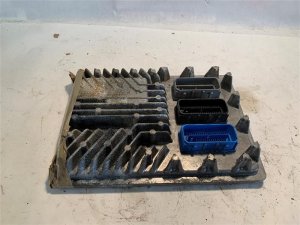
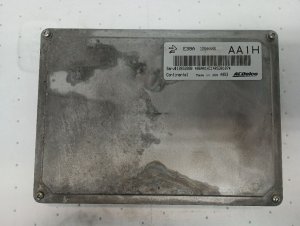
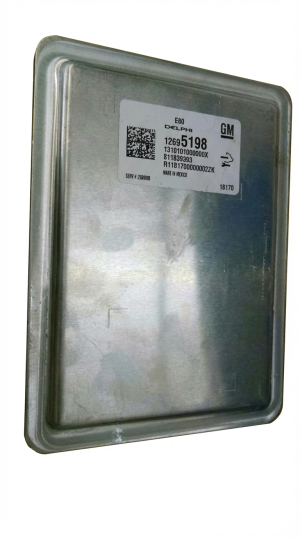
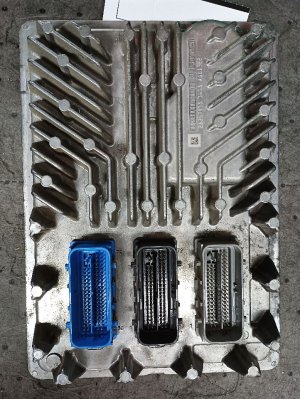
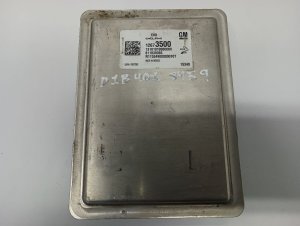
- Engine Control Module (ECM)
(OEM #12633555 (superseded by 12677098 for some applications, specific part number is VIN and engine dependent))— This is the most common cause of a true P0606 code, indicating an irreparable internal failure. Part number varies by engine (2.0L, 2.5L, 3.6L).
Trusted brands: ACDelco (Genuine GM)
OEM price range: $623-$1042
Aftermarket price range: $400-$750 (often includes programming/cloning service)
Technical Service Bulletins (TSBs) & Recalls
- 20NA144: Provides repair information to correct a customer concern of Check Engine Light Illuminated, DTC P0606 Set in Engine Control Module.
- 05-06-04-060A: Informational bulletin on control module DTCs including P0601, P0602, P0603, P0604, P0606, P062F, P06F3, P1621 which can be shared in multiple modules.
- 17-NA-132: Information on Malfunction Indicator Lamp (MIL) Illuminated - DTC P0606 Set, which may be caused by an open in the camshaft position sensor circuit during engine cranking.
Platform-Specific Known Issues
- GM issued TSB #20NA144 specifically providing repair information for a P0606 code set in the ECM.
- GM issued TSB #17-NA-132 to warn technicians that a faulty camshaft position sensor can incorrectly trigger a P0606 code on some vehicles.
- GM issued TSB #05-06-04-060A as an informational bulletin about various internal control module fault codes, including P0606.
- Corrosion on the camshaft position sensor connector pins is a known issue that can lead to the fault described in TSB #17-NA-132.
Mechanic-Grade Diagnostic Values
- Battery Voltage (Key Off, Engine Off) — expected: ~12.6 Volts. Failure: A reading below 12.4V may indicate a weak battery or a dead cell, which can cause spurious module errors during startup.
- Charging System Voltage (Engine Running) — expected: 13.5V - 14.5V. Failure: Voltage that is unstable, below 13.5V, or spiking above 14.5V indicates a faulty alternator or voltage regulator that can damage or confuse the ECM.
- Sensor Reference Voltage (at sensor connector) — expected: 5 Volts (typical for many sensors). Failure: If the 5V reference is missing at a sensor, and also missing at the ECM pin for that circuit, it points toward an internal ECM fault. If 5V is present at the ECM but not the sensor, it indicates a wiring fault.
Scan Tool Commands That Help
- GDS2 / Techline Connect: Service Programming System (SPS) — This function is required after installing a new ECM. It downloads the correct software and VIN-specific calibration from GM's servers and programs it onto the new, blank module.
- GDS2 / Techline Connect: Relearn Procedure / Security Programming — After programming a new ECM, a key relearn or security system synchronization must be performed to allow the engine to start. This pairs the new ECM with the vehicle's existing anti-theft system.
Wiring & Ground Locations
- Engine Control Module (ECM) — Located in the right front of the engine compartment.. This is the location of the module itself. The connectors (X1, X2, X3) must be inspected for corrosion or damage, and the module requires good airflow.
- G104 — For 3.6L engines, it's on the front of the right cylinder head. For 2.0L/2.5L engines, its location changed mid-2013 from the front to the lower rear of the cylinder head.. This is a primary engine ground. A GM Preliminary Information bulletin (PI1097A) specifically calls out inspecting this ground on 2013 models for being loose or having excess material under the eyelet, which can cause intermittent electrical issues.
- G103 / G110 — G103 is on the front of the passenger side (right) cylinder head. G110 is on the upper rear of the cylinder head (for non-3.6L engines).. These are additional critical engine-to-chassis grounds. A poor connection at any of these points can cause unstable voltage to the ECM and trigger a P0606 fault.
- Underhood Fuse Block — Located in the right front of the engine compartment.. This block contains the primary fuses that supply power to the ECM, often labeled 'ECM IGN' or similar. A poor connection or blown fuse here will cut power to the module.
OEM Part Supersession History
12644446→12653998, 12651631, and many others.— GM frequently updates part numbers to reflect hardware revisions or software calibration changes.
Heads up: The specific part number required is highly dependent on the vehicle's VIN, engine (2.0L, 2.5L, 3.6L), and installed options. Using the wrong part number, even if it physically fits, will result in a no-start condition or improper engine operation. Always verify the correct, most current part number with a dealer using the VIN.
Model Year Variations Within This Range
- 2013: On 2013 models with 4-cylinder engines (2.0L/2.5L) and automatic transmissions, the main engine ground (G104) was moved from the front of the engine to the rear of the engine mid-production year (around December 2012). Technicians should be aware of both possible locations when diagnosing ground issues on a 2013 model.
Helpful Videos

We Have This Part in Stock

The information in this article is provided for general reference and educational purposes only. Vehicle specifications, procedures, and part compatibility can vary by production date, trim level, and region. Always consult your vehicle's factory service manual and verify part numbers before purchasing or performing repairs. Safety-critical components such as airbags, seat belts, and braking systems should be installed by a qualified professional.
- Cadillac ATS:
- 🧭 Diagnostic Flowchart
- 🎬 Helpful Videos
- 🛍️ Shop This Part
- What's Unique About the 2013-2017 Cadillac ATS
- Symptoms You May Notice
- Most Likely Causes
- Rare But Worth Checking
- Diagnosis Steps
- Parts You'll Likely Need
- Technical Service Bulletins (TSBs) & Recalls
- Platform-Specific Known Issues
- Mechanic-Grade Diagnostic Values
- Scan Tool Commands That Help
- Wiring & Ground Locations
- OEM Part Supersession History
- Model Year Variations Within This Range
- 🎟️ Get 5% Off