

P0606 on 2007-2011 Cadillac DTS: ECM/PCM Processor Fault Guide
P0606 on a 2007-2011 Cadillac DTS indicates a critical internal processor fault in the Engine Control Module (ECM/PCM). This is a serious code that often requires ECM replacement. Before replacing the module, thoroughly inspect battery connections and main power/ground circuits, as voltage issues from a weak battery, faulty alternator, or corroded grounds are a very common cause for this code to be set incorrectly.
- P0606 is a critical code indicating an internal failure of the Engine Control Module (ECM).
- Do not drive the vehicle, as it can stall or lose power at any time, posing a serious safety risk.
- Before spending money on a new ECM, thoroughly inspect and clean all battery terminals and major power/ground connections, especially the main engine-to-frame ground.
- A faulty alternator or a weak battery that fails a load test are very common triggers for a false P0606 code.
- If the ECM needs to be replaced, it must be programmed to your car by a professional with the correct tools, though some vendors offer pre-programmed units.
What's Unique About the 2007-2011 Cadillac DTS
On many modern GM vehicles, the P0606 code is not exclusive to the Engine Control Module. As noted in GM's informational bulletin #05-06-04-060A, this fault can be reported by multiple different control modules. While the ECM is the most common culprit for a powertrain code like P0606, it's important to recognize that other modules on the vehicle's data network could potentially be involved. For the DTS of this era, which uses the Northstar engine, the primary focus for a P0606 code remains the main engine computer, but intermittent network communication issues caused by problems elsewhere (like under a sill plate) can cause widespread faults.
Diagnostic Flowchart
Tap your situation to follow the diagnostic path that matches what you're seeing on this vehicle.
Symptoms You May Notice
- Check Engine Light is on.
- Vehicle enters 'Reduced Engine Power' mode
- Engine stalling or stuttering.
- Vehicle will not start or has an intermittent crank-no-start condition.
- Erratic or harsh automatic transmission shifting.
- ABS or Stability Control warning lights may illuminate.
- Poor fuel economy.
- Surging at a stop.
- Erratic dashboard lights or radio behavior during startup attempts.
- Replacing sensors (like O2 sensors or the throttle body) due to other codes that appear alongside P0606. The faulty ECM can generate false codes for other components.
- Immediately replacing the ECM without first performing a thorough inspection of the battery, charging system, and all main power and ground connections.
Most Likely Causes
- Failed Engine Control Module (ECM/PCM) 🔴 High Probability → Shop Engine Control Module (ECM) Internal component failure is the most common reason for a true processor fault code after all external factors are ruled out. This is considered the 'textbook' cause.
How to confirm: After verifying all power, ground, and network circuits are functioning correctly, the module itself is condemned. This is typically a process of elimination. 🎬 Watch: How to diagnose an ECM processor error code
Typical fix: Replace the ECM/PCM and program it to the vehicle's VIN.
Est. part cost: $400-$800 - Poor Power or Ground Connections 🟡 Medium Probability Corrosion or loose connections at the battery, main engine/chassis grounds, or the ECM connector can cause unstable voltage, leading the module to incorrectly report an internal fault. On the DTS, a key ground strap runs from the engine block to the front frame rail and is a common point of failure. 🎬 See how a bad block ground causes no-crank issues
How to confirm: Perform a voltage drop test on the main power and ground circuits to the ECM. Visually inspect and clean all battery terminals and major ground straps. A forum post on 2CarPros shows a diagram of the main engine-to-frame ground strap location for a 2007 DTS.
Typical fix: Clean or tighten battery terminals, clean chassis and engine block ground points, and repair any corroded wiring or terminals at the ECM connector.
Est. part cost: $5-$50 - Faulty Charging System ⚪ Low Probability A failing alternator can produce voltage spikes or drops (over or undercharging) that can confuse or damage the sensitive electronics within the ECM.
How to confirm: Test the alternator's output under load to ensure it is providing a stable and correct voltage (typically 13.5-14.5 volts when the engine is running).
Typical fix: Replace the alternator.
Est. part cost: $200-$450 - Weak or Failing Battery 🟡 Medium Probability → Shop Vehicle Battery A battery that fails a load test, even if it holds a surface charge, can cause a significant voltage drop during cranking. This low voltage state is a well-documented trigger for a false P0606 code on many GM vehicles.
How to confirm: Test the battery with a digital load tester. A simple voltage check is insufficient. A battery voltage below 12.4V with the key off, or one that drops significantly during cranking, is suspect.
Typical fix: Replace the 12V battery.
Est. part cost: $150-$350
Rare But Worth Checking
- Aftermarket Tuning: Installing a performance tune can sometimes conflict with the ECM's internal self-checks, triggering a P0606 code. Reverting to the stock tune is a key diagnostic step if the vehicle has been modified.
- Software Corruption: In some cases, the module's software may be corrupted, sometimes after a dealer reflash. A dealer may be able to re-flash the ECM with the latest calibration, which can sometimes resolve the issue without replacing the hardware.
Diagnosis Steps
- Check for other DTCs. A P0606 code can cause other false codes to be set, but other codes can also sometimes cause a false P0606 (e.g., a shorted sensor).
- Perform a full visual inspection of the battery terminals, cables, and main chassis/engine ground straps. Clean any corrosion and ensure all connections are tight. A critical ground on the DTS is the strap from the engine block to the front frame rail.
- Test the 12V battery with a load tester to ensure it is healthy and can supply sufficient cranking amps. A simple voltage check is not sufficient. Low voltage during cranking is a known cause of this code.
- With the engine running, test the alternator output to ensure it is providing stable voltage without spikes or drops (typically 13.5-14.5V).
- Carefully inspect the wiring harness and connectors at the ECM for any signs of damage, corrosion, or moisture. Check for 12V+ power and clean grounds directly at the ECM connector pins per a wiring diagram.
- If all wiring, grounds, and power inputs are confirmed to be good, the ECM is likely faulty.
- Before replacing, check with a dealer for any available software updates (re-flashes) for the ECM, as this can sometimes resolve software-related glitches.
- If replacement is necessary, the new ECM must be programmed to the vehicle by a qualified technician. 🎬 Watch: Cadillac DTS engine computer replacement and programming walkthrough Some vendors sell pre-programmed units that may only require a security relearn procedure (e.g., key on for 10-15 mins, off, repeat 3 times).
Parts You'll Likely Need
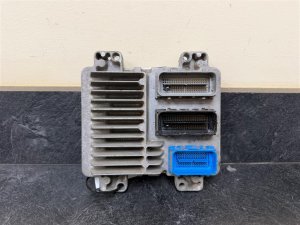
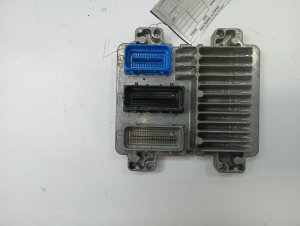
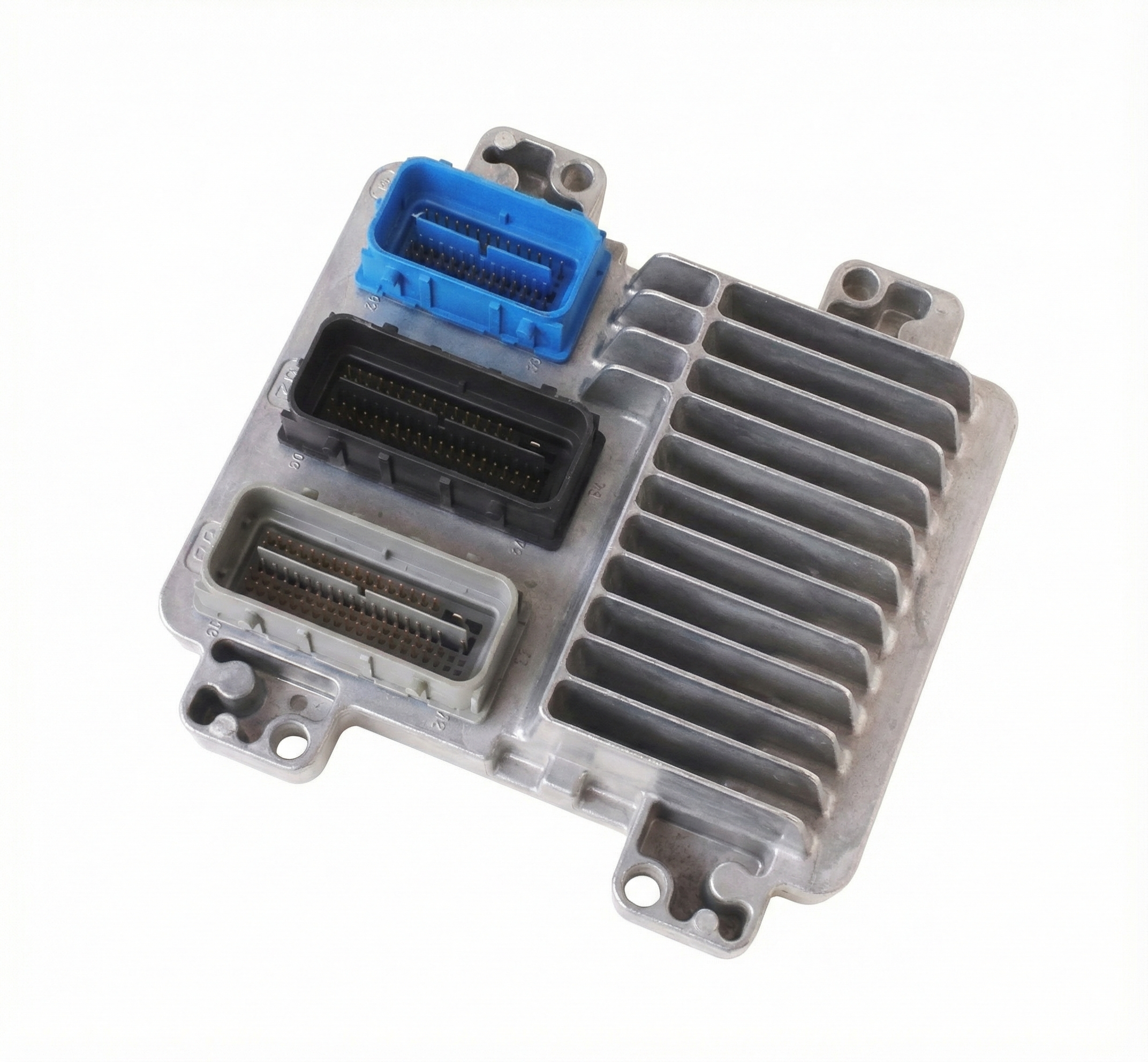
- Engine Control Module (ECM/PCM)
(OEM #12625348, 12622084, 12630457 (Note: Part numbers are year-specific, always verify with VIN))— This is the most common cause of a P0606 code when all external electrical factors have been ruled out.
Trusted brands: ACDelco (OEM)
OEM price range: $500-$800
Aftermarket price range: $350-$600
Related Codes That Often Appear With This One
- P0601 — This indicates an Internal Control Module Memory Check Sum Error. It is another type of internal processor fault.
- P0604 — This indicates an Internal Control Module Random Access Memory (RAM) Error, pointing to a different kind of internal module failure.
- U-series codes (e.g., U0100) — If the ECM is failing, it may lose communication with other modules on the vehicle's network, such as the Transmission Control Module (TCM) or Body Control Module (BCM), setting communication codes.
Technical Service Bulletins (TSBs) & Recalls
- 05-06-04-060A: An informational bulletin from GM that lists P0606 as one of several control module diagnostic codes that can be shared in multiple modules, indicating an internal fault. It advises technicians to identify which module set the code before diagnosis.
Platform-Specific Known Issues
- Main Engine Ground Strap Location: → Shop Engine Wiring Harness A critical ground connection to check is the main strap that connects the engine block to the front frame rail. A post on 2CarPros provides a diagram showing its location, which is crucial for diagnosing electrical issues that can trigger a P0606.
- Voltage Drop During Cranking: Like many GM vehicles of this era, the DTS is sensitive to low voltage during engine start. A weak battery can cause the ECM to momentarily lose stable power and incorrectly log a P0606 internal fault code. This is a common theme in owner forums.
Mechanic-Grade Diagnostic Values
- Battery Voltage (Key Off, Engine Off) — expected: ~12.6 Volts. Failure: A reading below 12.4V suggests a weak battery that can cause low-voltage codes during cranking.
- Charging System Voltage (Engine Running) — expected: 13.5 - 14.5 Volts. Failure: Voltage below 13.5V or above 14.5V points to a faulty alternator or voltage regulator.
- ECM Power & Ground Pins — expected: 12V+ on power supply circuits (Key On), <1.0 ohm resistance to ground on ground circuits.. Failure: Loss of voltage or high resistance on a ground circuit indicates a wiring fault that must be repaired before condemning the ECM.
Scan Tool Commands That Help
- N/A (Manual Procedure): Security Relearn Procedure (30-Minute) — Required after replacing the ECM to synchronize the new module with the vehicle's anti-theft system (Passkey II/III). The procedure involves cycling the ignition key to the 'ON' position for approximately 10-11 minutes, three consecutive times, without starting the engine.
Wiring & Ground Locations
- Engine Control Module (ECM) — Located in the engine bay, under the airbox assembly. The airbox must be removed to gain access.. This is the primary module that sets the P0606 code. Physical inspection for corrosion or damage at its connectors is a key diagnostic step.
- Body Control Module (BCM) — Located on the passenger side, under the dashboard near the corner.. While less common, GM TSB #05-06-04-060A notes that other modules can set a P0606. A faulty BCM or its wiring could potentially cause communication issues that manifest as a P0606.
- G103 / G104 — These are major engine compartment ground points. G103 is often located on the cowl or rear of the engine, while G104 is on the frame rail in the right front of the engine compartment. Exact locations can vary slightly by year and specific engine harness routing.. The ECM and many of its related sensors rely on these grounds. A corroded or loose connection at G103 or G104 can cause unstable voltage and trigger a false P0606.
- Engine to Frame Ground Strap — A braided strap running from the engine block to the front frame rail.. This is the main ground path for the entire powertrain. Degradation of this strap is a very common cause of numerous electrical issues, including module faults like P0606.
Real Owner Repair Stories
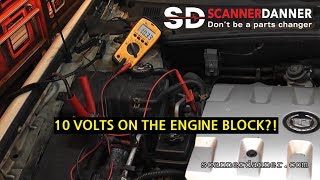
- ScannerDanner Forum (2009 Cadillac DTS) — Intermittent no communication with scan tool, P0606 code stored.
❌ Tried (didn't work) Initial checks of power and ground to the PCM.
✅ What actually fixed it The discussion pointed towards a potential shorted wheel speed sensor or another module on the CAN bus network pulling communication down, causing the P0606. The final fix was not explicitly stated, but the diagnostic path focused on isolating modules on the data bus to find the one causing the communication loss, rather than immediately replacing the ECM.
Helpful Videos

We Have This Part in Stock

The information in this article is provided for general reference and educational purposes only. Vehicle specifications, procedures, and part compatibility can vary by production date, trim level, and region. Always consult your vehicle's factory service manual and verify part numbers before purchasing or performing repairs. Safety-critical components such as airbags, seat belts, and braking systems should be installed by a qualified professional.
- Cadillac DTS:
- 🧭 Diagnostic Flowchart
- 🎬 Helpful Videos
- 🛍️ Shop This Part
- What's Unique About the 2007-2011 Cadillac DTS
- Symptoms You May Notice
- Most Likely Causes
- Rare But Worth Checking
- Diagnosis Steps
- Parts You'll Likely Need
- Related Codes That Often Appear With This One
- Technical Service Bulletins (TSBs) & Recalls
- Platform-Specific Known Issues
- Mechanic-Grade Diagnostic Values
- Scan Tool Commands That Help
- Wiring & Ground Locations
- Real Owner Repair Stories
- 🎟️ Get 5% Off