

P0606 on 2014 Cadillac ELR: Control Module Processor Fault Causes and Fixes
On a 2014 Cadillac ELR, code P0606 indicates a processor fault in a key control module, often the Engine Control Module (ECM) or Hybrid Powertrain Control Module 2 (HPCM2). It is frequently a temporary glitch caused by low 12V battery voltage or during battery service. Before replacing any modules, fully charge and test the 12V battery and follow the specific code-clearing procedure in GM TSB #PIC5978B.
- Do not immediately assume the ECM or HPCM2 has failed. This code is very often a 'glitch' on the Cadillac ELR and its platform-mate, the Chevy Volt.
- The most critical first step is to fully charge and load-test the 12V AGM battery. A weak battery or poor connection is the most common cause.
- If the code appeared after servicing, follow the specific clearing procedure in TSB #PIC5978B before any parts are replaced.
- This code is critical and makes the vehicle unsafe to drive due to the risk of stalling or unpredictable behavior.
What's Unique About the 2014-2014 Cadillac ELR
The Cadillac ELR is a complex Extended-Range Electric Vehicle (EREV) based on the Chevy Volt platform. Its powertrain is managed by multiple interconnected computers, and its software was updated from the Volt's to provide more power. A P0606 code is particularly nuanced on this vehicle because it can be set by either the traditional Engine Control Module or the specific Hybrid Powertrain Control Module 2. A GM Technical Service Bulletin (TSB #PIC5978B) highlights that this code can be falsely triggered in the HPCM2 simply by disconnecting the 12V battery or clearing codes with a scan tool, making a thorough battery system check the essential first step before considering expensive module replacement.
Symptoms You May Notice
- Check Engine Light illuminated
- Vehicle may not start
- Engine may stall or run erratically
- Reduced power or 'limp mode'
- Messages on the driver information center regarding the charging or powertrain system
- Erratic automatic transmission shifting behavior
- Anti-lock Brake (ABS) light may also illuminate
- Immediately replacing the Engine Control Module (ECM) or Hybrid Powertrain Control Module 2 (HPCM2) without first verifying the health of the 12V battery and its connections. This is the most common and costly mistake for this code on this specific vehicle.
Most Likely Causes
- Temporary Glitch During Servicing or Low Voltage 🔴 High Probability As documented in GM TSB #PIC5978B, the Hybrid Powertrain Control Module 2 (HPCM2) is sensitive and can set a false P0606 after a 12V battery disconnect or when clearing other codes with a scan tool.
How to confirm: Fully charge the 12V battery and have it professionally load-tested. Follow the specific TSB procedure to clear the code and see if it returns.
Typical fix: Charge the battery and clear the code using the proper procedure outlined in TSB PIC5978B: 1) Close all doors/hatch. 2) Enter service mode (press and hold power button). 3) Clear DTC with a GDS2 scan tool. 4) Power off vehicle. 5) Open and close the driver's door. 6) Wait 1 minute before restarting. If the battery is weak, it must be replaced.
Est. part cost: $200-$350 for a quality AGM battery - Weak or Failing 12V Battery 🟡 Medium Probability → Shop Vehicle Battery Modern control modules are extremely sensitive to voltage. The ELR's complex electronics can be disrupted by an unstable 12V power supply, leading to processor errors. A voltage drop below 9V during startup is a known trigger. One owner reported various electrical gremlins, including power seat failure, were solved simply by tightening a loose 12V battery bolt.
How to confirm: Test the battery voltage with a multimeter (should be >12.4V at rest). Perform a load test to check its ability to hold a charge and deliver sufficient cranking amps.
Typical fix: Replace the 12V AGM battery.
Est. part cost: $200-$350 - Faulty ECM or HPCM2 ⚪ Low Probability While less common than electrical issues, the module itself can fail internally due to age, heat, or vibration. GM issued a part restriction on the HPCM2 (K114B) under TSB PIC5380E, suggesting a known quality control or diagnostic issue with the module.
How to confirm: This is a process of elimination. If all power, ground, and communication circuits for the module test good, and the software is up-to-date, the module itself is the likely culprit.
Typical fix: Replace the faulty control module (ECM or HPCM2) and have it programmed to the vehicle by a dealer or qualified specialist.
Est. part cost: $600-$1200+ - Poor Power or Ground Connections ⚪ Low Probability
How to confirm: Visually inspect and perform voltage drop tests on the main power and ground cables for the ECM/HPCM2 and the battery. Ensure all connections are clean, tight, and free of corrosion. A critical ground is often located on the engine block.
Typical fix: Clean or repair corroded terminals and ground straps. Tighten any loose connections.
Est. part cost: $5-$50 for cleaning supplies or new cables
Rare But Worth Checking
- Software Corruption or Outdated Calibration: An incomplete or failed software update can corrupt a module's programming. GM also released a customer satisfaction program (N192291890) to update the HPCM2 software to provide more warning time before a potential loss of propulsion due to battery issues, indicating software revisions are critical for this module. A dealer may need to re-flash the module with the latest GM calibration.
- Aftermarket Tuning: If a performance tune has been installed, it can cause conflicts with the module's self-checks. Reverting to the stock factory tune is a critical diagnostic step.
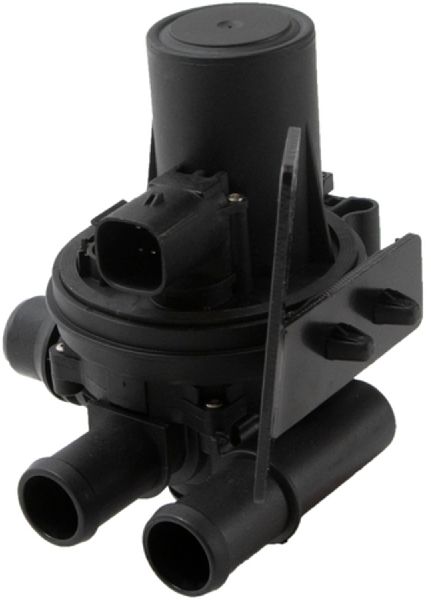
- Fault in an Unrelated Sensor/Module: On the related Volt platform, users have reported that a P0606 in the HPCM2 was ultimately caused by a faulty A/C pressure sensor or a failing coolant bypass valve, which created electrical noise or communication errors that the HPCM2 interpreted as an internal fault.
Diagnosis Steps
- Check for and document any other Diagnostic Trouble Codes (DTCs). Pay close attention to any voltage-related (P0562) or seemingly unrelated sensor codes.
- Crucial First Step: Fully charge the 12V auxiliary battery and have it professionally load-tested. A weak battery is a very common cause for a false P0606 on the ELR.
- Inspect the battery terminals and primary ground connections (at the battery and engine block) for cleanliness and tightness.
- If the code appeared after servicing, follow the specific procedure in TSB #PIC5978B to clear the code using a GM-compatible scan tool (GDS2).
- Drive the vehicle to see if the code returns. If it does not, the issue was likely a temporary voltage-related glitch.
- If the code returns, use a scan tool to determine which module set the code (ECM or HPCM2).
- Perform a thorough visual inspection of the wiring harness and connectors to the identified module.
- Using a wiring diagram, verify the module has proper power, ground, and communication signals. A voltage drop test on the power and ground circuits is recommended.
- Check for any available software updates for the module using a GM Techline terminal. Specifically check for campaigns like N192291890 for the HPCM2. If updates are available, perform the re-flash.
- If all wiring, power, grounds, and software are confirmed to be good, the control module itself is likely faulty and requires replacement and programming.
Parts You'll Likely Need
- 12V AGM Auxiliary Battery — A weak or failing 12V battery is the most frequent trigger for a false P0606 code on the Cadillac ELR.
Trusted brands: ACDelco, Bosch, DieHard
OEM price range: $250-$350
Aftermarket price range: $200-$300 - Engine Control Module (ECM)
(OEM #12668991 (supersedes 12643636, 12645216, 12670269))— If confirmed faulty after all other diagnostics, the ECM, which controls the gasoline engine, may need replacement.
Trusted brands: ACDelco (OEM)
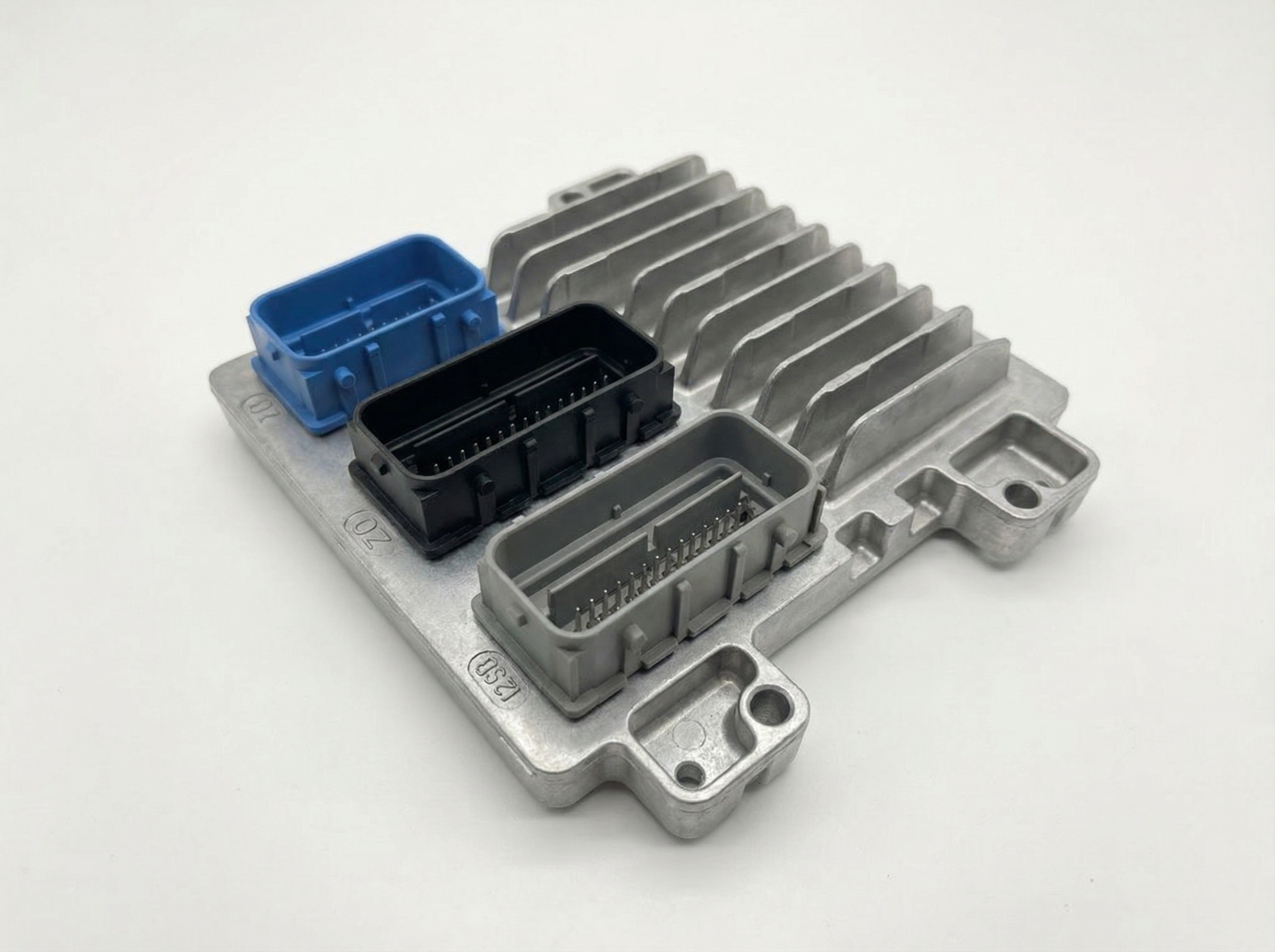
OEM price range: $600-$1000 - Hybrid Powertrain Control Module 2 (HPCM2)
(OEM #24271202 (supersedes 22994053, 22985723))— If confirmed faulty, this module, which helps manage the hybrid system, may need replacement. It is a common source of the code according to TSBs.
Trusted brands: ACDelco (OEM)
OEM price range: $700-$1200
Related Codes That Often Appear With This One
- P0562 (System Voltage Low): Often appears with P0606 when a failing 12V battery is the root cause.
- P0AB9 (Hybrid Powertrain Control Module 'A' Processor Performance): Another processor performance code that can accompany P0606.
- U-prefix codes (e.g., U0100): Communication codes may be present if the module with the P0606 fault has stopped communicating on the CAN bus.
Technical Service Bulletins (TSBs) & Recalls
- PIC5978B - Addresses a false P0606 set in the HPCM2 after servicing.
- PIC5380E - Details the part restriction placed on the HPCM2.
- N192291890 - Customer satisfaction program to update HPCM2 software.
Platform-Specific Known Issues
- GM Technical Service Bulletin #PIC5978B specifically notes that a P0606 can be set in the Hybrid Powertrain Control Module 2 (K114B) after a 12V battery disconnect or after clearing DTCs, often without an actual hardware fault.
- GM TSB #PIC5380E placed the HPCM2 (K114B) on a part restriction, requiring dealers to consult with the Technical Assistance Center before ordering a replacement, indicating a high rate of misdiagnosis or a need for quality control.
Mechanic-Grade Diagnostic Values
- 12V AGM Battery Voltage (Resting) — expected: 12.4V - 12.6V. Failure: Below 12.4V indicates a low state of charge; below 12.0V suggests a bad battery.
- Charging System Voltage (Engine Running) — expected: 13.5V - 14.5V. Failure: Voltage below 13.5V or fluctuating wildly can indicate an alternator/APM issue, confusing the control modules.
- Voltage Drop Test (Module Power/Ground Circuit) — expected: < 0.2V (200mV). Failure: A reading higher than 0.2V on either the power or ground side of the module's connector indicates high resistance that can starve the module for power.
Hidden / Shadow Codes Worth Checking
- P0606 5A: The '5A' is a GM-specific symptom byte meaning 'Control Module Processor Performance'. While P0606 is generic, this byte confirms the module failed an internal performance self-check, helping to distinguish it from other internal faults. (see via A professional GM-specific scan tool like the GDS2 (Global Diagnostic System 2) is required to view symptom bytes.)
Scan Tool Commands That Help
- GDS2 (GM Global Diagnostic System 2): Clear DTCs (following TSB PIC5978B) — This specific procedure is required to clear a false P0606 that can set in the HPCM2 after a 12V battery disconnect or after clearing other codes. A standard clearing procedure may not work.
- GDS2 / Techline Connect: SPS (Service Programming System) - Module Reprogramming — Used to update the software on the ECM or HPCM2. This can resolve glitches causing a P0606, as noted in TSBs like N192291890, or is required after replacing a module.
- GDS2: Freeze Frame / Failure Records — Crucial for determining which module (ECM or HPCM2) set the code and under what conditions (e.g., at startup, during driving), which helps narrow down the diagnostic path.
Wiring & Ground Locations
- K20 (Engine Control Module) — Located in the engine compartment. Pinouts are available in service manuals. Key grounds are pins 2, 4, and 6 on connector X1, and pin 73 on connector X3.. The ECM is one of the two primary modules that can set P0606. Verifying its power and ground connections is a critical diagnostic step before module replacement.
- K114B (Hybrid Powertrain Control Module 2) — Located in the rear compartment of the vehicle.. The HPCM2 is the other primary module that sets P0606 and is the subject of several TSBs for setting the code falsely. Its location in the rear makes it less susceptible to engine heat but still vulnerable to connection issues.
- G103 / G105 — Common GM ground locations in the engine compartment, typically on the engine block, frame rail, or firewall. G105 is often behind the cooling fan relays, and G103 is on the cowl above the brake booster.. These are major chassis and engine ground points. Corrosion or looseness at these locations can create system-wide voltage instability, a primary trigger for a false P0606.
- 12V AGM Battery Location — In the rear compartment, beneath the load floor.. The battery is not in the engine bay. Accessing it for testing and replacement requires removing panels in the trunk area. The First Responder cut tag is also located here.
Real Owner Repair Stories
- Reddit user in r/volt (2018 Chevy Volt LT (related platform)) — Check Engine Light with P0606 in the HPCM2. Vehicle seemed to drive fine.
❌ Tried (didn't work) Initially suspected a faulty A/C pressure sensor and even replaced it.
✅ What actually fixed it The user had previously ignored other codes related to a battery coolant bypass valve. When a new high-voltage code for that same valve appeared, they plugged in a spare valve. This not only fixed the coolant valve codes but also made the P0606 disappear and caused the A/C pressure sensor to start reading correctly, indicating an electrical interference issue. - Reddit user in r/volt (2013 Chevy Volt (related platform)) — Check Engine Light with codes P0AB9 and P0606 after the car failed to complete Engine Maintenance Mode (EMM) and went into reduced power.
❌ Tried (didn't work) Restarting the car, which allowed EMM to complete, but the Check Engine Light remained.
✅ What actually fixed it The community immediately suggested the 12V battery was the likely cause, as low voltage is a known trigger for random failures and processor codes on the Volt platform. The resolution was to have the 12V battery tested and likely replaced.
OEM Part Supersession History
22985723, 22994053→24271202— Likely internal revisions for reliability and to address issues that led to the part being restricted under TSB PIC5380E.
Heads up: Always use the latest part number available from GM. Due to the requirement for VIN-specific programming, using a used module with an old part number is highly discouraged.
Diagnostic Flowchart
Other Known Issues on This Vehicle
Issues unrelated to this code that are worth knowing about as an owner of this generation:
- Drive Motor Rotor Bearing Failure 🔴 High — Can occur at various mileages, causing a whine, scrape, or whistle noise, especially during regenerative braking. May set code P0A46. (Ref: PIP5081L)
- Battery Energy Control Module (BECM) Failure 🔴 High → Shop Vehicle Battery — A well-documented issue on the Volt platform that can cause a no-start condition or shift to gas with various battery-related codes. Parts can be difficult to source.
- Cracked or Delaminating CUE Touchscreen 🟡 Low — Common across many Cadillac models of this era. The touchscreen can develop spiderweb cracks or delaminate, causing phantom touches and loss of function. One ELR owner confirmed this issue.
- On-Board Charging Module (OBCM) Failure 🟠 Medium — Can prevent the vehicle from charging. An owner reported significant delays in getting a replacement part due to scarcity.
- Shift to Park Message 🟠 Medium — A common issue on the Volt platform where the vehicle does not recognize it is in Park, preventing it from shutting off properly.
Used vs. New Parts: Buying Guide for This Vehicle
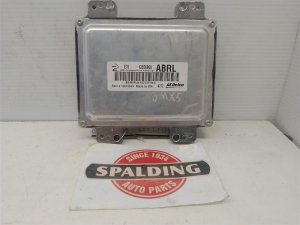
When a used part is the smart pick: For this specific repair, a used part is almost never a smart choice. Both the ECM and HPCM2 are VIN-locked and require programming with GM's proprietary software (Techline Connect). While some specialist services offer 'cloning' of an old module to a used one, this is complex and carries risk. Given the sensitivity of these modules, a new, warrantied part from the dealer is the recommended path.
Donor-vehicle mileage cap: roughly under 1 miles for the part to have meaningful remaining life.
What to inspect on the donor part:
- Not applicable, as used modules are not recommended.
OEM-only on this vehicle (don't cheap out):
- Engine Control Module (ECM/K20)
- Hybrid Powertrain Control Module 2 (HPCM2/K114B)
Aftermarket brands forum-validated for this vehicle:
- ACDelco (OEM)
Brands owners have reported issues with on this vehicle:
- Any non-OEM or pre-programmed module from an unknown online vendor. The risk of programming incompatibility or outright failure is extremely high for this vehicle.
Real Owner Stories
Aggregated from forums and TSBs cited above. Mileages and costs reflect what owners reported in those sources.
2014 Cadillac ELR
Symptoms: Electrical gremlins including non-working power seats.
What fixed it: Tightening a loose bolt on the 12V battery terminal.
Source hint: EV Rider on YouTube - '2014 Cadillac ELR: The Final 8-Year Review'
2018 Chevrolet Volt 1.5L (Platform Mate)
Symptoms: P0606 in Hybrid Powertrain Control Module 2 and incorrect A/C pressure sensor readings.
What fixed it: Replacing a faulty coolant bypass valve which was causing electrical side effects.
Source hint: r/volt on Reddit - Thread titled 'P0606 in Hybrid Powertrain Control Module 2'
Related OBD-II Codes
Frequently Asked Questions
Can a simple 12V battery disconnect cause a P0606 code on my Cadillac ELR?
Is there a specific software update for the HPCM2 module to address these issues?
How do I properly clear a P0606 code on my ELR without it coming right back?
My ELR has a P0606 and my power seats stopped working; are these related?
What kind of 12V battery should I use to prevent voltage-related P0606 errors?
Helpful Videos
Used OEM Parts in Stock
New Aftermarket Parts Available


The information in this article is provided for general reference and educational purposes only. Vehicle specifications, procedures, and part compatibility can vary by production date, trim level, and region. Always consult your vehicle's factory service manual and verify part numbers before purchasing or performing repairs. Safety-critical components such as airbags, seat belts, and braking systems should be installed by a qualified professional.
- Cadillac ELR:
- 🧭 Diagnostic Flowchart
- 🎬 Helpful Videos
- 🛍️ Shop This Part
- What's Unique About the 2014-2014 Cadillac ELR
- Symptoms You May Notice
- Most Likely Causes
- Rare But Worth Checking
- Diagnosis Steps
- Parts You'll Likely Need
- Related Codes That Often Appear With This One
- Technical Service Bulletins (TSBs) & Recalls
- Platform-Specific Known Issues
- Mechanic-Grade Diagnostic Values
- Hidden / Shadow Codes Worth Checking
- Scan Tool Commands That Help
- Wiring & Ground Locations
- Real Owner Repair Stories
- OEM Part Supersession History
- Other Known Issues on This Vehicle
- Used vs. New Parts: Buying Guide for This Vehicle
- Real Owner Stories
- 2014 Cadillac ELR
- 2018 Chevrolet Volt 1.5L (Platform Mate)
- Related OBD-II Codes
- Frequently Asked Questions
- 🎟️ Get 5% Off