

P0606 on 2015-2022 Cadillac Escalade: Control Module Fault Causes and Fixes
On a 2015-2022 Cadillac Escalade, code P0606 often points to electrical issues like a weak battery, poor connections, or faulty grounds rather than a failed Engine Control Module (ECM). Before replacing expensive modules, thoroughly check the battery, clean all major grounds, and check for software updates as advised by multiple GM Technical Service Bulletins.
- Do not immediately assume the ECM is bad. P0606 on an Escalade is very often caused by simpler electrical issues.
- Always start diagnosis by testing the battery and inspecting all major power and ground connections for corrosion and tightness.
- Ask a dealership to check for any available software updates for the Engine, Transmission, or Body Control Modules, as this is a documented fix.
- This code is serious and can cause the vehicle to stall. It should be addressed promptly to avoid being stranded.
What's Unique About the 2015-2022 Cadillac ESCALADE
On this generation of Cadillac Escalade and its GM platform mates (Tahoe, Yukon, Silverado), P0606 is frequently a symptom of an external problem, not a failed module. Multiple GM Technical Service Bulletins (TSBs) point towards causes like low battery voltage, poor electrical connections at the battery or chassis grounds, or software glitches that require reprogramming. Owners and technicians should exhaust these diagnostic paths before condemning an expensive control module, as the root cause is often less severe than the code's definition implies.
Diagnostic Flowchart
Tap your situation to follow the diagnostic path that matches what you're seeing on this vehicle.
Generation note: This range covers the 4th generation (2015-2020, K2XX platform) and the 5th generation (2021-2022, T1XX platform). While the code's meaning is consistent, specific TSBs apply to certain years. TSB #150730002A regarding TCM reprogramming is for 2015 models. TSB #PIP5609 for ECM ground checks applies to 2016-2018 models. TSBs #PIT6347B and #PIT5946B for battery issues and BCM software are relevant for 2021+ models. The newer T1XX platform (2021+) uses GM's Global B electrical architecture, making software updates via Techline Connect a more common fix for module-related DTCs.
Symptoms You May Notice
- Check Engine Light (MIL) illuminated
- Service StabiliTrak warning message
- Service Brake System warning message
- Harsh or firm transmission shifts
- Engine RPM flare between shifts
- Transmission shudder or delayed engagement
- Engine may not start or may stall unexpectedly
- Reduced engine power (Limp Mode)
- Tachometer stops working
- ABS light illuminated
- Replacing the ECM or TCM without first verifying battery health, thoroughly cleaning all main ground connections (especially battery-to-chassis and engine-to-firewall 🎬 See this walkthrough on replacing faulty GM ground cables), and ensuring the module's software is up-to-date.
Most Likely Causes
- Low Battery Voltage or Poor Connections 🔴 High Probability → Shop Vehicle Battery Modern vehicles like the Escalade are highly sensitive to voltage fluctuations. A weak battery, corroded terminals, or a jump-start can trigger a P0606. TSB #PIT6347B specifically calls out performing additional battery and connection testing for this code on 2021+ models.
How to confirm: Test the battery's state of charge and health with a load tester. A simple voltage check is insufficient. Inspect battery terminals and main power/ground cables for corrosion, looseness, or damage. Forum users report that connections can look clean but still be faulty.
Typical fix: Clean or tighten battery terminals and all major ground connections. Replace the battery if it fails a load test. Many owners have resolved the code simply by replacing an aging battery.
Est. part cost: $0-$350 - Faulty Module Power or Ground Circuits 🔴 High Probability TSB #PIP5609 directs technicians to inspect the ECM's electrical connections and verify proper powers and grounds, indicating this is a known failure point for 2016-2018 models. Corrosion on chassis grounds is common.
How to confirm: Perform a voltage drop test on the power and ground circuits for the affected module. Visually inspect key ground straps: on the frame under the driver's door, from the engine block to the firewall, and at the radiator core support.
Typical fix: Disassemble, clean with a wire brush, and securely tighten the affected ground connection. Repair any damaged wiring. Some owners apply a protective coating after cleaning to prevent future corrosion.
Est. part cost: $0-$100 - Control Module Software Glitch 🟡 Medium Probability TSBs for the TCM (#150730002A for 2015 models) and BCM (#PIT5946B for 2021-2023 models) indicate that reprogramming with updated software can resolve this code. The BCM software issue can also cause HVAC and lighting problems.
How to confirm: A dealership or qualified shop must use a scan tool (like GM's Techline Connect) to check the current software calibration version against the latest available from GM.
Typical fix: Reprogram the affected module (TCM or BCM) with the latest software. TSB #PIT5946B explicitly states NOT to replace the BCM for this issue if a software update is available.
Est. part cost: $100 - $250 - Internal Failure of a Control Module (ECM, TCM, BCM) ⚪ Low Probability While this is the direct definition of the code, it should be the last consideration. TSB #PIP5609 confirms that if all power, ground, and connection issues are ruled out, the ECM should be replaced. This is a process of elimination.
How to confirm: This is diagnosed by exclusion. If all power, ground, and communication circuits are verified to be good and the software is up to date, the module itself is deemed faulty.
Typical fix: Replace the failed control module and program the new unit to the vehicle using specialized tools. Note: The Federal Emissions Warranty may cover the PCM for up to 8 years or 80,000 miles.
Est. part cost: $500-$1500+
Rare But Worth Checking
- Aftermarket Engine/Transmission Tuning: → Shop Transmission Assembly Improperly modified software from aftermarket tuning devices can cause internal conflicts within the control module, leading to a P0606 code. Reverting to the stock calibration is a key diagnostic step if the vehicle is tuned.
- Faulty Charging System (Alternator): An over-charging or under-charging alternator can create voltage instability or 'dirty power', upsetting sensitive control modules and triggering a P0606 fault. This should be tested along with the battery.
Diagnosis Steps
- Read all Diagnostic Trouble Codes (DTCs) from all modules (ECM, TCM, BCM, ABS) to see which module stored the P0606 and if other codes are present. A generic scanner may not see all codes.
- Perform a complete battery and charging system test. Ensure the battery is fully charged and passes a load test, not just a voltage check.
- Disconnect, clean, and tighten all ends of the main battery cables. Inspect and clean the primary ground locations: engine block to firewall, battery to chassis, and under the driver's side on the frame.
- Consult TSBs specific to your model year. Check for software updates for the ECM, TCM, or BCM. This is a common fix, especially on 2015 (TCM) and 2021+ (BCM) models.
- If TSBs point to a specific module (e.g., ECM per TSB #PIP5609), inspect its connectors for damage or corrosion and perform a voltage drop test on its dedicated power and ground circuits using a multimeter.
- If the vehicle has an aftermarket tune, flash it back to the stock calibration and see if the code returns.
- If all electrical, ground, and software issues are ruled out, the control module that set the code is the most likely culprit and may require replacement. Check if the part is covered under the Federal Emissions Warranty (8yr/80k miles).
Parts You'll Likely Need
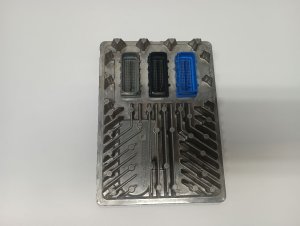
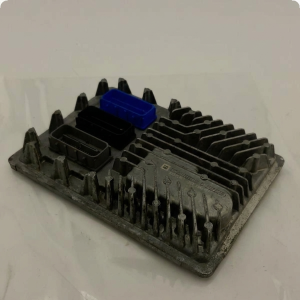
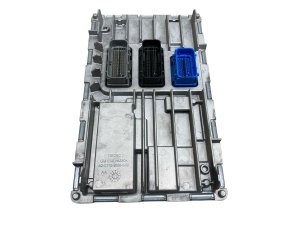
- Engine Control Module (ECM)
(OEM #12671992, 12692068, 12686382 (Verify by VIN))— If all other diagnostic steps fail, the ECM (GM Type E92) itself may have an internal fault. This is the 'textbook' cause of the code but should be the last part replaced.
Trusted brands: ACDelco (OEM)
OEM price range: $800-$1500
Aftermarket price range: $500-$1000 - Battery — A weak or failing battery is a primary trigger for this code due to low voltage, as highlighted in TSB #PIT6347B and numerous owner reports.
Trusted brands: ACDelco, Optima, Odyssey
OEM price range: $200-$350
Aftermarket price range: $150-$250 - Transmission Control Module (TCM)
(OEM #24276411 (Verify by VIN))— On 2015 models in particular, the TCM can set this code due to software issues or internal faults, causing shifting problems as described in TSB #150730002A.
Trusted brands: ACDelco (OEM)
OEM price range: $600-$1200
Aftermarket price range: $400-$800 - Engine Ground Strap
(OEM #19434466 (Verify by application))— A corroded or broken ground strap between the engine and chassis is a common, high-probability cause for electrical issues, including P0606.
Related Codes That Often Appear With This One
- P16F3 — This is a Control Module Redundant Memory Performance code, often set alongside P0606 as part of an internal self-check failure, as noted in TSB #150730002A and #PIP5609.
- P0562 — This code indicates System Voltage Low, which directly supports the theory that a weak battery or poor connection is the root cause, as mentioned in TSB #PIT6347B.
- P2818 — This is a Transmission Control Solenoid Pressure Control Valve code, which can appear with P0606 when the TCM is the source of the fault, as seen in TSB #150730002A.
- P0601, P0602, P0603, P0604 — These are all internal control module memory or processor error codes. TSB #PIP5609 groups them with P0606, indicating a related family of module self-test failures often caused by the same power/ground issues.
Technical Service Bulletins (TSBs) & Recalls
- PIT6347B: Addresses ABS/SES/MIL warnings with P0606 and P0562, pointing to battery and connection testing.
- PIP5609: Recommends inspecting ECM electrical connections, powers, and grounds for P0606.
- 150730002A: Advises TCM reprogramming for P0606 with transmission symptoms on 2015 models.
- 05-06-04-060A: Informs that P0606 is a multi-module diagnostic code.
Platform-Specific Known Issues
- TSB #PIT5946B (2021-2023 Models): For 2021-2023 models, a P0606 set in the Body Control Module (BCM) may be accompanied by HVAC or lighting issues. GM advises that this may be caused by outdated BCM software and instructs dealers to reprogram the BCM before considering replacement.
- TSB #PIT6347B (2021+ Models): Notes that P0606 can appear with ABS and StabiliTrak warnings on 2021 models and directs dealers to perform extra battery and connection tests before replacing any modules.
- TSB #PIP5609 (2016-2018 Models): Points to inspecting the ECM's electrical connections, powers, and grounds as a primary diagnostic step for P0606 on 2016-2018 Escalade, Tahoe, Yukon, Silverado, and Sierra. It explicitly states to only replace the ECM if no power, ground, or connection issues are found.
- TSB #150730002A (2015 Models): Specifically calls for TCM reprogramming to fix P0606 accompanied by transmission shifting issues like firm shifts, shudder, or RPM flare on 2015 models.
Mechanic-Grade Diagnostic Values
- Battery State of Charge (Key Off) — expected: 12.4V to 12.6V. Failure: Below 12.4V indicates a discharged or failing battery. A reading below 12V can indicate a dead cell.
- Charging System Voltage (Engine Running) — expected: 13.5V to 14.5V at the battery terminals. Failure: Voltage that is too low, too high, or fluctuating can indicate a faulty alternator or voltage regulator, which can trigger P0606.
- ECM/PCM Power Supply at Connector — expected: 12.6V or more with key in the 'on' position. Failure: If voltage is lower than battery voltage, it indicates high resistance in the power supply wiring or fuse block.
- Voltage Drop on Ground Circuit — expected: Less than 0.1V (100mV). Failure: A reading higher than 0.1V between the module's ground pin and the negative battery terminal indicates high resistance in the ground circuit, a common cause of this code.
Scan Tool Commands That Help
- GDS2 (GM Global Diagnostic System 2): Clear DTC — After a battery disconnect or replacement, a P0606 may become a persistent code that cannot be cleared with a standard OBD-II reader. GM bulletins note that a service tool (GDS2) may be required to successfully erase the code from the EBCM or HPCM2 after the underlying voltage issue is resolved.
- GDS2 / Techline Connect: BCM Programming (SPS) — For 2021-2023 models, TSB #PIT5946B and #PIT6347B instruct technicians to check BCM parameters. If specific 'Program Flow Monitoring Status' parameters are active, reprogramming the BCM with the latest calibration is the specified fix, not module replacement.
Wiring & Ground Locations
- G103 — On the cowl, at the left (driver's) rear of the engine compartment, often above the brake booster.. This is a critical ground point that serves the Body Control Module (BCM), Instrument Panel Cluster (IPC), and the Data Link Connector (DLC). A poor connection here can cause widespread communication errors and set a P0606 in the BCM.
- G104 / G108 — On the rear of the left (driver's side) cylinder head.. This is a primary engine-to-chassis ground. A loose or corroded connection here can cause unstable voltage for the ECM and other engine sensors.
- G110 — Located on the left front body mount near the frame.. This ground serves various front-end components and is a known spot for corrosion, especially in salt-belt regions. It is a key part of the main grounding scheme.
- ECM Connector X1 — The main 73-pin connector at the Engine Control Module.. Specific pins provide battery voltage and ground to the ECM. Pin 20 (RD/WH wire) is a primary Battery Positive Voltage feed, and multiple other pins provide grounds. Verifying voltage and ground integrity directly at these pins is a definitive test.
Real Owner Repair Stories
- Tahoe Yukon Forum (2007 GMC Yukon XL 2500) — Click but no crank, then would eventually start. Flashed 'Reduced Engine Power' and set P0606. Also had electrical issues like the radio flashing and ejecting a CD.
❌ Tried (didn't work) Initial diagnosis pointed to a bad ECM.
✅ What actually fixed it The user suspected a battery or ground issue based on the erratic electrical behavior. The final fix was not posted in the thread, but the consensus from other users was to replace the battery and thoroughly clean all battery cable and main ground connections, as corrosion can hide under the cable insulation.
OEM Part Supersession History
24272004→24276411— Updated part for the Transmission Control Module (TCM) for early-model (approx. 2015-2016) Escalades.
Heads up: The new part number requires programming to the vehicle's VIN. Using an old part number or a used module without correct programming will lead to communication errors and shifting problems.
Model Year Variations Within This Range
- 2021-2022: These models use GM's newer Global B electrical architecture. TSBs #PIT6347B and #PIT5946B point to software anomalies in the Brake System Control Module (BSCM) / Body Control Module (BCM) as a cause for P0606, which is fixed by a software update via Techline Connect, not module replacement.
- 2015: This model year is specifically called out in TSB #150730002A for a P0606 code related to the Transmission Control Module (TCM), causing firm shifts and RPM flares. The fix is TCM reprogramming.
Helpful Videos

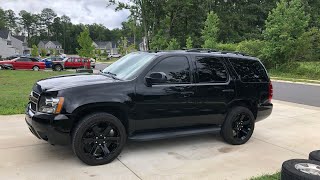

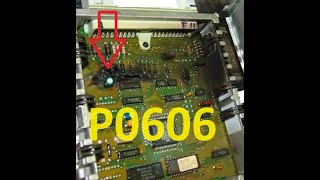
Used OEM Parts in Stock
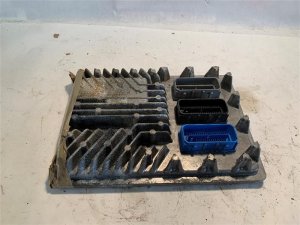
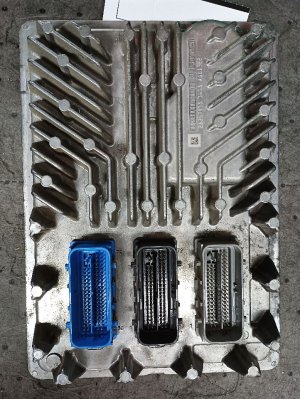
New Aftermarket Parts Available

The information in this article is provided for general reference and educational purposes only. Vehicle specifications, procedures, and part compatibility can vary by production date, trim level, and region. Always consult your vehicle's factory service manual and verify part numbers before purchasing or performing repairs. Safety-critical components such as airbags, seat belts, and braking systems should be installed by a qualified professional.
- Cadillac ESCALADE:
- 🧭 Diagnostic Flowchart
- 🎬 Helpful Videos
- 🛍️ Shop This Part
- What's Unique About the 2015-2022 Cadillac ESCALADE
- Symptoms You May Notice
- Most Likely Causes
- Rare But Worth Checking
- Diagnosis Steps
- Parts You'll Likely Need
- Related Codes That Often Appear With This One
- Technical Service Bulletins (TSBs) & Recalls
- Platform-Specific Known Issues
- Mechanic-Grade Diagnostic Values
- Scan Tool Commands That Help
- Wiring & Ground Locations
- Real Owner Repair Stories
- OEM Part Supersession History
- Model Year Variations Within This Range
- 🎟️ Get 5% Off