

P0606 on 2007-2011 Cadillac STS: ECM Processor Fault Causes and Fixes
P0606 on a Cadillac STS indicates a critical internal fault in the engine's main computer (ECM). Before replacing the expensive ECM, thoroughly inspect all battery cables and ground connections for corrosion or looseness, as this is a common trigger. Key grounds to check are on the cylinder heads (G103/G104). A replacement ECM requires professional programming.
- P0606 is a critical code indicating an ECM processor fault; do not drive the vehicle.
- The most important first step is to rule out external electrical problems. Thoroughly clean and tighten all battery and ground connections before considering ECM replacement.
- Test the battery and alternator to ensure the ECM is receiving stable voltage.
- If the ECM must be replaced, it is not a plug-and-play part. It requires professional programming to match your car's VIN and security system.
What's Unique About the 2007-2011 Cadillac STS
For this generation of Cadillac, a P0606 code is often a sign of an underlying electrical issue rather than an immediate ECM failure. GM issued a Technical Service Bulletin (TSB #05-06-04-060A) advising technicians that P0606 and related codes can be shared across multiple modules, hinting at a systemic cause. Owners and technicians on related GM platforms have found that unstable voltage from poor ground connections, specifically grounds on the cylinder heads (G103/G104), or a weak charging system is a frequent culprit, tricking the ECM into reporting a false internal failure.
Diagnostic Flowchart
Tap your situation to follow the diagnostic path that matches what you're seeing on this vehicle.
Symptoms You May Notice
- Check Engine Light is on
- "Reduced Engine Power" message on the dashboard
- Engine stalling intermittently or dying at a stop
- Engine will not start or is hard to start
- Erratic automatic transmission shifting
- ABS or Traction Control lights may illuminate
- Radio and dash lights may flash or act erratically
- Immediately replacing the ECM without first testing power and ground circuits. A bad ground is a much cheaper fix and a very common cause.
- Replacing sensors (like the throttle body or O2 sensors) that have set other codes. A faulty ECM can generate false codes for other components, but conversely, a shorted sensor can also cause a false P0606.
Most Likely Causes
- Poor Power or Ground Connections to the ECM 🔴 High Probability Vibration and age can lead to corrosion or loosening of critical ground straps on the engine block and chassis, a known issue on many GM platforms of this era. The Sigma platform is particularly noted for this.
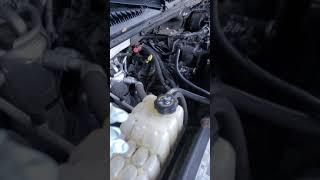
How to confirm: Perform a voltage drop test on the ECM's power and ground circuits. Visually inspect and physically check the main battery terminals, engine ground straps, and chassis grounds. Specifically locate and inspect ground G103 (front of the right cylinder head) and G104 (rear of the left cylinder head) for tightness and corrosion. 🎬 See how to find and clean hidden engine grounds
Typical fix: Disconnect the battery. Remove, wire brush until shiny, and securely re-tighten the contact surfaces of all main engine and chassis ground connections. Apply dielectric grease on reassembly to prevent future corrosion. Replace any corroded battery cables or ground straps.
Est. part cost: $10-$100 - Failed Engine Control Module (ECM) 🟡 Medium Probability → Shop Engine Control Module (ECM) The E38 ECM used in these vehicles can fail internally from heat cycles and vibration over a long service life. Sometimes a burnt smell is noticeable near the module.
How to confirm: This is a process of elimination. If the power/ground circuits, charging system, and wiring are all confirmed to be in perfect condition via voltage drop testing and physical inspection, the ECM itself is condemned.
Typical fix: Replace the Engine Control Module. The new module must be professionally programmed to the vehicle's VIN and security systems.
Est. part cost: $400-$800 - ECM Software Anomaly ⚪ Low Probability GM has released software updates for other models to fix erroneous P0606 codes, indicating that software glitches can be a cause. Stable battery voltage is critical during any programming attempt.
How to confirm: A GM dealership or a qualified shop with a Techline Connect subscription can check if a newer software calibration is available for your vehicle's VIN.
Typical fix: Reprogram the ECM with the latest manufacturer software. This is often referred to as 'reflashing'.
Est. part cost: $0-$200 - Faulty Charging System ⚪ Low Probability A failing alternator can produce voltage spikes or drops that can confuse or damage the sensitive electronics within the ECM.
How to confirm: Test the alternator's output under load. The voltage should be stable and typically between 13.5 and 14.5 volts.
Typical fix: Replace the alternator.
Est. part cost: $200-$450
Rare But Worth Checking
- Damaged Wiring Harness: While not common, wires leading to the ECM can become chafed or damaged, causing intermittent shorts that trigger the code. A thorough visual inspection is warranted before replacing the ECM.
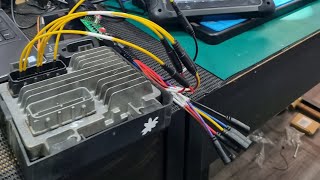
- Shorted External Sensor: A sensor elsewhere on the engine can short out internally, sending erratic voltage back to the ECM and causing it to report a processor fault. If other codes are present, diagnosing them first may resolve the P0606. 🎬 Watch: How to diagnose an ECM processor error code For example, unplugging a suspect sensor and seeing if the P0606 code clears can be a valid diagnostic step.
Diagnosis Steps
- Scan the vehicle for all DTCs. Note any other codes that are present, as a shorted sensor can trigger a P0606.
- Check for any relevant Technical Service Bulletins (TSBs) for your vehicle's VIN, especially TSB #05-06-04-060A. A software update may be available.
- Thoroughly inspect the battery, its terminals, and the main battery cables. A user on a forum fixed their P0606 by replacing a battery with a physically loose positive post. Clean any corrosion and ensure connections are tight.
- Test the charging system. With the engine running, check the alternator's voltage output to ensure it is stable and within specification (typically 13.5-14.5V).
- Disconnect the battery. Locate and inspect the main engine and chassis ground straps. Pay special attention to G103 (front of passenger-side cylinder head) and G104 (rear of driver-side cylinder head). Remove them, clean the contact points until they are shiny, and re-secure them tightly.
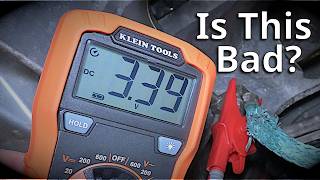
- If possible, perform a voltage drop test on the ECM's main power and ground pins at the connector to confirm it's receiving stable voltage.
- If a battery drain is suspected, perform a parasitic draw test.
- If all wiring, grounds, and voltages are confirmed to be correct, the ECM is the most likely cause of the fault.
Parts You'll Likely Need
- Engine Control Module (ECM)
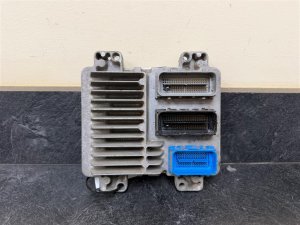
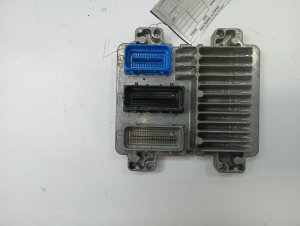
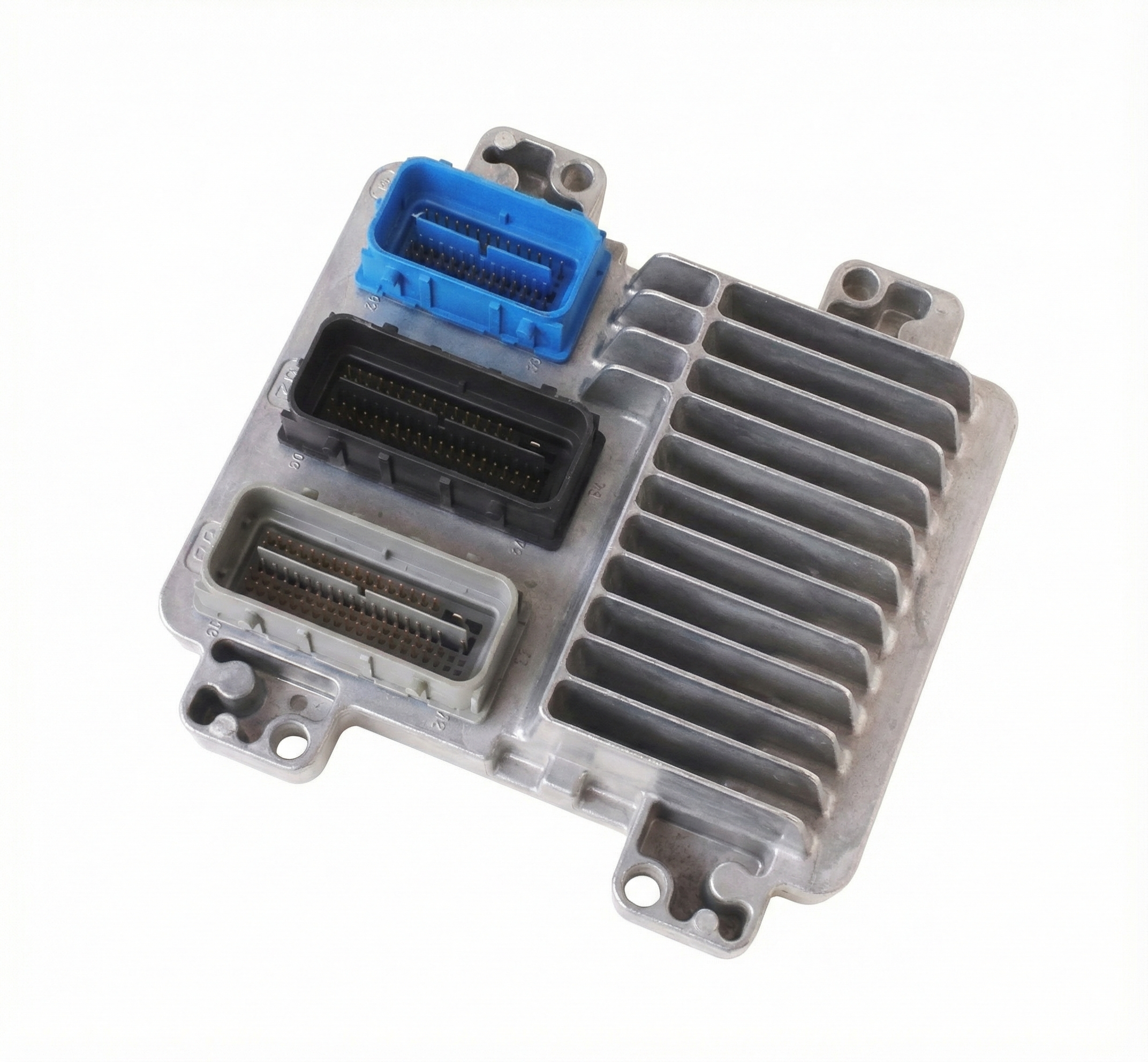
(OEM #12612384, 12607096, 12622093, 12623325 (Verify by VIN, common for 2008 models))— This is the part that fails if all external electrical issues are ruled out. It is the 'brain' that has the internal processor fault. The specific ECM is the ACDelco E38.
Trusted brands: ACDelco (OEM Remanufactured)
OEM price range: $500-$800
Aftermarket price range: $300-$600 - Battery Cables / Ground Straps — Corroded or damaged cables are a primary cause of the voltage issues that can falsely trigger a P0606 code.
Trusted brands: ACDelco, Standard Motor Products
OEM price range: $50-$150
Aftermarket price range: $20-$80
Related Codes That Often Appear With This One
- U-series codes (e.g., U0100) — Communication codes often appear with P0606 because a failing or improperly powered ECM can disrupt the entire vehicle data network (CAN bus).
- P2135 — Throttle Position Sensor codes can be falsely triggered by the ECM when it enters 'Reduced Engine Power' mode as a result of the P0606 fault.
- P0601, P0603, P0604 — These are all internal control module fault codes. Their presence alongside P0606 strongly suggests an unrecoverable hardware failure within the ECM.
Technical Service Bulletins (TSBs) & Recalls
- 05-06-04-060A: Information on Control Module Diagnostic Trouble Codes (DTCs) P0601, P0602, P0603, P0604, P0606, P062F, P06F3, P1621 which can be shared in multiple modules.
Platform-Specific Known Issues
- GM issued TSB #05-06-04-060A, which applies to the 2007 Cadillac STS. It is an informational bulletin for technicians regarding a group of control module DTCs, including P0606, noting that they can be shared in multiple modules. This officially supports the diagnostic approach of checking for a systemic electrical issue before replacing a single module.
- Real-world owner experiences on forums for platform-mates like the Chevy Tahoe consistently resolve intermittent P0606 codes, along with flickering dash lights and radio issues, by cleaning all major ground connections.
Mechanic-Grade Diagnostic Values
- Battery Voltage (Key Off, Engine Off) — expected: ~12.6 Volts. Failure: Below 12.4 Volts may indicate a weak battery or parasitic draw, which can cause voltage-related codes.
- Charging System Voltage (Engine Running) — expected: 13.5 - 14.5 Volts. Failure: Voltage that is too low, too high, or fluctuating can indicate a failing alternator, causing unstable power to the ECM.
- Fuel Pressure (at fuel rail) — expected: Approximately 60 PSI. Failure: Significantly lower pressure would indicate a fuel delivery issue, but stable pressure helps rule out the fuel system as the cause of stalling.
- ECM Power Supply Pins (at ECM Connector X1) — expected: Battery Positive Voltage (B+). Failure: Less than B+ indicates a voltage drop in the power supply circuit. Check Pin 20 (RD/WH wire).
- ECM Ignition Supply Pins (at ECM Connector X1) — expected: Ignition 1 Voltage (Key On). Failure: No voltage indicates an issue with the ignition switch signal. Check Pin 19 (PK wire).
Scan Tool Commands That Help
- GM GDS2/Tech2 SPS: Service Programming System (SPS) — Required to flash the vehicle's VIN, security information, and correct software calibration into a new or replacement ECM. The vehicle will not start without this step.
- GM GDS2/Tech2: Vehicle Theft Deterrent (VTD) Relearn — After installing and programming a new ECM, this procedure is necessary to sync the new module with the vehicle's immobilizer system.
- Aftermarket (HP Tuners, EFILive): Write Entire / Flash OS — Used by tuners to modify engine parameters. Incorrectly flashing an incompatible Operating System (OS) can cause a P0606 code and 'brick' the ECM.
Wiring & Ground Locations
- G103 — For the 3.6L V6, this ground is located on the top right side of the engine, fastened directly to the ECM case. On V8 models, it is typically on the front of the passenger-side cylinder head.. This is a primary ground for the ECM. A poor connection here directly impacts the ECM's stability and can cause false processor fault codes.
- G104 — On V8 models, this is typically located on the rear of the driver-side (left) cylinder head. A wiring diagram for a 2006 STS shows it on the right front frame rail, near the bumper bracket, indicating a possible model year or engine-specific variation.. This is another critical engine ground. Its integrity is essential for stable sensor readings and module operation.
- ECM Connector X1, Pin 20 — This is the main battery positive voltage feed to the ECM. The wire is typically Red/White.. A voltage drop test at this pin can confirm if the ECM is receiving full and stable battery power.
- ECM Connector X1, Pin 19 — This is the Ignition 1 Voltage feed to the ECM, which signals that the key is on. The wire is typically Pink.. Loss of this signal can cause the ECM to shut down unexpectedly.
- ECM Grounds (Multiple Pins) — The E38 ECM uses multiple pins for its ground return path through the wiring harness, which ultimately connect to chassis grounds like G103/G104.. Verifying continuity to ground on these pins is the final step to confirm the ECM's ground circuit integrity before condemning the module.
Real Owner Repair Stories
- CorvetteForum user (2006 Chevrolet Corvette (LS2 V8 with E38 ECM)) — Car ran poorly and would die when put in gear. Gauges would sweep and multiple warnings (Service Active Handling, ABS, etc.) and U-series communication codes would appear.
❌ Tried (didn't work) Battery test (passed), Fuel pressure test (was good at ~60 psi), Spark and injector pulse test (both good), Re-flashing ECM with latest OS (only provided temporary relief), Visual inspection of all grounds and wiring looms (no faults found), Re-flashing the Transmission Control Module (TCM)
✅ What actually fixed it Replacing the Engine Control Module (ECM). After installation and relearn procedures, the issues were resolved. - LS1Tech Forum user (Engine swap project with Gen4 L96 6.0L V8 and E38 ECM) — P0606 code appeared after a base tune was applied. The throttle would become unresponsive ('dead pedal') under load.
❌ Tried (didn't work) Swapping O2 sensors to address a secondary code.
✅ What actually fixed it The consensus diagnosis was that the tuner had flashed an incompatible Operating System (OS) into the E38 ECM, a common way to 'brick' these modules. The fix is to replace the ECM and ensure the correct, compatible OS is flashed.
Model Year Variations Within This Range
- 2007-2011: The ACDelco E38 ECM had internal hardware revisions during its production life. Because of this, flashing an Operating System (OS) or calibration file from a different model year (e.g., a 2007 file onto a 2009 ECM) can cause a conflict, resulting in a P0606 code and a non-functional 'bricked' module.
Helpful Videos


Used OEM Parts in Stock
New Aftermarket Parts Available




The information in this article is provided for general reference and educational purposes only. Vehicle specifications, procedures, and part compatibility can vary by production date, trim level, and region. Always consult your vehicle's factory service manual and verify part numbers before purchasing or performing repairs. Safety-critical components such as airbags, seat belts, and braking systems should be installed by a qualified professional.
- Cadillac STS:
- 🧭 Diagnostic Flowchart
- 🎬 Helpful Videos
- 🛍️ Shop This Part
- What's Unique About the 2007-2011 Cadillac STS
- Symptoms You May Notice
- Most Likely Causes
- Rare But Worth Checking
- Diagnosis Steps
- Parts You'll Likely Need
- Related Codes That Often Appear With This One
- Technical Service Bulletins (TSBs) & Recalls
- Platform-Specific Known Issues
- Mechanic-Grade Diagnostic Values
- Scan Tool Commands That Help
- Wiring & Ground Locations
- Real Owner Repair Stories
- Model Year Variations Within This Range
- 🎟️ Get 5% Off