

P0606 on 2011-2015 Chevrolet Camaro: ECM Processor Fault Causes and Fixes
P0606 on a 2011-2015 Camaro indicates a critical internal processor fault in the Engine Control Module (ECM). This usually requires replacing the ECM, which must be professionally programmed. Before replacement, always check battery voltage and all ECM-related ground connections, as electrical issues can sometimes trigger this code. For modified vehicles, an improper engine tune is a very common cause.
- P0606 is a critical fault indicating the Camaro's main computer (ECM) has failed its internal self-test.
- Do not drive the vehicle. There is a high risk of the engine stalling unexpectedly or entering a severe limp mode.
- Before replacing the expensive ECM, thoroughly inspect the battery, charging system (for spikes), and all ECM ground wires for issues.
- If the car has been tuned, the tune itself is a primary suspect. Reverting to the stock GM software is a critical diagnostic step.
What's Unique About the 2011-2015 Chevrolet CAMARO
For the fifth-generation Camaro, which uses the GM E38 ECM, the P0606 code is a serious fault often called the 'ECM death code' by technicians, especially in the context of aftermarket tuning. Forum discussions with Camaro owners reveal that aggressive or improper engine tuning can corrupt the ECM's software or alter critical parameters (like electronic throttle control tables) beyond what the processor's self-check will accept, leading to this code. This often happens under high-load conditions like full throttle with traction control disabled. While the primary cause is often a failed ECM, it's crucial to rule out simpler electrical issues like bad grounds or wiring problems, which can mimic a processor fault.
Diagnostic Flowchart
Tap your situation to follow the diagnostic path that matches what you're seeing on this vehicle.
Symptoms You May Notice
- Check Engine Light is on
- "Service StabiliTrak" warning message
- "Reduced Engine Power" message and limp mode activation
- Engine stalling or running rough, sometimes intermittently
- Vehicle may not start at all
- Erratic automatic transmission shifting
- Throttle may become unresponsive or dead, with the engine only idling
- ABS light may illuminate
- Replacing other components like the throttle body, oxygen sensors, or camshaft position sensors without first checking for ECM-related TSBs and verifying power/ground circuits. While a faulty sensor circuit can sometimes cause a P0606, the code itself points to the processor, not the sensor.
Most Likely Causes
- Internal ECM Failure 🔴 High Probability The ECM (GM E38) is a complex electronic device that can fail over time due to heat cycles, vibration, or internal component degradation. In some cases, a brand new replacement ECM can even be faulty out of the box.
How to confirm: After ruling out all other possibilities (wiring, grounds, power supply, tune), the ECM is condemned. This is a process of elimination. 🎬 Watch: How to diagnose an ECM processor error step-by-step. A dealer-level scan tool may be able to confirm the internal fault.
Typical fix: Replace the Engine Control Module and have it professionally programmed to the vehicle's VIN and security information.
Est. part cost: $450-$602 - Corrupted or Improper Engine Tune 🔴 High Probability On modified Camaros, this is a very common trigger. Flashing an incorrect Operating System (OS) or making aggressive changes to certain tables, specifically the Electronic Throttle Control (ETC) parameters, can cause a conflict that the processor flags as a P0606 fault. This often occurs only under specific conditions, like wide-open throttle with traction control turned off.
How to confirm: This is diagnosed by flashing the ECM back to the stock factory tune using a tool like GM MDI2. If the code disappears and does not return under the same conditions, the aftermarket tune was the cause.
Typical fix: Work with a reputable tuner to correct the calibration file, specifically by reverting throttle-related tables to stock, or return the vehicle's software to its stock configuration entirely.
Est. part cost: $100-$500 (for tuner service or re-flash) - Poor ECM Ground Connections 🟡 Medium Probability Ground wires can corrode or become loose over time, causing intermittent voltage drops that can confuse the ECM's processor. Forum members have identified several key ground points on the 5th Gen Camaro: at the back of each cylinder head, on the engine block near the alternator/water pump, and a main chassis ground on the passenger side frame rail.
How to confirm: Perform a voltage drop test on the ECM ground circuits. Visually inspect all ground straps and connection points on the engine block and chassis for corrosion, looseness, or charring. A bad ground can sometimes be confirmed if moving the ECM or its harness causes the issue to appear or disappear.
Typical fix: Disconnect, clean all contact points to bare metal, apply dielectric grease, and securely tighten the ground connections.
Est. part cost: $10-$50 - Low or Spiking Battery Voltage ⚪ Low Probability → Shop Vehicle Battery Like any computer, the ECM is sensitive to its power supply. A weak battery can cause a voltage drop during cranking, while a failing alternator can cause voltage spikes (e.g., to 16V+) during high RPMs or Wide Open Throttle (WOT), both of which can trigger a processor fault code.
How to confirm: Test the battery with a digital load tester; voltage with the key off should be ~12.6V. Check the alternator output voltage with the engine running at idle and under load (WOT if safe to do so while monitoring voltage). It should remain stable between 13.5 and 14.5 volts. Voltage spikes above 15V indicate a faulty alternator.
Typical fix: Replace the weak battery or faulty alternator. One owner on a Reddit forum confirmed that after flashing his ECM didn't fully solve the problem, replacing a faulty alternator that was causing voltage spikes at WOT finally fixed all issues.
Est. part cost: $150-$450
Rare But Worth Checking
- Damaged Wiring Harness: A short or open in the wiring harness leading to the ECM can cause this code. This can be caused by physical damage, chafing against the chassis/engine, or internal corrosion. One owner on Camaro5 forums ultimately traced their P0606 to a damaged wire creating a communication issue between the ECM and ABS module, which required harness repair.
Diagnosis Steps
- Check for other DTCs. If codes like P1516 or U-codes are present, they can provide clues about communication or throttle control system issues. Diagnose and fix them first.
- Inspect the battery and charging system. Ensure the battery is fully charged (~12.6V) and the alternator provides stable voltage (13.5-14.5V), even under load and at high RPM.
- Visually inspect all wiring and connectors at the ECM. Look for any signs of damage, corrosion, or loose pins. Pay close attention to the main harness for chafing.
- Inspect all ECM-related ground connections. Key locations include the rear of both cylinder heads and the main chassis ground on the passenger side frame rail. Disassemble, clean to bare metal, and tighten securely.
- If the vehicle has an aftermarket tune, flash the ECM back to the stock GM calibration and see if the code returns. This is the most effective way to rule out a software issue.
- If the code appears with "Service Stabilit 🎬 See what the Service StabiliTrak message means and how to fix it.rak," consider issues with wheel speed sensors or the throttle body, as these systems are interconnected, though P0606 itself points to the ECM.
- If all external factors have been ruled out, the fault is internal to the ECM.
- Replace the ECM. The new module must be programmed by a dealer or a qualified shop with the correct software for your vehicle's VIN.
Parts You'll Likely Need
- Engine Control Module (ECM/PCM)
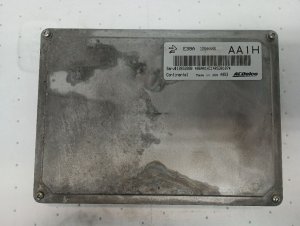
(OEM #12651994 (supersedes 12643248))— This code most often indicates a terminal internal failure of the ECM's processor. The entire unit must be replaced and programmed. 🎬 Watch: How to install a plug-and-play Camaro PCM module.
Trusted brands: ACDelco (OEM)
OEM price range: $457-$602
Aftermarket price range: $200-$400 (Remanufactured/Programmed)
Related Codes That Often Appear With This One
- P0601, P0602, P0603, P0604 — These are all internal control module memory or processor error codes. The provided TSB #05-06-04-060A groups them with P0606, indicating they relate to similar internal faults that require module replacement if no external cause is found.
- U-series codes (e.g., U0100) — If the ECM is failing, it may lose communication with other modules on the vehicle's network (CAN bus), resulting in communication codes.
- P1516 — This code relates to the Throttle Actuator Control (TAC) module performance. It is frequently seen with P0606, especially on modified Corvettes and Camaros, pointing to a conflict between the throttle commands and what the ECM processor expects to see.
Technical Service Bulletins (TSBs) & Recalls
- 05-06-04-060A: An informational bulletin for technicians regarding internal control module faults.
Platform-Specific Known Issues
- The NHTSA-cited Technical Service Bulletin #05-06-04-060A confirms that P0606 is recognized by GM as an internal control module fault code that can appear in multiple modules across its car and light truck lineup.
- A separate TSB for newer GM vehicles (16-NA-332) notes that a P0606 can be caused by a software anomaly and may only require reprogramming, not replacement, though this TSB does not officially cover the 2011-2015 Camaro.
- On Camaro5 forums, multiple owners of modified cars report that P0606 appears specifically when traction control is turned off and the car is put under heavy load, pointing directly to a conflict within the engine tune's parameters.
Mechanic-Grade Diagnostic Values
- Battery Voltage (Key Off, Engine Off) — expected: Approximately 12.6 Volts. Failure: A reading below 12.4V indicates a low state of charge or a failing battery. A reading that is a multiple of 2.1V below 12.6V (e.g., 10.5V) can indicate a dead cell.
- Charging System Voltage (Engine Running) — expected: 13.5 - 14.5 Volts at idle and under load. Failure: Voltage dropping below 13.0V or spiking above 15.0V, especially at high RPM or Wide-Open Throttle (WOT), indicates a failing alternator or voltage regulator.
- Sensor 5-Volt Reference — expected: Approximately 5.0 Volts at sensor connectors fed by the ECM. Failure: If the 5V reference is missing at a sensor, unplug the sensor. If the 5V signal returns at the connector, the sensor is shorted and may be causing the P0606. If the signal does not return, the fault is in the wiring or the ECM itself.
Hidden / Shadow Codes Worth Checking
- Program Flow Monitoring Status: This is not a code but a specific parameter within the GDS2 scan tool data for some GM modules. If it reads 'Active' while all other internal performance parameters are 'Inactive', it may indicate a software glitch that can be fixed by reprogramming, rather than a hardware failure. In some cases, GM engineering advises to clear codes and take no further action if this is the only active parameter after an update. (see via GM GDS2 Scan Tool: Module Diagnostics > [Module Name] > Identification Information > Internal Control Module Performance Data.)
Scan Tool Commands That Help
- GM MDI/MDI2 with TIS2WEB/Techline Connect: SPS (Service Programming System) — This is used to re-flash the ECM with the latest stock GM calibration. It is a critical step to rule out a corrupted aftermarket tune and is required when installing a new ECM to program it to the vehicle.
- Aftermarket Tuning Software (e.g., HP Tuners): Write Entire / Revert to Stock — Used to diagnose a suspected bad tune. A tuner can specifically revert the Electronic Throttle Control (ETC) tables back to their factory settings, which has been shown to resolve the P0606 code in many cases on modified vehicles.
Wiring & Ground Locations
- Engine Block Grounds — There are multiple grounds on the engine. Key locations for the V8 are at the rear of each cylinder head (one on passenger side, multiple on driver's side) and near the water pump/alternator area on the passenger side of the block.. The ECM relies on these grounds for a stable reference. A loose or corroded ground at the cylinder head is a common cause of intermittent electrical issues, including processor faults.
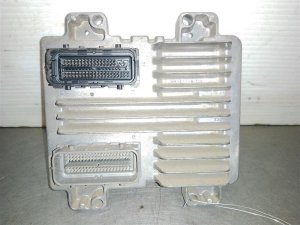
- ECM Connectors (V8 E38) — The E38 ECM has two main connectors, typically labeled X1 (73-pin) and X2 (80-pin). Key pins include Battery Positive Voltage (X1, Pin 20, RD/WH wire) and Ignition 1 Voltage (X1, Pin 19, PK wire).. Testing for stable power and clean ground connections directly at these pins is the most definitive way to rule out a power supply issue to the ECM.
- ECM Connectors (V6 LFX) — The ECM for the LFX V6 engine has three connectors: X1, X2, and X3. They can be identified by the color of their Terminal Position Assurance (TPA) clips: X1 is typically Blue, X2 is Black, and X3 is Gray.. Correctly identifying the connectors is crucial when using a wiring diagram to test specific pin voltages or continuity for diagnosis.
Real Owner Repair Stories
- Reddit user @abdulhtc24 (2012 Chevrolet Camaro SS (modified)) — P0606 and reduced engine power during heavy pulls or at Wide-Open Throttle (WOT). Cabin electronics would also shut down.
❌ Tried (didn't work) Having the ECM reflashed with a GM MDI2 tool cleared the P0606 code, but the car would still die at WOT.
✅ What actually fixed it Replacing the alternator. The old alternator was causing voltage spikes up to 16V at WOT, which confused the ECM. The new alternator kept voltage stable around 14V, resolving all issues. - LS1Tech forum user (Gen4 L96 engine swap with E38 ECM (similar to Camaro)) — Intermittent P0606 code where the throttle goes dead and the engine only idles after about 70% throttle application under load.
❌ Tried (didn't work) The issue appeared immediately after getting a custom tune.
✅ What actually fixed it The owner sent the ECM to a specialist (BP Automotive) who corrected the throttle tables within the tune. This confirmed the aftermarket tune was the direct cause. - LS1Tech forum user @itsdaveonline (Modified Camaro (assumed)) — P0606 code would set only when sustaining slightly more than half throttle for about 5 seconds, triggering reduced power mode.
❌ Tried (didn't work) Driving gently would prevent the code from appearing.
✅ What actually fixed it The owner returned to the tuner, who put the throttle-related tables in the tune back to their stock values. This immediately resolved the problem. - Camaro5 forum user @ZetaZel (Modified Camaro SS with LS3) — Intermittent P0606 with reduced engine power, sometimes accompanied by a P0300 (random misfire).
❌ Tried (didn't work) Cleaning the throttle body and replacing the MAF sensor.
✅ What actually fixed it The PCM was determined to be faulty and was replaced. The user confirmed 'all is good' after the replacement.
"I Checked Everything" — The Actual Cause
- A smoke test would not be relevant for this electronic fault. However, a similar pattern exists where all standard electrical tests (battery at idle, grounds, basic wiring checks) pass, but the code still appears. In one documented case, the root cause was a failing alternator that only produced voltage spikes (up to 16V) at high RPM under load (WOT). This condition would be missed by standard shop tests but was enough to trigger the ECM's internal processor fault logic. The fix was a new alternator, not a new ECM.
When the Usual Fixes Don't Work
- While P0606 is often called the 'ECM death code', multiple owner-verified repairs show this is not always the case. In one instance, a 2012 Camaro SS continued to have issues even after an ECM reflash. The final repair was a new alternator, which was causing voltage spikes to 16V only at wide-open throttle. In another case, a tuner was able to resolve the code by simply reverting the electronic throttle control tables in the aftermarket tune back to stock, proving the ECM hardware was not faulty. These cases demonstrate that before condemning the expensive ECM, it is critical to rule out external electrical issues and software corruption from improper tuning.
OEM Part Supersession History
12643248→12651994— Standard part revision and update by the manufacturer.
Model Year Variations Within This Range
- 2011-2015: The primary difference affecting this code is the engine. V8 models (LS3, L99) use the GM E38 ECM. V6 models from 2012-2015 use the LFX engine with a different ECM (Delco E39 or E39A), which has a different physical footprint (3 connectors vs 2 on the E38) and pinout. While P0606 can occur on both, the specific part numbers and wiring diagrams are not interchangeable.
Helpful Videos

Used OEM Parts in Stock
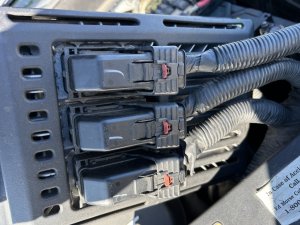
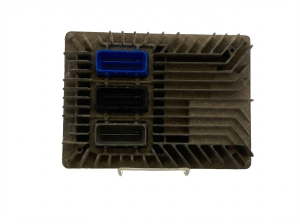
New Aftermarket Parts Available


The information in this article is provided for general reference and educational purposes only. Vehicle specifications, procedures, and part compatibility can vary by production date, trim level, and region. Always consult your vehicle's factory service manual and verify part numbers before purchasing or performing repairs. Safety-critical components such as airbags, seat belts, and braking systems should be installed by a qualified professional.
- Chevrolet CAMARO:
- 🧭 Diagnostic Flowchart
- 🎬 Helpful Videos
- 🛍️ Shop This Part
- What's Unique About the 2011-2015 Chevrolet CAMARO
- Symptoms You May Notice
- Most Likely Causes
- Rare But Worth Checking
- Diagnosis Steps
- Parts You'll Likely Need
- Related Codes That Often Appear With This One
- Technical Service Bulletins (TSBs) & Recalls
- Platform-Specific Known Issues
- Mechanic-Grade Diagnostic Values
- Hidden / Shadow Codes Worth Checking
- Scan Tool Commands That Help
- Wiring & Ground Locations
- Real Owner Repair Stories
- "I Checked Everything" — The Actual Cause
- When the Usual Fixes Don't Work
- OEM Part Supersession History
- Model Year Variations Within This Range
- 🎟️ Get 5% Off