

P0606 on 2005-2010 Chevrolet Cobalt: ECM/PCM Processor Fault Causes and Fixes
This code indicates a critical internal failure of the Engine Control Module (ECM). While the ECM itself may have failed, the most common triggers are actually external electrical issues like a weak battery, bad grounds (especially G103 and G105), or a faulty alternator. Always test the full charging and grounding system before replacing the expensive ECM. In some cases, a software anomaly or a faulty cam sensor can falsely trigger this code.
- P0606 is a critical code indicating an ECM processor fault; do not continue to drive the vehicle.
- Before condemning the expensive ECM, you MUST thoroughly test the battery, alternator, and all power/ground connections, especially grounds G103 and G105.
- A weak battery is the most common misdiagnosed cause of a P0606 code.
- Check for TSBs. The issue could be a simple software update (TSB 20-NA-120) or a misleading code caused by a faulty cam sensor (TSB 17-NA-132).
- If the ECM must be replaced, the new unit will require professional programming to your vehicle's VIN.
- If your Cobalt is modified, an improper software tune could be the source of the problem.
What's Unique About the 2005-2010 Chevrolet Cobalt
For the Chevrolet Cobalt and its platform mates (Pontiac G5, Saturn Ion), the P0606 code is a straightforward but severe fault. The electrical system on this platform is highly sensitive to voltage fluctuations. A weak battery, failing alternator, or corroded grounds can easily confuse the ECM into setting a P0606 code, making thorough electrical diagnosis essential before condemning the module. Owners on forums for the Cobalt SS have noted that improper aftermarket tuning can also trigger this processor fault code. Furthermore, GM has issued a technical service bulletin (TSB 17-NA-132) stating that a faulty camshaft position sensor can sometimes incorrectly set a P0606 code instead of a specific cam sensor code.
Symptoms You May Notice
- Check Engine Light is on solid
- Vehicle enters 'Reduced Engine Power' mode
- Engine stalling or shutting off while driving
- Harsh or erratic automatic transmission shifting
- Engine cranks but will not start
- Code reappears immediately after clearing
- Engine may run rough or misfire
- Inconsistent starting issues
- Replacing the ECM without first thoroughly testing the battery, alternator, and all power/ground connections. Many ECMs are replaced unnecessarily when the actual fault was a simple and cheap electrical issue.
- Replacing the ECM when the actual cause is a faulty camshaft position sensor, as warned in TSB 17-NA-132.
Most Likely Causes
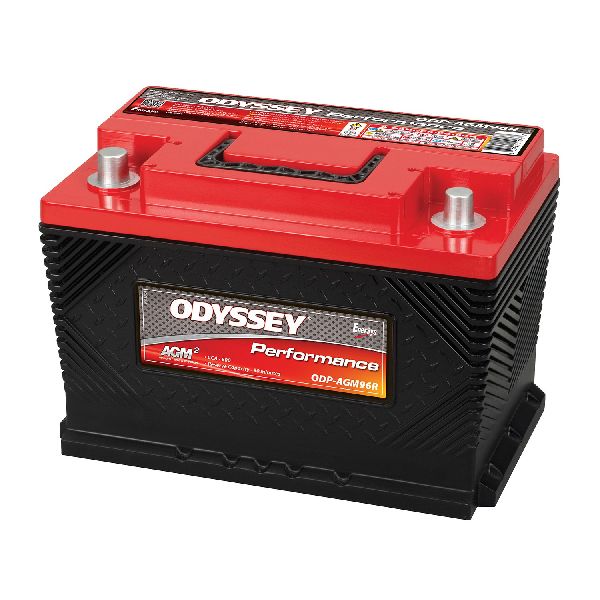
- Weak or Failing Battery 🔴 High Probability → Shop Vehicle Battery Control modules require stable voltage. Low voltage during engine cranking is a very common trigger for processor fault codes across many GM vehicles, including the Cobalt which has its battery located in the trunk, making cable condition critical.
How to confirm: Test the battery with a digital multimeter or a professional battery tester. A healthy, fully charged battery should read approximately 12.6 volts with the engine off. During cranking, the voltage should not drop below 9.6 volts. A drop of exactly 2.1 volts (e.g., reading 10.5V instead of 12.6V) can indicate a dead internal cell.
Typical fix: Replace the vehicle's battery and clean the terminals.
Est. part cost: $150-$250 - Defective Alternator or Charging System 🟡 Medium Probability An alternator that is undercharging or overcharging can create voltage spikes or drops that damage or confuse the ECM.
How to confirm: With the engine running, test the voltage at the battery terminals. A healthy charging system should output between 13.5 and 14.5 volts. Any significant deviation or fluctuation points to a problem.
Typical fix: Replace the alternator and serpentine belt.
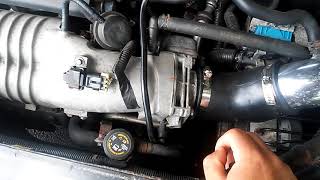
Est. part cost: $150-$350 - Poor Power or Ground Connections 🟡 Medium Probability Over time, ground straps and power cables can corrode or become loose, creating high resistance and unstable voltage for the ECM. Key locations on the Cobalt include the G103 ground on the cowl above the brake booster, and the G105 ground on the transmission which directly grounds the ECM 🎬 Watch: Locate and clean your Cobalt's critical ground points and TCM.
How to confirm: Visually inspect all battery cables, terminals, and the main engine/chassis ground straps (G101, G103, G105). Look for green/white corrosion, looseness, or physical damage. Perform a voltage drop test on the power and ground circuits to the ECM to find hidden resistance; a drop over 0.5 volts is excessive.
Typical fix: Disassemble, clean, and tighten all main power and ground connections. Replace any corroded or damaged cables or ground straps.
Est. part cost: $20-$100 - Failed Engine Control Module (ECM) 🔴 High Probability → Shop Engine Control Module (ECM) This is the root cause if all external electrical factors have been ruled out. Internal components can fail due to heat, vibration, or age. Cold weather can also exacerbate an already failing ECM.
How to confirm: This is a process of elimination. After confirming the battery, charging system, and all related wiring are in perfect condition and no TSBs apply, the ECM is the only remaining culprit.
Typical fix: Replace the ECM. The new module must be programmed to the vehicle's VIN and specific configuration.
Est. part cost: $200-$500
Rare But Worth Checking
- Improper Aftermarket Tuning: On a modified Cobalt (especially SS models), an incorrect or failed software tune can cause conflicts within the ECM's processor, leading to a P0606 code, often paired with other codes like P0172 (System Too Rich). This was noted by owners on the Cobalt SS Network forum.
- Faulty Camshaft Position Sensor: → Shop Engine Camshaft Position Sensor GM issued TSB 17-NA-132 which states that an open in the camshaft position sensor circuit can cause a P0606 to set during cranking *instead* of the appropriate cam sensor code. The bulletin explicitly advises against replacing the ECM for this condition until the cam sensor and its circuit have been checked.
- ECM Software Anomaly: GM TSB 20-NA-120 indicates that for some vehicles, a P0606 can be set due to a software anomaly. The prescribed fix is to reprogram the ECM with updated software, not replace it.
- Shorted Sensor or Actuator: In rare cases, a sensor that is severely shorted-circuited (e.g., a throttle body issue setting a P2101) can feed back improper voltage and disrupt the ECM's internal processing, tricking it into setting the P0606 code.
Diagnosis Steps
- Scan for any other accompanying trouble codes. If codes like P2101 (throttle body) or cam sensor codes are present, diagnose them first.
- Check for applicable Technical Service Bulletins (TSBs) for your specific VIN. TSBs 20-NA-120 and 17-NA-132 are directly related to P0606 and may point to a software update or a faulty cam sensor.
- Using a multimeter, check the battery voltage with the engine off (should be ~12.6V).
- Start the engine and check the alternator's output at the battery terminals (should be 13.5V-14.5V and stable).
- Perform a battery load test to ensure it can hold a charge under load, especially during cranking.
- Thoroughly inspect the battery terminals, power cables, and ground straps for any signs of corrosion, damage, or looseness. Pay special attention to the main grounds G103 (cowl above brake booster) and G105 (on the transmission). Clean or replace as needed.
- Perform a voltage drop test on the ECM's power and ground circuits to identify any high resistance not visible to the eye. A drop greater than 0.5V indicates a problem.
- Inspect the wiring harness and connectors at the ECM for any visible damage, corrosion, or pushed-out pins.
- If all external electrical systems and related sensors (like the camshaft position sensor) are confirmed to be working perfectly, the ECM is the likely point of failure.
- Confirm the correct part number for the ECM before ordering a replacement.
Parts You'll Likely Need
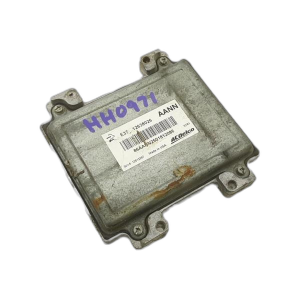
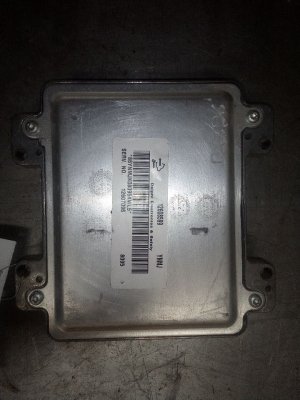
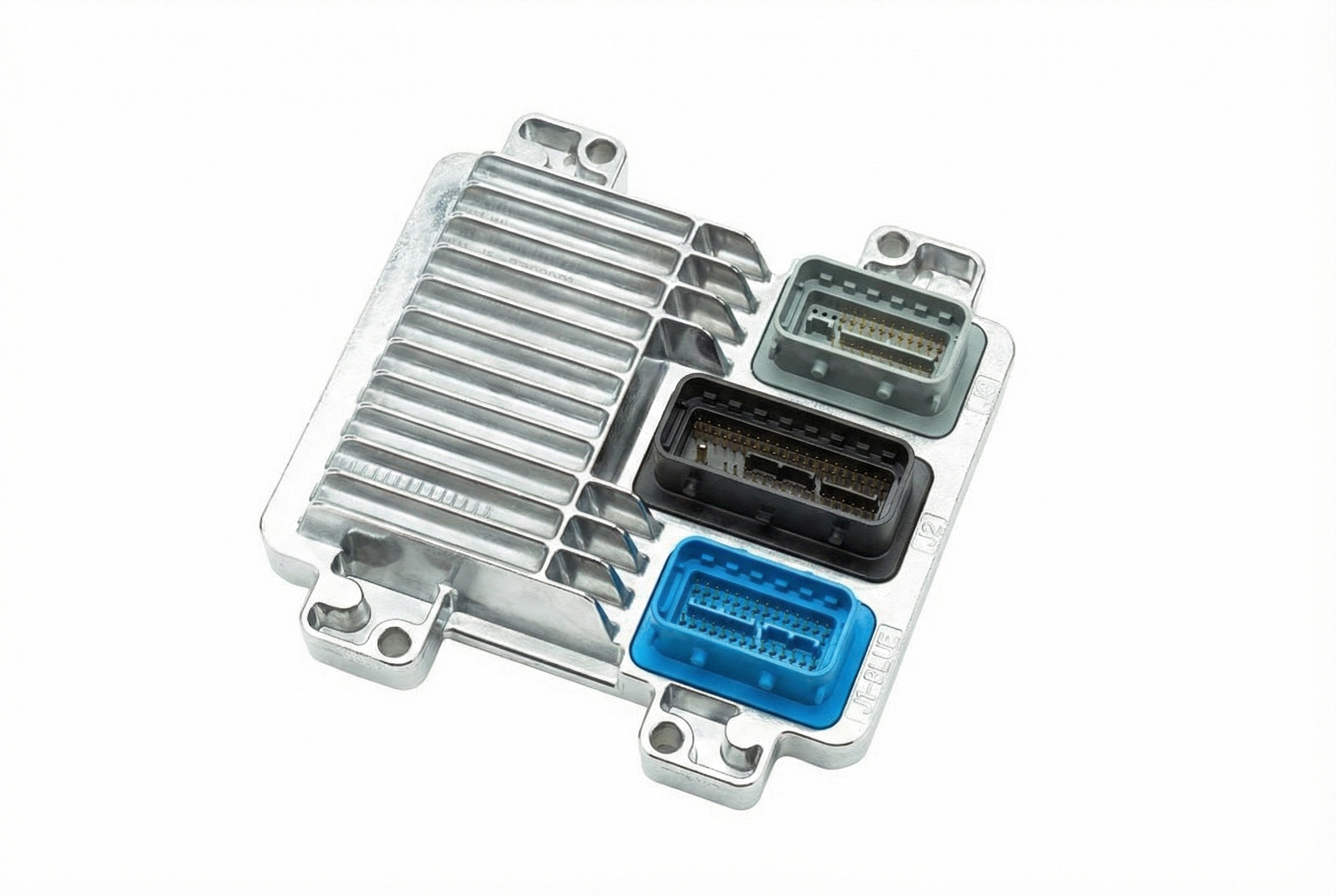
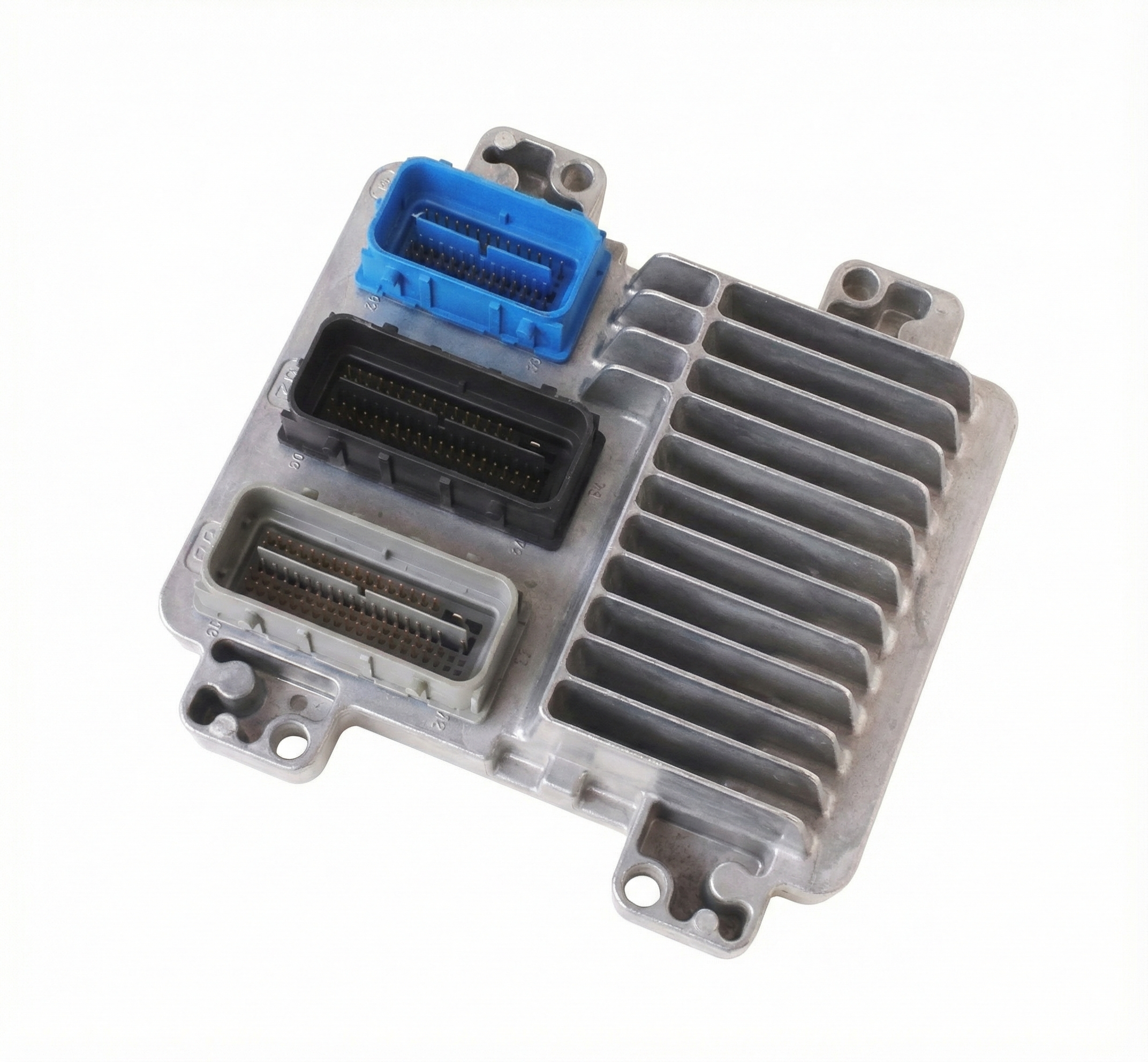
- Engine Control Module (ECM)
(OEM #Varies by year/engine. Examples: 12599714 (2006 2.2L), 12623326 (2008-10 SS, supersedes 12614967).)— This is the ultimate fix if the module has internally failed after all other electrical issues are ruled out.
Trusted brands: ACDelco (OEM), Cardone (Remanufactured), Flashmasters, Solo PCMs
OEM price range: $300-$500
Aftermarket price range: $200-$400 - Battery — A weak or failing battery is a very common trigger for this code and should be the first component tested and replaced if faulty.
Trusted brands: ACDelco, DieHard, Interstate
OEM price range: $180-$250
Aftermarket price range: $150-$220
Related Codes That Often Appear With This One
- P0172 — A Cobalt SS owner reported P0606 along with P0172 (System Too Rich). In that case, it was suspected that modifications and an improper tune were causing both the fuel mixture issue and the processor fault.
- P2101 — A Cobalt SS owner with an LNF engine reported getting P0606 and P2101 (Throttle Actuator Control Motor Circuit Range/Performance) simultaneously, leading to a no-start condition. Forum advice suggested that fixing the P2101 throttle body issue would likely resolve the P0606 as well.
- P0562 / P0563 — A GM TSB notes that low battery voltage (P0562) or high voltage (P0563) can cause the EBCM to log a P0606. While this TSB is for the brake module, it demonstrates the principle that voltage instability is a known cause for this processor fault code across modules.
Technical Service Bulletins (TSBs) & Recalls
- TSB 17-NA-132: Warns that a P0606 code can be set by a faulty camshaft position sensor, and advises checking the sensor before replacing the ECM.
- TSB 20-NA-120: Indicates a software anomaly can cause P0606, fixable with an ECM reprogram instead of replacement.
Platform-Specific Known Issues
- The battery's location in the trunk means the long power cable running the length of the car is a potential point of failure or voltage drop that must be inspected.
- Corrosion of the ground strap on the transmission (G105) is a known issue that can cause a host of electrical gremlins, including P0606.
Mechanic-Grade Diagnostic Values
- ECM Power and Ground Circuit Voltage Drop — expected: Less than 0.5 Volts. Failure: A reading greater than 0.5V indicates excessive resistance in the power or ground wiring to the ECM.
- Ignition Control Module Connector Voltage (2006 2.2L, Key On) — expected: Red Wire (Pin 5): ~12V; White Wire (Pin 4): ~5V; Orange Wire (Bottom Pin 2): ~5V. Failure: Significant deviation from these voltages can indicate wiring or power supply issues upstream of the ignition system, which is tied to the ECM.
- Battery Voltage (Engine Off) — expected: ~12.6 Volts. Failure: A reading below 12.4V indicates a discharged battery. A reading of ~10.5V (a 2.1V drop) strongly suggests an internal dead cell.
Scan Tool Commands That Help
- Tech2 / GDS2 or equivalent professional scan tool: Security System Relearn / Anti-Theft Relearn — Required after installing a new or used ECM to sync it with the vehicle's immobilizer. The car will not start until this procedure is completed.
- Tech2 / GDS2 or equivalent professional scan tool: Crankshaft Position Variation Learn — Often required after ECM replacement to calibrate the new module to the specific crankshaft position sensor. Failure to perform this may result in a persistent check engine light with code P0315 or P1336, even if the car runs.
- Tech2 / GDS2 or equivalent professional scan tool: Clutch Pedal Position Learn — May be required on manual transmission models after replacing the ECM to ensure the module recognizes the clutch pedal's position for starting and cruise control functions.
Wiring & Ground Locations
- G105 — On the transmission housing, sometimes described as behind the cooling fan relays or under the driver's side headlight area.. This is a critical ground point that directly serves the Engine Control Module (ECM) and Transmission Control Module (TCM). Corrosion or looseness here is a very common cause of electrical issues, including P0606.
- G103 — On the cowl panel in the engine compartment, located above the brake booster.. This ground serves multiple interior modules, including the BCM and Instrument Panel Cluster (IPC). A bad ground here can cause widespread communication errors and voltage issues that may indirectly affect the ECM. A ground cable also connects from G105 to G103.
- G101 — On the lower front of the engine block.. This ground point also serves the ECM and TCM, along with the Mass Air Flow sensor. It is another primary ground path that must be clean and tight.
- ECM Power/Ground Pins — At the main connectors of the Engine Control Module.. These specific pins are where voltage drop tests should be performed to confirm the ECM is receiving stable power and has a solid ground connection, ruling out wiring harness issues between the battery/fuse block and the module itself.
Real Owner Repair Stories
- Cobalt SS Network forum user (2006 Chevrolet Cobalt SS Supercharged, 120,000 miles) — Persistent P0606 and P0172 (System Too Rich) codes, preventing state inspection.
❌ Tried (didn't work) The owner took it to a dealer who could not diagnose the issue due to numerous aftermarket parts (injectors, supercharger pulley, etc.).
✅ What actually fixed it The consensus from experienced forum members was that the combination of extensive modifications with an improper or failed aftermarket tune was causing both the processor fault (P0606) and the rich condition (P0172). The fix was to get a new, correct tune for the specific hardware installed. - The Chevrolet Cobalt SS Forum user (2008 Cobalt with LNF engine) — Car would not start or would have a very rough idle, setting codes P0606 and P2101 (Throttle Actuator Control) simultaneously.
❌ Tried (didn't work) Clearing the codes would temporarily fix the problem for about a week before they returned.
✅ What actually fixed it Forum veterans advised that when P0606 appears with another specific component code like P2101, the component is the root cause. A fault in the throttle body circuit was likely feeding back errant data, confusing the ECM. The recommended fix was to diagnose and repair the P2101 throttle body issue, which would in turn resolve the P0606. - Cobalt SS Network forum user (2006 Cobalt LT 2.2L) — No-start condition after removing and reinstalling the ECM to clean the terminals.
❌ Tried (didn't work) Replacing the MAP sensor, cleaning the throttle body, replacing the ECM, replacing the coil module and plug wires.
✅ What actually fixed it The user eventually discovered a bad ground connection for the ignition coil connector at the top of the valve cover. The missing ground prevented the ignition system from functioning, which created the no-start condition that was mistakenly attributed to the ECM.
OEM Part Supersession History
12614967→12623326— Updated service part from GM.
Heads up: The parts are fully interchangeable, but the newer part number (12623326) is the correct updated replacement to order.
Model Year Variations Within This Range
- 2008-2010: Cobalt SS models with the 2.0L LNF turbocharged engine use a different ECM (e.g., part numbers 12614967, 12623326) than the naturally aspirated 2.2L L61 and 2.4L LE5 engines used in other trims and years. Diagnostics and part replacement must account for the specific engine.
- 2005-2006 vs 2007-2010: The base 2.2L Ecotec engine was updated from the L61 to the LAP version starting in 2007 for some models, which may involve slight differences in sensors and ECM software calibrations. Always verify parts by VIN.
Diagnostic Flowchart
Other Known Issues on This Vehicle
Issues unrelated to this code that are worth knowing about as an owner of this generation:
- Electric Power Steering (EPS) Failure 🔴 High — Extremely common, affecting most of the production run. Led to a major safety recall (NHTSA #10V073000). (Ref: Recall 10023D / 10V073000.)
- Faulty Ignition Switch 🔴 High — Widespread and dangerous issue where the key could move out of the 'Run' position, shutting off the engine and airbags. Led to a massive recall (NHTSA #14V047000). (Ref: Recall 14V047000.)
- Premature Timing Chain Tensioner Wear 🟠 Medium — Common on Ecotec engines (2.0L LSJ, 2.2L L61, 2.4L LE5). Often presents as a rattle on cold startup between 60,000-120,000 miles. (Ref: Multiple tensioner design revisions were made, but no single recall covered all vehicles. A known service bulletin addresses the issue.)
- Fuel Line and Fuel Pump Module Leaks 🔴 High → Shop Fuel Pump — Affects certain model years, especially in warmer climates, due to cracking plastic on the fuel pump module or corrosion of fuel lines. Led to recalls. (Ref: Recall 09V419000 / GM Bulletin 09226.)
- Worn Front Lower Control Arm Bushings 🟠 Medium — A frequent wear item, often failing before 100,000 miles, causing clunking noises, poor alignment, and wandering steering. Replacement can be difficult due to seized bolts.
Used vs. New Parts: Buying Guide for This Vehicle
When a used part is the smart pick: A used or professionally remanufactured ECM is a very common and cost-effective solution for this repair, often costing significantly less than a new unit from a dealership. Given the high rate of misdiagnosis, a lower-cost part is a sensible first step after external electrical issues are ruled out.
Donor-vehicle mileage cap: roughly under 150000 miles for the part to have meaningful remaining life.
What to inspect on the donor part:
- Ensure the seller guarantees the unit is in good working order and was tested.
- If possible, confirm with the seller that the donor unit was able to communicate with a scan tool before being removed from the vehicle.
- Check for any physical damage, corrosion, or burnt smells on the casing and connectors.
OEM-only on this vehicle (don't cheap out):
- While the ECM itself can be remanufactured, the software programmed onto it should always be the latest OEM calibration for your vehicle's VIN. Do not use an ECM with a tune from another modified vehicle unless it matches your exact setup.
Aftermarket brands forum-validated for this vehicle:
- Cardone (Remanufactured)
- ACDelco (OEM/Remanufactured)
- Sellers providing VIN programming services like Flashmasters, Flagship One, and Solo PCMs are frequently mentioned in forums.
Brands owners have reported issues with on this vehicle:
- Avoid unknown sellers on auction sites who do not offer VIN-specific programming or a warranty. An ECM from a different year or with the wrong calibration will not work correctly.
Real Owner Stories
Aggregated from forums and TSBs cited above. Mileages and costs reflect what owners reported in those sources.
2006 Chevrolet Cobalt SS
Symptoms: The vehicle was throwing P0606 along with P0172 (System Too Rich). The car had heavy modifications and aftermarket parts.
What fixed it: The issue was attributed to an improper tune for the aftermarket parts rather than a failed PCM.
Source hint: CobaltSS.net - P0606 PCM processor
2008 Chevrolet Cobalt SS Turbo (LNF)
Symptoms: The owner experienced a no-start condition with both P2101 and P0606 codes present.
What fixed it: Fixing the primary code (P2101, related to the throttle body) was identified as the solution to clear the P0606.
Source hint: CobaltSS.net - P2101 and p0606. Help
2006 Saturn Ion 2.2L
Symptoms: A no-start condition accompanied by the P0606 code on this Delta platform vehicle.
What fixed it: Diagnostic path focused on battery and charging system checks before considering PCM replacement.
Source hint: iATN - P0606 on 2006 Saturn Ion 2.2L
Related OBD-II Codes
Frequently Asked Questions
Could a bad camshaft position sensor be causing the P0606 code on my Cobalt?
Does my 2005-2010 Cobalt require a new ECM to fix P0606, or can it be reprogrammed?
Where are the main ground points I should check on my Cobalt to resolve this code?
Why does my Cobalt enter 'Reduced Engine Power' mode when P0606 triggers?
Can a low battery trigger P0606 on a Cobalt even if the ECM is fine?
If I have both P2101 and P0606, which one should I fix first?
Helpful Videos


Used OEM Parts in Stock
New Aftermarket Parts Available


The information in this article is provided for general reference and educational purposes only. Vehicle specifications, procedures, and part compatibility can vary by production date, trim level, and region. Always consult your vehicle's factory service manual and verify part numbers before purchasing or performing repairs. Safety-critical components such as airbags, seat belts, and braking systems should be installed by a qualified professional.
- Chevrolet Cobalt:
- 🧭 Diagnostic Flowchart
- 🎬 Helpful Videos
- 🛍️ Shop This Part
- What's Unique About the 2005-2010 Chevrolet Cobalt
- Symptoms You May Notice
- Most Likely Causes
- Rare But Worth Checking
- Diagnosis Steps
- Parts You'll Likely Need
- Related Codes That Often Appear With This One
- Technical Service Bulletins (TSBs) & Recalls
- Platform-Specific Known Issues
- Mechanic-Grade Diagnostic Values
- Scan Tool Commands That Help
- Wiring & Ground Locations
- Real Owner Repair Stories
- OEM Part Supersession History
- Model Year Variations Within This Range
- Other Known Issues on This Vehicle
- Used vs. New Parts: Buying Guide for This Vehicle
- Real Owner Stories
- 2006 Chevrolet Cobalt SS
- 2008 Chevrolet Cobalt SS Turbo (LNF)
- 2006 Saturn Ion 2.2L
- Related OBD-II Codes
- Frequently Asked Questions
- 🎟️ Get 5% Off