

P0606 on 2006-2009 Chevrolet Impala SS 5.3L: PCM Processor Fault Causes and Fixes
P0606 on a Chevy Impala SS indicates a critical internal failure of the engine computer (PCM). Before replacing the expensive PCM, you must first rule out common issues on this platform like bad grounds, a failing alternator, or a weak battery, as unstable voltage can falsely trigger this code. PCM replacement requires professional programming and costs between $500 and $900.
- P0606 is a critical code. Do not drive the vehicle, as it can stall at any moment.
- Before you buy an expensive new PCM, you MUST test the battery, alternator, and all major engine ground straps. On this Impala, a simple electrical issue is a very common cause of a false P0606.
- The most important ground points to check are G101 on the front of the engine block and G111 on a transmission-to-engine bolt.
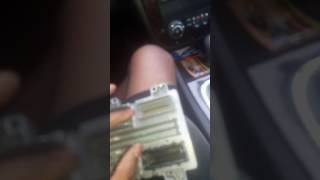
- If the PCM does need to be replaced, it is not a DIY job. The new module requires professional programming to your car's VIN and security system.
What's Unique About the 2006-2013 Chevrolet Impala
The 2006-2009 Impala SS, which features the 5.3L LS4 V8, is particularly sensitive to electrical system health. While P0606 often means the PCM has failed, on this specific GM W-body platform, the code is frequently triggered by external electrical problems. Aging battery cables, corroded engine ground straps, and failing alternators can cause voltage fluctuations that the PCM misinterprets as an internal failure. Therefore, a thorough diagnosis of the charging and grounding systems is essential before condemning the PCM, a common misstep that leads to expensive and unnecessary repairs.
Generation note: The user-provided range of 2006-2013 covers the entire ninth generation of the Chevrolet Impala. However, the specified 5.3L LS4 V8 engine was only available in the Impala SS model from 2006 to 2009. This guide is specific to those 2006-2009 Impala SS models and their direct platform mates.
Symptoms You May Notice
- Check Engine Light is on
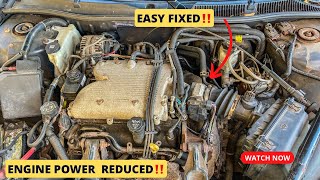
- Vehicle suddenly enters 'Reduced Engine Power' or 'limp mode'
- Engine stalling intermittently or refusing to start
- Rough or erratic idling
- Erratic or harsh automatic transmission shifting
- Inability to clear the code with a scan tool (it returns immediately)
- ABS and Traction Control lights may illuminate simultaneously
- Other bizarre electrical issues, like the key getting stuck in the ignition
- Message center may display 'Starting Disabled Due to Electronic Throttle Control'
- Replacing the throttle body or accelerator pedal assembly because of erratic throttle response, when the issue is the PCM's inability to process their signals correctly.
- Overhauling or replacing the transmission due to harsh shifting, when the PCM is failing to command shifts properly.
Most Likely Causes
- Internal Powertrain Control Module (PCM) Failure 🔴 High Probability → Shop Engine Control Module (ECM) As noted in GM TSB #05-06-04-060A, internal processor faults can occur from age, thermal stress from under-hood temperatures, or voltage spikes over the vehicle's life. In the majority of cases where external factors are ruled out, the PCM's processor or memory has a physical fault.
How to confirm: This is a diagnosis of exclusion. If all power, ground, and charging system tests pass and no other causes are found, the PCM is condemned.
Typical fix: Replace the Powertrain Control Module (PCM) and have it professionally programmed to the vehicle's VIN.
Est. part cost: $250-$600 - Poor PCM Power or Ground Circuits 🟡 Medium Probability Corroded or loose ground straps and power connections are common on aging vehicles and can cause intermittent voltage drops, confusing the PCM's internal self-tests. The PCM requires stable voltage above 5.23V to operate correctly.
How to confirm: Perform a voltage drop test on the PCM's main power and ground wires. Visually inspect all chassis and engine ground connections for corrosion and tightness, especially grounds G101 (behind left headlight) and G111 (transmission-to-engine bolt).
Typical fix: Clean corroded terminals with a wire brush, tighten loose connections, and replace any damaged ground straps or battery cables.
Est. part cost: $10-$50 - Charging System Malfunction 🟡 Medium Probability A failing alternator can produce voltage spikes (>15V) or low, unstable voltage (<13.2V), which can disrupt or permanently damage the PCM's sensitive processor.
How to confirm: With the engine running, use a multimeter to test the voltage at the battery terminals. A healthy alternator should produce a stable voltage between 13.5 and 14.5 volts.
Typical fix: Replace the alternator and ensure all connections are clean and tight.
Est. part cost: $150-$350
Rare But Worth Checking
- Shorted Sensor on 5-Volt Reference Circuit: A sensor that runs on the 5V reference circuit (e.g., MAP, TPS) can short internally and pull the entire circuit's voltage down. This can cause multiple codes, including P0641, and confuse the PCM enough to trigger a P0606. Diagnosing this requires checking the 5V signal at various sensors.
Diagnosis Steps
- Scan for all Diagnostic Trouble Codes (DTCs) in all vehicle modules. Note any other codes, especially other P06xx, U-codes, or sensor codes like P0641.
- Perform a 'hard reset' by disconnecting both battery terminals and touching them together for 60 seconds. This drains all capacitors in the modules and can sometimes clear a temporary glitch. Reconnect and see if the code returns.
- Check the battery. Ensure it is fully charged (approx. 12.6V) and passes a load test. A weak battery is a known cause of this code.
- Test the charging system. With the engine running, verify the alternator provides a stable voltage between 13.5-14.5V.
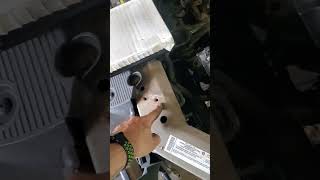
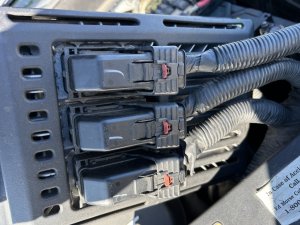
- Perform a thorough visual inspection of the PCM wiring harness and connectors. The PCM is located inside the air cleaner box, 🎬 Watch: How to locate and remove the ECM making it susceptible to damage during air filter service.
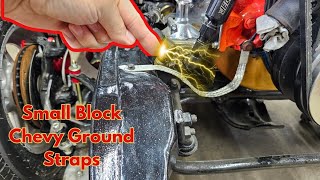
- Inspect and clean all major engine and chassis ground connections, especially G101 (behind left headlight, on frame) and G111 (on the transmission-to-engine bolt, below the starter for the 5.3L). A poor ground is a very common cause of electrical gremlins on this platform.
- Perform a voltage drop test on the PCM's power and ground circuits to confirm their integrity under load. Voltage drop should be less than 0.2V on the power side and 0.1V on the ground side.
- Check for available PCM software updates (reflash). A dealer or qualified shop can check if a software update addresses the issue, though this is unlikely to fix a hardware-related P0606.
- If all external wiring, power, and grounds are confirmed to be good, the PCM has an internal fault and must be replaced.
Parts You'll Likely Need
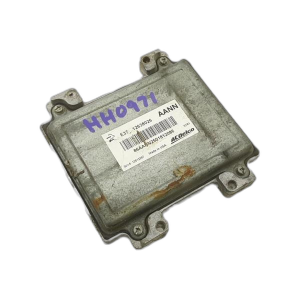
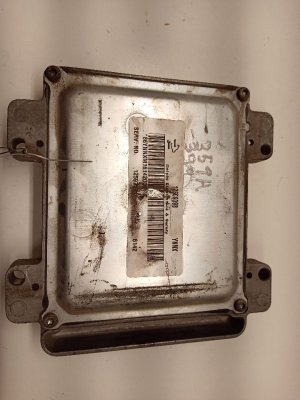
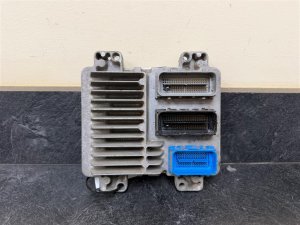
- Engine Control Module (ECM/PCM)
(OEM #12603530 (also 12612384))— This is the most common fix when all external electrical factors have been ruled out. The original module's internal processor has failed.
Trusted brands: ACDelco (OEM), Cardone, FS1
OEM price range: $350-$600
Aftermarket price range: $250-$450 - Engine Ground Strap — The original ground straps can corrode or break, causing unstable voltage that can trigger a false P0606 code. Replacing them is a key diagnostic step before condemning the ECM.
Trusted brands: ACDelco, Dorman
OEM price range: $20-$40
Aftermarket price range: $10-$25
Related Codes That Often Appear With This One
- P0601, P0602, P0604 — These are all internal control module memory or processor error codes. Their presence strongly reinforces the diagnosis of a failed PCM.
- U0100 — This code means 'Lost Communication With ECM/PCM'. It often appears when the PCM is failing and can no longer communicate effectively with other modules on the vehicle's network (CAN bus).
- C0240 — Stands for 'PCM Traction Control Not Allowed'. This code is often set alongside P0606 on W-body platforms, indicating the PCM has disabled the traction/stability system because it cannot trust its own calculations.
Technical Service Bulletins (TSBs) & Recalls
- TSB #05-06-04-060A: This is a general informational bulletin for technicians. It states that several control modules across the GM lineup can set internal fault codes (P0601, P0606, etc.) and advises technicians to follow proper diagnostics before replacing a module. It confirms PCM failure is a recognized issue but does not provide a specific fix.
Platform-Specific Known Issues
- The ECM on this platform is located inside the air cleaner housing, which can make it susceptible to physical damage or connector issues if care is not taken during air filter changes.
- A known NHTSA complaint (ODI #10470380) for a 2007 Impala describes classic P0606 symptoms: sudden low-power mode and bizarre electrical problems, highlighting the real-world impact of this failure.
Mechanic-Grade Diagnostic Values
- Battery Voltage (Static, Key Off) — expected: 12.4V - 12.6V. Failure: Below 12.4V. If the voltage drop from 12.6V is a multiple of 2.1V, it suggests a dead cell.
- Charging System Voltage (Engine Running) — expected: 13.5V - 14.5V. Failure: Voltage is unstable, below 13.5V, or spiking above 14.5V.
- PCM Battery Positive Voltage — expected: Should match battery voltage (B+). Failure: Voltage is significantly lower than battery voltage, indicating a wiring issue.
- Scan Tool Live Data: GM.VOLTS vs SAE.VPWR — expected: Both parameters should show stable battery voltage and be within 0.1V of each other.. Failure: A significant discrepancy between the two readings or low voltage on both can indicate a power supply or ground issue to the PCM.
Scan Tool Commands That Help
- GM Tech 2 / GDS2: Crankshaft Position (CKP) Variation Learn — This procedure is required after replacing the PCM. Failure to perform it will typically set a P0315 code and leave the Check Engine Light on, even if the P0606 is resolved.
- GM Tech 2 / GDS2: VIN Relearn / Programming — This is mandatory when installing a new or used PCM. The tool is used to write the vehicle's VIN into the replacement module, allowing it to communicate with other modules on the CAN bus.
- GM Tech 2 / GDS2: Theft Deterrent Relearn — Required after PCM replacement to sync the new module with the vehicle's anti-theft system (Pass-Key). Without this, the vehicle will not start. A manual 30-minute procedure is also possible.
Wiring & Ground Locations
- G111 (for 5.3L LS4) — On the transmission-to-engine bolt, located *below* the starter motor.. This is a primary engine-to-chassis ground. Corrosion or looseness here is a very common cause of intermittent and low voltage conditions that can trigger a false P0606.
- G101 — Behind the left (driver's side) headlight, on the frame rail.. Another critical chassis ground point. Its location makes it susceptible to corrosion from road spray.
- G102 — Near the battery, typically on the right strut tower.. This is the main battery ground connection to the chassis. Any issue here affects the entire vehicle's electrical system.
- PCM Connector C1 (Blue/Green) - Grounds — Pins 1 and 40 (BLK/WHT wires) on the PCM connector are grounds.. These are the direct ground paths for the PCM itself. A voltage drop test should be performed directly at these pins to rule out a wiring fault between the PCM and the main chassis grounds.
- PCM Connector C1 (Blue/Green) - Power — Pins 20 and 57 (often RD/WH wires) are constant battery positive voltage. Pin 19 (often PNK wire) is ignition voltage (key-on power).. These pins supply the necessary operating voltage to the PCM. Verifying stable battery voltage at these specific pins is a crucial step before condemning the module.
Real Owner Repair Stories
- Reddit user on r/wrx_vb (Subaru WRX (different vehicle, but illustrates an edge case)) — P0606 code would set during hard acceleration, putting the car into limp mode.
❌ Tried (didn't work) Initial diagnosis pointed towards a bad ECU or a bad tune.
✅ What actually fixed it The aftermarket exhaust system was vibrating and physically touching the chassis during high engine load. This created a static discharge or electrical noise through the chassis ground, which the ECU misinterpreted as an internal processor fault. Re-seating the exhaust to create clearance solved the problem permanently.
OEM Part Supersession History
12603530→12612384, 19210737, 12630457— Standard component revisions by the manufacturer for reliability or component changes.
Heads up: Part number 12603530 is a widely used PCM (service number) across many GM platforms from 2006-2010, including the Impala, Malibu, G6, and Trailblazer. While physically interchangeable, the correct software and calibration must be flashed for the specific vehicle and VIN.12605843→19210736, 12611973— This is a hardware number that may have multiple compatible service numbers.
Heads up: For a 2007 Impala SS, a PCM with hardware number 12605843 can be replaced by service number 19210736. The critical factor is not the part number itself, but that the replacement is programmed with the correct VIN and software for the 5.3L LS4 engine.
Diagnostic Flowchart
Other Known Issues on This Vehicle
Issues unrelated to this code that are worth knowing about as an owner of this generation:
- Active Fuel Management (AFM/DoD) Lifter Failure 🔴 High — Common, especially on engines over 75,000 miles. Often presents as a persistent ticking or chirping noise, followed by a misfire code (typically on cylinders 1, 4, 6, or 7). (Ref: Multiple TSBs exist, including PIP4568S and 19-NA-219, addressing diagnosis and repair.)
- 4T65E-HD Transmission Failure 🔴 High → Shop Transmission Assembly — Very common. The transmission is considered a weak point, often failing between 60,000 and 100,000 miles due to the V8's torque. Symptoms include harsh shifting, torque converter shudder, slipping, or complete loss of movement.
- Intermediate Steering Shaft Clunk 🟡 Low — Extremely common across the W-body platform. A clunking or popping noise is heard and felt through the steering wheel, especially at low speeds. It is an annoyance but not typically a safety failure. (Ref: TSB #00-02-35-003N (and subsequent revisions) details the diagnosis and replacement of the intermediate steering shaft.)
- High Oil Consumption 🟠 Medium — Many LS4 owners report consuming oil between changes. A stuck AFM pressure relief valve in the oil pan can cause excessive oil spray, leading to carbon buildup and fouled plugs. (Ref: TSB #11-06-01-007 addresses the stuck oil pressure relief valve.)
Used vs. New Parts: Buying Guide for This Vehicle
When a used part is the smart pick: A used PCM is a very common and cost-effective repair for this vehicle, provided it is purchased from a reputable vendor who pre-programs it to your vehicle's VIN before shipping. This avoids the high cost of a new OEM module and the need for expensive dealer programming tools.
Donor-vehicle mileage cap: roughly under 150000 miles for the part to have meaningful remaining life.
What to inspect on the donor part:
- Ensure the seller guarantees the part is from a running, driving vehicle.
- Verify the seller offers VIN programming as part of the sale. Do not buy a 'blank' used module.
- Check that the seller provides instructions for the 30-minute security relearn procedure, which you will need to perform after installation.
- Look for a warranty (many reputable sellers offer a 1-year warranty on programmed used modules).
OEM-only on this vehicle (don't cheap out):
- For this specific repair, a used OEM (ACDelco) module that has been reprogrammed is often the best balance of cost and reliability. There is no strong reason to insist on a brand-new unit if a properly programmed used one is available.
Aftermarket brands forum-validated for this vehicle:
- Flashmasters
- FS1 (Flagship One)
- Garrett Tuning
Brands owners have reported issues with on this vehicle:
- Unknown eBay or Amazon sellers who do not offer VIN programming and a warranty.
Real Owner Stories
Aggregated from forums and TSBs cited above. Mileages and costs reflect what owners reported in those sources.
2006 Pontiac Grand Prix GXP 5.3L LS4 V8
Symptoms: Random 'Reduced Engine Power' on startup accompanied by P0606 and C0240 codes, and 'Service Stability System' messages.
What fixed it: Replacing the PCM with a used, pre-flashed unit from eBay and performing the security and crank relearn procedures.
Cost: $200-$200
Source hint: impalaforums.com - Thread Title: '06 Grand Prix GXP - Service Stability System - Reduced Engine Power - P0606 C0240'
2007 Chevrolet Impala
Symptoms: Sudden low-power mode and bizarre electrical problems.
What fixed it: Internal Powertrain Control Module (PCM) replacement (implied by P0606 diagnosis of exclusion).
Source hint: NHTSA complaint (ODI #10470380)
Related OBD-II Codes
Frequently Asked Questions
Does GM TSB #05-06-04-060A provide a specific fix for the P0606 code on my Impala?
Why did my Impala display 'Starting Disabled Due to Electronic Throttle Control' along with the P0606 code?
Can a bad ground at G101 or G111 cause a P0606 on the 5.3L LS4 engine?
Is it true that changing my air filter could have caused this PCM code?
My 2007 Impala suddenly lost power and the ABS/Traction Control lights came on; is this related to P0606?
Can I use a used PCM from a salvage yard to fix this code?
Helpful Videos
We Have This Part in Stock

The information in this article is provided for general reference and educational purposes only. Vehicle specifications, procedures, and part compatibility can vary by production date, trim level, and region. Always consult your vehicle's factory service manual and verify part numbers before purchasing or performing repairs. Safety-critical components such as airbags, seat belts, and braking systems should be installed by a qualified professional.
- Chevrolet Impala:
- 🧭 Diagnostic Flowchart
- 🎬 Helpful Videos
- 🛍️ Shop This Part
- What's Unique About the 2006-2013 Chevrolet Impala
- Symptoms You May Notice
- Most Likely Causes
- Rare But Worth Checking
- Diagnosis Steps
- Parts You'll Likely Need
- Related Codes That Often Appear With This One
- Technical Service Bulletins (TSBs) & Recalls
- Platform-Specific Known Issues
- Mechanic-Grade Diagnostic Values
- Scan Tool Commands That Help
- Wiring & Ground Locations
- Real Owner Repair Stories
- OEM Part Supersession History
- Other Known Issues on This Vehicle
- Used vs. New Parts: Buying Guide for This Vehicle
- Real Owner Stories
- 2006 Pontiac Grand Prix GXP 5.3L LS4 V8
- 2007 Chevrolet Impala
- Related OBD-II Codes
- Frequently Asked Questions
- 🎟️ Get 5% Off