

P0606 on 2015-2018 Chevrolet Malibu: ECM Processor Fault Causes and Fixes
P0606 on a 2015-2018 Malibu indicates a serious internal fault in the Engine Control Module (ECM). This often leads to a no-start or stalling condition. While the ECM itself is the most common cause, always check battery, grounds, and wiring first, as these are known weak points. ECM replacement is a non-DIY job requiring professional programming and is often the ultimate fix after external factors are eliminated.
- P0606 is a critical fault code on your Malibu, indicating the main engine computer has failed its self-test.
- Do not drive the vehicle. The risk of stalling in traffic is high.
- The most common cause is a failed Engine Control Module (ECM), as documented in multiple GM service bulletins.
- Before replacing the expensive ECM, you or your mechanic MUST test the battery and verify all power and ground connections to the ECM are clean and tight.
- ECM replacement is not a DIY job; it requires professional programming to sync with your car's VIN and security systems.
What's Unique About the 2015-2018 Chevrolet MALIBU
For this generation of Malibu, which spans the Epsilon II and E2XX platforms, Chevrolet has issued several Technical Service Bulletins (TSBs) directly addressing P0606. Specifically, TSB #PIP5530 points to internal issues with the E88 ECM in 2018 models, which can cause this code along with a no-start condition. Another bulletin, #PIP5609, advises technicians to thoroughly inspect the ECM's electrical connections, powers, and grounds before condemning the module, indicating that wiring issues can mimic ECM failure on this platform. This is crucial as poor grounds are a common GM issue that can incorrectly trigger a P0606.
Diagnostic Flowchart
Tap your situation to follow the diagnostic path that matches what you're seeing on this vehicle.
Generation note: The 2015-2018 year range covers the end of the 8th generation (2013-2015, on the Epsilon II platform) and the beginning of the 9th generation (2016-2024, on the E2XX platform). The provided TSBs cover vehicles in both generations, suggesting the P0606 fault and its causes are common across this transitional period. The 2018 models with the 1.5L Turbo engine, in particular, were subject to a recall for an ECM software error that could disable the fuel injectors and cause a stall.
Symptoms You May Notice
- Engine will not crank or start.
- Check Engine Light is on.
- Engine stalls intermittently or while driving.
- Vehicle cranks but does not start.
- Reduced engine power or "Limp Mode".
- Problems with automatic transmission shifting, such as hard or erratic shifts.
- Unstable or rough idle.
- Decreased fuel economy.
- Replacing the ECM without first thoroughly checking all power and ground circuits. TSB #PIP5609 explicitly warns against this, and corroded grounds are a very common GM issue.
- Replacing other components like transmission modules or fuel pumps when drivability issues occur, without realizing the root cause is the master computer (ECM).
- Replacing the ECM when the actual cause is a faulty camshaft position sensor circuit, as warned in TSB #17-NA-132.
Most Likely Causes
- Internal Engine Control Module (ECM) Failure 🔴 High Probability → Shop Engine Control Module (ECM) Manufacturer TSBs #PIP5530 and #20NA144 directly acknowledge internal ECM issues causing P0606 on these vehicles. Service Update 18017 for 2018 models also called for replacing the E88 ECM for a no-start condition. This is often considered a 'death code' for the ECM after all other possibilities are ruled out.
How to confirm: After confirming all power/ground circuits and external wiring are intact, the diagnosis points to the ECM. This is typically confirmed by a dealership or qualified shop with advanced diagnostic tools that can attempt to communicate with the module. A failure to communicate or the persistence of the code after clearing points to internal failure.
Typical fix: Replace the Engine Control Module and program it to the vehicle.
Est. part cost: $300-$800 - Poor ECM Power or Ground Connections 🟡 Medium Probability TSB #PIP5609 specifically instructs technicians to inspect the ECM's electrical connections, powers, and grounds before replacement, suggesting this is a known failure point. GM vehicles are generally known for issues with ground straps, which can corrode or break, causing unstable voltage that confuses the ECM.
How to confirm: Visually inspect the ECM connectors for corrosion or damage. Use a multimeter to perform a voltage drop test on all power and ground wires going to the ECM to ensure they are within specification. Locate and inspect the main engine-to-chassis ground straps; they are often braided and can be found bolted to the engine block/head and the firewall or frame.
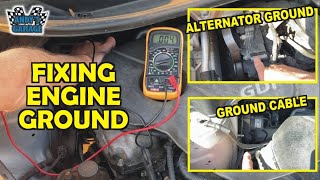
Typical fix: Clean or repair the ECM connectors and grounding points. This involves unbolting the ground straps, cleaning the contact surfaces to bare metal 🎬 Watch: How to find and fix engine ground issues., and re-securing them.
Est. part cost: $10-$100 - Corrupted or Outdated ECM Software ⚪ Low Probability A recall (N192221960) was issued for 2018 Malibus with the 1.5L turbo engine due to an ECM software error that could disable fuel injectors. While this may not always set P0606, it shows the platform is susceptible to software-related ECM issues that can be resolved with a re-flash.
How to confirm: A dealership or a shop with a subscription to GM's service information system (TIS2Web/SPS2) can check if the vehicle's software calibration is the latest version available.
Typical fix: Reprogram (re-flash) the ECM with the latest manufacturer software.
Est. part cost: $0 (if under recall) - $200
Rare But Worth Checking
- Faulty Camshaft Position Sensor Circuit: → Shop Engine Camshaft Position Sensor While not specific to the Malibu in the provided documents, GM has issued TSB #17-NA-132 for other vehicles, warning that a faulty camshaft position sensor circuit can incorrectly trigger a P0606 code *instead* of a specific cam sensor code. The logic error occurs during cranking; the ECM sees an impossible signal, aborts the start, and sets P0606 before it can log the true cam sensor fault. This is a critical misdiagnosis to avoid.
- Failing Alternator or Weak Battery: → Shop Vehicle Battery Unstable voltage from a failing alternator or a weak battery can cause control modules to set internal processor faults. If the battery voltage drops too low during cranking, it can trigger a P0606. Always test the battery (state of charge and health) and charging system (alternator output should be 13.5-14.5V when running) before diagnosing the ECM.
Diagnosis Steps
- Check for other DTCs that may point to a specific circuit (e.g., sensor or communication codes). A shorted sensor can sometimes cause the ECM to act erratically.
- Perform a complete battery and charging system test. Ensure battery voltage is stable and within the correct range (typically 12.4-12.6V with engine off, 13.7-14.7V with engine running).
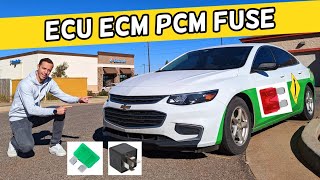
- Carefully inspect the ECM wiring harness 🎬 Watch: Where to find the ECM fuses on your Malibu. and connectors for any signs of damage, corrosion, or loose pins.
- Following the advice of TSB #PIP5609, locate, remove, clean, and re-secure all major ECM and engine ground straps. These are typically braided straps from the engine block/head to the firewall and chassis.
- Test the ECM's main power and ground circuits using a multimeter to check for voltage drops. Ensure all grounds are clean and tight.
- If a crank-no-start condition exists, investigate the camshaft position sensor and its circuit for opens or shorts, per TSB #17-NA-132, before condemning the ECM.
- Check for any available software updates for the ECM. A dealer or qualified shop can perform this check using GM's service software.
- If all external wiring, powers, grounds, and software are confirmed to be good, the ECM itself is highly likely to be faulty and requires replacement.
Parts You'll Likely Need
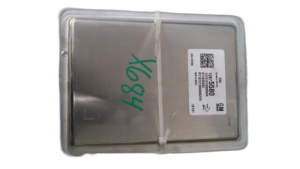
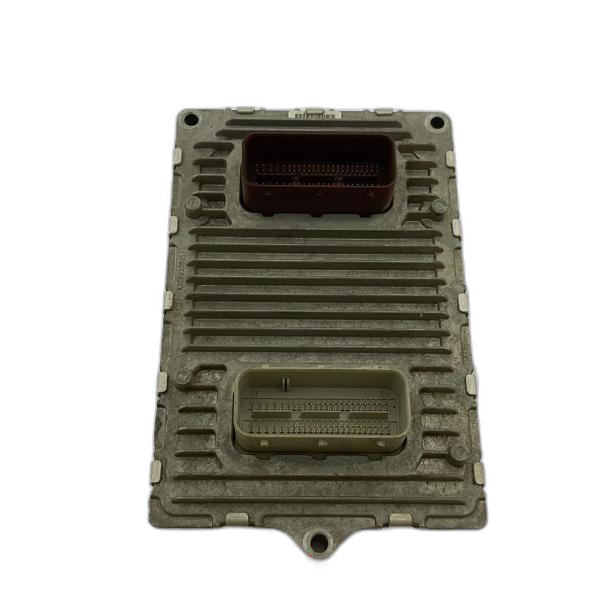
- Engine Control Module (ECM)
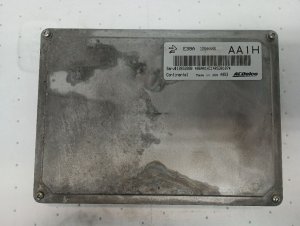
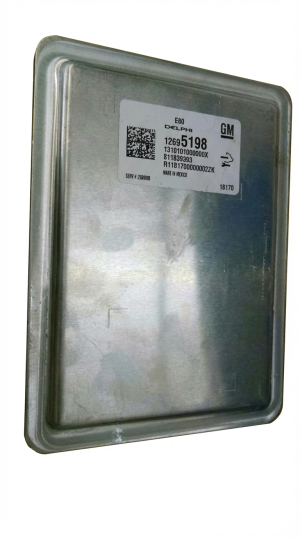
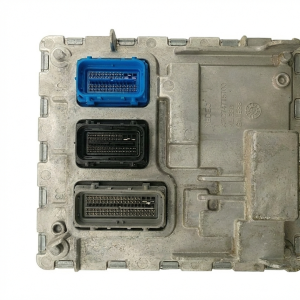
(OEM #12691559)— This is the most common cause of a P0606 code, as confirmed by multiple TSBs. The module's internal processor fails. Part number 12691559 is specifically mentioned for 2018 models in Service Update 18017 and is listed as an E88 type ECM. This part number has been superseded by 12719250.
Trusted brands: ACDelco (OEM)
OEM price range: $400-$800
Aftermarket price range: $250-$500 (Remanufactured) - Engine Ground Strap — Corroded or broken ground straps are a frequent cause of intermittent and difficult-to-diagnose electrical problems on GM vehicles, including a false P0606 code. Replacing them is a common and relatively inexpensive diagnostic step.
Trusted brands: ACDelco, Dorman
OEM price range: $20-$50
Aftermarket price range: $10-$30
Related Codes That Often Appear With This One
- P0601, P0602, P0603, P0604 — These are all internal control module memory or processor error codes. TSB #05-06-04-060A and #PIP5609 group them with P0606, indicating they relate to similar ECM faults.
Technical Service Bulletins (TSBs) & Recalls
- PIP5530: Communicates a possible internal E88 ECM issue causing P0606 and no-start.
- 20NA144: Provides repair info for P0606 causing a Check Engine Light.
- 05-06-04-060A: General information bulletin covering a group of internal control module error codes.
- PIP5609: Advises checking ECM connections, powers, and grounds before replacement.
- 17-NA-132: Warns that a faulty camshaft position sensor circuit can incorrectly set a P0606.
Platform-Specific Known Issues
- TSB #PIP5530: Notes the possibility of an internal E88 ECM issue on 2018 models that can cause P0606 and a crank/no-start condition.
- TSB #20NA144: Provides repair information for a Check Engine Light caused by DTC P0606 in the ECM on 2016 models.
- TSB #PIP5609: Warns that on 2016 models, codes like P0606 can be set and advises checking the ECM's electrical connections, powers, and grounds before replacement.
- Recall N192221960: Affects some 2018 Malibu models with the 1.5L turbo engine, where an ECM software error could disable the fuel injectors, potentially causing a stall. The fix is a software reprogram.
Mechanic-Grade Diagnostic Values
- Charging System Voltage — expected: 13.5V - 14.5V (with engine running). Failure: Voltage below 13.5V or above 14.5V indicates a potential alternator or charging system issue that can cause module errors.
- ECM Ground Circuit Voltage Drop — expected: Below 0.3V. Failure: Voltage significantly higher than 0.3V indicates a poor ground connection, which can cause the ECM to malfunction.
Scan Tool Commands That Help
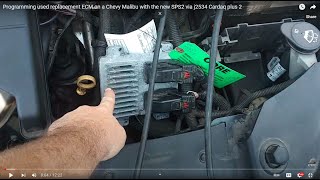
- GM GDS2 / Techline Connect (SPS2): Replace and Program — This function is required when installing a new or used ECM. It flashes the module with the correct VIN and vehicle calibration files.
- GM GDS2 / Techline Connect (SPS2): Vehicle Theft Deterrent Learn — This security relearn procedure is mandatory after replacing the ECM to allow the engine to start. It syncs the new ECM with the vehicle's immobilizer system and keys, typically involving a 12-minute wait.
Wiring & Ground Locations
- Battery — In the trunk, under the floor covering and behind a series of plastic covers and brackets. Not in the engine bay.. Technicians must know the battery is in the trunk to perform basic voltage and connection checks, which are the first step in diagnosing any module fault code like P0606.
- G103 — At the left rear of the engine compartment on the cowl, above the brake booster.. This is a major ground point that serves the Body Control Module (BCM), Instrument Panel Cluster (IPC), and the Data Link Connector (DLC), all of which communicate with the ECM. A fault here can cause widespread communication issues.
- G105 — At the left front of the engine compartment, often behind the cooling fan relays.. While primarily for lighting and fans, poor grounds in this area can introduce electrical noise that may affect sensitive modules.
- Body Control Module (BCM) — On the passenger side, on the floor underneath the dash, to the right of the center console. Requires pulling back the carpet to access.. The BCM is a central communication hub. If diagnosing a P0606 with other BCM-related codes, checking its connections and ground (G103) is critical.
- Exhaust Camshaft Position Sensor (1.5L Engine) — On top of the valve cover, nearest to the exhaust manifold.. A fault in this sensor's circuit can erroneously trigger a P0606 code. Knowing its location is essential for diagnosis per TSB #17-NA-132.
"I Checked Everything" — The Actual Cause
- A known pattern for GM vehicles where standard diagnostic tests may not find the root cause is a faulty camshaft position sensor circuit triggering P0606. Technicians may check all powers, grounds, and communication lines to the ECM and find no issues, leading them to condemn the expensive ECM. However, the actual cause is an open or short in the cam sensor circuit that the ECM misinterprets as an internal processor fault during engine cranking.
OEM Part Supersession History
12691559 (for 2018 1.5L), and others like 12680194, 12693292, 12696017→12719250— Likely hardware and software revisions to improve reliability and resolve issues that caused premature failure and codes like P0606.
Heads up: No incompatibility is noted. The latest part number, 12719250, is the correct service replacement for a long list of prior part numbers used in this vehicle range.
Model Year Variations Within This Range
- 2018 (1.5L LFV Engine): These models are specifically highlighted in Service Update 18017 for a condition where the E88 ECM can fail, causing a no-start and P0606. The original fix was to replace the ECM (P/N 12691559).
- 2015 vs 2016-2018: The 2015 model (8th Gen) and 2016-2018 models (9th Gen) use different ECMs depending on the engine. For example, a 2015 2.0L may use P/N 12666132, while a 2018 1.5L used P/N 12691559. Always verify the part number by VIN, as they are not interchangeable across generations or engine types without consulting the parts catalog.
Helpful Videos

We Have This Part in Stock

The information in this article is provided for general reference and educational purposes only. Vehicle specifications, procedures, and part compatibility can vary by production date, trim level, and region. Always consult your vehicle's factory service manual and verify part numbers before purchasing or performing repairs. Safety-critical components such as airbags, seat belts, and braking systems should be installed by a qualified professional.
- Chevrolet MALIBU:
- 🧭 Diagnostic Flowchart
- 🎬 Helpful Videos
- 🛍️ Shop This Part
- What's Unique About the 2015-2018 Chevrolet MALIBU
- Symptoms You May Notice
- Most Likely Causes
- Rare But Worth Checking
- Diagnosis Steps
- Parts You'll Likely Need
- Related Codes That Often Appear With This One
- Technical Service Bulletins (TSBs) & Recalls
- Platform-Specific Known Issues
- Mechanic-Grade Diagnostic Values
- Scan Tool Commands That Help
- Wiring & Ground Locations
- "I Checked Everything" — The Actual Cause
- OEM Part Supersession History
- Model Year Variations Within This Range
- 🎟️ Get 5% Off