

P0606 on 2007-2014 Chevrolet Suburban: PCM Failure Causes and Fixes
P0606 indicates a fatal internal error in the engine's main computer (PCM). However, on 2007-2014 Suburbans, before replacing the expensive PCM, thoroughly inspect all battery cables and ground connections. Faulty grounds and low voltage are a known issue on this platform and can mimic PCM failure, causing this code.
- P0606 is a critical code indicating a PCM processor fault, but on 2007-2014 Suburbans, it is frequently caused by simple electrical issues like bad grounds or failing battery cables.
- Before condemning the expensive PCM, a thorough inspection and testing of the battery, alternator, and all major power/ground cables is essential and often solves the problem.
- Replacement of the PCM is a last resort and requires professional programming to the vehicle's VIN and security system.
What's Unique About the 2007-2014 Chevrolet SUBURBAN
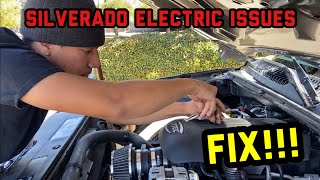
The 2007-2014 Suburban and its sibling GM trucks (Tahoe, Silverado, Yukon) on the GMT900 platform are known for developing electrical issues over time, often stemming from corroded or loose ground wires 🎬 Watch: How to fix common GM truck electrical and ground issues. and battery cables. While P0606 officially points to the PCM, owners on forums frequently report that chasing down and cleaning grounds or replacing the main battery cables resolves a host of electrical gremlins, including messages like 'Reduced Engine Power' that often accompany a P0606 code. Low voltage during cranking is a particularly common trigger for a false P0606 on these trucks. This makes a thorough electrical system check more critical on this platform than on others before condemning the PCM.
Diagnostic Flowchart
Tap your situation to follow the diagnostic path that matches what you're seeing on this vehicle.
Symptoms You May Notice
- Engine suddenly stalls or will not start
- "Reduced Engine Power" message displayed on the dashboard
- Check Engine Light is on
- ABS or other warning lights may illuminate
- Erratic or harsh automatic transmission shifting
- Engine misfires or runs rough
- Complete failure to crank, with only a clicking sound
- Dashboard lights flashing, radio acting erratically
- Replacing the PCM without first performing a thorough voltage drop test and visual inspection of all main power and ground cables. Many owners fix this code by simply cleaning grounds or replacing a corroded battery cable.
Most Likely Causes
- Faulty Powertrain Control Module (PCM) 🔴 High Probability → Shop Engine Control Module (ECM) On many GM trucks of this era, P0606 is often a terminal code for the ECM/PCM, indicating internal hardware failure after all external factors are eliminated.
How to confirm: After exhaustively ruling out all other possibilities (power, ground, wiring, sensors), the PCM is diagnosed by exclusion. A professional may use advanced scan tools to attempt communication; failure to communicate or reflash points to a bad PCM. Sometimes a burnt smell can be detected near the module.
Typical fix: Replace the PCM and have it programmed by a dealer or qualified shop with the correct software for the vehicle's VIN.
Est. part cost: $300-$800 - Poor or Corroded Battery Cables and Ground Straps 🟡 Medium Probability → Shop Engine Ground Strap The GMT900 platform is known for electrical issues caused by failing grounds and battery cables, which can cause voltage drops or spikes that the PCM interprets as an internal fault. Corrosion can build up inside the cable sheathing where it isn't visible.
How to confirm: Visually inspect the main positive and negative battery cables for swelling, corrosion, or damage. Locate and inspect the main engine-to-chassis and battery-to-chassis ground straps for corrosion and tightness. Perform a voltage drop test on the ground side and power feeds to the PCM to check for high resistance.
Typical fix: Clean all ground connection points 🎬 See this guide on finding and fixing bad ground wires. to bare metal. Replace the positive and negative battery cables if they show signs of internal corrosion or high resistance.
Est. part cost: $50-$200 - Unstable Voltage from a Failing Alternator ⚪ Low Probability
How to confirm: With the engine running, use a multimeter to test the voltage at the battery terminals. A healthy alternator should produce a steady voltage, typically between 13.5 and 14.5 volts. Readings that are too high, too low, or fluctuating wildly indicate a problem with the alternator or voltage regulator.
Typical fix: Replace the alternator and ensure the battery is fully charged.
Est. part cost: $200-$450
Rare But Worth Checking
- Shorted Sensor or Actuator: A sensor on the 5-volt reference circuit can short out, pulling down the voltage and causing the PCM to incorrectly flag an internal error. Unplugging sensors one by one may help isolate the issue.
- Damaged Wiring Harness: Physical damage to the wiring harness leading to the PCM from chafing, heat, or rodents can cause shorts that trigger a P0606 code.
- Aftermarket Tuning/Programming Issues: Improperly applied aftermarket tunes or programming can sometimes cause conflicts within the PCM's processor, leading to a P0606 code. This has been noted in forums after performance modifications like DOD/AFM deletes.
Diagnosis Steps
- Scan for all DTCs. Note any other codes, especially communication (U-codes) or circuit codes. Other codes can help point to an external cause, like a shorted sensor.
- Check the battery. Ensure it is fully charged (12.4-12.6V with engine off) and passes a load test. A weak battery causing a voltage drop during cranking is a common trigger.
- Test the alternator. With the engine running, verify the charging voltage is stable and within the 13.5-14.5V range.
- Crucial Step for Suburban: Inspect all main power and ground connections. Remove, clean, and secure the battery terminals, the main engine ground strap (often on the front of the engine block), and the chassis ground points. Inspect the full length of the positive and negative battery cables for corrosion or swelling, as corrosion can hide inside the insulation.
- Perform a voltage drop test on the PCM's power and ground circuits to confirm it's receiving stable voltage equal to battery voltage.
- Inspect the PCM connectors and nearby wiring harness for any signs of corrosion, moisture intrusion, or physical damage.
- If external wiring, power, and grounds are confirmed to be perfect, the PCM is very likely faulty. Attempting a software reflash with an OEM tool is a final diagnostic step before replacement.
- If the reflash fails or the code returns immediately, replace the PCM. This must be followed by programming it to the vehicle's VIN and performing a security relearn procedure. 🎬 Watch a full Suburban PCM swap, programming, and test drive.
Parts You'll Likely Need
- Powertrain Control Module (PCM/ECM)
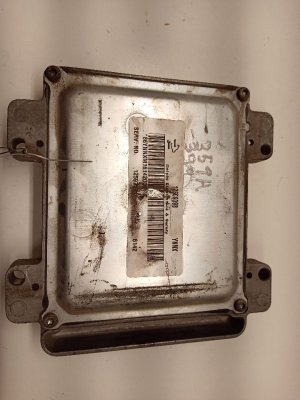
(OEM #12633238 (ACDelco E38, common for 2010-2014 with 5.3L/6.0L/6.2L, check specific VIN))— This is the most common direct cause of a true P0606 code after all external factors are ruled out.
Trusted brands: ACDelco (OEM), Cardone (Remanufactured)
OEM price range: $400-$800
Aftermarket price range: $140-$600 - Battery Cables (Positive and Negative)
(OEM #22846469 (Negative, for 6.0L 3/4 ton), 22846471 (Negative, for 5.3L 1/2 ton))— Corrosion in the cables can cause voltage issues that mimic PCM failure on this specific vehicle platform.
Trusted brands: ACDelco, Standard Motor Products, Duralast
OEM price range: $100-$200
Aftermarket price range: $50-$150
Related Codes That Often Appear With This One
- U0100 — Lost Communication With ECM/PCM. This code often appears with P0606 because if the PCM is failing internally, it cannot communicate properly with other modules on the vehicle's network.
- P2101 — Throttle Actuator Control Motor Circuit Range/Performance. Electrical issues that trigger P0606 can also affect the throttle body, causing related codes.
Technical Service Bulletins (TSBs) & Recalls
- Bulletin #05-06-04-060A: An informational bulletin from GM regarding several control module DTCs, including P0606, noting they can be shared across multiple modules, which highlights the diagnostic complexity.
- Bulletin #PIP4450 (Multiple versions): Discusses intermittent no-start, stalling, and various electrical DTCs, sometimes pointing towards checking grounds and PCM connections, which is relevant to P0606 diagnosis.
- Bulletin #10-06-01-008 series (e.g., 10-06-01-008F, 10-06-01-008K): While for oil consumption issues related to Active Fuel Management (AFM), this TSB is highly relevant to the platform, detailing engine-out repairs and piston/ring replacement, showing the complexity of the engines managed by the PCM in question.
Platform-Specific Known Issues
- On the GMT900 platform (which includes the 2007-2014 Suburban), there are multiple forum reports of intermittent and difficult-to-diagnose electrical problems, including P0606, being caused by faulty grounds or battery cables. Symptoms often include a 'Reduced Engine Power' warning and a no-crank condition, which are resolved by cleaning ground points or replacing the cables.
- Another known issue on these trucks, particularly those with Active Fuel Management (AFM), is excessive oil consumption (TSB 10-06-01-008 series). While not directly causing P0606, it speaks to the overall complexity and potential for cascading issues in the powertrain management system.
Mechanic-Grade Diagnostic Values
- PCM Ground Circuit Voltage Drop (Key On, Engine Off) — expected: Less than 0.1 Volts (100 millivolts). Failure: A reading greater than 0.3V (300 millivolts) indicates unacceptable resistance from corrosion or a faulty wire. Some GM procedures specify an even tighter tolerance of less than 0.05V (50 millivolts).
- PCM Ground Circuit Voltage Drop (Engine Cranking) — expected: Less than 0.085 Volts (85 millivolts). Failure: A reading higher than 85mV during cranking points to a poor ground connection that fails under load.
- Alternator Output Voltage (Engine Running) — expected: 13.5V - 14.5V, stable. Failure: Voltage that is unstable, too high, or too low can corrupt PCM operations and trigger a false P0606.
Scan Tool Commands That Help
- GDS2 (2013+ models) / Tech2 (pre-2013 models): Reprogram ECM / Program ECM — This function is required when replacing the PCM. It uses the GM TIS2Web/SPS (Service Programming System) to load the correct VIN and vehicle-specific calibration file into the new module.
- GDS2 / Tech2: Crankshaft Position System Variation Learn — This procedure is often required after PCM replacement to synchronize the new module with the crankshaft position sensor. Failure to perform this may result in a separate DTC (like P0315) and potential misfire detection issues.
- GDS2 / Tech2 with TIS2Web/SPS: VIN Override / Programming a Used Module — When installing a used PCM, modern GM software (Techline Connect/SPS2) may block programming if the VINs don't match. A workaround involves contacting GM Techline support to enable the older SPS1 interface, which allows for manually entering the correct VIN to program a used module when the original is missing or dead.
Wiring & Ground Locations
- G101 — On the front of the engine, lower block. Also described as being near the lower left of the radiator core support.. This is a primary ground point for the Engine Control Module (ECM) and Transmission Control Module (TCM). A poor connection here directly affects the PCM's operation.
- G104 — On the rear of the left (driver's side) cylinder head. A braided ground strap often connects from here to the firewall.. This grounds the cylinder head to the chassis. While it also grounds other components like the VCM and fuel pump relay, ensuring a solid engine-to-body ground is critical for overall electrical stability.
- G103 — On the front of the right (passenger's side) cylinder head.. This is another critical engine block ground point. On these trucks, grounds are located on both cylinder heads and must be clean and tight.
- G108 — On the firewall/cowl in the left rear corner of the engine compartment, often where the strap from G104 attaches.. This is the main body-side attachment point for the engine ground strap, completing the primary engine-to-chassis ground path.
"I Checked Everything" — The Actual Cause
- A common scenario analogous to a 'smoke test clean' for this electronic code is when all external power and ground voltage drop tests pass, yet the P0606 code persists. In this case, the root cause is often a shorted sensor on the 5-volt reference circuit. A technician can unplug sensors one-by-one (e.g., accelerator pedal position sensor, throttle body, crank position sensor) to see if the 5V reference returns to normal, which would isolate the faulty external component that is making the PCM believe it has an internal fault.
OEM Part Supersession History
12597121, 12612384→12625455 (for 2009), then 12633238 (for 2010+)— Hardware changes to support different vehicle systems and calibrations, such as a new throttle body design in 2009.
Heads up: Crucially, different service numbers are generally not cross-compatible via software flashing. Attempting to flash a 2010 operating system (for a 12633238 ECM) onto a 2009 ECM (12625455) will corrupt the module and render it unusable ('bricked'). The service number on the replacement ECM must match the hardware generation of the vehicle.
Model Year Variations Within This Range
- 2007-2008 vs 2009: The 2009 model year introduced a new E38 ECM (P/N 12625455) and a different throttle body. This change means that calibrations (tunes) are not interchangeable between 2008 and 2009 models.
- 2009 vs 2010-2014: The 2010 model year introduced another new E38 ECM (P/N 12633238). This hardware is not backward-compatible with 2009 software. The 6-speed automatic transmission also became more common starting in 2009, representing a significant powertrain management difference from early 2007-2008 models.
- 2007-2014: GM's diagnostic software changed during this period. Vehicles up to 2012/2013 are typically serviced with a Tech2 scantool, while 2013 and newer models require the GDS2 software platform.
Helpful Videos

Used OEM Parts in Stock
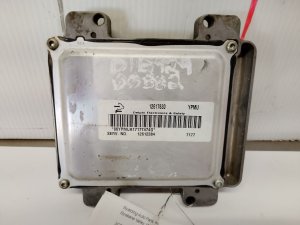
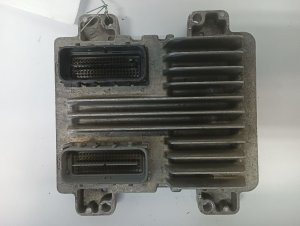
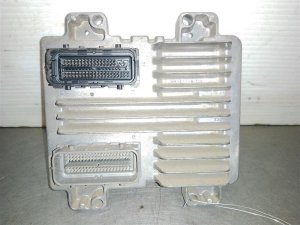
New Aftermarket Parts Available



The information in this article is provided for general reference and educational purposes only. Vehicle specifications, procedures, and part compatibility can vary by production date, trim level, and region. Always consult your vehicle's factory service manual and verify part numbers before purchasing or performing repairs. Safety-critical components such as airbags, seat belts, and braking systems should be installed by a qualified professional.
- Chevrolet SUBURBAN:
- 🧭 Diagnostic Flowchart
- 🎬 Helpful Videos
- 🛍️ Shop This Part
- What's Unique About the 2007-2014 Chevrolet SUBURBAN
- Symptoms You May Notice
- Most Likely Causes
- Rare But Worth Checking
- Diagnosis Steps
- Parts You'll Likely Need
- Related Codes That Often Appear With This One
- Technical Service Bulletins (TSBs) & Recalls
- Platform-Specific Known Issues
- Mechanic-Grade Diagnostic Values
- Scan Tool Commands That Help
- Wiring & Ground Locations
- "I Checked Everything" — The Actual Cause
- OEM Part Supersession History
- Model Year Variations Within This Range
- 🎟️ Get 5% Off