

P0606 on 2012-2014 Chrysler 200: PCM Processor Fault Causes and Fixes
P0606 on a 2012-2014 Chrysler 200 indicates an internal processor fault in the Powertrain Control Module (PCM). This is a serious code that can cause stalling and no-start conditions. The most common fix is replacing the PCM, which requires professional programming and can cost between $500 and $1200. In some cases, a dealership software update (reflash) can resolve the issue without replacing the hardware.
- P0606 is a critical code indicating a fault within the Powertrain Control Module (PCM) itself.
- Symptoms are severe and can include stalling, no-start, and erratic transmission behavior, making the vehicle unsafe to drive.
- Before replacing the expensive PCM, always check for software updates and verify that power and ground connections to the module are clean and secure.
- PCM replacement is not a DIY job; the new module must be professionally programmed to the vehicle.
What's Unique About the 2012-2014 Chrysler 200
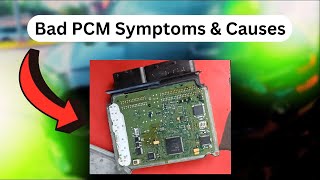
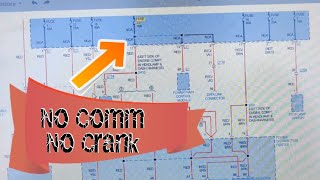
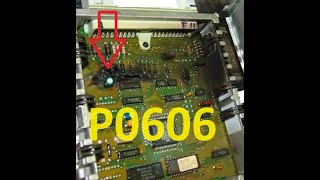
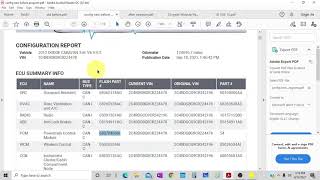
For the first-generation Chrysler 200 and its platform-mate, the Dodge Avenger, a P0606 code is a documented issue. The National Highway Traffic Safety Administration (NHTSA) has investigated engine stalling at low speeds on these vehicles, with some cases pointing to a defective PCM. Furthermore, Chrysler has issued technical service bulletins for this platform and others indicating that a P0606 code could be caused by a software glitch that can be fixed 🎬 Watch: How to diagnose an ECM/PCM processor error with a PCM reflash, rather than a full replacement.
Diagnostic Flowchart
Tap your situation to follow the diagnostic path that matches what you're seeing on this vehicle.
Symptoms You May Notice
- Check Engine Light is on
- Vehicle may stall, especially when slowing down or at idle
- Engine will not start or is difficult to start
- Erratic or harsh automatic transmission shifting
- Vehicle enters 'limp mode' with reduced engine power
- Poor engine performance, misfires, or rough idle
- Decrease in fuel economy
- ABS or other warning lights may illuminate simultaneously
- Replacing fuel system or ignition components. Symptoms like stalling or misfiring can mimic a bad fuel pump or spark plugs, but P0606 points specifically to a processor issue.
- Condemning the PCM before checking for software updates. A reflash is a cheaper and often effective first step that is sometimes overlooked.
Most Likely Causes
- Faulty Powertrain Control Module (PCM) 🔴 High Probability → Shop Engine Control Module (ECM) NHTSA investigations have pointed to defective PCMs causing stalling issues on this platform. Forum discussions for the Chrysler 200 and Dodge Avenger frequently conclude with PCM replacement as the final fix after other diagnostics fail.
How to confirm: After confirming all power, ground, and network circuits are intact and that no software update is available, the PCM is condemned. This is a process of elimination. A professional diagnosis is required.
Typical fix: Replace the PCM. The new unit must be programmed by a dealer or a qualified shop with the correct software and the vehicle's VIN.
Est. part cost: $300-$800 - PCM Software Anomaly 🟡 Medium Probability Chrysler has issued multiple service bulletins (e.g., TSB 18-022-16, 18-088-16 REV. A) where a P0606 code, often with other symptoms, is resolved by a software update, not hardware replacement. This indicates known software bugs can trigger this fault.
How to confirm: A technician with a dealership-level scan tool (like wiTECH for Chrysler) can check the current software calibration ID against the latest available version from the manufacturer.
Typical fix: Reprogram (or 'reflash') the PCM with the latest software version. This must be done by a professional with access to manufacturer software.
Est. part cost: $0 (parts), labor only ($100-$250) - Poor PCM Power or Ground Connection ⚪ Low Probability
How to confirm: Visually inspect the PCM connectors for corrosion or damage. Use a multimeter to perform a voltage drop test on the main power and ground wires to the PCM to ensure there is no excessive resistance. Check main engine and chassis ground straps for tightness and corrosion.
Typical fix: Clean or repair the corroded terminals or damaged wiring. Secure any loose ground straps.
Est. part cost: $5-$50
Rare But Worth Checking
- Charging System Fault: An alternator producing excessive voltage (over 15 volts) or unstable voltage can damage or confuse the sensitive electronics inside the PCM, leading to a P0606 code. Always check the charging system voltage before replacing the PCM.
- CAN Bus Communication Error: The P0606 code can sometimes be triggered by a communication breakdown on the Controller Area Network (CAN) bus, which connects various modules. A short or open in the CAN bus wiring can make the PCM believe it has an internal fault.
Diagnosis Steps
- Check for other Diagnostic Trouble Codes (DTCs). P0606 can be a consequence of other faults. Note any other codes, especially communication (U-codes) or sensor circuit codes.
- Check for available PCM software updates. A dealer or qualified shop can determine if a reflash is available to fix known software bugs. This is a critical first step for this platform.
- Test the battery and charging system. Ensure battery voltage is stable and above 12.4V with the engine off, and between 13.5V and 14.5V with the engine running. Low or spiking voltage can trigger a false P0606.
- Inspect all power and ground connections to the PCM. Look for any signs of corrosion, looseness, or damage on the wiring harness connectors and main ground straps.
- Perform a voltage drop test on the PCM's power and ground circuits to rule out high resistance in the wiring.
- Inspect the CAN bus wiring for any visible damage or shorts, especially near the PCM connectors.
- If all external factors (software, power, grounds, network) are confirmed to be good, the PCM is highly likely to be faulty and requires replacement.
Parts You'll Likely Need
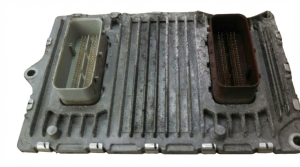
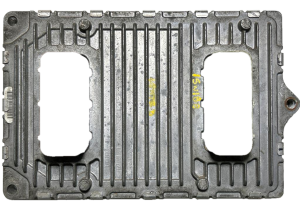
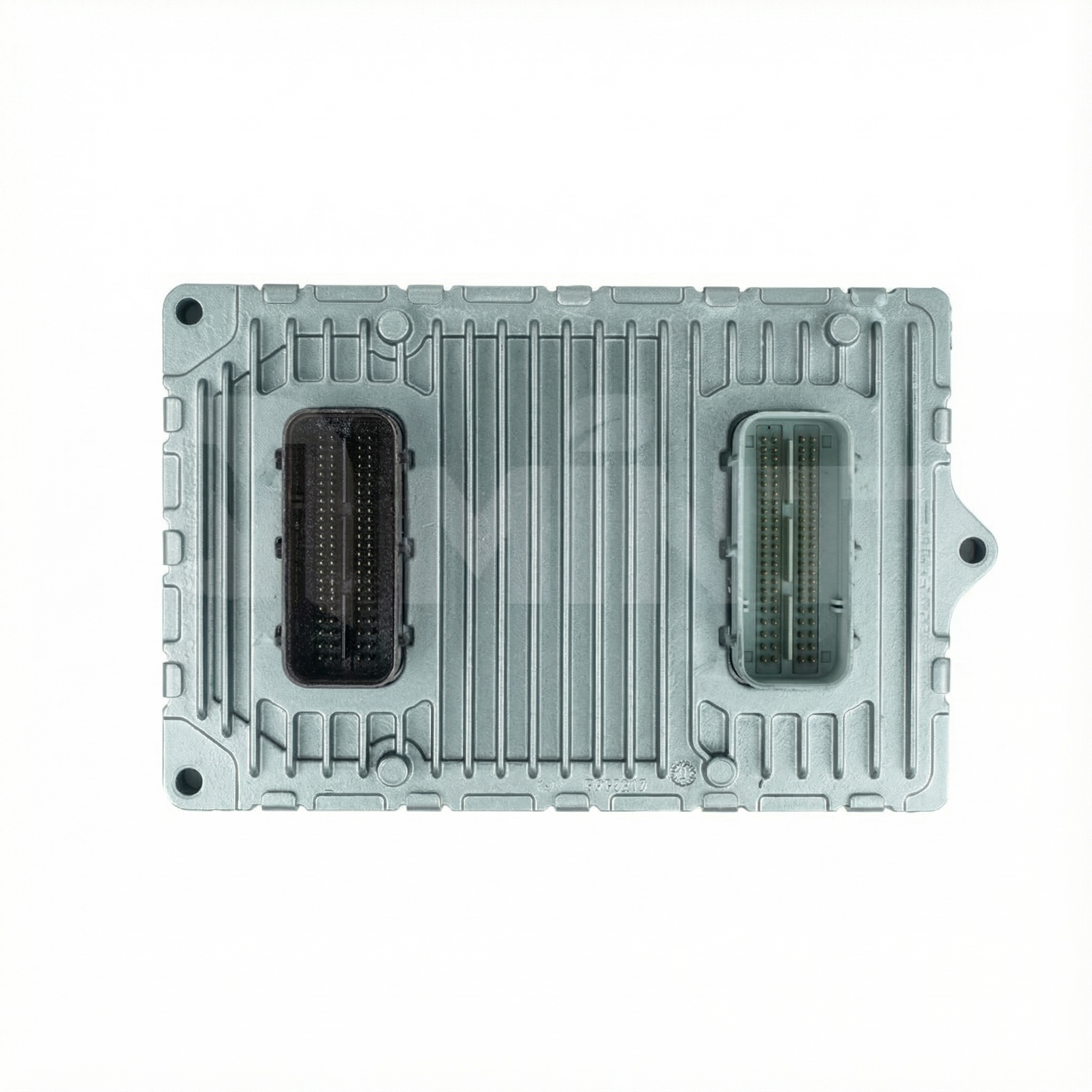
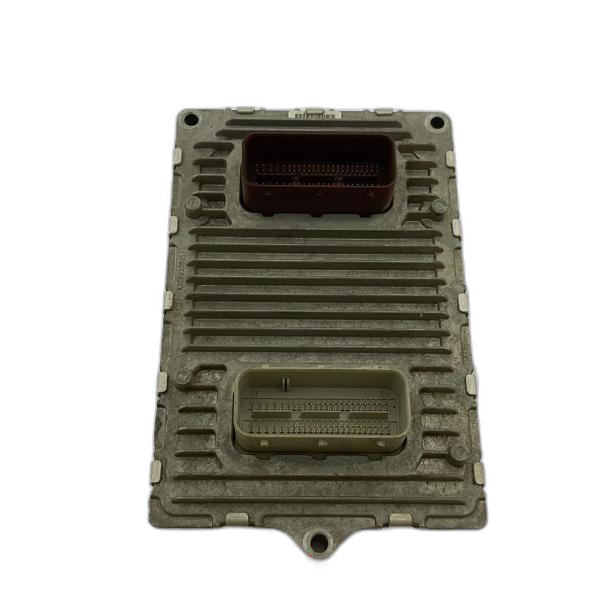
- Powertrain Control Module (PCM)
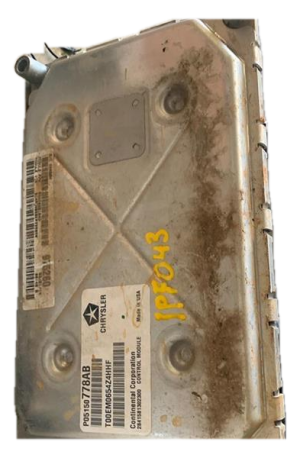
(OEM #Varies by VIN. Common series include 68068445xx, 68068446xx (2.4L) and 68068449xx, 68068450xx (3.6L). Always verify with dealer using VIN.)— This is the most common cause of a P0606 code, indicating an irreparable internal processor failure after software and wiring issues have been ruled out.
Trusted brands: Mopar (OEM), Cardone (Remanufactured), Standard Motor Products (Remanufactured), FS1 (Flash Services)
OEM price range: $500-$800
Aftermarket price range: $300-$600
Related Codes That Often Appear With This One
- P0108 — Manifold Absolute Pressure Sensor Circuit High. The provided NHTSA TSB #1810216 explicitly lists this code appearing alongside P0606.
- P0204 — Fuel Injector 4 Circuit/Open. Also listed in TSB #1810216 as a concurrent code.
- P113D / P113E — O2 Sensor Slow Response codes. These are also mentioned in TSB #1810216, suggesting the PCM fault can cause erroneous readings from various engine sensors.
- U0140 — Lost Communication With Body Control Module. TSB #18-088-16 REV. A lists this code alongside P0606 as being potentially resolved by a PCM software update.
Technical Service Bulletins (TSBs) & Recalls
- Bulletin #18-022-16 (NHTSA #1810216): Mentions P0606 in a list of DTCs that can occur with a 1-2 upshift clunk symptom on 2012 models. The fix is a PCM software update.
- Bulletin #18-088-16 REV. A: Applies to other Chrysler models but is relevant as it shows a pattern of FCA using software updates to fix P0606 when accompanied by other DTCs like U0140 (Lost Communication with BCM).
Platform-Specific Known Issues
- NHTSA Stalling Investigation: An NHTSA investigation (PE12017) into stalling on 2011-2013 models with the 3.6L V6 engine identified the potential for PCM failure as a cause, lending official weight to owner complaints.
- Real-World Repair Story: PCM Replacement: A user on '200forums.com' with a 2012 Chrysler 200 reported a P0606 code with stalling. After verifying power and grounds, the shop replaced and programmed a new PCM. The total cost was approximately $950, which resolved the issue. This highlights the typical repair path and cost when a reflash is not an option.
- Software Update for Transmission Clunk: → Shop Transmission Assembly NHTSA records show TSB #18-022-16 (Chrysler's version of #1810216) for the 2012 model year that addresses a '1-2 upshift clunk'. The bulletin involves a PCM software update and lists P0606 as one of several DTCs that might be present along with the primary symptom.
Mechanic-Grade Diagnostic Values
- Battery Voltage (engine off, at rest) — expected: 12.4V - 12.6V. Failure: Below 12.4V indicates a weak charge; a reading below 12V can indicate a dead cell.
- Charging System Voltage (engine running) — expected: 13.5V - 14.5V. Failure: Voltage that is unstable, below 13.5V, or above 14.8V can cause PCM processor faults.
- PCM Power/Ground Voltage Drop — expected: Less than 100mV (0.1V). Failure: A reading higher than 100mV indicates excessive resistance in the power or ground circuit that needs to be located and repaired. A forum member noted a 32mV reading on a ground test, which is within spec.
Scan Tool Commands That Help
- wiTECH 2.0: PCM Reprogramming / Flashing — Used to install the latest manufacturer software to fix known bugs (a common cause of P0606) or to program a brand new, blank PCM to the vehicle.
- wiTECH 2.0: Restore Vehicle Configuration — This function is critical when installing a *used* PCM. It copies the VIN and other configuration data from the server to prevent a VIN mismatch between the replacement PCM and other modules on the vehicle (like the ABS or BCM).
- wiTECH 2.0: Write VIN — After installing a new or blank PCM, this function must be used to write the car's VIN into the module, which is a prerequisite for the immobilizer system to function and allow the car to start.
Wiring & Ground Locations
- Powertrain Control Module (PCM) — Typically located in the engine bay, against the firewall, often near the battery.. This is the module setting the code. Its connectors are a primary inspection point for corrosion or damage.
- Totally Integrated Power Module (TIPM) — The main fuse and relay center, located on the left side of the engine compartment.. The TIPM supplies battery voltage to the PCM. A faulty fuse or relay within the TIPM can cut power to the PCM, causing various faults including P0606.
- G105 — Right side of the engine compartment.. This is a primary engine compartment ground. A loose or corroded connection here can affect multiple components, including the PCM's ground reference.
- G321 / G309 — Left side of the engine compartment.. Another critical engine bay ground point. Poor contact here can cause unstable voltage and trigger a P0606.
- G200 — Located at the left end of the dash, likely behind the driver's side kick panel.. An interior ground point that can affect communication between interior modules and the PCM.
Real Owner Repair Stories
- 200forums.com user thread (2012 Chrysler 200 Touring) — Stalling, P0606 code present.
❌ Tried (didn't work) Initial diagnosis pointed towards PCM after basic checks.
✅ What actually fixed it The shop replaced and programmed a new Powertrain Control Module (PCM). The total cost was approximately $950, which resolved all symptoms.
OEM Part Supersession History
68068445xx (2.4L Engine, 2012)→The suffix (xx) updates over time (e.g., AA, AB, AC... AJ) to reflect software and hardware revisions. A later suffix is generally compatible with an earlier one.— Software updates and minor hardware revisions.
Heads up: While later letters are usually better, the base number must match. Always confirm compatibility with the VIN.68068449xx / 68068450xx (3.6L Engine, 2012)→Multiple part numbers and suffixes are listed as compatible for the 3.6L engine, including 68068449AA through AG and 68068450AA through AG.— Software updates and potential hardware changes for different vehicle options.
Heads up: The large number of compatible parts for the 3.6L highlights the importance of using a VIN to get the exact correct module for the vehicle's specific features.68205118AA (3.6L Engine, 2014)→68205118AB and later revisions.— Software updates for the newer model year.
Model Year Variations Within This Range
- 2013 (2.4L Engine): A specific safety recall (NHTSA #13V552000) exists for a faulty engine balance shaft module that causes stalling. This can be misdiagnosed as a PCM issue due to the similar symptom.
- 2012 vs. 2014: The OEM part numbers for the PCM are different between these model years, even for the same engine. For example, a 2012 3.6L may use a 68068449xx series PCM, while a 2014 3.6L may use a 68205118xx series. They are not interchangeable.
Helpful Videos
We Have This Part in Stock

The information in this article is provided for general reference and educational purposes only. Vehicle specifications, procedures, and part compatibility can vary by production date, trim level, and region. Always consult your vehicle's factory service manual and verify part numbers before purchasing or performing repairs. Safety-critical components such as airbags, seat belts, and braking systems should be installed by a qualified professional.
- Chrysler 200:
- 🧭 Diagnostic Flowchart
- 🎬 Helpful Videos
- 🛍️ Shop This Part
- What's Unique About the 2012-2014 Chrysler 200
- Symptoms You May Notice
- Most Likely Causes
- Rare But Worth Checking
- Diagnosis Steps
- Parts You'll Likely Need
- Related Codes That Often Appear With This One
- Technical Service Bulletins (TSBs) & Recalls
- Platform-Specific Known Issues
- Mechanic-Grade Diagnostic Values
- Scan Tool Commands That Help
- Wiring & Ground Locations
- Real Owner Repair Stories
- OEM Part Supersession History
- Model Year Variations Within This Range
- 🎟️ Get 5% Off