

P0606 on 2012-2014 Dodge Avenger: PCM Processor Fault Causes and Fixes
P0606 on a Dodge Avenger indicates a critical internal failure of the main engine computer (PCM). While this often requires replacing the PCM, the cause can sometimes be a simpler issue like a weak battery, bad ground wire, or outdated software. Before paying for a replacement, check if it's covered under the 8-year/80,000-mile federal emissions warranty. Driving is not recommended due to the risk of stalling.
- P0606 is a critical fault code indicating the vehicle's main computer (PCM) has an internal error.
- Do not continue to drive the vehicle, as it can stall at any time, posing a serious safety risk.
- Before replacing the expensive PCM, always have a professional check for software updates and thoroughly inspect the battery, alternator, and all PCM power and ground wires.
- PCM replacement is not a DIY job for most people, as it requires special tools to program the new module to your car's VIN.
What's Unique About the 2012-2014 Dodge AVENGER
For this generation of Dodge Avenger and its direct platform-mate, the Chrysler 200, the P0606 code is a straightforward but severe fault. A Technical Service Bulletin (TSB) for the 2012 model shows this code can appear alongside various other sensor and injector circuit codes, which can be misleading. This suggests the PCM's failure can cause it to incorrectly report problems with other components, making it crucial to suspect the PCM as the root cause when P0606 is present. The interchangeability of parts and issues with the Chrysler 200 is a key characteristic of this platform. A critical point for this vehicle is the battery's location in the driver-side wheel well, which makes its connections prone to corrosion and difficult to inspect, often leading to voltage issues that can trigger a false P0606.
Diagnostic Flowchart
Tap your situation to follow the diagnostic path that matches what you're seeing on this vehicle.
Symptoms You May Notice
- Check Engine Light is on
- Engine may stall unexpectedly, sometimes when coming to a stop.
- Engine surging, especially when braking or coming to a stop.
- Vehicle may not start at all or have a crank-no-start condition.
- Noticeable drivability issues like surging, hesitation, or lack of power.
- Erratic or harsh automatic transmission shifting.
- Other warning lights, such as the Throttle Control or ABS light, may illuminate.
- Replacing fuel injectors, O2 sensors, or MAP sensors. The TSB #1810216 specifically lists codes for these parts (P0204, P113D, P113E, P0108) appearing alongside P0606. In this context, these other codes are likely symptoms of the PCM's failure, not the root cause.
Most Likely Causes
- Powertrain Control Module (PCM) Internal Failure 🔴 High Probability → Shop Engine Control Module (ECM) This is the direct definition of the code. The internal processor of the PCM has failed 🎬 Watch: Understanding the causes and fixes for the P0606 code. its self-diagnostic test, which can be caused by age, heat cycles, or internal component failure.
How to confirm: After confirming all power, ground, and communication circuits are intact and the software is up to date, the PCM is condemned by elimination. This is the final step after all external factors are ruled out.
Typical fix: Replace the Powertrain Control Module and program the new unit to the vehicle. Check for Federal Emissions Warranty coverage (8yr/80k miles) first.
Est. part cost: $300-$800 - Poor PCM Power or Ground Circuits 🟡 Medium Probability Corrosion is common on battery terminals and chassis grounds. The main engine-to-chassis ground strap can fray or corrode, causing unstable voltage that tricks the PCM into setting a P0606 code. The battery's location in the driver's side wheel well makes it susceptible to moisture and makes inspection difficult.
How to confirm: Perform a voltage drop test on the PCM's power and ground wires. Visually inspect the main battery ground, the engine-to-chassis ground strap, and smaller ground points on the inner fender for corrosion, looseness, or damage. Clean all contact points until they are shiny.
Typical fix: Clean or repair corroded terminals and ground points. Replace damaged wiring or ground straps. In some cases, simply cleaning the battery terminals and performing a hard reset has cleared the code permanently.
Est. part cost: $5-$50 - PCM Software Glitch / Needs Update 🟡 Medium Probability Software anomalies can sometimes trigger false internal processor faults. Chrysler has issued numerous PCM software updates (reflashes) for this vehicle platform to fix a wide range of drivability and code issues.
How to confirm: A dealership or qualified shop can use a wiTECH scan tool to check if a newer software calibration is available for the vehicle's VIN. An interrupted or failed previous update can also corrupt the PCM.
Typical fix: Perform a PCM reflash/software update. This should always be attempted before hardware replacement.
Est. part cost: $0-$200 - Failing Battery or Alternator ⚪ Low Probability → Shop Vehicle Battery Low system voltage (from a weak battery) or voltage spikes (from a faulty alternator) can cause unpredictable behavior in electronic modules, including the PCM, leading to a false P0606. This is especially common if the vehicle has been sitting for an extended period.
How to confirm: Test the battery with the engine off (should be ~12.6V) and the alternator with the engine running (should be ~13.5-14.5V). The voltage should be stable and not fluctuate wildly.
Typical fix: Replace the weak battery or failing alternator.
Est. part cost: $150-$500
Diagnosis Steps
- Scan for all diagnostic trouble codes. Note any other codes that are present, but be aware that with P0606, other codes are often symptoms of the PCM failure.
- Thoroughly test the battery and charging system. Ensure battery voltage is stable and above 12.4V with the engine off and between 13.5V-14.5V with the engine running. A weak battery or faulty alternator can cause this code.
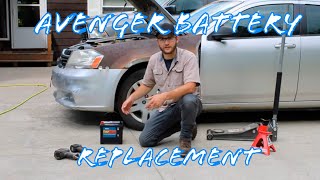
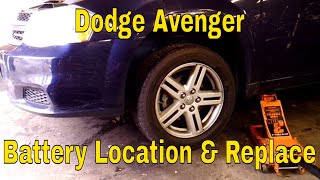
- Inspect and clean all primary power and ground connections. This includes battery terminals, the main battery-to-chassis ground, and the engine block-to-chassis ground strap. Ensure all connections are tight and free of corrosion. The battery is in the driver's side wheel well and requires removing the wheel and liner for access. 🎬 See this walkthrough on how to access and replace the battery.
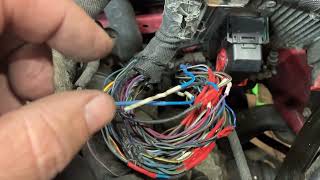
- Inspect the main PCM connectors for looseness, 🎬 Watch: How to replace a damaged PCM connector. corrosion, or damage. Wiggle the connectors with the engine running to see if it induces a stall or misfire, which would indicate a bad connector or pin issue rather than a faulty PCM.
- Check all fuses related to the PCM/ECM in the vehicle's fuse box. Pull them and visually inspect for damage and ensure the contacts are clean.
- If external power and grounds are good, attempt a hard reset. Disconnect both battery terminals and hold them together for 60 seconds (or leave disconnected for 30 minutes) to drain all residual power from the modules. This can sometimes clear a temporary glitch.
- Check for available PCM software updates using a manufacturer-specific scan tool (wiTECH). If an update is available, perform the reflash as this is cheaper than replacement and may solve the problem.
- If all external wiring, power sources, and grounds are confirmed to be good, the software is up to date, and the code returns, the PCM is faulty.
- Before purchasing a new PCM, call a Chrysler/Dodge dealer with your VIN and mileage to check for coverage under the 8-year/80,000-mile Federal Emissions Warranty.
- If not covered by warranty, replace the PCM and have it programmed to the vehicle by a dealership or a qualified automotive technician with the proper tools.
Parts You'll Likely Need
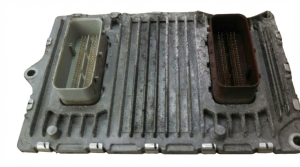
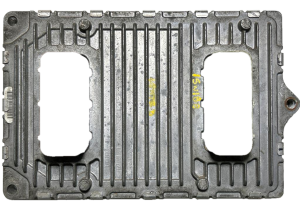
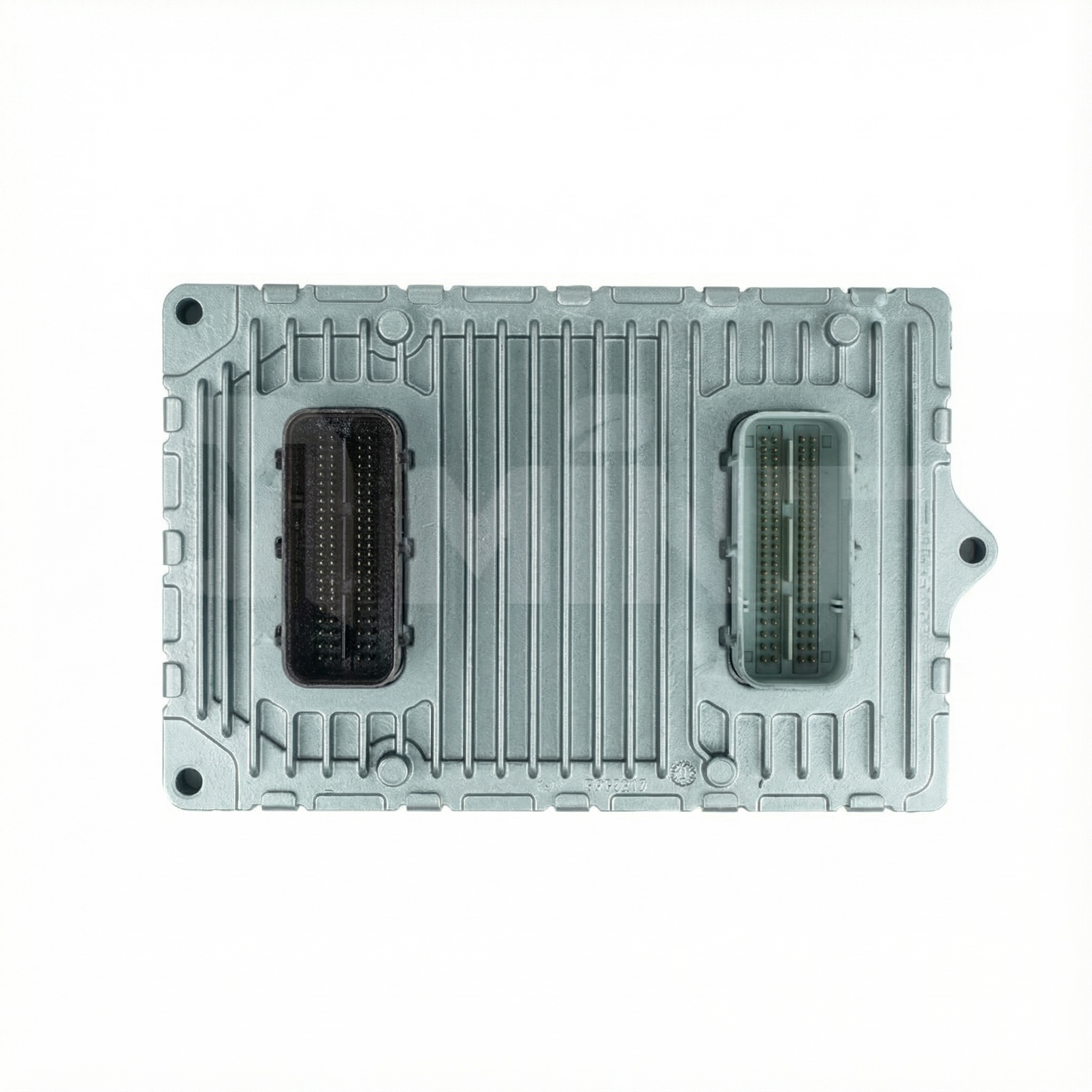
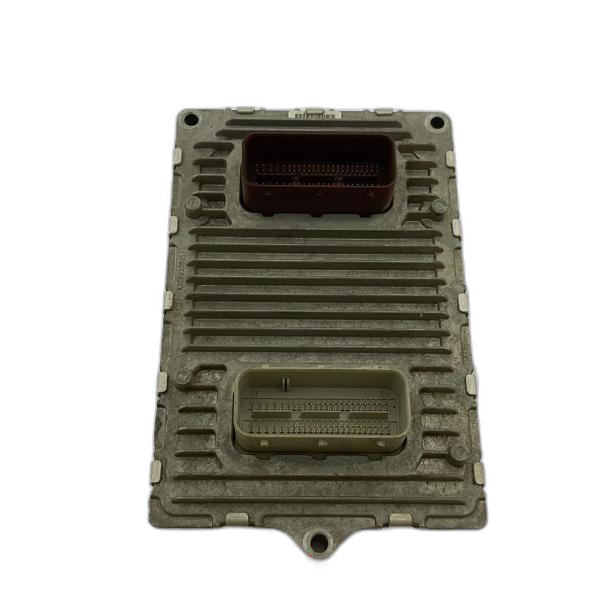
- Powertrain Control Module (PCM)
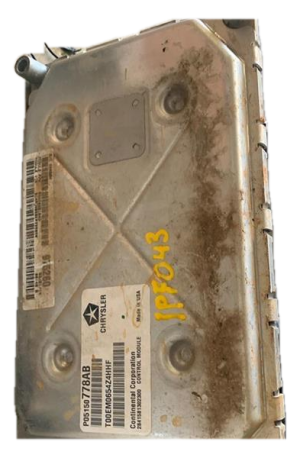
(OEM #05150761AB, 68164365AC (Examples only, part is VIN-specific))— This is the most common definitive fix for a P0606 code after all external factors like wiring and software have been ruled out. The exact part number MUST be matched to your vehicle's VIN.
Trusted brands: Mopar (OEM), Cardone, Standard Motor Products, SIA Electronics
OEM price range: $500-$800
Aftermarket price range: $250-$600
Related Codes That Often Appear With This One
- P0108 — Manifold Absolute Pressure Sensor Circuit High. As cited in TSB #1810216, this can be triggered by the PCM's internal fault.
- P0204 — Fuel Injector 4 Circuit/Open. Also cited in TSB #1810216 as a potential companion code caused by the PCM failure.
- P113D — O2 Sensor 1/1 Slow Response. Mentioned in TSB #1810216, indicating the PCM may be misinterpreting sensor data due to its own fault.
- P113E — O2 Sensor 2/1 Slow Response. Also from TSB #1810216, further pointing to the PCM as the central issue.
Technical Service Bulletins (TSBs) & Recalls
- Bulletin #1810216: Notes P0606 - Internal Control Processor in a list with other DTCs, suggesting the PCM is the root cause.
- General PCM Flash Updates (e.g., TSB 18-033-13, 18-017-14): While not specifically for P0606 on the Avenger, Chrysler has a well-documented history of issuing software updates to fix a wide variety of MIL illumination issues and drivability problems on this platform, reinforcing that a software check is a critical diagnostic step.
Platform-Specific Known Issues
- NHTSA Technical Service Bulletin #1810216 documents the P0606 code on 2012 models, linking it to a cluster of other fault codes. This bulletin reinforces the diagnosis that the PCM is the likely culprit when multiple, seemingly unrelated codes appear with P0606.
- Owner experiences frequently highlight the importance of not immediately condemning the PCM. In one documented case on a similar Dodge vehicle, a P0606 code that appeared after the truck was sitting for a long period was resolved simply by cleaning the battery terminals and letting the system reset, with no PCM replacement needed.
Mechanic-Grade Diagnostic Values
- Battery Voltage (Engine Off) — expected: ~12.6V. Failure: A reading below 12.4V indicates a weak or discharged battery that can cause false codes. If the voltage is a multiple of 2.1V below 12.6V (e.g., 10.5V), it suggests a dead cell.
- Charging System Voltage (Engine Running) — expected: 13.5V - 14.5V. Failure: Voltage that is unstable, too low, or too high indicates a faulty alternator or voltage regulator, which can cause electrical issues that trigger P0606.
- PCM Power Supply Wire Voltage — expected: Should match battery voltage (~12.6V+) with Key On, Engine Off.. Failure: If the voltage at the PCM connector is significantly lower than at the battery, it indicates high resistance (a voltage drop) in the power supply wiring.
Scan Tool Commands That Help
- wiTECH 2.0: Restore Vehicle Configuration — This is a mandatory step after replacing a PCM (new or used). It writes the vehicle's VIN to the module and synchronizes it with other modules on the car, such as the anti-theft system (SKIM) and ABS. Failure to perform this can result in a no-start condition or VIN mismatch codes.
- wiTECH 2.0: Check PCM VIN / Write VIN — Used during a new PCM installation to manually write the vehicle's VIN into the blank module before other configuration steps.
- wiTECH 2.0: Learn ETC (Electronic Throttle Control) — This function is used after PCM programming to calibrate the throttle body's position sensors to the new module.
Wiring & Ground Locations
- Battery — Inside the front driver's side wheel well, behind the fender liner.. This inconvenient location makes the battery terminals and cables susceptible to corrosion from road spray and difficult to inspect. A poor connection here is a common cause of voltage issues that can trigger a false P0606.
- G300 — Under the driver's seat or on the center floor tunnel.. This is a major interior and chassis ground point. Corrosion or looseness here can affect multiple electronic modules, including the PCM.
- G321 / G105 — Located in the engine compartment, on the left (G321) and right (G105) sides respectively.. These are primary engine bay ground points. The PCM and its related sensors rely on clean, tight connections at these locations for stable operation.
- PCM Connector C2 — The main (larger) electrical connector plugging into the Powertrain Control Module in the engine bay.. A documented failure point. Internal pin fretting or a loose connection in this specific connector can mimic a complete PCM failure, causing stalls and no-start conditions. Wiggling this connector can help diagnose the issue.
Real Owner Repair Stories
- YouTube channel 'Frugal Prepper's Garage & Garden' (2013 Dodge Avenger) — Crank-no-start, intermittent misfiring and stalling.
❌ Tried (didn't work) Initial diagnosis pointed towards a bad PCM or incorrect wiring after a previous repair attempt.
✅ What actually fixed it The fault was traced to the main PCM connector (C2). Wiggling the connector would cause the engine to stall or misfire. Replacing the connector pigtail resolved all symptoms, proving the PCM itself was not faulty. - CarKiller forum user (2007 Toyota Camry (similar principle applies)) — Check engine light with code P0606 appeared temporarily about a week after replacing a dead battery.
❌ Tried (didn't work) N/A
✅ What actually fixed it The code cleared on its own and did not return. The consensus was that the low voltage from the old, failing battery caused a temporary electronic glitch in the PCM, setting a false code. No parts were replaced. - RamForum.com user '20hemi10' (Various Ram, Jeep, Dodge, Chrysler vehicles) — P0606 code present.
❌ Tried (didn't work) Verifying chassis grounds.
✅ What actually fixed it In the technician's experience, after verifying grounds are good, the definitive fix has always been to replace and program the Powertrain Control Module (PCM).
When the Usual Fixes Don't Work
- While P0606 is defined as an internal processor fault and often does require PCM replacement, it should not be the immediate conclusion. A significant number of real-world cases show the code is triggered by external factors. A documented case for a 2013 Avenger showed that a faulty main PCM connector produced identical symptoms to a failed PCM, including a no-start condition and misfires; the fix was replacing the connector pigtail, not the expensive computer. Furthermore, low voltage events from a failing battery are known to set a temporary P0606 that resolves itself once the battery issue is corrected. Always perform thorough checks of the battery, charging system, grounds, and harness connectors before condemning the PCM.
OEM Part Supersession History
05150763AB (May be an earlier revision or family number)→68164365AC— Standard part revision for hardware/software updates.
Heads up: The part number must be matched to the vehicle's VIN and specific transmission (4-speed vs. 6-speed).
Model Year Variations Within This Range
- 2012-2014: The 2.4L engine was offered with both a 4-speed and a 6-speed automatic transmission. The PCM connectors are different between these two configurations, making the modules non-interchangeable. It is critical to source a replacement PCM for the correct transmission type.
Helpful Videos

We Have This Part in Stock

The information in this article is provided for general reference and educational purposes only. Vehicle specifications, procedures, and part compatibility can vary by production date, trim level, and region. Always consult your vehicle's factory service manual and verify part numbers before purchasing or performing repairs. Safety-critical components such as airbags, seat belts, and braking systems should be installed by a qualified professional.
- Dodge AVENGER:
- 🧭 Diagnostic Flowchart
- 🎬 Helpful Videos
- 🛍️ Shop This Part
- What's Unique About the 2012-2014 Dodge AVENGER
- Symptoms You May Notice
- Most Likely Causes
- Diagnosis Steps
- Parts You'll Likely Need
- Related Codes That Often Appear With This One
- Technical Service Bulletins (TSBs) & Recalls
- Platform-Specific Known Issues
- Mechanic-Grade Diagnostic Values
- Scan Tool Commands That Help
- Wiring & Ground Locations
- Real Owner Repair Stories
- When the Usual Fixes Don't Work
- OEM Part Supersession History
- Model Year Variations Within This Range
- 🎟️ Get 5% Off