

P0606 on 2018-2020 Dodge Durango: Internal Processor Failure Causes & Fixes
P0606 on a 2018-2020 Dodge Durango indicates a critical internal failure of the Powertrain Control Module (PCM), the engine's main computer. The most common fix is replacing and programming the PCM, which is a significant repair. However, before replacement, it's crucial to check for software updates and verify power/ground circuits, as these can also trigger the code.
- P0606 is a critical fault indicating the Durango's main computer (PCM) has an internal processor error.
- Do not continue to drive the vehicle, as it may stall or enter limp mode without warning.
- Before replacing the expensive PCM, always have a dealer check for required software updates, as this can sometimes resolve the issue.
- Diagnosis must include a thorough check of the battery, charging system, and the PCM's power and ground wiring for corrosion or damage.
- Replacing the PCM is not a DIY job; it must be programmed by a professional with the correct tools.
- Check with a dealer about your vehicle's Federal Emissions Warranty status, as it may cover the cost of PCM replacement for up to 8 years/80,000 miles.
What's Unique About the 2018-2020 Dodge DURANGO
For this generation of Dodge Durango and its platform mate, the Jeep Grand Cherokee, the P0606 code is specifically mentioned in manufacturer bulletins related to drivability issues like the vehicle entering 'limp mode'. [Bulletin #1812522, Bulletin #1808323] These bulletins sometimes point to software glitches that can be resolved with a PCM update rather than a full replacement. This makes checking for software updates a crucial first step that is more relevant here than on many other vehicles where P0606 almost always means immediate hardware failure. Furthermore, these vehicles utilize a Secure Gateway Module (SGM) which complicates PCM replacement, often requiring specific tools like wiTECH 2.0 or AlfaOBD to program a new or used module.
Diagnostic Flowchart
Tap your situation to follow the diagnostic path that matches what you're seeing on this vehicle.
Symptoms You May Notice
- Check Engine Light (MIL) is on.
- Vehicle enters "Limp Mode". [Bulletin #1812522, Bulletin #1808323]
- Flashing Electronic Throttle Control (ETC) light. [Bulletin #1812522, 27]
- Engine may stall or not start.
- Poor or erratic automatic transmission performance.
- Reduced engine performance and poor fuel economy.
- ABS (Anti-lock Brake System) light may also illuminate.
- Erratic or continuous cooling fan actuation.
- Replacing the catalytic converters when codes P0420 or P0430 appear alongside P0606. The failing PCM can generate these codes falsely, as noted in TSB #1808323.
- Replacing the electronic throttle body because the ETC light is flashing. The flashing light is often a symptom of the PCM failure, not the cause.
- Condemning the PCM without first thoroughly checking for software updates and verifying stable power and clean grounds.
Most Likely Causes
- Powertrain Control Module (PCM) Internal Failure 🔴 High Probability → Shop Engine Control Module (ECM) The PCM is a complex electronic device susceptible to failure from heat, vibration, and age. While not uniquely prone, it is the most direct cause when software and wiring are ruled out.
How to confirm: This is typically diagnosed by exclusion. 🎬 Watch: How to diagnose an ECM/PCM processor error If all power/ground circuits, wiring, and software are confirmed to be good, the PCM itself is condemned. Sometimes a failed PCM may have a burnt smell or visible damage on the circuit board.
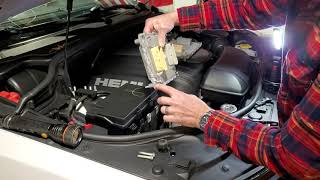
Typical fix: Replace the PCM and have it professionally programmed to the vehicle's VIN and security key (SKIM) module.
Est. part cost: $400-$900 - PCM Software Glitch / Outdated Software 🟡 Medium Probability Manufacturer TSBs and recalls for this era of Durango often involve PCM software updates to fix various drivability issues. TSBs for other FCA vehicles show that software updates are a common fix for P0606.
How to confirm: A dealership or qualified shop can check for available PCM software updates using the vehicle's VIN with a wiTECH scan tool.
Typical fix: Reprogram (or 'flash') the PCM with the latest manufacturer software.
Est. part cost: $0 - $200 - Poor PCM Power or Ground Connections ⚪ Low Probability
How to confirm: Perform a voltage drop test on the PCM's power and ground wires. Inspect the PCM connectors and main engine/chassis ground points for corrosion or looseness. A high-resistance ground can cause a voltage drop that fools the PCM into flagging an internal fault.
Typical fix: Clean or repair the corroded terminals, connectors, or ground straps. Ensure all connections are tight.
Est. part cost: $5-$50
Rare But Worth Checking
- Aftermarket Engine Tune:
- Incorrect Battery Disconnect/Reconnect Procedure: → Shop Vehicle Battery
- Faulty Alternator or Unstable Voltage:
Diagnosis Steps
- Check with a Dodge dealership using your VIN to see if any software updates or recalls (like Safety Recall U65) are available for the PCM. This is the most important and least invasive first step.
- Perform a full vehicle scan to document all present trouble codes. Pay close attention to any other codes that may point to a root cause, like sensor circuit faults or communication codes.
- Check battery and charging system. Use a multimeter to confirm battery voltage is ~12.6V with the engine off and a stable ~13.5-14.5V when running. Unstable voltage can confuse the PCM.
- Visually inspect the PCM, its connectors, and the associated wiring harness for any signs of physical damage, corrosion, or loose connections.
- Inspect and test the main PCM power and ground circuits. Check all related fuses. Clean the main engine-to-chassis ground strap. A poor ground is a common hidden cause.
- If an aftermarket tune is installed, flash the vehicle back to its stock configuration to see if the code disappears.
- If all wiring, power, grounds, and software are confirmed to be good, the PCM is faulty and requires replacement.
Parts You'll Likely Need
- Powertrain Control Module (PCM)
(OEM #Example Only: 68332509AB, 68395678AA (Part numbers are highly VIN-specific; always verify with a dealer))— This code directly indicates a failure of the PCM's internal processor. After ruling out software and wiring, replacement is the only fix.
Trusted brands: Mopar (OEM)
OEM price range: $600-$900
Aftermarket price range: $400-$700
Related Codes That Often Appear With This One
- P0420 — As per TSB #1808323, a failing PCM can incorrectly report catalyst system inefficiency.
- P0430 — Similar to P0420, TSB #1808323 indicates the PCM may generate this code as a result of its own internal fault.
- U0100 — This code indicates 'Lost Communication With ECM/PCM'. It can appear alongside P0606 if the internal failure prevents the PCM from communicating on the CAN bus network.
Technical Service Bulletins (TSBs) & Recalls
- 1812522: Mentions P0606 causing MIL and Limp Mode with flashing ETC light on 2020 models.
- 1808323: Connects P0606 with limp mode and false catalyst codes (P0420/P0430) on 2018 models.
- 18-037-16 (for Ram): While for a different vehicle, this TSB shows a history of FCA using software flashes to correct a wide range of DTCs, reinforcing the 'check for updates first' strategy.
Platform-Specific Known Issues
- TSB #1812522 notes that on the 2020 Durango, P0606 can cause the Malfunction Indicator Lamp (MIL) to illuminate and the vehicle to enter Limp Mode with a flashing Electronic Throttle Control (ETC) light.
- TSB #1808323 for the 2018 Durango links P0606 with a vehicle limp mode and notes it can appear alongside catalyst efficiency codes P0420 and P0430, which may not indicate an actual catalyst problem.
- Safety Recall U65 (NHTSA 18V-332) was issued for some 2018 Durango models to reprogram the PCM to prevent a condition where the vehicle could become stuck in cruise control. While not directly for P0606, it highlights the importance of PCM software on this platform.
Mechanic-Grade Diagnostic Values
- Battery Voltage (Engine Off) — expected: ~12.6 Volts. Failure: Voltage below 12.2V may indicate a weak battery that can cause erratic module behavior.
- Charging System Voltage (Engine Running) — expected: Stable ~13.5 - 14.5 Volts. Failure: Voltage below 13.2V or above 14.8V, or fluctuating voltage, indicates a problem with the alternator or voltage regulator which can trigger a false P0606.
- CAN Bus Resistance (at DLC, battery disconnected) — expected: ~60 Ohms. Failure: A reading of ~120 Ohms suggests a break in the CAN circuit or a missing terminating resistor in one of the modules. A reading near 0 Ohms indicates a short between CAN High and CAN Low wires.
Scan Tool Commands That Help
- wiTECH 2.0: Restore Vehicle Configuration — After installing a new PCM, this function is used to program the vehicle's original configuration (VIN, options, mileage) into the blank module.
- wiTECH 2.0: Check PCM VIN — Used to manually write the vehicle's VIN into a new or used PCM, which is a required step for the module to function correctly.
- wiTECH 2.0: Learn ETC (Electronic Throttle Control) — This miscellaneous function is required after PCM replacement to calibrate the throttle position sensor to the new module.
- AlfaOBD / wiTECH 2.0: Write VIN / Copy SKIM — For 2018+ models with a Secure Gateway Module (SGM), these tools are needed to bypass security and program a replacement (even used) PCM with the correct VIN and security information.
Wiring & Ground Locations
- Main Engine Ground Strap — Typically a thick braided wire running from the engine block to the vehicle's chassis/frame. On the 5.7L, one is located near the passenger side motor mount/alternator area.. A corroded or loose main ground is a primary cause of unstable voltage and electrical noise that can lead to a false P0606 code.
- PCM Ground Wire — A specific wire in the PCM harness connector that provides the ground reference for the module itself. A wiring diagram is needed to identify the exact pin.. Unlike the main chassis ground, this specific ground is for the PCM's internal logic. High resistance on this circuit can directly cause the processor to report an internal fault.
- Alternator Ground Strap — A smaller ground strap that often attaches to the back of the alternator.. Ensures the alternator is properly grounded to the chassis, preventing voltage irregularities and AC ripple that can damage or confuse the PCM.
- Star Connector (CAN Bus Junction) — For 2018-2019 models, it is a green connector located behind the instrument cluster, in the same position as the Jeep Grand Cherokee.. This is a central hub for the CAN bus network. Corrosion or loose connections here can disrupt communication between all modules, potentially causing the PCM to log fault codes.
Real Owner Repair Stories
- Reddit user in r/DodgeDurango (2012 Dodge Durango SXT 3.6L (Note: older model, but illustrates a key principle)) — Vehicle would shut down completely at highway speeds. After a recall was performed, it would throw random codes, including high and low voltage codes for O2 sensors.
❌ Tried (didn't work) Replacing O2 sensors with aftermarket parts, which changed the code from 'low voltage' to 'high voltage'.
✅ What actually fixed it A CDJR technician advised that Stellantis (FCA) vehicles are notoriously sensitive to aftermarket electronics and that using factory OEM O2 sensors was necessary to resolve the voltage codes and erratic PCM behavior. - GMTNation Forum User (GMC Sierra (Note: different vehicle, but demonstrates a universal cause)) — No-start condition (clicking), followed by limp mode and a P0606 code after getting a jump start.
❌ Tried (didn't work) Cleaning corroded battery terminals provided a temporary fix, but the issue returned.
✅ What actually fixed it The root cause was a bad battery with an internally loose positive post. Replacing the faulty battery with a new one stabilized the vehicle's voltage and resolved the P0606 code.
Model Year Variations Within This Range
- 2018+: Vehicles from 2018 onward are equipped with a Secure Gateway Module (SGM). This module prevents unauthorized communication with the vehicle's network, including programming a new PCM. A technician needs either the OEM wiTECH 2.0 tool with a valid subscription or specific aftermarket tools like AlfaOBD with a bypass cable to perform a PCM replacement.
Helpful Videos

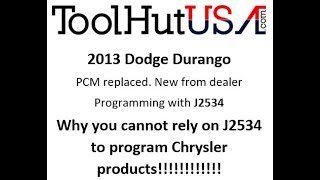
We Have This Part in Stock
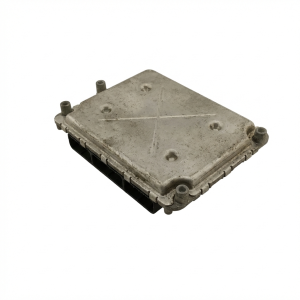
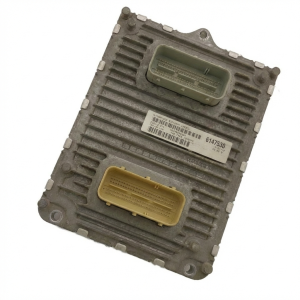

The information in this article is provided for general reference and educational purposes only. Vehicle specifications, procedures, and part compatibility can vary by production date, trim level, and region. Always consult your vehicle's factory service manual and verify part numbers before purchasing or performing repairs. Safety-critical components such as airbags, seat belts, and braking systems should be installed by a qualified professional.
- Dodge DURANGO:
- 🧭 Diagnostic Flowchart
- 🎬 Helpful Videos
- 🛍️ Shop This Part
- What's Unique About the 2018-2020 Dodge DURANGO
- Symptoms You May Notice
- Most Likely Causes
- Rare But Worth Checking
- Diagnosis Steps
- Parts You'll Likely Need
- Related Codes That Often Appear With This One
- Technical Service Bulletins (TSBs) & Recalls
- Platform-Specific Known Issues
- Mechanic-Grade Diagnostic Values
- Scan Tool Commands That Help
- Wiring & Ground Locations
- Real Owner Repair Stories
- Model Year Variations Within This Range
- 🎟️ Get 5% Off