

P0606 on 2015-2022 GMC Acadia: ECM Processor Fault Causes and Fixes
P0606 on a GMC Acadia indicates a serious internal processor fault in the Engine Control Module (ECM). While this often means the ECM needs replacement and programming (~$500-$1500), it can sometimes be falsely triggered by a bad battery, faulty grounds, or even a failed camshaft position sensor. Always diagnose these cheaper possibilities first, as GM has issued specific service bulletins warning against immediate ECM replacement.
- P0606 is a critical fault code indicating a problem with the Engine Control Module's internal processor.
- Do not immediately assume the ECM is bad. On a GMC Acadia, this code can be falsely triggered by a weak battery, bad grounds, or a faulty camshaft position sensor.
- Due to the risk of stalling and unpredictable engine behavior, it is not safe to drive with an active P0606 code.
- Diagnosis should follow a specific order: check TSBs, test the battery/charging system, inspect grounds, and test external sensors *before* condemning the expensive ECM.
- Any ECM replacement requires professional programming to match the module to your vehicle's VIN and specific options.
What's Unique About the 2015-2022 Gmc ACADIA
For the GMC Acadia and other GM vehicles, P0606 doesn't always mean the ECM is bad. GM has issued technical service bulletins (TSBs) acknowledging that other issues can falsely trigger this code. For example, TSB #17-NA-132 explains that an open circuit in the camshaft position sensor can cause a P0606 to set during engine cranking before the actual sensor code has a chance to register; the bulletin explicitly warns technicians not to replace the ECM for this condition. Similarly, TSB #24-NA-050 notes that low voltage from a weak battery or even a jump-start can cause the Electronic Brake Control Module (EBCM) to set a P0606. Technicians are specifically warned not to immediately replace control modules without investigating these other potential root causes first.
Diagnostic Flowchart
Tap your situation to follow the diagnostic path that matches what you're seeing on this vehicle.
Generation note: The 2015-2022 range covers two generations of the GMC Acadia: the first generation (2015-2016, and 2017 'Limited' model on the Lambda platform) and the second generation (2017-2022 on the C1XX platform). While the P0606 code has the same meaning for both, specific causes like sensor failures or wiring issues may differ due to different platform architectures and engine options. The underlying principle of diagnosing external factors (battery, grounds, sensors) before condemning the ECM applies to both generations.
Symptoms You May Notice
- Check Engine Light (MIL) illuminated.
- Vehicle may not start or may be difficult to crank.
- Engine may stall unexpectedly.
- Reduced engine power or entering 'limp mode'.
- Erratic automatic transmission shifting.
- ABS or Traction Control warning lights may illuminate.
- Brake pedal may feel different (per TSB #20-NA-073).
- Poor fuel economy.
- Loss of power steering.
- Dead throttle pedal, with engine only idling.
- Replacing the ECM without checking for TSBs related to other causes like the camshaft position sensor.
- Replacing the Electronic Brake Control Module (EBCM) when the cause is a low voltage event, as warned against in TSB #24-NA-050.
- Replacing fuel system or ignition components in response to drivability issues before confirming the root cause is not the ECM.
- Replacing the throttle body in response to a dead pedal or reduced power, when the issue is the ECM not processing the throttle position sensor's signal correctly.
Most Likely Causes
- Internal Engine Control Module (ECM) Failure 🔴 High Probability → Shop Engine Control Module (ECM) This is the direct definition of the code, where the ECM's internal self-check fails. Over time, electronic components can fail due to heat cycles, vibration, or internal shorts.
How to confirm: After exhaustively ruling out all other possibilities (power, ground, external sensor faults, and software updates), the ECM is condemned. This is a process of elimination.
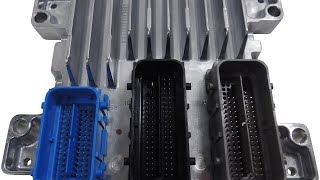
Typical fix: Replace the Engine Control Module and perform programming/reflashing to sync it 🎬 See how to swap and program a new GM ECM with the vehicle's specific VIN and options. Mail-in cloning services are also available.
Est. part cost: $300-$1000 - Low Battery Voltage or Faulty Alternator 🟡 Medium Probability → Shop Vehicle Battery GM TSB #24-NA-050 specifically mentions that low voltage during cranking (jump-starts) or high voltage during charging can cause the EBCM to set a P0606. A weak battery can cause voltage to drop significantly during startup, confusing the module's self-test.
How to confirm: Test the battery's state of charge and health with a professional battery tester. Check the alternator's output voltage with a multimeter (should be ~13.5-14.5V when running). The P0606 may be accompanied by P0562 (low voltage) or P0563 (high voltage).
Typical fix: Replace the battery and/or alternator. Ensure battery terminals are clean and tight. The code may need to be cleared with a scan tool after the repair.
Est. part cost: $150-$600 - Faulty Camshaft Position Sensor (or wiring) 🟡 Medium Probability → Shop Engine Camshaft Position Sensor A GM TSB (#17-NA-132) explicitly states that an open in the camshaft position sensor circuit can cause a P0606 to set during cranking before a specific cam sensor code can be logged. The TSB warns technicians *not* to replace the ECM for this condition, as the crank signal is aborted before the cam sensor code can set.
How to confirm: Inspect the camshaft position sensor wiring for damage. Test the sensor's operation with a multimeter or oscilloscope according to the service manual. Check for pending codes related to the cam sensor (e.g., P0365, P0366).
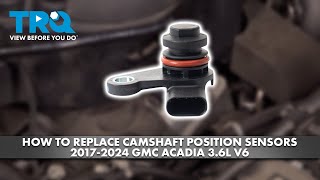
Typical fix: Replace the faulty camshaft position sensor 🎬 Watch: How to replace camshaft position sensors on the 3.6L V6 and/or repair the damaged wiring.
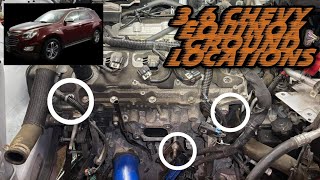
Est. part cost: $30-$100 - Poor Power or Ground Connections ⚪ Low Probability All vehicles are susceptible. Corrosion or looseness at the main ECM ground straps, battery terminals, or fuse block can create high resistance and voltage drops, tricking the ECM into thinking it has an internal fault. On related GM platforms, grounds on the cylinder heads (G103, G104) and the braided strap from the engine to the firewall are common failure points.
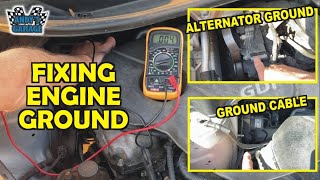
How to confirm: Perform a voltage drop test on the ECM's power and ground circuits. Visually inspect all major ground points from the battery to the chassis and engine block for corrosion and tightness. A voltage drop greater than 0.2V 🎬 Watch: How to check and fix common engine ground issues (200mV) on a ground circuit is unacceptable.
Typical fix: Clean, tighten, or replace corroded ground straps and battery terminals.
Est. part cost: $10-$50
Rare But Worth Checking
- Corrupted ECM Software or Aftermarket Tune: If a previous programming attempt failed or was interrupted, the software can become corrupted, leading to a P0606 code. Similarly, an improper aftermarket engine tune can cause this code, sometimes referred to as the 'ECM death code' in tuning communities. A dealer or qualified shop may be able to reflash the module with the correct factory software as a potential fix.
- Faulty Body Control Module (BCM): → Shop Body Control Module A preliminary information bulletin (PIC6440B) for some newer GM SUVs notes that an out-of-date BCM software can cause a P0606 to set in the BCM, which may trigger other issues. The fix is to update the BCM software, not replace it.
- Faulty Aftermarket Remote Starter: Improperly installed aftermarket remote start systems can tap into critical CAN bus or power wires. An internal failure or short circuit within the remote start module can disrupt communication or cause voltage fluctuations, falsely triggering a P0606 in the ECM.
Diagnosis Steps
- Check for other DTCs. Pay close attention to any codes related to sensors (camshaft), voltage (P0562/P0563), or communication.
- Review TSBs. Check for bulletins like #17-NA-132 (cam sensor) and #24-NA-050 (low voltage) that provide specific alternative diagnoses for P0606.
- Test the Battery and Charging System: Use a professional tester to verify the battery's health and cold cranking amps. Check alternator output (~13.5-14.5V). A simple voltage check may not be sufficient for modern AGM batteries.
- Inspect All Power and Ground Connections: Visually inspect and clean the battery terminals. Locate and verify the main engine-to-chassis ground straps are clean, tight, and not corroded or broken. On similar GM platforms, key grounds are on the cylinder heads and firewall.
- Diagnose External Inputs: Following TSB guidance, thoroughly test the camshaft position sensor and its circuit for opens or shorts.
- Check for Software Updates: A dealer or qualified shop with a Techline Connect subscription can check if a software reflash is available for the ECM or other modules like the BCM.
- Verify ECM Power/Ground at the Connector: If all else is good, use a multimeter to confirm the ECM is receiving proper voltage and has a solid ground at its own connector pins, per the vehicle's wiring diagram.
- Condemn the ECM: If all external factors have been ruled out, the ECM itself is the likely culprit and requires replacement and programming. Consider the Federal Emissions Warranty, which may cover the ECM for up to 8 years/80,000 miles.
Parts You'll Likely Need
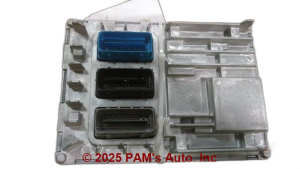
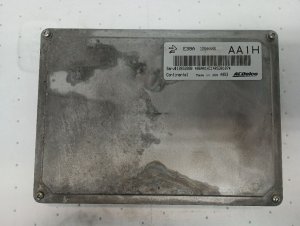
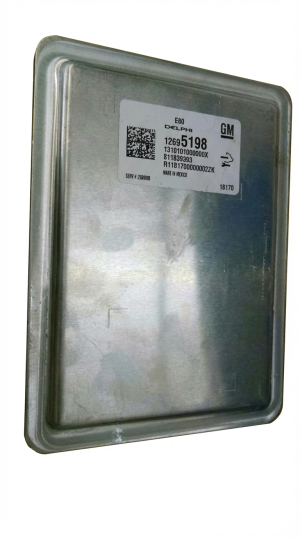
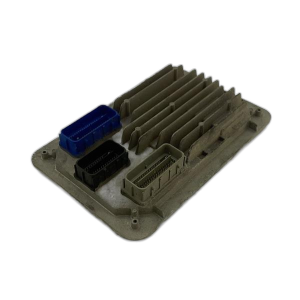
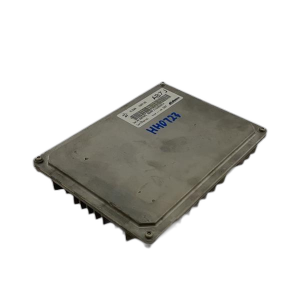
- Engine Control Module (ECM)
(OEM #e.g., 12672624 (for 2017 3.6L))— This is the most common definitive fix for a true P0606, after all other external causes have been ruled out.
Trusted brands: ACDelco (OEM)
OEM price range: $500-$1000
Aftermarket price range: $300-$700 (Remanufactured/Programmed).
Related Codes That Often Appear With This One
- C0021, C05D2, C0595, C2A3B, C0024, C053D, P25A2 — TSB #20-NA-073 lists these brake-related codes as potentially appearing with P0606, indicating a fault that may affect the brake control system.
- P0562 or P0563 — These codes indicate low or high system voltage, respectively. TSB #24-NA-050 notes they can appear with P0606 when a battery or charging system issue is the root cause.
- P0365 or P0366 — These are camshaft position sensor codes. According to TSB #17-NA-132, a fault in this circuit can trigger a P0606 *instead* of these codes during cranking.
Technical Service Bulletins (TSBs) & Recalls
- 17-NA-132: Camshaft position sensor circuit fault causing P0606.
- 24-NA-050: Low/high voltage events causing P0606 in the EBCM.
- 20-NA-073: P0606 appearing with brake system codes and symptoms.
- 24-NA-111: General bulletin for correcting P0606, points to software updates.
- PIC6440B: Preliminary information on BCM software causing P0606.
Platform-Specific Known Issues
- TSB #17-NA-132: Warns that an open in the camshaft position sensor circuit can set a P0606 during cranking before a cam sensor DTC can be logged. It explicitly states NOT to replace the ECM for this condition.
- TSB #24-NA-050: Details how low battery voltage (from a weak battery or jump-start) can cause the Electronic Brake Control Module (EBCM) to log a P0606. The fix is to address the battery/charging system, not the EBCM. A software update was also being developed to make the module less sensitive.
- TSB #20-NA-073: Connects P0606 with a list of brake system codes (C0021, C05D2, etc.) and symptoms like a change in brake pedal feel, pointing to an issue affecting the brake control module.
- Federal Emissions Warranty: The ECM is often covered under this federal warranty for 8 years or 80,000 miles. Owners should check with a dealer about this coverage before paying for a replacement.
Mechanic-Grade Diagnostic Values
- Voltage Drop on ECM Ground Circuit — expected: < 0.2 Volts (200 millivolts). Failure: A reading higher than 0.2V indicates excessive resistance in the ground path, which can starve the module of a clean ground and trigger a P0606.
- Alternator Output Voltage — expected: 13.5V - 14.5V with engine running. Failure: Voltage below 13.5V may indicate a failing alternator, while voltage above 14.8V can indicate a faulty voltage regulator, both of which can cause a P0606.
Hidden / Shadow Codes Worth Checking
- P0606 5A: Internal Control Module Read Only Memory (ROM) Malfunction. This specific symptom byte strongly suggests an unrecoverable internal hardware failure within the ECM itself, making replacement the most likely fix. (see via A GM-specific scan tool like the GDS2 (Global Diagnostic System 2) is required to view symptom bytes.)
Scan Tool Commands That Help
- GDS2 / Techline Connect: Service Programming System (SPS) — This function is mandatory after installing a new ECM. It connects to GM's servers to download the correct VIN-specific software and calibration files into the new module.
- GDS2: Module Setup / Immobilizer Learn — After programming a new ECM via SPS, this procedure must be run to configure the module to the vehicle's specific options and learn the anti-theft (immobilizer) key data. Failure to perform this step will result in a no-start condition.
Wiring & Ground Locations
- G103 / G104 — Typically located on the rear of the cylinder heads on many GM V6 and V8 engines.. These are primary engine ground points. If they become loose or corroded, it can create a poor ground path for the ECM and other critical engine sensors, leading to a false P0606.
- G108 — Often found on the engine block, providing a ground path via a braided strap to the frame or firewall.. This is a main engine-to-body ground. A failure here can cause widespread electrical issues, including intermittent power and ground to the ECM.
- ECM Connectors (X1, X2) — The main multi-pin connectors at the ECM itself. Location varies by generation (see Model-Year Variations).. This is the final point for testing power and ground directly at the module. Corrosion or pushed-out pins in these connectors can directly cause a P0606.
Real Owner Repair Stories
- AcadiaForum.net user reports (2012 GMC Acadia (Lambda Platform)) — P0606, Service Stabilitrak message, reduced engine power.
❌ Tried (didn't work) Replacing the throttle body.
✅ What actually fixed it The final resolution was replacing and programming the Engine Control Module (ECM). - General automotive forum discussions (Various GM models, including Acadia) — Intermittent P0606, random stalling, no-start, check engine light.
❌ Tried (didn't work) Clearing the code, checking the battery.
✅ What actually fixed it The fault was traced to a poorly installed aftermarket remote starter. The device was intermittently shorting a communication or power wire, causing the ECM to report an internal fault. Removing the remote start system resolved the P0606 code permanently.
OEM Part Supersession History
12672624→12684227 -> 12690382 -> 12711832 (latest)— Hardware and firmware revisions to improve reliability and address potential processing glitches that could contribute to false P0606 codes.
Heads up: While older numbers may work, it is always recommended to program the vehicle with the latest available part number to get all reliability updates.
Model Year Variations Within This Range
- 2015-2017 (Limited): These models are on the Lambda platform. The ECM is typically located in the engine compartment, often near the front driver's side, sometimes behind the bumper cover or air filter housing. This location can make it more vulnerable to front-end collision damage or water intrusion.
- 2017-2022: These models are on the C1XX platform. The ECM is generally located in the engine bay near the firewall or battery, a more traditional and often better-protected location. The physical part numbers and ground locations may differ significantly from the earlier generation.
Helpful Videos
We Have This Part in Stock

The information in this article is provided for general reference and educational purposes only. Vehicle specifications, procedures, and part compatibility can vary by production date, trim level, and region. Always consult your vehicle's factory service manual and verify part numbers before purchasing or performing repairs. Safety-critical components such as airbags, seat belts, and braking systems should be installed by a qualified professional.
- Gmc ACADIA:
- 🧭 Diagnostic Flowchart
- 🎬 Helpful Videos
- 🛍️ Shop This Part
- What's Unique About the 2015-2022 Gmc ACADIA
- Symptoms You May Notice
- Most Likely Causes
- Rare But Worth Checking
- Diagnosis Steps
- Parts You'll Likely Need
- Related Codes That Often Appear With This One
- Technical Service Bulletins (TSBs) & Recalls
- Platform-Specific Known Issues
- Mechanic-Grade Diagnostic Values
- Hidden / Shadow Codes Worth Checking
- Scan Tool Commands That Help
- Wiring & Ground Locations
- Real Owner Repair Stories
- OEM Part Supersession History
- Model Year Variations Within This Range
- 🎟️ Get 5% Off