

P0606 on 2014-2021 GMC Sierra 1500: Brake Module Fault vs. ECM Failure
On a 2014-2021 GMC Sierra, P0606 often points to a software glitch in the Brake System Control Module (BSCM), especially if code C0021 is also present. The fix is typically a dealer software update, not an expensive module replacement. Always check for loose battery cables, poor grounds (especially G218), and ECM connections first, as these are common and cheaper failure points.
- On a 2014-2021 Sierra, P0606 is a critical code that frequently points to the brake system, not just the engine computer.
- Before considering expensive module replacement, investigate a BSCM software update, especially if code C0021 is also present.
- Always perform basic electrical checks first: ensure the battery is healthy and all connections to the ECM and BSCM are clean and tight.
- Do not drive the vehicle if you experience a hard brake pedal or other braking abnormalities, as your safety is at risk.
- Professional diagnosis is highly recommended due to the safety-critical nature of the brake system and the need for specialized programming tools.
What's Unique About the 2014-2021 Gmc SIERRA 1500
Unlike many vehicles where P0606 defaults to a failed Engine Control Module (ECM), on these specific GMC Sierra trucks, GM has issued multiple Technical Service Bulletins (TSBs) linking the code to the Brake System Control Module (BSCM). Often, the root cause is a software anomaly that can be fixed with a dealer-performed reprogram, not a hardware failure. This is a critical distinction that can save owners from unnecessarily replacing an expensive ECM. TSBs like PIT5634 explicitly warn that following standard P0606 diagnostics can lead to a misdiagnosis and incorrect repair.
Diagnostic Flowchart
Tap your situation to follow the diagnostic path that matches what you're seeing on this vehicle.
Generation note: The 2014-2021 year range covers two generations of the GMC Sierra 1500: the third generation (K2XX, 2014-2018) and the fourth generation (T1XX, 2019-2021). The TSBs provided cover models in both generations, indicating that issues like BSCM software faults and ECM connection problems can occur across this entire year span. The issue is particularly well-documented for 2019-2020 models.
Symptoms You May Notice
- Check Engine Light (Malfunction Indicator Lamp) illuminated.
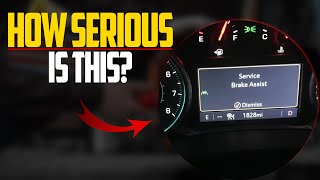
- "Service Brake System" message on the Driver Information Center (DIC).
- "Reduced Engine Power" and "Speed Limited" messages.
- Brake pedal feels hard or has a different, longer, or softer feel than normal.
- Loss of power brake assist. 🎬 See what the Service Brake Assist message actually means.
- ABS and StabiliTrak/Traction Control lights may be illuminated.
- Vehicle may not start or may stall.
- Replacing the Engine Control Module (ECM) without first checking for TSBs related to BSCM reprogramming or inspecting electrical connections. Many TSBs explicitly warn against this.
- Replacing the Brake System Control Module (BSCM) when only a software update is needed.
Most Likely Causes
- Brake System Control Module (BSCM) Software Anomaly 🔴 High Probability → Shop ABS Control Module Multiple GM TSBs (#PIT5730A, #20NA073, #PIT5728D) confirm this is a known issue where electrical anomalies or outdated software can cause the BSCM to set a P0606, often with C0021. TSB #PIT5728D specifically notes this can happen after a remote start via the OnStar app.
How to confirm: Scan all vehicle modules. If P0606 is stored in the BSCM and accompanied by C0021, a software issue is the most likely cause. Check the vehicle's service history for related software updates.
Typical fix: Reprogram the Brake System Control Module (BSCM) with the latest software available from GM. This must be done at a dealership or a qualified shop with access to GM's TIS2Web service. This service is often covered under GM's 8-year/80,000-mile Federal Emissions Warranty.
Est. part cost: $0 - Poor Electrical Connections or Grounds 🟡 Medium Probability TSB #PIP5609 explicitly advises technicians to check the Engine Control Module's (ECM) electrical connections and grounds before replacing the module for a P0606 code. TSB #18-NA-161 identifies the G218 ground on the front of the dash as a common source of poor connections that can cause various electrical issues.
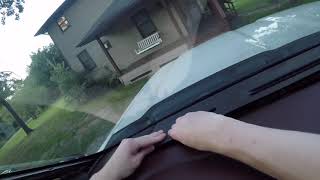
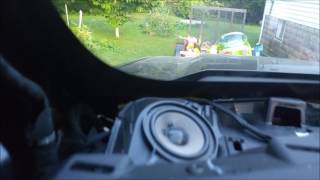
How to confirm: Visually inspect the ECM and BSCM connectors for looseness, corrosion, or damage. Check and clean the main engine and chassis ground points, especially the G218 ground. YouTube videos from channels like AnthonyJ350 show common GM truck ground locations. 🎬 Watch: How to find and fix the G218 ground issue.
Typical fix: Clean, tighten, or repair the affected connectors, wires, or ground straps. Adding a redundant ground strap is a common preventative fix recommended by owners.
Est. part cost: $0-$50 - Low Battery Voltage 🟡 Medium Probability → Shop Vehicle Battery Modern control modules are sensitive to voltage fluctuations. A weak or failing battery can cause modules to initialize incorrectly, leading to processor faults. TSB #PIT5634 notes that low voltage conditions can cause the EBCM to incorrectly set a P0606. TSB #24-NA-050 for 2024 HD trucks also describes P0606 being set due to voltage fluctuations during cranking or jump-starting.
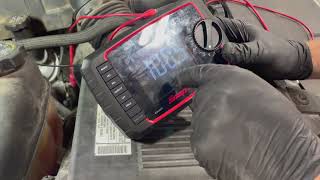
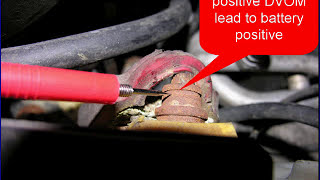
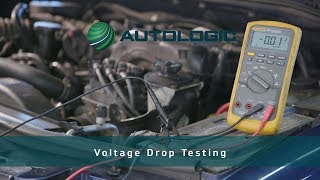
How to confirm: Test the battery with a digital multimeter or a professional battery tester. 🎬 Watch: The best way to perform a voltage drop test. Voltage should be ~12.6V with the engine off and 13.7-14.7V with the engine running.
Typical fix: Recharge or replace the vehicle's battery. Ensure battery terminals are clean and tight. Some owners on forums report that simply disconnecting the battery for 15 minutes and reconnecting can temporarily resolve the issue, pointing to a voltage-induced glitch.
Est. part cost: $150-$350 - Internal Failure of a Control Module (ECM or BSCM) ⚪ Low Probability While possible, this should be considered the last resort after all software, wiring, and voltage issues have been ruled out, as per GM's own service bulletins. A true internal failure is less common than the software or connection issues described above.
How to confirm: This is a diagnosis of exclusion. If reprogramming, checking connections, and verifying voltage do not resolve the code, the module itself is likely faulty.
Typical fix: Replace the faulty module (ECM or BSCM) and program the new unit to the vehicle. This requires specialized tools.
Est. part cost: $400-$1200
Rare But Worth Checking
- Faulty Camshaft Position Sensor: → Shop Engine Camshaft Position Sensor TSB #17-NA-132 (for 2017-2018 models) notes that an open in the camshaft position sensor circuit can sometimes incorrectly trigger a P0606 code during engine cranking before the correct cam sensor code has a chance to set. The bulletin explicitly states NOT to replace the ECM for this condition until the cam sensor circuit is checked.
Diagnosis Steps
- Perform a full vehicle scan to see which module set the P0606 code and if any other codes, especially C0021, are present. Note if P0606 is in the BSCM/EBCM.
- Check for relevant TSBs based on the codes found. If P0606 and C0021 are in the BSCM, a software update is the most likely fix.
- Inspect the battery terminals for tightness and corrosion. Test the battery and charging system to ensure stable voltage above 13.5 volts when running. A weak battery is a known cause of this code.
- Thoroughly inspect the wiring and connectors at the Engine Control Module (ECM) and Brake System Control Module (BSCM). Look for any signs of damage, corrosion, or loose pins as per TSB #PIP5609.
- Check engine and chassis ground connections to ensure they are clean and tight. Pay special attention to the G218 ground located on the firewall/dash area, as it's a known problem spot.
- If TSBs point to a software fix, have a dealer or qualified shop reprogram the BSCM. Confirm if the repair is covered under the 8yr/80k mile emissions warranty.
- If TSB #17-NA-132 applies to your model year, check the camshaft position sensor circuit before considering module replacement.
- If all other steps fail to resolve the issue, the final step is to diagnose the specific control module (ECM or BSCM) for internal failure and replace it if necessary.
Parts You'll Likely Need
- Brake System Control Module (BSCM) Reprogramming
(OEM #N/A (Service))— This is a service, not a part. It's the most common fix documented in GM TSBs for the P0606/C0021 combination. Labor is often quoted at 0.5 hours.
Trusted brands: GM Dealer Service (TIS2Web)
OEM price range: $100-$250 (Potentially free under 8yr/80k mile emissions warranty)
Aftermarket price range: N/A - Engine Control Module (ECM)
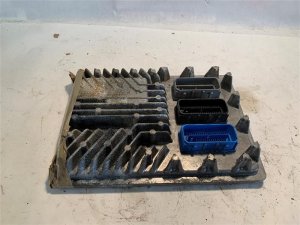
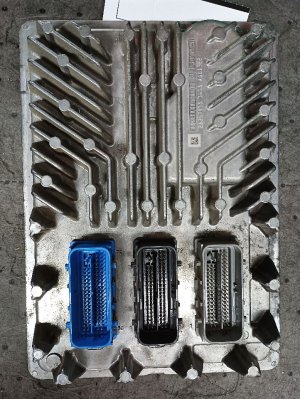
(OEM #ACDelco 12679078 (Example for 2017 5.3L/6.2L))— This is a potential cause if wiring and BSCM issues are ruled out, but it should not be the first part replaced.
Trusted brands: ACDelco (GM Original Equipment)
Related Codes That Often Appear With This One
- C0021 — This code for 'Brake Booster Performance' is the most common companion to P0606 when the issue is related to the Brake System Control Module (BSCM). Multiple TSBs (#PIT5730A, #PIT5728D, #20NA073) cite these two codes appearing together as the primary indicator for a required BSCM software update.
- P25A2 — This code for 'Brake Booster Pump Motor Control Module Requested MIL Illumination' can also accompany P0606, as noted in TSB #20NA073 and TSB #PIT5728D. It confirms the Engine Control Module (ECM) is illuminating the check engine light at the request of the brake module.
- C05D2, C0595, C2A3B, C0024, C053D — These are various other chassis and brake-related codes that TSB #20NA073 lists as potentially appearing alongside P0606. They indicate specific faults the BSCM has detected within its own system, such as 'Brake Master Cylinder Piston Excessive Travel' or 'Brake Pressure Sensor Circuit Performance', further confirming the problem lies within the brake control system.
Technical Service Bulletins (TSBs) & Recalls
- 20-NA-073: Details the BSCM software issue, lists many associated DTCs, and provides the reprogram correction.
- PIT5730A: Specifically addresses P0606 and C0021 on 2020 models, calling for a BSCM reprogram.
- PIT5728D: Links P0606/C0021 to a previous service campaign and notes the issue is more likely after a remote start.
- PIP5609: Warns technicians to check ECM power/ground connections before replacing the ECM for P0606.
- 17-NA-132: Points to a faulty camshaft position sensor circuit as a possible mimic of an ECM failure.
- 18-NA-161: Identifies poor ground at G218 as a cause for various electrical issues.
- PIT5634: Notes that low voltage can cause the EBCM to incorrectly set a P0606.
- 24-NA-050: Confirms voltage fluctuations during cranking/jump-starting can set P0606 on newer HD trucks.
Platform-Specific Known Issues
- A known software issue in the Brake System Control Module (BSCM) can cause P0606 and C0021 to set, resulting in a hard brake pedal and DIC warnings. TSB #PIT5730A addresses this for 2020 models with a software update.
- A similar issue can occur on 2019 models after a specific service campaign (N192268090) is performed, which is then corrected by a subsequent BSCM reprogram per TSB #PIT5728D. This TSB also notes the problem is more likely to occur after using the OnStar app for a remote start.
- Owners frequently trigger this fault code unintentionally by causing a voltage drop, such as by replacing the battery or jump-starting the vehicle.
Mechanic-Grade Diagnostic Values
- Battery Voltage (Engine Off) — expected: ~12.6 Volts. Failure: Voltage significantly below 12.4V indicates a discharged or failing battery.
- Charging System Voltage (Engine Running) — expected: 13.5V - 14.7V. Failure: Voltage below 13.5V or fluctuating wildly can indicate an alternator issue, which can trigger P0606.
- Battery Cable Voltage Drop Test — expected: < 200 millivolts (0.2V). Failure: A reading higher than 200mV under load indicates high internal resistance, requiring cable replacement.
- Negative Battery Cable Clamp Nut Torque — expected: 7 Nm (62 lb in). Failure: Loose clamps can cause intermittent voltage issues.
- Negative Battery Cable to Engine Block Nut Torque — expected: 45 Nm (33 ft lb). Failure: A loose main engine ground can cause a wide range of electrical faults.
Hidden / Shadow Codes Worth Checking
- P0606 (masking a camshaft sensor fault): On 2017-2018 models, an open in the camshaft position sensor circuit can cause the ECM to set a P0606 during cranking before the appropriate cam sensor DTC has a chance to register. The crank is aborted, and only P0606 is stored. (see via This is a diagnostic trap, not a visible code. If P0606 is present with a crank/no-start symptom, the camshaft position sensor circuit must be tested directly, even with no cam sensor codes present.)
Scan Tool Commands That Help
- GM GDS2 / TIS2Web: K160 Brake System Control Module Programming and Setup — This is the primary dealer-level fix when P0606 is accompanied by C0021 or other BSCM-related codes, as directed by multiple TSBs. It updates the module's software to correct internal logic errors.
- GM Service Tool (GDS2): Clear EBCM DTCs (Labor Op *2486148) — TSB 24-NA-050 notes that after a voltage-induced P0606, simply disconnecting the battery may not clear the code. A specific command using the scan tool is required to erase the fault from the EBCM memory.
- Manual Procedure (No Tool): Brake System Relearn/Adaptation — After a brake service (like a pad change) on 2019+ models, if brake system warnings appear. The procedure involves turning the ignition on (engine off), then pressing and holding the brake pedal firmly for approximately 5 minutes until the 'BRAKE' light on the dash flashes. This allows the BSCM to relearn pedal travel and pressure parameters. Codes must be cleared after.
Wiring & Ground Locations
- G218 — Located on the driver's side of the dash, behind the A-pillar trim panel and speaker. It is a stud with a nut securing one or more ground eyelets.. This is a primary ground for the Body Control Module (BCM). TSB #PIT5405C identifies it as a notorious source of electrical problems. The factory dash insulator mat can get trapped between the ground eyelet and the body, causing a poor connection that leads to widespread electrical issues, including module communication faults that can mimic or cause a P0606.
- Negative Battery Cable Assembly — The main cable runs from the negative battery post to multiple connection points, typically one on the engine block and another on the chassis/frame.. This entire assembly can fail due to internal corrosion or loose crimps that are not visually apparent. A failing cable can cause intermittent voltage drops and electrical noise, confusing sensitive modules like the BSCM and ECM and triggering a P0606, even if basic voltage tests seem normal.
- Engine Wiring Harness (Driver's Side) — The harness routing near the ECM/TCM bracket, under the driver's side upper control arm, and around the shock tower.. TSB 21-NA-149 (for related HD trucks) warns that this harness can rub (chafe) against sharp metal edges, wearing through insulation and causing wires to short. This can directly cause a P0606 and mimic a complete ECM failure, leading to unnecessary replacement.
Real Owner Repair Stories
- Reddit user 'Abraham580' in r/Silverado (2012 Silverado (similar K2XX electrical architecture)) — Crazy computer stuff, similar to electrical gremlins associated with P0606.
❌ Tried (didn't work) Replacing the battery, Replacing the alternator, Replacing alternator-to-battery cable, Replacing block-to-body ground strap
✅ What actually fixed it Replacing the entire negative battery cable assembly. The user noted the old cable looked good and passed multimeter tests, but was internally faulty. - YouTube channel 'Dustin Turner' (2014 Silverado High Country) — Headlights and dash lights flickering/dimming when using turn signals or brakes, truck completely shutting off when turning, various warning messages (park assist, power steering disabled).
❌ Tried (didn't work) Testing the alternator and battery (both tested fine).
✅ What actually fixed it Fixing the G218 ground. The user found sound-deadening material was trapped under the ground connection. Trimming the material away and re-securing the ground nut corrected all electrical issues.
"I Checked Everything" — The Actual Cause
- A common failure pattern reported by owners is a faulty negative battery cable assembly. The cable can pass a simple visual inspection and basic multimeter voltage/continuity tests but still be internally corroded or have a loose crimp. This creates high resistance under load, causing voltage drops that trigger module faults like P0606. In one documented case, this was the final fix after replacing the battery and alternator failed to solve the problem.
Model Year Variations Within This Range
- 2019: A recall was issued for 2019 Sierra 1500 models due to EBCM (Electronic Brake Control Module) software that could erroneously disable the ABS and Electronic Stability Control systems. The fix was a software reflash, which aligns with the common fix for P0606 on these trucks.
- 2019-2021 (T1XX generation): The physical location of some control modules may differ from the earlier 2014-2018 (K2XX) generation. For example, on the related HD truck platform, the ECM moved from the engine bay to the driver's side wheel well starting in 2020, indicating a potential location change for the 1500s as well.
Helpful Videos


We Have This Part in Stock

The information in this article is provided for general reference and educational purposes only. Vehicle specifications, procedures, and part compatibility can vary by production date, trim level, and region. Always consult your vehicle's factory service manual and verify part numbers before purchasing or performing repairs. Safety-critical components such as airbags, seat belts, and braking systems should be installed by a qualified professional.
- Gmc SIERRA 1500:
- 🧭 Diagnostic Flowchart
- 🎬 Helpful Videos
- 🛍️ Shop This Part
- What's Unique About the 2014-2021 Gmc SIERRA 1500
- Symptoms You May Notice
- Most Likely Causes
- Rare But Worth Checking
- Diagnosis Steps
- Parts You'll Likely Need
- Related Codes That Often Appear With This One
- Technical Service Bulletins (TSBs) & Recalls
- Platform-Specific Known Issues
- Mechanic-Grade Diagnostic Values
- Hidden / Shadow Codes Worth Checking
- Scan Tool Commands That Help
- Wiring & Ground Locations
- Real Owner Repair Stories
- "I Checked Everything" — The Actual Cause
- Model Year Variations Within This Range
- 🎟️ Get 5% Off