

P0606 on 2010-2015 GMC Terrain: ECM Processor Fault Causes and Fixes
P0606 on a 2010-2015 GMC Terrain indicates an internal processor fault in a control module, usually the Engine Control Module (ECM). While this often means the ECM needs replacement (~$500-$1000), always check for software updates and thoroughly rule out bad grounds, low battery voltage, or a faulty camshaft position sensor circuit first, as these are common, cheaper-to-fix causes.
- P0606 is a critical code indicating a processor fault, making the vehicle unsafe to drive.
- Do not immediately replace the Engine Control Module (ECM). This code can be misleading.
- First, have the battery and charging system tested. Then, check for any available ECM software updates from a GM dealer.
- Thoroughly inspect battery connections and main engine/chassis ground straps for corrosion or looseness, as this is a common and inexpensive fix.
- If the vehicle has a crank-no-start condition, investigate the camshaft position sensor circuit before condemning the ECM, per TSB 17-NA-132.
What's Unique About the 2010-2015 Gmc TERRAIN
On many GM vehicles, including the Terrain and its platform-mate the Chevrolet Equinox, the P0606 code is not as straightforward as it seems. A key GM Technical Service Bulletin (TSB) notes that this code can be shared across multiple modules, not just the engine computer. [⭐ TSB #05-06-04-060A] Furthermore, other critical GM TSBs show this code can be falsely triggered by a bad camshaft position sensor circuit during startup or by software glitches in the brake or body control modules. This makes it critical to diagnose thoroughly before condemning the expensive ECM, as the root cause is often external to the module itself.
Diagnostic Flowchart
Tap your situation to follow the diagnostic path that matches what you're seeing on this vehicle.
Symptoms You May Notice
- Check Engine Light is on
- Engine stalls or runs rough
- Vehicle will not start or is very hard to start
- Reduced Engine Power message displayed
- Erratic or poor automatic transmission shifting
- Other warning lights (like ABS or StabiliTrak) may be on
- Decreased fuel economy
- Engine misfires or unusual idle
- Immediately replacing the ECM without checking for software updates. A re-flash is much cheaper and is a common fix.
- Replacing the ECM for a crank-no-start condition when the actual cause is a faulty camshaft position sensor circuit, as warned in TSB 17-NA-132.
- Overlooking a simple bad battery or corroded ground strap, which can mimic the symptoms of a failed ECM.
Most Likely Causes
- Internal ECM/PCM Failure 🔴 High Probability This is the default meaning of the code; the module's self-diagnostics have determined it is internally compromised due to hardware failure or data corruption.
How to confirm: This is a diagnosis of exclusion. A technician will confirm all other possible causes (wiring, grounds, software, other sensors) are not at fault before condemning the ECM.
Typical fix: Replace the Engine Control Module and program it to the vehicle.
Est. part cost: $300-$600 - Poor Power or Ground Connections 🟡 Medium Probability Corroded or loose ground straps and battery connections can cause voltage fluctuations that confuse control modules, leading them to set internal fault codes. Key ground points on GM platforms, like those from the engine block to the firewall or frame, are known to fail.
How to confirm: Visually inspect all battery terminals, main chassis grounds (especially firewall and engine block straps), and the ECM connector and wiring for corrosion, looseness, or damage. Perform a voltage drop test on the power and ground circuits; a reading over 0.2-0.3 volts indicates excessive resistance.
Typical fix: Clean, tighten, or replace faulty battery terminals, cables, or ground straps. Applying dielectric grease can help prevent future corrosion.
Est. part cost: $10-$100 - ECM Software Anomaly 🟡 Medium Probability GM has issued multiple service bulletins for various models where a P0606 can be resolved with a software update rather than a hardware replacement. These glitches can cause the module to fail its own internal checks.
How to confirm: A dealership or qualified shop with access to GM's Techline Connect system can check for and apply available software updates for the ECM or other related modules like the Brake System Control Module (BSCM).
Typical fix: Reprogram the ECM with the latest software calibration.
Est. part cost: $0
Rare But Worth Checking
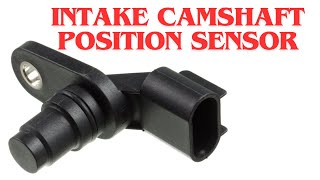
- Faulty Camshaft Position Sensor Circuit: → Shop Engine Camshaft Position Sensor A critical GM TSB (#17-NA-132) points out that on some models, a faulty cam sensor circuit can cause a P0606 during a crank-no-start condition. The ECM aborts the start and sets P0606 before it has a chance to set the correct cam sensor code. The bulletin explicitly states NOT to replace the ECM for this condition. Diagnosis of the cam sensor circuit is required.
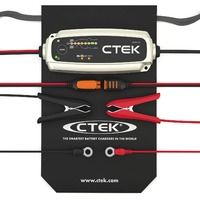
- Low Battery Voltage / Charging System Fault: → Shop Vehicle Battery A weak, failing, or improperly connected battery can cause modules to behave erratically during startup, setting a false P0606. One GM TSB (#24-NA-050) specifically links P0606 in the brake module to low voltage events during cranking or jump-starting. Always load test the battery and check alternator output (typically 13.5-14.5V) before proceeding with complex diagnostics.
Diagnosis Steps
- Verify the battery is fully charged and passes a load test. Check the charging system for proper voltage output (typically 13.5-14.5V).
- Scan for all codes from all modules, not just the ECM. Note if P0606 was set by another module like the Brake System Control Module (BSCM).
- Inspect all power and ground connections to the ECM. Check for clean, tight connections at the battery, firewall, and engine block. Perform a voltage drop test on the main ground circuits.
- If a crank-no-start condition is present, thoroughly inspect the camshaft position sensor and its wiring before considering ECM replacement, per GM TSB 17-NA-132.
- Check with a GM dealer or qualified shop for any available ECM or BSCM software updates. A re-flash may solve the problem.
- If all the above steps fail to resolve the issue, and no other causes are found, the ECM is likely faulty.
- Replace the ECM. This must be followed by programming the new module to your vehicle's VIN and security information.
Parts You'll Likely Need
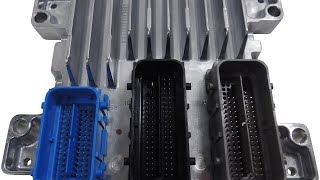
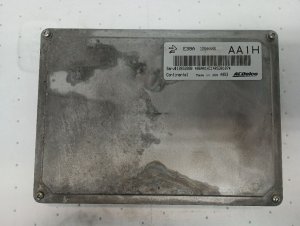
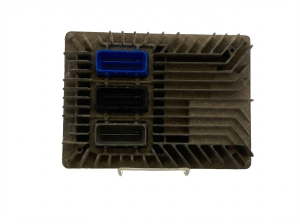
- Engine Control Module (ECM)
(OEM #12653998, 12643248, 12637157 (Varies by year/engine, verify with VIN))— This is the most common definitive fix after all other diagnostic steps have been exhausted.
Trusted brands: ACDelco (GM Original Equipment)
OEM price range: $400-$600
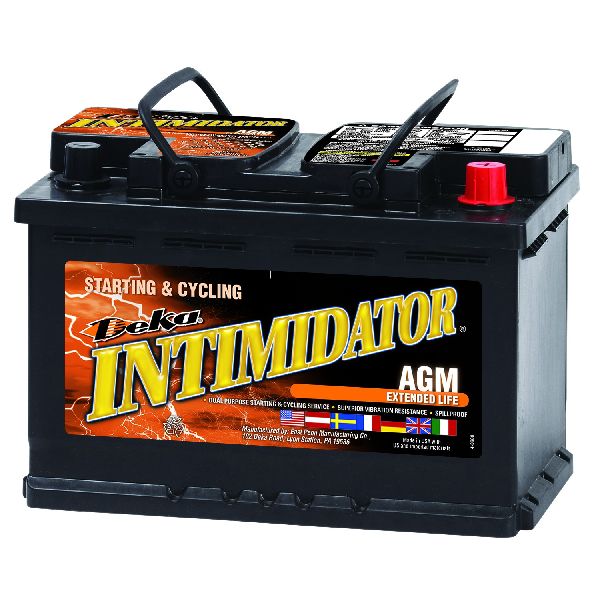
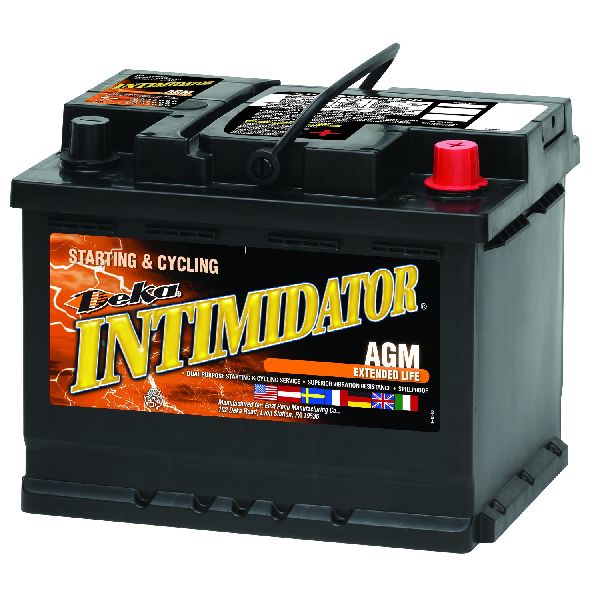
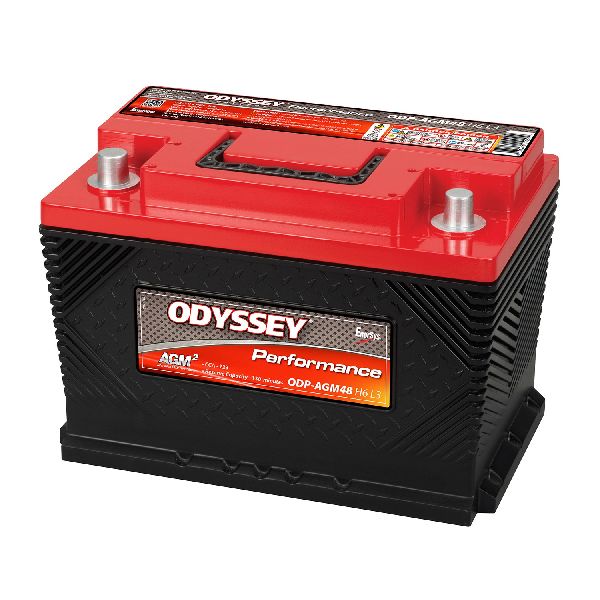
Aftermarket price range: $300-$500 - Battery — A weak or failing battery is a frequent cause of false P0606 codes due to low voltage during startup.
Trusted brands: ACDelco, Interstate, DieHard
OEM price range: $150-$250
Aftermarket price range: $120-$200
Related Codes That Often Appear With This One
- P0562 — System Voltage Low. This code appearing with P0606 strongly suggests the root cause is a battery, alternator, or wiring issue, not an internal module fault.
- P0563 — System Voltage High. This code appearing with P0606 points to a charging system problem, like a faulty alternator, causing voltage spikes that can damage or confuse modules.
- C0021 — Brake Booster Performance. On many GM vehicles, this code appears with P0606 when the Brake System Control Module (BSCM) has a software issue. The fix is often a BSCM reprogram, not an ECM replacement.
Technical Service Bulletins (TSBs) & Recalls
- 05-06-04-060A: Information on control module Diagnostic Trouble Code(s) (DTC)(s) P0601, P0602, P0603, P0604, P0606, P062F, P06F3, P1621 which can be shared in multiple modules.
- 17-NA-132: Warns that a P0606 during a crank-no-start may be caused by a faulty camshaft position sensor circuit, and explicitly states not to replace the ECM for this condition.
- 20-NA-155: Notes that a P0606 can be caused by a software anomaly in the Brake System Control Module and the fix is to reprogram it, not replace the ECM.
- 24-NA-050: Links P0606 in the Electronic Brake Control Module (EBCM) to low or high voltage events like jump-starting or a weak battery, advising against module replacement.
Platform-Specific Known Issues
- The provided TSB #05-06-04-060A specifically notes that on these vehicles, codes like P0606 can be shared across multiple different control modules, highlighting the importance of a full-system scan. [⭐ TSB #05-06-04-060A]
- A known issue documented in TSB 17-NA-132 describes how an open in the camshaft position sensor circuit can cause a P0606 during cranking without setting a specific cam sensor code, leading to a common misdiagnosis.
Mechanic-Grade Diagnostic Values
- ECM Power Supply Voltage — expected: 12.6V or higher with key on, engine off.. Failure: Voltage significantly lower than battery voltage indicates high resistance in the power feed circuit.
- Alternator Output Voltage — expected: 13.5V - 14.5V with engine running.. Failure: Voltage below 13.5V or above 14.5V indicates a charging system fault that can trigger a false P0606.
- ECM Ground Circuit Resistance — expected: Less than 1.0 Ohm between the ECM ground pins and a clean chassis ground.. Failure: Resistance higher than 1.0 Ohm indicates a poor ground connection, a common cause of false module codes.
Scan Tool Commands That Help
- GDS2 (GM Global Diagnostic System 2): Service Programming System (SPS) — This function is required after installing a new Engine Control Module (ECM). It programs the vehicle's VIN and security information into the new module, linking it to the vehicle.
- GDS2 (GM Global Diagnostic System 2): Module Diagnostics > ECM > Data Display — To monitor live data such as module voltage inputs and sensor reference voltages. This helps determine if the ECM is receiving proper power and if any sensor circuits are causing voltage irregularities.
Wiring & Ground Locations
- G103 — Located on the left front of the engine compartment, under the battery tray.. This is a major ground point for multiple components in the engine bay. Corrosion or looseness here can cause intermittent voltage issues for the ECM and other modules.
- G105 — Located on the rear of the engine for the 2.4L engine, or the left rear for the 3.0L engine.. This is a primary engine block ground. A poor connection here directly impacts the ECM's ground reference, leading to unstable operation and potential for a P0606 code.
- ECM Connector X1, Pin 20 — On the main ECM connector.. This is a battery positive voltage input pin. A technician should verify battery voltage is present at this pin to confirm the ECM is receiving main power.
- ECM Connector X1, Pin 73 — On the main ECM connector.. This is a primary ground pin for the ECM. A voltage drop test should be performed on this pin to ensure a solid ground connection.
- Underhood Fuse Block — Located in the left rear of the engine compartment.. Contains multiple fuses (e.g., F20, F42, F52, F53) and relays (e.g., R66) that supply power to the ECM. A faulty fuse or relay can cause a no-power condition or intermittent voltage, triggering P0606.
Real Owner Repair Stories
- terrainforum.net user (2011 GMC Terrain) — Check Engine Light with P0606, reduced engine power, and other throttle-related codes.
❌ Tried (didn't work) Initial diagnosis pointed towards ECM failure.
✅ What actually fixed it The throttle body assembly was faulty and causing an electrical issue that the ECM interpreted as an internal fault. Replacing the entire throttle body assembly resolved the P0606 code. - equinoxforum.net user (Chevrolet Equinox (platform mate)) — Crank-no-start condition with code P0606 stored.
❌ Tried (didn't work) Clearing the code, checking battery.
✅ What actually fixed it Following the advice of TSB 17-NA-132, the owner diagnosed and replaced a faulty exhaust camshaft position sensor. This resolved the crank-no-start and the P0606 code did not return. - GMTNation forum user (GM Vehicle) — P0606 code and limp mode, especially in cold weather.
❌ Tried (didn't work) Initial checks did not immediately identify the cause.
✅ What actually fixed it The problem was traced to a severely corroded positive battery cable and a failing battery with a loose post. Replacing the battery and cleaning the cable connection fixed the issue, showing how power supply integrity is critical. [forum_citations]
OEM Part Supersession History
12637157→12653998— Engineering update for improved reliability or to address known issues.
Heads up: Using an incorrect part number, even if it physically fits, can cause communication errors or non-function. Always verify the correct, most current part number with the vehicle's VIN before ordering.
Helpful Videos



Used OEM Parts in Stock
New Aftermarket Parts Available


The information in this article is provided for general reference and educational purposes only. Vehicle specifications, procedures, and part compatibility can vary by production date, trim level, and region. Always consult your vehicle's factory service manual and verify part numbers before purchasing or performing repairs. Safety-critical components such as airbags, seat belts, and braking systems should be installed by a qualified professional.
- Gmc TERRAIN:
- 🧭 Diagnostic Flowchart
- 🎬 Helpful Videos
- 🛍️ Shop This Part
- What's Unique About the 2010-2015 Gmc TERRAIN
- Symptoms You May Notice
- Most Likely Causes
- Rare But Worth Checking
- Diagnosis Steps
- Parts You'll Likely Need
- Related Codes That Often Appear With This One
- Technical Service Bulletins (TSBs) & Recalls
- Platform-Specific Known Issues
- Mechanic-Grade Diagnostic Values
- Scan Tool Commands That Help
- Wiring & Ground Locations
- Real Owner Repair Stories
- OEM Part Supersession History
- 🎟️ Get 5% Off