

P0606 on 2010-2015 Hyundai Tucson: ECM/PCM Processor Fault Causes and Fixes
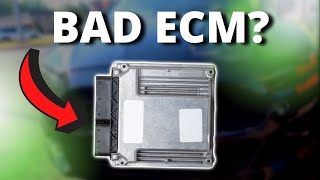
This code indicates a critical internal failure of the engine computer (PCM). The most common fix is replacing the PCM, which must be programmed by a professional. Before replacement, always check the battery and alternator, as unstable voltage can sometimes trigger this code erroneously. Also, check for available software updates (reflash) as some campaigns have addressed logic errors.
- P0606 is a critical code indicating the engine's main computer has failed its internal self-test.
- Do not continue to drive the vehicle, as it can stall without warning, creating a serious safety risk.
- Before spending money on a new PCM, you must verify the battery is healthy and the alternator is providing stable voltage (13.5V-14.5V).
- Ask a dealer to check for applicable software updates, like Service Campaign SA377, which specifically addresses P0606.
- Replacing the PCM is not a DIY job for most people, as the new unit must be professionally programmed to your vehicle's VIN.
- The most likely fix for a persistent P0606 code, after ruling out external factors, is a new or remanufactured PCM.
What's Unique About the 2010-2015 Hyundai Tucson
For the 2010-2015 (LM generation) Tucson, the diagnostic criteria for P0606 are quite specific, including checks on internal sensor power supplies and accelerator pedal sensor grounds. While no widespread recalls exist for P0606 itself, several service campaigns and TSBs were issued for this platform to update ECM logic for other issues, which can sometimes resolve erroneous processor faults. Unlike some vehicles where this code is ambiguous, on the Tucson, after ruling out power/ground issues, it almost always points to an internal hardware or software failure within the PCM itself.
Symptoms You May Notice
- Check Engine Light is on
- Engine stalling unexpectedly, either at idle or while driving
- Engine will not start or has a 'crank, no-start' condition
- Rough or unstable idle
- Noticeable loss of engine power or hesitation
- Erratic or harsh automatic transmission shifting
- Reduced fuel economy
- Other warning lights (ABS, TCS) may illuminate as communication with the PCM is lost
- Replacing sensors like the crankshaft or camshaft position sensor. While these can cause stalling or no-start issues, they would typically set their own specific codes. P0606 points specifically to the PCM itself.
- Condemning the PCM without first thoroughly checking the vehicle's battery, alternator output, and all power/ground connections to the module.
Most Likely Causes
- Internal PCM Failure 🔴 High Probability
How to confirm: This is the default diagnosis after all other possibilities (power, ground, software) have been eliminated. A professional scan tool may show the module as unresponsive or confirm the internal fault. A visual inspection of the PCM board might reveal burnt spots or damaged capacitors.
Typical fix: Replace the Powertrain Control Module (PCM) and have it professionally programmed to the vehicle.
Est. part cost: $500-$1000 - Unstable System Voltage 🟡 Medium Probability All modern control modules are sensitive to voltage fluctuations. A failing alternator or weak battery can cause unpredictable behavior.
How to confirm: Test the battery's health and cranking amps. With the engine running, use a multimeter to check the alternator's output at the battery terminals. Voltage should be stable, typically between 13.5 and 14.5 volts. Spikes or low voltage can trigger a false P0606.
Typical fix: Replace the failing battery or alternator.
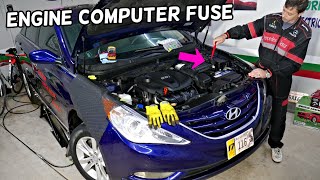
Est. part cost: $150-$500 - PCM Power or Ground Circuit Fault 🎬 Check this video to locate and inspect your ECU fuses ⚪ Low Probability
How to confirm: Visually inspect the wiring harness and connectors at the PCM for any signs of corrosion, damage, or loose pins. Use a multimeter to perform a voltage drop test on the main power and ground circuits to the PCM to ensure there is no excessive resistance. The PCM requires a steady 12.6V+ supply with the key on.
Typical fix: Repair the damaged wiring or clean the corroded connectors/ground points.
Est. part cost: $5-$50 - PCM Software Corruption ⚪ Low Probability Several service campaigns were issued to update ECM logic for fuel injection and knock sensor detection, indicating that software revisions are not uncommon for this platform.
How to confirm: A dealer or qualified shop must connect a factory-level scan tool (like Hyundai's GDS) to check the current software calibration ID against the latest available version from Hyundai. This is not something that can be checked with a basic code reader.
Typical fix: Update or 'reflash' the PCM with the latest manufacturer software. This is often attempted before module replacement.
Est. part cost: $0 (if under warranty/campaign) - $200
Diagnosis Steps
- Scan for any other DTCs. Address other codes first, as in rare cases a shorted sensor can cause PCM issues.
- Thoroughly test the battery to ensure it has a full charge and good cranking amps. A weak battery is a common cause of module communication errors, especially during startup.
- With the engine running, check the alternator output. It should be stable and within the 13.5V-14.5V range. An over-charging or under-charging alternator can damage control modules.
- Inspect the PCM connectors for corrosion, bent pins, or water intrusion. Ensure they are securely connected.
- Check the main power and ground connections to the PCM. Verify clean, tight connections at the battery terminals, engine block, and chassis ground points. Perform a voltage drop test on these circuits.
- Consult a dealer or a well-equipped independent shop to check for any available PCM software updates (reflash), referencing campaigns like SA377 or others that apply to the vehicle's VIN.
- If all the above steps check out, the PCM is almost certainly faulty and requires replacement and programming.
Parts You'll Likely Need
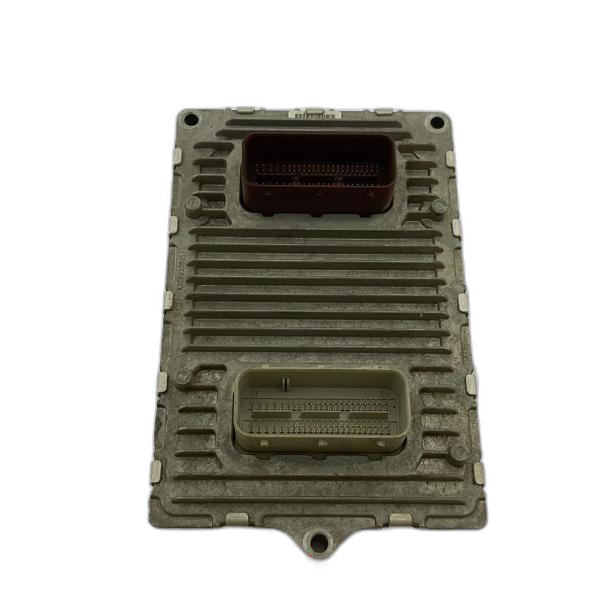
- Powertrain Control Module (PCM)
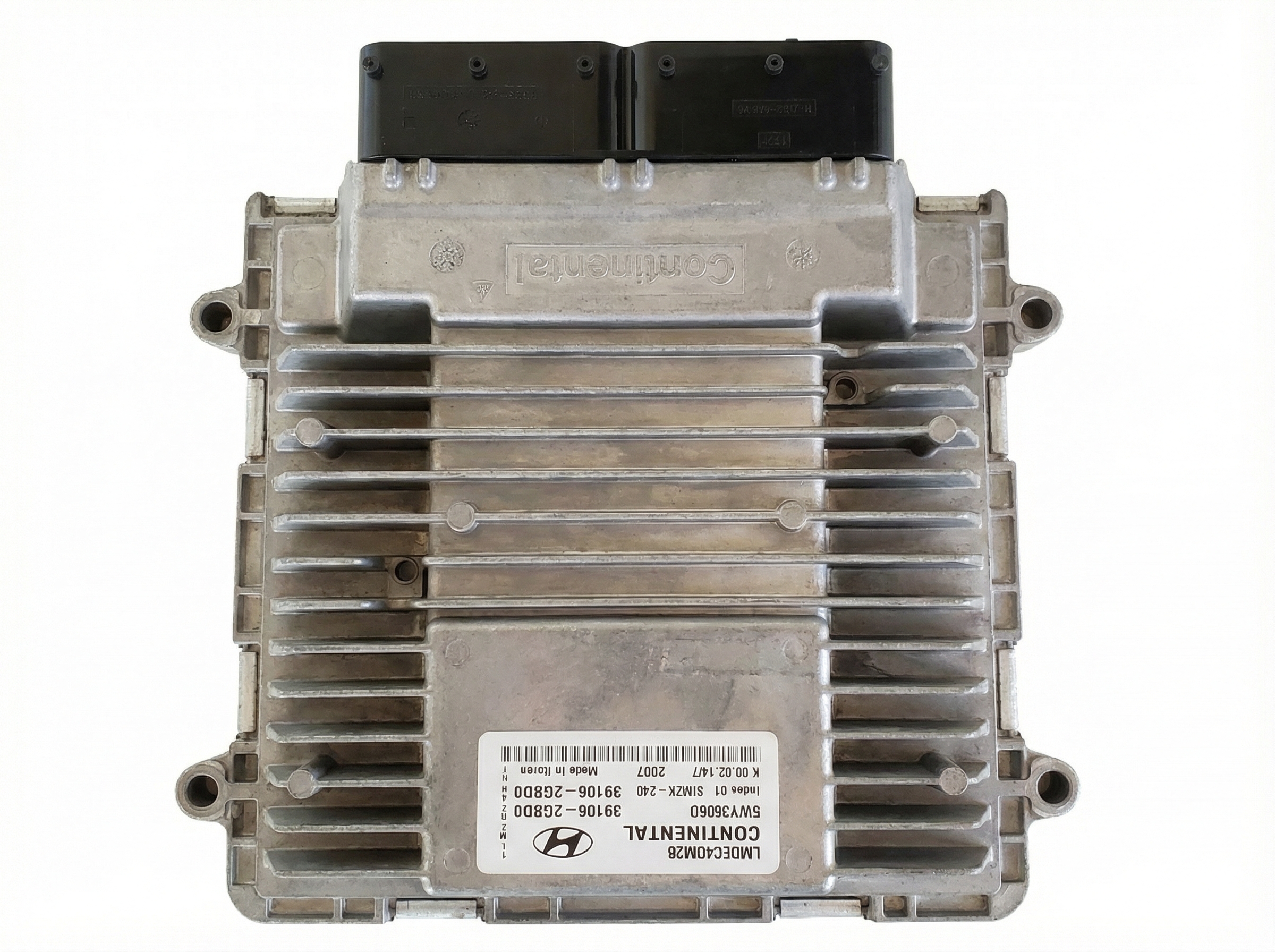
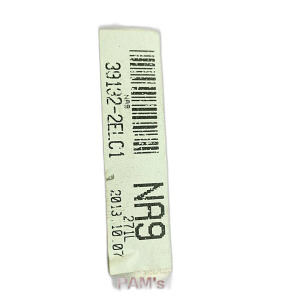
(OEM #Varies by year, engine (2.0L/2.4L), and transmission. Examples include 39104-02070, but must be verified by VIN.)— This code indicates an unrecoverable internal processor fault, meaning the module itself has failed.
Trusted brands: Hyundai (OEM), Bosch (Remanufactured), Cardone (Remanufactured), Flagship One (Remanufactured)
OEM price range: $800-$1200
Aftermarket price range: $400-$700 (Remanufactured)
Related Codes That Often Appear With This One
- U0100 - Lost Communication With ECM/PCM: This code is often a direct result of the P0606 fault, as the PCM's internal failure prevents it from communicating with other modules on the CAN bus.
- P0601 - Internal Control Module Memory Check Sum Error: A companion code that also points to a fatal internal PCM error.
Technical Service Bulletins (TSBs) & Recalls
- Service Campaign SA377: Titled 'ECU LOGIC IMPROVEMENT FOR DTC P0606', this campaign specifically addresses reprogramming the ECU to correct a condition that could cause this code. It requires a dealer-level tool (KDS) to perform the update.
- Service Campaign 959: An ECM software update for 2014-2015 Tucson models with the 2.4L SULEV engine to revise fuel injection logic. While not directly for P0606, software corruption can be a cause, making related logic updates relevant.
- Product Improvement Campaign 966/982: Installation of Knock Sensor Detection System (KSDS) software. This extensive campaign updated ECM logic to monitor for engine bearing wear. An improper or failed update could potentially lead to processor faults.
Mechanic-Grade Diagnostic Values
- PCM Internal Sensor Power Supply Voltage (A/D Converter Standard) — expected: 4.7V - 5.1V. Failure: A voltage reading below 4.7V or above 5.1V will trigger a P0606.
- Battery Voltage (Key Off) — expected: 12.6V or higher. Failure: Low voltage can cause various erroneous codes, including a false P0606 during startup.
- Alternator Output (Engine Running) — expected: 13.5V - 14.5V. Failure: Voltage spikes or drops outside this range can damage the PCM or cause it to fail self-tests.
Scan Tool Commands That Help
- Hyundai GDS / GDS-Mobile: S/W Management -> Write VIN — This function is mandatory after installing a new or used replacement PCM. Failure to write the vehicle's VIN to the new module will result in a no-start condition and/or set a DTC P0630.
- Hyundai GDS / GDS-Mobile: ECU Upgrade — Used to perform software updates (reflashes) as specified in Technical Service Bulletins or Service Campaigns (e.g., KSDS update, SA377). This should be checked before condemning the PCM.
Wiring & Ground Locations
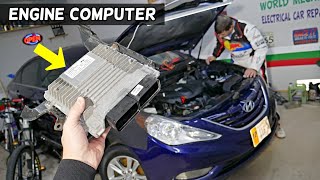
- PCM / ECM — Located in the left rear of the engine compartment.. This is the primary component that sets code P0606. Its location is needed for inspection of connectors and for replacement.
- GHG05 Ground — Located on the left rear of the engine compartment.. This is a primary ground point for the engine control system. A loose or corroded connection here can cause unstable power to the PCM, potentially triggering a P0606.
- GM01 / GM05 Grounds — Located on the left side of the dash, likely behind the driver's side kick panel.. These are major chassis ground distribution points. While not directly for the PCM, poor connections here can affect communication between modules and overall electrical stability.
Model Year Variations Within This Range
- 2010-2013: These model years with the 2.4L MPI engine were specifically included in the KSDS update Campaign 966, which altered ECM software.
- 2014-2015: These model years with the 2.0L GDI engine were also included in Campaign 966. Additionally, 2014-2015 models with the 2.4L SULEV engine had a separate ECM update (Campaign 959) for fuel injection logic.
Diagnostic Flowchart
Other Known Issues on This Vehicle
Issues unrelated to this code that are worth knowing about as an owner of this generation:
- Theta II Engine Failure (Connecting Rod Bearing) 🔴 High — Widespread issue affecting 2010-2013 2.4L MPI and 2014-2015 2.0L GDI engines, leading to class-action lawsuits and recalls. Failures can occur at various mileages, often preceded by a knocking noise. (Ref: NHTSA Campaign 19V-0xx series, Product Improvement Campaign 966/982 (KSDS update), and a lifetime warranty extension for affected VINs for this specific failure.)
- Excessive Oil Consumption 🟠 Medium — Commonly reported on both the 2.0L and 2.4L engines, often starting around 70,000 miles. Can be caused by worn piston rings or carbon buildup. (Ref: Hyundai TSB 21-EM-003H provides guidelines for oil consumption testing and potential engine repairs.)
- ABS Module Internal Short / Fire Risk 🔴 High → Shop ABS Control Module — A defect in the ABS module could allow brake fluid to leak internally, causing an electrical short and potential for an engine compartment fire, even when the vehicle is parked. (Ref: NHTSA Recall 20V-543 (Affects 2016+ models, but the underlying issue is a known problem in the Hyundai/Kia family). Owners of earlier models should be aware of any ABS warning lights.)
- Transmission Shifting Problems 🟡 Low → Shop Transmission Assembly — Complaints of rough or delayed shifting are documented, sometimes resolved with a software update or, in more severe cases, requiring internal transmission work. Onset can be as early as 30,000 miles.
- Malfunctioning Brake Light Switch 🟡 Low — A faulty brake light switch can cause multiple issues, including the brake lights not working, the ESC warning light to illuminate, and problems with push-button start or shifting out of park. This was a widespread issue on many Hyundai models of this era. (Ref: Recall R/2013/056 was issued for earlier models but the part remains a common failure point.)
Used vs. New Parts: Buying Guide for This Vehicle
When a used part is the smart pick: A used OEM PCM from a reputable recycler can be a cost-effective option, but only if you have a confirmed plan and budget for professional programming. The physical installation is simple, but the vehicle will be immobile until programmed.
Donor-vehicle mileage cap: roughly under 80000 miles for the part to have meaningful remaining life.
What to inspect on the donor part:
- Verify the exact OEM part number matches your original module.
- Ensure the donor vehicle had the same engine, transmission, and drivetrain (FWD/AWD).
- Inspect the connectors on the used module for any bent pins, corrosion, or signs of water damage.
- Purchase from a seller that offers a warranty and has a good return policy.
OEM-only on this vehicle (don't cheap out):
- Powertrain Control Module (PCM) - While remanufactured units exist, a used OEM or new OEM part is the most reliable choice. The complexity and vehicle-specific programming make generic aftermarket modules a high-risk option.
Aftermarket brands forum-validated for this vehicle:
- Flagship One (Remanufactured/Programmed)
- Cardone (Remanufactured)
Brands owners have reported issues with on this vehicle:
- Unbranded, generic "plug-and-play" modules sold on auction sites. For this vehicle, programming is not optional, and claims of being "plug-and-play" are often false.
Real Owner Stories
Aggregated from forums and TSBs cited above. Mileages and costs reflect what owners reported in those sources.
2010-2015 Hyundai Tucson
Symptoms: The Check Engine Light is on and the engine stalls unexpectedly while driving or at idle. The owner also noted erratic or harsh automatic transmission shifting and a loss of communication with the PCM, causing ABS and TCS lights to illuminate.
What fixed it: The PCM was replaced and professionally programmed to the vehicle after power and ground circuits were confirmed stable.
Cost: $500-$1000
Source hint: General Hyundai forums and mechanic help sites cited in forum_citations and common_causes
2014-2015 Hyundai Tucson 2.4L SULEV
Symptoms: Software corruption leading to logic issues; vehicle required fuel injection logic revisions.
What fixed it: Update or 'reflash' the PCM with the latest manufacturer software per Service Campaign 959.
Cost: $0-$200
Source hint: Service Campaign 959
Related OBD-II Codes
Frequently Asked Questions
Is there a specific Hyundai service campaign for code P0606 on my Tucson?
Can the Knock Sensor Detection System (KSDS) update cause processor faults?
My 2014 Tucson 2.4L has fuel injection issues; is there a software fix?
Could a weak battery trigger a false P0606 code on this vehicle?
What should be checked before replacing the expensive PCM?
Are there any engine-related warranties that might be relevant if my PCM fails during other repairs?
Helpful Videos

Used OEM Parts in Stock
New Aftermarket Parts Available

The information in this article is provided for general reference and educational purposes only. Vehicle specifications, procedures, and part compatibility can vary by production date, trim level, and region. Always consult your vehicle's factory service manual and verify part numbers before purchasing or performing repairs. Safety-critical components such as airbags, seat belts, and braking systems should be installed by a qualified professional.
- Hyundai Tucson:
- 🧭 Diagnostic Flowchart
- 🎬 Helpful Videos
- 🛍️ Shop This Part
- What's Unique About the 2010-2015 Hyundai Tucson
- Symptoms You May Notice
- Most Likely Causes
- Diagnosis Steps
- Parts You'll Likely Need
- Related Codes That Often Appear With This One
- Technical Service Bulletins (TSBs) & Recalls
- Mechanic-Grade Diagnostic Values
- Scan Tool Commands That Help
- Wiring & Ground Locations
- Model Year Variations Within This Range
- Other Known Issues on This Vehicle
- Used vs. New Parts: Buying Guide for This Vehicle
- Real Owner Stories
- 2010-2015 Hyundai Tucson
- 2014-2015 Hyundai Tucson 2.4L SULEV
- Related OBD-II Codes
- Frequently Asked Questions
- 🎟️ Get 5% Off