

P0606 on 2011-2015 Kia Optima: ECM Processor Fault Causes and Fixes
For the 2011-2015 Kia Optima, code P0606 often points to a software glitch. Before replacing the expensive Engine Control Module (ECM), check if your vehicle has had all required software updates, especially the critical Knock Sensor Detection System (KSDS) update (related to PI1803). This is the most likely and cheapest fix, and is often related to the widespread engine issues on this platform.
- Before any repairs, call a Kia dealer with your VIN and ask if Product Improvement Campaign PI1803 (KSDS update) and other ECU updates have been performed.
- The most likely fix for P0606 on this Optima is a software update, not a new ECM.
- Do not drive the vehicle. A P0606 code can lead to sudden stalling and is a safety hazard.
- Always check the battery, alternator, and ground connections before considering ECM replacement, as voltage instability is a common trigger.
What's Unique About the 2011-2015 Kia Optima
On many cars, a P0606 code often leads directly to replacing the engine computer. However, for this specific Kia Optima generation, the context is dominated by massive engine recalls and subsequent software updates. Kia and Hyundai released numerous critical ECU updates, most notably the Knock Sensor Detection System (KSDS) update (Product Improvement Campaign PI1803), to monitor for and prevent catastrophic engine failures. A P0606 code can be falsely triggered by outdated software or be an early sign of the very engine problems these updates address. Therefore, ensuring the ECM has the latest software is the absolute first step, not an immediate hardware replacement.
Symptoms You May Notice
- Check Engine Light is on
- Engine stalls or runs erratically
- Vehicle enters 'limp mode' with reduced power
- Engine will not start or has a crank-no-start condition
- Poor or harsh automatic transmission shifting
- Reduced fuel economy
- ABS or Traction Control lights may also illuminate
- Engine fan running constantly at unusual times
- Immediately replacing the ECM without checking for software updates. Given the extensive history of recalls and service campaigns like PI1803, a software update is the most probable and cost-effective solution.
- Replacing the ECM when the actual fault is a weak battery or failing alternator. Unstable voltage is a known trigger for this code.
Most Likely Causes
- Outdated or Glitched ECM Software 🔴 High Probability This platform was subject to numerous critical software updates, including the KSDS campaign (PI1803), to address widespread engine reliability issues. An outdated software version can fail to correctly handle certain operating parameters, falsely triggering a processor fault.
How to confirm: Contact a Kia dealership with your vehicle's VIN. Ask if PI1803 or any other ECU software updates are open for your car. A technician can also connect a KDS tool to check the ECM's current software calibration ID against the latest available version.
Typical fix: Reprogram the ECM with the updated software using the Kia Diagnostic System (KDS). This is a dealer-level or qualified shop repair.
Est. part cost: $0 (if part of a campaign) - $150 (if standard labor) - Low or Unstable System Voltage 🟡 Medium Probability Modern control modules are highly sensitive to voltage. A weak battery, failing alternator, or even a poor connection after a battery replacement can cause unpredictable behavior and trigger processor fault codes. Many owners report a P0606 appearing immediately after a battery dies or is replaced.
How to confirm: With the engine off, test the battery voltage with a multimeter; it should be ~12.6V. With the engine running, it should be ~13.5V-14.5V. Any values outside this range suggest a battery or charging system issue that must be corrected first.
Typical fix: Replace the weak battery or faulty alternator. Clean any corrosion from the battery terminals and ensure connections are tight.
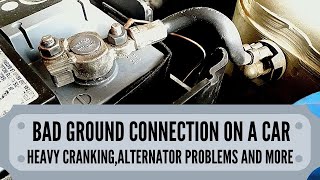
Est. part cost: $150-$600 - Poor Power or Ground Connections to ECM ⚪ Low Probability Corrosion or loose connections at the main ECM ground points or power feeds can cause voltage drops that mimic an internal failure. Key grounding points include the chassis, engine block, and intake manifold.
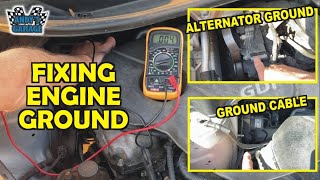
How to confirm: Visually inspect the ECM connectors for corrosion or damage. Locate the main engine and chassis ground straps and ensure they are clean, tight, and free of corrosion. A resistance check from the ECM ground pin to the chassis should be less than 1Ω.
Typical fix: Clean and tighten all ground connections (often requires a wire brush and 🎬 See how to diagnose and fix bad ground connections dielectric grease). Repair any damaged wiring or connectors.
Est. part cost: $0-$50 - Failed Engine Control Module (ECM) ⚪ Low Probability → Shop Engine Control Module (ECM) While this is the ultimate 'hard fault', it should be the last consideration. The prevalence of software and voltage issues on this platform makes them far more likely culprits. Physical failure is rare unless caused by external factors like water damage or a severe voltage spike.
How to confirm: This is a process of elimination. If the software is up to date, the charging system is healthy, and all power/ground connections are perfect, the ECM itself is the likely suspect.
Typical fix: Replace the Engine Control Module and have it professionally programmed to the vehicle's VIN and key information.
Est. part cost: $500-$1200
Rare But Worth Checking
- A shorted sensor or actuator: A component connected to the ECM can short out internally, sending an improper voltage back to the ECM and causing it to report a processor fault. Unplugging suspect sensors one by one can sometimes isolate the issue.
Diagnosis Steps
- Scan for any other trouble codes. Address other codes first, especially P1326 or any sensor circuit codes, as they could be the root cause.
- Check battery and charging system. Use a multimeter to verify battery voltage is ~12.6V with the engine off and ~13.5-14.5V with the engine running. A weak battery or failing alternator must be fixed before proceeding.
- CRITICAL: Contact a Kia dealership with your vehicle's VIN. Ask if Product Improvement Campaign PI1803 (KSDS Update) and any other ECU software updates are open or have been completed.
- If any software updates are available, this is the next mandatory step. This is the most probable fix and is often performed for free under a campaign.
- If software is current, perform a thorough visual inspection of the ECM wiring harness and connectors. Look for corrosion, damage, or loose pins. The ECM is often located in the engine bay near the battery and fuse box.
- Locate and verify all major power and ground connections for the ECM are clean, tight, and free of corrosion. Test resistance from the ECM ground pins to the chassis; it must be near zero.
- If the code appeared after a battery replacement, perform a hard reset by disconnecting the negative battery terminal for several minutes to clear any volatile memory glitches.
- If all previous steps fail to resolve the code, the Engine Control Module is likely faulty and requires replacement and programming.
Parts You'll Likely Need
- Engine Control Module (ECM) Reprogramming — Kia has released multiple critical software updates (like PI1803) to address engine reliability and related false codes. A software reflash is the official first-line fix.
OEM price range: $150-$250 (Labor for reflash)
Aftermarket price range: N/A - Engine Control Module (ECM)
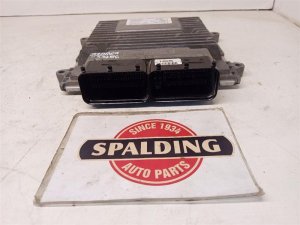
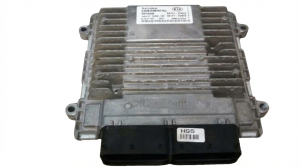
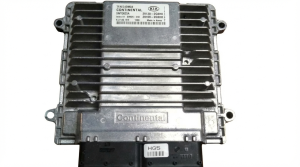
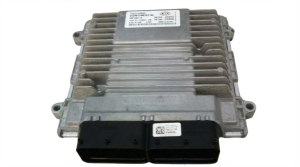
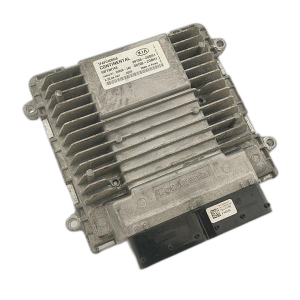
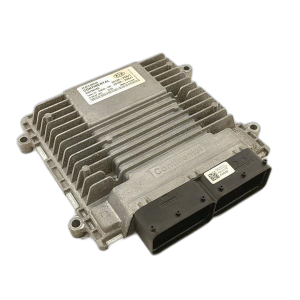
(OEM #Multiple - e.g., 39114-2GTE1, 39104-2GTE0. MUST be verified by VIN.)— This part is only needed if all other diagnostic steps, including the software update, fail to resolve the code. It is the last resort.
Trusted brands: Kia (OEM), FS-Curtis (Remanufactured)
OEM price range: $800-$1200
Aftermarket price range: $400-$700 (Remanufactured)
Related Codes That Often Appear With This One
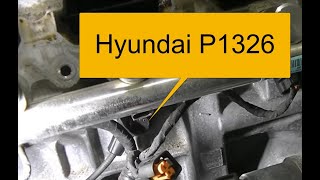
- P1326 — This code for 'Knock Signal Range/Performance' is directly related to the KSDS update. If the KSDS software is installed and detects vibrations indicative of impending engine bearing failure, it triggers P1326 and puts the car in limp mode. Its presence alongside P0606 strongly points to the severe engine 🎬 Watch: Understanding the P1326 knock sensor detection system issues this platform is known for.
- P0607 — This code indicates 'Control Module Performance' and is a very similar internal self-check failure. They often appear together, pointing strongly to an issue with the ECM itself, its software, or its power/ground supply.
Technical Service Bulletins (TSBs) & Recalls
- PI1803: PRODUCT IMPROVEMENT CAMPAIGN: KNOCK SENSOR DETECTION SYSTEM (KSDS) – ECU LOGIC IMPROVEMENT
- SA377: SERVICE ACTION: ECU LOGIC IMPROVEMENT FOR DTC P0606 (Note: Primarily documented for 2020 Soul in TSB Bulletin #TSBENG203, but demonstrates Kia's use of software updates for this specific code across models)
- Related Engine Campaigns: SC147, SC176, SC200, SC209
Platform-Specific Known Issues
- The P0606 code on this platform is deeply intertwined with the massive Theta II engine failure problem, which led to class-action lawsuits and the KSDS software update campaign (PI1803). The code can be a false flag from outdated software or a legitimate symptom of the underlying engine issues.
- Many owners report the P0606 code appearing after a battery jump or replacement, indicating high sensitivity to voltage fluctuations.
Mechanic-Grade Diagnostic Values
- ECM Power Supply (Open Circuit Voltage) — expected: 12.6V (Battery Voltage). Failure: 0V indicates an open in the power or ground side of the circuit. Less than 12.6V indicates high resistance (voltage drop) elsewhere in the circuit.
- ECM Power Supply (Closed Circuit Voltage Drop - Power Side) — expected: < 0.5V. Failure: A reading greater than 0.5V between the ECM power pin and the battery positive terminal indicates excessive resistance in the power feed wiring or fuse.
- ECM Power Supply (Closed Circuit Voltage Drop - Ground Side) — expected: < 0.5V. Failure: A reading greater than 0.5V between the ECM ground pin and the battery negative terminal indicates excessive resistance in the ground strap or wiring.
- CAN Bus Resistance (at OBD-II port) — expected: ~60 Ω (with battery disconnected). Failure: A reading of ~120 Ω indicates one of the two terminating resistors (often in the ECM or instrument cluster) is offline. A reading other than 60 or 120 Ω suggests a wiring issue.
Scan Tool Commands That Help
- Kia GDS (Global Diagnostic System): ECU Upgrade — This is the primary function used by dealers to perform software updates, such as the KSDS (PI1803) or P0606-specific logic improvements (SA377). It's the first step in diagnosis.
- Kia GDS (Global Diagnostic System): Resetting Adaptive Values — After addressing a potential underlying issue (like a faulty sensor or bad ground) or replacing the ECM, this function can be used to clear learned values and force the ECM to re-adapt to the vehicle's current state.
- Kia GDS (Global Diagnostic System): VIN Number Writing — This is a mandatory step when installing a new or used ECM. The vehicle's VIN must be programmed into the module for it to communicate with other modules and for the immobilizer system to function.
Wiring & Ground Locations
- ECM Power Ground Pins — On the main ECM harness connectors. A wiring diagram is required for exact pin numbers, but examples include pins 3 and 4 on a 94-pin connector.. These are the direct ground paths for the ECM. High resistance or an open circuit on these specific pins will cause the ECM to malfunction and can set a P0606.
- Main Chassis/Engine Grounds — Key points include straps from the engine block and cylinder head to the chassis/frame. A specific ground point is often located on the driver's side inner fender near the fuse box.. The ECM relies on the entire vehicle's grounding system. A corroded or loose main ground strap can create unstable voltage across all electronics, confusing the ECM's internal self-checks.
- CAN Bus Wires — Pins 6 (CAN High) and 14 (CAN Low) at the OBD-II diagnostic port. These wires run between all major control modules, including the ECM, Instrument Cluster, and ABS module.. A short or open in the CAN bus wiring can corrupt communication between modules. The ECM may interpret this data corruption as an internal processor failure, triggering a P0606.
Real Owner Repair Stories
- YouTube Comment Section / General Forum Consensus (Various 2011-2015 Kia Optima) — P0606 code, often accompanied by other sensor circuit codes (e.g., P0118 for coolant temp sensor).
❌ Tried (didn't work) Clearing the codes (they return immediately), Replacing the battery, Considering ECM replacement
✅ What actually fixed it Unplugging sensors one-by-one until the P0606 code no longer sets upon key-on. In one documented pattern, a shorted Engine Coolant Temperature (ECT) sensor was pulling down the 5V reference circuit, causing the ECM to report an internal fault. Replacing the faulty sensor resolved the P0606 without needing to replace the ECM.
OEM Part Supersession History
39108-2GBE0→39108-2GBE1— Likely internal hardware or software revision to improve reliability or address a known issue.
Heads up: Part numbers MUST be matched exactly. An ECM for a 2.4L will not work in a 2.0T, and a PZEV (California Emissions) model requires a PZEV ECM. Using the wrong part number, even if it physically fits, will result in a no-start condition as it cannot be programmed.39108-2GGC0→39108-2GGC1, then 39108-2GGC2— Revisions for newer model years (2016-2018) but demonstrates the pattern of supersession. These are NOT compatible with the 2011-2015 models.
Heads up: Illustrates that part numbers change frequently. Always verify the exact part number for the specific VIN of the vehicle being repaired.
Model Year Variations Within This Range
- 2011-2013 vs 2014-2015: The mid-cycle refresh in 2014 brought changes to electronics. ECM part numbers are often different between the pre-refresh (e.g., 39111-2G879 for 2011-13) and post-refresh (e.g., 39108-2GBE1 for 2014-15) models. They are not interchangeable.
- All: Within any given year, there are different ECMs for the 2.4L vs 2.0T engines, and for Federal vs. PZEV (California) emissions. This compatibility is strict and must be adhered to when sourcing a replacement.
Diagnostic Flowchart
Other Known Issues on This Vehicle
Issues unrelated to this code that are worth knowing about as an owner of this generation:
- Catastrophic Engine Failure (Rod Bearing Failure) 🔴 High — Extremely widespread across the Theta II engine family, leading to multiple class-action lawsuits and recalls. Often occurs between 60,000 and 120,000 miles, but can happen at any time. (Ref: Related to recalls like SC147 and the resulting lifetime engine warranty and KSDS update campaigns (PI1803).)
- Excessive Oil Consumption 🔴 High — Very common issue, often a direct precursor to engine failure. Many owners report consuming a quart of oil every 1,000 miles or less. (Ref: Kia has an oil consumption test procedure (TSB ENG222).)
- Carbon Buildup on Intake Valves 🟠 Medium — A common problem inherent to Gasoline Direct Injection (GDI) engines. Typically becomes noticeable after 50,000-70,000 miles, causing misfires (P0300 series codes), rough idle, and reduced performance.
- Steering Column Click/Noise 🟡 Low — A very common annoyance caused by a failing flexible steering coupler in the motor-driven power steering (MDPS) assembly. The rubber coupler disintegrates, causing a clicking noise when turning the wheel. (Ref: TSB CHA-075 describes the repair.)
- Cracked Low-Pressure Fuel Hose 🔴 High — Common enough on 2013-2014 models to warrant a recall. The hose can crack due to engine heat, leaking fuel and creating a significant fire risk. (Ref: NHTSA Recall 18V907000)
Used vs. New Parts: Buying Guide for This Vehicle
When a used part is the smart pick: A used ECM is a viable, cost-effective option ONLY if you have a clear plan for programming. It makes sense if your original ECM is confirmed dead (after ruling out all other causes) and you are working with a shop that has advanced tools for cloning or immobilizer pairing.
Donor-vehicle mileage cap: roughly under 80000 miles for the part to have meaningful remaining life.
What to inspect on the donor part:
- Part number MUST exactly match the original ECM.
- Source from a reputable dismantler with a warranty and return policy.
- Ensure the donor vehicle had the same engine, transmission, and emissions package (PZEV vs Federal).
- Visually inspect the used ECM for any signs of physical damage, corrosion, or opened casings.
OEM-only on this vehicle (don't cheap out):
- Engine Control Module (ECM) - While used OEM is an option, avoid generic 'rebuilt' units from unknown brands. Stick to original Kia parts, whether new or used.
Aftermarket brands forum-validated for this vehicle:
- Flagship One (FS1)
- Solo Auto Electronics
Brands owners have reported issues with on this vehicle:
- Unbranded, no-name sellers on platforms like eBay or Amazon without a clear programming service or warranty.
Real Owner Stories
Aggregated from forums and TSBs cited above. Mileages and costs reflect what owners reported in those sources.
2015 Kia Optima 2.4L GDI
Symptoms: The P0606 code appeared about a week after the battery was replaced. The owner was concerned about a processor failure due to the recent battery change.
What fixed it: The community consensus suggested the code was a transient fault caused by low voltage from the old, failing battery. Testing the alternator and performing a hard reset were recommended.
Source hint: CarKiller.com thread titled 'Check engine/code P0606 after battery replacement'
2011-2015 Kia Optima 2.4L/2.0T — ~90000 miles
Symptoms: The vehicle experienced symptoms related to the widespread Theta II rod bearing failure, which often occurs between 60,000 and 120,000 miles.
What fixed it: Reprogramming the ECM with the KSDS update (PI1803) or engine replacement under the lifetime warranty provided by campaigns like SC147.
Source hint: Vehicle-specific issues and Known Issues (Theta II Engine Failure)
Related OBD-II Codes
Frequently Asked Questions
Is there a specific Kia update for the P0606 code on my Optima?
Can a bad battery really cause a P0606 processor code on a 2015 Optima?
What is the PI1803 update and why does my car need it?
My Optima is in 'limp mode' with a P0606; is this related to the engine recalls?
Will I have to pay to fix P0606 if it's a software issue?
Where are the ground points I should check for this code?
Helpful Videos
We Have This Part in Stock

The information in this article is provided for general reference and educational purposes only. Vehicle specifications, procedures, and part compatibility can vary by production date, trim level, and region. Always consult your vehicle's factory service manual and verify part numbers before purchasing or performing repairs. Safety-critical components such as airbags, seat belts, and braking systems should be installed by a qualified professional.
- Kia Optima:
- 🧭 Diagnostic Flowchart
- 🎬 Helpful Videos
- 🛍️ Shop This Part
- What's Unique About the 2011-2015 Kia Optima
- Symptoms You May Notice
- Most Likely Causes
- Rare But Worth Checking
- Diagnosis Steps
- Parts You'll Likely Need
- Related Codes That Often Appear With This One
- Technical Service Bulletins (TSBs) & Recalls
- Platform-Specific Known Issues
- Mechanic-Grade Diagnostic Values
- Scan Tool Commands That Help
- Wiring & Ground Locations
- Real Owner Repair Stories
- OEM Part Supersession History
- Model Year Variations Within This Range
- Other Known Issues on This Vehicle
- Used vs. New Parts: Buying Guide for This Vehicle
- Real Owner Stories
- 2015 Kia Optima 2.4L GDI
- 2011-2015 Kia Optima 2.4L/2.0T — ~90000 miles
- Related OBD-II Codes
- Frequently Asked Questions
- 🎟️ Get 5% Off