

P0606 on 2014-2018 Mazda Mazda3 2.5L: PCM Processor Fault Causes and Fixes
P0606 indicates a critical internal failure of the Powertrain Control Module (PCM), the engine's main computer. While the PCM itself may have failed, the code can also be triggered by a weak battery, a bad alternator, or poor ground connections. Always test the charging and grounding systems before replacing the expensive PCM.
- P0606 is a critical code indicating a fault with the engine's main computer (PCM).
- DO NOT immediately replace the PCM. First, thoroughly test the battery, alternator, and clean all major power and ground connections.
- Driving is unsafe as the vehicle may stall at any time.
- If the PCM does need to be replaced, it is NOT a plug-and-play part. It requires professional programming to match your car's VIN and security system.
- Check with a Mazda dealer for any available software updates for your VIN, especially for 2018 models.
What's Unique About the 2014-2018 Mazda Mazda3
For the third-generation Mazda3 with the SKYACTIV-G engine, the P0606 code is a serious fault that often points directly to the PCM. However, these vehicles are also sensitive to voltage irregularities. Owners and technicians have found that issues like a failing battery, a bad alternator, or corroded ground straps can sometimes trigger a P0606 code, making the PCM appear faulty when it isn't. It is crucial to rule out these simpler, cheaper power-related issues before condemning the control module itself. Mazda has also issued TSBs for other models where moisture intrusion in connectors caused a false P0606, emphasizing the need to check the full circuit.
Symptoms You May Notice
- Check Engine Light is on
- Engine may not start or is hard to start
- Engine stalling unexpectedly, sometimes intermittently
- Noticeable loss of power and acceleration (limp mode)
- Erratic or harsh automatic transmission shifting
- Reduced fuel economy
- Other warning lights (like ABS or traction control) may illuminate
- Replacing the PCM without first verifying stable power and clean grounds. A bad alternator or a $10 corroded ground strap can mimic a thousand-dollar PCM failure.
Most Likely Causes
- Internal Powertrain Control Module (PCM) Failure 🔴 High Probability → Shop Engine Control Module (ECM) The P0606 code is specifically designed to report an internal processor self-test failure, making the module itself the most direct cause.
How to confirm: This is typically the final diagnosis after all other possibilities (power, grounds, wiring, software) have been exhaustively ruled out by a professional. 🎬 Watch: A professional walkthrough on diagnosing the P0606 processor error.
Typical fix: Replace the Powertrain Control Module (PCM) and have the new unit programmed by a dealer or qualified shop with Mazda-specific software.
Est. part cost: $800-$1200 - Poor Power or Ground Supply 🟡 Medium Probability Modern, complex electronics are sensitive to voltage. A weak battery, failing alternator, or corroded/loose ground straps can cause voltage drops or spikes that the PCM interprets as an internal fault.
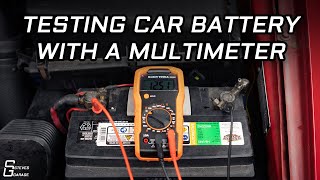
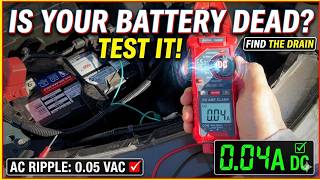
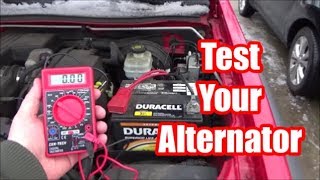
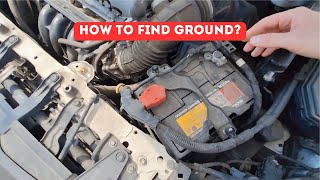
How to confirm: Test the battery's health and state of charge. With the engine running, use a multimeter to check the alternator output at the battery terminals (should be ~13.5-14.5V). 🎬 Watch: How to test your battery and alternator with a multimeter. Visually inspect and clean all major ground connections from the battery to the chassis and from the engine block to the chassis. The main engine-to-chassis ground is often located near the passenger-side motor mount. 🎬 See this guide on how to locate and check ground cables.
Typical fix: Replace the weak battery, failing alternator, or clean/tighten/replace corroded ground cables.
Est. part cost: $20-$600 - Corrupted or Outdated PCM Software ⚪ Low Probability
How to confirm: A Mazda dealership or a well-equipped independent shop can check the current software version against available updates. A recall (NHTSA 19V497000) for a software update was issued for some 2018 models to prevent stalling due to cylinder deactivation logic.
Typical fix: Reprogram (reflash) the PCM with the latest manufacturer software. This may resolve software glitches that trigger the P0606 code.
Est. part cost: $0-$200
Rare But Worth Checking
- Damaged PCM Wiring or Connectors: Although less common, physical damage to the wiring harness or corrosion in the PCM connectors can cause a short or open circuit, leading to this code. A TSB for older CX-7s (SA-020/19) specifically points to moisture in a connector causing a false P0606, proving it's a possible cause. A thorough visual inspection is warranted before replacing the PCM.
- Shorted External Component: Rarely, a sensor or actuator connected to the PCM can short out internally, sending erratic voltage back to the PCM and causing it to fail its self-test. If other trouble codes are present alongside P0606, they should be investigated first.
Diagnosis Steps
- Check Battery and Charging System: Ensure the battery is fully charged and healthy. Start the engine and use a multimeter to test the alternator's output voltage at the battery terminals. It should be stable, between 13.5 and 14.5 volts. An undercharging or overcharging alternator can cause this code.
- Inspect All Grounds: Visually inspect, clean, and tighten the main battery ground, chassis grounds, and engine-to-chassis ground straps. Poor grounds are a common cause of electrical issues that can trigger a false P0606. Pay special attention to the ground strap near the passenger side motor mount.
- Check for TSBs and Recalls: Contact a Mazda dealer with your VIN to see if any software updates or recalls (like NHTSA 19V497000 for 2018 models) are pending for the PCM. Also check if your vehicle is covered under the 8-year/80,000-mile Federal Emissions Warranty for the PCM.
- Inspect PCM Connectors: Disconnect the battery. Unplug the PCM connectors and inspect for any signs of corrosion, moisture, or bent/damaged pins. Water intrusion has been a documented cause on other Mazda models.
- Clear Codes and Test Drive: If any issues were found and fixed in the previous steps, clear the code and drive the vehicle to see if it returns. Sometimes a temporary glitch can set this code.
- Professional Diagnosis: If the code returns and all power/ground circuits are confirmed to be good, the PCM is very likely faulty. The vehicle should be taken to a professional for advanced diagnostics and probable replacement and programming.
Parts You'll Likely Need
- Powertrain Control Module (PCM)
(OEM #PEK2-18-881, PE07-18-881 (example prefixes, exact number is VIN-specific))— This is the most common fix when the P0606 code is legitimate and not caused by external power or ground issues. The code indicates an internal processor failure.
Trusted brands: Mazda (OEM)
OEM price range: $1100-$1250
Aftermarket price range: $250-$600 (Remanufactured/Used) - Battery — A weak or failing battery can cause low voltage conditions that may incorrectly trigger a P0606 code.
Trusted brands: Interstate, DieHard, Duralast
OEM price range: $200-$300
Aftermarket price range: $150-$250 - Ground Strap — A corroded or broken engine or chassis ground strap can disrupt the PCM's power supply and cause a false P0606 code. It's a cheap part to check and replace.
Trusted brands: Mazda (OEM), Standard Motor Products
OEM price range: $20-$50
Aftermarket price range: $10-$30
Related Codes That Often Appear With This One
- P2610 — This code for 'ECM/PCM Internal Engine Off Timer Performance' also points to an internal PCM issue or a problem with its power supply, especially a weak battery.
- P0601, P0602, P0603, P0605 — Any P060x code generally indicates a problem within the PCM itself, such as memory errors or programming faults, reinforcing the diagnosis of a faulty module.
Technical Service Bulletins (TSBs) & Recalls
- NHTSA Recall 19V497000: While not directly for P0606, this recall addresses a PCM software issue in some 2018 models that could cause the engine to stall due to improper control of the hydraulic valve clearance adjuster during cylinder deactivation. It's relevant as it involves a PCM reprogram to fix a critical engine management flaw.
- Mazda TSB SA-020/19: Although for a 2010-2012 CX-7, this bulletin shows a precedent for P0606 being caused by moisture and corrosion in a wiring harness connector (C-31), reinforcing the need to check connectors thoroughly.
- Bulletin #SA-020-19: This manufacturer service bulletin notes that vehicles may exhibit the Check Engine Light ON with DTC P0606, which may be caused by corrosion on the C-31 connector due to moisture.
Platform-Specific Known Issues
- Federal Emissions Warranty Coverage: Before paying for a PCM replacement, owners should contact a Mazda dealer with their VIN to check for coverage under the Federal Emissions Warranty. This warranty often covers major emissions components like the PCM for 8 years or 80,000 miles, potentially making the repair free of charge.
Mechanic-Grade Diagnostic Values
- PCM Main Relay Power Supply Voltage — expected: B+ (Battery Voltage) at PCM connector pin 1BE with ignition ON.. Failure: Voltage significantly below battery voltage or 0V indicates a problem with the main relay, fuse, or wiring.
- PCM Ground Circuit Continuity — expected: Less than 1.0 V (ideally near 0V) at PCM connector pins 2AA, 2AB, 2AC, and 2AD when tested against battery positive.. Failure: Voltage reading higher than 1.0V indicates a poor ground connection, which can cause floating voltage and trigger internal processor faults.
Hidden / Shadow Codes Worth Checking
- Pending Code: The Mazda M-MDS (dealer-level tool) can detect and display 'pending codes'. These are temporary faults the PCM has detected on a single drive cycle but has not yet stored as a permanent DTC. A pending P0606 could indicate an intermittent voltage or ground issue that hasn't yet been severe enough to trigger the check engine light. (see via Mazda M-MDS or equivalent advanced scan tool with access to Mode 7 data.)
Scan Tool Commands That Help
- Mazda IDS (Integrated Diagnostic System): Module Programming — Required when replacing the PCM. This function programs the new module with the vehicle's VIN, immobilizer data, and specific calibration file.
- Mazda IDS (Integrated Diagnostic System): Self Test — Used to retrieve all current, past, and pending DTCs from all vehicle modules, which can provide context if other codes are present alongside P0606.
Wiring & Ground Locations
- Engine-to-Chassis Ground (Primary) — A prominent ground strap located near the passenger-side motor mount, connecting the engine block to the chassis.. This is a primary ground path for the engine and its electronics, including the PCM. Corrosion or looseness here is a well-documented cause of various electrical faults, including false P0606 codes.
- Transmission Case Ground — One or more ground wires bolted directly to the transmission case.. Provides a ground path for sensors and components on the transmission, but also contributes to the overall engine grounding system that the PCM relies on.
- Battery Negative to Chassis Ground — The main cable from the battery's negative terminal to a point on the vehicle's chassis/frame in the engine bay.. This is the master ground point for the entire vehicle. Any corrosion or looseness at this connection can cause system-wide voltage instability that can upset the PCM.
When the Usual Fixes Don't Work
- Forum research for this specific vehicle and code reveals a distinct lack of complex repair stories with surprise endings. The diagnostic path is consistently reported as: 1) Check and verify battery, alternator, and grounds. 2) If all are perfect, the code is not false and the PCM has failed. 3) Replace and program the PCM. This suggests that once basic power issues are ruled out, the fault is almost always internal to the module itself.
OEM Part Supersession History
PE07-18-881E, PE07-18-881G, PE07-18-881H, PE07-18-881J, PE07-18-881K, PE07-18-881L→PE07-18-881M— Revision and update by the manufacturer. Newer revisions often contain hardware or software improvements to address known issues.
Heads up: While the latest part number is generally backward compatible, it is critical to order based on VIN. Other part number prefixes (e.g., PEK2, PE26) exist for different engine/transmission/year combinations and are not interchangeable.
Diagnostic Flowchart
Other Known Issues on This Vehicle
Issues unrelated to this code that are worth knowing about as an owner of this generation:
- Infotainment System Malfunctions (Ghost Touch/Freezing) 🟠 Medium — Very common on 2014-2016 models. The touchscreen may register phantom inputs ('ghost touch') or freeze, often due to delamination from heat. Mazda issued a warranty extension for the center display on some models. (Ref: Warranty Extension Program (not a formal recall))
- Intake Valve Carbon Buildup 🟡 Low — As a direct-injection (GDI) engine, some carbon buildup on intake valves is inevitable over high mileage (typically 100k+ miles). However, Mazda's SKYACTIV-G design is considered less prone to severe, performance-affecting buildup than many other early GDI engines.
- Parking Brake Caliper Corrosion 🟠 Medium — A recall was issued for 2014-2016 models where water could enter the rear brake caliper, causing the parking brake actuator to corrode and potentially fail or bind. (Ref: Recall 1217F)
- Front Body Control Module (F-BCM) Failure 🟡 Low → Shop Body Control Module — A recall was issued for some models where the front wipers could stop working due to a faulty F-BCM, which required replacement. (Ref: Recall 3219D)
Used vs. New Parts: Buying Guide for This Vehicle
When a used part is the smart pick: A used PCM is ONLY a viable option if you have a confirmed plan and budget for professional reprogramming. It is not a plug-and-play part. It can save significant money on the part cost if the original PCM is confirmed dead and the vehicle is older.
Donor-vehicle mileage cap: roughly under 80000 miles for the part to have meaningful remaining life.
What to inspect on the donor part:
- Verify the part number exactly, though it will still need reprogramming.
- Source from a vehicle with a known history, avoiding flood, fire, or major collision damage.
- Ensure the donor vehicle had the same engine (2.5L) and transmission (AT/MT) type.
- Obtain the VIN of the donor car if possible, as it can sometimes help the programmer.
OEM-only on this vehicle (don't cheap out):
- Powertrain Control Module (PCM) - While remanufactured units exist, a new OEM unit from Mazda or a used OEM unit are the only practical choices. The critical factor is the need for Mazda-specific programming (using IDS), which aftermarket 'clone' modules cannot typically receive.
Brands owners have reported issues with on this vehicle:
- Any pre-programmed or 'plug-and-play' PCM advertised for this vehicle should be treated with extreme skepticism. The immobilizer system is integrated and requires a specific programming procedure with a dealer tool.
Real Owner Stories
Aggregated from forums and TSBs cited above. Mileages and costs reflect what owners reported in those sources.
2014-2018 Mazda3 SKYACTIV-G 2.5L
Symptoms: The user noted that the P0606 code points to an ECM/PCM issue and advised checking the fuse and power harness first.
What fixed it: Inspection of the fuse and power harness as a preliminary step before PCM replacement.
Source hint: reddit.com/r/mazda3
2014-2018 Mazda3 SKYACTIV-G 2.5L
Symptoms: The P0606 code appeared specifically during wet weather conditions.
What fixed it: Cleaning corroded ground points resolved the issue.
Source hint: mazdaspeeds.com
Related OBD-II Codes
Frequently Asked Questions
Will the Federal Emissions Warranty cover a PCM replacement on my 2014-2018 Mazda3?
Is there a recall for the PCM on the 2018 Mazda3 that could be related to stalling?
I have a P0606 and it's raining outside; could the weather be a factor for my Mazda?
Where is the main engine-to-chassis ground located on the SKYACTIV-G 2.5L?
Can I just swap in a used PCM from another Mazda3 to fix the P0606 code?
Does the 2014-2018 Mazda3 have any other common electrical issues I should know about?
Helpful Videos


We Have This Part in Stock


The information in this article is provided for general reference and educational purposes only. Vehicle specifications, procedures, and part compatibility can vary by production date, trim level, and region. Always consult your vehicle's factory service manual and verify part numbers before purchasing or performing repairs. Safety-critical components such as airbags, seat belts, and braking systems should be installed by a qualified professional.
- Mazda Mazda3:
- 🧭 Diagnostic Flowchart
- 🎬 Helpful Videos
- 🛍️ Shop This Part
- What's Unique About the 2014-2018 Mazda Mazda3
- Symptoms You May Notice
- Most Likely Causes
- Rare But Worth Checking
- Diagnosis Steps
- Parts You'll Likely Need
- Related Codes That Often Appear With This One
- Technical Service Bulletins (TSBs) & Recalls
- Platform-Specific Known Issues
- Mechanic-Grade Diagnostic Values
- Hidden / Shadow Codes Worth Checking
- Scan Tool Commands That Help
- Wiring & Ground Locations
- When the Usual Fixes Don't Work
- OEM Part Supersession History
- Other Known Issues on This Vehicle
- Used vs. New Parts: Buying Guide for This Vehicle
- Real Owner Stories
- 2014-2018 Mazda3 SKYACTIV-G 2.5L
- 2014-2018 Mazda3 SKYACTIV-G 2.5L
- Related OBD-II Codes
- Frequently Asked Questions
- 🎟️ Get 5% Off