

P0606 on 2003-2007 Saturn Ion: PCM Processor Fault Causes and Fixes
The P0606 code on a Saturn Ion indicates an internal processor fault within the Powertrain Control Module (PCM). This is a serious issue that often requires replacing the PCM itself. Before condemning the PCM, thoroughly inspect battery, alternator, and all PCM-related ground connections, as electrical faults are a common trigger. Expect costs for a programmed replacement PCM to be between $200 and $500, with DIY replacement being possible but professional programming required.
- P0606 is a critical code indicating a failure in your Saturn Ion's main computer (PCM).
- Do not drive the vehicle, as it can stall or shut down unexpectedly.
- Thoroughly check and clean all PCM power and ground connections and test the charging system before assuming the PCM has failed.
- A replacement PCM must be programmed to your vehicle's VIN to function correctly, a job best left to a professional or a reputable mail-in service.
What's Unique About the 2003-2007 Saturn Ion
The Saturn Ion, built on the GM Delta platform, uses a PCM that is central to all vehicle operations. While P0606 is a generic code, on this platform and its mates like the Chevy Cobalt, it is often a 'condemning' code for the PCM itself after external electrical issues are ruled out. Unlike some vehicles where wiring or sensor issues are the primary trigger, on the Ion, an actual internal failure of the PCM is a very common cause. The PCM's location changed from the engine bay near the firewall (2003-2004) to inside the cabin behind the passenger kick panel (2005-2007), with the earlier models being more susceptible to heat-related failure. Replacement requires a unit that is programmed specifically to the car's Vehicle Identification Number (VIN).
Symptoms You May Notice
- Check Engine Light is on
- Engine will not start or is very hard to start
- Engine stalls intermittently, especially while driving or at a stop
- Reduced engine power or 'limp mode'
- Erratic or harsh automatic transmission shifting
- Poor fuel economy
- ABS or Traction Control lights may also illuminate
- Gauges on the instrument cluster may behave erratically or go dead before a stall
- Replacing sensors (like O2 or MAP sensors) without checking for other codes. If P0606 is the only code, the problem is almost always with the PCM or its direct connections.
- Replacing the PCM without first thoroughly testing the battery, alternator, and all ground circuits. An unstable voltage supply is a very common trigger for a false P0606.
Most Likely Causes
- Internal PCM Failure 🔴 High Probability The PCM can fail due to age, heat cycles (especially on 2003-04 models where it's in the engine bay), voltage spikes, or internal component degradation. It is the most common final diagnosis after all other possibilities are exhausted.
How to confirm: After verifying all power/ground connections and ruling out other codes, if P0606 returns immediately upon key-on, the PCM is almost certainly faulty. Visual inspection may sometimes reveal burnt spots or a burnt electronic smell near the module.
Typical fix: Replace the Powertrain Control Module (PCM). The new unit must be programmed with the vehicle's VIN.
Est. part cost: $200-$500 - Poor PCM Power or Ground Connections 🟡 Medium Probability Corrosion or loose connections at the battery, main ground straps, or the PCM connectors can cause voltage irregularities that trigger this fault. Key ground points are known to corrode, including the main engine-to-chassis grounds and smaller grounds for the ECU itself.
How to confirm: Visually inspect all battery terminals, ground straps from the engine to the chassis (check under the airbox and from the valve cover to the block), and the PCM connectors for corrosion or damage. Use a multimeter to test for stable voltage and continuity at the PCM connector pins. A voltage drop test on the ground circuit is highly effective.
Typical fix: Clean or tighten terminals and ground points. Repair or replace the damaged section of the wiring harness or the PCM connector.
Est. part cost: $10-$100 - Damaged Wiring Harness ⚪ Low Probability Wires can become chafed or broken over time, particularly where the harness routes near hot or vibrating components, leading to shorts or open circuits that can disrupt PCM operation.
How to confirm: Perform a detailed visual inspection of the wiring harness leading to the PCM for any signs of physical damage, chafing, or melting.
Typical fix: Repair the specific damaged wires.
Est. part cost: $5-$50
Rare But Worth Checking
- Charging System Malfunction: An over-voltage or under-voltage condition from a failing alternator can damage or confuse the PCM's internal processor. Always test alternator output (should be stable 13.5-14.5V) before replacing the PCM.
- Shorted Sensor or Actuator: A sensor on the 5-volt reference circuit that shorts internally can sometimes overload the PCM and cause it to set a P0606 code. If other sensor-related codes are present, they should be diagnosed first.
- Software Anomaly: GM has issued bulletins for other platforms where a software glitch can cause a false P0606. Before replacing the module, it's wise to check with a dealer if any reflash updates are available for the vehicle's VIN.
Diagnosis Steps
- Check for and document any other stored DTCs. Address those codes first, especially if they relate to specific sensors or circuits.
- Check for any applicable Technical Service Bulletins (TSBs) for your vehicle's VIN. A software update may be the required fix.
- Verify battery voltage is stable and above 12.4V with the key off. Test the alternator output to ensure it is within the correct range (typically 13.5-14.5V) with the engine running.
- Perform a thorough visual inspection of the PCM, its connectors, and the surrounding wiring harness. Look for any signs of corrosion, moisture intrusion, or physical damage.
- Inspect all main engine and chassis ground connections. Disassemble, clean, and secure them, especially the main strap from the engine block to the chassis and any grounds near the PCM.
- Disconnect the PCM connectors and inspect the pins for damage, corrosion, or moisture.
- If all external wiring, power, and grounds are confirmed to be good and the P0606 code persists or returns immediately, the PCM is defective and requires replacement.
Parts You'll Likely Need
- Powertrain Control Module (PCM)
(OEM #Varies by year/VIN. Examples include 12598090, 12605787, 12596917, 12603764.)— This code directly indicates an internal failure of the PCM processor, making replacement the most common fix after external electrical faults are ruled out.
Trusted brands: ACDelco (OEM), Cardone, Flagship One, Solo Auto Electronics
OEM price range: $350-$500
Aftermarket price range: $200-$400
Technical Service Bulletins (TSBs) & Recalls
- While not for the Ion specifically, GM TSB 20-NA-127 addresses P0606 on other models, advising technicians to reprogram the ECM with updated software before replacing it, as a software anomaly can be the cause. This highlights the importance of checking for software updates for the Ion as well.
- Manufacturer TSB Bulletin #05-06-04-060A provides information to technicians regarding control module DTCs, including P0601 and P0606, noting that these faults can be shared across multiple modules.
Platform-Specific Known Issues
- Owner on SaturnForum describes hunting for a braided ground strap near the valve cover/exhaust side of the engine block after doing a head gasket; a missing ground like this is a prime cause for electrical issues.
- A thread on SaturnFans (relayed through another forum) shows a diagram pinpointing multiple ground wires that bolt to the engine block between the starter and alternator, which are often overlooked.
- The massive GM ignition switch recall affects all 2003-2007 Ions. A faulty switch can cause a loss of electrical power to the PCM while driving, which could potentially trigger fault codes or mimic PCM failure symptoms.
Mechanic-Grade Diagnostic Values
- Battery Voltage (Key Off) — expected: Greater than 12.4V. Failure: Below 12.4V indicates a weak battery that can cause false codes. A reading below 12.0V, especially if the difference from 12.6V is a multiple of 2.1V, suggests a dead cell.
- Charging System Voltage (Engine Running) — expected: 13.5V - 14.5V. Failure: Voltage outside this range indicates a faulty alternator or voltage regulator, which can damage the PCM.
- PCM Ground Resistance — expected: < 1 Ohm to chassis ground. Failure: High resistance indicates a poor ground connection, a primary cause of false P0606 codes.
- CAN Bus Voltage (Idle) — expected: CAN High: ~2.5-3.5V; CAN Low: ~1.5-2.5V. Failure: Voltages outside these ranges can indicate a communication network issue.
Scan Tool Commands That Help
- Tech2 or equivalent professional scan tool: Crankshaft Position Variation Learn Procedure — This is mandatory after replacing the PCM. Failure to perform this procedure will often result in a P1336 or P0315 code and potential drivability issues. The procedure involves accelerating the engine to fuel cut-off to allow the new PCM to learn the minute variations of the crankshaft reluctor wheel.
- No tool required (manual procedure): Passlock Security Relearn Procedure (30-Minute Relearn) — This is required after installing a new or used PCM to synchronize it with the vehicle's immobilizer system. Without this, the engine will not start. The procedure involves cycling the key to 'ON' for three consecutive 10-minute intervals until the security light turns off.
Wiring & Ground Locations
- G105 — On the lower left rear of the engine, above the starter.. This is a critical engine ground point. A loose or corroded connection here can directly impact PCM stability and trigger processor faults.
- G101 — Behind the left front headlamp assembly in the engine compartment.. This ground serves multiple components in the forward lamp harness; while not a direct PCM ground, electrical noise from a poor connection can affect the system.
- G109 — At the left rear side of the engine compartment.. This ground is associated with the Electronic Power Steering (EPS) module, which communicates with the PCM. A fault here can cause cascading electrical issues.
- Engine Block Grounds — A cluster of ground wires that bolt to the engine block in the area between the starter and the alternator.. These are frequently overlooked or forgotten during engine service (like a starter or alternator replacement) and are a very common cause of mysterious electrical problems, including P0606.
Real Owner Repair Stories
- Saturn Forum user 'IonNinja' (2005 Saturn Ion 2.2L) — Vehicle was down for a few years, owner was reassembling and could not identify where a group of black wires went.
❌ Tried (didn't work) Initially thought the wires went to the starter.
✅ What actually fixed it It was confirmed by other forum members and a wiring diagram that the wires were a group of critical grounds that bolt directly to the engine block between the starter and alternator. Properly securing these grounds is essential for correct electrical system operation. - Saturn L300 Owner (Cross-Model Reference) — NHTSA ODI #10217964 describes a vehicle that was towed to a dealership where technicians confirmed code P0606 and determined the engine control module (ECM/PCM) was faulty and required replacement.
- Saturn L300 Owner (Cross-Model Reference) — According to NHTSA ODI #10439123, a vehicle exhibited recurring issues where codes P0606, P0700, and P1811 were revealed during a 25-mile drive, requiring multiple repair attempts.
OEM Part Supersession History
12589999→12599726— Standard part revision and update by the manufacturer.
Heads up: These part numbers are generally interchangeable for the specified model years, but the replacement must be programmed to the vehicle's VIN.Multiple, e.g., 12590651, 12597520→Multiple, e.g., 12611568, 12616920, 19209822— Numerous software and hardware revisions over the life of the platform.
Heads up: For 2007 models, there is a very long list of compatible part numbers. It is critical to match the service number from the original module or verify compatibility with the VIN, as not all are interchangeable despite looking identical.
Model Year Variations Within This Range
- 2003-2004: The PCM is located in the engine compartment, near the firewall. These units are more exposed to heat and vibration, leading to a higher potential for heat-related failure.
- 2005-2007: The PCM was moved inside the vehicle cabin, behind the passenger side kick panel. This location protects it from engine heat but can make it susceptible to moisture if there are water leaks into the cabin.
Diagnostic Flowchart
Other Known Issues on This Vehicle
Issues unrelated to this code that are worth knowing about as an owner of this generation:
- Defective Ignition Switch 🔴 High — Extremely widespread. Subject of major GM recall (e.g., 14063, 14113). The switch can move out of the 'Run' position, causing the engine to stall and disabling airbags. (Ref: NHTSA Recalls 14063, 14113, 13454)
- Sudden Loss of Electric Power Steering (EPS) 🔴 High — Very common. Caused by a faulty EPS motor. Subject of a major recall (e.g., 14115) and lifetime warranty extension for some model years. (Ref: NHTSA Recall 14115 / GM Bulletin 14115B)
- Cracked Fuel Pump Module / Fuel Leaks 🟠 Medium → Shop Fuel Pump — Common, especially in vehicles from hot weather states. A plastic component on the fuel pump module can crack, leading to fuel leaks and a strong fuel odor. (Ref: NHTSA Recalls 12V459, 09V419)
- Faulty Turn Signal / Daytime Running Lamp (DRL) Socket 🟡 Low — Frequently reported. The front turn signal/DRL bulb loses contact with the socket, causing the lamp to stop working intermittently. (Ref: NHTSA Recall 04V547)
- Blend Door Actuator Failure 🟡 Low — Common issue causing a repetitive clicking or knocking sound from behind the dashboard when the HVAC system is on.
Used vs. New Parts: Buying Guide for This Vehicle
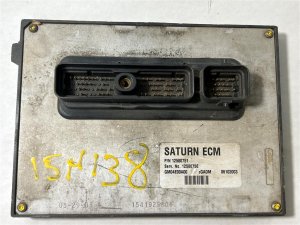
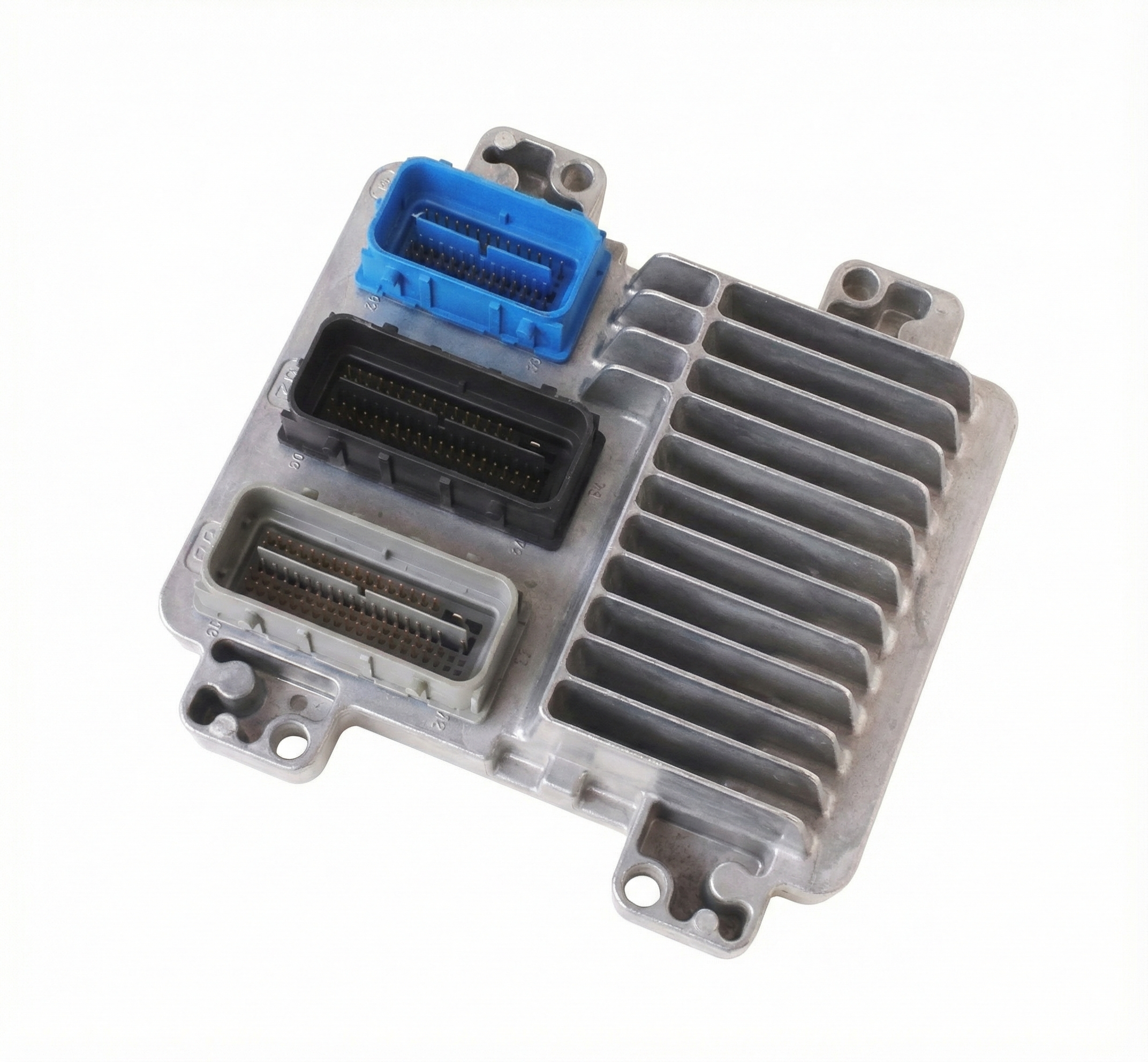
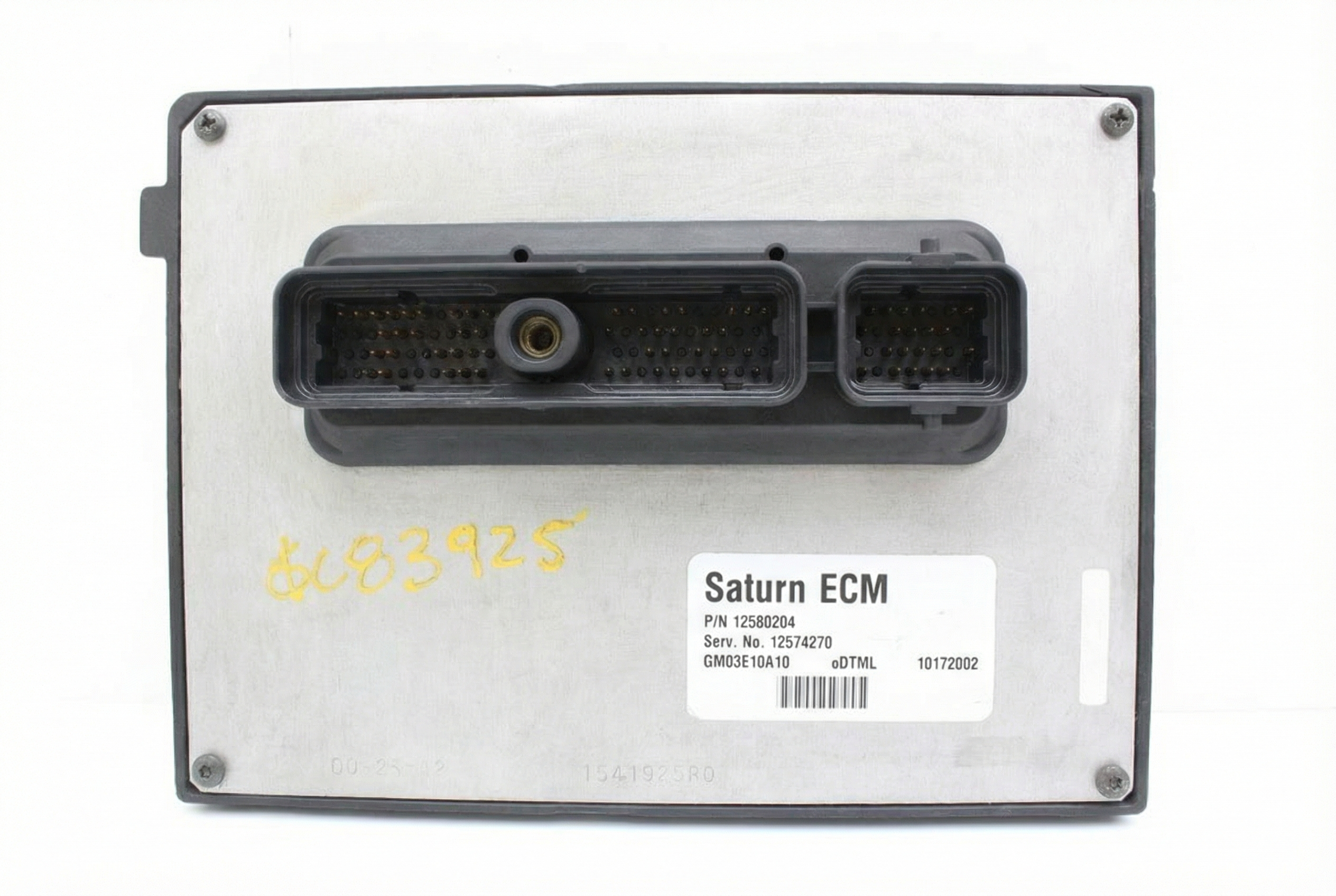
When a used part is the smart pick: A used or remanufactured PCM is an excellent and common cost-saving strategy for this repair. Since the primary failure mode is internal, a tested unit from a reputable salvage yard or remanufacturer is a viable alternative to a new OEM part, which may be discontinued or very expensive.
Donor-vehicle mileage cap: roughly under 150000 miles for the part to have meaningful remaining life.
What to inspect on the donor part:
- Verify the part number on the used module matches your original module's service number.
- Purchase from a vendor that offers VIN-programming as a service before shipping. This is mandatory for the part to function.
- Choose a part from a southern or dry-climate vehicle if possible to minimize the risk of corrosion damage.
- Ensure the seller offers a warranty on the programming and the hardware itself.
Aftermarket brands forum-validated for this vehicle:
- ACDelco (Remanufactured OEM)
- Cardone
- Flagship One (FS1)
- Module Mechanics
- Solo Auto Electronics
Brands owners have reported issues with on this vehicle:
- Unknown eBay/Amazon sellers who do not offer pre-programming or a warranty.
Real Owner Stories
Aggregated from forums and TSBs cited above. Mileages and costs reflect what owners reported in those sources.
2005 Saturn Ion 2
Symptoms: Owner was confused about the placement of multiple wires after engine work; specifically looking for ground locations to resolve electrical issues.
What fixed it: Locating and securing multiple ground wires that bolt to the engine block between the starter and alternator.
Source hint: Saturn Forum - 'Where do these wires go? 2005 Ion 2' (2018)
2003-2007 Saturn Ion (General)
Symptoms: A braided ground strap was left disconnected near the valve cover/exhaust side of the engine block after a head gasket repair.
What fixed it: Reconnecting the missing braided ground strap to the engine block.
Source hint: Saturn Forum - 'Cant find where this ground wire goes!!!' (2023)
2005-2010 Chevrolet Cobalt (Platform Mate)
Symptoms: P0606 code appearing alongside symptoms identical to the Ion, often linked to internal processor faults or grounding.
What fixed it: Cleaning and securing specific ground points G103 and G105, or replacing the PCM if grounds and alternator were verified.
Source hint: Chevrolet Cobalt SS Forum - 'P0606 PCM Processor' (2011)
Related OBD-II Codes
Frequently Asked Questions
Could the major GM ignition switch recall be related to my P0606 code on a 2003-2007 Saturn Ion?
I just finished a head gasket repair on my Ion and now have electrical issues. What should I check?
Where are the common ground points located on the 2005 Ion 2 that might cause a P0606?
Does GM TSB 20-NA-127 apply to my Saturn Ion?
Is it true that the PCM location on 2003-2004 Ions makes them more prone to failure?
Can I use a used PCM from a salvage yard to fix my P0606?
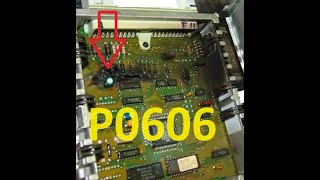
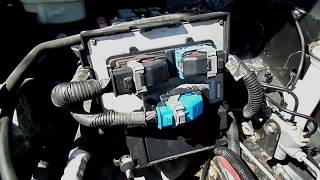
Helpful Videos
Used OEM Parts in Stock
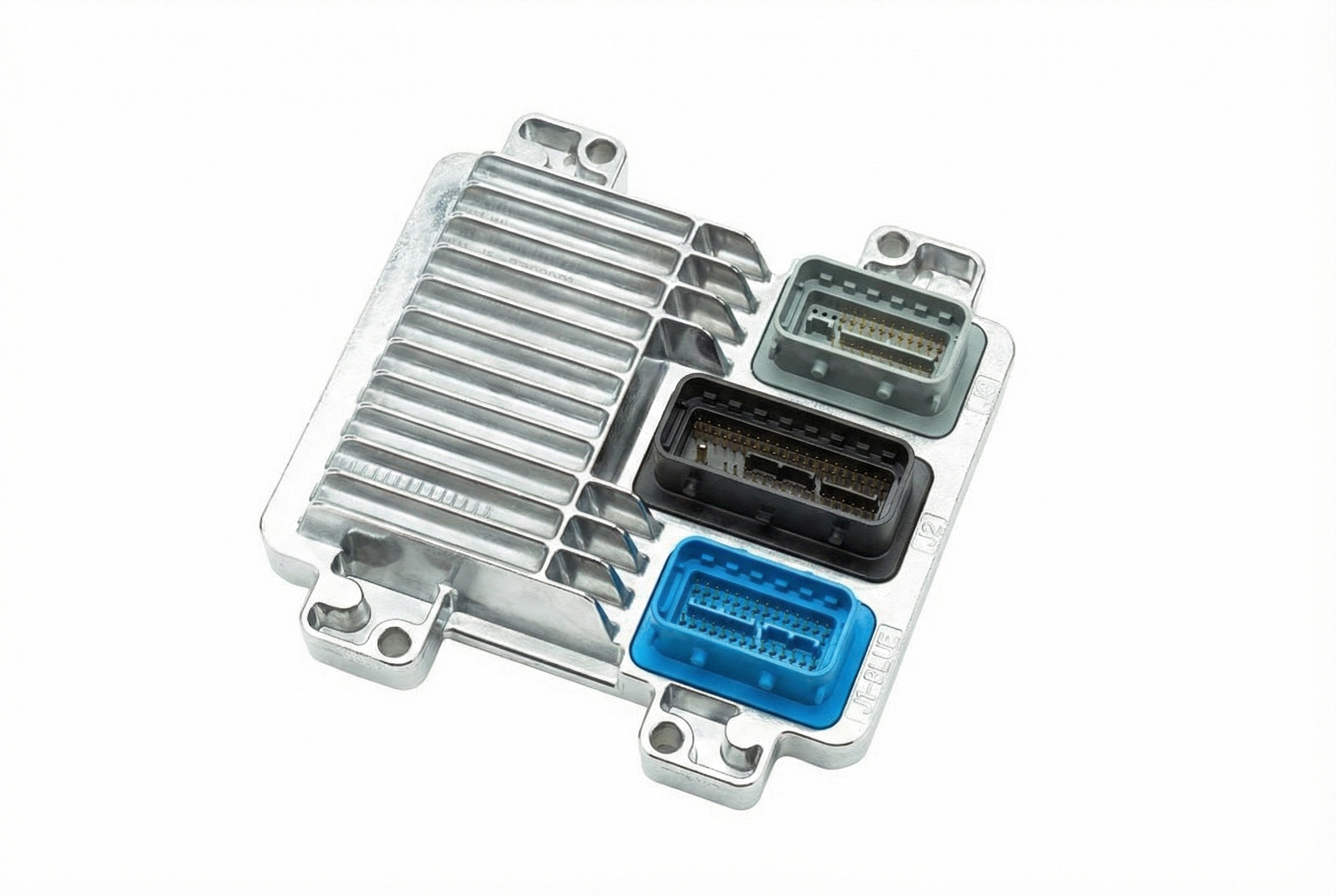
New Aftermarket Parts Available

The information in this article is provided for general reference and educational purposes only. Vehicle specifications, procedures, and part compatibility can vary by production date, trim level, and region. Always consult your vehicle's factory service manual and verify part numbers before purchasing or performing repairs. Safety-critical components such as airbags, seat belts, and braking systems should be installed by a qualified professional.
- Saturn Ion:
- 🧭 Diagnostic Flowchart
- 🎬 Helpful Videos
- 🛍️ Shop This Part
- What's Unique About the 2003-2007 Saturn Ion
- Symptoms You May Notice
- Most Likely Causes
- Rare But Worth Checking
- Diagnosis Steps
- Parts You'll Likely Need
- Technical Service Bulletins (TSBs) & Recalls
- Platform-Specific Known Issues
- Mechanic-Grade Diagnostic Values
- Scan Tool Commands That Help
- Wiring & Ground Locations
- Real Owner Repair Stories
- OEM Part Supersession History
- Model Year Variations Within This Range
- Other Known Issues on This Vehicle
- Used vs. New Parts: Buying Guide for This Vehicle
- Real Owner Stories
- 2005 Saturn Ion 2
- 2003-2007 Saturn Ion (General)
- 2005-2010 Chevrolet Cobalt (Platform Mate)
- Related OBD-II Codes
- Frequently Asked Questions
- 🎟️ Get 5% Off