

P0606 on 2003-2008 Subaru Forester Turbo: ECM Fault Causes and Fixes
On a 2004-2008 Forester XT, P0606 is almost always a temporary glitch after a dead battery or jump-start, not a failed computer. The fix is a specific reset procedure: clear the code, turn the ignition off, wait one full minute, then restart. A weak battery is the next most likely cause. This issue is well-documented in Subaru TSB 07-75-13R.
- Before any other action, perform the specific reset procedure: clear the code, turn the ignition off, and wait for at least one full minute before restarting.
- Do not immediately assume your ECM is bad. This code is most often caused by a recent battery replacement, jump-start, or dead battery on Forester XT models.
- A true ECM failure is the least likely cause. Always verify battery health, charging system output, and the integrity of engine/ECU grounds before considering ECM replacement.
What's Unique About the 2003-2008 Subaru Forester
For the 2004-2008 Forester XT with the EJ255 turbo engine, this code is a well-documented anomaly. Subaru issued Technical Service Bulletin (TSB) #07-75-13R explaining that if the battery dies or is disconnected, the ECM's backup memory is cleared. If the ignition is then cycled on and off, and then turned back on within one minute, it interrupts the ECM's internal self-shutoff procedure, causing a false P0606 code to be stored. This makes a simple battery change or jump-start the most common trigger for this seemingly serious code. The code may not appear immediately but can be set after a period of driving.
Symptoms You May Notice
- Check Engine Light (CEL) is on.
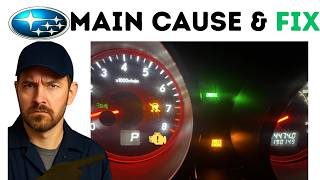
- Flashing cruise control light. 🎬 Watch: How to address flashing cruise and check engine lights.
- Vehicle may enter 'limp mode' with reduced engine power.
- Vehicle may stall or have a rough idle.
- Vehicle may not start, but lights and accessories have power.
- Vehicle Dynamics Control (VDC) or Hill Descent Control lights may illuminate.
- No-crank, no-start condition where the engine does not turn over at all.
- Replacing the Engine Control Module (ECM) without first performing the TSB-specified reset procedure and verifying battery/charging system health. This is an expensive and often unnecessary repair.
Most Likely Causes
- Improper Ignition Cycle After Power Loss 🔴 High Probability This is a well-documented software glitch detailed in Subaru TSB #07-75-13R. It specifically affects turbo models after a battery disconnect, jump-start, or deep discharge. The ECM's self-shutoff procedure is interrupted if the ignition is turned on within a minute of being turned off after power is restored.
How to confirm: The code appeared shortly after the vehicle's battery was replaced, jump-started, or went dead. The code may not set immediately but can appear after some driving.
Typical fix: Clear the code with a scan tool. Turn the ignition ON, then OFF. Wait for at least one full minute before turning the ignition ON again. This allows the ECM's self-shutoff relay to complete its cycle. Some owners report this procedure must be followed exactly to clear a 'permanent' code.
Est. part cost: $0 - Failing Battery or Weak Charging System 🟡 Medium Probability → Shop Vehicle Battery The ECM is sensitive to voltage. An old battery providing low voltage during cranking or a faulty alternator providing unstable voltage can cause the ECM to fail its internal self-check and trigger a false P0606. The factory Panasonic batteries in some Subarus have been cited by owners as being undersized and prone to early failure.
How to confirm: Test the battery voltage with a multimeter. It should be ~12.6V with the engine off and 13.5V-14.5V while running. A load test at an auto parts store can confirm battery health. Low voltage from a failing battery is a very common trigger.
Typical fix: Replace the vehicle's battery. If charging voltage is incorrect, inspect the alternator and its connections.
Est. part cost: $150-$400 - Poor ECM Power or Ground Connection ⚪ Low Probability Subaru ECUs are grounded to the intake manifold, which can be a point of failure if corrosion occurs or if modifications like TGV deletes are installed without ensuring a good ground path. Corrosion or loose connections at the battery terminals or main engine ground strap can also cause intermittent voltage drops that trigger the code.
How to confirm: Visually inspect battery terminals for corrosion. Locate and inspect the main engine-to-chassis ground strap for tightness and corrosion. On turbo models, the ECU's main ground is typically on the intake manifold, to the right of the throttle body (when viewed from the front). Inspect this connection for tightness and cleanliness.
Typical fix: Clean battery terminals and cable ends. Clean or replace corroded ground straps. Ensure the ECU ground on the intake manifold is clean and tight. Aftermarket grounding kits are a popular modification to prevent such issues.
Est. part cost: $10-$50
Rare But Worth Checking
- Reversed Polarity During Jump-Start: Connecting jumper cables backward, even for a moment, can cause a large voltage spike that triggers P0606. In some cases, clearing the code is enough to fix it, but it can also cause permanent damage to the ECM. One owner reported getting a P0606 and a dash full of lights after a stranger incorrectly connected jumper cables, but the code cleared and did not return.
- Aftermarket Component Interference: A user on a forum reported a P0606 code that was traced to an aftermarket exhaust that was vibrating and touching the chassis under load. This was believed to be creating a static discharge or grounding issue that the ECU interpreted as a fault. Reseating the exhaust to create clearance solved the problem.
- Faulty Engine Control Module (ECM): → Shop Engine Control Module (ECM) While this is what the code definition implies, a true internal hardware failure of the ECM is the least likely cause. This should only be considered after all other possibilities, especially the TSB reset procedure, voltage checks, and ground inspections, have been exhausted.
Diagnosis Steps
- Check if the battery has recently been disconnected, replaced, or jump-started. If yes, this is the most likely cause.
- Using a scan tool, attempt to clear the P0606 code.
- Turn the ignition ON, then turn it completely OFF.
- Wait for at least one full minute. Use a timer to be precise. Do not touch the ignition during this time. This is the most critical step.
- After one minute, start the vehicle and see if the code returns. You may need to drive the vehicle for the code to fully clear from a 'permanent' status.
- If the code returns, perform a 'hard reset' by disconnecting the negative battery terminal and pressing the brake pedal for 30 seconds to drain residual power. Reconnect and repeat the one-minute wait procedure.
- If the code still returns, test the battery and charging system. Voltage should be ~12.6V with the engine off and 13.5V-14.5V with the engine running.
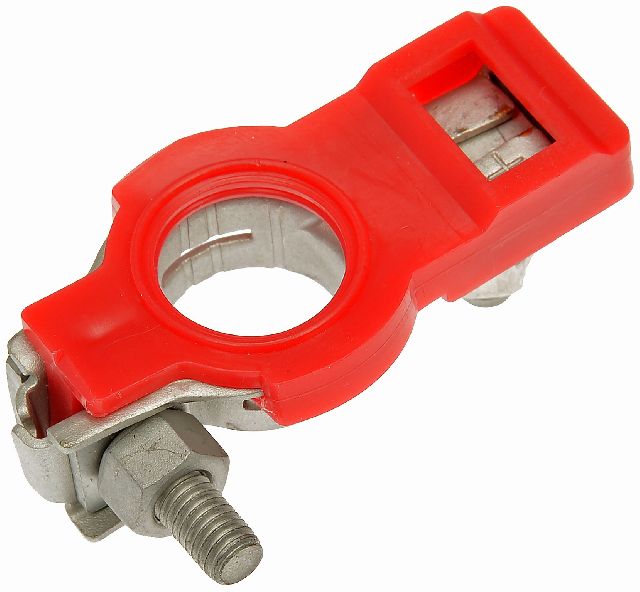
- Inspect all battery connections, main power cables, and the engine-to-chassis ground strap for corrosion and tightness.
- Specifically locate and inspect the ECU ground points on the intake manifold. Ensure they are clean, tight, and free of corrosion.
- Inspect the wiring harness and connectors at the ECM for any visible damage, corrosion, or loose pins.
- If all external factors (power, grounds, reset procedure) are confirmed to be good and the code persists, the ECM may have a true internal fault.
Parts You'll Likely Need
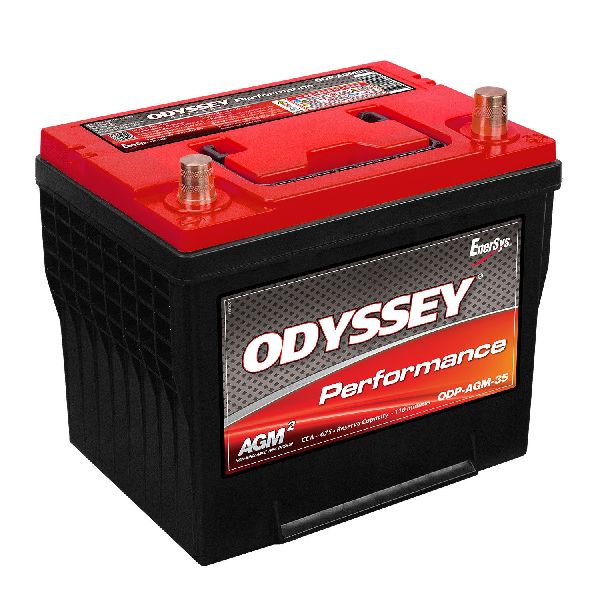
- Car Battery — A weak or failing battery is a very common underlying cause, as unstable voltage can trigger a false P0606 code during engine cranking.
Trusted brands: Interstate, DieHard, Optima
OEM price range: $150-$250
Aftermarket price range: $150-$350 - Engine Control Module (ECM)
(OEM #22611AK762)— This is only needed in the rare case of a true internal hardware failure, after all other diagnostic steps (especially the TSB reset procedure) have been exhausted. Part numbers are highly specific to year and transmission; 22611AK762 is listed for the 2006 Forester XT with automatic transmission. Always verify the part number with your vehicle's VIN.
Trusted brands: Subaru (OEM)
OEM price range: $900-$1350
Aftermarket price range: $250-$900
Technical Service Bulletins (TSBs) & Recalls
- 07-75-13R: 'DTC P0606 after Vehicle Battery Is Reconnected' - This is the primary bulletin explaining the software glitch on turbo models and outlines the specific reset procedure required to clear the false code. It applies to all Subaru models with DIT (Turbo) engines. Manufacturer TSB Bulletin #07-75-13R provides information regarding DTC P0606 related specifically to the determination of this code on Forester Turbo and applicable WRX models.
Platform-Specific Known Issues
- Subaru Technical Service Bulletin #07-75-13R specifically calls out that on Forester Turbo models, a P0606 code can be set if the ignition is cycled too quickly (within one minute) after battery power has been interrupted.
- The ECU grounding location on the intake manifold is a known weak point, especially if aftermarket parts like TGV deletes have been installed, which can interrupt the ground path if not done correctly.
Mechanic-Grade Diagnostic Values
- ECM Backup Power Supply Voltage — expected: 10 - 14 V (Ignition Switch OFF). Failure: Voltage below 10V indicates a problem with the constant power supply to the ECM, potentially from a bad fuse or wiring.
- ECM Main Power Supply Voltage — expected: 10 - 14 V (Ignition Switch ON). Failure: Voltage below 10V with the key on points to an issue in the main power relay or ignition-switched power circuit to the ECM.
- Voltage Drop Test (Battery Positive to ECM Power Pin) — expected: Less than 0.5 Volts. Failure: A voltage reading higher than 0.5V indicates high resistance in the power supply wire or connections between the battery and the ECM.
- Alternator AC Ripple Voltage — expected: Less than 500 millivolts (0.5V) AC. Failure: AC voltage higher than 500mV indicates failing diodes in the alternator's rectifier, creating 'dirty' power that can disrupt the ECM and trigger a P0606 fault.
Hidden / Shadow Codes Worth Checking
- Permanent DTC (PDTC): The P0606 code can be stored as a 'Permanent' fault that cannot be cleared using a standard scan tool's 'Clear Codes' function or by disconnecting the battery. The ECM must verify the fault is resolved through a specific procedure (like the TSB's 60-second wait) and then complete a drive cycle before it will clear the code itself. (see via Visible on most modern OBD-II scan tools, but it will be designated as 'permanent' and will not erase on command until the proper conditions are met.)
Scan Tool Commands That Help
- Subaru Select Monitor (SSM): Main Menu > Each System Check > Engine Control System > OBD System > Clear Memory — This is the official first step in the TSB 07-75-13R procedure. It should be performed before the 60-second ignition-off wait time to ensure the ECM's memory is fully cleared, especially when dealing with a persistent or permanent P0606 code.
Wiring & Ground Locations
- Main ECU Ground — On the intake manifold, typically on the right side of the throttle body (when viewed from the front of the engine bay).. This is the primary ground path for the entire ECU. Since the ECU is not grounded directly to the chassis, any corrosion, looseness, or interruption at this point (e.g., from installing TGV deletes or phenolic spacers) can cause erratic ECU behavior and trigger a P0606.
- Gb-1 / Gb-3 — These are body ground distribution points. Gb-1 is located at the left kick panel, and Gb-3 is at the right kick panel inside the cabin.. While not the direct ECU ground, these points are crucial for the overall health of the vehicle's electrical system. A poor body ground can create voltage differentials and electrical noise that may contribute to control module faults.
Real Owner Repair Stories
- Reddit user on r/subaru (2015+ WRX (procedure is applicable)) — P0606 code and limp mode after a dead battery and jump start. Code would not clear with a standard OBD2 tool while parked.
❌ Tried (didn't work) Clearing the code with an OBD2 tool while the vehicle was stationary.
✅ What actually fixed it After performing a series of resets including the 1-minute ignition cycle procedure, the user gave up and started driving. As a last resort, they had a passenger clear the code using a Bluetooth OBD reader and the Torque app *while the vehicle was moving at 30mph*. This successfully cleared the code and restored normal operation. - Reddit user on r/SubaruForester (2017 Forester XT (behavior consistent with SG generation)) — 'Permanent' P0606 code appeared after a battery change.
❌ Tried (didn't work) Attempting to clear the code with a standard OBD-II reader.
✅ What actually fixed it The owner took the vehicle to a shop that followed the TSB 07-75-13R procedure exactly: clear codes with a professional scanner, turn ignition off, wait one full minute, then turn ignition on. This precise procedure allowed the self-shutoff relay to cycle correctly and enabled the 'permanent' code to be cleared.
OEM Part Supersession History
Varies by year/transmission→Varies— N/A
Heads up: ECU part numbers are extremely specific to the model year, transmission type, and emissions equipment. For example, an ECU from a 2004-2005 XT may not be compatible with a 2006-2008 XT due to changes in engine hardware (like the secondary air pump) and wiring. An ECU from an automatic transmission vehicle will not work in a manual, and vice-versa. Always verify the exact OEM part number with the vehicle's VIN before purchasing a replacement.
Model Year Variations Within This Range
- 2004-2005: These pre-facelift models used B25 cylinder heads and had a lower compression ratio. Critically, their ECUs are noted to be more easily swappable with the contemporary STi ECU for performance tuning.
- 2006-2008: These facelift models featured cosmetic updates, a slightly higher compression ratio, and the addition of a secondary air injection system for emissions. These changes mean the ECUs are not directly interchangeable with the earlier 2004-2005 models.
Diagnostic Flowchart
Real Owner Stories
Aggregated from forums and TSBs cited above. Mileages and costs reflect what owners reported in those sources.
Subaru Forester
Symptoms: After a reversed-polarity jump start, the car started but the dash was lit up with a flashing cruise control light, lit hill descent light, lit CEL, and a P0606 ECM/PCM fault.
What fixed it: Cleared the faults with a code reader, turned the car off, and then back on. It started fine with no returning error codes.
Source hint: r/SubaruForester (Reddit): 'Got a hell of a scare tonight Engine Code 0606 after a bad jump'
Related OBD-II Codes
Frequently Asked Questions
Does TSB 07-75-13R apply to my 2003-2008 Forester Turbo?
I just replaced the battery on my EJ255 and got a P0606. Is my ECM ruined?
How do I perform the reset procedure to clear the P0606 code?
Can installing TGV deletes cause a P0606 on my Forester?
My Forester won't crank and has a P0606, but the dash lights work. What should I do?
Why are my cruise control and Hill Descent Control lights flashing with this code?
Helpful Videos
We Have This Part in Stock


The information in this article is provided for general reference and educational purposes only. Vehicle specifications, procedures, and part compatibility can vary by production date, trim level, and region. Always consult your vehicle's factory service manual and verify part numbers before purchasing or performing repairs. Safety-critical components such as airbags, seat belts, and braking systems should be installed by a qualified professional.
- Subaru Forester:
- 🧭 Diagnostic Flowchart
- 🎬 Helpful Videos
- 🛍️ Shop This Part
- What's Unique About the 2003-2008 Subaru Forester
- Symptoms You May Notice
- Most Likely Causes
- Rare But Worth Checking
- Diagnosis Steps
- Parts You'll Likely Need
- Technical Service Bulletins (TSBs) & Recalls
- Platform-Specific Known Issues
- Mechanic-Grade Diagnostic Values
- Hidden / Shadow Codes Worth Checking
- Scan Tool Commands That Help
- Wiring & Ground Locations
- Real Owner Repair Stories
- OEM Part Supersession History
- Model Year Variations Within This Range
- Real Owner Stories
- Subaru Forester
- Related OBD-II Codes
- Frequently Asked Questions
- 🎟️ Get 5% Off