

P0606 on 2014-2018 Subaru Forester XT: ECM Fault, Software Glitch, and Fixes
On a 2014-2018 Forester XT, P0606 is almost always a software glitch after a dead battery or power loss, not a failed computer. The fix is a specific reset procedure: clear the code, turn the ignition off, wait over 60 seconds, then restart. A dealer software update may be needed for a permanent fix on 2014-2015 models. This issue also affects the Subaru WRX which shares the same engine.
- Do not panic and replace the ECM. P0606 on your Forester XT is most likely a temporary glitch from a recent power loss.
- First, try the simple reset: clear the code, turn the ignition off, and wait for at least one full minute before restarting the car.
- Check your battery. A weak or old battery can cause this code to appear.
- If the code persists on a 2014-2015 model, ask a Subaru dealer about a software update (reflash) before considering any hardware replacement.
What's Unique About the 2014-2018 Subaru Forester
The Forester XT, with its Direct Injection Turbo (DIT) engine, has an ECM that is highly sensitive to power loss. Subaru released a specific Technical Service Bulletin (TSB 07-75-13R, revised 03/10/20) because this code was so common after a battery change or jump-start. If the ignition is cycled too quickly (within 60 seconds) after power is restored, the ECM's self-shutoff relay procedure is interrupted, leading it to mistakenly flag an internal fault. This platform-specific quirk means a scary-sounding code often has a very simple, no-cost fix. The issue is so common it also affects the 2015-2021 Subaru WRX which uses the same engine.
Symptoms You May Notice
- Check Engine Light is on
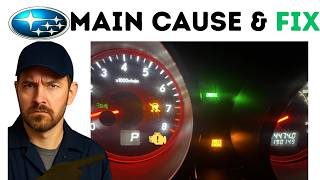
- Cruise control light is flashing 🎬 Watch: How to fix a flashing cruise control light
- Vehicle Dynamics Control (VDC) / traction control light is on
- Hill descent control light is on
- Vehicle enters 'limp mode' with significantly reduced engine power and acceleration
- Poor or unpredictable throttle response
- Potential for engine stalling
- Code may be listed as 'permanent' and not clear with a standard reader until the TSB procedure is followed
- Replacing the Engine Control Module (ECM) without first performing the TSB reset procedure or checking for available software updates. This is an expensive and usually unnecessary repair for this specific code on this vehicle.
Most Likely Causes
- Improper Ignition Cycle After Power Loss 🔴 High Probability This is a well-documented issue specific to Subaru turbo models, as outlined in TSB 07-75-13R. The ECM's backup memory is cleared during power loss, and a quick ignition cycle interrupts its reboot and self-shutoff relay procedure. Manufacturer service bulletin TSB #07-75-13R (dated 2018-03-28) notes that if the ignition is turned back "ON" within one minute after the first time it is turned "OFF," it becomes possible for the CEL to illuminate and store DTC P0606 in memory.
How to confirm: Confirm if the battery was recently disconnected, replaced, jump-started, or went completely dead. A user on a Forester forum even reported it happening after a reversed-polarity jump start attempt. If any power interruption event occurred, this is the most likely cause.
Typical fix: Perform the TSB reset procedure: Use a scan tool to clear the code. Turn the ignition ON, then turn it OFF. Wait for at least one full minute (use a timer). Turn the ignition back ON. This allows the ECM's self-shutoff relay to complete its cycle, which the ECM needs to see before it will clear a permanent code.
Est. part cost: $0 - ECM Software Requires Update 🟡 Medium Probability For 2014-2015 models specifically, Subaru identified a software logic issue that could make the P0606 code appear more frequently. TSB 11-15-14 was released to address this, though finding the text of this specific TSB is difficult as it may have been superseded or bundled. NHTSA ODI #10574609 describes a situation where a technician identified P0606 as a voltage issue on the ECM and determined the corrective action was to re-flash the ECM computer.
How to confirm: If the reset procedure does not permanently resolve the code on a 2014-2015 model, contact a Subaru dealer with your VIN. They can check their internal system to see if TSB 11-15-14 or a newer software update applies and if it has been performed.
Typical fix: A Subaru dealership reprograms (reflashes) the Engine Control Module with updated software. This is the permanent fix for the underlying glitch on affected model years.
Est. part cost: $0 - $250 - Failing Battery or Weak Charging System ⚪ Low Probability → Shop Vehicle Battery The ECM is sensitive to voltage fluctuations. The factory-installed Panasonic battery is known for having a low Cold Cranking Amps (CCA) rating (around 390 CCA), and can cause voltage sags during startup as it ages, triggering the P0606 self-test fault. A faulty alternator providing unstable power can also be a cause.
How to confirm: Use a multimeter to test the battery and charging system. A healthy battery should read about 12.6V with the engine off. With the engine running, the alternator should produce between 13.5V and 14.5V. If the battery is original or several years old, it's a prime suspect.
Typical fix: Replace the weak battery, preferably with a higher-quality AGM battery with a higher CCA rating (e.g., 650 CCA or more). If the alternator is faulty, replace it.
Est. part cost: $150 - $600
Rare But Worth Checking
- Loose or Corroded ECM Power/Ground Wires: Before condemning the ECM, it's worth checking its electrical connections. A bad ground can cause countless phantom electrical issues, including a P0606 code. Check the main engine ground straps and the ECM body grounds.
- Aftermarket Tuning: Users on forums have reported that flashing an aftermarket tune (e.g., from a Cobb Accessport) can sometimes trigger a P0606 code, either during the flash process or during driving. Reflashing the tune or reverting to a stock map and then following the TSB reset procedure often resolves this.
- Internal ECM Failure: This is the least likely cause. Only consider this after all other possibilities, including the TSB procedures, software updates, and electrical checks, have been exhausted. A true hardware failure inside the ECM will typically cause the code to return immediately after a reset, even when following the proper procedure.
Diagnosis Steps
- Check for recent power loss: Has the battery been disconnected, replaced, or jump-started recently? If yes, proceed to the next step.
- Perform TSB Reset Procedure: Use a scan tool to clear code P0606. Turn the ignition switch ON, then immediately turn it OFF. Wait for at least 60 seconds (use a timer to be sure).
- Restart and Test: Start the engine and drive the vehicle to see if the code returns. For many owners, this resolves the issue, even for 'permanent' codes.
- Check Battery and Alternator Health: If the code returns, use a multimeter to test the battery voltage (~12.6V engine off) and charging system voltage (13.5-14.5V engine running). Consider the age and CCA rating of the battery; the OEM battery is a known weak point.
- Check for Software Updates: If power and grounds are good, contact a Subaru dealer with your VIN. Ask if TSB 11-15-14 (for 2014-2015 models) or any other ECM software update is available for your vehicle to fix the P0606 glitch.
- Inspect ECM Connections: As a final step before considering ECM replacement, inspect the ECM's electrical connectors and main ground wires for looseness or corrosion.
- Consider ECM Replacement: If all the above steps fail and the code persists immediately after a proper reset, the ECM may have an internal hardware fault. This is rare and should be the last resort.
Parts You'll Likely Need
- Engine Control Module (ECM) Reprogramming — For 2014-2015 models, an updated software flash from the dealer is the official permanent fix for the glitch that causes P0606.
Trusted brands: Subaru (Dealer Service)
OEM price range: $100-$250
Aftermarket price range: N/A - Engine Control Module (ECM)
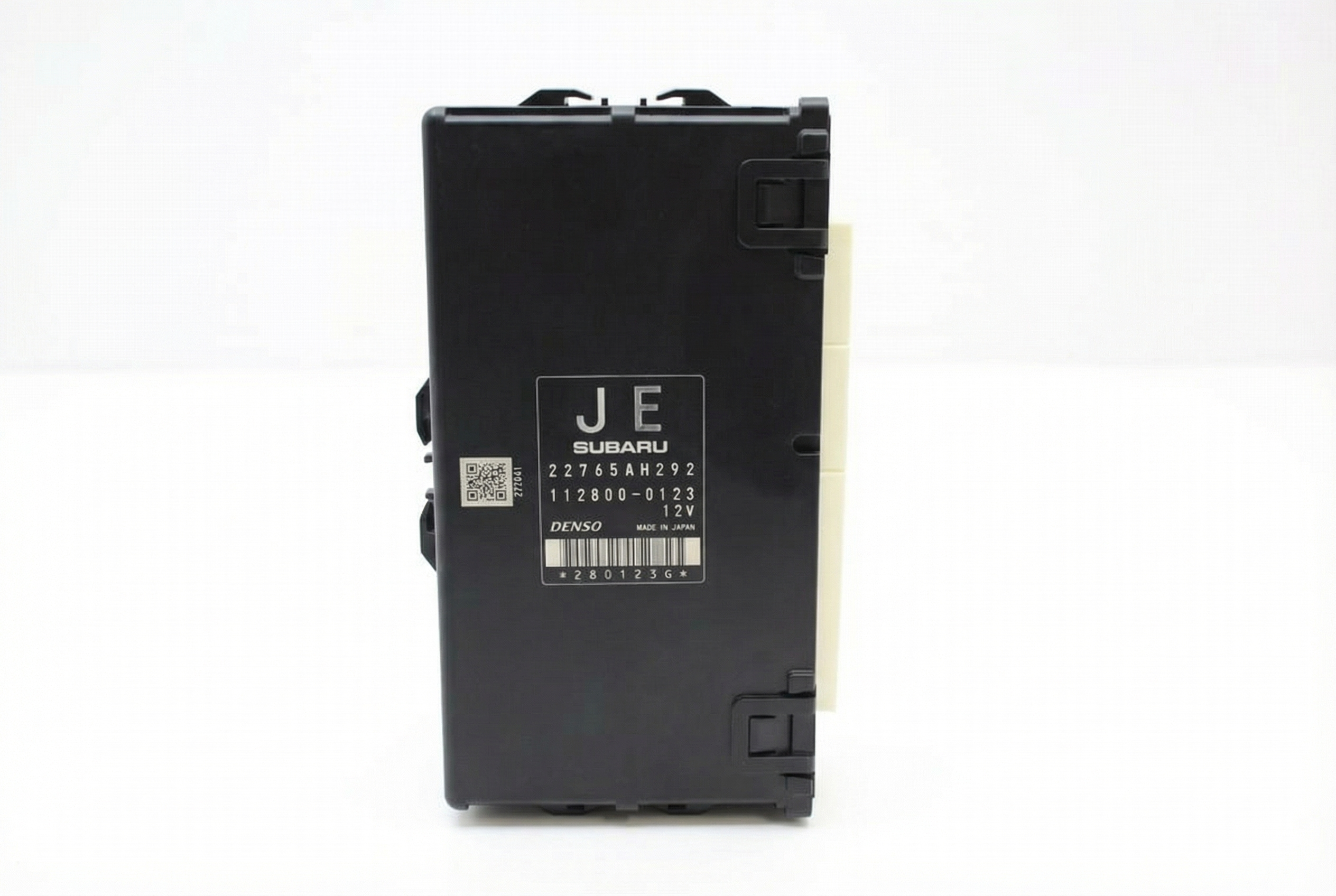
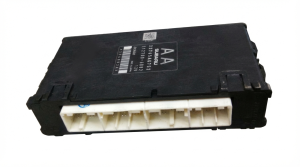
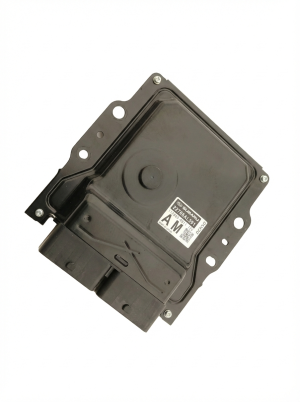
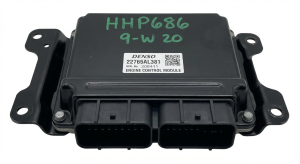
(OEM #22765AG751 (Example for 2015-2016 2.5L PZEV AT, part numbers are highly specific))— This is only needed in the rare event of a true internal hardware failure, after all other diagnostic steps have been exhausted. Part numbers are extremely specific to year, engine, and transmission, and the unit will require dealer programming. Example part numbers for a 2015 Forester include 22765AG970, 22765AG751, and 22765AG753.
Trusted brands: Subaru (OEM)
OEM price range: $900-$1200
Aftermarket price range: $400-$800 (Remanufactured)
Technical Service Bulletins (TSBs) & Recalls
- 07-75-13R: Describes the cause (DTC P0606 after Vehicle Battery Is Reconnected) and the specific reset procedure for all models with DIT (Turbo) engines, including Forester XT and WRX. Revised on 03/10/20.
- 07-75-13: An earlier manufacturer bulletin (dated 2013-06-06) providing information regarding DTC P0606 specifically for the determination of this code on Forester Turbo models equipped with back-up memory.
- 11-15-14: Mentions a dealer ECM reflash as a permanent fix for the P0606 glitch on 2014-2015 Forester XT models.
Platform-Specific Known Issues
- A known software glitch on 2014-2015 Forester XT models can cause this code, which is correctable with a dealer reflash per TSB 11-15-14.
- The procedure outlined in TSB 07-75-13R is critical for all FA20DIT engines and is the first step in diagnosing a P0606 after any power interruption.
Mechanic-Grade Diagnostic Values
- ECM Ground Circuit Resistance — expected: Less than 2.0 ohms, ideally close to 0.. Failure: A reading higher than a few ohms indicates a poor ground connection (corrosion, looseness) that can cause phantom codes like P0606.
- ECM Power and Ground Voltage Drop (Under Load) — expected: Less than 0.5 volts.. Failure: A voltage drop greater than 0.5V on either the power or ground side when the system is active indicates high resistance in the wiring or connections, which can starve the ECM of stable power.
- Battery Voltage (Engine Off) — expected: ~12.6 Volts. Failure: A reading below 12.4V indicates a discharged or failing battery, a known trigger for P0606 on this platform.
- Charging System Voltage (Engine Running) — expected: 13.5 - 14.5 Volts. Failure: Voltage below 13.5V or above 14.5V indicates a problem with the alternator or voltage regulator, which can cause the unstable power that triggers a P0606 fault.
Hidden / Shadow Codes Worth Checking
- Permanent DTC (PDTC): P0606 can be stored as a 'Permanent' code, which cannot be erased with a standard scan tool 'clear codes' function. The ECM itself must verify the fault is fixed before it will clear the code. (see via Many modern OBD-II scanners will display a separate list for 'Permanent Codes' in addition to active/pending codes.)
Scan Tool Commands That Help
- Subaru Select Monitor (SSMIII/SSM4): Clear Memory — This is the official first step in the TSB 07-75-13R procedure. It is used to clear the fault from the ECM's memory before performing the critical 60-second ignition-off wait time. The menu path is: Main Menu > Each System Check > Engine Control System > OBD System > Clear Memory.
- CarProg / K-Tag (or similar EEPROM programmer): Read/Write EEPROM (e.g., 93C86 chip) — In a rare case of true internal ECM failure, the vehicle's VIN and immobilizer key data are stored on an EEPROM chip inside the ECU. To use a donor/used ECU, this chip's data must be cloned from the original ECU to the replacement. This is a specialist-level task.
Wiring & Ground Locations
- Engine Control Module (ECM) — Located in the passenger-side footwell. The carpet must be pulled back and a metal protective plate removed to access it.. This is the component setting the code. Its physical connections for power and ground must be secure. Its location makes it potentially vulnerable to water damage from a clogged A/C drain or windshield leak, which could be a root cause of failure.
- Primary ECM Ground — On Subaru turbo models, a main ECU ground connection is typically bolted directly to the intake manifold.. A loose or corroded ground on the intake manifold is a common point of failure for various electrical issues. Verifying this connection is tight and clean is a key diagnostic step before condemning the ECM.
- OBD-II Data Link Connector — Located in the lower portion of the instrument panel on the driver's side, to the left of the steering column.. This is the port required to connect a scan tool to read the P0606 code and perform the necessary 'Clear Memory' function.
Real Owner Repair Stories
- Reddit user on r/WRX (2015+ Subaru WRX (FA20DIT engine)) — P0606 code and limp mode appeared after the battery died and was jump-started.
❌ Tried (didn't work) Clearing the code with an OBD tool while stationary., Disconnecting the battery and pulling the ECU fuse., Performing the standard TSB ignition cycle reset procedure.
✅ What actually fixed it The code finally cleared after the user had a passenger use a Bluetooth OBD reader (Torque app) to clear the fault code *while the vehicle was being driven* at approximately 30 mph. This unconventional step worked when stationary attempts failed. - Reddit user on r/subaru (2016 Subaru WRX 6-speed (FA20DIT engine)) — P0606 appeared after a dead battery was replaced. The code was listed as 'Permanent' (PDTC) and would not clear with a standard reader, though the car ran fine.
❌ Tried (didn't work) Simply clearing the code with a standard reader., Disconnecting the battery for 15-20 minutes.
✅ What actually fixed it The fix was to follow the TSB 07-75-13R procedure exactly: use a scan tool to clear the code, turn the ignition OFF, and wait for at least one full minute before turning it ON again. This allowed the ECU to see the condition was resolved and clear the permanent code itself.
Model Year Variations Within This Range
- 2014-2015: These specific model years had a known software logic issue that made them more susceptible to triggering P0606. Subaru issued TSB 11-15-14 to address this with a dealer-performed ECM software update (reflash). Later models (2016-2018) may have already had the updated logic from the factory.
Diagnostic Flowchart
Real Owner Stories
Aggregated from forums and TSBs cited above. Mileages and costs reflect what owners reported in those sources.
2017 Forester XT
Symptoms: Dash lit up like a Christmas tree after swapping out an older, dead battery at Autozone. A 'permanent' P0606 code was present.
What fixed it: The owner found that the code required a dealership visit for a specialized code clear or ECM flash.
Source hint: Reddit r/SubaruForester - 'P0606 Code After Battery Change - 2017 Forester XT'
2016 Forester XT
Symptoms: The vehicle drove and functioned fine, but threw a P0606 code related to an ECM timer internal short.
What fixed it: A Subaru technician replaced the ECM.
Source hint: Reddit r/WRX
2016 Subaru WRX
Symptoms: P0606 code appeared after the battery died and would not clear with a standard reader.
What fixed it: Followed TSB 07-75-13R, waiting 60 seconds during the ignition cycle to let the self-shutoff relay complete its process.
Source hint: Reddit r/subaru - 'P0606 Caused by dead battery... code wont clear'
Subaru Forester
Symptoms: Engine Code 0606 triggered after a reversed-polarity jump start attempt.
What fixed it: The code was successfully cleared after the power interruption event.
Source hint: Reddit r/SubaruForester - 'Got a hell of a scare tonight... Engine Code 0606 after a bad jump'
Documented NHTSA Reports
NHTSA ODI #10574609
Symptoms: An owner reported driving at normal speed to a dealer after experiencing issues. The technician identified an error code of P0606.
What fixed it: The technician stated this was a voltage issue on the Engine Control Module (ECM) and the corrective action was to re-flash the ECM computer.
Related OBD-II Codes
Frequently Asked Questions
Does TSB 07-75-13R apply to my 2014-2018 Forester XT?
Why is my cruise control light flashing and traction control light on with code P0606?
I just replaced the battery on my Forester XT and now I have a 'permanent' P0606 code. How do I fix it?
Is there a software update to fix P0606 on the Forester XT?
Can the factory battery cause the P0606 code on my FA20DIT engine?
My 2016 WRX has the same FA20DIT engine. Will the Forester XT reset procedure work for it?
Helpful Videos
We Have This Part in Stock

The information in this article is provided for general reference and educational purposes only. Vehicle specifications, procedures, and part compatibility can vary by production date, trim level, and region. Always consult your vehicle's factory service manual and verify part numbers before purchasing or performing repairs. Safety-critical components such as airbags, seat belts, and braking systems should be installed by a qualified professional.
- Subaru Forester:
- 🧭 Diagnostic Flowchart
- 🎬 Helpful Videos
- 🛍️ Shop This Part
- What's Unique About the 2014-2018 Subaru Forester
- Symptoms You May Notice
- Most Likely Causes
- Rare But Worth Checking
- Diagnosis Steps
- Parts You'll Likely Need
- Technical Service Bulletins (TSBs) & Recalls
- Platform-Specific Known Issues
- Mechanic-Grade Diagnostic Values
- Hidden / Shadow Codes Worth Checking
- Scan Tool Commands That Help
- Wiring & Ground Locations
- Real Owner Repair Stories
- Model Year Variations Within This Range
- Real Owner Stories
- 2017 Forester XT
- 2016 Forester XT
- 2016 Subaru WRX
- Subaru Forester
- Documented NHTSA Reports
- NHTSA ODI #10574609
- Related OBD-II Codes
- Frequently Asked Questions
- 🎟️ Get 5% Off