

P0606 on 2014-2020 Subaru Forester: Understanding an ECM Processor Fault
On 2014-2018 Forester XT (Turbo) models, this code is most often a software glitch caused by disconnecting the battery or the battery dying. Before replacing parts, try clearing the code, turning the ignition off, waiting over a minute, and restarting. For other models, it can indicate a failing battery or a true ECM failure. A permanent fix for 2014-2015 models is available via a dealer ECM reflash per TSB 11-15-14.
- For a 2014-2018 Forester XT, P0606 is very likely a software glitch after a battery power loss, not a failed part.
- Always try the simple reset procedure first: clear the code, turn the car off, wait 60+ seconds, and restart.
- A permanent fix via a dealer software update (reflash) exists for 2014-2015 Forester XT models.
- Never assume the ECM is bad without first ruling out the TSB procedure and testing the battery/charging system.
What's Unique About the 2014-2020 Subaru FORESTER
The 2014-2018 Forester XT (and other Subaru models with DIT turbo engines like the WRX) are uniquely prone to this code due to a software sensitivity. As documented by Subaru in Technical Service Bulletin #07-75-13R, if the battery is disconnected, goes dead, or an OBD memory clear is performed, the ECM's backup memory is erased. If the ignition is then turned 'ON' within one minute of being turned 'OFF', it can improperly interrupt the ECM's self-shutoff procedure. This logs a latent P0606 fault code that may not appear immediately but can be triggered later depending on driving conditions, even if the vehicle runs perfectly. Subaru later released TSB 11-15-14 offering a permanent ECM reprogramming file to fix this glitch on 2014-2015 Forester XT models.
Diagnostic Flowchart
Tap your situation to follow the diagnostic path that matches what you're seeing on this vehicle.
Generation note: This range covers two Forester generations. The SJ generation (2014-2018) included the 2.0L DIT (Direct Injection Turbo) engine in XT models, which is the primary subject of TSBs for this code. The SK generation (2019-2020) uses a non-turbo 2.5L engine; while P0606 can still occur from general electrical faults, the specific battery-related software glitch is not documented for these years.
Symptoms You May Notice
- Check Engine Light (CEL) illuminated
- Flashing cruise control indicator on the dashboard 🎬 Watch: Why your cruise control light is flashing and how to fix it.
- Vehicle enters 'failsafe' or 'limp mode' with significantly reduced engine power
- Hill descent control light may illuminate
- In many cases, no noticeable driving issues other than the warning lights
- Vehicle may crank but fail to start 🎬 See these diagnostic tips if your car won't start with code P0606.
- Rough idling
- Immediately replacing the ECM without checking for TSBs or testing the battery. On this platform, the ECM is often not the root cause, and replacing it is expensive and unnecessary if the issue is just a software glitch or a weak battery.
Most Likely Causes
- Improper Ignition Cycle After Power Loss 🔴 High Probability Specifically documented in Subaru TSB #07-75-13R for all DIT (Turbo) engines. The ECM's self-shutoff procedure is sensitive after its backup memory is cleared from a battery disconnect, a dead battery, or even an OBD memory clear function.
How to confirm: Confirm if the battery was recently disconnected, replaced, jump-started, or went completely dead. If so, this is the most likely cause. The code may not appear immediately after the event.
Typical fix: Clear the DTC with a scan tool. Turn the ignition OFF and wait for at least one full minute before turning it back ON. This allows the self-shutoff relay to complete its cycle properly. For a permanent solution on 2014-2015 XT models, a dealer can perform an ECM reflash per TSB 11-15-14.
Est. part cost: $0 - $150 (for dealer reflash) - Failing Battery or Charging System Issue 🟡 Medium Probability → Shop Vehicle Battery Modern ECMs are highly sensitive to voltage. An old battery that provides low voltage during cranking or a faulty alternator providing unstable voltage (under 13.5V or over 14.5V) can cause the ECM to fail its internal self-check and trigger a P0606.
How to confirm: Test the battery's health, cranking amps, and state of charge. With the engine running, use a multimeter to check the alternator output voltage at the battery terminals (typically should be 13.5-14.5V). Many auto parts stores will test the battery and alternator for free.
Typical fix: Replace the battery and/or alternator.
Est. part cost: $150-$600 - Internal ECM Failure ⚪ Low Probability While true hardware failure is rare, it can happen. In one forum instance on a related WRX, persistent issues like rough idle, stalling, and dying while driving that existed *before* a battery event pointed to a genuine ECM failure, which was resolved by replacement.
How to confirm: This is a diagnosis of exclusion. If all power, ground, and related sensor circuits are confirmed to be good, the TSB reset procedure fails, and the code persists after a reflash attempt, the ECM itself is likely faulty.
Typical fix: Replace the Engine Control Module and have it programmed to the vehicle by a dealer or qualified shop.
Est. part cost: $800-$1500
Rare But Worth Checking
- Poor ECM Ground Connection: A loose or corroded ground wire for the ECM can cause erratic behavior and voltage issues that mimic an internal failure. A thorough diagnostic step is to check all ECM power and ground connections for integrity.
- Reversed Polarity During Jump-Start: Incorrectly connecting jumper cables, even for a moment, can send a voltage spike through the electrical system. One Forester owner reported this exact scenario: after realizing the cables were on backward and correcting them, the car started but immediately threw a P0606 code with multiple dash lights. Luckily, clearing the code resolved it in their case, but this event can permanently damage the ECM.
Diagnosis Steps
- Check for Technical Service Bulletins (TSBs). Note TSB #07-75-13R for all turbo models and TSB #11-15-14 for a permanent reflash fix on 2014-2015 turbo models.
- Question the driver: Was the battery recently dead, disconnected, or jump-started?
- If yes, use a scan tool to clear the P0606 code.
- Turn the ignition completely OFF. Remove the key and wait for at least 60 seconds. Use a timer to be certain.
- Start the vehicle and see if the code returns after a drive cycle. If it does not, the issue is resolved.
- If the code returns, try a 'hard reset'. Disconnect the negative battery terminal and press the brake pedal for 30 seconds to drain any residual power. Reconnect the battery, then repeat the 60-second ignition off procedure.
- If the code still returns, perform a comprehensive test of the battery and charging system. Check for stable voltage during cranking and while running (13.5V-14.5V).
- Inspect the ECM's main power and ground connections for tightness and corrosion. On turbo models, the main ECU ground is typically on the intake manifold.
- If all wiring, power, and grounds are good, consult a dealership about an ECM software update (reflash), especially for 2014-2015 models per TSB 11-15-14.
- If a reflash does not solve the problem or is not available, the ECM is likely faulty and requires replacement and programming.
Parts You'll Likely Need
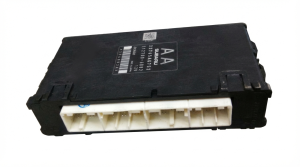
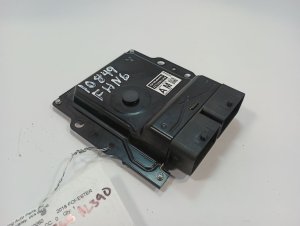
- Engine Control Module (ECM)
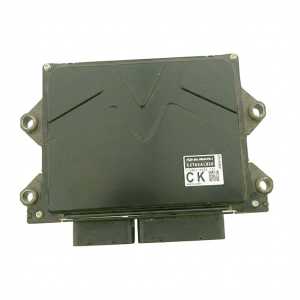
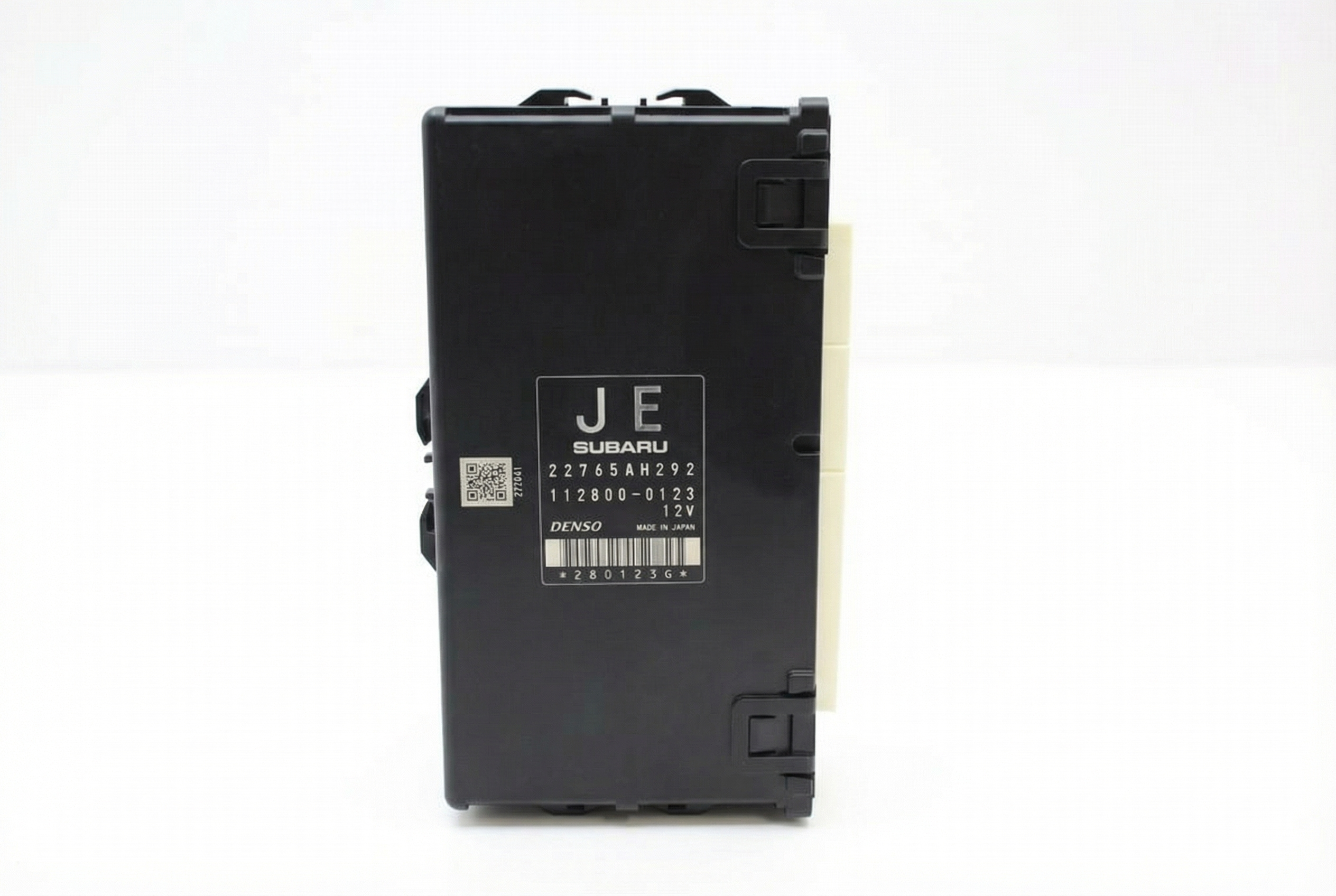
(OEM #22611AW064 (superseded by 22611AW065 for 2014 XT models). Part numbers are VIN-specific, always verify.)— This is the part that gets replaced if the fault is determined to be an internal, unrecoverable hardware failure after all other software and electrical issues have been ruled out.
Trusted brands: Subaru (OEM)
OEM price range: $900-$1400
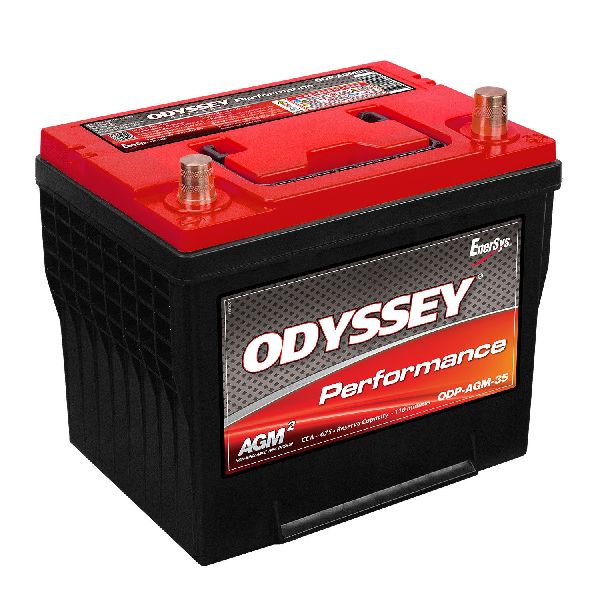
Aftermarket price range: $100-$400 (Used/Remanufactured) - Battery — A weak or failing battery providing unstable voltage is a common trigger for a P0606 code.
Trusted brands: Interstate, DieHard, Subaru (OEM)
OEM price range: $200-$300
Aftermarket price range: $150-$250
Technical Service Bulletins (TSBs) & Recalls
- 07-75-13R: 'DTC P0606 after Vehicle Battery Is Reconnected' - Details the specific software glitch on DIT (Turbo) engines for Forester and WRX models, and outlines the reset procedure.
- 11-15-14 (also listed as Service Bulletin #07-87-14): 'Reprogramming Files For DTC P0606 And Extended Engine Cranking' - Announces availability of a permanent ECM software update for 2014-2015 Forester 2.0 XT models to fix the P0606 issue.
- 07-75-13: The original bulletin providing information on P0606 for 2014 Forester Turbo models.
Platform-Specific Known Issues
- A known issue, documented in TSB #07-75-13R, affects turbo models where disconnecting the battery and then cycling the ignition too quickly can cause a false P0606 code.
- A permanent software fix is available from Subaru dealers for 2014-2015 Forester XT models per TSB 11-15-14, which reprograms the ECM to prevent the glitch.
- An owner complaint to the NHTSA for a 2014 model with P0606 reported the corrective action was to 're-flash the ECM computer'.
- Owners on forums frequently report success simply by clearing the code and following the TSB's 60-second wait procedure after a battery change or jump-start.
Mechanic-Grade Diagnostic Values
- Battery Voltage (Key Off, Engine Off) — expected: ~12.6 Volts. Failure: A reading below 12.4V indicates a low state of charge. A reading that is a multiple of 2.1V below 12.6V (e.g., 10.5V) can indicate a dead cell.
- Charging System Voltage (Engine Running at Idle) — expected: 13.5 - 14.5 Volts. Failure: Voltage below 13.5V or above 14.5V, or a fluctuating voltage, indicates a potential alternator or connection issue that can trigger P0606.
- ECM Power and Ground Pins — expected: Technicians should consult the vehicle-specific factory service manual or wiring diagram to identify the ECM power and ground pins. Power pins should show battery voltage, and ground pins should show near-zero resistance to the chassis ground.. Failure: Voltage drops on power pins or any significant resistance on ground pins indicate a wiring harness or connection problem that can cause a false P0606.
Scan Tool Commands That Help
- Subaru Select Monitor (SSMIII/SSM4): Clear Memory — This is the first step in the official TSB procedure for a P0606 caused by power loss. It is used to clear the fault from the ECM's memory before performing the ignition cycle reset. The path is: Main Menu > Each System Check > Engine Control System > OBD System > Clear Memory.
Wiring & Ground Locations
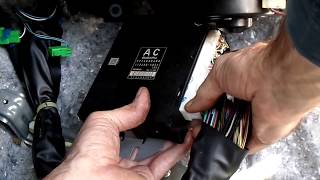
- Engine Control Module (ECM) — Located in the passenger-side footwell. The carpet must be pulled back and a metal protective plate removed to access it.. This is the component setting the code. Its location makes it vulnerable to water damage from a clogged A/C drain or windshield leak, which is a possible root cause.
- Primary ECM Ground — On Subaru turbo models, the ECU's main ground connection is typically bolted to the top of the intake manifold, not directly to the engine block or chassis.. A poor connection at this specific point can cause voltage irregularities and electrical noise, directly leading to a false P0606 code. All grounding between the manifold, engine block, and chassis must be clean and tight.
Real Owner Repair Stories
- Reddit user on r/WRX (2015+ Subaru WRX (shares DIT engine and P0606 TSB with Forester XT)) — P0606 Check Engine Light and limp mode after the battery died.
❌ Tried (didn't work) Checking gas cap.
✅ What actually fixed it Following the TSB procedure. The user cleared the code with an OBD2 tool, then turned the key to 'ON' for 1 minute, then 'OFF' for 1 minute, then back 'ON'. This resolved the issue without parts replacement. - YouTube comment on ECU Testing video (Honda (logic applies to other sensitive Japanese ECUs)) — Car lost power, went into limp mode, and threw a P0606 code.
❌ Tried (didn't work) Initial diagnostics did not point to the cause.
✅ What actually fixed it The owner discovered that recently installed 'OEM' spark plugs were counterfeit. Replacing them with genuine OEM spark plugs from a reputable store resolved the P0606 code and drivability issues.
OEM Part Supersession History
22611AW064→22611AW065— Revision/update from manufacturer.
Heads up: A used ECM, even with a matching part number, is VIN-locked to the original vehicle. Some sellers claim it cannot be reprogrammed by a dealer and requires a specialist ECM cloning/programming service to function in a new vehicle.Multiple for 2014 Forester 2.0L Turbo→Later revisions— Rolling updates.
Heads up: The following part numbers are listed as interchangeable for the 2014 Forester Turbo: 22611AW060, 22611AW061, 22611AW062, 22611AW063, 22611AW064, 22611AW065, 22611AW066, 22611AW067. Always verify the specific part number required for your vehicle's VIN.
Model Year Variations Within This Range
- 2017 vs. 2018: There were no significant mechanical or electrical system changes between the 2017 and 2018 model years that would affect the diagnosis of a P0606 code. Changes were primarily cosmetic or related to option package content, such as the introduction of a 'Black Edition' package and making the EyeSight system standard on Touring trims.
Helpful Videos

Used OEM Parts in Stock
New Aftermarket Parts Available



The information in this article is provided for general reference and educational purposes only. Vehicle specifications, procedures, and part compatibility can vary by production date, trim level, and region. Always consult your vehicle's factory service manual and verify part numbers before purchasing or performing repairs. Safety-critical components such as airbags, seat belts, and braking systems should be installed by a qualified professional.
- Subaru FORESTER:
- 🧭 Diagnostic Flowchart
- 🎬 Helpful Videos
- 🛍️ Shop This Part
- What's Unique About the 2014-2020 Subaru FORESTER
- Symptoms You May Notice
- Most Likely Causes
- Rare But Worth Checking
- Diagnosis Steps
- Parts You'll Likely Need
- Technical Service Bulletins (TSBs) & Recalls
- Platform-Specific Known Issues
- Mechanic-Grade Diagnostic Values
- Scan Tool Commands That Help
- Wiring & Ground Locations
- Real Owner Repair Stories
- OEM Part Supersession History
- Model Year Variations Within This Range
- 🎟️ Get 5% Off