

P0606 on 2005-2009 Subaru Legacy: ECM Processor Fault Causes and Fixes
On a 2005-2009 Subaru Legacy, a P0606 code is often a temporary glitch caused by a dead battery or power interruption. Before replacing the ECM, perform a specific reset procedure: clear the code, turn the ignition off, wait at least one minute, and then restart the car. This procedure is documented in Subaru TSB 07-75-13R and is a widely confirmed fix in owner forums.
- Do NOT immediately replace the ECM. The most likely cause is a temporary glitch from a recent power loss (dead battery, jump-start).
- Always perform the TSB reset procedure first: clear codes, turn ignition off, and wait at least 60 seconds before restarting.
- If the reset doesn't work, thoroughly test the battery and charging system. Low or unstable voltage is the second most common cause.
- Check and clean main ground connections, as a poor ground can mimic ECM failure.
- A true ECM failure is rare and should only be considered after all other possibilities have been exhausted.
What's Unique About the 2005-2009 Subaru Legacy
The fourth-generation Subaru Legacy (2005-2009), particularly turbocharged models (Legacy GT), is highly sensitive to power interruptions. As documented in Subaru Technical Service Bulletin #07-75-13R, if the ignition is cycled too quickly (turned ON within one minute of being turned OFF) after the battery has been disconnected or gone dead, the ECM can fail to complete its self-shutoff procedure. This doesn't immediately trigger the P0606 code but sets a latent fault that can appear after some driving, causing significant confusion for owners who may assume the ECM has failed when it's often just a software-related hiccup. This behavior is common across many Subaru turbo platforms of the era.
Symptoms You May Notice
- Check Engine Light (CEL) is on
- Flashing Cruise Control light (and cruise control is disabled)
- Vehicle may enter 'limp mode' with reduced engine power and poor throttle response
- Vehicle may stall or have difficulty starting
- Unpredictable engine behavior or rough idling
- Disabling of Vehicle Dynamics Control (VDC) system
- Immediately replacing the Engine Control Module (ECM) without first performing the TSB 07-75-13R reset procedure and thoroughly checking the battery/charging system. This is an expensive and often unnecessary repair for this specific code on this platform. 🎬 Watch: How to diagnose a P0606 ECM processor error
Most Likely Causes
- Improper Ignition Cycle After Power Loss 🔴 High Probability As described in Subaru TSB 07-75-13R, the ECM logic is sensitive to being restarted too quickly after its backup memory has been cleared by a power loss (e.g., dead battery, battery change, or jump-start). This is the most common cause for this code on this platform, confirmed by countless owner experiences.
How to confirm: This is the first step in diagnosis. If the battery was recently dead, disconnected, or jump-started, this is the most likely cause. The code may not appear immediately but after a short drive.
Typical fix: Perform the TSB reset procedure. Clear the code with a scan tool. Turn the ignition ON, then OFF. Wait for at least one full minute (use a timer). Before turning the ignition ON again. This allows the ECM's self-shutoff relay to cycle properly. In some cases, a few drive cycles may be needed for the permanent DTC (PDTC) to be cleared by the ECU after the procedure is done.
Est. part cost: $0 - Failing Battery or Weak Charging System 🟡 Medium Probability → Shop Vehicle Battery Modern ECMs are highly sensitive to voltage. An old battery that provides low voltage during cranking or a faulty alternator providing unstable voltage can cause the ECM to fail its internal self-check and trigger a P0606 code. The OEM batteries on these cars are not known for longevity.
How to confirm: Use a multimeter to test the battery and charging system. Battery voltage with the engine off should be ~12.6V. With the engine running, it should be stable between 13.5V and 14.5V. Many auto parts stores will test your battery and alternator for free.
Typical fix: Replace the weak battery or faulty alternator.
Est. part cost: $150-$400 - Faulty Engine Control Module (ECM) ⚪ Low Probability → Shop Engine Control Module (ECM) While the code directly points to an ECM processor fault, on this platform it is more often a symptom of other issues. A true hardware failure is the least common cause but can happen.
How to confirm: This is a diagnosis of exclusion. If the reset procedure, battery/charging system check, and wiring/ground inspection all pass, the ECM itself may be faulty. This requires advanced diagnostics, often by a professional, to check for power and ground at the ECM connector.
Typical fix: Replace the Engine Control Module. The new or remanufactured ECM will require programming to the vehicle's VIN and specific configuration.
Est. part cost: $800-$1500
Rare But Worth Checking
- Poor Ground Connections: A corroded or loose engine or chassis ground can cause voltage fluctuations that confuse the ECM, leading to a P0606 code. Key grounds to check are the main strap from the engine block to the chassis and the battery negative cable connection. It's a simple check that can save a lot of money.
- Aftermarket Tuning or Performance Chips: Modifying the ECM's software with aftermarket tunes can sometimes cause instability or conflicts that lead to processor fault codes. In some cases, an aftermarket exhaust making contact with the chassis has been reported to cause a ground issue sufficient to trigger a P0606.
- Shorted Sensor or Component: In rare cases, a sensor or other component connected to the ECM can short out, sending erratic voltage back to the computer and causing it to report an internal fault. If the P0606 is accompanied by other codes, diagnosing those first may resolve the P0606.
Diagnosis Steps
- Check if the battery has recently been disconnected, replaced, or if the vehicle was jump-started. If yes, this is your primary lead.
- Connect an OBD-II scanner and record the P0606 code and any other codes present. Note if the cruise control light is flashing. 🎬 See this quick fix for flashing cruise control lights
- Perform the TSB reset procedure: Clear the code(s) with the scanner. Turn the ignition ON, then turn it OFF. Wait for at least 60 seconds without touching the ignition (use a stopwatch).
- After waiting, start the vehicle and see if the code returns. A short drive cycle may be necessary for the permanent code to clear.
- If the code does not return, the issue was the temporary glitch. If it returns, proceed to the next step.
- Using a multimeter, test the battery voltage with the car off (should be ~12.6V).
- Start the engine and test the charging system voltage at the battery terminals (should be stable, 13.5V-14.5V). If voltage is low, high, or fluctuating, diagnose the alternator and charging system.
- Inspect all battery cables, terminals, and major ground straps (engine block to chassis, battery to chassis) for corrosion, security, and damage. The main engine ground is often on the intake manifold. Clean or tighten as necessary.
- If the vehicle has an aftermarket tune, consult the tuner or consider flashing back to the stock map to see if the issue resolves.
- If all the above steps check out and the code persists, the ECM itself may be faulty. This diagnosis is best confirmed by a professional before ordering an expensive replacement part.
Parts You'll Likely Need
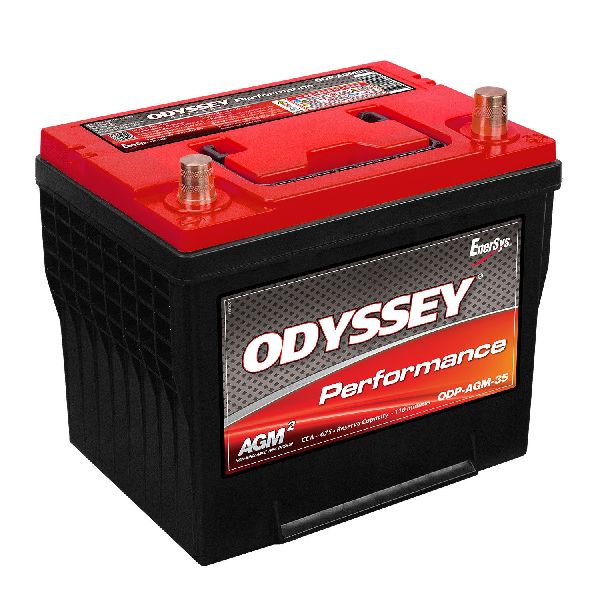
- Vehicle Battery — A weak or failing battery is a common trigger for a false P0606 code due to low or unstable voltage during startup and operation.
Trusted brands: Interstate, DieHard, Duralast, Optima
OEM price range: $200-$300
Aftermarket price range: $150-$250 - Engine Control Module (ECM)
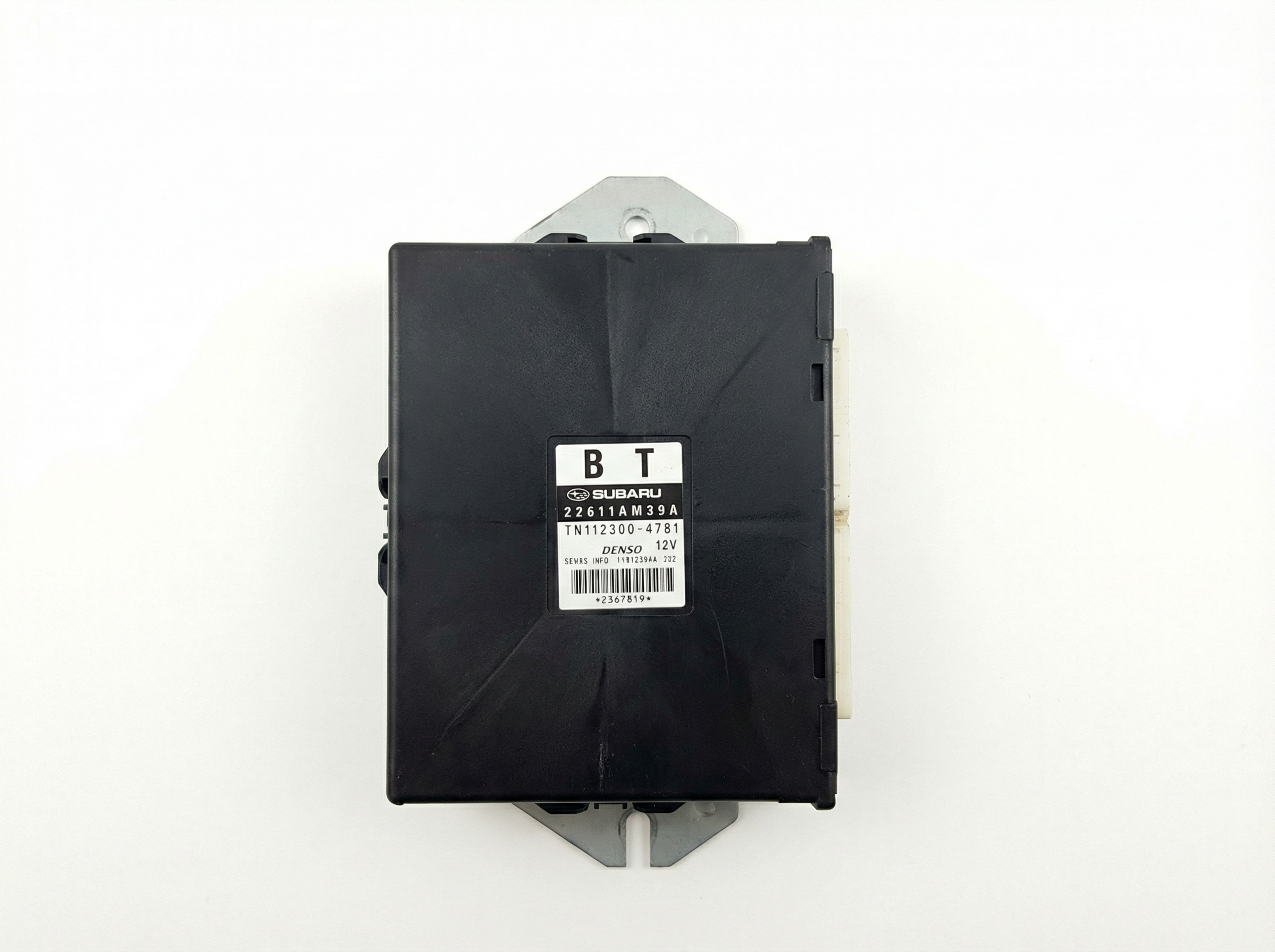
(OEM #22611AN02C, 22611BC05A (Examples, part number is highly specific to year, engine, transmission, and emissions. Always verify with VIN))— This is the last resort. If all other diagnostic steps fail and the code persists, the ECM itself has likely failed and needs to be replaced and programmed.
Trusted brands: Subaru (OEM), Cardone (Remanufactured)
OEM price range: $1000-$1500
Aftermarket price range: $450-$800 (Remanufactured)
Technical Service Bulletins (TSBs) & Recalls
- 07-75-13R: Describes the P0606 code being set after a battery reconnection or power loss on turbo models and outlines the specific reset procedure to follow (clear code, ignition off, wait 60+ seconds).
Platform-Specific Known Issues
- This platform is known to set a P0606 code due to a software sensitivity related to power loss, as documented in Subaru TSB 07-75-13R. This is especially common on turbocharged models (Legacy GT) which use the EJ255 engine.
- Owner forums are filled with accounts of this code appearing immediately after a battery change, with the TSB reset procedure successfully resolving the issue without any parts replacement.
Mechanic-Grade Diagnostic Values
- Battery State of Charge (Engine Off) — expected: 12.4V - 12.6V. Failure: A reading below 12.4V indicates a discharged or failing battery. A drop to ~10.5V can indicate a dead cell.
- Charging System Voltage (Engine Running at Idle) — expected: 13.5V - 14.5V. Failure: Voltage below 13.5V, above 14.5V, or fluctuating voltage points to a faulty alternator or voltage regulator.
- Voltage Drop Test at ECM Connector — expected: < 0.5V. Failure: A voltage drop greater than 0.5V on either the power or ground side of the circuit indicates high resistance that can trigger the code.
- Alternator AC Ripple Voltage — expected: < 0.5 V AC. Failure: AC voltage greater than 0.5V indicates failing alternator diodes, which can introduce electrical noise and cause processor faults.
Hidden / Shadow Codes Worth Checking
- Permanent DTC (PDTC): This isn't a separate code, but a state of the P0606 code. After the TSB reset procedure is performed, the code may remain stored as a 'Permanent DTC' that cannot be cleared by a standard OBD-II scanner. The ECM itself will clear the PDTC after a specific number of successful drive cycles confirm the fault is no longer present. (see via Visible on most modern OBD-II scanners, but distinguished by its 'permanent' status which resists manual clearing commands.)
Scan Tool Commands That Help
- Subaru Select Monitor (SSMIII/SSM4): Clear Memory — This is the first official step in the TSB 07-75-13R procedure. It must be performed before the 60-second ignition cycle reset to properly clear the fault logic from the ECM. The path is: Main Menu > Each System Check > Engine Control System > OBD System > Clear Memory.
Wiring & Ground Locations
- Engine Control Module (ECM) — Located behind the right side of the dashboard, accessible from the passenger footwell.. This is the component setting the code. Verifying power, ground, and connector integrity at this location is the final step before condemning the module.
- Main ECU Ground — On the top of the intake manifold.. The ECU gets its primary ground reference from this point, not directly from the chassis or battery. A loose or corroded connection here is a high-probability cause for false P0606 codes, especially if engine work (like TGV deletes) has been performed.
- Chassis/Engine Grounds — Key locations include a strap from the engine block to the chassis, a ground on the alternator bracket, and the main battery ground point on the chassis near the driver's side strut tower.. These secondary grounds ensure the entire electrical system has a stable reference. A failure in any of these can create voltage differentials that confuse the ECM.
Real Owner Repair Stories
- Reddit user on r/WRX (2015+ Subaru WRX (platform with similar P0606 logic)) — P0606 code and limp mode after a dead battery was jumped.
❌ Tried (didn't work) Clearing the code with an OBD tool while the vehicle was stationary., Standard battery disconnect/reconnect procedures.
✅ What actually fixed it The code was successfully cleared using a Bluetooth OBD reader and the Torque app *while the vehicle was being driven at approximately 30 mph*. This unconventional step forced the ECU to re-evaluate its status under active conditions, clearing the persistent fault. - Go-Parts Research / Forum Documentation (Tuned Subaru WRX (applies to tuned Legacy GT)) — P0606 code would appear repeatedly, but only under high engine load.
❌ Tried (didn't work) Standard electrical checks of the battery and alternator., Checking primary ground wires.
✅ What actually fixed it The cause was an aftermarket exhaust system that was vibrating and making physical contact with the vehicle's chassis under load. This created an intermittent ground fault that the ECM interpreted as an internal processor error. The fix was to physically adjust the exhaust hangers for proper clearance.
"I Checked Everything" — The Actual Cause
- While not a smoke test issue, a similar pattern exists for this code. A vehicle passed all standard electrical tests (battery voltage, alternator output, static ground checks) but still threw a P0606. The actual cause was found to be an aftermarket exhaust vibrating against the chassis during high-load driving, creating a momentary, dynamic ground fault that standard diagnostic procedures would miss.
When the Usual Fixes Don't Work
- In some documented cases, the standard TSB reset procedure (clearing codes, waiting 60 seconds) is not enough to clear a 'Permanent DTC' version of P0606. Owners have reported needing to perform several drive cycles before the ECU clears the code on its own. In one unconventional but successful case, the owner had to use a mobile app to send the 'clear code' command while the vehicle was actively being driven, suggesting a specific set of operating conditions was required for the reset to be accepted by the ECM.
OEM Part Supersession History
22611AN02C (and others like 22611AN02A, B, D, E, F)→22611BC05A— Revision and consolidation of part numbers by the manufacturer.
Heads up: When sourcing a replacement, using the latest part number (22611BC05A) is generally safest, but you must ensure it is for the correct engine, transmission, and emissions type (Calif. vs Federal).
Model Year Variations Within This Range
- 2007-2009: A mid-cycle refresh occurred for the 2007 model year. Turbocharged GT models received the 'Subaru Intelligent Drive' (SI-Drive) system, which allows the driver to select different engine performance maps via a console dial. This introduces different ECM logic and potentially different ECM hardware compared to the 2005-2006 models. The spec.B model also switched from a 5-speed to a 6-speed manual transmission.
Diagnostic Flowchart
Other Known Issues on This Vehicle
Issues unrelated to this code that are worth knowing about as an owner of this generation:
- Turbocharger Oil Starvation (Banjo Bolt Filter) 🔴 High — Common on Legacy GT (EJ255 engine). Clogged mesh filters in the oil feed banjo bolts restrict oil flow, leading to premature turbo failure. Many owners and shops proactively remove these filters. (Ref: Subaru TSB 02-97-05 (related to AVCS filters))
- Front Lower Control Arm Rear Bushing Failure 🟠 Medium — Very common across the entire model range. The large rubber compliance bushing cracks and fails, sometimes at low mileage (under 50k miles), causing clunking noises, poor alignment, and wandering steering.
- Catted Up-Pipe Failure (2005-2006 GT) 🔴 High — Affects early turbo models. The catalytic converter material in the up-pipe can break apart and be ingested by the turbocharger, causing catastrophic failure. Many owners replace it with a catless up-pipe from a later model or aftermarket.
- Plastic Radiator End Tank Failure 🟠 Medium — Common on higher mileage vehicles (over 100k miles). The plastic end tanks on the OEM radiator can crack, leading to coolant leaks and potential overheating.
Used vs. New Parts: Buying Guide for This Vehicle
When a used part is the smart pick: A used OEM Engine Control Module (ECM) is a very sensible choice for this repair, as a new unit is extremely expensive and often on backorder. Given that the P0606 code is frequently a glitch and not a hardware failure, a used ECM from a reputable auto recycler is a cost-effective solution.
Donor-vehicle mileage cap: roughly under 150000 miles for the part to have meaningful remaining life.
What to inspect on the donor part:
- Verify the part number EXACTLY matches your original or its superseded number.
- Inspect the donor ECM's connectors for any signs of corrosion, bent pins, or water intrusion (white or green crust).
- Ask the recycler about the donor vehicle's history if possible (e.g., was it a flood car?). Avoid modules from flood-damaged vehicles.
- Ensure there is no physical damage, cracking, or burn marks on the ECM case.
OEM-only on this vehicle (don't cheap out):
- Engine Control Module (ECM)
Aftermarket brands forum-validated for this vehicle:
- For batteries, which are a common underlying cause, brands like Optima, Interstate, and DieHard AGM are frequently recommended by owners as upgrades over the factory battery.
Brands owners have reported issues with on this vehicle:
- There are no widely reported aftermarket ECM brands to avoid, as most replacements are either used OEM or remanufactured OEM units (like Cardone). Be cautious of no-name sellers on auction sites.
Real Owner Stories
Aggregated from forums and TSBs cited above. Mileages and costs reflect what owners reported in those sources.
2015+ Subaru WRX
Symptoms: P0606 code appeared immediately after a dead battery.
What fixed it: Cleared the code and performed timed ignition cycles as per the TSB procedure.
Source hint: Reddit - 'P0606 after dead battery- FIXED (2015+ WRX)'
2005-2009 Subaru Legacy GT
Symptoms: Check Engine Light and flashing cruise control light; permanent DTC (PDTC) would not clear with a standard reader.
What fixed it: Followed the TSB reset procedure and completed a few drive cycles, which allowed the ECU to clear the permanent code on its own.
Source hint: Reddit r/subaru & r/WRX
2005-2009 Subaru Legacy
Symptoms: P0606 'glitch' symptoms after power loss.
What fixed it: Successful fix using the TSB reset procedure (clear code, ignition off, wait 60+ seconds).
Source hint: LegacyGT.com
Related OBD-II Codes
Frequently Asked Questions
Does Subaru TSB 07-75-13R apply to my Legacy GT?
Why did my cruise control light start flashing and my cruise control stop working when the P0606 code appeared?
I just changed my battery and now I have a P0606 code. Do I need a new ECM?
Will a simple code clear with a scan tool fix the P0606 on my Legacy?
Could my car's ground straps cause a P0606 processor code?
Is the P0606 code related to the banjo bolt oil filter issues on my EJ255 engine?
Helpful Videos
![How to Change ECU [Engine Control Unit Swap // Subaru]](https://img.youtube.com/vi/-EmwuYWWbUE/mqdefault.jpg)
Used OEM Parts in Stock
New Aftermarket Parts Available


The information in this article is provided for general reference and educational purposes only. Vehicle specifications, procedures, and part compatibility can vary by production date, trim level, and region. Always consult your vehicle's factory service manual and verify part numbers before purchasing or performing repairs. Safety-critical components such as airbags, seat belts, and braking systems should be installed by a qualified professional.
- Subaru Legacy:
- 🧭 Diagnostic Flowchart
- 🎬 Helpful Videos
- 🛍️ Shop This Part
- What's Unique About the 2005-2009 Subaru Legacy
- Symptoms You May Notice
- Most Likely Causes
- Rare But Worth Checking
- Diagnosis Steps
- Parts You'll Likely Need
- Technical Service Bulletins (TSBs) & Recalls
- Platform-Specific Known Issues
- Mechanic-Grade Diagnostic Values
- Hidden / Shadow Codes Worth Checking
- Scan Tool Commands That Help
- Wiring & Ground Locations
- Real Owner Repair Stories
- "I Checked Everything" — The Actual Cause
- When the Usual Fixes Don't Work
- OEM Part Supersession History
- Model Year Variations Within This Range
- Other Known Issues on This Vehicle
- Used vs. New Parts: Buying Guide for This Vehicle
- Real Owner Stories
- 2015+ Subaru WRX
- 2005-2009 Subaru Legacy GT
- 2005-2009 Subaru Legacy
- Related OBD-II Codes
- Frequently Asked Questions
- 🎟️ Get 5% Off