

P0606 on 2005-2009 Subaru Outback: ECM Processor Fault Causes and Fixes
On a 2005-2009 Subaru Outback, P0606 is almost always a temporary glitch caused by a dead or disconnected battery. Before replacing any parts, perform a specific reset: clear the code, turn the ignition off, wait one full minute, then restart. This usually fixes it for $0.
- Do NOT rush to replace the ECM. P0606 on this Outback is most likely a temporary glitch.
- If the code appeared after a battery issue, perform the reset procedure first: clear codes, ignition off, wait 60+ seconds, then restart.
- The second most likely cause is a weak battery or failing alternator. Test the charging system before buying expensive parts.
- A true ECM failure is rare and should be the last consideration after all other, more common and cheaper possibilities are ruled out.
What's Unique About the 2005-2009 Subaru Outback
The third-generation Subaru Outback, particularly turbo models, is well-known for setting a 'false' P0606 code after a power interruption. A Subaru Technical Service Bulletin (TSB #07-75-13R) explains that if the ignition is cycled too quickly after power is restored (e.g., after a battery change), the ECM doesn't shut down properly and mistakenly logs a fault. This is a known software quirk. Owners and even shops often replace expensive parts unnecessarily when the real fix is a simple, specific reset procedure that costs nothing.
Symptoms You May Notice
- Check Engine Light is on
- Flashing 'CRUISE' light on the dashboard
- Vehicle enters 'limp mode' with significantly reduced engine power
- Engine may stall or have difficulty starting
- Cruise control is disabled
- Unpredictable or poor throttle response.
- Replacing the Engine Control Module (ECM) without first attempting the specific reset procedure or testing the battery and charging system.
- Assuming the code means definite hardware failure, leading to unnecessary expense.
Most Likely Causes
- Improper Ignition Cycle After Power Loss 🔴 High Probability This is a well-documented software logic issue in Subarus, detailed in TSB #07-75-13R. The ECM's self-shutoff procedure is interrupted if the ignition is turned on within a minute of being turned off after a power loss event (e.g., battery change, jump-start, or even clearing codes with a scan tool).
How to confirm: The code appeared immediately after the battery was replaced, disconnected, jump-started, or went completely dead. The code may appear as a 'Permanent DTC' that standard clearing procedures fail to remove.
Typical fix: Perform a specific reset procedure: Use a scan tool to clear the code, turn the ignition completely OFF, remove the key, and wait for at least one full minute (use a timer). Then, turn the ignition back ON and start the engine. This allows the ECM's self-shutoff relay to fully cycle.
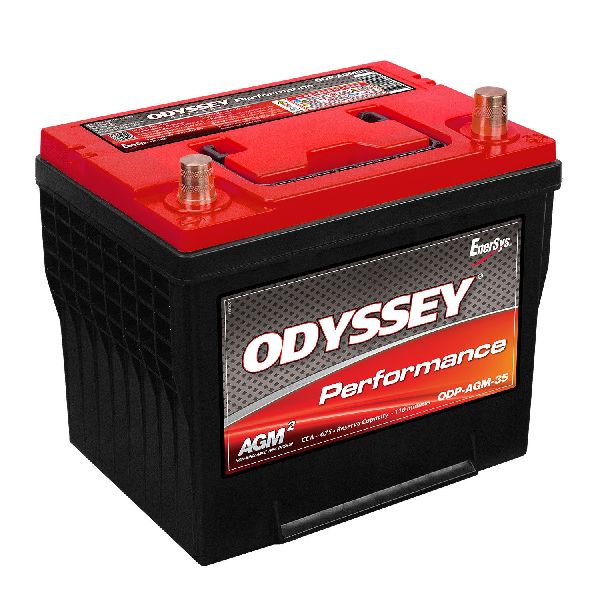
Est. part cost: $0 - Failing Battery or Weak Charging System 🟡 Medium Probability → Shop Vehicle Battery The ECM is highly sensitive to voltage. A weak battery providing low voltage during cranking, or a faulty alternator providing unstable voltage, can cause the ECM to fail its internal self-check and trigger a false P0606. The original Panasonic batteries in some Subarus were known for having low cold-cranking amps (CCA) and a shorter lifespan, making voltage issues more common with age.
How to confirm: Test the battery with a multimeter (should be ~12.6V with engine off) and test the alternator output (should be 13.5V-14.5V with engine running). Many auto parts stores will test them for free. A battery that drops significantly below 10V during cranking is a likely culprit.
Typical fix: Replace the vehicle's battery or, if the charging system is at fault, the alternator. Upgrading to a quality AGM battery with higher CCA is a common preventative measure.
Est. part cost: $150-$400 - Poor ECM Power or Ground Connections ⚪ Low Probability Over time, the main ground straps for the engine and the power/ground connections at the ECM itself can corrode or become loose, causing intermittent voltage drops that upset the computer. On some Foresters (a platform mate), the ECM grounds are located on the intake manifold and are susceptible to corrosion.
How to confirm: Visually inspect the main ground straps from the battery to the chassis and engine. Locate the ECM (typically in the passenger footwell) and inspect its connectors for any signs of corrosion, water intrusion, or damaged pins. Check for high resistance in the power and ground wires at the ECM connector.
Typical fix: Clean the ground connection points with a wire brush until they are shiny and re-secure them tightly. Clean the ECM connector pins if corrosion is found. Ensure all connections are secure.
Est. part cost: $0-$20
Rare But Worth Checking
- Internal ECM Failure: This is the least likely cause. It should only be considered after all other causes, especially the reset procedure and battery/charging system checks, have been thoroughly ruled out. A true ECM hardware failure is rare and is often misdiagnosed.
Diagnosis Steps
- Question the driver: Has the battery been recently replaced, disconnected, or jump-started? If yes, this is the most likely trigger.
- Connect an OBD-II scanner and confirm P0606 is the primary code. Use the scanner's function to clear the code.
- Turn the ignition key to the OFF position. Remove the key.
- Wait for at least 60 seconds. Use a timer to be precise. This is the most critical step, allowing the self-shutoff relay to complete its cycle as per TSB 07-75-13R.
- Insert the key, turn the ignition ON, and start the engine. Drive the vehicle to see if the code returns. For some 'permanent' codes, a short drive cycle may be required for the ECM to verify the fix and clear the light.
- If the code does not return, the issue is resolved.
- If the code returns, test the battery and charging system. A healthy battery should read about 12.6 volts with the engine off. The alternator should produce between 13.5 and 14.5 volts with the engine running. Have the battery load tested.
- If the battery or alternator fails the test, replace the faulty component.
- If the charging system is healthy, inspect the ECM's main power and ground connections for looseness or corrosion. Check engine-to-chassis ground straps. 🎬 Watch: Finding and cleaning Subaru Outback ground connections Clean and tighten as necessary.
- If all the above steps fail to resolve the code, the ECM may have an internal fault, requiring professional diagnosis and likely replacement.
Parts You'll Likely Need
- Automotive Battery — A weak or failing battery is a common trigger for a false P0606 code due to low voltage during engine cranking. The original batteries are often cited as a weak point.
Trusted brands: Interstate, DieHard, Duralast, Optima
OEM price range: $200-$350
Aftermarket price range: $150-$250 - Engine Control Module (ECM)
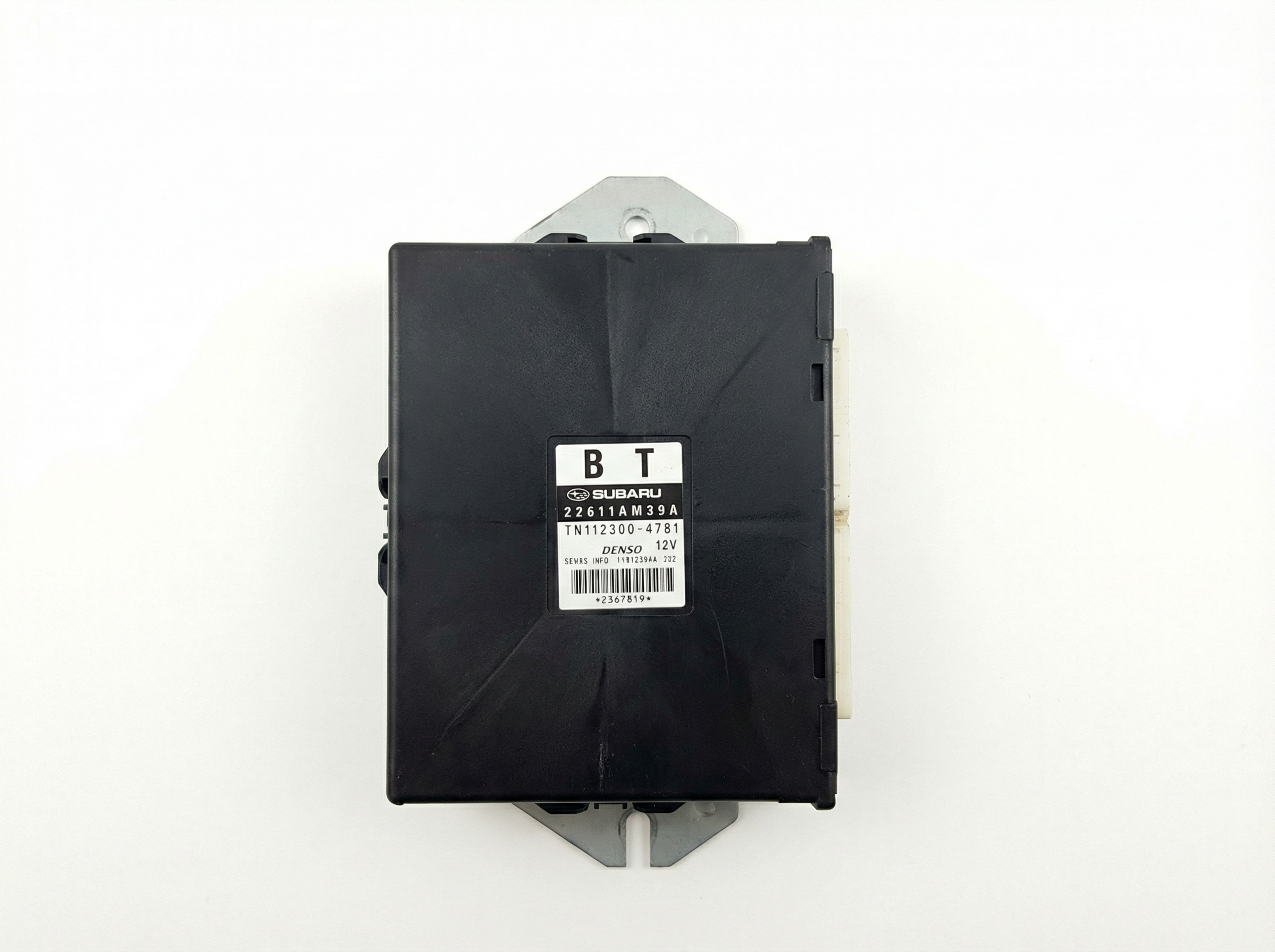
(OEM #22611AH94F)— This is the last resort if all other diagnostic steps fail. The part number must be matched exactly to the vehicle's VIN and transmission type, and it requires programming by a dealer or specialized shop. Part numbers are frequently revised by Subaru, so always verify with a dealer.
Trusted brands: Subaru (OEM)
OEM price range: $800-$1200
Aftermarket price range: $250-$500
Technical Service Bulletins (TSBs) & Recalls
- 07-75-13R: 'DTC P0606 after Vehicle Battery Is Reconnected' - This TSB is the primary document explaining the software glitch on turbo models and outlines the specific 'wait one minute' reset procedure. It applies to all models with DIT (Turbo) engines.
Platform-Specific Known Issues
- Permanent DTC requires specific procedure: An owner on Reddit with a similar platform (2017 Forester XT) reported a 'permanent' P0606 after a battery change that a standard reader couldn't clear. The fix was to follow the TSB 07-75-13R procedure exactly: clear codes, ignition off, wait one full minute, then ignition on. This allowed the self-shutoff relay to cycle and the permanent code to be cleared by the ECU itself.
- Reversed Polarity Jump-Start: A forum user reported getting a P0606 code after accidentally having jumper cables connected with reversed polarity. After correcting the cables and starting the car, the code was successfully cleared with a scanner and did not return, indicating the ECM was not permanently damaged by the event.
Mechanic-Grade Diagnostic Values
- ECM Power Supply Pin Voltage — expected: 12.6V or more with key in the 'ON' position.. Failure: Voltage significantly lower than battery voltage indicates high resistance in the power supply wiring or fuse block.
- ECM Ground Pin Resistance — expected: Near 0 ohms resistance to chassis ground.. Failure: High resistance on ground pins points to a wiring harness, connector, or ground point issue, not an internal ECM fault.
- Charging System Voltage (Engine at Idle) — expected: 13.5V - 14.5V.. Failure: Voltage below 13.5V, above 14.5V, or fluctuating readings suggest a failing alternator or voltage regulator.
Hidden / Shadow Codes Worth Checking
- Permanent DTC (PDTC): This is not a unique code number, but a state where the P0606 cannot be cleared by a standard scan tool or by disconnecting the battery. The ECU itself must verify the fault is resolved (e.g., after the proper reset procedure and a drive cycle) before it will clear the code. (see via A standard OBD-II scanner will show the P0606 code but will repeatedly fail to clear it, which is the primary indicator of a PDTC state.)
Scan Tool Commands That Help
- Subaru Select Monitor (SSMIII/SSM4): Clear Memory — This is the official first step in the TSB 07-75-13R procedure. It is used to clear the fault from the ECM's memory before performing the critical one-minute ignition-off wait time. The path is typically: Main Menu > Each System Check > Engine Control System > OBD System > Clear Memory.
Wiring & Ground Locations
- Main ECU Ground — On the intake manifold for many Subaru models of this era.. A loose or corroded ground connection at this critical point can cause intermittent voltage irregularities, confusing the ECM's processor and triggering a false P0606.
- Rear Hatch Wiring Harness — In the flexible boot between the main body and the rear hatch/tailgate.. While not a direct cause of P0606, owners of 2008 models report this harness is a common failure point for other electrical issues (rear wiper, radio antenna). A short in this harness could potentially introduce electrical noise into the system, though it's an unlikely cause for P0606.
Real Owner Repair Stories
- Reddit user on r/WRX (2015+ WRX (similar DIT engine logic)) — P0606 code and limp mode after a dead battery was jump-started.
❌ Tried (didn't work) Disconnecting the negative battery terminal and pulling the ECU fuse., Standard OBD2 tool reset while stationary., Ignition cycle reset (ON for 1 min, OFF for 1 min).
✅ What actually fixed it The code finally cleared after using a Bluetooth OBD reader (Torque app) to send the 'clear faults' command *while driving* at approximately 30 mph. - legacycentral BBS forum user (Subaru Legacy (similar EJ engine architecture)) — Unstable charging system voltage (fluctuating voltmeter needle) and poor engine performance.
❌ Tried (didn't work) Living with the unstable voltage.
✅ What actually fixed it The owner ran a new 14-gauge ground wire from the battery to the alternator pivot bolt, and another from that bolt to the intake manifold. This stabilized the charging system voltage and resolved the performance issues, demonstrating the importance of the manifold ground path.
OEM Part Supersession History
22611AH94A, 22611AH94B, 22611AH94C, 22611AH94D, 22611AH94E→22611AH94F— Part revisions by the manufacturer to address issues or update components.
Heads up: According to dealer parts sites, 22611AH94F is the final replacement for the previous versions for specific 2005 models. Always verify with VIN.
Model Year Variations Within This Range
- 2008-2009: The 2008 model year introduced a mid-generation facelift with a larger, chrome-ringed grille. More importantly, Vehicle Dynamics Control (VDC), Subaru's electronic stability control, became standard on 2.5XT and 3.0R models, which may affect ECM software and diagnostics compared to earlier years without VDC.
- 2005: The ECM part number 22611AH94F is specifically listed for 2005 models built within certain date ranges (e.g., from 12/16/2004 to 04/27/2005), indicating high specificity and potential differences from other years in the range.
Diagnostic Flowchart
Other Known Issues on This Vehicle
Issues unrelated to this code that are worth knowing about as an owner of this generation:
- Head Gasket Failure (EJ253 Engine) 🔴 High — Very common, typically between 80,000 and 150,000 miles. Affects non-turbo 2.5L engines. The most common failure is an external oil or coolant leak.
- Catalytic Converter Failure (P0420) 🟠 Medium — Common at higher mileage, often triggered by code P0420. Can be caused by a failing head gasket leaking contaminants into the exhaust. (Ref: TSB #WVI-19R and #WVM-23R for some PZEV models address ECM logic to prevent overheating.)
- Wheel Bearing Failure 🟠 Medium — Common failure item, often requiring replacement after 100,000 miles. Symptoms include a humming or grinding noise that gets louder with speed. (Ref: TSB 03-58-08 extended the rear wheel bearing warranty for 2005-2006 models to 8 years/100,000 miles.)
- Automatic Transmission Torque Bind/Shudder 🟠 Medium → Shop Transmission Assembly — Can cause a shudder or binding feeling during tight turns or vibration at highway speeds (35-55 MPH). Often caused by a failing transfer clutch solenoid or old fluid. (Ref: Subaru has issued service bulletins for torque converter shudder on similar models.)
- Airbag Inflator Recall 🔴 High — Part of the massive Takata airbag recall. Affects 2005-2014 Outback models. The inflators can rupture, causing injury. (Ref: NHTSA Recall)
Used vs. New Parts: Buying Guide for This Vehicle
When a used part is the smart pick: A used ECM is a very cost-effective choice IF AND ONLY IF you use a mail-in cloning service. A used ECM from a junkyard is NOT plug-and-play and will result in a no-start condition due to an immobilizer mismatch. Cloning transfers your original car's VIN, key, and immobilizer data to the donor ECM, making it work just like the original.
Donor-vehicle mileage cap: roughly under 150000 miles for the part to have meaningful remaining life.
What to inspect on the donor part:
- Verify the OEM part number on the used ECM matches your original unit exactly.
- Buy from a reputable seller that guarantees the part is tested and functional.
- Inspect photos for any signs of physical damage, water intrusion, or corrosion on the case or connectors.
- Ensure the seller has a clear return policy in case the unit is dead on arrival.
OEM-only on this vehicle (don't cheap out):
- Engine Control Module (ECM) - While used OEM is viable with cloning, brand-new aftermarket ECMs are generally not recommended due to potential software and compatibility issues. Stick with new OEM or a cloned used OEM unit.
Aftermarket brands forum-validated for this vehicle:
- For ECM replacement, mail-in cloning services like Karman Auto are reported to be effective solutions for programming used OEM units.
Brands owners have reported issues with on this vehicle:
- Avoid generic, unbranded ECMs from marketplaces like eBay or Amazon unless they are guaranteed to be correctly programmed/cloned for your specific VIN.
Real Owner Stories
Aggregated from forums and TSBs cited above. Mileages and costs reflect what owners reported in those sources.
2017 Subaru Forester XT
Symptoms: A 'permanent' P0606 code appeared immediately after a battery change that a standard reader could not clear.
What fixed it: Followed the TSB 07-75-13R procedure exactly: cleared codes, turned ignition off, waited one full minute, then turned ignition back on to allow the self-shutoff relay to cycle.
Source hint: Reddit (r/subaru) thread titled 'P0606 Caused by dead battery. Got new battery and the code wont clear.'
2015+ Subaru WRX
Symptoms: P0606 code triggered after the battery went dead.
What fixed it: Performed a specific sequence: key to ON, wait 1 minute, turn it off and wait 1 minute.
Source hint: Reddit (r/WRX) thread titled 'P0606 after dead battery fixed 2015 WRX'
2005-2009 Subaru Outback (General Platform)
Symptoms: P0606 code appeared after accidentally connecting jumper cables with reversed polarity.
What fixed it: Corrected the cable orientation, started the car, and successfully cleared the code with a scanner.
Source hint: vehicle_specific_issues: Reversed Polarity Jump-Start
Related OBD-II Codes
Frequently Asked Questions
Does TSB 07-75-13R apply to my Subaru Outback if I have a P0606 code?
Why did my Outback go into 'limp mode' with a P0606 code after I changed the battery?
Can a weak battery cause a false P0606 on my Subaru?
I tried clearing the P0606 code with a scan tool but it won't go away. Is my ECM dead?
Where are the ECM grounds located on this platform if I need to check for corrosion?
Is there a specific battery upgrade recommended to prevent voltage-related ECM codes?
Helpful Videos
Used OEM Parts in Stock
New Aftermarket Parts Available


The information in this article is provided for general reference and educational purposes only. Vehicle specifications, procedures, and part compatibility can vary by production date, trim level, and region. Always consult your vehicle's factory service manual and verify part numbers before purchasing or performing repairs. Safety-critical components such as airbags, seat belts, and braking systems should be installed by a qualified professional.
- Subaru Outback:
- 🧭 Diagnostic Flowchart
- 🎬 Helpful Videos
- 🛍️ Shop This Part
- What's Unique About the 2005-2009 Subaru Outback
- Symptoms You May Notice
- Most Likely Causes
- Rare But Worth Checking
- Diagnosis Steps
- Parts You'll Likely Need
- Technical Service Bulletins (TSBs) & Recalls
- Platform-Specific Known Issues
- Mechanic-Grade Diagnostic Values
- Hidden / Shadow Codes Worth Checking
- Scan Tool Commands That Help
- Wiring & Ground Locations
- Real Owner Repair Stories
- OEM Part Supersession History
- Model Year Variations Within This Range
- Other Known Issues on This Vehicle
- Used vs. New Parts: Buying Guide for This Vehicle
- Real Owner Stories
- 2017 Subaru Forester XT
- 2015+ Subaru WRX
- 2005-2009 Subaru Outback (General Platform)
- Related OBD-II Codes
- Frequently Asked Questions
- 🎟️ Get 5% Off