

P0606 on 2015-2021 Subaru WRX: ECM Processor Fault Causes and Fixes
On a 2015-2021 Subaru WRX, code P0606 is often not a failed ECU, but a software glitch triggered by a dead battery or disconnecting power. The most common fix is a specific reset procedure or an ECU software update from a dealer, not an expensive ECU replacement.
- Before panicking, if you have a P0606 code, ask yourself if the battery has been disconnected, died, or was jumped recently. This is the most common trigger.
- The first fix to try is a specific reset: clear the codes, cycle the ignition ON then OFF, and wait a full 60 seconds before turning it back ON.
- Do not immediately replace the Engine Control Module (ECM). The problem is most likely a software glitch, a weak battery, or a grounding issue, not a hardware failure.
- If the reset procedure doesn't work, the next step is to have a Subaru dealer check for and apply any available ECM software updates related to TSB 07-75-13R.
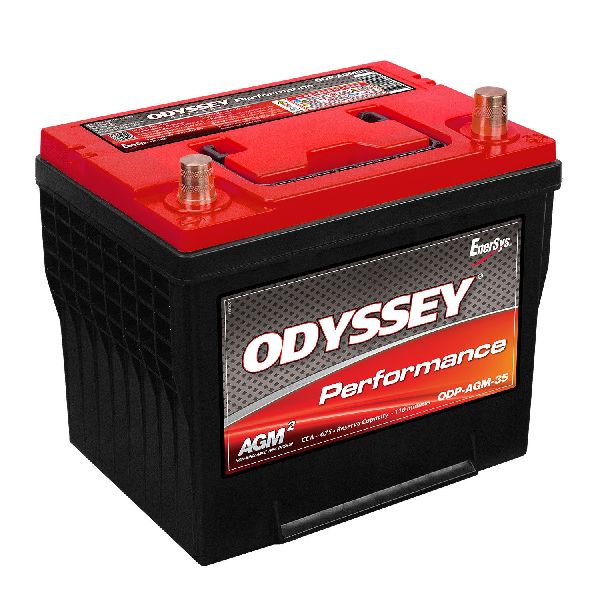
- Consider replacing the notoriously weak factory battery with a higher quality, higher CCA alternative, as unstable voltage is a frequent underlying cause.
What's Unique About the 2015-2021 Subaru WRX

The 2015-2021 WRX is highly susceptible to this code due to a logic flaw in the Engine Control Module (ECM). As outlined in Subaru's Technical Service Bulletin (TSB) 07-75-13R, if the ignition is cycled back on too quickly (within one minute) after battery power is restored, it can set the stage for a P0606 code to appear later. This happens because the ECM's self-shutoff relay procedure is interrupted. This means a simple battery change or a jump-start can trigger this seemingly serious code, even though the ECM hardware is perfectly fine.
Diagnostic Flowchart

Tap your situation to follow the diagnostic path that matches what you're seeing on this vehicle.
Symptoms You May Notice

- Check Engine Light (CEL) is on.
- Vehicle enters 'limp mode' (reduced engine power).
- Cruise control light flashing / disabled.
- Vehicle may stall or have a rough idle.
- Failure to start or requires multiple attempts to crank.
- Hill descent control light on.
- Multiple warning lights on the dashboard, often described as a "Christmas tree".
- Immediately replacing the ECM. Because of the specific software issue described in the TSB, many owners and shops might assume the worst (a failed computer) when the actual fix is a procedural reset, a new battery, or a software update.
Most Likely Causes

- Improper Ignition Cycle After Power Loss 🔴 High Probability This is a well-documented issue in Subaru TSB 07-75-13R. The ECM's self-shutoff procedure is interrupted if the ignition is turned on within a minute of being turned off after a power loss event (like a battery change or jump-start).
How to confirm: The code appeared after the battery was recently disconnected, replaced, jumped, or died. The vehicle may otherwise run fine once the code is cleared correctly.
Typical fix: Perform a specific reset procedure: clear the code with a scan tool, turn the ignition ON, then OFF, and wait for at least one full minute before turning the ignition ON again. Some owners report success by disconnecting the battery and pressing the brake pedal for a minute to fully discharge the system before reconnecting and performing the reset. If this doesn't work, an ECM software update from a Subaru dealer may be required.
Est. part cost: $0-$200 - Low Battery Voltage or Failing Alternator 🟡 Medium Probability → Shop Vehicle Battery The factory Panasonic battery in many WRX models is often cited by owners as being undersized (e.g., 375-390 CCA) and prone to premature failure, typically within 2-3 years. An unstable or low voltage supply from a weak battery or failing alternator can confuse the ECM's internal processor, triggering a P0606 code.
How to confirm: Test the battery voltage with a multimeter. It should be ~12.6V with the engine off and 13.5V-14.5V with the engine running. Many auto parts stores can perform a load test on the battery to confirm its health.
Typical fix: Replace the battery, often with a higher CCA (Cold Cranking Amps) unit. If the charging voltage is low, replace the alternator.
Est. part cost: $150-$600 - Aftermarket Tuning Issues 🟡 Medium Probability The WRX is a very commonly tuned platform. An aftermarket tune (e.g., from a Cobb Accessport) can sometimes trigger a P0606, especially under high load or if the battery voltage is unstable. In some cases, the tune file itself may be the cause, requiring a revision from the tuner.
How to confirm: The code appears after flashing a new tune or during specific driving conditions (e.g., high-gear pulls). The issue may resolve after reflashing the map or reverting to a stock tune.
Typical fix: First, check battery and ground connections. Try reflashing the tune. If the issue persists, contact the tuner for a map revision or uninstall the tune to see if the problem disappears. Ensure the Accessport cable is securely connected during flashing.
Est. part cost: $0-$150 (for a tune revision) - Faulty Engine Control Module (ECM) ⚪ Low Probability → Shop Engine Control Module (ECM)
How to confirm: All other possibilities, including the TSB procedure, software updates, battery/alternator replacement, and electrical issues, have been exhausted. This is typically a last resort diagnosis after a professional has verified all power and ground signals to the ECM are correct.
Typical fix: Replace the Engine Control Module. This is expensive and requires programming by a dealer or specialist to match the vehicle's immobilizer.
Est. part cost: $800-$1500
Rare But Worth Checking
- Poor Ground Connection: A Reddit user on r/wrx_vb reported that an aftermarket exhaust vibrating and touching the chassis was enough to create an electrical anomaly and trigger a P0606 code under load. Checking engine and chassis grounds for tightness and corrosion is a worthwhile step, as a bad ground can cause voltage irregularities that the ECM interprets as an internal fault.
- Reversed Polarity During Jump-Start: A Subaru Forester owner reported triggering a P0606 code immediately after accidentally connecting jumper cables with reversed polarity. Although the code cleared and did not return, this highlights the ECM's sensitivity to severe electrical events.
Diagnosis Steps
- Check if the battery has been recently disconnected, jumped, or replaced. If so, this is the most likely cause.
- Using a scan tool (like a Cobb Accessport or standard OBD-II reader), clear the P0606 code.
- Turn the ignition to the 'ON' position, then turn it 'OFF'.
- WAIT FOR AT LEAST ONE FULL MINUTE. This allows the ECM's self-shutoff relay to fully power down and complete its cycle.
- Turn the ignition back 'ON' and start the vehicle. See if the code returns. Some owners report needing to drive for a short period before the permanent code clears.
- If the code persists, thoroughly test the battery and charging system. The factory battery is a known weak point. A healthy battery should read approx. 12.6 volts engine-off and the alternator should supply 13.5-14.5 volts with the engine running.
- Inspect all engine and chassis ground connections for tightness and corrosion. A key ground strap runs from the engine block to the chassis.
- If the vehicle has an aftermarket tune, try reflashing the map or uninstalling the tune to revert to stock and see if the issue persists.
- If all the above steps fail, contact a Subaru dealership to inquire about TSB 07-75-13R and check if an ECM software update is available for your vehicle.
- If a software update does not resolve the issue, a deeper diagnosis of the ECM and its circuits is needed, which may lead to ECM replacement.
Parts You'll Likely Need
- Engine Control Module (ECM) Software Update — This is the most common official fix from Subaru to correct the logic flaw that causes the P0606 code after a power interruption, as per TSB 07-75-13R.
Trusted brands: Subaru
OEM price range: $100-$250
Aftermarket price range: N/A - Battery — The OEM battery is frequently cited as weak and short-lived. Replacing a failing battery often resolves the code by providing stable voltage to the ECM.
Trusted brands: Optima, AGM Platinum, DieHard
OEM price range: $150-$250
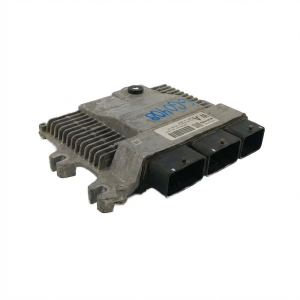
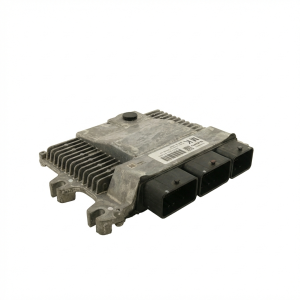
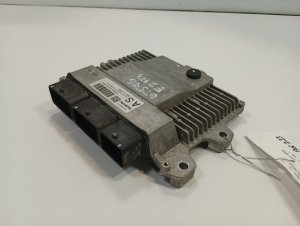
Aftermarket price range: $180-$350 - Engine Control Module (ECM)
(OEM #22765AL002 (Example for 2018 WRX w/ Manual Trans, may vary by year/trans))— This is only needed if the ECM has a true internal hardware failure, which is less common than the software glitch. It should only be replaced after all other diagnostic steps have been exhausted. Part numbers are specific; for a 2018 WRX MT, examples include 22765AL001 and 22765AL002.
Trusted brands: Subaru (OEM)
OEM price range: $1000-$1500
Aftermarket price range: $500-$900
Technical Service Bulletins (TSBs) & Recalls
- 07-75-13R: DTC P0606 after Vehicle Battery Is Reconnected
Platform-Specific Known Issues
- Subaru issued Technical Service Bulletin (TSB) #07-75-13R, which directly addresses this code on turbo models like the WRX and Forester XT. It states that after a battery disconnect, turning the ignition back on within one minute of turning it off can cause the P0606 code to set later.
- The factory-installed Panasonic battery is often criticized by owners for having a low CCA rating (around 375-390) and a short service life of 2-3 years, making voltage-related P0606 codes more likely as the vehicle ages.
Mechanic-Grade Diagnostic Values
- Battery State of Charge (Engine Off) — expected: 12.4V - 12.6V. Failure: A reading below 12.0V indicates a discharged or failing battery. A drop of exactly 2.1V (e.g., to ~10.5V) can indicate a dead cell.
- Charging System Voltage (Engine Running) — expected: 13.5V - 14.5V. Failure: Voltage below 13.5V or above 14.5V indicates a potential alternator or voltage regulator issue.
- Voltage Drop Test (Battery to ECM) — expected: Near 0V difference. Failure: If the voltage measured at the ECM's power pin is significantly lower than the voltage at the battery terminal, it indicates high resistance in the wiring harness.
Hidden / Shadow Codes Worth Checking
- Permanent DTC (PDTC): The P0606 can be stored as a Permanent Diagnostic Trouble Code (PDTC). Unlike regular DTCs, a PDTC cannot be erased by a standard scan tool or by disconnecting the battery. The ECM itself must see that the fault condition has been rectified (e.g., via the TSB reset procedure) and complete a specific drive cycle before it will clear the code. (see via Visible on most standard OBD-II scan tools, but distinguished by its 'permanent' status which prevents manual clearing.)
Scan Tool Commands That Help
- Subaru Select Monitor (SSM): Clear Memory (within OBD System) — This is the dealer-level tool and specific function mentioned in TSB 07-75-13R to officially clear the ECM memory before performing the mandatory one-minute wait procedure. It is the first step in the official Subaru diagnostic process for this code.
Wiring & Ground Locations
- Main ECM Ground — On DIT (Direct Injection Turbo) engines, the main ground point for the ECU's wiring harness is located on the top of the intake manifold.. A poor connection at this specific point can cause unstable voltage and erratic behavior for the ECM, potentially triggering a P0606. This is a critical point to check for tightness and corrosion, especially if aftermarket parts have been installed on or near the manifold.
- Main Engine-to-Chassis Ground — A primary ground strap connects the engine block to the vehicle's chassis. On some models, a smaller ground strap is also present near the J-pipe on the exhaust.. The entire electrical system relies on a solid engine-to-chassis ground. Corrosion or looseness here can cause widespread electrical issues, including confusing the ECM and causing a P0606 code.
- Interior Ground Point (Dash Area) — For hardwiring accessories, owners have successfully used bolts near the clutch pedal assembly, the bolt for the hood release latch under the fuse box, and bolts on the triangular side panel of the dash.. While not a primary cause, if aftermarket electronics are improperly grounded to one of these points, they can introduce electrical noise or voltage drops that may interfere with ECM operation, especially if they share a circuit branch.
Real Owner Repair Stories
- Reddit user on r/WRX (2015+ WRX) — P0606 code and limp mode after a dead battery was jumped.
❌ Tried (didn't work) Clearing the code with an OBD tool while stationary.
✅ What actually fixed it A combination of procedures was performed, but the final fix occurred when the user cleared the code using a Bluetooth OBD reader and the Torque app *while driving* at approximately 30 mph. This unconventional step, after performing the TSB-recommended ignition cycles, finally cleared the permanent code. - Reddit user on r/wrx_vb (Tuned 2022+ WRX (VB Chassis)) — P0606 code and limp mode consistently occurred during high-load pulls after installing a new aftermarket exhaust.
❌ Tried (didn't work) Re-flashing the tune., Reverting to a previous tune file.
✅ What actually fixed it The owner discovered the aftermarket exhaust was vibrating and physically touching the car's chassis at certain RPMs. This contact created an electrical anomaly (grounding issue or static discharge) that the ECU interpreted as an internal fault. Adjusting the exhaust to create proper clearance permanently solved the problem. - Reddit user on r/subaru (2016 WRX 6-speed) — P0606 code appeared after a dead battery. After replacing the battery, the code would not clear with a standard reader, even though the car ran and drove fine.
❌ Tried (didn't work) Simply clearing the code with a reader., Disconnecting the battery for 15-20 minutes.
✅ What actually fixed it The issue was identified as a Permanent DTC (PDTC). The fix was to follow the TSB 07-75-13R procedure exactly: clear the code, then turn the ignition off and wait for at least one full minute before turning it on again. This allows the self-shutoff relay to properly cycle, which the ECM needs to see before it will clear the permanent code.
OEM Part Supersession History
22765AL000, 22765AL001, 22765AL002, 22765AL003→22765AL005— Standard hardware and software revisions by the manufacturer to improve reliability or address known issues.
Heads up: While the latest part number (22765AL005) replaces the earlier versions, any replacement ECM will likely require programming by a dealer or specialist to match the vehicle's VIN and immobilizer system.
Used OEM Parts in Stock
New Aftermarket Parts Available


The information in this article is provided for general reference and educational purposes only. Vehicle specifications, procedures, and part compatibility can vary by production date, trim level, and region. Always consult your vehicle's factory service manual and verify part numbers before purchasing or performing repairs. Safety-critical components such as airbags, seat belts, and braking systems should be installed by a qualified professional.
- Subaru WRX:
- 🧭 Diagnostic Flowchart
- 🛍️ Shop This Part
- What's Unique About the 2015-2021 Subaru WRX
- Symptoms You May Notice
- Most Likely Causes
- Rare But Worth Checking
- Diagnosis Steps
- Parts You'll Likely Need
- Technical Service Bulletins (TSBs) & Recalls
- Platform-Specific Known Issues
- Mechanic-Grade Diagnostic Values
- Hidden / Shadow Codes Worth Checking
- Scan Tool Commands That Help
- Wiring & Ground Locations
- Real Owner Repair Stories
- OEM Part Supersession History
- 🎟️ Get 5% Off