

P0606 on 2007-2011 Toyota Camry: ECM Processor Fault Causes and Fixes
On a 2007-2011 Camry, code P0606 is rarely a bad engine computer (ECM). It's most often caused by a faulty downstream oxygen sensor or a burnt-out brake light bulb. Always diagnose these cheaper parts before considering ECM replacement.
- Do not automatically replace the engine computer for a P0606 code on a 2007-2011 Camry.
- If P0606 appears with an oxygen sensor code (like P0137 or P0138), the oxygen sensor is almost certainly the problem.
- If P0606 appears by itself, check your brake light bulbs before doing any other diagnosis.
- Always verify battery health and clean ground connections as a basic first step for any major electronic fault code.
- Using high-quality OEM parts, especially for sensors like Denso, is crucial for a lasting repair.
What's Unique About the 2007-2011 Toyota Camry

The XV40 generation Camry is notorious for setting a false P0606 code. Unlike many other vehicles where P0606 points directly to a failed computer, on this Camry, the root cause is frequently a failing oxygen sensor heater circuit or even a simple, burnt-out brake light bulb. The official Toyota diagnostic procedure can be misleading, sometimes suggesting immediate ECM replacement if P0606 is the only code present. However, experienced technicians and a specific Technical Service Bulletin (TSB) strongly advise investigating these other, more common and less expensive causes first.
Symptoms You May Notice

- Check Engine Light is on
- VSC (Vehicle Stability Control) and/or Traction Control light may also be on
- Vehicle may stall unexpectedly or fail to start
- Rough or erratic idling
- Noticeable decrease in fuel economy
- Problems with automatic transmission shifting
- Multiple, seemingly unrelated warning lights on the dashboard
- Immediately replacing the Engine Control Module (ECM) without diagnosing other causes. This is an expensive mistake, as the P0606 code on this Camry is very often a false flag caused by a much cheaper component like an O2 sensor or light bulb.
Most Likely Causes

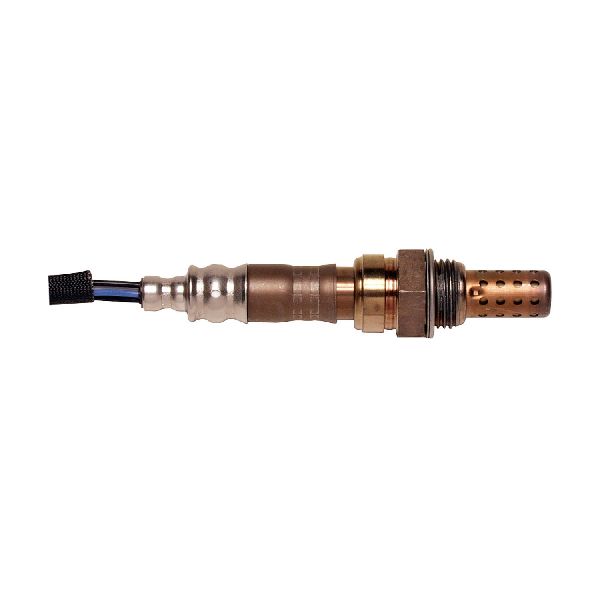
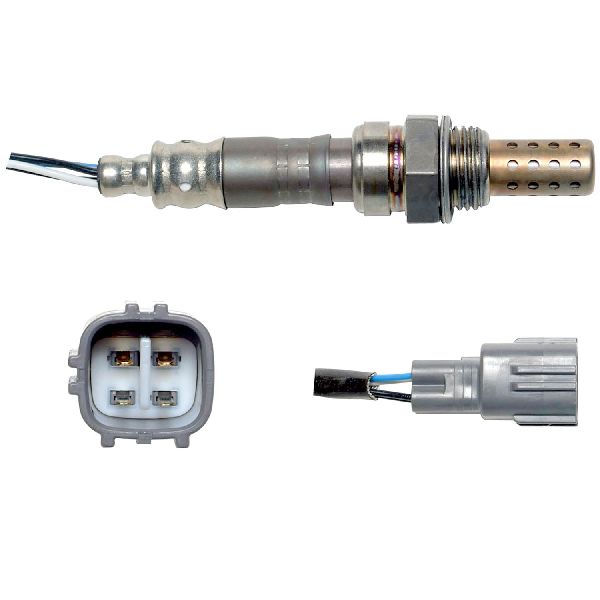
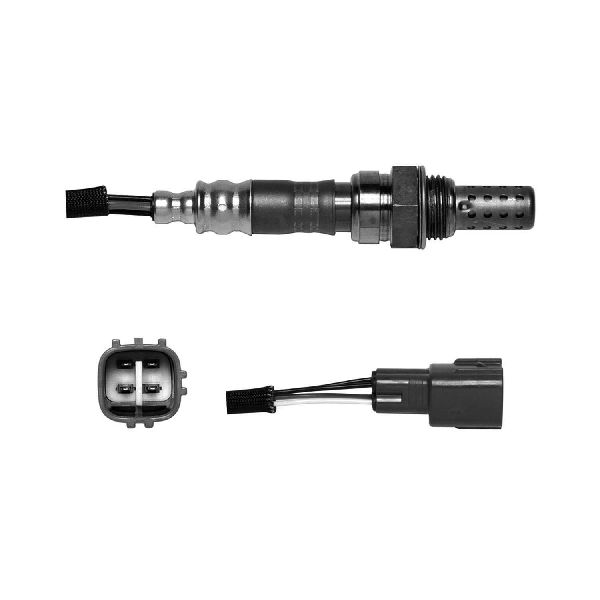
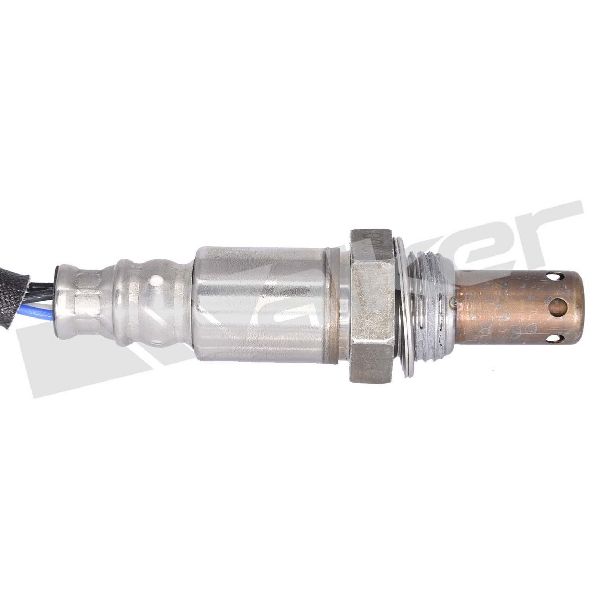
- Failing Downstream Oxygen (O2) Sensor 🔴 High Probability → Shop Oxygen Sensor This is the most widely documented false trigger for P0606 on this platform. An internal short or high resistance in the O2 sensor's heater circuit sends a voltage spike or irrational signal to the ECM, which misinterprets it as a processor fault. This is often accompanied by an O2 sensor-specific code like P0137 or P0138.
How to confirm: Scan for any other trouble codes. If an O2 sensor code is present with P0606, diagnose the O2 sensor first. A mechanic can use a scan tool to watch the O2 sensor voltage and heater circuit resistance/impedance data. Wiggling the sensor's wiring harness while watching live data can reveal intermittent shorts. A healthy downstream sensor should show relatively stable voltage, while a faulty one may show erratic jumps or be stuck high/low.
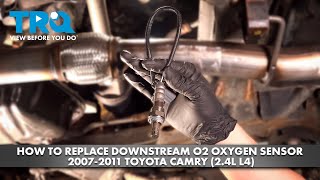
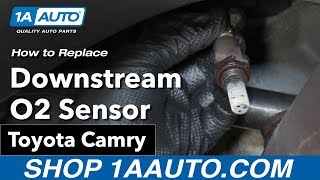
Typical fix: Replace the downstream oxygen sensor (Bank 1, Sensor 2 on the 2.4L 2AZ-FE engine, located after the catalytic converter). 🎬 See this walkthrough for replacing the downstream oxygen sensor. Use a quality OEM brand like Denso for best results, as these vehicles are sensitive to aftermarket sensor values.
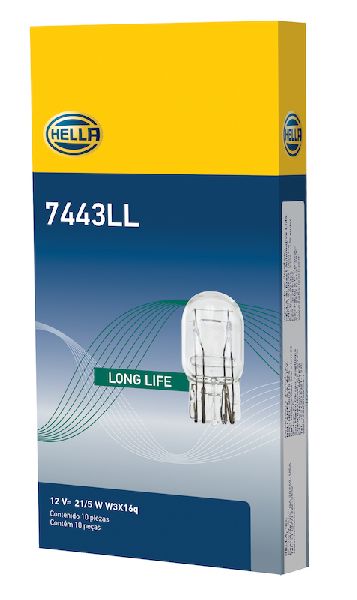
Est. part cost: $50-$150 - Burnt-Out Brake Light Bulb 🟡 Medium Probability On 2007-2009 models in particular, when the filament in a dual-filament brake light bulb (like a 7443) breaks, it can fall and short against the taillight circuit. This creates a voltage surge that travels through the wiring to the ECM, which logs a lone P0606 code as it's not programmed to recognize this specific failure mode as a burnt bulb.
How to confirm: This is a simple visual check, especially if P0606 is the only code present. Have a helper press the brake pedal while you observe all brake lights. Check for any bulbs that are burnt out or behaving strangely. Remove the bulbs 🎬 Watch: How a simple brake light bulb fixed this P0606 code. and inspect the filaments inside; one may be broken and touching the other.
Typical fix: Replace the faulty brake light bulb. The common bulb type is a 7443. This is a very inexpensive and simple fix.
Est. part cost: $5-$15 - Poor Battery Health or Charging System Fault ⚪ Low Probability → Shop Vehicle Battery The ECM is highly sensitive to voltage. A weak battery, failing alternator, or corroded battery terminals can provide 'dirty' or unstable power below the required threshold, confusing the ECM during its self-test and logging a false P0606.
How to confirm: Test the battery voltage with a multimeter (should be ~12.6V with engine off). Test the alternator output with the engine running (should be ~13.5-14.5V). Perform a load test on the battery at an auto parts store to check its true health.
Typical fix: Clean the battery terminals and cable ends with a wire brush. If tests fail, replace the battery and/or alternator.
Est. part cost: $150-$500 - Corroded or Loose ECM Power/Ground Wires ⚪ Low Probability Engine bay heat and moisture can degrade the main power or ground connections to the ECM over time, causing intermittent voltage drops that trigger the code. Bad grounds are a known cause of strange electrical issues.
How to confirm: Visually inspect the main engine-to-chassis ground straps and the wiring harness connectors at the ECM for any signs of corrosion, looseness, or damage. A technician can perform a voltage drop test on the main power and ground circuits to confirm their integrity.
Typical fix: Unbolt, clean the ground connection points with a wire brush until they are shiny, and tighten all connections securely. Repair any damaged wires.
Est. part cost: $0-$50
Rare But Worth Checking
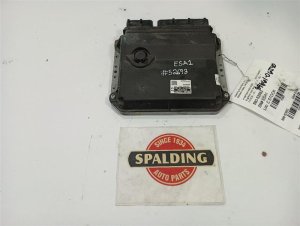
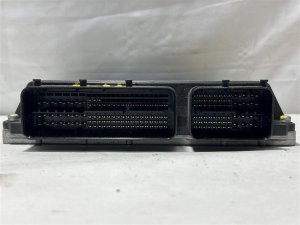
- Failed Engine Control Module (ECM): → Shop Engine Control Module (ECM) This is the 'official' cause but should only be considered after all other possibilities, especially O2 sensors and brake lights, have been exhaustively ruled out. An actual ECM failure is rare on this platform compared to the false triggers. Toyota did issue a bulletin (EG051-04) for 2003-2004 Camrys with the 2AZ-FE engine that did require ECM replacement for P0606, but this is less common for the 2007-2011 generation.
- Loose Gas Cap: While less common, some owners have reported that a P0606 code appeared alongside EVAP system codes (like P0455) and was resolved by replacing a faulty gas cap that was causing a vacuum leak. This is more likely if other EVAP codes are present.
Diagnosis Steps

- Read all stored trouble codes with an OBD-II scanner. Note any codes that appear alongside P0606.
- If any oxygen sensor codes (like P0137, P0138) are present, prioritize diagnosing the oxygen sensor circuit. This is the most likely cause. Use a scan tool to monitor live data from the O2 sensor (specifically B1S2) and its heater circuit 🎬 Watch: A step-by-step guide to replacing your downstream O2 sensor. impedance.
- If P0606 is the only code present, perform a full visual inspection of all exterior lights, especially the brake lights. Remove the bulbs (typically 7443 type) and inspect for broken filaments that may be causing a short.
- If no other codes or bad bulbs are found, test the vehicle's electrical system. Check the battery's state of charge (~12.6V engine off) and perform a load test. With the engine running, check the alternator's voltage output to ensure it's stable and within the 13.5-14.5V range.
- Inspect the main engine and chassis ground connections. Unbolt them, clean away any corrosion until the metal is bright, and re-tighten securely. Check the ECM's dedicated ground wires as well.
- Inspect the electrical connectors at the ECM for any signs of corrosion, moisture, or pushed-out pins. Check for any aftermarket wiring (like remote starters or alarms) that may be improperly installed.
- As a simple reset, disconnect the battery for 15-30 minutes to clear any potential one-time software glitches, then reconnect and see if the code returns.
- If all the above steps fail to resolve the issue, the ECM may be faulty. This diagnosis should be confirmed by a professional technician, who may check for available software updates before recommending replacement.
Parts You'll Likely Need
- Downstream Oxygen Sensor (Bank 1 Sensor 2)
(OEM #89465-06150)— This is the most common part to fail and trigger a false P0606 code on the 2007-2011 Camry, especially the 2.4L model.
Trusted brands: Denso (OEM Manufacturer), NGK
OEM price range: $120-$180
Aftermarket price range: $50-$100 - Brake Light Bulb
(OEM #7443 (common type))— A failing dual-filament bulb can short internally and send a voltage spike to the ECM, causing a lone P0606 code, particularly on 2007-2009 models.
Trusted brands: Sylvania, Philips
OEM price range: $10-$20
Aftermarket price range: $5-$15 - Engine Control Module (ECM)
(OEM #Varies by year/trim, e.g., 89661-06D22)— This is the last resort. It should only be replaced after all other common causes have been definitively ruled out. A replacement ECM will require professional programming.
Related Codes That Often Appear With This One
- P0137 / P0138 — These codes indicate low or high voltage from the downstream oxygen sensor (Bank 1 Sensor 2). A short in this sensor's heater circuit is a primary cause of a false P0606 on this vehicle.
- C1201 — This code means 'Engine Control System Malfunction' and is stored in the ABS/VSC computer. It's a secondary code that often appears whenever a primary engine fault illuminates the Check Engine Light, disabling the VSC system as a precaution.
Technical Service Bulletins (TSBs) & Recalls
- T-SB-0001-10 (Revised August 2013): Explicitly links DTC P0606 to O2 sensor codes P0138/P0158. It advises technicians that P0606 may be present due to incorrect Oxygen Sensor operation and provides diagnostic steps to check sensor values before condemning the ECM.
- T-SB-0072-12: While this specific TSB number appears to relate to other issues in public databases, the general issue of O2 sensor failures causing P0606 is well-documented across multiple TSBs and technician resources for this era of Toyota vehicles.
Platform-Specific Known Issues
- A known issue on 2007-2009 models where a failing brake light bulb filament can short circuit and trigger a P0606 code without any other codes present.
- The ECM on this platform is highly sensitive to voltage irregularities from downstream components, particularly the O2 sensor heater circuit, leading it to falsely condemn itself.
Mechanic-Grade Diagnostic Values
- Downstream O2 Sensor (Heated) Heater Resistance — expected: 11 - 16 Ω at 68°F (20°C) for Denso sensors typical to this model. Some sources state 0.8 - 1.4 ohms for A/F sensors, but the downstream is a heated O2 sensor.. Failure: A resistance reading of many thousands of ohms (kΩ) or an open circuit (infinite resistance) indicates a failed heater element. A reading far outside the specified range also indicates a problem.
- O2 Sensor Heater Current (via Techstream) — expected: Between 0.3 A and 2.0 A.. Failure: If the current is less than 0.3 A, the ECM may set a 'Circuit Low' code (like P0037). If it is more than 2.0 A, it may set a 'Circuit High' code (like P0038). These conditions can precipitate a P0606.
- Alternator Output Voltage at Battery Terminals — expected: 13.5 - 14.5 Volts with engine running.. Failure: Sustained voltage above 15.0V can be interpreted by the ECM as a critical fault, potentially triggering a P0606. Voltage below 13.0V can also cause unpredictable module behavior.
Scan Tool Commands That Help
- Toyota Techstream: Graphing O2 Sensor B1S2 Voltage and Heater Circuit — This is a critical step for diagnosing an intermittent O2 sensor fault. By graphing the data live while wiggling the sensor's wiring harness, a technician can visually spot the voltage dropouts or spikes that trigger the P0606, even if they only last for a fraction of a second.
- Toyota Techstream: Freeze Frame Data Analysis — When a P0606 is set, analyzing the freeze frame data is crucial. Look for O2 or A/F sensor heater circuit data that is out of specification for only one or two data frames. This is a classic signature of an intermittent external fault tricking the ECM into setting a P0606.
Wiring & Ground Locations
- ECM Connectors A24, C24 — The ECM is located behind the right side of the dashboard. It has multiple connectors, with A24 and C24 being primary for power, ground, and sensor inputs on the 2AZ-FE engine.. Testing for stable voltage and clean grounds must be done directly at these connectors' pins to rule out wiring harness issues between the power source/ground points and the ECM itself.
- Engine Ground Strap — On the 2.4L (2AZ-FE) engine, a primary engine-to-chassis ground is notoriously difficult to find. It is typically located on the side of the cylinder head, underneath other components. Another key ground is from the transmission case to the chassis near the motor mount to ground the starter.. A corroded or loose engine ground strap can cause unstable voltage across all engine sensors, creating electrical noise that can be misinterpreted by the ECM as an internal fault.
- Ground Points E1, E2, E3 — These are primary dashboard harness ground points. E1 is on the left side of the dash, E2 is in the center, and E3 is on the right side.. The ECM and other interior modules rely on these grounds. A loose ground at E3, near the ECM, could cause intermittent power issues for the control module, leading to a P0606.
Real Owner Repair Stories
- iATN (International Automotive Technicians Network) (2007 Toyota Camry LE 3.5L) — Check Engine Light on with only code P0606.
❌ Tried (didn't work) The factory service manual's diagnostic chart pointed directly to 'Replace ECM' as the first and only step.
✅ What actually fixed it Based on information from other technicians, the mechanic used a scan tool to graph the rear O2 sensor data. While wiggling the wiring for the Bank 2 Sensor 2 (B2S2) O2 sensor, a glitch in the voltage graph appeared. Replacing the faulty downstream O2 sensor resolved the P0606 code. - YouTube video by BOULEVARD AUTOMOTIVE CENTER (2009 Toyota Camry XLE) — Check Engine Light on with only code P0606. No other codes were present.
❌ Tried (didn't work) Initial research pointed towards O2 sensors or a bad ECM.
✅ What actually fixed it After finding forum threads, the technician checked the brake lights. The filament from the brake circuit in a dual-filament (7443 type) bulb had broken and fallen onto the taillight circuit, creating a voltage spike that the ECM interpreted as an internal fault. Replacing the burnt-out brake light bulb fixed the issue.
OEM Part Supersession History
89661-06T20, 89661-06T21→89661-06T22— Standard part revision by the manufacturer for minor improvements or supplier changes.89661-06K20, 89661-06K21→89661-06K22— Standard part revision by the manufacturer, often for hybrid or specific trim models.
Heads up: Part numbers are extremely specific to year, engine, and trim. Using the wrong ECM, even from the same model year, will result in a no-start condition. Always verify the part number from the original unit.
Model Year Variations Within This Range
- 2007-2009: These pre-facelift models are more frequently cited in repair stories as having the P0606 code caused by a shorted brake light bulb filament. While possible on later models, it appears to be a more common failure pattern on the earlier XV40s.
Diagnostic Flowchart
Real Owner Stories
Aggregated from forums and TSBs cited above. Mileages and costs reflect what owners reported in those sources.
2007 Toyota Camry V6
Symptoms: Logged a P0606 code. Technician found an electrical glitch by wiggling the oxygen sensor wires.
What fixed it: Replaced the Bank 2 Sensor 2 oxygen sensor.
Source hint: iATN (International Automotive Technicians Network) forum thread
2007-2009 Toyota Camry XLE
Symptoms: A standalone P0606 code that would go on and off, with no other engine codes present.
What fixed it: Replaced a burnt-out dual-filament brake light bulb that had a broken filament shorting the circuit.
Source hint: YouTube - 'P0606 solved!!!' by 'Normal Guy Supercar' / ToyotaNation Forums
2007 Toyota Camry
Symptoms: Vehicle threw both P0606 and P0137 codes simultaneously.
What fixed it: Replaced the downstream oxygen sensor.
Source hint: YouTube - '2002 - 2007 TOYOTA CAMRY FIX FOR P0606 P0137'
Related OBD-II Codes
Frequently Asked Questions
Does Toyota TSB T-SB-0001-10 apply to my 2007-2011 Camry?
Why would a burnt-out brake light cause a P0606 code on my 2008 Camry?
Which oxygen sensor usually triggers a false P0606 on the 2.4L 2AZ-FE engine?
I have codes P0606 and P0137 together. Should I replace the ECM?
Can a weak battery trigger a false ECM failure code on this platform?
Helpful Videos

Used OEM Parts in Stock
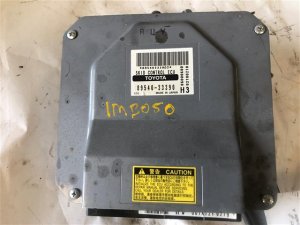
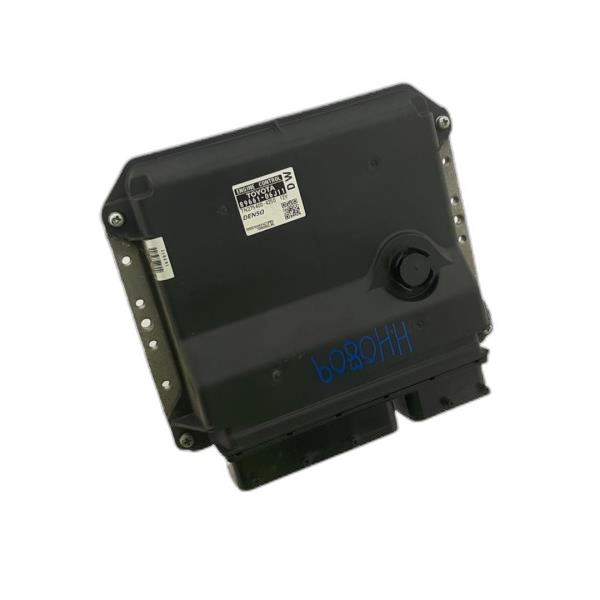
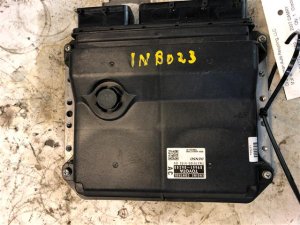
New Aftermarket Parts Available


The information in this article is provided for general reference and educational purposes only. Vehicle specifications, procedures, and part compatibility can vary by production date, trim level, and region. Always consult your vehicle's factory service manual and verify part numbers before purchasing or performing repairs. Safety-critical components such as airbags, seat belts, and braking systems should be installed by a qualified professional.
- Toyota Camry:
- 🧭 Diagnostic Flowchart
- 🎬 Helpful Videos
- 🛍️ Shop This Part
- What's Unique About the 2007-2011 Toyota Camry
- Symptoms You May Notice
- Most Likely Causes
- Rare But Worth Checking
- Diagnosis Steps
- Parts You'll Likely Need
- Related Codes That Often Appear With This One
- Technical Service Bulletins (TSBs) & Recalls
- Platform-Specific Known Issues
- Mechanic-Grade Diagnostic Values
- Scan Tool Commands That Help
- Wiring & Ground Locations
- Real Owner Repair Stories
- OEM Part Supersession History
- Model Year Variations Within This Range
- Real Owner Stories
- 2007 Toyota Camry V6
- 2007-2009 Toyota Camry XLE
- 2007 Toyota Camry
- Related OBD-II Codes
- Frequently Asked Questions
- 🎟️ Get 5% Off