

P0606 on 2006-2012 Toyota RAV4 3.5L V6: ECM Fault or O2 Sensor Problem?
On a 2006-2012 RAV4 V6, code P0606 is almost never a bad Engine Control Module (ECM). It's a 'ghost' code most often caused by a failing downstream oxygen (O2) sensor. Replacing the correct O2 sensor for ~$70-$150 usually fixes the problem and turns off the VSC/4WD lights.
- Do NOT replace the ECM for a P0606 code on this RAV4 unless all other possibilities are ruled out.
- If you have other codes like P0138 or P0158, the oxygen sensor is the problem. Fix that first.
- The Check Engine, VSC, and 4WD lights all coming on together is the classic symptom for this issue.
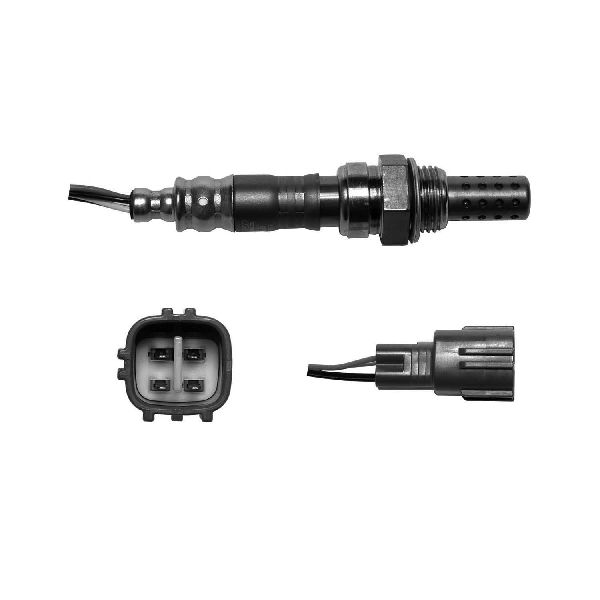
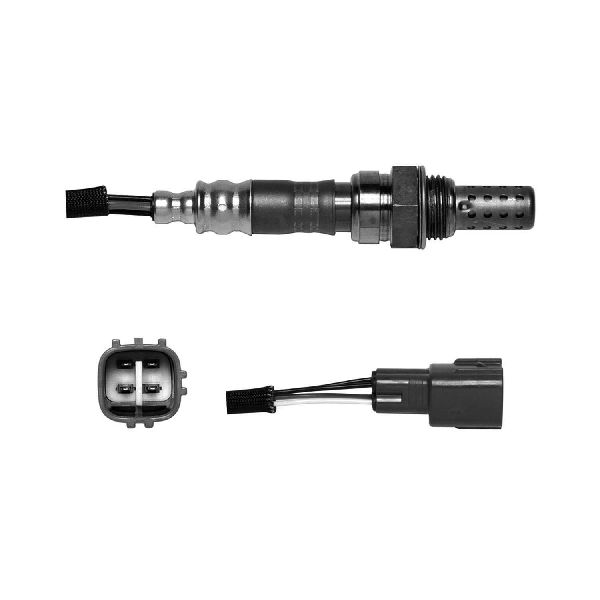
- Use a quality OEM-brand sensor like Denso for the best results. Specific part numbers are Denso 234-4261 (Bank 1) and 234-4501 (Bank 2).
- A scan tool that can show live data is essential for an accurate diagnosis if P0606 appears by itself.
What's Unique About the 2006-2012 Toyota RAV4
The third-generation RAV4's ECM is notoriously sensitive to voltage irregularities from its emissions sensors. An aging oxygen sensor can develop a momentary short or open in its internal heater circuit, sending a voltage spike that the ECM's programming misinterprets as a critical processor failure. Toyota acknowledged this with Technical Service Bulletin T-SB-0001-10 Rev1, which advises technicians that a P0606 is likely caused by a faulty oxygen or A/F sensor, not the ECM. This is a crucial distinction that prevents the common misdiagnosis of replacing the expensive engine computer, a repair that technicians on forums like iATN warn against.
Symptoms You May Notice
- Check Engine Light is on
- VSC and 4WD/AWD warning lights are illuminated (often flashing)
- Engine may hesitate or lack power
- Vehicle may stall, especially when returning to idle
- Reduced fuel economy
- Replacing the Engine Control Module (ECM). This is the most common and expensive mistake. The factory service manual's basic diagnostic tree for a standalone P0606 may incorrectly suggest ECM replacement, but TSBs and extensive field data prove otherwise.
Most Likely Causes
- Failing Downstream Oxygen (O2) Sensor 🔴 High Probability → Shop Oxygen Sensor The ECM is highly sensitive to voltage spikes from aging O2 sensor heater circuits. This is the most common cause documented in TSBs and by technicians for this specific vehicle.
How to confirm: If another code like P0137, P0138, or P0158 is present, that O2 sensor is the fault. If P0606 is alone, use a scan tool to graph the live voltage of the downstream O2 sensors (Bank 1 Sensor 2 and Bank 2 Sensor 2). Look for erratic voltage, dropouts, or a flat line between 0.1V and 0.9V. Wiggling the sensor's wiring harness while watching the data can help identify a bad connection or sensor, a technique confirmed by professional technicians.
Typical fix: Replace the faulty downstream oxygen sensor. The 2GR-FE V6 has two: Bank 1 is on the firewall side (harder to access), and Bank 2 is on the radiator side (easier to access). Using an oxygen sensor socket is highly recommended.
Est. part cost: $70-$150 - Failing Upstream Air/Fuel (A/F) Ratio Sensor ⚪ Low Probability → Shop Oxygen Sensor While less common than the downstream O2 sensor, a failing A/F sensor can also send erratic signals that the ECM misinterprets, as noted in TSB T-SB-0001-10.
How to confirm: Check for accompanying codes like P2195 or P2197. Use a scan tool to monitor live data for the A/F sensors (Bank 1 Sensor 1 and Bank 2 Sensor 1). Look for abnormal voltage readings or a sensor that doesn't respond to changes in engine load.
Typical fix: Replace the faulty upstream Air/Fuel ratio sensor for the corresponding bank.
Est. part cost: $100-$200
Rare But Worth Checking
- Poor ECM Ground Connection or Damaged Wiring: A corroded or loose engine ground strap can cause unstable voltage across the electrical system, leading to various false codes, including P0606. Before replacing parts, check main ground points on the engine block, valve covers, and chassis for a clean, tight connection.
- Faulty Engine Control Module (ECM): → Shop Engine Control Module (ECM) This is extremely rare on this vehicle for this specific code. This should only be considered after all sensor and wiring-related possibilities have been exhaustively ruled out by a professional. The factory service manual's basic diagnostic tree for a standalone P0606 may incorrectly suggest ECM replacement.
Diagnosis Steps
- Read all fault codes. Do not clear them. If any codes for oxygen sensors (P0137, P0138, P0157, P0158) or A/F sensors (P2195, P2197) are present, diagnose and fix them first. The P0606 is secondary.
- If P0606 is the only code present, use a scan tool capable of graphing live data.
- Monitor the voltage signals from the downstream O2 sensors (Bank 1 Sensor 2 and Bank 2 Sensor 2). A healthy sensor will fluctuate between ~0.1V and ~0.9V on a warm engine. A faulty one may be stuck at a high or low voltage, or show erratic spikes and dropouts.
- While observing the live data, carefully wiggle the wiring harness for each O2 sensor, including the connector which may be inside the cabin under the carpet. If the voltage glitches or drops out when you move the wires, you have found the faulty sensor or connection.
- Inspect the wiring and connectors for all O2/A/F sensors for signs of melting, chafing, or corrosion.
- Inspect the main engine-to-chassis ground connections to ensure they are clean and tight.
- Only after confirming the sensors and wiring are good should you consider the possibility of a faulty ECM, which is highly unlikely.
Parts You'll Likely Need
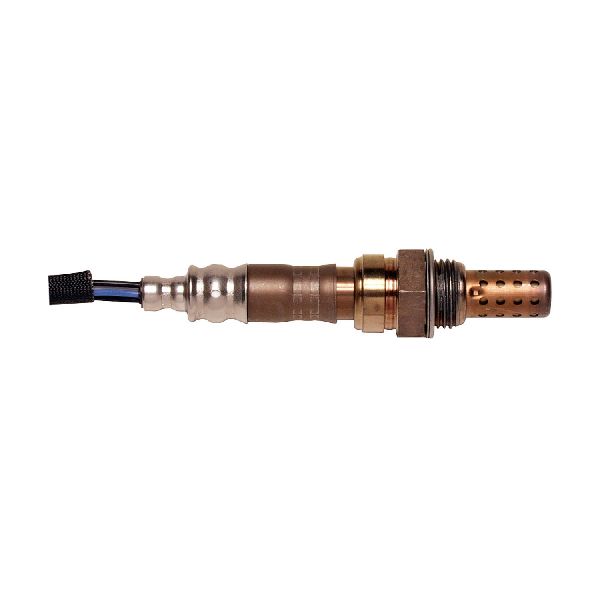
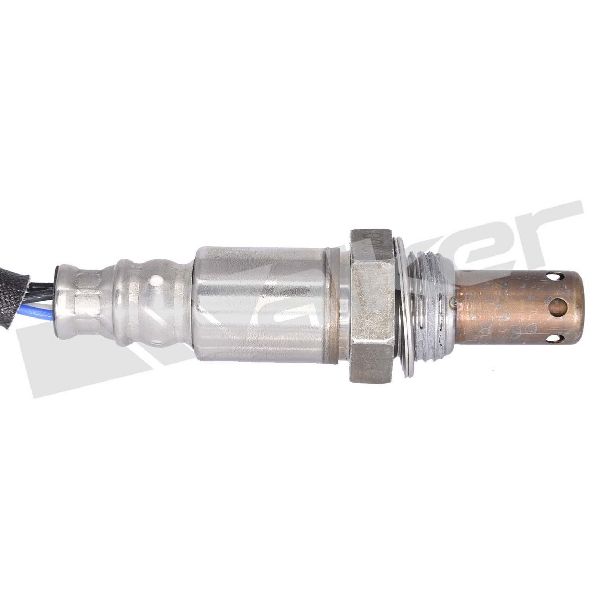
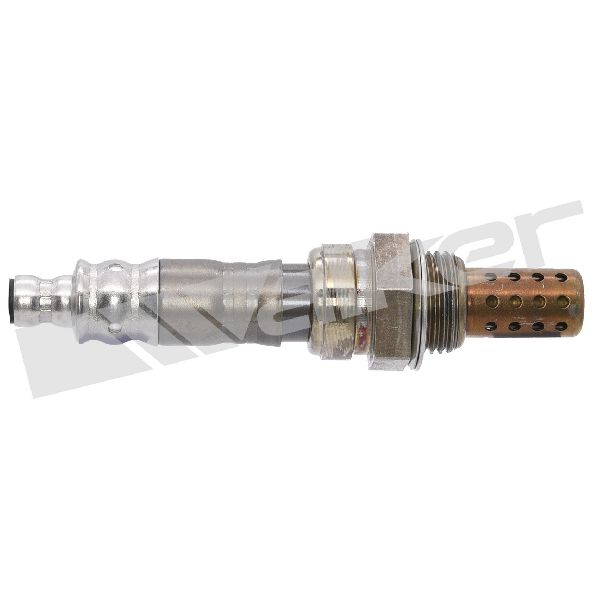
- Downstream Oxygen Sensor
(OEM #Bank 1 Sensor 2 (Rear/Firewall): Denso 234-4261; Bank 2 Sensor 2 (Front/Radiator): Denso 234-4501)— This is the most common cause of a P0606 code on this vehicle, as confirmed by Toyota's own TSB. Denso is the Original Equipment Manufacturer.
Trusted brands: Denso
OEM price range: $120-$180
Aftermarket price range: $70-$130
Related Codes That Often Appear With This One
- P0138 / P0158 — These codes for 'O2 Sensor Circuit High Voltage' for Bank 1 and Bank 2 respectively are the primary root cause. The high voltage spike from the failing sensor is what triggers the false P0606.
- P0137 / P0157 — These codes for 'O2 Sensor Circuit Low Voltage' can also indicate a failing sensor or wiring that leads the ECM to set a P0606.
- C1201 — This code means 'Engine Control System Malfunction' and is set by the ABS/VSC computer. It appears because the engine fault (P0606) has caused the ECM to disable the Vehicle Stability Control system as a safety precaution. This is a secondary code.
Technical Service Bulletins (TSBs) & Recalls
- T-SB-0001-10 Rev1: MIL "ON" DTC P0138, P0158 and/or P0606 Diagnostic Tips.
Platform-Specific Known Issues
- Toyota Technical Service Bulletin T-SB-0001-10 Rev1 was issued to address this exact problem, confirming that P0606 is often set due to incorrect oxygen or A/F sensor operation.
- The connector for the downstream O2 sensor may be located inside the vehicle's cabin, under the carpet near the center console or passenger footwell, requiring interior trim removal for access.
Mechanic-Grade Diagnostic Values
- Downstream O2 Sensor (Heated O2) Heater Resistance — expected: 11 to 16 Ω at 68°F (20°C). Failure: An open circuit ('OL' on multimeter) or resistance far outside the specified range.
- Upstream A/F Sensor Heater Resistance — expected: 1.8 to 3.4 Ω at 68°F (20°C). Failure: An open circuit ('OL' on multimeter) or resistance far outside this range. Note: This is a different spec than the downstream sensor.
- O2 Sensor Heater Circuit Voltage — expected: 9V to 14V (Battery Voltage) at the harness-side connector with Key On, Engine Off.. Failure: 0V or significantly low voltage, indicating a problem with the EFI fuse, relay, or wiring, not the sensor itself.
- O2 Sensor Heater Circuit Current (ECM Threshold) — expected: Greater than 0.3 Amps when active.. Failure: If the ECM detects current drops below 0.3A for more than 2 seconds, it will set a heater circuit fault code (e.g., P0037).
- Charging System Voltage (at battery terminals) — expected: Approximately 13.5V to 14.5V with the engine running.. Failure: Voltage that is too low, too high, or fluctuating erratically can indicate a failing alternator, which may cause false ECM codes.
Hidden / Shadow Codes Worth Checking
- N/A (Freeze Frame Data Analysis): This platform does not typically set specific 'shadow codes' for this fault. Instead, the triggering event is a momentary glitch captured in the freeze frame data. A technician can analyze this data on a professional scan tool (like Techstream) to see an instantaneous, out-of-range reading from an O2 sensor's voltage or internal impedance that occurred at the exact moment the P0606 was set. (see via Using a scan tool that can display detailed freeze frame data associated with the P0606 code.)
Scan Tool Commands That Help
- Toyota Techstream (or equivalent professional scanner): Live Data Graphing (O2S B1S2, O2S B2S2) — This is the primary diagnostic method. Graphing the downstream O2 sensor voltage while wiggling the harness can visually confirm an intermittent open or short in the sensor or its wiring, which is the most common cause of the P0606.
- Toyota Techstream: Utility -> Check Mode — After replacing a sensor, putting the ECM into 'Check Mode' forces it to run its self-diagnostics more quickly than a standard drive cycle. This allows for faster verification that the repair was successful and the code will not return.
Wiring & Ground Locations
- Downstream O2 Sensor Connectors — Inside the vehicle cabin, under the carpet. The Bank 1 (rear) sensor connector is typically found by peeling back the carpet near the passenger side of the center console. The Bank 2 (front) connector is in a similar area.. Technicians must access these interior connectors to test the sensor circuit or disconnect the old sensor during replacement. Wiggling the connector and harness here is a key diagnostic step.
- Engine Harness Grounds (Cylinder Heads) — The 2GR-FE has critical harness grounds bolted to the sides of the cylinder heads. One is located on the rear head, directly underneath the throttle body. Another is on the front head.. A loose or corroded ground at these points can cause unstable voltage references for all engine sensors, leading the ECM to misinterpret data and falsely set codes like P0606.
- Valve Cover Grounds — Ground wires run from the valve covers to a metal bracket on top of the strut tower in the engine bay.. These provide a secondary ground path for the upper engine components. Poor contact here can contribute to electrical noise and intermittent issues.
Real Owner Repair Stories
- iATN (International Automotive Technicians Network) (2006 Toyota RAV4 3.5L (2GR-FE)) — Check Engine Light with code P0606. Vehicle had already been to a dealer where the ECM was replaced, but the code returned.
❌ Tried (didn't work) Replacing the Engine Control Module (ECM)
✅ What actually fixed it A technician graphed the downstream O2 sensor (Bank 1, Sensor 2) voltage and found it would glitch when its wiring was moved. Replacing the faulty O2 sensor provided a final fix. - YouTube channel 'geeksauthority' (2006 Toyota RAV4) — Check Engine Light, VSC light, and 4WD light were all on. Codes P0137 (O2 Sensor Circuit Low Voltage) and P0606 were present.
❌ Tried (didn't work) Initial diagnosis pointed towards a complex ECM issue.
✅ What actually fixed it The owner diagnosed and replaced the downstream oxygen sensor (Bank 1 Sensor 2), which resolved all codes and warning lights. - YouTube channel 'Fix It Angel' (2008 Toyota RAV4) — Check Engine Light with codes P0037, P0136, and P0137.
✅ What actually fixed it The video documents the replacement of the Bank 1 Sensor 2 oxygen sensor with a Denso 234-4501 part. The repair was successful and cost around $60 for the part. This demonstrates the cluster of sensor codes that often accompany the P0606 issue.
When the Usual Fixes Don't Work
- While the overwhelming evidence points to a sensor failure, there are rare documented cases where the P0606 code on other Toyota models (like early 2000s Corollas and Camrys with different engines) did require an ECM replacement per a TSB. However, for the 2006-2012 RAV4 with the 2GR-FE, this is not the standard procedure, and treating the sensors first remains the correct diagnostic path.
Diagnostic Flowchart
Other Known Issues on This Vehicle
Issues unrelated to this code that are worth knowing about as an owner of this generation:
- VVT-i Oil Line Rupture 🔴 High — Common on 2006-2009 models with the original rubber hose. Failure can occur without warning, leading to rapid oil loss and catastrophic engine failure. (Ref: Limited Service Campaign (LSC) 90K was issued to replace the rubber hose with an all-metal line.)
- Intermediate Steering Shaft Clunk 🟠 Medium — Very common across all years. A distinct 'clunk' or 'pop' is heard and felt in the steering wheel at low speeds or when stationary. (Ref: T-SB-0033-11 (and earlier versions like T-SB-0318-08) were issued, advising replacement with an updated part.)
- Water Pump Failure 🟠 Medium — Common failure item, often between 60,000 and 120,000 miles. Signs include a slow coolant leak (pink crusty residue) from the weep hole, a faint coolant smell, or a whining/grinding noise.
Used vs. New Parts: Buying Guide for This Vehicle
When a used part is the smart pick: For this specific repair, a used part is almost never recommended. The only exception is sourcing a used wiring harness connector pigtail from a junkyard if the original connector was physically broken or melted.
Donor-vehicle mileage cap: roughly under 75000 miles for the part to have meaningful remaining life.
What to inspect on the donor part:
- For a connector pigtail, inspect for brittle plastic, corrosion on pins, and ensure the locking tab is intact.
- Ensure there are several inches of clean, un-stretched wire attached.
OEM-only on this vehicle (don't cheap out):
- Engine Control Module (ECM): If the ECM is proven faulty (extremely rare), a new or professionally remanufactured unit with proper programming is required. A used ECM from a junkyard may have VIN incompatibility issues.
- Air/Fuel Ratio and Oxygen Sensors: These are wear items. A used sensor has unknown remaining life and is a poor value. Always install new sensors.
Aftermarket brands forum-validated for this vehicle:
- Denso: This is the Original Equipment Manufacturer (OEM) for Toyota. Their aftermarket parts are identical to the factory parts and are the most highly recommended for a first-time fix.
Brands owners have reported issues with on this vehicle:
- Generic, unbranded, or 'white-box' sensors from online marketplaces. These often use lower-quality elements and heater circuits that can fail prematurely or not meet the ECM's strict performance parameters, causing the code to return.
Real Owner Stories
Aggregated from forums and TSBs cited above. Mileages and costs reflect what owners reported in those sources.
2006 Toyota RAV4 3.5L V6
Symptoms: Check engine light on with P0606 code.
What fixed it: The report indicates that a dealer replacement of the ECM failed to fix the issue, as the light returned 10 minutes later, implying the root cause was likely a sensor or wiring issue as described in TSBs.
Source hint: CarComplaints.com / NHTSA ODI #10384313
2006 Toyota RAV4 3.5L V6
Symptoms: Check Engine Light with code P0606. Scan tool showed erratic voltage from Bank 2 Sensor 2 when its wiring was wiggled.
What fixed it: Replacing the Bank 2 Sensor 2 oxygen sensor after confirming a glitch in the wiring harness.
Source hint: iATN (International Automotive Technicians Network) - Post Title: 'Toyota P0606 - Don't replace the ECM'
2007 Toyota RAV4 3.5L V6
Symptoms: P0606 code triggered by an O2 sensor's impedance jumping randomly on a scan tool.
What fixed it: Replacement of the faulty oxygen sensor.
Source hint: legrandfort.com - 'Toyota DTC P0606 Diagnostic and Repair'
2006-2012 Toyota RAV4 V6
Symptoms: Classic P0606 + VSC/4WD lights scenario, sometimes accompanied by codes P0137 or P0138.
What fixed it: Identifying the faulty downstream O2 sensor and replacing it with a Denso part.
Source hint: RAV4World / Toyota Nation Forums
Related OBD-II Codes
Frequently Asked Questions
Does Toyota Technical Service Bulletin T-SB-0001-10 Rev1 apply to my RAV4 V6?
Why are my VSC and 4WD warning lights flashing along with the Check Engine Light?
Where is the Bank 1 Sensor 2 oxygen sensor located on the 3.5L V6 RAV4?
Should I replace my ECM if I have a P0606 code?
Is there a specific brand of oxygen sensor recommended for this repair?
Are there any other major engine issues I should look out for on my 2006-2009 RAV4 V6?
Helpful Videos

We Have This Part in Stock


The information in this article is provided for general reference and educational purposes only. Vehicle specifications, procedures, and part compatibility can vary by production date, trim level, and region. Always consult your vehicle's factory service manual and verify part numbers before purchasing or performing repairs. Safety-critical components such as airbags, seat belts, and braking systems should be installed by a qualified professional.
- Toyota RAV4:
- 🧭 Diagnostic Flowchart
- 🎬 Helpful Videos
- 🛍️ Shop This Part
- What's Unique About the 2006-2012 Toyota RAV4
- Symptoms You May Notice
- Most Likely Causes
- Rare But Worth Checking
- Diagnosis Steps
- Parts You'll Likely Need
- Related Codes That Often Appear With This One
- Technical Service Bulletins (TSBs) & Recalls
- Platform-Specific Known Issues
- Mechanic-Grade Diagnostic Values
- Hidden / Shadow Codes Worth Checking
- Scan Tool Commands That Help
- Wiring & Ground Locations
- Real Owner Repair Stories
- When the Usual Fixes Don't Work
- Other Known Issues on This Vehicle
- Used vs. New Parts: Buying Guide for This Vehicle
- Real Owner Stories
- 2006 Toyota RAV4 3.5L V6
- 2006 Toyota RAV4 3.5L V6
- 2007 Toyota RAV4 3.5L V6
- 2006-2012 Toyota RAV4 V6
- Related OBD-II Codes
- Frequently Asked Questions
- 🎟️ Get 5% Off