

P0607 on 2018-2024 Chevrolet Equinox 1.5T: Control Module Performance Causes and Fixes
P0607 on a 2018-2024 Equinox indicates a 'Control Module Performance' error, usually pointing to the Engine Control Module (ECM). The most common causes are a weak battery, poor electrical grounds, or an internal ECM fault. Before replacing the expensive ECM, always test the battery and check all power and ground connections to the module, as low voltage is a frequent trigger.
- P0607 means the Engine Control Module (ECM) has detected an internal performance error.
- Before assuming the ECM is bad, ALWAYS test the battery and charging system thoroughly. A weak battery is the most common misdiagnosed cause.
- Inspect all power and ground connections to the ECM for looseness and corrosion.
- ECM replacement is the last resort and requires professional programming to your vehicle's VIN.
- Ask a dealer to check for any available ECM software updates before replacing the module.
What's Unique About the 2018-2024 Chevrolet Equinox
For the third-generation Equinox, the P0607 code is a serious fault that often puts the vehicle into 'limp mode' to protect the powertrain. While the code's definition is standard, GM vehicles can be particularly sensitive to low voltage from a weak battery or failing alternator, which can mimic ECM failure. Additionally, GM has issued service bulletins for other models around this year range for similar codes caused by software anomalies. For example, TSB 22-NA-044 addresses a P0607 in the Body Control Module (BCM) on other GM vehicles, fixed by a software reset, highlighting the importance of checking for software updates for the Equinox's ECM before condemning the hardware. Furthermore, manufacturer service bulletins such as TSB Bulletin #PIE0672B and TSB Bulletin #22NA044 document instances across the GM lineup where the P0607 code is set specifically in the BCM, leading to an illuminated Check Engine Lamp on the Driver Information Center (DIC).
Symptoms You May Notice
- Check Engine Light is on
- Vehicle enters 'Reduced Engine Power' or 'Limp Mode'
- Engine stalling or shutting off while driving
- Hard starting or no-start condition
- Rough or erratic idling
- Poor acceleration and sluggish throttle response
- Harsh or incorrect transmission shifting
- Disabled remote start functionality
- "Transmission Hot" message displayed on the DIC (as noted in TSB Bulletin #PIE0690A)
- Vehicle will not disengage from Park (as noted in TSB Bulletin #PIE0690)
- Replacing the ECM immediately without testing the battery and checking ground connections. A weak battery is a very common cause for this code and is a much cheaper fix.
- Overlooking a corroded battery cable or chassis ground strap that is causing intermittent voltage drops.
Most Likely Causes
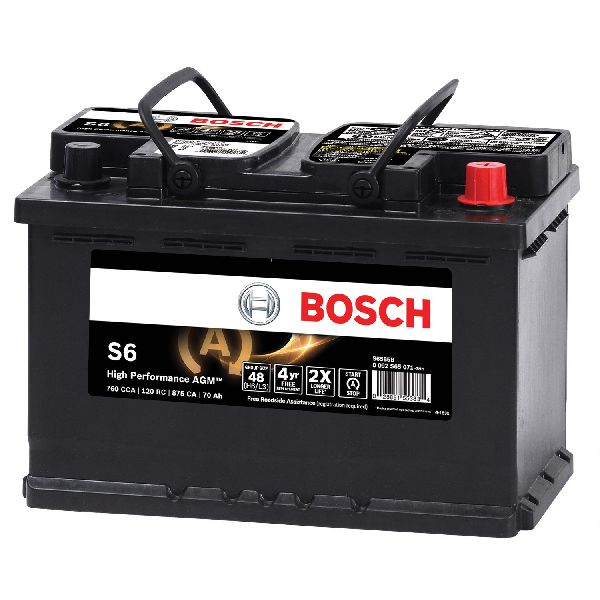
- Weak or Failing Battery 🔴 High Probability → Shop Vehicle Battery Modern vehicles with complex electronics, including the Equinox, are highly sensitive to voltage. A drop in voltage below 9V during cranking can cause the ECM to fail its self-test and set a P0607 code erroneously. The auto start/stop system also places high demands on the battery.
How to confirm: Test the battery with a digital multimeter or an electronic battery tester. A healthy, fully charged AGM battery should read approximately 12.6 volts with the engine off and 14.0-14.7 volts with the engine running. A load test is the most definitive way to confirm battery health.
Typical fix: Replace the vehicle's AGM battery.
Est. part cost: $150-$300 - Poor ECM Power or Ground Connections 🟡 Medium Probability Vibration and exposure to the elements can cause main power and ground wires connected to the ECM to become loose or corroded over time, leading to intermittent voltage supply. A bad ground is a common cause of module performance codes.
How to confirm: Visually inspect the ECM's wiring harness and connectors for tightness, corrosion, or damage. Perform a voltage drop test on the main power and ground circuits to the ECM to ensure there is minimal resistance (ideally less than 0.1 Ω on the ground side). Check main chassis and engine block ground straps.
Typical fix: Clean the ground connection points until they are on bare metal and tighten all connectors. Repair any damaged wires.
Est. part cost: $5-$50 - Internal ECM Failure ⚪ Low Probability While less common, the ECM can fail internally due to electrical surges (like from improper jump-starting), moisture intrusion, or component failure on the circuit board. Sometimes a visual inspection of the board can reveal burnt spots.
How to confirm: This is a diagnosis of exclusion. If the battery, charging system, and all ECM-related wiring, power, and grounds have been confirmed to be in perfect working order, the ECM itself is the likely culprit. A dealer scan tool may also be able to run an internal self-test on the module.
Typical fix: Replace the Engine Control Module and have it programmed to the vehicle's VIN by a dealer or qualified shop.
Est. part cost: $400-$1000
Rare But Worth Checking
- Failing Alternator: → Shop Alternator An alternator producing unstable voltage (spikes or drops) can disrupt the ECM's operation and trigger a P0607 code. This should be checked along with the battery. Output should be stable between 14.0-14.7 volts.
- ECM Software Corruption: A software glitch can cause the module to fail its self-test. In some cases, a dealer may be able to reflash the ECM with updated software as a fix, which is less expensive than replacement. Always check for the latest calibration before replacing the module.
- Aftermarket Tuning Devices: Improperly installed or low-quality aftermarket performance tuners that modify ECM software can sometimes corrupt the module or cause performance errors, leading to a P0607 code.
Diagnosis Steps
- Scan the vehicle for any other trouble codes. Address other codes, especially those related to voltage (P0562) or communication (U-codes), first.
- Perform a thorough test of the battery and charging system. Use a load tester on the battery. Ensure the alternator output is stable and within specification (14.0-14.7V) with the engine running.
- Disconnect the battery and inspect the battery terminals and cables for corrosion or looseness. Clean and tighten as needed. Follow the cables to their chassis and engine block connection points and inspect them as well.
- Locate the Engine Control Module (ECM). Carefully inspect its connectors for any signs of corrosion, moisture, or bent/damaged pins.
- Perform a voltage drop test on the ECM power and ground circuits to check for high resistance that wouldn't be visible.
- Inspect the main power and ground wires for the ECM. Trace the ground straps from the engine and ECM to the chassis and ensure they are clean, tight, and free of corrosion.
- If all wiring, power, and grounds are good, contact a dealership or a qualified shop with a subscription to GM's TIS2Web to check for any available ECM software updates (reflashing).
- If all external factors have been ruled out and a reflash is not possible or does not solve the issue, the ECM is likely faulty and requires replacement and programming.
Parts You'll Likely Need
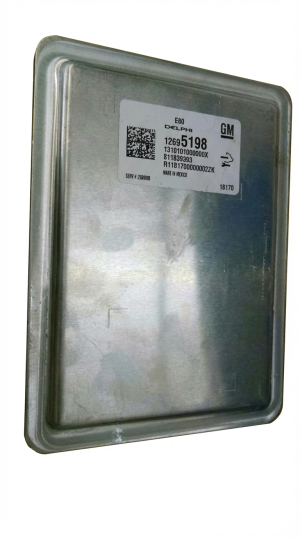
- Engine Control Module (ECM)
(OEM #12690382, 12708427 (Note: Part numbers are year/VIN specific, always verify))— This is the component that the code directly identifies as having a performance problem. It is the ultimate fix if all external electrical issues are ruled out.
Trusted brands: ACDelco (Genuine GM)
OEM price range: $500-$1000
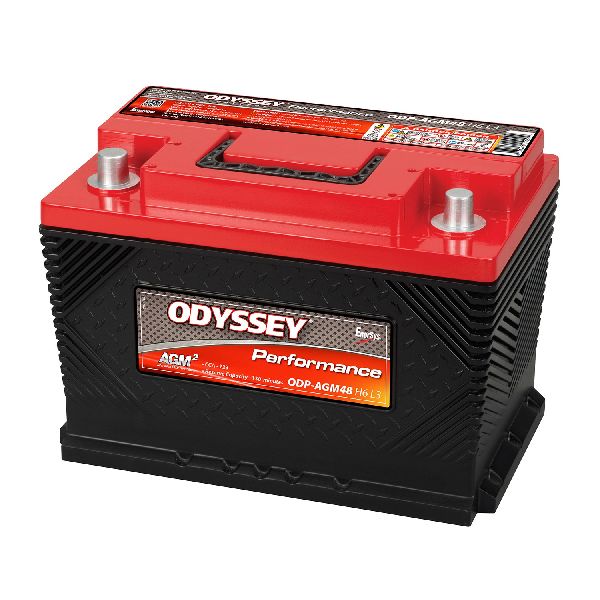
Aftermarket price range: $300-$700 - AGM Battery — A weak or failing battery is a frequent trigger for this code due to low voltage during engine start-up. Replacing it is a common and relatively inexpensive first step.
Trusted brands: ACDelco, DieHard, Duralast
OEM price range: $200-$350
Aftermarket price range: $150-$250
Related Codes That Often Appear With This One
- P0606 — This code also indicates an internal control module processor error and is very closely related to P0607. TSB Bulletin #PIE0690A notes that P0606 and P0607 can set together, sometimes accompanied by transmission-related warnings.
- U-codes (e.g., U0100) — If the ECM is failing, it may lose communication with other modules on the vehicle's data network (CAN bus), resulting in various 'Lost Communication' codes.
- Voltage codes (e.g., P0562) — Low system voltage codes often accompany P0607 and point towards a battery, alternator, or connection issue as the root cause.
Technical Service Bulletins (TSBs) & Recalls
- 22-NA-044: While for different GM models and often for the BCM, it documents P0607 being caused by a control module software anomaly, advising against immediate module replacement and instead performing a reset or software update. This principle is relevant to diagnosing the ECM on the Equinox.
- TSB Bulletin #PIE0690A: Notes that P0607 can be set in conjunction with a "Transmission Hot" message on the DIC and a condition where the vehicle will not disengage from Park.
- TSB Bulletin #PIE0672B: Documents the Check Engine Lamp illuminated on the Driver Information Center (DIC) with DTC P0607 set in the BCM, requiring a specific checklist to determine root cause.
Platform-Specific Known Issues
- While no TSBs specifically for the Equinox and P0607 were found, GM has issued TSB 22-NA-044 for other 2021-2022 vehicles on a similar platform where a P0607 in the Body Control Module (BCM) can be caused by a software anomaly, fixed by a specific reset procedure or update. This highlights the importance of checking for software updates for the ECM in the Equinox as well, as software glitches are a known cause for this code across GM products.
- There are no widespread, documented owner complaints of P0607 specifically on Equinox forums, suggesting it is not a chronic, systemic failure but rather an individual fault usually tied to the common causes listed (battery, wiring, or a one-off ECM failure).
Mechanic-Grade Diagnostic Values
- ECM Power Pins Voltage (Key On) — expected: 12.2 V ± 0.5 V. Failure: Voltage below this range indicates a power supply issue (battery, alternator, wiring).
- ECM Ground Pin Resistance — expected: < 0.1 Ω. Failure: Resistance higher than 0.1 Ω indicates a poor ground connection, which can cause module performance codes.
- Battery Voltage (Engine Off) — expected: ~12.6 V. Failure: Significantly lower voltage indicates a discharged or failing battery.
- Charging System Voltage (Engine Running) — expected: 14.0 - 14.7 V. Failure: Voltage outside this range indicates a failing alternator or voltage regulator.
Scan Tool Commands That Help
- GDS2 (GM Diagnostic Software): Module Replacement and Setup — This function is required after physically replacing the ECM. It allows the technician to program the new module with the correct VIN and vehicle-specific software calibrations.
- SPS (Service Programming System): Reprogram ECU / Calibration Update — Used to flash the ECM with the latest software from GM. This should be attempted before replacing the ECM, as a software glitch can cause P0607. It requires a subscription to GM's TIS2Web.
- GDS2 / Capable Scan Tool: Vehicle Theft Deterrent (VTD) Relearn — This is a mandatory step after replacing the ECM to synchronize the new module with the vehicle's anti-theft system and BCM. The car will not start until this procedure is completed successfully.
- GDS2 / Capable Scan Tool: Crankshaft Position Variation Relearn — Often required after ECM programming or replacement to calibrate the ECM to the specific tolerances of the crankshaft position sensor, ensuring accurate misfire detection and timing.
Wiring & Ground Locations
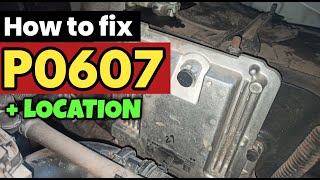
- ECM (Engine Control Module) — Located on the left side of the engine compartment.. This is the module setting the code. All power, ground, and data lines connect here.
- G103 — Located at the left rear of the engine compartment on the cowl, above the brake booster.. This is a major ground point for the Body Control Module (BCM), Instrument Panel Cluster (IPC), and Data Link Connector (DLC). A poor connection here can cause widespread communication and electrical issues that could be misdiagnosed as an ECM failure.
- G104 — Located on the top left of the engine block for the 1.5T LYX engine.. This is a primary engine block ground. A loose or corroded connection here can directly impact the ECM's ground reference and cause performance codes.
- G105 — Located at the left front of the engine compartment, often behind the cooling fan relays.. This ground serves several components in the front of the engine bay. While not a direct ECM ground, poor connections here can introduce electrical noise into the system.
- ECM Connector X1 — The main connector to the ECM.. Specific pins for battery positive voltage (e.g., Pin 20, RD/WH wire) and ignition voltage (e.g., Pin 19, PK wire) must be tested here to confirm the ECM is receiving proper power.
Real Owner Repair Stories
- YouTube video by 'Global Commerce CA' (2011 Chevrolet Equinox (Note: Older model, but demonstrates a common failure pattern for P0607)) — Intermittent no-start, no-crank condition. Fault codes for lost communication with ECM.
❌ Tried (didn't work) Initial checks of wiring, powers, and grounds were all fine when the vehicle was working.
✅ What actually fixed it The technician was able to diagnose the vehicle while the fault was active and confirmed the ECM had no communication. Replacing the ECM with a pre-programmed used unit from Flagship One and performing a security relearn with an Autel scan tool resolved the issue.
OEM Part Supersession History
12680656, 12686383, 12692069→12704475— Standard part evolution, likely incorporating hardware or firmware improvements for reliability.
Heads up: These part numbers are generally interchangeable for the specified models, but the replacement part (12704475) will have the most current updates. Always verify with VIN.
Model Year Variations Within This Range
- 2022-2024: The 2022 model year introduced a significant exterior and interior refresh, including new front/rear fascias, LED headlights, and updated infotainment with standard wireless Apple CarPlay/Android Auto. However, the 1.5T LYX I4 powertrain and its core electrical architecture remained the same, so the causes and diagnostic procedures for P0607 are not substantially different from the 2018-2021 models.
Diagnostic Flowchart
Other Known Issues on This Vehicle
Issues unrelated to this code that are worth knowing about as an owner of this generation:
- Cracked Pistons (from LSPI) 🔴 High — Most common in 2018-2020 models. Can occur due to Low-Speed Pre-Ignition (LSPI). Symptoms include misfires (P0300) and high oil consumption. (Ref: Multiple TSBs address diagnosis and the use of dexos1 Gen 2 oil to mitigate LSPI (e.g., related diagnostics in 19-NA-122).)
- Brake Vacuum Pump Failure 🔴 High — A widely documented failure on the 1.5T LYX engine. The pump can fail suddenly, causing a hard brake pedal and a 'Service Brake Assist' message (P0556). Catastrophic failure can send debris into the engine. (Ref: TSB 21-NA-268 details how a pump failure can damage the camshaft. A class-action lawsuit has also been filed regarding this issue.)
- Moisture in Charge Air Cooler (CAC) 🟠 Medium — Moisture can accumulate in the charge air cooler and freeze in cold weather, causing hesitation, misfires (P0300), and reduced power, especially in cold/wet climates. (Ref: TSB 18-NA-020 (and subsequent revisions) provides diagnostic procedures and fixes, which may include cleaning the CAC or installing a grille cover.)
- Crank No-Start from Sheared Cam Sprocket Pin 🔴 High — A rare but severe issue where the camshaft sprocket locating pin can shear, causing the engine to crank but not start due to a loss of valve timing. (Ref: TSB 19-NA-212 provides diagnostic tips for this condition, which often requires engine replacement if confirmed.)
Used vs. New Parts: Buying Guide for This Vehicle
When a used part is the smart pick: A used ECM can be a cost-effective option IF it is purchased from a reputable re-programmer who can flash it with your vehicle's VIN and the latest software *before* shipping. A standard junkyard ECM is often not usable.
Donor-vehicle mileage cap: roughly under 80000 miles for the part to have meaningful remaining life.
What to inspect on the donor part:
- Ensure the seller guarantees the module is tested and functional.
- Verify the seller will program the module to your VIN. You will need to provide it to them.
- Inspect the connectors on arrival for any bent pins, corrosion, or physical damage to the case.
OEM-only on this vehicle (don't cheap out):
- Engine Control Module (ECM) - While reputable pre-programmed aftermarket/used units exist, a new OEM part from a dealer is the most surefire way to avoid compatibility issues. Avoid un-programmed used modules from junkyards, as they are often VIN-locked and cannot be easily reprogrammed by most shops.
Aftermarket brands forum-validated for this vehicle:
- Flagship One (FS1)
- SIA Electronics
Brands owners have reported issues with on this vehicle:
- Unbranded, non-programmed modules from marketplaces like eBay or Amazon, as they often cannot be programmed to the vehicle.
Related OBD-II Codes
Frequently Asked Questions
Can a weak battery really cause a P0607 code on my 2018-2024 Equinox?
Does TSB 22-NA-044 apply to the P0607 code in my Equinox?
Should I use a standard battery or an AGM battery for my 1.5T LYX engine?
Is the P0607 code a common 'known issue' for the 2018-2024 Equinox?
Can I just buy a used ECM from a junkyard to fix this?
Could my 'Reduced Engine Power' mode be caused by something other than the ECM?
Helpful Videos
Used OEM Parts in Stock
New Aftermarket Parts Available



The information in this article is provided for general reference and educational purposes only. Vehicle specifications, procedures, and part compatibility can vary by production date, trim level, and region. Always consult your vehicle's factory service manual and verify part numbers before purchasing or performing repairs. Safety-critical components such as airbags, seat belts, and braking systems should be installed by a qualified professional.
- Chevrolet Equinox:
- 🧭 Diagnostic Flowchart
- 🎬 Helpful Videos
- 🛍️ Shop This Part
- What's Unique About the 2018-2024 Chevrolet Equinox
- Symptoms You May Notice
- Most Likely Causes
- Rare But Worth Checking
- Diagnosis Steps
- Parts You'll Likely Need
- Related Codes That Often Appear With This One
- Technical Service Bulletins (TSBs) & Recalls
- Platform-Specific Known Issues
- Mechanic-Grade Diagnostic Values
- Scan Tool Commands That Help
- Wiring & Ground Locations
- Real Owner Repair Stories
- OEM Part Supersession History
- Model Year Variations Within This Range
- Other Known Issues on This Vehicle
- Used vs. New Parts: Buying Guide for This Vehicle
- Related OBD-II Codes
- Frequently Asked Questions
- 🎟️ Get 5% Off