

P0607 on 2016-2024 Chevrolet Malibu 1.5L: Control Module Performance Diagnosis
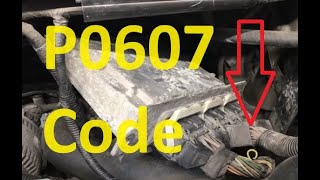
P0607 on a Chevy Malibu indicates an internal problem with the Engine Control Module (ECM). Before replacing the expensive ECM, first check for simpler causes like a weak battery, bad alternator, or loose power/ground connections. This code is a general fault and not tied to a specific, common design flaw on the Malibu, unlike other well-documented issues with the 1.5L engine.
- P0607 means the Engine Control Module (ECM) has an internal performance fault.
- Before assuming the ECM is bad, always test the battery, alternator, and check all power/ground connections thoroughly.
- While P0607 is a generic fault, the 1.5L engine in the Malibu has several specific, well-known weaknesses (pistons, PCV, vacuum pump) that a technician should be aware of during diagnosis.
What's Unique About the 2016-2024 Chevrolet Malibu
For the 2016-2024 Chevrolet Malibu, the P0607 code does not appear to be linked to a common, recurring design flaw according to available service bulletins and owner forums. The causes are typically the same as those for most modern vehicles, pointing to general electrical system health or a random module failure. This is in contrast to several other well-documented systemic issues on the 1.5L LFV engine, such as cracked pistons, PCV system clogs, and brake vacuum pump failures, which have specific TSBs and widespread owner discussion. Therefore, while the P0607 code itself is generic, it should prompt a thorough check of the vehicle's overall health, not just a rush to replace the ECM.
🎬 Watch: Understanding the P0607 code causes and fixesSymptoms You May Notice
- Check Engine Light is on
- Vehicle may not start, or cranks but fails to fire.
- Intermittent stalling, especially at idle or while driving.
- Reduced engine power and sluggish acceleration (limp mode).
- Noticeable decrease in fuel economy.
- Rough or irregular idling.
- A "Transmission Hot" message or an inability to disengage the vehicle from Park may occur in some GM configurations (as noted in Bulletin #PIE0690A).
- Replacing sensors like oxygen (O2) or crankshaft position sensors. While a failing ECM can cause other codes to appear, P0607 specifically points to the module itself or its support system (power/ground), not the sensors it reads.
Most Likely Causes
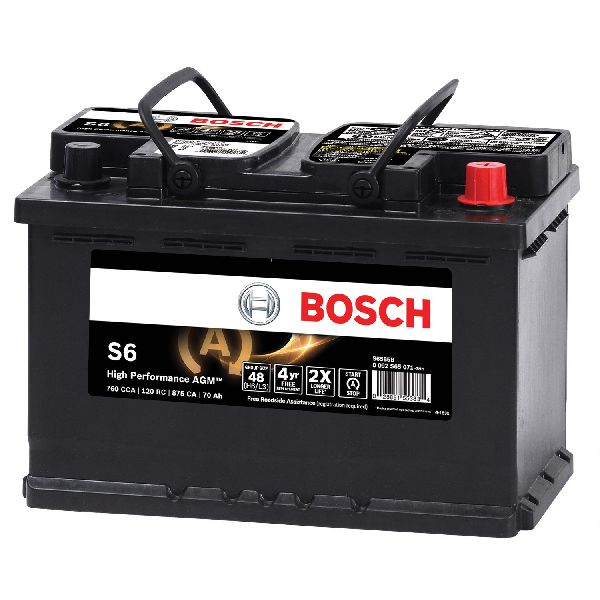
- Weak or Failing Battery 🔴 High Probability → Shop Vehicle Battery Modern vehicles like the Malibu are highly sensitive to voltage. The 1.5L Turbo models often feature start-stop technology, which places higher demands on the battery. A voltage drop below 9V during cranking can trigger a P0607.
How to confirm: Test the battery voltage with a multimeter. It should be above 12.4V with the engine off and 13.7V-14.7V when running. Many auto parts stores will test your battery for free.
Typical fix: Replace the vehicle's battery.
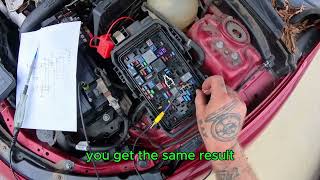
Est. part cost: $150-$250 - Poor ECM Power or Ground Connections 🟡 Medium Probability Vibrations and exposure to the elements can cause critical ground straps or power connections at the ECM to become loose or corroded over time, a common issue on many GM vehicles.
How to confirm: Visually inspect the main ground straps from the engine/transmission to the chassis. Locate the ECM and check its connectors for corrosion or damage. Use a multimeter to check for voltage drops and ensure ground resistance is below 0.1 Ω.
Typical fix: Clean the connection points with a wire brush and ensure they are tight. Repair any damaged wiring.
Est. part cost: $5-$20 - Failing Alternator ⚪ Low Probability → Shop Alternator
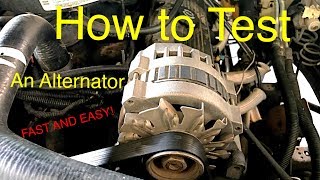
How to confirm: With the engine running, check the battery voltage. If it's below 13.2V, above 15V, or fluctuating wildly, the alternator is likely failing to provide stable voltage to the electrical system and ECM.
Typical fix: Replace the alternator.
Est. part cost: $250-$500 - Faulty Engine Control Module (ECM) or Body Control Module (BCM) ⚪ Low Probability → Shop Engine Control Module (ECM)
How to confirm: This is typically the last resort after all other possibilities have been ruled out. Note that on some GM platforms, Bulletin #22NA044 indicates the Check Engine MIL can be set by the Body Control Module with DTC P0607.
Typical fix: Replace the ECM or BCM. The new module will require programming to the vehicle's VIN and security system.
Est. part cost: $400-$1000
Rare But Worth Checking
- Corrupted ECM Software: Sometimes, the ECM's software can become corrupted, especially after a jump-start. A dealership or qualified shop can check for and apply any available software updates (a process called 'reflashing'), which can sometimes resolve the issue without replacing the hardware.
- Aftermarket Engine Tuning: Installing a non-factory engine tune or performance chip can sometimes conflict with the ECM's self-diagnostic routines, causing a P0607 code. Restoring the factory calibration can resolve the issue.
Diagnosis Steps
- Read Freeze Frame Data: Use an OBD-II scanner to record the conditions under which the P0607 code was set.
- Check for Other Codes: Look for any other stored codes, especially other P06xx codes or U-series communication codes. Manufacturer Bulletin #PIE0690 notes that P0606 and P0607 may set together in some instances.
- Test the Electrical System: Fully test the battery's state of health and charge. With the engine running, use a multimeter to verify the alternator is producing stable voltage (typically 13.7V-14.7V).
- Inspect Power and Grounds: Disconnect the battery. Visually inspect the battery terminals for corrosion. Trace and inspect the main engine and chassis ground straps for tightness and corrosion. Clean them thoroughly.
- Inspect ECM Connections: Locate the ECM and carefully inspect its wiring harness and connectors for any signs of damage, moisture intrusion, or corrosion.
- Check for Software Updates: Contact a dealership or a well-equipped independent shop to determine if there is a software update available for the ECM. Also, inquire if the vehicle has an aftermarket tune.
- Condemn the ECM: If all the above steps check out, the ECM itself is the most likely culprit. This is a diagnosis by elimination.
Parts You'll Likely Need
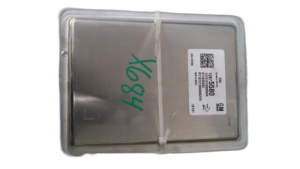
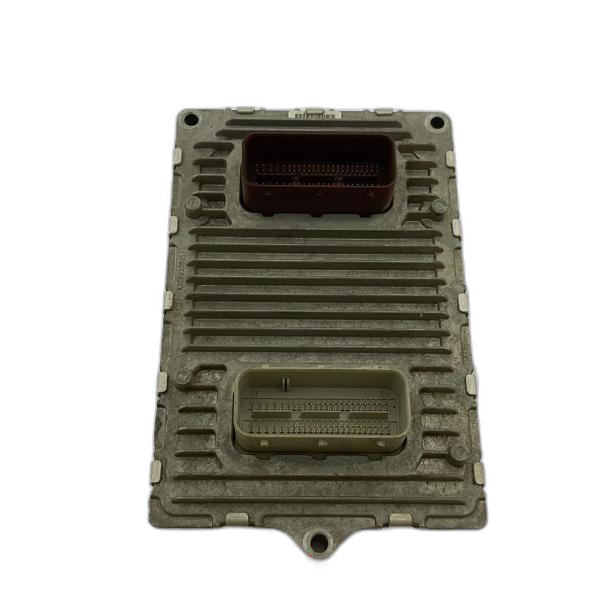
- Engine Control Module (ECM)
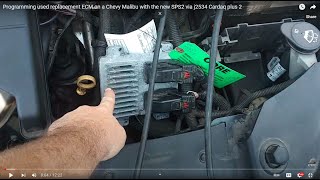
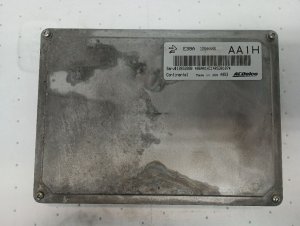
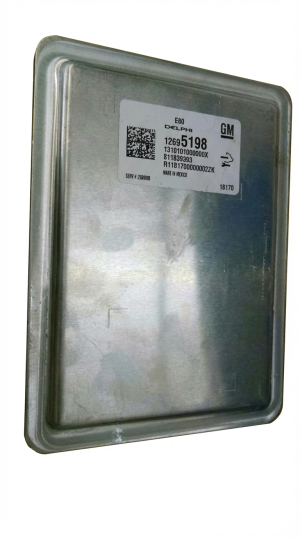
(OEM #Multiple P/Ns exist, verify by VIN. Examples: 12691559, 12697788, 12719250.)— If all external factors like power, ground, and software are confirmed to be good, the internal circuitry of the ECM (ACDelco E92 family) has likely failed, requiring replacement. 🎬 Watch: How to program a replacement Chevy Malibu ECM
Trusted brands: ACDelco (OEM)
OEM price range: $500-$1000
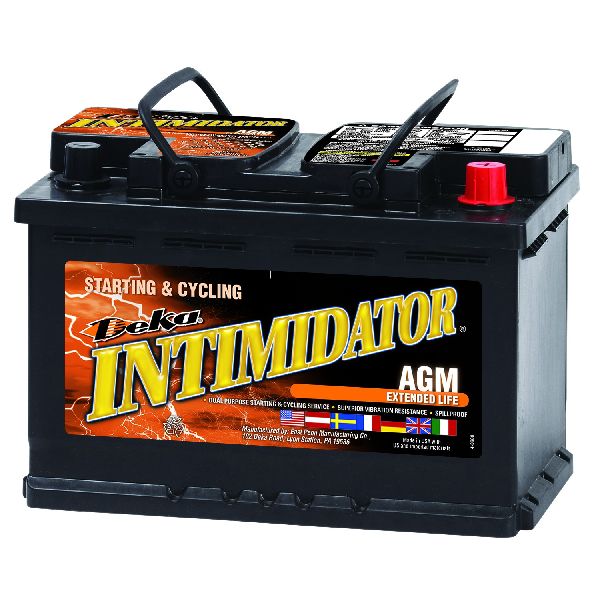
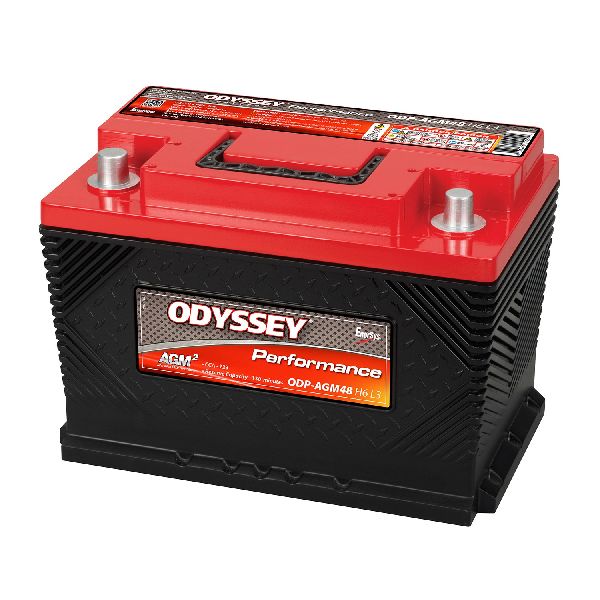
Aftermarket price range: $300-$700 - Battery — A weak or failing battery is a common cause of voltage irregularities that can trigger a P0607 code.
Trusted brands: ACDelco, DieHard, Interstate
OEM price range: $200-$300
Aftermarket price range: $150-$250
Related Codes That Often Appear With This One
- P0601, P0602, P0603, P0604, P0605, P0606 — These are all codes related to internal control module errors, such as memory read/write faults or processor issues. Seeing them together strongly suggests a problem with the ECM itself. Bulletin #PIE0690 specifically links P0606 and P0607 in power train diagnostics.
- U-series codes (e.g., U0100) — U-codes indicate a loss of communication between modules. If the ECM is failing, it may stop communicating with other modules on the vehicle's network (like the Transmission Control Module or Body Control Module), triggering these codes.
Technical Service Bulletins (TSBs) & Recalls
- 19-NA-122: Addresses cracked pistons on 1.5L engines due to pre-ignition, a major known issue for this platform.
- 19-NA-206: Pertains to the common 'Shift to Park' message issue on 2016-2019 models.
- 20-NA-047: Relates to diagnosing and repairing the clogged PCV orifice in the camshaft cover.
- 22-NA-224: Provides the fix for the charge air cooler pipe that frequently disconnects from the throttle body.
- TSB #22-NA-044: While not for the Malibu, this TSB for newer GM SUVs shows that a P0607 code can sometimes be a BCM software issue fixed by an update, highlighting the importance of checking for software flashes before replacing hardware.
- Bulletin #PIE0672B: This manufacturer bulletin notes that a P0607 code can set in the Body Control Module (BCM), causing the Check Engine Lamp to illuminate on the Driver Information Center.
- Bulletin #PIE0690A: Describes a condition where P0607 and P0606 are set, potentially accompanied by a "Transmission Hot" message or the vehicle failing to disengage from Park.
Mechanic-Grade Diagnostic Values
- Battery Voltage (Engine Off) — expected: >12.4V. Failure: Voltage below 12.4V indicates a discharged or failing battery that can cause module errors.
- Alternator Output Voltage (Engine Running) — expected: 13.7V - 14.7V. Failure: Voltage below 13.5V or above 14.5V suggests an alternator issue causing unstable power to the ECM.
- ECM Ground Circuit Resistance — expected: < 5 Ω. Failure: Resistance higher than 5 ohms between the ECM ground pins and a known good chassis ground indicates a poor ground connection.
- ECM Power Pin to Ground Pin Resistance (ECM disconnected) — expected: Open Line (OL) or very high resistance. Failure: A direct connection or low resistance (e.g., 0 ohms) indicates an internal short circuit within the ECM, requiring replacement.
Scan Tool Commands That Help
- GDS2 / Techline Connect (SPS2): Replace and Program ECU — This function is required after physically installing a new or used ECM. It programs the vehicle's VIN and security information into the replacement module.
- GDS2 / Techline Connect (SPS2): Vehicle Theft Deterrent Learn — This procedure must be performed after ECM programming is complete. It synchronizes the newly programmed ECM with the vehicle's immobilizer system, allowing the engine to start. The process can take 10-12 minutes.
- GDS2 / Techline Connect (SPS2): VIN Override — When programming a used ECM, the system will detect a VIN mismatch. This command allows the technician to overwrite the donor module's VIN with the correct VIN of the vehicle receiving the part.
Wiring & Ground Locations
- G103 — Located at the left rear of the engine compartment on the cowl, above the brake booster.. This is a primary ground point for the Engine Control Module (ECM) and Body Control Module (BCM). A loose or corroded connection here is a common cause of various module communication and performance codes, including P0607.
- G105 — Located on the right rear of the engine, on an engine-to-transmission stud.. This ground serves the ECM and Transmission Control Module (TCM). A poor connection at this stud can cause erratic behavior and internal fault codes in the ECM.
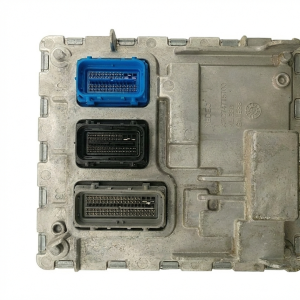
- ECM Connector — The ECM is located in the LH (driver's side) of the engine compartment.. Physical inspection of the ECM's three rectangular connectors is critical. Look for pin corrosion, moisture intrusion, or damage to the wiring harness that could interrupt power or ground supply, triggering a P0607 before condemning the module itself.
OEM Part Supersession History
12680194, 12691559, 12697788→12719250— GM regularly updates service parts to integrate new materials, technologies, or fix previously identified issues.
Heads up: Part number 12719250 is the latest service replacement for many earlier numbers used on the 2018-2024 Malibu 1.5L. Always verify the correct part number by VIN before ordering, but expect older numbers to be superseded by this one.
Model Year Variations Within This Range
- 2019-2024: For the 2019 model year, the 1.5L engine was paired with a new Continuously Variable Transmission (CVT), replacing the previous six-speed automatic. This change does not directly affect the cause of P0607 but is a significant powertrain difference to be aware of when sourcing parts or service information.
- 2019-2024: The 2019 refresh introduced a new standard 8-inch touchscreen with the 'Chevrolet Infotainment 3' system. While not directly tied to the ECM, any diagnosis of network or communication codes that may accompany a P0607 must account for this updated system.
Diagnostic Flowchart
Other Known Issues on This Vehicle
Issues unrelated to this code that are worth knowing about as an owner of this generation:
- Cracked Pistons due to Low-Speed Pre-Ignition (LSPI) 🔴 High — Common on 2016-2018 models, can occur under 100k miles. Causes misfires (P0300-P0304) and excessive oil consumption. (Ref: Customer Satisfaction Program N182195660 (also 17019); TSB 19-NA-122.)
- 'Shift to Park' Message / Inability to Shut Off Vehicle 🟠 Medium — Very common on 2016-2019 models. A faulty park switch in the shifter assembly prevents the BCM from recognizing Park, leading to battery drain. (Ref: TSB 19-NA-206 (supersedes 18-NA-297).)
- Mechanical Brake Vacuum Pump Failure 🔴 High — A known weak point on the 1.5L LFV engine. The pump can seize and disintegrate, sending metal debris into the camshaft and cylinder head, potentially causing catastrophic engine damage. (Ref: No specific TSB, but a widely documented failure mode.)
- Clogged PCV Orifice in Camshaft Cover 🟠 Medium — A high-failure item causing increased crankcase pressure, oil leaks (e.g., main seal), and codes like P1101. The orifice is plastic and can break during replacement, falling into the engine. (Ref: TSB 20-NA-047.)
- Charge Air Cooler (CAC) Outlet Pipe Disconnection 🟡 Low — The charge pipe from the intercooler to the throttle body frequently pops off, causing a sudden loss of power, a loud whoosh sound, and underboost code P0299. (Ref: TSB 22-NA-224; TSB PIP5651G. Fix is an updated retainer clip (GM P/N 12684263).)
Used vs. New Parts: Buying Guide for This Vehicle
When a used part is the smart pick: A used ECM from a reputable salvage yard can be a cost-effective option for this repair, as the vehicle platform (non-Global A for early models) generally allows for reprogramming of used modules. This is only a smart choice if you have access to GM's Service Programming System (SPS) or a shop that does, as it is impossible to use without being reprogrammed.
Donor-vehicle mileage cap: roughly under 80000 miles for the part to have meaningful remaining life.
What to inspect on the donor part:
- Verify the part number on the used ECM matches one of the compatible numbers for your vehicle's VIN.
- Inspect the connectors for any bent, corroded, or broken pins.
- Ensure the donor vehicle was not involved in a flood or fire.
- Obtain the VIN of the donor vehicle if possible, as it can sometimes help with the programming process.
OEM-only on this vehicle (don't cheap out):
- Engine Control Module (ECM) - While used OEM is an option, avoid no-name aftermarket 'rebuilt' units without a lifetime warranty and clear programming instructions. A new ACDelco part or a properly sourced used OEM part are the most reliable choices.
Brands owners have reported issues with on this vehicle:
- Unbranded or generic 'plug-and-play' ECMs advertised online. These often fail or cause other system issues because they cannot be properly integrated with the vehicle's security and specific options without VIN-based programming.
Real Owner Stories
Aggregated from forums and TSBs cited above. Mileages and costs reflect what owners reported in those sources.
2017 Chevrolet Malibu 1.5L Turbo — 150000 miles
Symptoms: Owner was inquiring about the complexity of a PCV valve replacement due to the labor-intensive nature of the job and the risk of plastic parts breaking into the engine.
What fixed it: The discussion focused on the necessity of replacing the PCV orifice in the camshaft cover to manage crankcase pressure, a known issue that can lead to broader engine health problems.
Source hint: Reddit r/AskMechanics - '2017 Chevrolet Malibu (~150000 miles) PCV valve replacement (Could I do this on my own?)'
2022 Chevrolet Malibu 1.5L Turbo
Symptoms: Recurring turbo failures and a recurring P0299 code.
What fixed it: The owner had 4 turbos replaced, with the underlying issue potentially linked to crankcase pressure from the PCV system affecting turbo longevity.
Source hint: Reddit r/AskMechanics - '2022 Malibu 1.5T — 4 turbos replaced, recurring P0299...'
Related OBD-II Codes
Frequently Asked Questions
Could my 2017 Malibu's P0607 code be related to the 'Shift to Park' message I keep seeing?
I have a 2018 Malibu 1.5L; is there a TSB for the P0607 code specifically?
Can I use a used ECM to fix my Malibu's P0607 code?
Why does my 1.5L Turbo Malibu trigger P0607 during startup?
Is the P0607 code related to the charge air cooler pipe issue on the 2022 Malibu?
Could a clogged PCV orifice cause electrical codes like P0607?
Helpful Videos
Used OEM Parts in Stock
New Aftermarket Parts Available


The information in this article is provided for general reference and educational purposes only. Vehicle specifications, procedures, and part compatibility can vary by production date, trim level, and region. Always consult your vehicle's factory service manual and verify part numbers before purchasing or performing repairs. Safety-critical components such as airbags, seat belts, and braking systems should be installed by a qualified professional.
- Chevrolet Malibu:
- 🧭 Diagnostic Flowchart
- 🎬 Helpful Videos
- 🛍️ Shop This Part
- What's Unique About the 2016-2024 Chevrolet Malibu
- Symptoms You May Notice
- Most Likely Causes
- Rare But Worth Checking
- Diagnosis Steps
- Parts You'll Likely Need
- Related Codes That Often Appear With This One
- Technical Service Bulletins (TSBs) & Recalls
- Mechanic-Grade Diagnostic Values
- Scan Tool Commands That Help
- Wiring & Ground Locations
- OEM Part Supersession History
- Model Year Variations Within This Range
- Other Known Issues on This Vehicle
- Used vs. New Parts: Buying Guide for This Vehicle
- Real Owner Stories
- 2017 Chevrolet Malibu 1.5L Turbo — 150000 miles
- 2022 Chevrolet Malibu 1.5L Turbo
- Related OBD-II Codes
- Frequently Asked Questions
- 🎟️ Get 5% Off