

P0607 on 2011-2014 Ford Edge 2.0L EcoBoost: Control Module Performance Causes and Fixes
This code indicates a critical error with the Powertrain Control Module (PCM). The most common causes are a weak battery, failing alternator, or bad ground connections. Always test the complete charging system before considering PCM replacement, which is the most expensive fix. In some cases, this code can be triggered by other component failures, like the electronic throttle body, that cause erratic data signals to the PCM.
- P0607 is a critical code indicating a problem with the vehicle's main computer; do not drive the vehicle.
- Always start diagnosis by thoroughly testing the battery, alternator, and all related cables and grounds. This is the most common and cheapest fix.
- Do not replace the PCM unless all other possibilities (power supply, grounds, wiring, software) have been professionally ruled out.
- PCM replacement requires programming by a dealer or a specialized shop with the correct tools.
What's Unique About the 2011-2014 Ford Edge
While P0607 is a generic code, it is especially critical on vehicles with turbocharged engines like the 2.0L EcoBoost. An ECM/PCM malfunction can lead to incorrect fuel, boost, and ignition timing calculations, potentially causing poor performance, engine damage, or dangerous stalling conditions. On many Ford platforms, a P0607 can sometimes be a secondary code triggered by a failing electronic throttle body, which sends erratic signals that the PCM misinterprets as an internal fault. There are no widespread, unique design flaws on the 2011-2014 Edge that cause this code; rather, it follows the typical failure patterns for modern Ford vehicles, starting with electrical system health.
Symptoms You May Notice
- Check Engine Light is on
- Wrench light may be illuminated
- Engine may not start or may be hard to start
- Sudden stalling at idle or while driving
- Reduced engine power or acceleration (limp mode)
- Erratic or harsh transmission shifting
- Noticeable decrease in fuel economy
- Replacing the PCM before thoroughly testing the battery and charging system. A weak battery is a far more common and cheaper fix.
- Overlooking a failing electronic throttle body as the root cause of the PCM setting a performance code.
Most Likely Causes
- Weak or Failing Battery / Alternator 🔴 High Probability → Shop Alternator The PCM requires a stable voltage to operate correctly. An aging battery (typically 3-5 years old) or a failing alternator can cause voltage drops during startup or operation, triggering a false P0607 self-test failure.
How to confirm: Test the battery voltage with a multimeter. It should be approximately 12.6V with the engine off. During cranking, it should not drop below 10V. With the engine running, alternator output should be between 13.5V and 14.5V.
Typical fix: Replace the battery and/or alternator.
Est. part cost: $150-$450 - Poor PCM Power or Ground Connections 🟡 Medium Probability Over time, battery cable ends, main engine grounds, and PCM-specific ground straps can corrode or loosen. This creates unwanted resistance (should be below 0.1 Ω) and can starve the PCM of the stable voltage it needs.
How to confirm: Visually inspect all battery cables and major ground straps for corrosion, looseness, or damage. Perform a voltage drop test on the main power and ground cables to the PCM to check for excessive resistance.
Typical fix: Clean battery terminals and cable ends with a wire brush. Tighten all ground connections. Replace any corroded or damaged cables.
Est. part cost: $10-$100 - Electronic Throttle Body (ETB) Failure 🟡 Medium Probability → Shop Fuel Injection Throttle Body Ford vehicles of this era are known for ETB failures where internal contacts get contaminated, causing erratic signals. This can put the vehicle into limp mode and may confuse the PCM, causing it to log a P0607 code as a secondary fault.
How to confirm: Often accompanied by throttle-specific codes (like P2112). A technician can monitor the throttle position sensor data for erratic readings. Cleaning the throttle body is a first step, but replacement is often necessary.
Typical fix: Replace the electronic throttle body assembly. Ford issued an extended warranty (Customer Satisfaction Program 13N03) for this part on many affected vehicles.
Est. part cost: $150-$300 - PCM Software Issue ⚪ Low Probability Occasionally, glitches in the PCM's software can cause internal conflicts that trigger a P0607 code. Ford has issued TSBs for other models where a PCM reflash was the solution for this code.
How to confirm: This can only be confirmed by a Ford dealer or a qualified shop with access to Ford's diagnostic software (IDS). They can check the current software calibration and see if an update is available.
Typical fix: Reprogram (reflash) the PCM to the latest software version. This is a dealer or professional-level repair.
Est. part cost: $0 (labor only) - Internal PCM Failure ⚪ Low Probability If all power, ground, software, and related component issues (like the ETB) are ruled out, the PCM itself has likely failed internally. This can be due to age, heat cycles, water intrusion, or an internal short circuit.
How to confirm: This is a process of elimination. If the battery, alternator, wiring, grounds, and software are all confirmed to be in perfect working order, and a reflash does not solve the issue, the PCM is condemned.
Typical fix: Replace the Powertrain Control Module. The new module must be programmed to the vehicle's VIN and specific configuration.
Est. part cost: $500-$1000
Diagnosis Steps
- Read all diagnostic trouble codes (DTCs) with a quality OBD-II scanner. Note any other codes that are present, especially throttle-body related codes.
- Inspect the Battery and Cables: Visually check the battery terminals and cables for corrosion, damage, or loose connections. Clean and tighten as necessary.
- Test the Charging System: Use a multimeter to test the battery voltage (engine off: ~12.6V), during cranking (should stay >10V), and with the engine running to verify alternator output (13.5V-14.5V). A failing battery or alternator is a common cause.
- Inspect PCM Wiring and Grounds: Locate the PCM and inspect its connectors and wiring harness for any signs of damage, corrosion, or moisture intrusion. Trace and inspect the main engine and chassis ground straps for integrity.
- Perform a Voltage Drop Test: If you have the expertise, perform a voltage drop test on the PCM's main power and ground circuits to identify any hidden resistance in the wiring. Ground resistance should be under 0.1 Ohms.
- Inspect the Electronic Throttle Body (ETB): Given the prevalence of ETB failures on this platform, inspect its wiring and consider if symptoms align with a throttle issue. If other throttle codes are present, diagnose that system first.
- Attempt a Hard Reset: Disconnect the negative battery terminal for 30 minutes. This can sometimes clear temporary electronic glitches, but it is unlikely to fix a persistent P0607. A more thorough method is a Keep Alive Memory (KAM) reset, which involves shorting the disconnected battery cables for several minutes to fully discharge system capacitors.
- Consult a Professional: If the above steps do not resolve the issue, the next steps involve professional tools. A technician will need to check for PCM software updates and potentially reflash the module using Ford's IDS.
- Diagnose for PCM Replacement: If all wiring, power, grounds, and software have been ruled out, the PCM itself is the likely culprit and will need to be replaced and programmed.
Parts You'll Likely Need
- Battery
(OEM #Motorcraft BXT-96R-590 (Group Size 96R))— An old or weak battery is the most common trigger for a false P0607 code due to low voltage during self-tests. The correct group size for the 2.0L EcoBoost is 96R.
Trusted brands: Motorcraft, Interstate, DieHard
OEM price range: $180-$250
Aftermarket price range: $150-$220 - Powertrain Control Module (PCM)
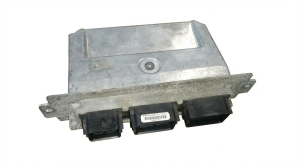
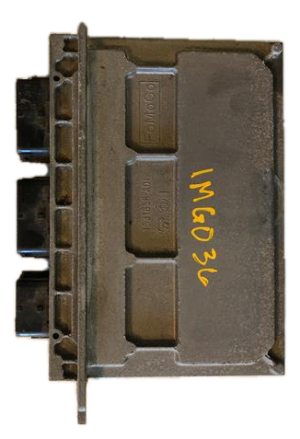
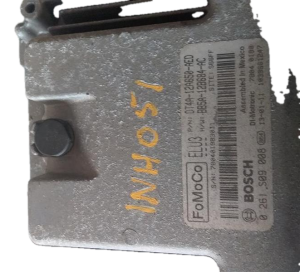
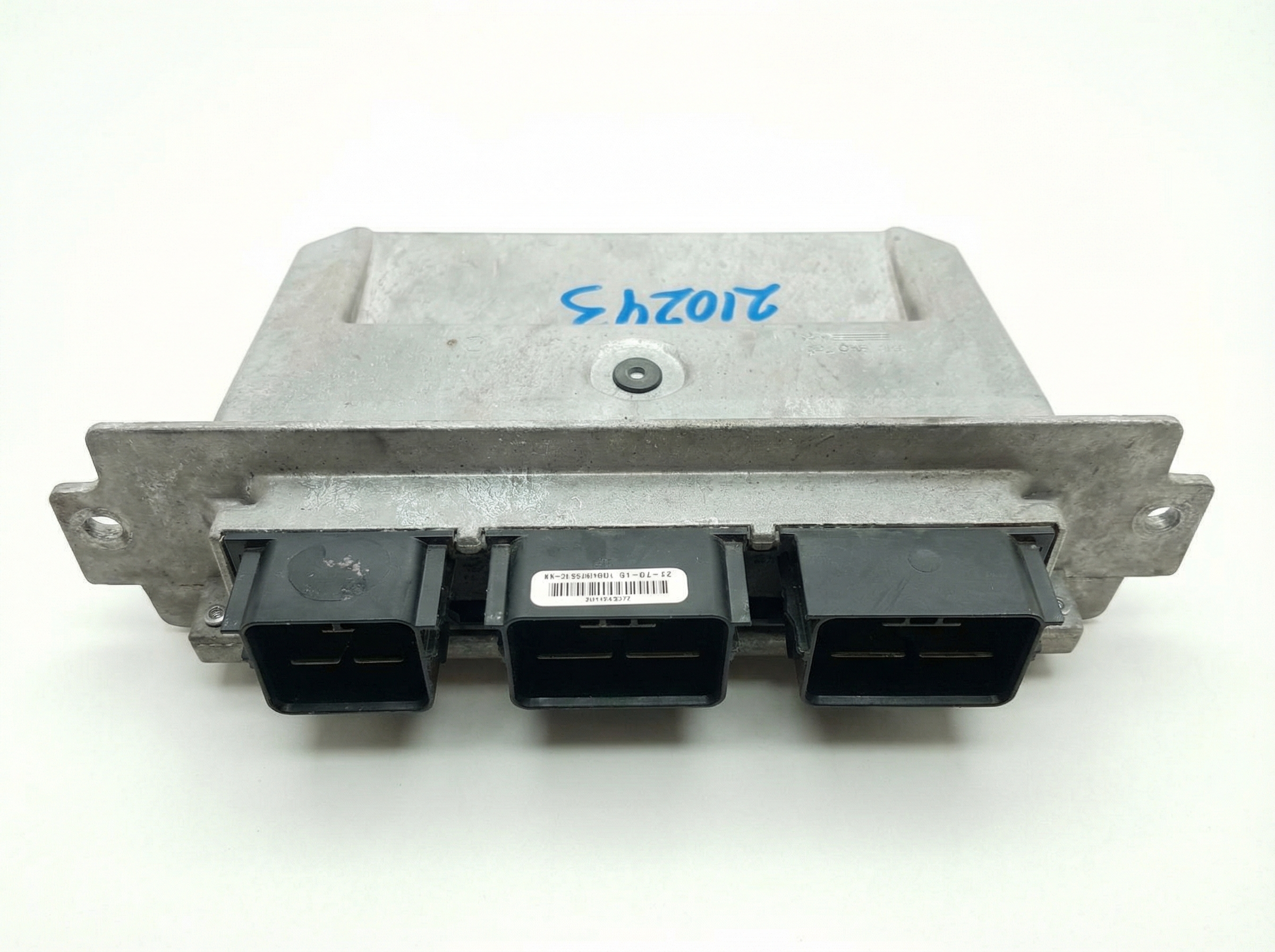
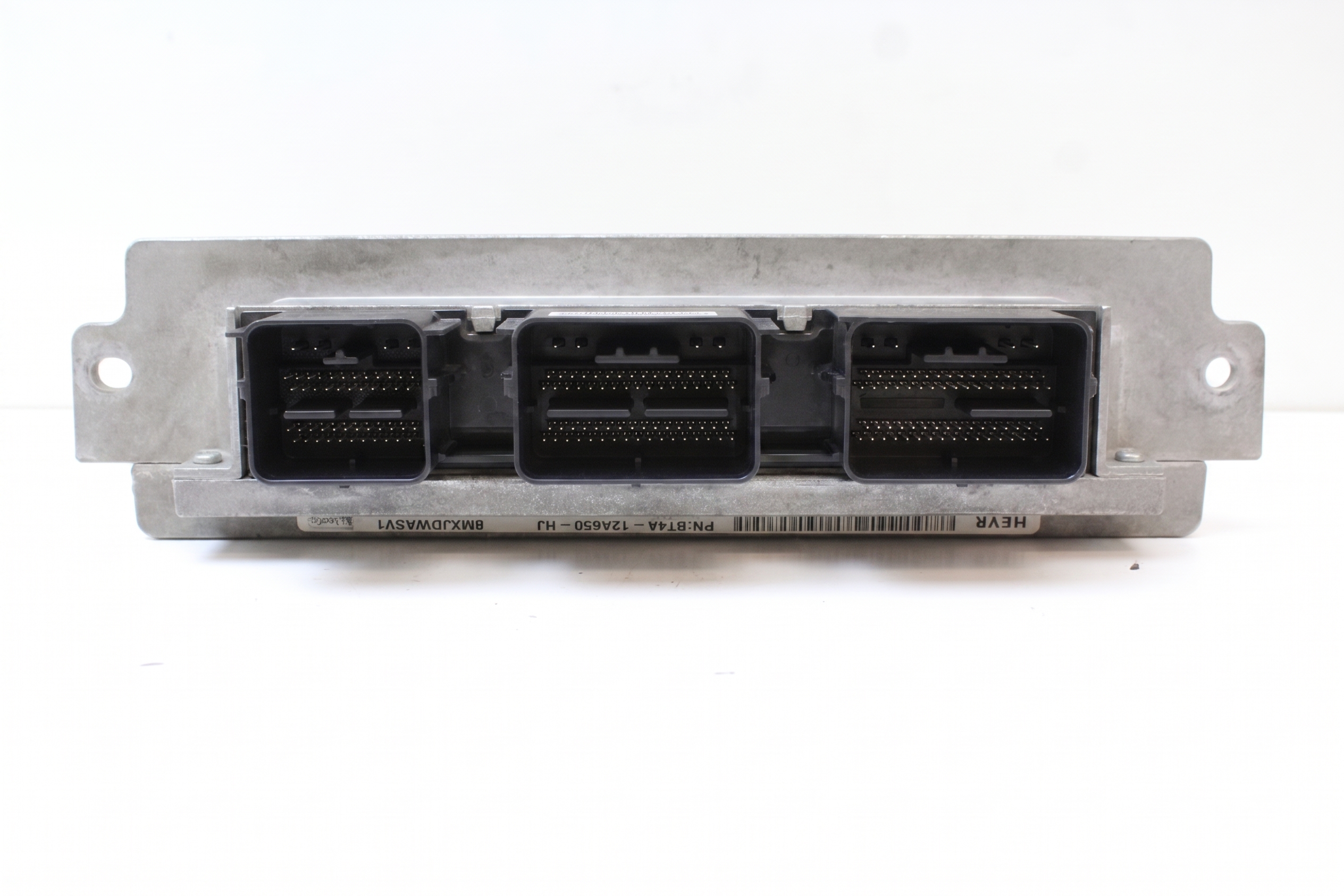
(OEM #Example: DT4A-12A650-ADD, DT4Z-12A650-BMA (Part number is specific to your vehicle's VIN and calibration))— If all other causes are ruled out, the PCM itself has failed and must be replaced. Part number is specific to your vehicle's VIN and calibration, and must be programmed by a dealer or specialist.
Trusted brands: Motorcraft (OEM), Flagship One (Remanufactured)
OEM price range: $800-$1200
Aftermarket price range: $400-$800 (Remanufactured)
Related Codes That Often Appear With This One
- P0606 — This code for 'PCM Processor Fault' is very similar to P0607. Seeing them together strongly points towards an internal failure of the PCM.
- U0100 — This code means 'Lost Communication With ECM/PCM'. It can appear with P0607 if the PCM is failing intermittently and dropping off the vehicle's communication network.
- P2112 — This code for 'Throttle Actuator Control System - Stuck Closed' often points to a failing Electronic Throttle Body. On Fords, a faulty ETB can sometimes cause the PCM to log a P0607 as a symptom of the erratic data it's receiving.
Technical Service Bulletins (TSBs) & Recalls
- TSB 18-2013: Acknowledges the 'Door Ajar Lamp Remains Illuminated' issue and provides a dealer cleaning procedure.
- Customer Satisfaction Program 13N03: Extends the warranty on the Electronic Throttle Body for many Ford models due to high failure rates.
- Customer Satisfaction Program 13N02 / Extended Warranty 13S12: Extends t
Mechanic-Grade Diagnostic Values
- PCM Power Pin Voltage (Key On) — expected: 12.2 V ± 0.5 V. Failure: Voltage below this range indicates a power supply issue from the battery or fuse box.
- PCM Ground Circuit Resistance — expected: Below 0.1 Ω. Failure: Resistance higher than 0.1 Ω indicates a corroded or loose ground connection that needs to be cleaned or tightened.
- CAN Bus Voltage (Key On, Engine Off) — expected: CAN High (~2.7V), CAN Low (~2.3V). Failure: A line stuck at 0V or 5V indicates a short. Both lines at the same voltage indicates they are shorted together. This test helps verify the PCM's communication network is physically intact.
Scan Tool Commands That Help
- Ford IDS (Integrated Diagnostic System): PCM Parameter Reset — After replacing the PCM, this function should be performed to clear adaptive learning tables and ensure the new module functions correctly with the vehicle's existing components.
- Ford IDS (Integrated Diagnostic System): Key On Engine Off (KOEO) Self-Test — This is a fundamental diagnostic step. Running the KOEO self-test can confirm if the P0607 code is hard-set or intermittent and may reveal other related diagnostic codes stored in the PCM.
Wiring & Ground Locations
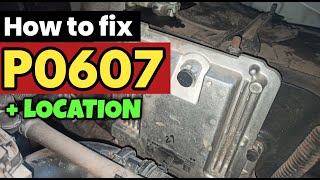
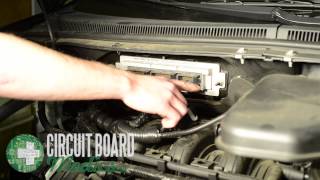
- Powertrain Control Module (PCM) — Located in the engine bay, on the right side (passenger side) near the firewall.. This is the module setting the code. All power, ground, and communication tests will be performed at its connectors.
- C175B — The main electrical connector for the Powertrain Control Module (PCM).. This is where you will test for power and ground integrity. Key pins for a 2.0L EcoBoost are: Pins 1, 2, 4 for Ground; Pins 5, 6 for VPower (main power from PCM relay); Pin 15 for Ignition Run Power.
- G101 / G104 / G105 — These are primary engine compartment ground points. G101 is typically near the battery on the left front of the engine bay. G104 and G105 are often on the left and right front inner fender areas.. The PCM relies on clean, tight chassis and engine block grounds. The main PCM grounds (from pins 1, 2, 4) ultimately connect to one of these points. Corrosion or looseness here can cause a P0607.
Real Owner Repair Stories
- Advanced Level Auto Diagnostics (YouTube) (2013 Ford Edge 2.0L EcoBoost) — No start, no communication with the PCM after a transmission replacement.
❌ Tried (didn't work) The shop initially checked grounds and connections with no success.
✅ What actually fixed it The technician diagnosed that the PCM had power and ground, but was still not communicating on the CAN bus. This confirmed an internal failure of the PCM itself. Replacing the PCM resolved the no-start and no-communication issue.
Diagnostic Flowchart
Other Known Issues on This Vehicle
Issues unrelated to this code that are worth knowing about as an owner of this generation:
- Door Ajar Light Stays On 🟡 Low — Extremely common. A faulty switch inside the door latch assembly fails, causing the light to stay on and potentially draining the battery. The issue is so prevalent that numerous owner-created repair videos exist. (Ref: TSB 18-2013 (describes the issue and a cleaning procedure).)
- Failing Electronic Throttle Body (ETB) 🔴 High → Shop Fuel Injection Throttle Body — Common across many Ford models of this era. Contamination or electronic failure within the ETB can cause sudden loss of power, erratic idle, and the vehicle entering 'limp mode'. This can sometimes trigger other codes, including P0607. (Ref: Customer Satisfaction Program 13N03 (Extended warranty to 10 years/150,000 miles for this part on some models, though the Edge was not explicitly listed in all documents, the issue is identical).)
- Brake Booster Failure 🔴 High — A known issue where the brake booster diaphragm can tear, resulting in a hissing noise when the pedal is pressed and increased pedal effort required to stop. It presents a significant safety concern. (Ref: Customer Satisfaction Program 13N02 / Extended Warranty 13S12 (Extends the warranty on the brake booster to 10 years/150,000 miles).)
- Power Transfer Unit (PTU) Failure (AWD Models) 🔴 High — Common on first-generation AWD Edge models. The PTU (transfer case) can overheat due to a small fluid capacity and lack of cooling, leading to fluid breakdown and eventual gear/bearing failure.
Used vs. New Parts: Buying Guide for This Vehicle
When a used part is the smart pick: A used PCM from a reputable salvage yard can be a cost-effective option, but ONLY if you have a way to get it professionally programmed. Unlike a simple mechanical part, a PCM is VIN-specific and controls the anti-theft system.
Donor-vehicle mileage cap: roughly under 120000 miles for the part to have meaningful remaining life.
What to inspect on the donor part:
- Ensure the donor vehicle was not involved in a front-end collision or flood, which could damage the PCM.
- Get the VIN of the donor car to verify its year, engine, and transmission match yours exactly.
- Purchase from a seller that offers a warranty or return policy in case the unit is faulty.
OEM-only on this vehicle (don't cheap out):
- Powertrain Control Module (PCM) - While used OEM modules are an option, avoid no-name 'refurbished' units from questionable online sources. Programming is critical, and many aftermarket/refurbished units can have compatibility or longevity issues.
Aftermarket brands forum-validated for this vehicle:
- Flagship One (FS1) is a widely mentioned supplier of remanufactured and pre-programmed PCMs.
Brands owners have reported issues with on this vehicle:
- Be wary of generic eBay or Amazon sellers offering 'unlocked' or 'plug-and-play' PCMs without requiring your VIN for programming. These often do not work correctly with the vehicle's security system.
Real Owner Stories
Aggregated from forums and TSBs cited above. Mileages and costs reflect what owners reported in those sources.
2011-2014 Ford Edge 3.5L
Symptoms: Owners discussed high frequency of throttle body issues, leading to recommendations for preventative cleaning or replacement to avoid limp mode and secondary faults.
What fixed it: Cleaning or replacing the electronic throttle body assembly.
Source hint: Ford Edge Forum - 'Throttle Body Service or Failure - 3.5L'
Related OBD-II Codes
Frequently Asked Questions
Is there an extended warranty for the throttle body on my 2011-2014 Ford Edge?
Could my 'Door Ajar' light issue be related to the P0607 code?
How can I check if my Edge's battery is causing this internal control module error?
What is the 'hard reset' or KAM reset procedure mentioned for this vehicle?
Does the 2.0L EcoBoost in the Edge share this PCM issue with other Ford models?
Can a software update fix my P0607 code?
Helpful Videos
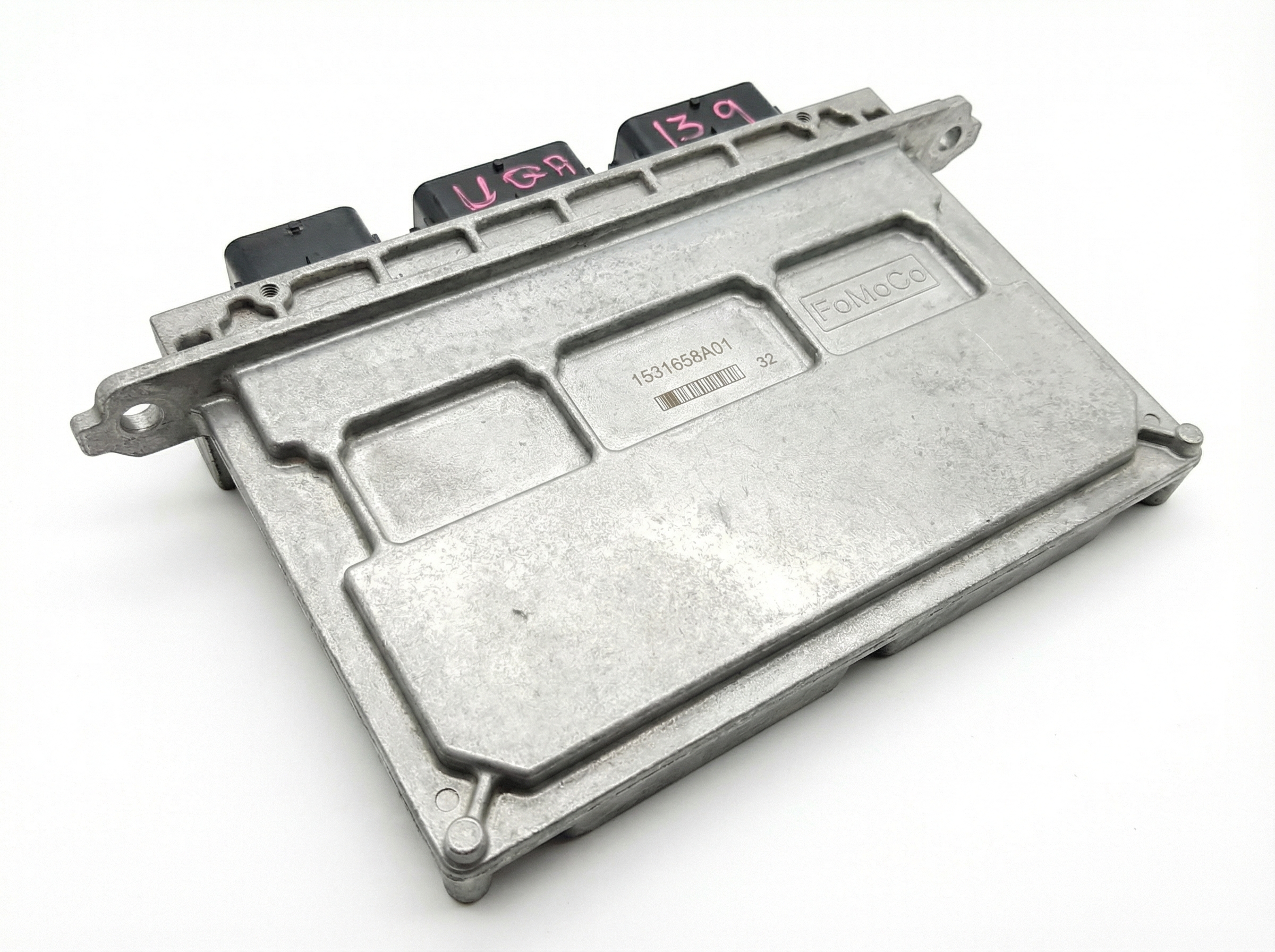
Used OEM Parts in Stock
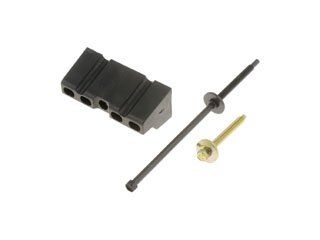
New Aftermarket Parts Available


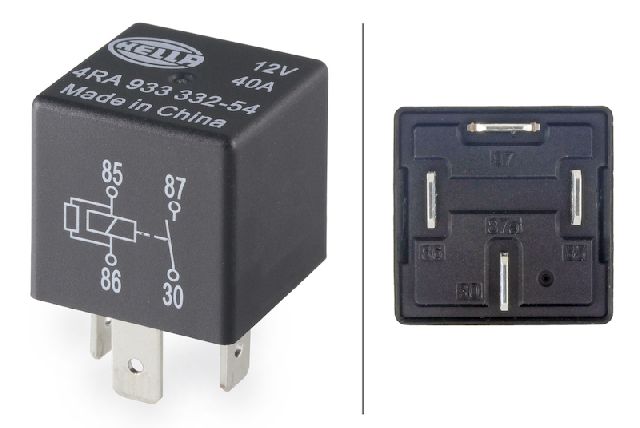

The information in this article is provided for general reference and educational purposes only. Vehicle specifications, procedures, and part compatibility can vary by production date, trim level, and region. Always consult your vehicle's factory service manual and verify part numbers before purchasing or performing repairs. Safety-critical components such as airbags, seat belts, and braking systems should be installed by a qualified professional.
- Ford Edge:
- 🧭 Diagnostic Flowchart
- 🎬 Helpful Videos
- 🛍️ Shop This Part
- What's Unique About the 2011-2014 Ford Edge
- Symptoms You May Notice
- Most Likely Causes
- Diagnosis Steps
- Parts You'll Likely Need
- Related Codes That Often Appear With This One
- Technical Service Bulletins (TSBs) & Recalls
- Mechanic-Grade Diagnostic Values
- Scan Tool Commands That Help
- Wiring & Ground Locations
- Real Owner Repair Stories
- Other Known Issues on This Vehicle
- Used vs. New Parts: Buying Guide for This Vehicle
- Real Owner Stories
- 2011-2014 Ford Edge 3.5L
- Related OBD-II Codes
- Frequently Asked Questions
- 🎟️ Get 5% Off