

P0607 on 2011-2018 Ford Focus 2.0L: Control Module Performance Causes and Fixes
On a 2011-2018 Ford Focus, code P0607 is most often caused by poor ground connections, a weak battery, or a failing Powertrain Control Module (PCM). Before replacing the expensive PCM, thoroughly inspect and clean the main chassis grounds under the airbox, as this is a very common and inexpensive fix that resolves the issue for many owners.
- P0607 is a critical code on the Ford Focus that indicates an internal PCM problem, and the vehicle should not be driven.
- The most common and vehicle-specific cause is a poor ground connection under the air filter box. This should be the first thing you check and fix.
- Always test the battery and alternator to rule out low voltage before considering more expensive repairs.
- If grounds and voltage are good, the PCM may have failed. Replacement requires professional programming to match the vehicle's VIN and security system.
What's Unique About the 2011-2018 Ford Focus
The third-generation Ford Focus (2011-2018) is known for having sensitive electronics and, more specifically, problematic grounding points. Many of the electrical issues that plague these cars, including symptoms related to the infamous DPS6 automatic transmission, have been traced back to corroded or insufficient grounds located under the air filter box. Therefore, while P0607 points to an internal PCM failure, on this particular car, an external electrical issue like a bad ground is a highly probable root cause that must be ruled out first. Some ECU repair specialists note a design flaw in the Delphi-made ECUs used in some Mk3 Focus models that makes them prone to failure, leading to no-start conditions.
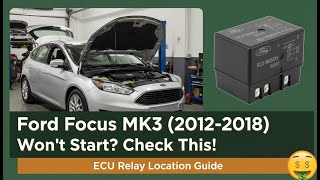
🎬 Watch: Locate and check the ECU relayGeneration note: This covers the entire third generation (C346) of the Ford Focus, including the pre-facelift (2012-2014) and post-facelift (2015-2018) models. No significant differences in the cause or diagnosis of this code have been noted between the facelifts. However, earlier models within this generation were particularly noted for ECU design flaws.
Symptoms You May Notice
- Check Engine Light is on
- "Engine Malfunction" or "Transmission Malfunction Service Now" message on the dash display
- Engine stalls unexpectedly, sometimes while driving
- No-start or hard starting condition
- Vehicle enters 'limp mode,' with reduced power and limited RPM
- Rough or erratic idle
- Harsh or erratic shifting on automatic transmission models
- Multiple warning lights (ABS, Brake, etc.) flickering intermittently
- Replacing the throttle body. While throttle-related codes like P2110 often appear with P0607, the root cause is often the PCM's inability to control the throttle, not a faulty throttle body itself. One owner on a forum reported a dealer replaced the throttle body, which did not fix the issue.
- Replacing the transmission control module (TCM). While ground issues can cause TCM faults, if P0607 is present, the problem is more likely with the PCM or its core electrical supply. TSB 16-0129 addresses TCM issues but with different codes (U0100, P0606).
Most Likely Causes
- Poor or Corroded Ground Connections 🔴 High Probability The main chassis ground points on the Focus are located under the airbox in an area prone to moisture and are often poorly prepared from the factory, with paint inhibiting a good connection. This is a well-documented issue across owner forums.
How to confirm: Remove the airbox assembly to access the ground points on the inner fender. Check for looseness or corrosion. Perform a voltage drop test on the ground cable; resistance should be below 0.1 Ω.
Typical fix: Disconnect the battery. Unbolt the ground wires, clean the terminals, the bolt, and the chassis contact point down to bare metal using a wire brush or sandpaper. Re-secure the connections tightly and apply a dielectric grease or protective coating to prevent future corrosion.
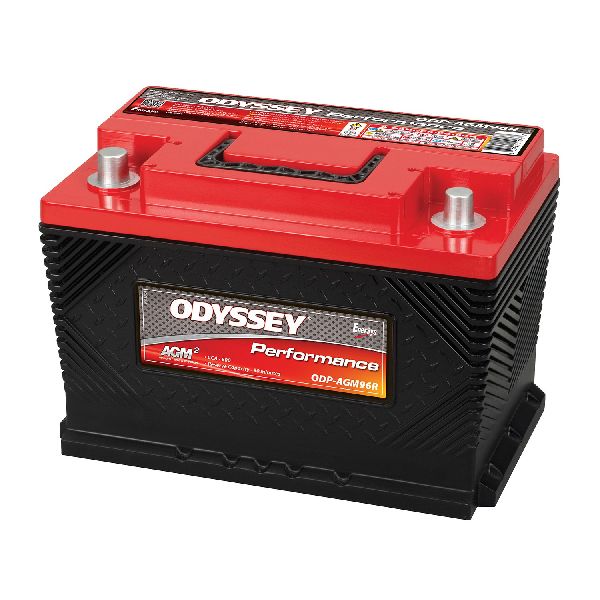
Est. part cost: $0-$10 - Failing Battery or Alternator 🟡 Medium Probability → Shop Alternator Low voltage can cause the PCM to fail its internal self-tests, triggering a P0607 code even if the module is not faulty. This is a common cause across many modern vehicles with sensitive electronics.
How to confirm: Test the battery voltage with the engine off; it should be at least 12.4V. With the engine running, test the alternator output; it should be between 13.7V and 14.7V. Many auto parts stores will test your battery and alternator for free.
Typical fix: Replace the weak battery or failing alternator.
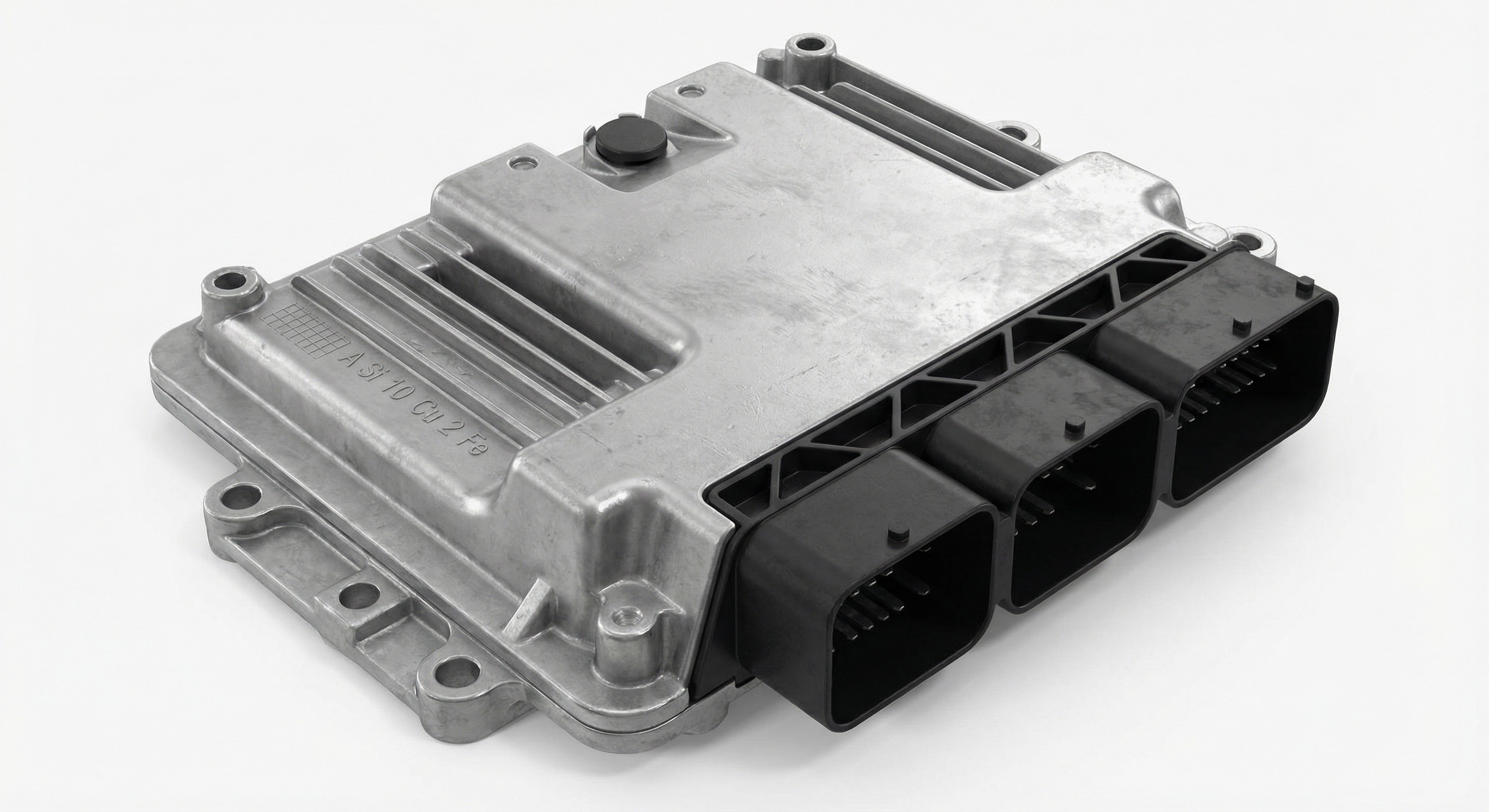
Est. part cost: $150-$400 - Powertrain Control Module (PCM) Failure 🟡 Medium Probability → Shop Engine Control Module (ECM) Internal components can fail from heat, vibration, or age. Some earlier Focus models were noted to have ECU design flaws, particularly Delphi-manufactured units. Moisture intrusion is another cause of internal failure.
How to confirm: This is a process of elimination. If all power sources, ground connections, and wiring to the PCM have been verified as good, and the code persists, the PCM itself is the likely culprit. A dealership or qualified shop may attempt a software reflash first.
Typical fix: Replace the PCM. The new module must be programmed to the vehicle's VIN and key information. This typically requires dealer-level tools or a specialized service.
Est. part cost: $200-$800
Rare But Worth Checking
- PCM Software Corruption: A voltage spike from a jump-start or a failed software update can corrupt the PCM's software, triggering P0607. A software reflash by a dealer might resolve the issue without needing to replace the hardware.
- Damaged PCM Wiring Harness: While not common, wires leading to the PCM can become chafed, corroded, or damaged, causing intermittent power or data loss. A visual inspection of the harness is warranted.
Diagnosis Steps
- Scan for all diagnostic trouble codes. Note any other codes that appear alongside P0607, especially P2110 or P2107.
- CRITICAL FIRST STEP: Test the battery and charging system. Ensure battery voltage is above 12.4V (engine off) and alternator output is 13.7-14.7V (engine on). A weak battery is a common cause.
- Disconnect the battery. Remove the air filter housing to gain access to the main ground points on the driver's side inner fender.
- Unbolt the main battery ground cable and any other grounds attached at this location. Clean the wire terminals, the bolt, and the chassis surface to bare metal. This is the most common fix reported in owner forums.
- Reassemble securely and apply a protective coating. Clear codes and re-test the vehicle.
- If the code returns, inspect the PCM connectors for corrosion or damage. Check the power and ground circuits at the PCM connector using a multimeter and a wiring diagram.
- If all wiring, power, and grounds are confirmed good, the next step is to attempt a PCM software reflash at a dealership or qualified shop.
- If a reflash does not work or is not possible, the PCM has likely failed and needs to be replaced and programmed.
Parts You'll Likely Need
- Powertrain Control Module (PCM)
(OEM #CM5A-12A650-AFA, CU7A-12A650-PC (Examples for 2012 model, many variations exist))— This is the part that is replaced if all external electrical issues are ruled out. The internal failure of the module is the final diagnostic conclusion.
Trusted brands: Motorcraft, Bosch
OEM price range: $700-$1100
Aftermarket price range: $200-$500 - Battery Ground Cable
(OEM #CV6Z-14300-A (Example, part varies by year/model))— If the cable itself is heavily corroded or frayed, cleaning the connection point may not be enough. A bad cable can cause a voltage drop and trigger the code.
Trusted brands: Motorcraft, Standard Motor Products
OEM price range: $50-$100
Aftermarket price range: $25-$60
Related Codes That Often Appear With This One
- P2110 — Throttle Actuator Control System - Forced Limited RPM. This code is often triggered by the PCM as a failsafe when it detects an internal error (like P0607) and puts the car in 'limp mode'. Multiple forum posts confirm these two codes appearing together.
- P06B8 — Internal Control Module Non-Volatile Random Access Memory (NVRAM) Error. This code, along with P0607, strongly indicates an internal hardware or memory fault within the PCM.
- P0884 — TCM Power Input Signal Intermittent. This can be caused by the same poor power or ground issues that trigger P0607, affecting multiple modules simultaneously.
- P2107 — Throttle Actuator Control Module Processor. This code is also related to the electronic throttle control system and often appears with P0607 and P2110, pointing towards a PCM-level failure to control the throttle system.
Technical Service Bulletins (TSBs) & Recalls
- TSB 16-0129: Addresses no-start, loss of power, and engagement loss in vehicles with the DPS6 transmission, but points to different codes (U0100, U0101, P0606) and a TCM replacement, not directly P0607.
- TSB 16-0109: Supersedes TSB 15-0120 and deals with clutch shudder on DPS6 transmissions, requiring a PCM/TCM software update as part of the procedure. While not a direct fix for P0607, it highlights the interconnectedness of the modules.
- TSB 21-2086: A manufacturer bulletin for other Ford models (F-150) notes that P0607 may be stored in the PCM due to various software parameters within the module, requiring a software update to correct the condition.
- TSB 24-2310: Documents that vehicles may exhibit an illuminated MIL or wrench indicator with DTC P0607:45 stored in the PCM, sometimes with no other driveability symptoms.
Platform-Specific Known Issues
- The 2011-2018 Focus is well-known for having poor chassis ground connections from the factory, often with paint left on the contact surface under the bolt. This is a primary suspect for any electrical fault on this platform.
- A user on FocusFanatics.org described a classic P0607 scenario where the car would enter limp mode with the 'Engine Malfunction' light, which was ultimately resolved by cleaning the ground points under the airbox.
Mechanic-Grade Diagnostic Values
- PCM Power Pins Voltage (Key ON) — expected: 12.2 V ± 0.5 V. Failure: Voltage below the specified range indicates a power supply issue from the battery, fuses, or wiring.
- PCM Ground Circuit Resistance — expected: Below 0.1 Ω. Failure: Resistance above 0.1 Ω indicates a poor ground connection, which is a very common cause for P0607 on this vehicle.
- Battery Voltage (Engine Off) — expected: 12.4V or higher. Failure: A lower voltage suggests a weak or discharged battery, which can cause the PCM to fail its self-test.
- Alternator Output (Engine Running) — expected: 13.7V to 14.7V. Failure: Voltage outside this range indicates a charging system problem that can lead to unstable power for the PCM.
Scan Tool Commands That Help
- Ford IDS (Integrated Diagnostic System): Programmable Module Installation (PMI) — This function is used when replacing the PCM. It allows the technician to transfer configuration data from the old PCM to the new one, or to manually set up a new PCM if the old one is non-communicative.
- Ford IDS (Integrated Diagnostic System): Module Reprogramming — Used to reflash the PCM with updated software from Ford. This can sometimes fix corruption issues that trigger P0607 without requiring hardware replacement.
- Ford IDS or compatible J2534 tool: Parameter Reset (PATS) — This is a critical security function required after installing a used or new PCM. It synchronizes the immobilizer system (PATS) between the PCM and the vehicle's keys, allowing the engine to start. Failure to perform this will result in a no-start condition.
- Ford IDS (Integrated Diagnostic System): Self-Test (KOEO/KOER) — Running the Key-On-Engine-Off (KOEO) and Key-On-Engine-Running (KOER) self-tests can help verify if the P0607 code is hard-set or intermittent and check for other related faults.
Wiring & Ground Locations
- G104 / G105 — Located on the driver's side inner fender, underneath the air filter box assembly.. These are the primary chassis ground points for the PCM and other critical electronic modules. They are notoriously prone to corrosion and poor contact from the factory, making them the number one suspect and first check for P0607 and other electrical faults on this vehicle.
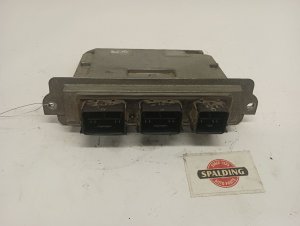
- PCM Location — Behind the driver's side front wheel well liner. Access requires removing the wheel and liner.. Knowing the physical location is necessary for inspection of the module and its connectors for physical damage or water intrusion, and for replacement if it is condemned.
- C175B — This is the main, large electrical connector for the Powertrain Control Module (PCM).. All power, ground, and signal wires for the PCM pass through this connector. Technicians must use a pinout diagram for C175B to perform voltage and resistance checks directly at the PCM, which is the definitive way to confirm if the module is receiving proper power and ground before condemning it.
- ECU/PCM Power Relay (R14) — In the under-hood fuse box, typically labeled as relay R14.. This relay supplies the main operating power to the PCM. A faulty or intermittent relay will cut power to the computer, causing stalling, no-start conditions, and potentially a P0607 code. It's a simple and inexpensive part to check and swap before diagnosing the PCM itself.
Real Owner Repair Stories
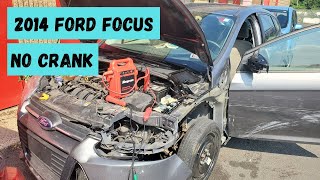
- YouTube user 'Flying Wheels' (2014 Ford Focus) — No crank, no start. No communication with the PCM. The check engine light would not illuminate during the initial key-on self-check, a key indicator of PCM communication failure.
❌ Tried (didn't work) Checking main fuses (they were all good).
✅ What actually fixed it The PCM was damaged by a reverse polarity jump-start. The faulty PCM brought down the entire CAN bus network. Disconnecting the main engine harness connector restored network communication with other modules, isolating the fault to the PCM/TCM circuit. The PCM had to be replaced and cloned from the damaged original to resolve the issue. - YouTube user 'JOATD' (Ford Focus (Year not specified, Mk3 generation)) — Check engine light with code P2610 (ECM/PCM Engine Off Timer Performance), which is closely related to internal PCM self-test failures like P0607.
❌ Tried (didn't work) Standard code clearing.
✅ What actually fixed it A hard reset of the PCM was performed by disconnecting both battery terminals and connecting them together with a jumper wire for 10 minutes. This procedure fully drains the capacitors within the module (Keep Alive Memory - KAM), forcing a complete reboot. This cleared the persistent internal timer fault.
Diagnostic Flowchart
Other Known Issues on This Vehicle
Issues unrelated to this code that are worth knowing about as an owner of this generation:
- DPS6 'PowerShift' Automatic Transmission Failure 🔴 High — Extremely common on 2012-2016 models with the automatic transmission. Symptoms include shuddering, hesitation, and outright failure to engage gears. (Ref: Multiple TSBs exist, including 16-0109 and 16-0129, and numerous warranty extensions and a class-action lawsuit were initiated.)
- Faulty Canister Purge Valve 🟠 Medium — Common on 2012-2018 models, leading to a check engine light, rough idle, and difficulty starting after refueling. (Ref: Ford issued recall 18S32 (NHTSA campaign 18V735) because a stuck valve could deform the fuel tank.)
- Collapsing/Failing Engine Mounts 🟠 Medium — The passenger-side hydraulic motor mount is known to fail prematurely, causing excessive vibration and noise at idle and during acceleration.
- Electric Power Steering Failure 🔴 High — Some models experienced sudden loss of power steering assist. This led to a recall. (Ref: Recall 14S18 for some 2014 models due to improperly assembled steering gears. Another program existed to update software to prevent loss of assist.)
Used vs. New Parts: Buying Guide for This Vehicle
When a used part is the smart pick: A used PCM from a junkyard is a viable and cost-effective option for this vehicle, but ONLY if you have access to a professional with the correct tools and expertise. The key is the ability to either 'clone' the original PCM's data to the used one or perform a 'Parameter Reset' with Ford's IDS software.
Donor-vehicle mileage cap: roughly under 120000 miles for the part to have meaningful remaining life.
What to inspect on the donor part:
- Match the part number EXACTLY. There are many variations of PCMs for these cars.
- Source the part from a vehicle with a similar build date if possible.
- Inspect the donor PCM's connectors for any signs of corrosion, bent pins, or water damage.
- Choose a donor vehicle that was not involved in a front-end collision or flood, as the PCM is located in a vulnerable area.
OEM-only on this vehicle (don't cheap out):
- Powertrain Control Module (PCM). While you can use a used OEM part, avoid non-reputable aftermarket 'rebuilt' units without a lifetime warranty and clear programming instructions. The programming is more critical than the hardware itself.
Aftermarket brands forum-validated for this vehicle:
- Flagship One (FS1)
- AutoECU
Brands owners have reported issues with on this vehicle:
- Generic, unbranded units from online marketplaces without a warranty or programming support.
Real Owner Stories
Aggregated from forums and TSBs cited above. Mileages and costs reflect what owners reported in those sources.
2015 Ford Focus
Symptoms: No reverse gear, high revs before shifting gears, aggressive clicking noise from the TCM/transmission area, and the car entering limp mode after installing a used TCM. Codes P087A and P0607 were present.
What fixed it: The owner was in the process of replacing both the ECM (PCM) and the TCM after several diagnostic dead ends including replacing actuator B and the clutch assembly.
Source hint: Reddit r/MechanicAdvice - Ford Focus 2015 No reverse High Revv before changing gears
2011-2018 Ford Focus 2.0L
Symptoms: The car would enter limp mode accompanied by an 'Engine Malfunction' light on the dashboard display.
What fixed it: Cleaning the ground points located under the airbox assembly down to bare metal.
Source hint: FocusFanatics.org user description
2007 Ford Focus
Symptoms: P0607 appeared alongside P2110, leading to limp mode. A dealer initially misdiagnosed the issue as a faulty throttle body.
What fixed it: The PCM was suspected as the culprit after the throttle body misdiagnosis.
Source hint: Ford Focus Club / Ford Owners Club
Documented NHTSA Reports
Ford Owner Report
Symptoms: An owner reported experiencing erratic and harsh shifting while on the highway. Diagnostic codes P0606 and P0607 (PCM Processor Faults) were found alongside transmission range sensor issues.
Source hint: NHTSA ODI #11715240
Ford Owner Report
Symptoms: A vehicle was found with diagnostic codes P0607, P060A, P1674, and P2105. The owner stated the vehicle should have been included in a recall.
Source hint: NHTSA ODI #11029690
Ford Owner Report
Symptoms: An owner noted that despite having over 14 volts charging from the alternator to the battery, the DTC code P0607 persisted, indicating control module failure or corruption.
Source hint: NHTSA ODI #11383975
Related OBD-II Codes
Frequently Asked Questions
Does TSB 16-0129 or TSB 16-0109 provide a direct fix for the P0607 code on my Ford Focus?
I'm seeing 'Engine Malfunction' and 'Transmission Malfunction Service Now' on my 2012 Focus dash. Is this related to P0607?
Why is the chassis ground under the airbox a suspected cause for P0607 on the Focus?
Can a bad battery trigger a P0607 code even if my PCM is actually fine?
Is there a recall for the electrical issues causing P0607 on my 2014 Focus?
If I need to replace my PCM to fix P0607, can I just plug in a new one?
Helpful Videos
Used OEM Parts in Stock
New Aftermarket Parts Available

The information in this article is provided for general reference and educational purposes only. Vehicle specifications, procedures, and part compatibility can vary by production date, trim level, and region. Always consult your vehicle's factory service manual and verify part numbers before purchasing or performing repairs. Safety-critical components such as airbags, seat belts, and braking systems should be installed by a qualified professional.
- Ford Focus:
- 🧭 Diagnostic Flowchart
- 🎬 Helpful Videos
- 🛍️ Shop This Part
- What's Unique About the 2011-2018 Ford Focus
- Symptoms You May Notice
- Most Likely Causes
- Rare But Worth Checking
- Diagnosis Steps
- Parts You'll Likely Need
- Related Codes That Often Appear With This One
- Technical Service Bulletins (TSBs) & Recalls
- Platform-Specific Known Issues
- Mechanic-Grade Diagnostic Values
- Scan Tool Commands That Help
- Wiring & Ground Locations
- Real Owner Repair Stories
- Other Known Issues on This Vehicle
- Used vs. New Parts: Buying Guide for This Vehicle
- Real Owner Stories
- 2015 Ford Focus
- 2011-2018 Ford Focus 2.0L
- 2007 Ford Focus
- Documented NHTSA Reports
- Ford Owner Report
- Ford Owner Report
- Ford Owner Report
- Related OBD-II Codes
- Frequently Asked Questions
- 🎟️ Get 5% Off