

P0607 on 2019-2025 Jeep Wrangler: ECU Performance Fault Causes & Fixes
P0607 on a 2019-2025 Jeep Wrangler indicates an 'ECU Internal Performance' fault. For 4xe hybrid models, the most common fix is a multi-module software update. For all models, it can also mean a failing PCM, a weak 12V battery, a poor ground connection, or a failing alternator. Checking the battery and ground connections is the first step before considering a costly PCM replacement.
- P0607 means the main engine computer (PCM) has detected an internal fault.
- On a Jeep Wrangler 4xe, the first step should always be to check for available software updates, as this is a very common fix.
- Before condemning the expensive PCM, thoroughly test the 12V battery and inspect all main power and ground connections for tightness and corrosion.
- This is not a DIY-friendly repair. Diagnosis and potential PCM replacement/programming should be handled by a professional.
What's Unique About the 2019-2025 Jeep WRANGLER

On the 2019-2025 Jeep Wrangler, P0607 appears frequently in Technical Service Bulletins (TSBs) for the 4xe Plug-in Hybrid (PHEV) model. In this context, the code is often linked to hybrid battery system issues and is resolved by a comprehensive software update to multiple modules including the Battery Pack Control Module (BPCM), PCM, and others, rather than a single hardware failure. [Bulletin #0825023, Bulletin #0805023, 19] For non-hybrid models, owner forums report that the code can be triggered by simple electrical issues like poor grounds or a weak battery. A recurring owner complaint is finding ground bolts with paint on the contact surface from the factory, which must be cleaned to bare metal for a proper connection.
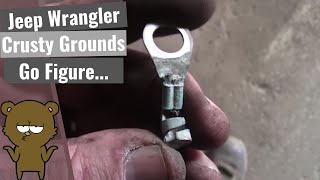
🎬 Watch: How to find and fix common Jeep ground issues.Diagnostic Flowchart

Tap your situation to follow the diagnostic path that matches what you're seeing on this vehicle.
Symptoms You May Notice

- Check Engine Light (Malfunction Indicator Lamp) is on
- Engine stalling or stuttering, sometimes while driving
- Reduced engine power or sluggish acceleration
- Vehicle enters 'Performance Limitation' mode [Bulletin #1807023]
- Difficulty starting the engine or a no-start condition
- Erratic or harsh transmission shifting
- Poor fuel economy
- Unseated fuses in the fuse box; some owners report finding multiple fuses not fully pushed in from the factory.
- Replacing sensors (like O2 sensors) that have set codes alongside P0607. Often, the sensor codes are a symptom of the PCM's inability to process data correctly, not the root cause. [Bulletin #23-019-25 REV. B]
Most Likely Causes

- Control Module Software Update Needed 🔴 High Probability Multiple TSBs for the Wrangler 4xe specifically call for software updates to fix this code when it appears with hybrid battery system faults. [Bulletin #0825023, Bulletin #0805023, Bulletin #0804823, 19] Forum users with standard engines also report that dealers identified a known software issue requiring a PCM update.
How to confirm: A dealership or qualified shop can check for available TSBs and software updates for your vehicle's VIN using the wiTECH diagnostic tool.
Typical fix: Reprogramming (flashing) the Powertrain Control Module (PCM) and, on 4xe models, other related modules like the BPCM, TCM, and PIM with the latest software.
Est. part cost: $0 (if under warranty) - $200 - Weak or Defective 12V Battery 🟡 Medium Probability → Shop Vehicle Battery Modern Jeeps are extremely sensitive to voltage. A weak battery can cause voltage drops during startup or ESS events that lead to unpredictable behavior in control modules, falsely triggering an internal performance code even on a brand new vehicle.
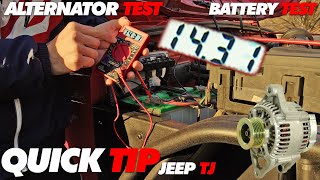
How to confirm: Test the battery voltage with a multimeter. It should be above 12.4V with the engine off and between 13.5V and 14.5V with the engine running. A simple voltage test is not enough; a load test is required to confirm the battery's health.
Typical fix: Replace the 12V AGM battery.
Est. part cost: $150-$350 - Poor Power or Ground Connections 🟡 Medium Probability Forum discussions on JL Wranglers specifically mention finding loose or corroded ground straps, with a notable issue being paint preventing a good connection from the factory. A bad ground can cause erratic module behavior and trigger the P0607 code.
How to confirm: Visually inspect all main battery cables, chassis grounds, and the wiring harness connectors at the PCM for looseness, corrosion, or damage. Check ground resistance with a multimeter; it should be less than 0.1 Ω. A specific forum user had their dealer find and fix a painted-over ground connection to resolve the code.
Typical fix: Clean, tighten, or replace the faulty ground straps or battery terminals. Ensure ground connection points are scraped to bare metal.
Est. part cost: $5-$50 - Failing Powertrain Control Module (PCM) ⚪ Low Probability → Shop Engine Control Module (ECM) While it's the direct definition of the code, actual hardware failure is less common than software or electrical supply issues. However, if all other causes are ruled out, the PCM itself has likely failed internally due to issues like thermal stress or moisture intrusion.
How to confirm: This is a process of elimination. If the battery, grounds, and software are all confirmed to be good, the PCM is the prime suspect. A technician may use an advanced scan tool to perform a module self-test.
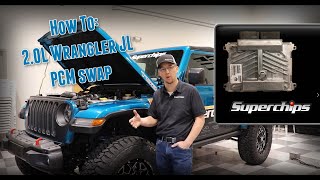
Typical fix: Replace the PCM and program the new unit to the vehicle's VIN and options. This must be done by a dealer or a specialized shop. 🎬 Watch: Step-by-step guide to swapping out your Wrangler's PCM.
Est. part cost: $500-$1200
Rare But Worth Checking
- Failing Alternator: → Shop Alternator
Diagnosis Steps
- Scan the vehicle for all DTCs. Note any other codes that are present alongside P0607, especially on 4xe models.
- Check for any applicable Technical Service Bulletins (TSBs) for your vehicle's VIN. Prioritize any software updates recommended by the TSBs, as this is a very common fix.
- Thoroughly inspect the 12V battery. Test its state of charge (should be >12.4V) and running voltage (13.5V-14.5V). Crucially, perform a load test to verify its health, as voltage alone can be misleading.
- Inspect all battery terminals and main chassis ground connections. Ensure they are clean, tight, and free of corrosion. A common issue on JL Wranglers is a painted ground connection point that needs to be cleaned to bare metal.
- Check all fuses in the engine bay fuse box. Owners have reported finding multiple fuses that were not fully seated from the factory, causing various electrical gremlins.
- Inspect the PCM wiring harness and connectors for any signs of damage, moisture, or looseness.
- If a software update is available (especially on 4xe models), have a dealer or qualified shop perform the reflash. Note that TSBs may require updating multiple modules in a specific sequence.
- If all power/ground inputs are good and software is up to date, the PCM is the most likely failed component and should be replaced by a professional.
Parts You'll Likely Need
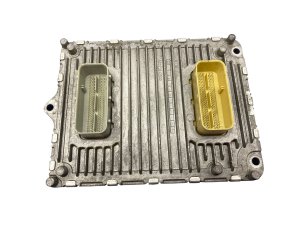
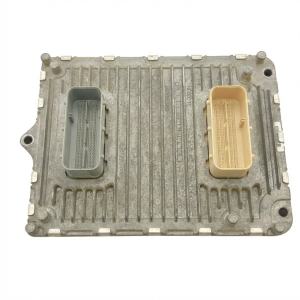
- Powertrain Control Module (PCM)
(OEM #68434927AC (supersedes 68434927AA, 68434927AB for 3.6L w/ eTorque); 68501523AD (supersedes 68501523AA-AC for 3.6L); 68434929AC (supersedes 68434929AA, 68434929AB for hybrid))— This is the component that has failed if the code is set due to an actual internal hardware fault. Replacement is the final step after ruling out software and electrical issues.
Trusted brands: Mopar
OEM price range: $800-$1200
Aftermarket price range: $500-$900 - 12V AGM Battery
(OEM #BA48F680AB; BBH7A001AA)— A weak or failing battery is a common cause of voltage-related module errors that can trigger a P0607 code.
Trusted brands: Mopar, Odyssey, NorthStar, ACDelco
OEM price range: $250-$400
Aftermarket price range: $150-$350
Related Codes That Often Appear With This One
- P0C78-00 — On 4xe models, this indicates a hybrid battery precharge issue, and a TSB directs technicians to update software to resolve both codes. [Bulletin #0825023]
- P1A21-00 — On 4xe models, this points to an incorrect HV battery contactor sequence, often appearing with P0607 and resolved by a software update. [Bulletin #0805023, Bulletin #0804823, 19]
- P2172 — This 'High Airflow/Vacuum Leak Detected' code can appear with P0607, suggesting the PCM is struggling to manage air/fuel calculations. [Bulletin #1807023]
- P0131 — An O2 sensor circuit low voltage code that can be triggered by a malfunctioning PCM, as noted in a TSB. [Bulletin #23-019-25 REV. B]
Technical Service Bulletins (TSBs) & Recalls
- Bulletin #23-019-25 REV. B: Associates P0607 with O2 sensor and injector circuit codes.
- Bulletin #0825023: Links P0607 to a hybrid battery precharge time code on 4xe models and advises a BPCM software update.
- Bulletin #0805023 & #0804823: Connects P0607 with various PHEV battery codes (contactor sequence, voltage sense) and requires a multi-module software update (PCM, BPCM, TCM, etc.) to resolve.
- Bulletin #1807023: Lists P0607 with vacuum leak and EVAP system codes, pointing to performance limitations.
- Bulletin #1811422: Groups P0607 with crankshaft position sensor codes and other performance codes on 2019 models.
Platform-Specific Known Issues
- For Wrangler 4xe models, P0607 is frequently associated with hybrid battery system DTCs and is often resolved by a multi-module software update as per TSBs #0825023, #0805023, and #0804823.
- Some owners on forums have reported chasing the P0607 code for extended periods, even after battery and PCM replacement, suggesting complex wiring or software issues that are difficult for dealerships to resolve.
Mechanic-Grade Diagnostic Values
- PCM Power Pin Voltage (Key On) — expected: 12.2 V ± 0.5 V. Failure: Voltage outside of this range indicates a power supply issue to the module.
- PCM Ground Circuit Resistance — expected: < 0.1 Ω. Failure: Resistance higher than 0.1 Ω indicates a poor ground connection that can cause erratic module behavior.
- Battery Voltage (Engine Off) — expected: > 12.4V (ideally 12.6V+). Failure: A reading below 12.4V suggests a discharged or failing battery, which is a common cause of module codes.
- Charging System Voltage (Engine Running) — expected: 13.5V - 14.5V. Failure: Voltage outside this range points to an issue with the alternator or charging system, which can create instability for the PCM.
Hidden / Shadow Codes Worth Checking
- P0607-00: The '-00' is a status byte used by Chrysler/Jeep's diagnostic system. While not a 'hidden' code in itself, its presence in multiple TSBs alongside other specific hybrid codes (like P1A21-00, P0C78-00) indicates a known software-related pattern, especially on 4xe models, that is resolved by a multi-module flash. (see via A professional scan tool like wiTECH will display the full code with the status byte. [Bulletin #0825023, Bulletin #0805023])
Scan Tool Commands That Help
- wiTECH 2.0: PCM Replace — When installing a new or used PCM. This function writes the vehicle's VIN to the new module and transfers the secret security key from the Wireless Control Module (WCM) to allow the vehicle to start.
- wiTECH 2.0: Reprogram Module (Flash) — Used to update the software calibration of the PCM and other modules (BPCM, TCM, etc.). This is the primary fix for P0607 on 4xe models as dictated by numerous TSBs. The tool connects to FCA's servers to download the correct software for the vehicle's VIN.
Wiring & Ground Locations
- G905A / G906A / G906B — These are primary grounds for the 'DASH' harness family, located in the driver and passenger footwell areas, typically behind kick panels.. The PCM and other critical interior modules rely on these grounds. A loose or corroded connection at these points can cause a wide range of electrical issues, including the P0607 code. Forum users frequently report electrical issues are traced back to poor grounds in these areas.
- G101 (WJ reference) — On older Jeeps, this is a critical ground behind the passenger headlight. While JL diagrams use different numbering, the principle is the same: a main body ground near the battery is essential.. A poor main ground between the battery, body, and engine block can cause system-wide voltage instability, a known trigger for P0607. One owner's fix involved cleaning a painted-over ground bolt.
- PCM Connectors — The PCM is located in the engine bay. Its connectors are a critical point of failure.. Moisture intrusion or pin corrosion at the main PCM connectors can directly cause internal performance faults, triggering P0607. A visual inspection of the connector pins for green/white corrosion is a necessary diagnostic step.
Real Owner Repair Stories
- jlwranglerforums.com user 'ChaosJeep' (2020 Jeep Wrangler Unlimited Sahara) — Check Engine Light with code P0607 appeared one week after purchasing the vehicle new.
❌ Tried (didn't work) Owner checked battery terminals, which appeared fine.
✅ What actually fixed it The dealership service department found a ground connection bolt that still had paint on its contact surface from the factory. They cleaned the paint off to get a bare metal connection, which cleared the P0607 code permanently. - Reddit user r/Jeep (2020 Jeep JL Sahara) — P0607 code appears consistently only after refueling, then clears on its own after some driving.
❌ Tried (didn't work) Replacing the 12V battery.
✅ What actually fixed it The user's post is a request for help and does not have a final resolution, but it highlights an unusual trigger pattern (refueling) that could point towards an EVAP system issue or wiring problem near the fuel tank that is coincidentally affecting the PCM. - jlwranglerforums.com user 'Mamallama' (2020 Wrangler Unlimited Altitude) — Recurring P0607 code since the vehicle had only 200 miles.
❌ Tried (didn't work) PCM replacement, Battery replacement
✅ What actually fixed it The owner reported that even after the PCM and battery were replaced, the code returned. The vehicle had been in the shop for over 30 days without a fix. This story highlights that P0607 can sometimes be a persistent, difficult-to-diagnose issue beyond the most common causes, likely stemming from a complex wiring harness or software incompatibility problem.
OEM Part Supersession History
68434929AA, 68434929AB→68434929AC— Standard part revision to address hardware or software compatibility issues.
Heads up: The latest part number (AC) should be used for all replacements. Using older stock could re-introduce issues that were fixed in later revisions. This part is specific to the 3.6L V6 Hybrid Engine.
Model Year Variations Within This Range
- 2021-2023: A significant recall (NHTSA ID ZB7 / 22V865000) was issued for 62,909 Wrangler 4xe models built between Sept 2, 2020, and Aug 17, 2022. A software issue could cause a loss of communication between the TCM, HCP, and AHCP, leading to an unexpected engine shutdown. The fix was a multi-module software update. Vehicles built after August 17, 2022, already had the updated software. This underlying software instability could be a major contributor to P0607 codes on these specific model years.
Helpful Videos
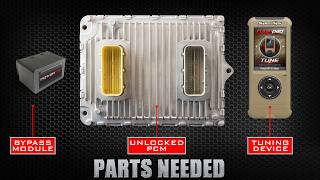
We Have This Part in Stock
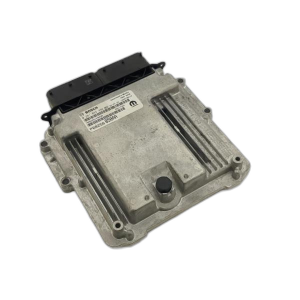
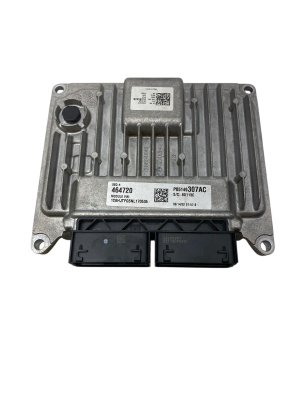
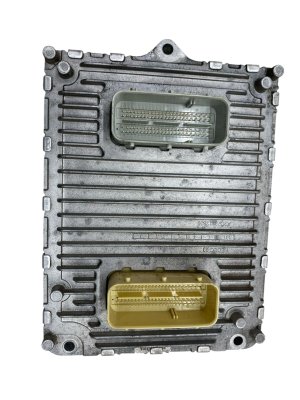

The information in this article is provided for general reference and educational purposes only. Vehicle specifications, procedures, and part compatibility can vary by production date, trim level, and region. Always consult your vehicle's factory service manual and verify part numbers before purchasing or performing repairs. Safety-critical components such as airbags, seat belts, and braking systems should be installed by a qualified professional.
- Jeep WRANGLER:
- 🧭 Diagnostic Flowchart
- 🎬 Helpful Videos
- 🛍️ Shop This Part
- What's Unique About the 2019-2025 Jeep WRANGLER
- Symptoms You May Notice
- Most Likely Causes
- Rare But Worth Checking
- Diagnosis Steps
- Parts You'll Likely Need
- Related Codes That Often Appear With This One
- Technical Service Bulletins (TSBs) & Recalls
- Platform-Specific Known Issues
- Mechanic-Grade Diagnostic Values
- Hidden / Shadow Codes Worth Checking
- Scan Tool Commands That Help
- Wiring & Ground Locations
- Real Owner Repair Stories
- OEM Part Supersession History
- Model Year Variations Within This Range
- 🎟️ Get 5% Off