

P0607 on 2002-2005 Saab 9-5 2.2 TiD (Y22DTH): Control Module Performance Causes and Fixes
On a 2002-2005 Saab 9-5 with the 2.2 TiD engine, code P0607 almost always indicates a fatal internal failure of the Engine Control Unit (ECU), which is integrated with the injection pump (a Bosch VP44 PSG16 unit). The most common fix is replacing the entire injection pump and ECU assembly, which is a complex and costly repair. Specialist repair of the electronics module is a viable, cheaper alternative.
- P0607 on a Saab 9-5 2.2 TiD is a critical code indicating a failure of the engine control unit.
- The ECU is integrated with the diesel injection pump (Bosch VP44 PSG16), making this a complex and expensive repair.
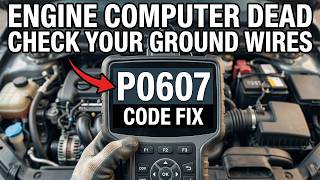
- Before condemning the expensive pump/ECU assembly, thoroughly check the vehicle's battery, charging system, and all ECU power and ground wires (specifically G2 and G25).
- Replacement is not a simple swap; the new unit must be professionally programmed ('married') to the vehicle's immobilizer using a Tech 2 tool.
- Do not drive the vehicle, as the engine could shut down at any time.
- Specialist repair of the electronic module is a common and more affordable alternative to replacing the entire pump assembly.
What's Unique About the 2002-2005 Saab 9-5
The key challenge with the Saab 9-5 2.2 TiD is that the engine control unit is not a separate box but is integrated into the Bosch VP44 (PSG16) high-pressure diesel pump. This design, sourced from Opel/GM, is notorious for failure. When the electronics on top of the pump fail and set a P0607 code, you cannot simply swap the ECU; the entire injection pump and control unit assembly must be addressed. This makes the repair significantly more complex and expensive than on vehicles with a standalone ECU. The failure is often due to microscopic wire bonds inside the PSG16 breaking from years of thermal cycles and vibration.
Symptoms You May Notice
- Check Engine Light is on.
- Engine will not start (cranks but does not fire).
- Engine stalls unexpectedly, possibly while driving.
- Limp Home mode activation.
- Noticeable loss of engine performance.
- Replacing fuel filters, glow plugs, or other fuel system components without first confirming the status of the ECU. 🎬 Watch: Understanding P0607 codes and PCM power issues While these can cause no-start issues, they will not set a P0607 code. A user on a forum questioned if a glow plug module fault could trigger P0607, but the consensus points to the ECU itself.
Most Likely Causes
- Internal Failure of the Injection Pump Control Unit (PSG16) 🔴 High Probability The Bosch VP44 PSG16 pump/ECU combo is a known weak point on many vehicles from this era, including Saabs, Opels, and Vauxhalls with the 2.2 diesel engine. Failures are often due to internal aluminum wire bonds breaking from thermal stress and vibration. A specialist who examined a failed unit confirmed multiple broken internal wires.
How to confirm: After verifying all power and ground connections to the ECU are good, the presence of P0607 almost definitively points to an internal ECU fault. A diagnostic scan with a tool like a Tech 2 will confirm the code is originating from the injection pump control module. If the code returns immediately after being cleared, it indicates a hard, permanent fault.
Typical fix: 1. Replacement of the entire injection pump and control module assembly with a new or remanufactured unit. 2. Sending the original PSG16 module to a specialist repair service. These services can often rebuild the unit by re-bonding the internal connections for a fraction of the cost of a new pump. A replacement unit (new or used) must be programmed ('married') to the car's immobilizer with a Tech 2.
Est. part cost: $500-$1500 - Poor Power or Ground Connections to the ECU 🟡 Medium Probability Over time, engine bay grounds can corrode and main power feeds can become loose, leading to voltage irregularities that can trigger a P0607 code even if the ECU itself is functional. The main battery grounds are G2 (on the left-hand structural member behind the headlamp) and G25 (on the gearbox).
How to confirm: Visually inspect and clean all main battery and chassis ground points, especially G2 and G25. Use a multimeter to verify stable voltage (12.2V+ with key on) and low resistance (<0.1 Ω) on the ECU's main power and ground pins at the harness connector. Jiggle the wiring harness while monitoring to check for intermittent connections.
Typical fix: Clean, tighten, or replace corroded ground straps and battery terminals. Repair any damaged wiring in the ECU harness.
Est. part cost: $10-$50 - Failing Battery or Alternator ⚪ Low Probability → Shop Alternator Any vehicle is susceptible. A weak battery or failing alternator can cause voltage drops during cranking or spikes during operation, which can confuse the ECU's internal self-checks and trigger a P0607.
How to confirm: Test the battery voltage at rest (should be >12.4V) and the alternator output while the engine is running (should be 13.7V-14.7V). Load test the battery to confirm its health, as a battery that holds a surface charge but collapses under load can cause this issue.
Typical fix: Replace the battery and/or alternator.
Est. part cost: $150-$400
Rare But Worth Checking
- Air ingress into the fuel system due to old, hardened rubber seals on the fuel filter housing or injector return lines. While this typically causes starting issues without a P0607, severe cases could potentially stress the pump.
Diagnosis Steps
- Scan the vehicle for all DTCs using a Saab-compatible tool like a Tech 2. Note the P0607 code and any sub-codes (e.g., P0607(B)) or other DTCs present.
- Check and charge the battery. Ensure battery terminals are clean and tight. A healthy, fully charged battery is crucial for accurate diagnosis.
- Test the alternator output to rule out charging system issues. Voltage should be stable between 13.7V and 14.7V with the engine running.
- Inspect all main power and ground connections in the engine bay. Specifically locate, clean, and tighten battery grounds G2 (on the chassis behind the headlamp) and G25 (on the gearbox).
- If possible, access the ECU connector at the injection pump. This may require removing the intake manifold. Check for stable power and a solid ground at the connector pins according to the vehicle's wiring diagram.
- Attempt to clear the code. If it returns immediately upon turning the ignition on, it strongly suggests a hard internal failure of the ECU.
- If all external wiring, power, and grounds are confirmed to be in perfect condition and the P0607 code persists, the injection pump/ECU assembly is faulty and requires replacement or specialist repair.
Parts You'll Likely Need
- Injection Pump with Integrated Control Unit (Bosch VP44 PSG16)
(OEM #Bosch numbers like 0470504207, 0470504217, 0470504224. It is critical to match the part number exactly.)— This is the primary point of failure for a P0607 code on this engine. The electronics module (PSG16) fails internally, requiring the replacement of the entire assembly or repair by a specialist.
Trusted brands: Bosch
OEM price range: $1200-$2000+
Aftermarket price range: $500-$1000 (remanufactured)
Related Codes That Often Appear With This One
- P0606 — This is another code for 'ECM/PCM Processor Fault'. Like P0607, it indicates a severe internal problem with the control unit.
- P1380 — This code relates to a glow plug control module fault. A forum user reported seeing P1380 alongside P0607, questioning if the faults were related or if the P0607 was causing a communication error with the glow plug module.
Platform-Specific Known Issues
- The 2.2 TiD engine uses a Bosch VP44 injection pump with an integrated PSG16 driver module (ECU). These are widely known to fail due to broken internal wire bonds from heat and vibration.
- Replacement of the ECU/pump assembly requires programming ('marrying') the new unit to the car's immobilizer system using a Saab Tech 2 diagnostic tool. A used part cannot be installed without being 'divorced' from the donor car or having its security code reset.
- A popular and cost-effective solution is to remove the PSG16 module from the pump and send it to a specialist for repair. These services are well-known in owner communities and can fix the internal broken wires.
Mechanic-Grade Diagnostic Values
- PSG16 ECU Power Supply Voltage — expected: 12V - 15V with ignition on.. Failure: Voltage below 12V indicates a power supply issue (battery, alternator, wiring) that could trigger P0607.
- PSG16 CAN Bus Terminating Resistor — expected: Approximately 120 Ω. Failure: A reading significantly different from 120 Ω between pins 1 and 2 of the PSG connector indicates a problem with the CAN bus wiring or the terminating resistor.
- Low-Pressure Fuel Supply to VP44 Pump — expected: Approximately 14-15 PSI at idle/cruise.. Failure: Pressure dropping below 10 PSI under load can starve the VP44 pump, leading to overheating of the electronics and eventual failure, though this may not directly set P0607.
- Injection Angle Adjuster Solenoid Resistance — expected: 8-10 Ω. Failure: A reading outside this range, such as 2 Ω, indicates an internal short in the solenoid, which is a component of the VP44 pump assembly.
Hidden / Shadow Codes Worth Checking
- P0607(B): This sub-code, visible with a Saab Tech 2 scanner, specifically points to an internal fault within the PSG16 control module on the injection pump. It effectively rules out external wiring or power supply issues as the primary cause. (see via Saab Tech 2 diagnostic tool.)
Scan Tool Commands That Help
- Saab Tech 2: Service Programming System (SPS) — This function is required after installing a new or used (divorced) PSG16/VP44 pump. It 'marries' the replacement pump to the car's immobilizer by downloading the correct vehicle software and security information to the pump's control module.
- Saab Tech 2: Add/Remove Module — This function, which requires security access, is used to either 'divorce' a pump from a donor vehicle before removal or 'marry' a replacement pump to the recipient vehicle. It manages the security handshake between the pump ECU and the car's immobilizer system.
Wiring & Ground Locations
- PSG16 ECU Connector — The control module is mounted directly on top of the Bosch VP44 injection pump and has two large, multi-pin connectors, one on each side.. This is the central point for all power, ground, and data communication for the engine management system. Verifying power and ground at these connectors is a key diagnostic step.
- G2 — On the left-hand structural member in the engine bay, behind the headlamp. This is a primary battery ground point.. Corrosion or a loose connection at this major ground point can cause unstable voltage to the entire engine management system, potentially triggering a P0607.
- G25 — On the gearbox housing. This is the second primary battery ground point.. Similar to G2, a poor connection here can destabilize the vehicle's electrical system and cause control module performance errors.
- PSG16 Power/Ground Pins — On the 'K' connector of the PSG16 module: Pin 16 is +15 ignition power, Pins 49, 51, 53, 55 are +30 main relay power, and Pins 50, 52, 54, 56 are grounds leading to G2.. These specific pins must be tested with a multimeter to confirm the PSG16 module is receiving correct and stable power and has a solid ground connection before condemning the unit itself.
Real Owner Repair Stories
- Saab Tech Talk (STT) forum user 'carrera' (2004 Nocturne Blue Saab 9-5 2.2 TiD Estate) — No-start condition after the car sat for a period. Cranks but does not fire. P0607(B) code present when read with a Tech 2.
❌ Tried (didn't work) Bleeding the fuel system., Checking for diesel at the schrader valve and return pipe., Clearing codes (P0607 returned immediately)., Checking fuses and power to the ECU, which led to some confusion but ultimately did not solve the issue.
✅ What actually fixed it The final fix was the replacement of the injection pump/ECU assembly. The user removed the original PSG16 module and sent it to a specialist who confirmed four broken internal wires. This confirms the common diagnosis of internal electronic failure.
OEM Part Supersession History
Multiple Bosch part numbers exist (e.g., 0 470 504 2xx series)→Various remanufactured part numbers.— Bosch frequently updates part numbers for remanufactured units. The critical factor is matching the exact original part number from the failed pump when sourcing a replacement.
Heads up: While pumps from different 2.2 TiD vehicles (e.g., Opel/Vauxhall) may be physically identical, their programming is different. A pump from another vehicle make/model cannot be used unless it is first 'divorced' and then reprogrammed specifically for the Saab 9-5 using a Tech 2 with the correct VIN. A list of compatible Bosch numbers includes 0470504201 through 0470504227.
Diagnostic Flowchart
Other Known Issues on This Vehicle
Issues unrelated to this code that are worth knowing about as an owner of this generation:
- Saab Information Display (SID) Pixel Failure 🟡 Low — Extremely common on virtually all 1998-2005 models. Pixels on the main information display and climate control panel fade or disappear, especially in temperature extremes. (Ref: No TSB, but numerous DIY repair kits (replacing the ribbon cable) are available.)
- Clogged Bulkhead/Sunroof Drains 🟠 Medium — Common if not preventatively maintained. Drains for the sunroof and the bulkhead plenum can clog with leaves and debris, causing water to leak into the passenger footwell or trunk.
- Fuel System Air Leaks (2.2 TiD) 🟠 Medium — Becomes common as the vehicle ages. Hardened rubber seals on injector return lines and the fuel filter housing allow air to enter the fuel system, causing hard starting or no-start conditions, especially when the car is parked nose-up.
- Direct Ignition Cassette (DIC) Failure (Petrol Engines Only) 🔴 High — A very common failure item on all Saab petrol engines of this era, typically failing every 60-80k miles. Does not apply to the 2.2 TiD diesel.
- Suspension Bushing Wear 🟠 Medium — Common after 100,000 miles. Front and rear suspension bushings, particularly the anti-roll bar links and control arm bushings, wear out leading to clunking noises and imprecise handling.
- EGR Valve Sticking (2.2 TiD) 🟠 Medium — A common issue on diesel engines of this era. The EGR valve can become clogged with soot, leading to poor performance, rough idling, and increased emissions.
Used vs. New Parts: Buying Guide for This Vehicle
When a used part is the smart pick: A used injection pump is a viable but high-risk option. It only makes sense if the seller can provide proof that the part has been properly 'divorced' from the donor vehicle using a Tech 2. Without this step, the part is an expensive paperweight as it cannot be programmed to a new car. A 'virginized' or reset ECU from a specialist is a much safer used option.
Donor-vehicle mileage cap: roughly under 80000 miles for the part to have meaningful remaining life.
What to inspect on the donor part:
- Must have a documented history of being 'divorced' or reset by a specialist.
- Check connector pins for any signs of corrosion or damage.
- Ask for the VIN of the donor car to verify compatibility if possible.
- Avoid pumps from vehicles that have been sitting for years, as internal seals may have dried out.
OEM-only on this vehicle (don't cheap out):
- Injection Pump / ECU Assembly (Bosch is the OEM). While specialist repair is common, there are no third-party 'new' manufacturers of this complex assembly.
Aftermarket brands forum-validated for this vehicle:
- Bosch (New or Remanufactured)
- Reputable ECU repair services (e.g., ECU-Testing, BBA Reman, and others mentioned in Saab forums) for rebuilding the original unit.
Brands owners have reported issues with on this vehicle:
- Unknown eBay or Amazon sellers offering 'repaired' or 'used' pumps without a clear warranty or a guarantee of the unit being divorced/reset.
Real Owner Stories
Aggregated from forums and TSBs cited above. Mileages and costs reflect what owners reported in those sources.
Saab 9-5 2.2 TiD
Symptoms: The car was a non-starter and had logged a P0607(B) fault code.
What fixed it: The owner sent the injection pump's ECU to a specialist who confirmed the fault and found four broken internal wires, which were then repaired.
Source hint: Saab Tech Talk (STT) - Thread '2.2 Diesel, non starter P0607 (6)'
Related OBD-II Codes
Frequently Asked Questions
My mechanic says the whole injection pump needs to be replaced for a P0607 code. Is there a cheaper option for my 2.2 TiD?
If I buy a used injection pump/ECU from another Saab 9-5, can I just install it to fix P0607?
Before assuming the expensive pump ECU has failed, what are the first things I should check for a P0607 code?
My Saab 9-5 cranks but won't start and is showing code P0607. Does this mean the engine is ruined?
Is this P0607 injection pump failure a problem unique to the Saab 9-5?
What specific tool is required to properly diagnose and program parts for a P0607 fault on this car?
Helpful Videos

The information in this article is provided for general reference and educational purposes only. Vehicle specifications, procedures, and part compatibility can vary by production date, trim level, and region. Always consult your vehicle's factory service manual and verify part numbers before purchasing or performing repairs. Safety-critical components such as airbags, seat belts, and braking systems should be installed by a qualified professional.
- Saab 9-5:
- 🧭 Diagnostic Flowchart
- 🎬 Helpful Videos
- What's Unique About the 2002-2005 Saab 9-5
- Symptoms You May Notice
- Most Likely Causes
- Rare But Worth Checking
- Diagnosis Steps
- Parts You'll Likely Need
- Related Codes That Often Appear With This One
- Platform-Specific Known Issues
- Mechanic-Grade Diagnostic Values
- Hidden / Shadow Codes Worth Checking
- Scan Tool Commands That Help
- Wiring & Ground Locations
- Real Owner Repair Stories
- OEM Part Supersession History
- Other Known Issues on This Vehicle
- Used vs. New Parts: Buying Guide for This Vehicle
- Real Owner Stories
- Saab 9-5 2.2 TiD
- Related OBD-II Codes
- Frequently Asked Questions
- 🎟️ Get 5% Off