

OBD-II Code P0614: Engine and Transmission Computers Aren't Talking
What P0614 means, why it triggers, and how to fix it
- Code P0614 indicates an incompatibility between the engine and transmission computers, forcing the vehicle into a 30-50 mph limp mode that makes it unsafe to drive.
- The most frequent cause is a software mismatch requiring a $150-$500 dealer reflash, rather than a mechanical transmission failure.
- Stop DIY diagnosis after checking the 12V battery and visible wiring; fixing this code requires a $400+ bi-directional scan tool to verify module software versions.
- Owners of 2011-2016 Ford Focus and Fiesta models should check Customer Satisfaction Program 14M02, which extends TCM warranty coverage to 10 years or 150,000 miles.
What Does P0614 Mean?
Code P0614 means the Engine Control Module (ECM) and Transmission Control Module (TCM) are not communicating correctly. These two computers must constantly share data for the powertrain to work smoothly. When they cannot talk or disagree on the data sent, it causes immediate shifting and drivability failures.
Technical definition: The official SAE/OBD-II definition for P0614 is "Engine Control Module (ECM)/Transmission Control Module (TCM) Incompatible." This indicates a communication failure or software mismatch between the two modules over the Controller Area Network (CAN) bus. Unlike a 'U' code (total communication loss), P0614 implies the modules hear each other but find the data invalid, corrupted, or from an unexpected software version.
Can I Drive With P0614?
No — Do Not Drive. Do not drive. The vehicle enters 'limp mode,' limiting speed to 30-50 mph and RPMs under 3,000. This creates unsafe driving dynamics, such as an inability to accelerate in traffic. Continuing to drive causes severe mechanical damage. Forcing shifts or driving at high RPMs in a low gear overheats the transmission and catalytic converter, adding $800-$2,500 in collateral damage to the final repair bill.
Common Causes
- Software or Programming Mismatch (Very Common) — Happens after one module is replaced or updated with a software version the other module does not recognize. Both modules must run compatible software. This also triggers if a programming attempt fails midway or an aftermarket engine/transmission is swapped without proper calibration.
- Faulty TCM or PCM (Common) — Internal failure of the TCM or main PCM is a primary cause. This results from cracked solder joints due to heat soak (especially when mounted directly on the transmission), failed memory chips, or internal electronic faults.
- Wiring Harness or Connector Issues (Common) — The CAN bus communication wires between the ECM and TCM become damaged, corroded, or shorted. This happens due to water intrusion, heat stress, or bent pins in the connectors.
- Low Battery Voltage or Voltage Surges (Less Common) — A weak battery causes voltage drops that corrupt data between modules during startup. Conversely, an improper jump-start causes a voltage spike that damages sensitive module electronics.
- Poor Ground Connection (Less Common) — A loose, corroded, or broken ground strap for a control module causes electrical glitches, including communication errors and data corruption.
- Terminal Resistor Failure (Rare) — The CAN bus network relies on two 120-Ohm terminating resistors. If one fails, total network resistance changes from 60 Ohms to 120 Ohms, destabilizing communication.
Symptoms
- Transmission Stuck in Limp Mode — The transmission will not shift, locking into 2nd or 3rd gear to prevent damage. This results in very slow acceleration and high engine RPMs at moderate speeds.
- Harsh or Erratic Shifting — Gear changes are rough, delayed, or unpredictable because the engine and transmission are not synchronized.
- Engine Stalling or Hesitation — The engine stalls when coming to a stop or after a gear change. You will notice a severe lack of power when pressing the gas pedal.
- Vehicle Will Not Start — The communication failure between the modules prevents the engine from starting entirely.
- Check Engine / Transmission Warning Light On — The vehicle's computer illuminates warning lights on the dashboard to alert the driver of the fault.
- Erratic Speedometer or Odometer — Because vehicle speed data is shared over the CAN bus, a communication fault causes the speedometer or odometer to stop working or behave erratically.
Diagnostic Flowchart
Tap your situation to follow the diagnostic path that matches what you're seeing on this code.
Common Fixes & Costs
- Reprogramming or Updating Module Software — Parts: $0, Labor: $150-$500, ~1.5 hr book time (Professional)
- Replacing the Transmission Control Module (TCM) and Programming
— Parts: $250-$900, Labor: $200-$400, ~3.0 hr book time
(Professional)
Ford Focus/Fiesta (DPS6): OEM AE8Z-7Z369-F (Alt: Dorman 609-042)
Mazda 3 2.0L (2010-2011): OEM LF8M-18-9E1H (Alt: Remanufactured units from Module Repair Pro) - Repairing Damaged Wiring or Connectors — Parts: $20-$100, Labor: $150-$400, ~2.5 hr book time (Intermediate)
- Replacing the Powertrain Control Module (PCM) and Programming
— Parts: $800-$1,400, Labor: $150-$300, ~2.0 hr book time
(Professional)
Hyundai Elantra (2017-2019): OEM VIN-specific (Dealer only) (Alt: Remanufactured units via Flagship One) - Replacing a Terminating Resistor or Module Containing It — Parts: $50-$1,200, Labor: $100-$500, ~2.5 hr book time (Advanced)
DIY vs Professional
- Reprogramming or Updating Module Software 🟢 Beginner
Tools: Manufacturer-specific scan tool (e.g., Ford IDS, VAG-COM), subscription to OEM service information. - Repairing Damaged Wiring or Connectors 🟢 Beginner
Tools: Multimeter, wire strippers, crimpers, solder iron, heat shrink tubing, wiring diagrams. - Replacing the TCM/PCM 🟢 Beginner
Tools: Basic hand tools to access the module. Professional scan tool for programming.
Used vs. New Parts: Buying Guide
When a used part is worth it: For older, high-mileage vehicles where the cost of a new OEM module is prohibitive. A used module is only a viable option if you have access to professional programming or cloning services.
Donor-vehicle mileage cap: roughly under 100000 miles for the part to have meaningful remaining life.
Donor quality checklist:
- Match the part number EXACTLY. Superseded or different hardware versions are not interchangeable.
- Verify the donor vehicle's VIN to ensure compatibility, if possible.
- Ask the seller if the part has been tested. Avoid modules from flood-damaged or fire-damaged vehicles.
Decision logic:
- If The fix is a known software update or reflash → Do not buy any part; pay for the programming service at a dealer or qualified shop.
- If Vehicle is under 10 years old and a new OEM part is available → Buy new OEM or a professionally remanufactured unit with a warranty. The risk of a faulty used module is too high.
- If The vehicle is very old (>15 years) and a new part is unavailable → A used module that is professionally cloned from your original module is the best option.
Warranty tradeoff: Used parts typically offer a 30-90 day warranty, which often doesn't cover labor. Remanufactured units usually come with a 1-year to lifetime warranty. New OEM parts carry a 1-2 year warranty.
Worst-case if a used part fails: $300-$600 if a used part fails after installation. This includes repeat labor for removal, installation, and programming attempts, plus the cost of another module.
What Happens If You Wait — Timeline
- Immediate: Code P0614 is set. Check Engine Light and/or Transmission Warning Light illuminates. Vehicle immediately enters 'limp mode,' locking into 2nd or 3rd gear. (MPG impact: 15-30%% · Added cost: $100-$300 in potential towing costs. Driving is unsafe and not recommended.)
- Driving for 10-50 miles in limp mode: Driving at speeds over 40 mph forces the engine to run at very high RPMs. This begins to rapidly overheat the transmission fluid and the catalytic converter. (MPG impact: 25-40%% · Added cost: $0, but critical damage is beginning.)
- Driving for 50-200 miles in limp mode: Sustained high RPMs overheat the catalytic converter's ceramic core, causing it to melt and clog the exhaust. This creates massive exhaust backpressure, further reducing engine power. (MPG impact: 35-50%+% · Added cost: $1200-$2800 for a new catalytic converter. The transmission fluid has also likely degraded from excessive heat, requiring a fluid flush ($200-$400).)
- Driving beyond 200+ miles in limp mode: Catastrophic damage occurs. The overheated transmission fluid cooks internal seals and causes clutch packs to fail. The clogged catalytic converter causes exhaust gases to back up into the engine, potentially damaging sensors or pistons. (MPG impact: N/A - Vehicle is likely undrivable% · Added cost: $3000-$7000+. This includes the original P0614 fix plus a replacement catalytic converter and potentially a full transmission rebuild.)
Cost of Not Fixing It
- Immediate: Vehicle is unsafe to drive due to limp mode, unpredictable stalling, and lack of acceleration. Risk of being stranded or causing an accident. (Added cost: Towing costs ($100-$300))
- 1-3 months: Driving in limp mode at high RPMs overheats the catalytic converter, causing its internal structure to melt and fail. (Added cost: $1200-$2800)
- 3-6+ months: Sustained high temperatures from limp-mode driving degrade transmission fluid and damage internal transmission components like clutches and seals, leading to a full transmission rebuild. (Added cost: $2500-$5000+)
Diagnosis Steps
- Read and Document All Trouble Codes
Use an OBD-II scanner to read the P0614 code and any stored codes from all modules. Pay special attention to 'U' codes (network codes), as they point to communication issues. Record and clear the codes to see which return immediately.
Tools: OBD-II Scanner (Beginner) - Check the Battery and Charging System
Ensure the battery is fully charged (above 12.4 volts with the engine off) and the alternator is working correctly (13.7-14.7 volts when running). Low or unstable voltage is a primary cause of module communication errors.
Tools: Multimeter (Beginner) - Inspect All Wiring and Connectors
Visually inspect the wiring harness between the ECM and TCM. Look for chafing, melting, corrosion, or loose pins at the module connectors. Verify all ground straps connected to the engine, transmission, and chassis are clean and tight.
Tools: Flashlight, Basic Hand Tools (Intermediate) - Verify Module Software Versions
Access both the ECM and TCM to compare their software/firmware part numbers. Check for manufacturer Technical Service Bulletins (TSBs) to see if there are known compatibility issues or available updates.
Tools: Advanced Bi-directional Scan Tool (Advanced) - Test the CAN Bus Integrity (Resistance)
With the battery disconnected, measure the resistance between CAN High (Pin 6) and CAN Low (Pin 14) at the DLC. A healthy network reads 60 Ohms. A reading of 120 Ohms indicates a failed terminating resistor or broken circuit. Near 0 Ohms indicates a short.
Tools: Multimeter (Advanced) - Monitor Live Data PIDs
Monitor PIDs from both the ECM and TCM simultaneously. Watch Engine RPM, Throttle Position, Vehicle Speed, and Commanded Gear. If the ECM shows 2000 RPM but the TCM data for engine speed is 'invalid' or '0', a communication fault is active.
Tools: Advanced Bi-directional Scan Tool (Advanced) - Test CAN Bus Voltages (Static)
With the key on and engine off, measure DC voltage. The voltage between CAN High (Pin 6) and ground should be approximately 2.5V. CAN Low (Pin 14) to ground should also be 2.5V. Significant deviation points to a short or faulty module transceiver.
Tools: Multimeter (Advanced) - Analyze CAN Bus Waveform (Oscilloscope)
Observe the signal pattern on the CAN High and Low lines. A good CAN bus shows a clean, mirror-image square wave pattern. Look for distorted signals, noise, or one line stuck high or low, indicating a wiring short or a faulty module pulling the network down.
Tools: Oscilloscope, OBD-II Breakout Box (Professional) - Isolate the Faulty Module
If wiring, grounds, and software are good, determine which module failed by disconnecting modules one by one from the CAN network and re-checking resistance or the oscilloscope pattern. This requires manufacturer-specific schematics.
Tools: Advanced Scan Tool, Manufacturer-Specific Schematics (Professional)
When This Code Triggers (Freeze-Frame Conditions)
- Engine Coolant Temp: 175-210°F (Fully warmed up and in closed-loop operation.)
- RPM: 1200-2800 (During or immediately after a gear shift command under light to moderate acceleration.)
- Engine Load: 25-55% (The fault often occurs when there is a demand for torque change, requiring the ECM and TCM to negotiate.)
- Vehicle Speed: 20-60 mph (Most likely to be set during city or highway driving when multiple shifts are occurring.)
Related Codes
- U0100 — This code means 'Lost Communication With ECM/PCM.' It indicates the TCM cannot hear from the ECM at all. P0614 means the modules are communicating but disagree (incompatible), while U0100 means the ECM is completely offline.
- U0101 — This code means 'Lost Communication with TCM.' It is the opposite of U0100 and signifies the ECM can't hear from the TCM. If you have U0101, the TCM will be unreachable with a scan tool.
- P0700 — This is a general transmission fault code meaning the TCM detected a problem and requested the Check Engine Light. P0614 is the specific, serious fault causing the P0700 to be stored.
- P0606 — This code means 'Internal Control Module Processor Fault.' If you see both codes, it strongly suggests the ECM or TCM has an internal hardware failure, rather than just a software or wiring issue.
Climate & Environmental Factors
- High Ambient Heat / Heat Soak: This is a significant contributor, especially for vehicles where the TCM is mounted directly on the transmission case (e.g., Ford Focus, Mazda 3). Constant exposure to high operating temperatures causes internal electronic components and solder joints to fail over time.
- Cold Weather: Cold temperatures lower a battery's effective voltage. A weak battery struggling in the cold causes voltage drops during startup, corrupting the initial communication handshake between the ECM and TCM.
- High Humidity / Water Intrusion: Humidity and water lead to corrosion on module connectors, ground points, and within the wiring harness. This corrosion increases resistance and disrupts the sensitive digital signals on the CAN bus.
How to Talk to a Mechanic About This Code
Say this: "I have a P0614 code and the car is in limp mode. I need a diagnostic to determine if this is a software issue, a wiring problem on the CAN bus, or a failed module. Please check for any available TSBs related to ECM/TCM software updates before quoting a module replacement."
This signals you understand the common causes are complex and not just a simple part swap. It directs the technician toward a logical diagnostic process (software -> wiring -> hardware) and prevents them from immediately quoting an expensive module replacement, which might not be necessary if a simple reflash or wiring repair is the true cause.
Avoid saying:
- 'My transmission is acting weird.' (Too vague, invites a broad and expensive diagnosis)
- 'Just replace the transmission computer.' (You might be asking for the wrong and most expensive part without proper diagnosis)
- 'Can you just clear the code?' (The code returns immediately as it's a hard fault, and the car is unsafe to drive)
Questions to ask before authorizing the repair:
- Did you verify the software versions on both the ECM and TCM are compatible and up-to-date?
- Did you test the CAN bus wiring between the modules for proper resistance (60 ohms) and check for shorts or opens?
- If a module needs to be replaced, does the quoted price include the necessary VIN programming and any relearn procedures?
- What is the warranty on the replacement module and the labor to install and program it?
Where to Take It: Dealer vs Independent vs Chain
- Dealer:
Recommended, especially if the vehicle is known for software quirks or is under warranty. Their access to proprietary tools is a major advantage for this specific code.
Best for: Vehicles under warranty or covered by a specific recall/extended warranty (like Ford's 14M02 program)., Complex software and programming issues, as they have direct access to manufacturer-specific tools and updates., German brands (Audi/VW) where software issues are a very common cause.
Downsides: Highest labor rates, often 1.5-2x more than independent shops., May default to replacing a module when a software reflash solves the problem. (Typical cost: +50% vs. baseline) - Independent Shop:
A good option IF they are a well-equipped, reputable shop specializing in diagnostics. Ask specifically if they can program ECM/TCM modules for your vehicle's make before booking.
Best for: Out-of-warranty vehicles where cost is a major factor., Shops that specialize in transmission or electrical diagnostics and have invested in advanced, dealer-level scan tools.
Downsides: Not all independent shops have the expensive equipment required for module programming and CAN bus diagnostics. You must verify their capabilities beforehand. (Typical cost: +0% vs. baseline) - Chain Shop:
AVOID for diagnosing and repairing a P0614. Their business model is not set up for in-depth electronic troubleshooting.
Best for: Basic services like battery replacement or reading the initial code for free.
Downsides: Generally lack the advanced diagnostic tools and expertise for complex network communication issues., High risk of misdiagnosis, leading to unnecessary parts replacement. (Typical cost: -10% vs. baseline)
When to Walk Away From the Repair
If the estimated repair cost for the P0614 code exceeds 50% of your car's private-party value, you should seriously consider selling the car as-is or trading it in.
- Car worth $3500, fix is $1500: Borderline - The repair is about 43% of the car's value. Get a second opinion before proceeding. This is a common scenario for an older Ford Focus or Mazda 3.
- Car worth $15000, fix is $1200: Fix it - The repair cost is well below the 50% threshold and restores a valuable asset.
- Car worth $2500, fix is $1800: Walk away - The repair cost is over 70% of the vehicle's value. It is not an economically sound repair.
What Scan Tool You Need for This Code
Minimum: A bi-directional scan tool that reads manufacturer-specific codes from all modules (ECM, TCM, ABS, etc.) and views live data streams from each.
A basic $50 code reader only shows the P0614 code. It cannot access the TCM to see its status, check software versions, or command tests to verify communication, which are all essential for diagnosing this issue.
Budget: BlueDriver Pro (~$100) — Reads codes from the TCM and other modules, providing more detail than a basic scanner. It views live data PIDs, helping see if data from the ECM (like RPM) reaches the TCM.
Mid-range: Foxwell NT716 / Topdon ArtiDiag Pro (~$250-350) — Offers true bi-directional control to actively test communication between modules. Performs service resets and accesses advanced manufacturer-specific data, crucial for determining if the issue is software or hardware related.
Professional: Autel MaxiCOM MK808BT / Launch X431 Series (~$450-600) — Provides full bi-directional control, advanced module coding/programming functions (for some vehicles), and access to OEM-level diagnostics. These tools are necessary if the fix requires reprogramming a new or used control module.
Rent vs buy: For a one-time P0614 diagnosis, renting is not a good option as auto parts stores do not rent the advanced bi-directional scanners needed. Pay a professional diagnostic fee ($125-$250) rather than buying a pro-level tool you may only use once.
How to Clear the Code After You Fix It
- Reconnect battery (if disconnected for repair).
- Use an OBD-II scan tool to clear all diagnostic trouble codes.
- Perform a complete drive cycle to allow readiness monitors to run.
Drive cycle (~30 minutes): Cold start (engine temp near ambient), let idle for 2-3 minutes. Drive in stop-and-go traffic for 15-20 minutes with several slow, full stops. Then, drive at a steady highway speed (55-60 mph) for at least 5-10 minutes. Allow the vehicle to cool down completely (8 hours) and repeat if necessary.
Readiness monitors affected: Catalyst Monitor, Oxygen Sensor Monitor, Comprehensive Component Monitor
Before emissions retest: drive at least 100 miles to fully set monitors.
Watch out for:
- Simply clearing the code with a scanner without a drive cycle results in a 'Not Ready' status at an emissions test.
- The P0614 code returns immediately if the root cause (e.g., software mismatch, faulty module) was not correctly fixed.
- Readiness monitors for some systems, like the catalyst, require multiple warm-up cycles to complete.
Will This Fail Emissions / State Inspection?
Yes — this code typically fails an OBD-II emissions inspection.
- California: An active P0614 code is an automatic failure. After repair, all readiness monitors must be 'Ready' (with the potential exception of EVAP for some model years) before you can pass a smog check.
- New York: The NYVIP3 inspection includes an OBD-II scan. An illuminated Check Engine Light and a stored P0614 code result in an immediate test failure.
- Texas: In counties requiring emissions testing, an active Check Engine Light is an automatic fail. The inspector's system reads the P0614 code directly from the OBD-II port.
Most Commonly Affected Vehicles
- Ford Focus (2012-2016) — Notorious for TCM failures on models with the DPS6 PowerShift transmission. The TCM is mounted on the transmission, exposing it to heat and vibration. Ford has an extended warranty (Customer Satisfaction Program 14M02) covering the TCM for up to 10 years/150,000 miles.
- Ford Fiesta (2011-2016) — Shares the same problematic DPS6 transmission and TCM as the Focus. Also covered by Ford's extended warranty program 14M02 for the TCM.
- Mazda 3 (2006-2011) — Known for TCM failure due to its location on the transmission case, leading to heat-related damage. Some owners have had success with aftermarket heat shields. The part number for the TCM changed multiple times during this period, so ensure the replacement is correct for the specific model year.
- Hyundai Elantra (2017-2019) — P0614 is a symptom of an internal PCM failure. The average cost for a PCM replacement on a 2017-2019 Elantra is around $760-$790 for the part, plus labor. TSBs for other transmission issues often end with 'replace PCM' as the final step.
- GMC Acadia (2007-2012) — First-generation models are known for a 'broken 3-5-R wave plate' inside the 6T75 transmission. This mechanical failure sends debris through the transmission, damaging the internal TCM and causing communication codes like P0614.
- Dodge Grand Caravan (2001-2007) — Issues with the solenoid pack (a common failure point) are sometimes misdiagnosed or lead to communication errors with the TCM, triggering a P0614 code. The TCM itself is also a known failure point.
- Nissan Altima (2007-2012) — Models with the Continuously Variable Transmission (CVT) experience TCM failures, often located within the valve body. This causes various codes, including P0614, along with classic CVT symptoms like shuddering and hesitation.
- Audi A4 (2013-2020) — Software mismatches are common, especially after a dealer service or if a software update is incomplete. This is resolved with a specific software reflash rather than a hardware replacement. TSB 2069112/2 specifically addresses software compatibility issues.
Manufacturer-Specific Notes
- Ford: For Focus (2012-2016) and Fiesta (2011-2016) with the DPS6 transmission, always check for TSBs 16-0109 and 16-0129. Ford has a Customer Satisfaction Program (14M02) extending the TCM warranty to 10 years or 150,000 miles. Always check with a dealer about warranty coverage before paying for repairs.
- Audi/Volkswagen: On many Audi and VW models, a P0614 code triggers after a dealer attempts a software update that fails or is incomplete. The fix is a specific reflash procedure outlined in TSBs like 2011732 or 2069112/2. A dealer may incorrectly quote a full module replacement when only a software correction is needed.
- Chrysler/Dodge/Jeep: In many vehicles from these brands, the TCM is part of the main Powertrain Control Module (PCM). A P0614 code points to an internal failure of this integrated computer, requiring a full PCM replacement and programming.
- Mazda: On models like the Mazda 3 (2006-2011), the TCM is notoriously prone to failure from heat soak due to its mounting location on the transmission. While no official recall exists, several companies offer remanufacturing services for the failed module.
Real Owner Stories
2014 Ford Focus with 75K miles - Classic TCM Failure
While driving, the dashboard displayed a "transmission fault service now" message and logged a P0606 code (a related internal processor fault). The dealer diagnosed a failed Transmission Control Module (TCM).
Outcome: The repair was covered under Ford's extended warranty for the TCM (Customer Satisfaction Program 14M02). However, the owner faced an indefinite delay, waiting months for the part due to supply chain issues.
Lesson: For Ford Focus (2012-2016) and Fiesta (2011-2016) models, always check with a dealer for warranty coverage on the TCM before paying for repairs. Be prepared for significant downtime if the part is on backorder.
2013 Audi A4 - Misdiagnosis after DIY Repair
After replacing a rear main seal, the owner accidentally shorted the starter, destroying the original Engine Control Module (ECM). A used ECM was purchased and programmed by a third party. The car started, but immediately threw code P0614 when put into reverse.
Outcome: The programmer had to use a different, more advanced tool to flash the correct, stock software file onto the used ECM. This resolved the P0614 code. The owner lost three weeks of time and had to make multiple long drives to the programmer.
Lesson: Replacing a major control module with a used part is complex. The replacement must be programmed with the exact software version for your vehicle's VIN and configuration. An incorrect or generic flash causes incompatibility codes.
2015 Truck with 6.7L ISB Engine Swap - Incompatible Hardware
An engine swap was performed, replacing a failed 5.9L engine with a newer 6.7L ISB engine. This involved rewiring the chassis harness to mate with the new engine's CM2250 ECM. After the swap, the engine ran well, but the transmission immediately logged a P0614 code.
Outcome: The P0614 code was a direct result of the new ECM not being calibrated to communicate with the older-style TCM. The resolution requires custom programming or finding a compatible TCM that can be programmed to work with the new ECM.
Lesson: When performing major component swaps (like engines or transmissions) from different model years or types, a P0614 code is highly likely. Budget for professional programming services to make the new and old modules compatible.
Generic vehicle - The "Easy Fix" with a Ground Wire
A car suddenly showed a Check Engine Light with code P0614 and experienced harsh, erratic shifting. No recent repairs had been performed.
Outcome: The inspection revealed a corroded and loose ground strap on the engine block. After cleaning the contact point and tightening the strap, the codes were cleared and did not return. The shifting behavior returned to normal.
Lesson: Always check the simple, low-cost items first. Before suspecting a multi-hundred-dollar module failure, inspect all related fuses, connectors, and especially the ground connections for the ECM and TCM. A poor ground causes a wide range of electrical issues that mimic module failure.
How to Prevent This Code From Triggering
- Maintain a Healthy Battery and Charging System (Annually) — Low voltage from a weak battery or voltage spikes from a failing alternator corrupt the sensitive data communication between modules, triggering false codes. Ensure battery terminals are clean and tight.
- Protect Against Moisture and Corrosion (During any under-hood maintenance) — Water intrusion is a primary cause of CAN bus wiring failure. Avoid pressure washing the engine bay. Periodically inspect module connectors for corrosion and apply dielectric grease as a water-repellent barrier on connector seals.
- Install Heat Shielding for At-Risk Modules (Once, if applicable) — For vehicles where the TCM is mounted directly to a hot transmission (e.g., Mazda 3), heat soak is a major cause of failure. Installing an aftermarket heat shield or using reflective heat tape insulates the module, extending its life by preventing internal solder joints from cracking.
- Ensure Proper Grounding for Aftermarket Electronics (During installation of any new electronics) — Improperly grounded aftermarket accessories (like stereos or lights) introduce electrical noise onto the vehicle's electrical system. This noise interferes with CAN bus signals and causes communication errors between critical modules.
- Address Fluid Leaks Promptly (At every oil change) — Engine oil or transmission fluid leaking onto wiring harnesses degrades the wire insulation over time, leading to shorts or corrosion that disrupt CAN bus communication.
Frequently Asked Questions
Can I fix a P0614 code myself?
Simple checks like inspecting the battery, grounds, and visible wiring are possible for a DIYer. However, the most common causes involve software and module failures that require expensive, professional-grade scan tools. Stop DIY diagnosis and consult a shop if the battery and wiring are intact.
My mechanic replaced the TCM, but the P0614 code is still there. What happened?
The new module was likely not programmed correctly to match your vehicle's VIN and software. Alternatively, the fault was never the TCM, but rather the ECM or CAN bus wiring.
I installed a used TCM/ECM and now have a P0614 code. Why?
A used module retains the programming and VIN from its original vehicle, causing an immediate incompatibility code. It must be professionally reprogrammed or 'cloned' with your car's specific data. This requires specialized tools.
My mechanic wants to fix a misfire code, but I also have P0614. Is this correct?
No, this is a common misdiagnosis. The P0614 network code indicates a core communication problem that often causes secondary symptoms like misfires. Always diagnose and fix the P0614 communication issue first.
How much does it cost to diagnose a P0614 code?
Most shops charge a diagnostic fee ranging from $125 to $250. This covers the initial investigation with advanced scan tools to pinpoint the root cause.
My check engine light is flashing with a P0614 code. What does that mean?
A flashing check engine light indicates a severe, active fault that causes immediate collateral damage, such as melting the catalytic converter. Pull over safely and have the vehicle towed to a repair facility.
Can a weak battery cause a P0614 code?
Yes, a weak battery causes voltage drops during startup that corrupt the data sent between the ECM and TCM. Checking the battery and charging system is always the first diagnostic step.
What's the difference between P0614 and a U-code?
P0614 means the modules are talking but do not understand each other due to an incompatibility. A 'U' code (like U0100) means there is a complete loss of communication where one module cannot hear the other at all.
Key Takeaways
- Code P0614 indicates an incompatibility between the engine and transmission computers, forcing the vehicle into a 30-50 mph limp mode that makes it unsafe to drive.
- The most frequent cause is a software mismatch requiring a $150-$500 dealer reflash, rather than a mechanical transmission failure.
- Stop DIY diagnosis after checking the 12V battery and visible wiring; fixing this code requires a $400+ bi-directional scan tool to verify module software versions.
- Owners of 2011-2016 Ford Focus and Fiesta models should check Customer Satisfaction Program 14M02, which extends TCM warranty coverage to 10 years or 150,000 miles.
Helpful Videos
Shop the Parts Behind P0614
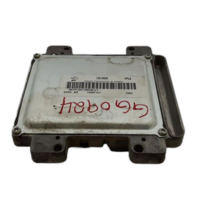
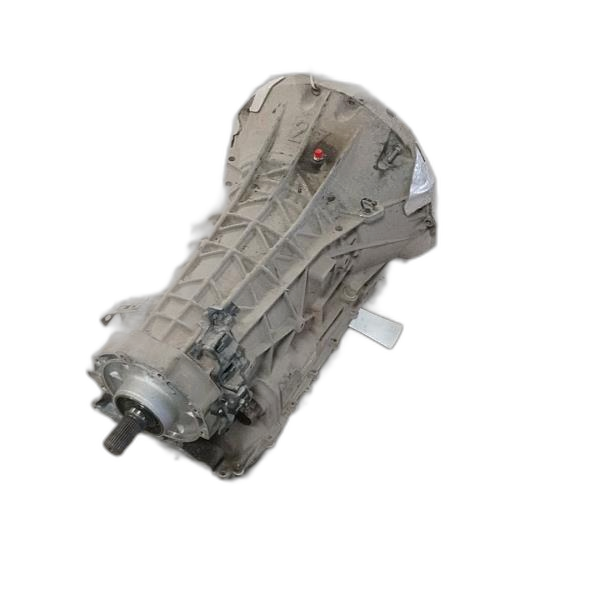
Below are the parts most often responsible for code P0614, ranked by how frequently each one is the actual culprit (per the diagnosis above). Tap any to see what we have for your vehicle.

The information in this article is provided for general reference and educational purposes only. Vehicle specifications, procedures, and part compatibility can vary by production date, trim level, and region. Always consult your vehicle's factory service manual and verify part numbers before purchasing or performing repairs. Safety-critical components such as airbags, seat belts, and braking systems should be installed by a qualified professional.
- 🧭 Diagnostic Flowchart
- 🎬 Helpful Videos
- 🛍️ Shop This Part
- What Does P0614 Mean?
- Can I Drive With P0614?
- Common Causes
- Symptoms
- Common Fixes & Costs
- DIY vs Professional
- Used vs. New Parts: Buying Guide
- What Happens If You Wait — Timeline
- Cost of Not Fixing It
- Diagnosis Steps
- When This Code Triggers (Freeze-Frame Conditions)
- Related Codes
- Climate & Environmental Factors
- How to Talk to a Mechanic About This Code
- Where to Take It: Dealer vs Independent vs Chain
- When to Walk Away From the Repair
- What Scan Tool You Need for This Code
- How to Clear the Code After You Fix It
- Will This Fail Emissions / State Inspection?
- Most Commonly Affected Vehicles
- Manufacturer-Specific Notes
- Real Owner Stories
- 2014 Ford Focus with 75K miles - Classic TCM Failure
- 2013 Audi A4 - Misdiagnosis after DIY Repair
- 2015 Truck with 6.7L ISB Engine Swap - Incompatible Hardware
- Generic vehicle - The "Easy Fix" with a Ground Wire
- How to Prevent This Code From Triggering
- Frequently Asked Questions
- Can I fix a P0614 code myself?
- My mechanic replaced the TCM, but the P0614 code is still there. What happened?
- I installed a used TCM/ECM and now have a P0614 code. Why?
- My mechanic wants to fix a misfire code, but I also have P0614. Is this correct?
- How much does it cost to diagnose a P0614 code?
- My check engine light is flashing with a P0614 code. What does that mean?
- Can a weak battery cause a P0614 code?
- What's the difference between P0614 and a U-code?
- Key Takeaways
- 🎟️ Get 5% Off