

P0616 on 2019 Jeep Cherokee: Starter Control Circuit Low Causes and Fixes
This code usually means your 2019 Cherokee won't start due to a problem in the starter circuit. The most likely fixes are replacing a faulty starter relay (a $10-$30 part), addressing a weak battery, or fixing a bad ground connection, which is a known issue on this platform.
- P0616 on a 2019 Jeep Cherokee indicates a low voltage problem in the starter control circuit, almost always resulting in a no-start condition.
- Before suspecting expensive parts, perform the simple checks first: test the battery and swap the two starter relays (K1, K3) in the under-hood fuse box.
- Thoroughly inspect the main battery ground cable, specifically where it bolts to the engine/transmission, as a broken terminal is a known issue on this platform that can cause this code.
- Replacing the entire starter motor should only be considered after ruling out the battery, fuses, relays, and all related wiring.
What's Unique About the 2019-2019 Jeep CHEROKEE
For the 2019 Jeep Cherokee (KL generation), the starting circuit uses two separate relays—one for the starter motor and one for the starter solenoid—located in the under-hood fuse box. 🎬 Watch: Locate your starter fuse and relays in the fuse box. A notable, though less common, issue found on this platform is a broken main ground cable terminal at the engine block, which can cause a P0616 code along with other seemingly unrelated electrical faults, like power steering warnings. This ground is often a braided strap from the engine block to the frame.
Diagnostic Flowchart
Tap your situation to follow the diagnostic path that matches what you're seeing on this vehicle.
Symptoms You May Notice
- Engine will not crank or start.
- Intermittent no-start condition.
- Audible clicking sound from the engine bay when trying to start, but the engine doesn't turn over.
- Slow engine crank.
- Check Engine Light is on.
- No response from the ignition in some cases.
- Replacing the starter motor when the actual problem is a cheap relay, a blown fuse, or a bad ground connection.
Most Likely Causes
- Faulty Starter Relay 🔴 High Probability → Shop Starter Motor Relays are electromechanical switches with a finite lifespan that can fail from repeated use. This is one of the most common causes for this code.
How to confirm: Locate the two starter relays (K1 and K3) in the under-hood fuse box. Swap one with an identical relay from a non-critical system (like the horn) and see if the vehicle starts.
Typical fix: Replace the faulty relay. They are inexpensive and easy to replace. The Mopar OEM part number is 56029616AA.
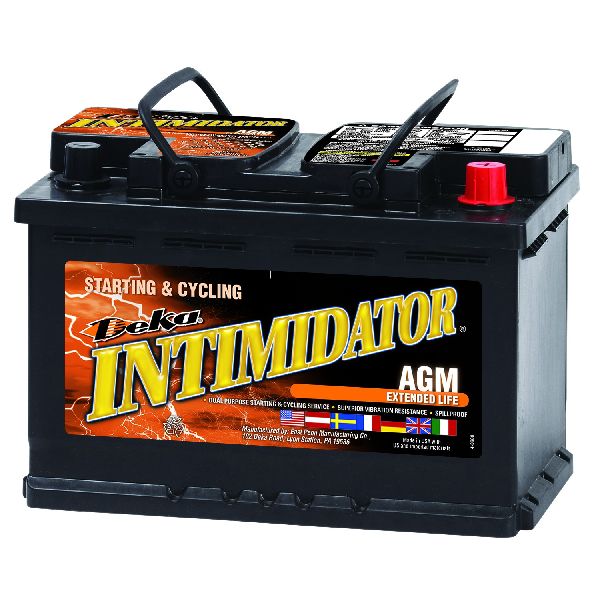
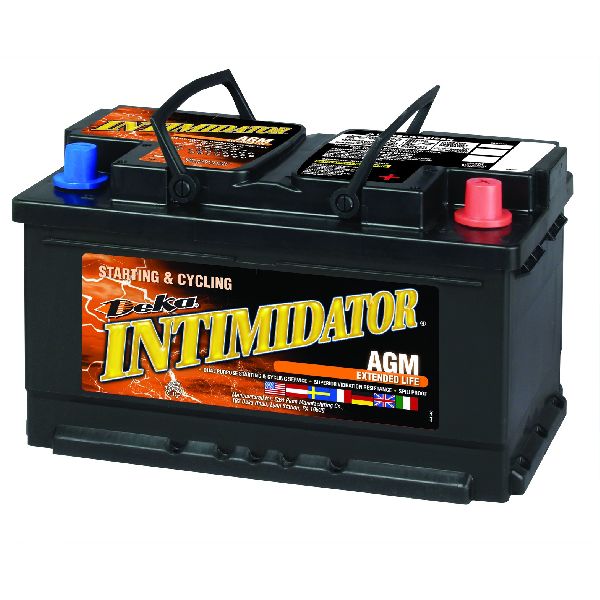
Est. part cost: $10-$30 - Weak or Dead Battery 🟡 Medium Probability → Shop Vehicle Battery A battery with low voltage can't supply the necessary power to the control circuits, triggering low voltage codes. This is a common issue on all modern vehicles.
How to confirm: Test the battery voltage with a multimeter; a healthy battery should read approximately 12.6 volts with the engine off. Many auto parts stores will test your battery for free.
Typical fix: Recharge or replace the battery.
Est. part cost: $150-$350 - Poor Ground Connection 🟡 Medium Probability A specific issue has been documented on this platform where the eyelet for the main ground cable at the engine/transmission block can break, causing an open circuit. This is a widely discussed failure point on many Jeep models.
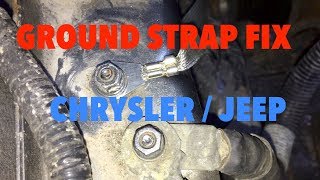
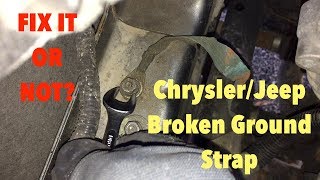
How to confirm: Visually inspect the main ground straps from the battery to the chassis and from the chassis to the engine block. Check for corrosion, looseness, or physical damage like a broken terminal end. 🎬 Watch: How to identify and fix a broken ground strap. Perform a voltage drop test on the ground side by placing one multimeter probe on the negative battery terminal and the other on the engine block while attempting to crank; a reading above 0.5 volts indicates a bad ground.
Typical fix: Clean the connection points and tighten the bolts, or replace the entire ground cable if the terminal is broken. The Mopar OEM part number for the negative battery cable is 68287831AA.
Est. part cost: $20-$75 - Blown Starter Fuse ⚪ Low Probability → Shop Starter Motor A voltage spike or short in the starter circuit can blow the protective fuse.
How to confirm: Check fuse F19 (a 40-amp fuse) in the under-hood fuse box. Visually inspect if the internal wire is broken or test for continuity with a multimeter.
Typical fix: Replace the blown fuse. If it blows again immediately, there is an underlying short circuit that needs to be diagnosed.
Est. part cost: $1-$5 - Faulty Starter Motor or Solenoid ⚪ Low Probability → Shop Starter Motor The starter motor is a high-wear component that can fail over time, sometimes drawing too much current and triggering a low voltage code.
How to confirm: After confirming the relays, fuses, and wiring are good, the starter itself is the next suspect. A mechanic can perform a voltage drop test or bench test the starter.
Typical fix: Replace the starter motor assembly. Part numbers vary by engine.
Est. part cost: $200-$450
Rare But Worth Checking
- Faulty Powertrain Control Module (PCM): This is a rare cause. All other possibilities, especially wiring and relays, should be exhaustively ruled out before condemning the PCM. Sometimes a software update via a TSB can resolve related electrical issues.
- Faulty Ignition Switch: The switch can fail to send the correct voltage signal to the starter relay circuit. This is less common than a relay or battery issue but is a confirmed potential cause.
Diagnosis Steps
- Read the codes with an OBD-II scanner to confirm P0616 and check for any other related codes.
- Check the battery. Ensure it is fully charged (approx. 12.6V) and that the terminals are clean and tight.
- Open the under-hood fuse box (Power Distribution Center) located next to the battery.
- Inspect the 40A starter fuse at position F19. Replace if blown.
- Locate the starter relays, K1 (solenoid) and K3 (starter). Swap the K1 relay with an identical, known-good relay (e.g., from the horn or A/C). Attempt to start the vehicle. If it still doesn't start, swap K3 and try again.
- If relays are not the issue, inspect the wiring. Pay close attention to the main ground cable from the battery to the chassis and engine block. Look for a broken terminal at the block, as this is a known failure point. Perform a voltage drop test on the ground circuit to confirm its integrity.
- Inspect the wiring and connector at the starter motor for any signs of corrosion, damage, or looseness. Check the small signal wire from the ignition switch.
- If all the above steps fail to identify the problem, the issue may lie with the starter motor itself, the ignition switch, or, in rare cases, the PCM, which may require professional diagnosis.
Parts You'll Likely Need
- Starter Relay
(OEM #56029616AA)— This is the most common and cheapest part to fail in the starter control circuit, making it the first component to check and replace.
Trusted brands: Mopar, Bosch, Standard Motor Products
OEM price range: $20-$40
Aftermarket price range: $10-$25 - Starter Motor
(OEM #56029615AD (3.2L V6); 56029712AC (2.4L I4); 68663478AA (2.0L I4 Turbo))— If the relays and wiring are good, the starter motor assembly is the next most likely culprit for a no-crank condition.
Trusted brands: Mopar, Denso, Bosch
OEM price range: $350-$500
Aftermarket price range: $200-$450 - Battery Ground Cable
(OEM #68287831AA)— A broken terminal on the ground cable is a documented cause of a no-start condition with a P0616 code on this vehicle.
Trusted brands: Mopar
OEM price range: $50-$100
Aftermarket price range: $20-$75
Related Codes That Often Appear With This One
- P0617 — This code for 'Starter Control Circuit High' is the counterpart to P0616 and indicates an opposite voltage problem in the same circuit. They can sometimes appear together during intermittent faults.
- P2610 — This code for 'PCM Internal Engine Off Timer Performance' is addressed by a PCM software update (TSB 18-047-20) for the 3.2L V6. If seen with P0616, it may indicate that a PCM software update is needed to resolve various electrical gremlins.
- U-codes (e.g., no communication with EPS) — A significant electrical fault, such as a broken main ground, can disrupt the entire vehicle communication network, causing a no-start (P0616) and communication loss with other modules like the Electronic Power Steering (EPS).
Technical Service Bulletins (TSBs) & Recalls
- TSB 18-077-22: This bulletin supersedes TSB 18-020-21 and involves a PCM software update for 2019 Cherokees with the 3.2L V6 engine. While it doesn't explicitly list P0616, it addresses a wide range of other electrical DTCs and drivability concerns. If a vehicle has P0616 and other electrical issues, a technician may check if this software update has been performed.
- TSB 18-020-21: Superseded by 18-077-22, this TSB also outlined a PCM software update for the 3.2L V6 to fix various MIL-triggering codes.
- TSB 18-047-20: This bulletin for the 3.2L V6 engine involves a PCM software update to address numerous DTCs, including P0616, P0617, and P2610. It also addresses conditions like an engine that doesn't restart after an ESS event.
- TSB 18-024-19 REV. A: For the 2.4L engine, this TSB involves a PCM software update to fix issues like failure to restart during an ESS event, which can be related to the starting circuit.
Platform-Specific Known Issues
- A known failure point is the main engine ground cable terminal, where the eyelet can physically break off the cable at the mounting point on the engine/transmission block. This creates an open circuit that prevents starting and can cause other electrical communication errors. This is a common issue across many Jeep models and should be one of the first wiring checks performed.
Mechanic-Grade Diagnostic Values
- Starter Relay Coil Resistance — expected: 75 ± 5 ohms. Failure: Resistance outside this range indicates a faulty relay.
- Voltage at Starter Relay Socket Pin 30 — expected: Constant battery voltage (approx. 12.6V). Failure: No voltage indicates an issue with the power supply from the battery or a blown fuse (F19).
- Voltage at Starter Relay Socket Pin 86 (Control Signal) — expected: Battery voltage (approx. 12V) only when the ignition key is turned to the 'START' position.. Failure: No voltage when trying to start points to a problem with the ignition switch or the PCM's control circuit.
- Ground Check at Starter Relay Socket Pin 85 — expected: Should show continuity to ground (or read ~12V when testing with a powered test light connected to the positive battery terminal).. Failure: No ground indicates a problem with the park/neutral position switch or the wiring to the PCM.
Scan Tool Commands That Help
- wiTECH: Actuation Test for Starter Relay — To manually command the starter relay on and off to verify if the relay itself clicks and if the starter engages. This isolates the control side (PCM, ignition switch) from the load side (relay, starter motor) of the circuit.
- wiTECH: Reprogram PCM/WCM — Used to apply software updates as specified in TSBs like 18-047-20. This can fix logic errors within the module that may be incorrectly setting P0616 or causing related no-start conditions.
Wiring & Ground Locations
- G907A — On the side of the transmission, where the main ground cable from the chassis connects to the powertrain.. This is the main ground point for the engine and transmission. A documented failure is the cable eyelet breaking at this stud, which creates an open circuit, preventing the starter from getting the ground it needs to operate and causing a P0616 code.
- Power Distribution Center (PDC) — Under the hood, next to the battery on the driver's side.. This fuse box contains the critical components for this circuit: Starter Fuse F19 (40A) and Starter Relays K1 (solenoid) and K3 (starter motor).
- Starter Solenoid Connector — On the starter motor itself, connecting the small-gauge signal wire.. This is the final point where the 'start' signal is delivered. The wire is a 14-gauge wire. A loose or corroded connection here will prevent the starter solenoid from engaging, even if the rest of the circuit is good.
Real Owner Repair Stories
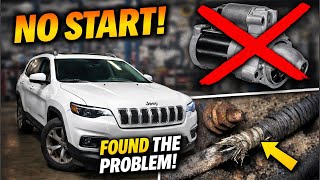
- Advanced Level Auto on YouTube (2019 Jeep Cherokee Latitude) — No-start, no-crank condition. Also had an 'Electronic Power Steering fault' message on the dash and no communication with the EPS module.
❌ Tried (didn't work) Replacing the starter motor.
✅ What actually fixed it The main ground cable (G907A) was physically broken at the terminal eyelet where it bolts to the transmission block. After testing the ground point with a test light and finding no ground on the engine block, the broken cable was discovered and replaced, which resolved all issues.
Helpful Videos

Used OEM Parts in Stock
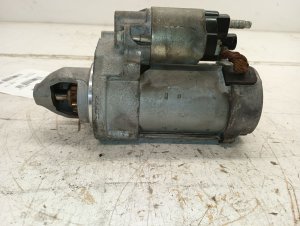
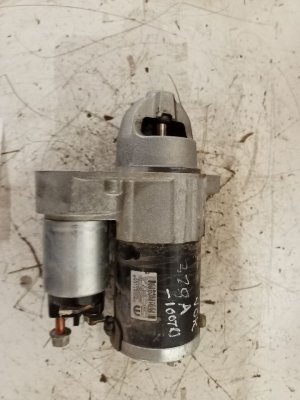
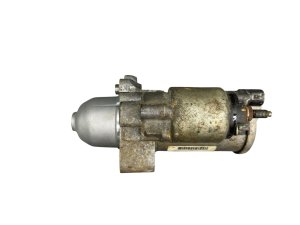
New Aftermarket Parts Available


The information in this article is provided for general reference and educational purposes only. Vehicle specifications, procedures, and part compatibility can vary by production date, trim level, and region. Always consult your vehicle's factory service manual and verify part numbers before purchasing or performing repairs. Safety-critical components such as airbags, seat belts, and braking systems should be installed by a qualified professional.
- Jeep CHEROKEE:
- 🧭 Diagnostic Flowchart
- 🎬 Helpful Videos
- 🛍️ Shop This Part
- What's Unique About the 2019-2019 Jeep CHEROKEE
- Symptoms You May Notice
- Most Likely Causes
- Rare But Worth Checking
- Diagnosis Steps
- Parts You'll Likely Need
- Related Codes That Often Appear With This One
- Technical Service Bulletins (TSBs) & Recalls
- Platform-Specific Known Issues
- Mechanic-Grade Diagnostic Values
- Scan Tool Commands That Help
- Wiring & Ground Locations
- Real Owner Repair Stories
- 🎟️ Get 5% Off