

P0626 on 2011-2014 Ford Edge: Generator Field Circuit High Causes and Fixes
This code almost always points to a failing alternator, specifically its internal voltage regulator. Expect to pay $300-$600 for a replacement alternator. While you can drive short distances, the vehicle may stall without warning, so immediate attention is recommended.
- P0626 on a 2011-2014 Ford Edge indicates a high voltage or open circuit fault in the alternator's monitor (GENMON) circuit.
- The most likely cause by far is a failed alternator with a bad internal voltage regulator.
- Before replacing the alternator, perform a quick visual inspection of the wiring and 3-pin connector between the alternator and the PCM.
- Do not continue driving with this code, as the vehicle could stall at any time, creating a safety hazard.
What's Unique About the 2011-2014 Ford Edge
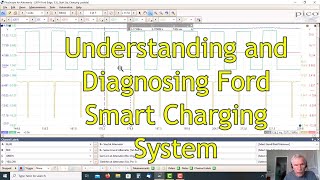
The 2011-2014 Ford Edge uses a 'Smart Charge' system where the PCM actively manages the alternator rather than relying on a simple internal regulator. 🎬 Watch: How the Ford Smart Charge system works and how to diagnose it This system uses a dedicated feedback line (GENMON) from the alternator to the PCM to report its status and load. The P0626 code is set specifically when the PCM sees a fault on this GENMON line. On a scan tool, this fault typically appears as a GENMON duty cycle reading of 98% or higher, indicating an open circuit or a short to voltage. When this occurs, the PCM may default the alternator to a fixed output of around 13.5 volts as a failsafe.
Symptoms You May Notice
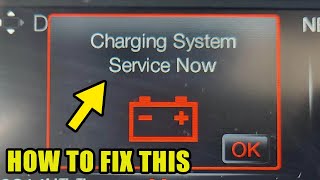
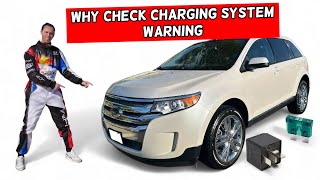
- Battery or charging system warning light on the dashboard 🎬 Watch: Why your Ford Edge has a check charging system warning
- Check Engine Light is on
- Engine stalling or having difficulty starting
- Dimming headlights and interior lights
- Erratic behavior from electrical accessories like the radio or power windows
- A dead battery after sitting
- A burning smell from the battery if it is being overcharged
- Replacing the battery without testing the charging system. While a bad battery can cause electrical issues, it is not typically the root cause of a P0626 code. A new battery will also fail to charge if the root cause is not fixed.
- Replacing the alternator without first inspecting the wiring harness and connector. A simple broken wire or corroded pin can cause the same symptoms as a failed alternator.
Most Likely Causes
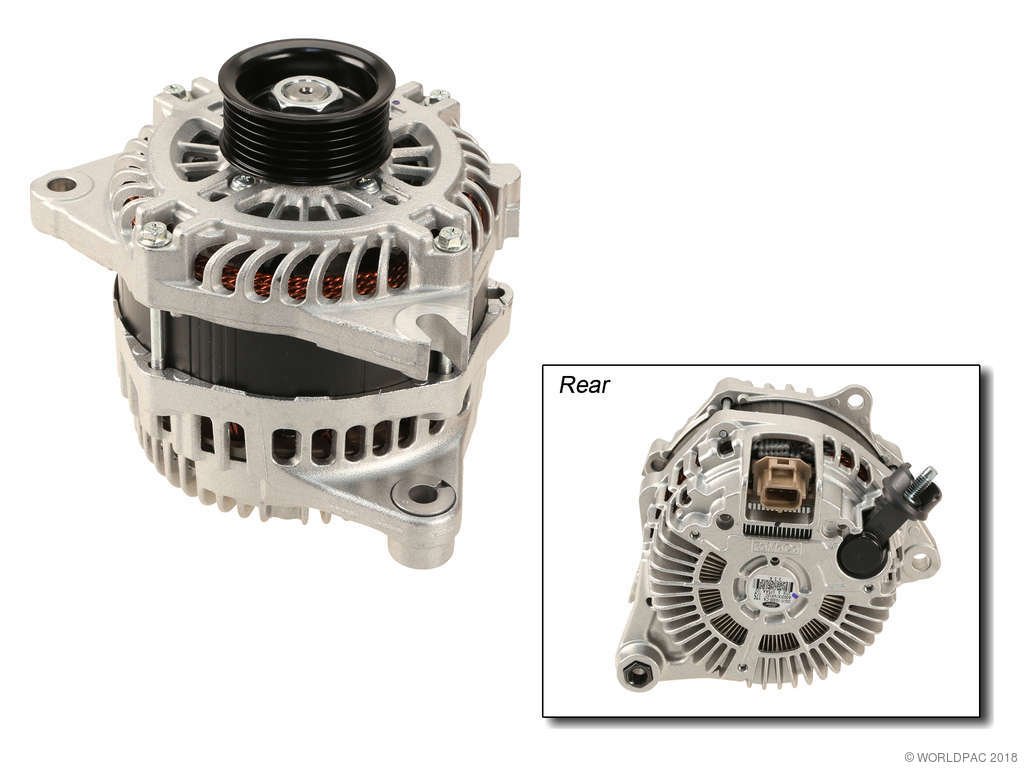
- Faulty Alternator 🔴 High Probability → Shop Alternator The internal voltage regulator within the alternator is the most common failure point in the charging system that triggers this specific code. It fails to properly communicate its status back to the PCM via the GENMON circuit.
How to confirm: After verifying wiring is intact, perform a charging system test. With the engine running, check the voltage at the battery terminals. A reading that is too high (over 15V) or too low (below 13.2V) often indicates a faulty alternator. An advanced scan tool showing a GENMON PID duty cycle of 98% or more is a strong indicator of this fault.
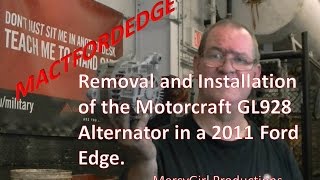
Typical fix: Replace the alternator assembly. 🎬 See this step-by-step alternator replacement walkthrough Using an OEM Motorcraft part is highly recommended to avoid compatibility issues with the Smart Charge system.
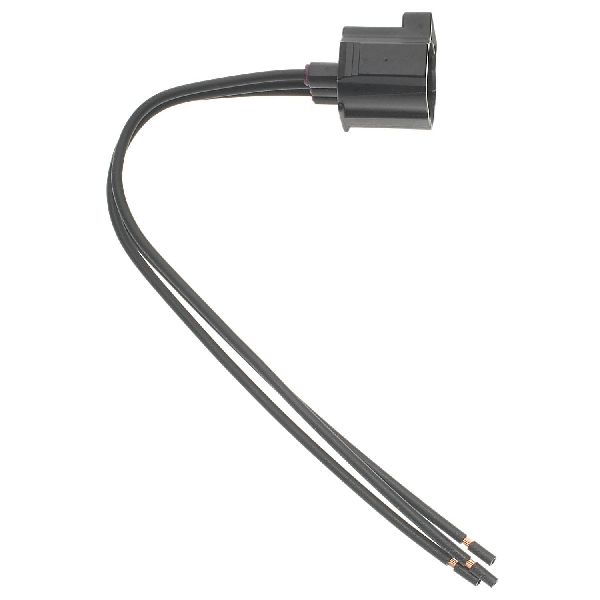
Est. part cost: $250-$550 - Wiring Harness Damage 🟡 Medium Probability The 3-pin connector at the alternator (C102A) can become corroded or the wiring can chafe over time, leading to an open or shorted circuit on the GENMON line.
How to confirm: Visually inspect the wiring and the 3-pin connector between the alternator and the PCM. Look for any signs of corrosion, breaks, pushed-out pins, or chafing. Perform a continuity test on the GENMON wire if no visible damage is found. A wiggle test on the harness while monitoring the GENMON PID can also help identify intermittent faults.
Typical fix: Repair the damaged section of the wire or replace the faulty connector pigtail. Ensure connections are clean and secure, and apply dielectric grease to prevent future corrosion.
Est. part cost: $10-$50 - Blown Fuse ⚪ Low Probability
How to confirm: Locate the fuse box in the engine compartment (Battery Junction Box) and check the fuse related to the alternator's 'A' sense circuit. On similar platforms, this is often fuse #58 (10A) or F8 (10A). A visual inspection or a continuity test with a multimeter will confirm if the fuse is blown.
Typical fix: Replace the blown fuse. If it blows again, a short circuit exists that must be diagnosed.
Est. part cost: $1-$5
Rare But Worth Checking
- Faulty Powertrain Control Module (PCM): → Shop Engine Control Module (ECM) This is a rare cause. The PCM should only be suspected after the alternator and all related wiring have been thoroughly tested and confirmed to be good. A failure of the internal driver circuit within the PCM can mimic an alternator or wiring fault.
Diagnosis Steps
- Scan for any other stored trouble codes to get a full picture of the issue.
- Visually inspect the battery terminals for corrosion and ensure they are tight.
- Inspect the alternator drive belt for wear or damage.
- Carefully inspect the wiring harness and 3-pin connector at the alternator for any signs of damage, corrosion, or loose connections.
- With the engine running, use a multimeter to measure the voltage at the battery. It should be stable, typically between 13.5 and 14.8 volts. Readings above 15 volts suggest a dangerous overcharge condition, while readings below 13.2 volts indicate an undercharge condition.
- If you have an advanced scan tool, monitor the GENMON PID. A duty cycle reading of 98% or higher strongly suggests an open or short-to-power fault that triggers P0626.
- Follow the specific pinpoint tests in the factory service manual. This will involve checking for continuity and shorts to power/ground on the GENMON circuit between the alternator connector and the PCM connector.
- If all wiring, fuses, and connections are confirmed to be good, the fault is almost certainly internal to the alternator, which will need to be replaced.
Parts You'll Likely Need
- Alternator (Generator)
(OEM #CT4Z-10346-A)— This is the most common cause of a P0626 code, as the internal voltage regulator fails and can no longer communicate properly with the PCM.
Trusted brands: Motorcraft, Bosch, Denso
OEM price range: $400-$600
Aftermarket price range: $250-$450
Related Codes That Often Appear With This One
- P0625 — This is the opposite code, 'Generator Field/F Terminal Circuit Low'. Seeing both can indicate an intermittent wiring problem or a failing alternator regulator. P0625 is set when the GENMON duty cycle is 3% or less.
- P0620 — This is a more general 'Generator Control Circuit Malfunction' code. P0626 is a more specific fault within that system, and they can appear together.
- P0562 — This code means 'System Voltage Low'. It is often a symptom of the P0626 fault, where the alternator isn't charging properly, causing the overall vehicle voltage to drop.
- P065B — Generator Control Circuit Range/Performance. This code can appear alongside P0626, especially if an incorrect or poor-quality aftermarket alternator is installed that cannot communicate properly with the PCM.
Platform-Specific Known Issues
- Importance of OEM Alternator: → Shop Alternator Due to the complexity of the Ford Smart Charge system, using a non-OEM (aftermarket) alternator can sometimes lead to persistent communication codes like P0626 or P065B, even if the new alternator is technically charging. It is highly recommended to use a Motorcraft replacement part to ensure compatibility.
Mechanic-Grade Diagnostic Values
- GENMON PID Duty Cycle (Scan Tool) — expected: 3% - 98% during normal operation.. Failure: A reading of 98% or higher indicates an open circuit or short to voltage, triggering P0626.
- Default Charging Voltage (Multimeter at Battery) — expected: 13.5V - 14.8V (Normal).. Failure: If the GENMON circuit fails, the system will default to a fixed ~13.5V - 13.7V after the engine briefly exceeds 2000 RPM.
- GENMON Circuit Voltage (KOEO, C102A Unplugged) — expected: 8-11 Volts at Pin 1 (VT wire), harness side. This is the bias voltage from the PCM.. Failure: 0V indicates an open wire from the PCM or a bad PCM driver. A reading of battery voltage could indicate a short to power.
- Positive Circuit Voltage Drop — expected: Less than 0.20 Volts.. Failure: A reading greater than 0.20V indicates high resistance in the B+ cable or connections between the alternator and battery.
- Negative Circuit Voltage Drop — expected: Less than 0.20 Volts.. Failure: A reading greater than 0.20V indicates high resistance in the ground circuit between the alternator case and the negative battery terminal.
Scan Tool Commands That Help
- Ford IDS (or equivalent advanced scan tool): Output State Control - RPM — To manually raise and lower engine RPM while monitoring the GENMON PID. This allows a technician to check if the alternator is responding correctly to changes in engine speed and load, helping to isolate whether the fault is intermittent or constant.
Wiring & Ground Locations
- C102A — The 3-pin electrical connector at the alternator.. This is the primary connection point for the alternator's control circuits. Pin 1 (Violet wire) is the GENMON circuit that triggers P0626. Pin 2 (Blue/Orange wire) is the GENCOM (command) circuit. Pin 3 (Red or Violet/Red wire) is the 'A' sense circuit providing battery voltage feedback.
- C1381B / C175B — One of the main multi-pin connectors at the Powertrain Control Module (PCM).. This connector contains the other end of the alternator control wires. For the 2.0L engine, the GENMON wire (Violet) is at Pin 23 and the GENCOM wire (Blue/Orange) is at Pin 22. Continuity must be checked between these pins and the corresponding pins at C102A.
- G104 — Primary engine-to-chassis ground strap, typically on the driver's side of the engine block or cylinder head, connecting to the frame rail or firewall.. A poor engine ground can cause a voltage potential difference between the alternator housing and the PCM's ground reference. This can corrupt the GENMON signal and trigger a false P0626 code.
Real Owner Repair Stories
- Ford F150 Forum (2016 Ford F-150 5.0L (Uses same Smart Charge system)) — Sudden 'Service Charging System' warning message, codes P0620, P0626, P065B.
❌ Tried (didn't work) Replacing the battery with a new, high-quality unit., Replacing the alternator with a new one.
✅ What actually fixed it The alternator pigtail connector (C102A) was replaced. Even though the original harness showed no visible damage, replacing the connector resolved all charging system codes. - Vertex AI Search Document Analysis (2014 Ford Focus (Uses same Smart Charge system)) — Persistent charging system codes P0625 and P0626.
❌ Tried (didn't work) Replacing the original alternator with a non-OEM, remanufactured unit.
✅ What actually fixed it The issue was only resolved after replacing the incompatible aftermarket alternator with a genuine OEM Motorcraft-branded part. This highlights the sensitivity of the Smart Charge system to non-OEM components.
OEM Part Supersession History
CT4Z-10346-A→CT4Z-10346-A— No supersession found, this remains the current part number. An alternate service part number is GL-8653.
Diagnostic Flowchart
Other Known Issues on This Vehicle
Issues unrelated to this code that are worth knowing about as an owner of this generation:
- Power Transfer Unit (PTU) Failure (AWD Models) 🔴 High — Common issue. The PTU fluid overheats due to proximity to the exhaust, leading to breakdown and gear failure. Preventative fluid changes every 30,000 miles are recommended.
- Door Ajar Sensor Failure 🟠 Medium — Very common on 2011-2013 models. The sensor within the door latch assembly fails, causing the 'Door Ajar' light to stay on, draining the battery. This was subject to a NHTSA investigation. (Ref: TSB 14-0011)
- Coolant Intrusion into Cylinders 🔴 High — A known issue with the 2.0L EcoBoost engine family due to a potential engine block design flaw. Can lead to misfires, rough running, and eventual catastrophic engine failure requiring a long block replacement. (Ref: TSB 19-2346 (supersedes 19-2208))
- Brake Booster Failure 🔴 High — The brake booster can fail, leading to a hard pedal feel and increased stopping distance. Ford issued an extended warranty coverage program for this component. (Ref: Ford Customer Satisfaction Program 13N02)
Used vs. New Parts: Buying Guide for This Vehicle
When a used part is the smart pick: For the alternator pigtail connector (C102A), a used part from a salvage yard is a smart, cost-effective choice. The main alternator assembly should not be purchased used due to the high failure rate of the internal electronics.
Donor-vehicle mileage cap: roughly under 80000 miles for the part to have meaningful remaining life.
What to inspect on the donor part:
- For a pigtail connector: ensure the plastic is not brittle, the locking tab is intact, and the metal pins show no signs of green or white corrosion.
- For a used alternator (not recommended): spin the pulley by hand to check for smooth bearing operation with no grinding or wobble, and inspect terminals for damage.
OEM-only on this vehicle (don't cheap out):
- Alternator (Generator)
Aftermarket brands forum-validated for this vehicle:
- Motorcraft (OEM)
Brands owners have reported issues with on this vehicle:
- Generic or unbranded remanufactured alternators are frequently reported to be incompatible with the Ford Smart Charge system, causing persistent codes even when new.
Real Owner Stories
Aggregated from forums and TSBs cited above. Mileages and costs reflect what owners reported in those sources.
2017 Ford Mondeo
Symptoms: The dashboard displayed a 'Service Charging system' issue message.
What fixed it: The issue was identified as a smart charging system fault involving the GENMON circuit.
Source hint: fordownersclub.com - A thread titled '"Service Charging system" issue (P0625/P0626)'
Related OBD-II Codes
Frequently Asked Questions
Can I use a cheaper aftermarket alternator to fix the P0626 code on my 2012 Ford Edge 2.0L EcoBoost?
My 2013 Edge has a 'Door Ajar' light that won't go off; could this be related to my P0626 charging system code?
Is there a specific fuse I should check for the P0626 code on this platform?
What specific wiring should I inspect for a P0626 code on my 2.0L EcoBoost?
Does the 2.0L EcoBoost engine in my Edge have any other major known issues I should be aware of while fixing this?
Helpful Videos
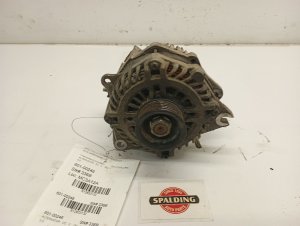
Used OEM Parts in Stock
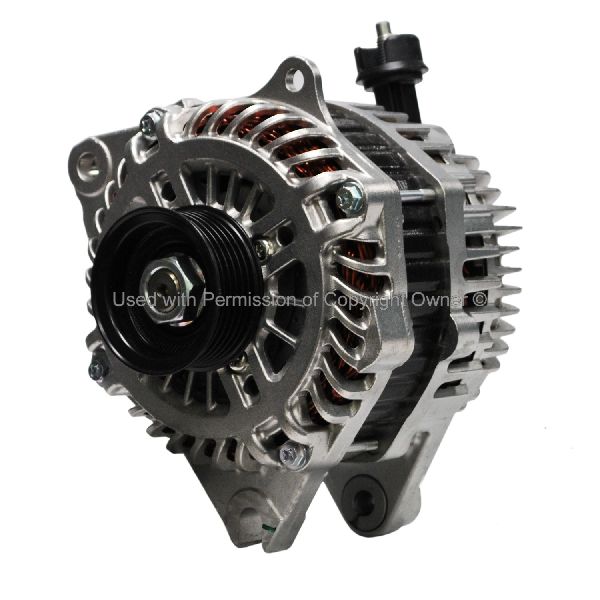
New Aftermarket Parts Available


The information in this article is provided for general reference and educational purposes only. Vehicle specifications, procedures, and part compatibility can vary by production date, trim level, and region. Always consult your vehicle's factory service manual and verify part numbers before purchasing or performing repairs. Safety-critical components such as airbags, seat belts, and braking systems should be installed by a qualified professional.
- Ford Edge:
- 🧭 Diagnostic Flowchart
- 🎬 Helpful Videos
- 🛍️ Shop This Part
- What's Unique About the 2011-2014 Ford Edge
- Symptoms You May Notice
- Most Likely Causes
- Rare But Worth Checking
- Diagnosis Steps
- Parts You'll Likely Need
- Related Codes That Often Appear With This One
- Platform-Specific Known Issues
- Mechanic-Grade Diagnostic Values
- Scan Tool Commands That Help
- Wiring & Ground Locations
- Real Owner Repair Stories
- OEM Part Supersession History
- Other Known Issues on This Vehicle
- Used vs. New Parts: Buying Guide for This Vehicle
- Real Owner Stories
- 2017 Ford Mondeo
- Related OBD-II Codes
- Frequently Asked Questions
- 🎟️ Get 5% Off