

P0626 on 2008-2012 Ford Escape 2.5L: Generator Circuit High Causes and Fixes
On a 2008-2012 Ford Escape, code P0626 almost always points to a failed alternator, specifically its internal voltage regulator. You may see a battery light and experience stalling. Expect to pay $200-$400 for a quality replacement alternator. Before replacing, inspect the 3-pin connector at the alternator as it is a known failure point.
- P0626 on your Escape means the engine computer has detected an open or short-to-power in the alternator's monitoring circuit.
- The most frequent cause is a failed internal voltage regulator, requiring a full alternator replacement. Use a new OEM or high-quality aftermarket part.
- Always inspect the 3-wire connector and harness at the alternator for damage before replacing parts.
- Do not drive the vehicle, as it can stall at any time, posing a significant safety risk.
What's Unique About the 2008-2012 Ford Escape
The 2008-2012 Ford Escape uses a PCM-controlled 'smart charge' system. Unlike older systems where the alternator self-regulated, the PCM is in direct command via two dedicated wires: GENCOM (Generator Communication) to send commands and GENMON (Generator Monitor) to receive status updates. P0626 is set when the PCM detects an open circuit or short to power on the GENMON line. Owners often find that a faulty alternator is the direct cause, though damage to the 3-pin alternator connector is also a known point of failure on these vehicles. Using aftermarket alternators can sometimes cause compatibility issues with this system, leading to persistent codes.
Symptoms You May Notice
- Battery or charging system warning light on the dashboard
- Check Engine Light is on
- "Check Charging System" message in the instrument cluster
- Engine stalling or running rough, especially at idle
- Difficulty starting the engine or a dead battery
- Dimming or flickering headlights and interior lights
- Erratic behavior from electrical accessories like the radio or power windows
- Harsh automatic transmission shifting
- Voltage gauge reading abnormally high (over 15V) or low (below 13V)
- Replacing the battery without diagnosing the charging system. A new battery will quickly be drained or damaged by the underlying alternator or wiring fault.
- Repeatedly replacing the alternator with cheap, remanufactured units. Incompatibility with the Ford smart charge system is a common issue, leading to a quick return of the P0626 code.
Most Likely Causes
- Faulty Alternator 🔴 High Probability → Shop Alternator The internal voltage regulator within the alternator is a common failure point. When it fails, it can cause an open or high voltage condition on the GENMON control circuit, directly triggering P0626. Many owners report that using aftermarket or remanufactured alternators can lead to repeat failures or incompatibility with the smart charge system.
How to confirm: After confirming battery and wiring are good, have the alternator bench-tested at an auto parts store. Or, monitor charging system voltage with a scan tool or multimeter; readings consistently above 15.0V suggest a failed regulator. A scan tool showing a GENMON PID value of 98-100% also points to this fault.
Typical fix: Replace the entire alternator assembly. It is highly recommended to use a high-quality OEM (Motorcraft) or a reputable new (not remanufactured) aftermarket unit to avoid compatibility issues.
Est. part cost: $200-$450 - Damaged Alternator Wiring or Connector 🟡 Medium Probability → Shop Alternator The 3-wire pigtail connector at the alternator is exposed to heat and vibration, which can lead to corrosion, broken wires, or pushed-out pins over time. The GENMON wire itself can break within the harness, causing an open circuit.
How to confirm: Visually inspect the wiring harness and the 3-pin connector going into the alternator. Wiggle the connector with the engine running to see if it affects charging voltage. Perform a continuity test on the GENMON wire (often a Violet or Yellow wire) between the alternator connector and the PCM connector to check for an open circuit.
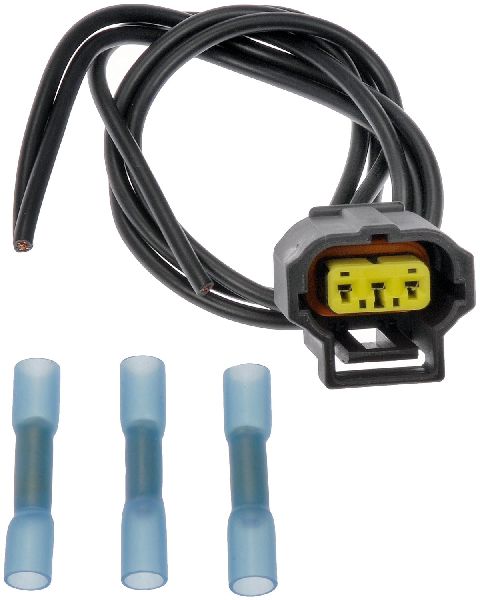
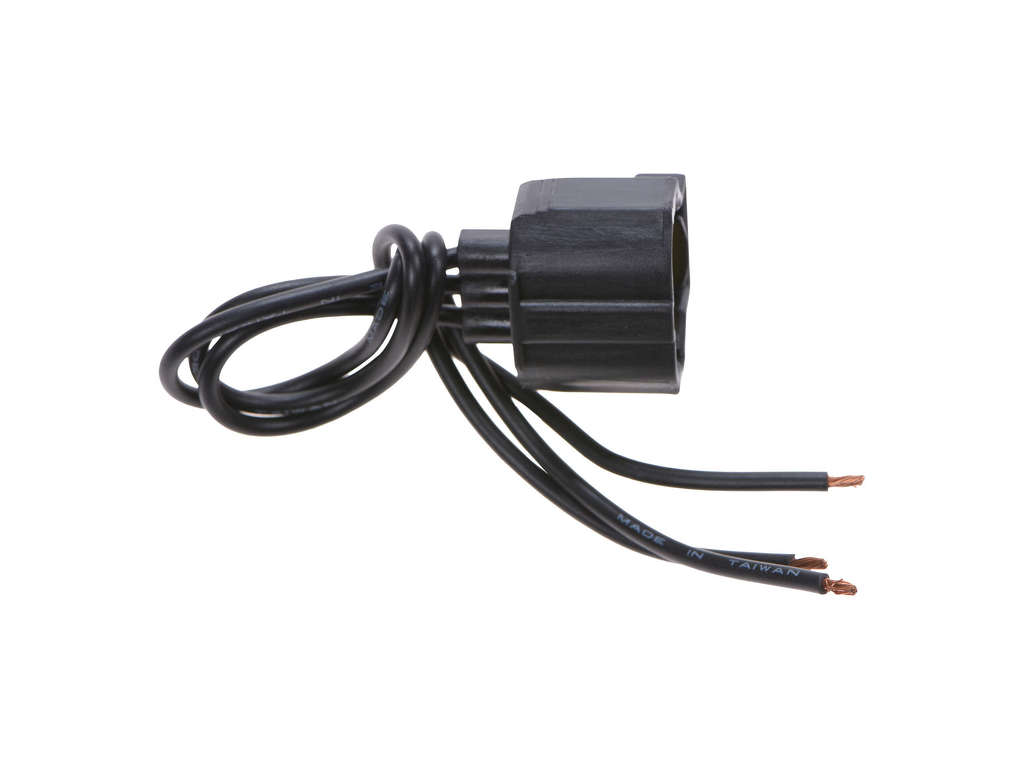
Typical fix: If the connector is damaged, replace it with a new pigtail connector (e.g., Motorcraft WPT-118). If a wire is broken, repair the circuit with a new section of wire and seal it from moisture.
Est. part cost: $25-$65 - Weak or Failing Battery ⚪ Low Probability → Shop Vehicle Battery
How to confirm: Test the battery with a digital battery tester. A healthy battery should have approximately 12.6 volts with the engine off and maintain voltage under load. Many auto parts stores will test your battery for free. Ensure battery voltage is above 12.2V before starting diagnosis.
Typical fix: Replace the battery if it fails testing. Note that a bad battery is often a symptom of the charging problem (P0626), not the root cause. A new battery will be quickly drained by the underlying fault.
Est. part cost: $150-$250
Rare But Worth Checking
- Failed Powertrain Control Module (PCM): → Shop Engine Control Module (ECM) This is the least likely cause. The internal driver circuit in the PCM that controls the alternator can fail. This should only be considered after the alternator, wiring, and battery have all been proven to be in good condition.
- Blown Fuse: A blown fuse related to the charging system can cause this code. On the 2008-2012 Escape, check fuse #6 (15A) in the under-hood fuse box.
Diagnosis Steps
- Read all fault codes from the PCM. Note any other codes that are present, especially P0620, P0625, or P065B.
- Test the battery's health and state of charge. Ensure battery terminals are clean and tight. A healthy, fully charged battery should read around 12.6V. Voltage must be above 12.2V for accurate testing.
- Check relevant fuses. Specifically, check fuse #6 (15A) in the under-hood fuse box.
- Start the engine. Measure the voltage at the battery terminals. A normal reading is between 13.5V and 14.8V. A reading above 15.0V strongly indicates a faulty voltage regulator (alternator). A reading below 13.2V indicates the alternator is not charging.
- Thoroughly inspect the alternator's 3-wire electrical connector (C102A) for any signs of corrosion, melting, pushed-out pins, or damage. Wiggle the harness while the engine is running to check for intermittent connections.
- If you have a capable scan tool, monitor the GENMON PID. A reading of 98% or higher with the engine running confirms the 'Circuit High' condition detected by the PCM.
- If wiring and connections appear good and the charging voltage is out of range, the alternator is the most likely cause. Remove it and have it tested or replace it with a quality unit.
- If a known-good alternator does not fix the code, perform a pinpoint continuity test on the GENMON wire (typically Violet, Circuit CDC15) between the alternator connector (Pin 1) and the PCM connector to rule out a hidden open or short in the harness.
- As a final step, if all other components test good, the PCM may be at fault.
Parts You'll Likely Need
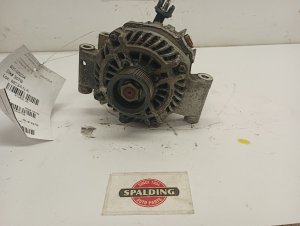
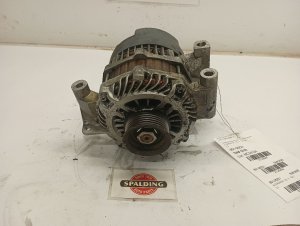
- Alternator
(OEM #8S4Z-10346-A (Motorcraft GL-989 for remanufactured))— This is the most common cause of P0626, as the internal voltage regulator fails.
Trusted brands: Motorcraft (Recommended), Bosch (New), Denso (New), Remy
OEM price range: $350-$500
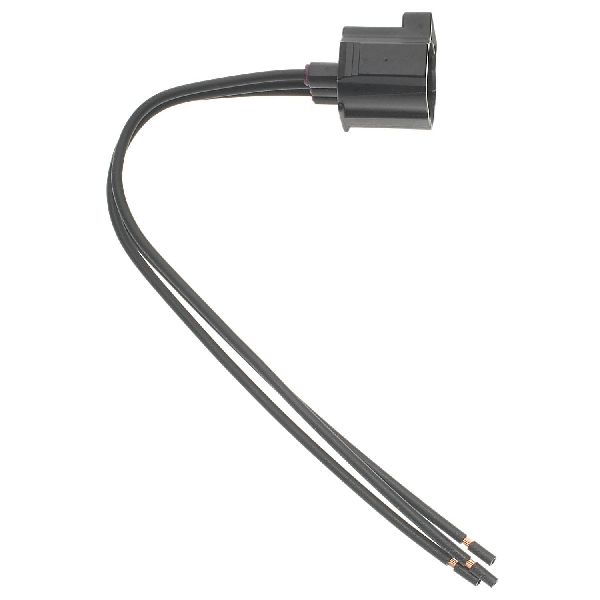
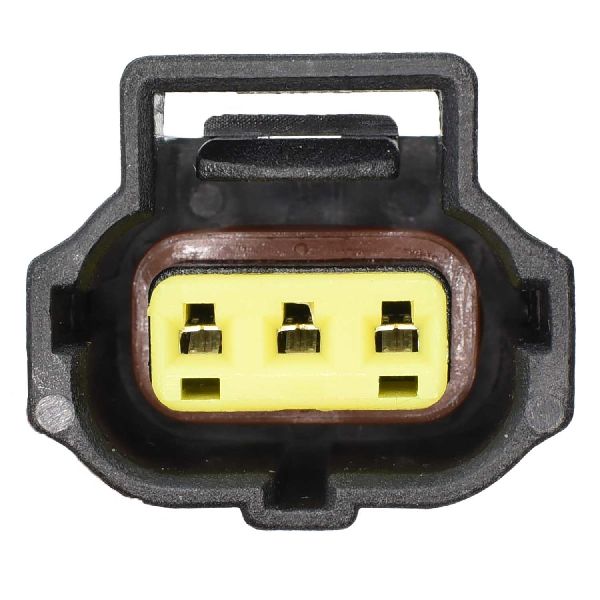
Aftermarket price range: $200-$400 - Alternator Connector Pigtail
(OEM #Motorcraft WPT-118 (Ford P/N: 3U2Z-14S411-JZA))— The connector at the alternator can become damaged from heat and vibration, requiring replacement.
Trusted brands: Motorcraft, Dorman (645-213), Standard Motor Products (S-821), NAPA/Echlin (EC261)
OEM price range: $45-$65
Aftermarket price range: $25-$45
Related Codes That Often Appear With This One
- P0625 — This code is for 'Generator Field 'F' Control Circuit Low'. It's the companion code to P0626 and can be triggered by the same set of faults in the alternator or wiring, specifically a short to ground on the GENMON circuit.
- P0620 — This is a more general 'Generator Control Circuit Malfunction' code. It often appears with P0625 or P0626 when the PCM detects a general issue with the alternator's smart charge system, such as an open circuit in the control wiring.
- P065B — This code for 'Generator Control Circuit Range/Performance' can also be set alongside P0626, indicating the PCM is not seeing the expected performance from the charging circuit.
Platform-Specific Known Issues
- Aftermarket Alternator Incompatibility: → Shop Alternator Owners on forums like Ford-Forum.com have reported going through multiple remanufactured alternators from parts stores before a genuine Ford/Motorcraft unit finally resolved their charging system light and codes. The sensitive smart charge system can be picky.
Mechanic-Grade Diagnostic Values
- GENMON (Generator Monitor) PID Duty Cycle — expected: Varies between 5% and 95% depending on load.. Failure: A reading of 98% or higher indicates an open circuit or short to power, triggering P0626.
- GENMON Circuit Wire (CDC15 - Violet) Continuity — expected: Less than 5.0 ohms between alternator connector C102A Pin 1 and PCM connector C175B Pin 14.. Failure: Resistance greater than 5.0 ohms indicates an open or high-resistance in the wire.
- GENMON Circuit Wire to Ground Resistance — expected: Greater than 10,000 ohms between alternator connector C102A Pin 1 and chassis ground.. Failure: Resistance less than 10,000 ohms indicates a short to ground.
- Default Mode Charging Voltage — expected: Approximately 13.5V - 13.7V.. Failure: This voltage appears when the PCM can no longer control the alternator due to a fault on the GENMON or GENCOM circuit. To test, disconnect the 3-pin connector, start the engine, and briefly rev to 2500 RPM.
- GENCOM (Generator Command) Circuit Voltage (KOER) — expected: Should vary, but typically between 4-9 volts when backprobed with the engine running.. Failure: Voltage does not change when electrical loads (headlights, blower fan) are added, suggesting a wiring or PCM issue.
Scan Tool Commands That Help
- Ford IDS (or equivalent professional scanner): Output State Control: RPM — To force a specific engine RPM (e.g., lower to 500 RPM) while turning on all electrical loads. This maximizes demand on the alternator, which should drive the GENMON PID to its maximum value (95-98%) if the system is working correctly.
- Ford IDS (or equivalent professional scanner): Active Command: GENVDSD (Generator Voltage Desired) — Allows a technician to command a specific charging voltage (e.g., 14.0V) to see if the alternator responds. This is used during pinpoint tests to verify PCM control over the alternator.
- N/A - Manual Test: GENCOM/GENMON Jumper Test — As a wiring integrity test without a scope. Disconnect the alternator 3-pin pigtail. Place a jumper wire between the GENCOM (Blue/Orange) and GENMON (Violet) terminals on the harness side. Start the engine. On a scan tool, the GENMON and GENCMD (or GENFDC%) PIDs should now mirror each other. If they do, the wiring and connectors between the harness and the PCM are confirmed to be good.
Wiring & Ground Locations
- C102A — The 3-pin electrical connector at the alternator.. This is the primary connector for the control circuits. Pin 1 is the GENMON circuit (Violet wire, CDC15) that triggers P0626. Pin 2 is the GENCOM circuit (Blue/Orange wire, CDC10). Pin 3 is the 'A' sense circuit (Brown/Red wire).
- C175B — The central of the three main multi-pin connectors at the Powertrain Control Module (PCM), located on the firewall.. This connector contains the other end of the alternator control wires. Specifically, the GENMON wire (Violet, CDC15) terminates at Pin 14, and the GENCOM wire (Blue/Orange, CDC10) terminates at Pin 53. Continuity tests for P0626 are performed between C102A and these pins.
- G101 — On the rear of the engine for the 2.5L model.. This is a primary engine ground. A poor connection here can cause a variety of electrical issues, including charging system faults. P0626 can be set by a poor engine ground.
- G104 / G105 — Located on the left front of the engine compartment, near the battery tray/shock tower area.. These are critical chassis grounds. Corrosion or looseness at these points can create voltage drops and electrical noise that may interfere with sensitive modules like the PCM, potentially contributing to charging system codes.
- Fuse #6 (15A) — In the under-hood fuse box (Battery Junction Box).. This fuse supplies power to the 'A' sense circuit (Pin 3) of the alternator regulator. While not directly the GENMON circuit, a fault in the regulator's power supply can cause it to malfunction and trigger various charging codes, including P0626.
Real Owner Repair Stories
- ScannerDanner Forum user 'Sadsixty1' (Ford vehicle with Smart Charge system (specific model not stated, but diagnosis is identical)) — Charging system codes after installing a remanufactured alternator.
❌ Tried (didn't work) Replacing the alternator with a remanufactured unit.
✅ What actually fixed it The user's voltage readings (9.3V on GENMON, 0.07V on GENCOM with connector unplugged, engine running) were confirmed to be correct by the forum expert. The final diagnosis was that the remanufactured alternator was either faulty or the incorrect part for the application, a very common issue with this system. The implied fix is to use a proper OEM or known-good new alternator.
OEM Part Supersession History
8S4Z-10346-A→8S4Z-10346-ARM (Motorcraft GL-989 is the remanufactured part number for this base)— Standard part lifecycle, moving from new production to remanufactured supply.
Heads up: While GL-989 is the correct remanufactured part, the quality control on remanufactured units can be inconsistent. Forums are replete with stories of multiple faulty 'reman' alternators being installed before a new OEM unit finally solved the problem. The internal regulators are sensitive and must be perfectly compatible with the Ford Smart Charge protocol.
Diagnostic Flowchart
Other Known Issues on This Vehicle
Issues unrelated to this code that are worth knowing about as an owner of this generation:
- 6F35 Automatic Transmission Failure 🔴 High — Widespread issue, can occur under 100,000 miles. Symptoms include harsh shifting, shuddering, slipping, and complete failure.
- Electronic Power Steering (EPS) Failure 🔴 High — Very common, leading to a sudden loss of power assist. Can occur at any mileage. (Ref: Recall 14S05 was issued for the steering torque sensor, which involved a software update and potential component replacement.)
- Rear Shock Tower / Wheel Well Rust 🔴 High — Extremely common in regions that use road salt. The passenger side rear shock tower is particularly prone to rusting completely through, compromising structural integrity.
- Faulty Throttle Body 🟠 Medium — Common failure around 70,000-100,000 miles, causing stalling and reduced engine power. (Ref: Ford had a warranty extension program for this issue on some vehicles.)
- Leaking Driver's Side Axle Seal 🟠 Medium — A frequently reported issue causing a transmission fluid leak from the left front axle area.
Used vs. New Parts: Buying Guide for This Vehicle
When a used part is the smart pick: For this specific repair, a used OEM (Motorcraft) alternator from a low-mileage, accident-damaged donor vehicle is often a smarter choice than a new aftermarket or store-brand remanufactured unit. The Ford smart-charge system is notoriously sensitive to the electronics in the voltage regulator, and used OEM parts have a higher likelihood of being compatible than non-OEM remans.
Donor-vehicle mileage cap: roughly under 80000 miles for the part to have meaningful remaining life.
What to inspect on the donor part:
- Verify the donor vehicle's mileage is below the threshold.
- Inspect the alternator pulley for smooth rotation with no grinding or excessive play.
- Check the 3-pin connector socket for any signs of corrosion, melting, or physical damage.
- Ensure the main B+ terminal stud and insulator are intact and not corroded.
- If possible, get the VIN of the donor vehicle to confirm it falls within the 2008-2012 range and has the 2.5L engine.
OEM-only on this vehicle (don't cheap out):
- Alternator / Voltage Regulator
Aftermarket brands forum-validated for this vehicle:
- Bosch (NEW, not remanufactured)
- Denso (NEW, not remanufactured)
Brands owners have reported issues with on this vehicle:
- Generic or 'white-box' store-brand remanufactured units are a common source of repeat failures for this P0626 code.
Real Owner Stories
Aggregated from forums and TSBs cited above. Mileages and costs reflect what owners reported in those sources.
2009 Ford Escape 3.0L V6
Symptoms: The battery light persisted even after replacing the alternator with a remanufactured unit from a parts store.
What fixed it: Replacing the remanufactured unit with a genuine Ford/Motorcraft alternator resolved the charging system light and codes.
Source hint: Ford-Forum.com: '2009 3.0L v6 Escape Electrical/Alternator Problem'
Related OBD-II Codes
Frequently Asked Questions
Why does my 2008-2012 Ford Escape keep triggering P0626 even after I replaced the alternator with a store-brand unit?
Is there a specific fuse I should check for charging system issues on my Escape?
My power steering failed at the same time as my battery light; are these related?
What should the GENMON PID reading be on a scan tool if the circuit is healthy?
Can I just replace the wiring connector instead of the whole alternator?
Does the 2008-2011 Mercury Mariner have this same P0626 issue?
Helpful Videos
Used OEM Parts in Stock
New Aftermarket Parts Available


The information in this article is provided for general reference and educational purposes only. Vehicle specifications, procedures, and part compatibility can vary by production date, trim level, and region. Always consult your vehicle's factory service manual and verify part numbers before purchasing or performing repairs. Safety-critical components such as airbags, seat belts, and braking systems should be installed by a qualified professional.
- Ford Escape:
- 🧭 Diagnostic Flowchart
- 🎬 Helpful Videos
- 🛍️ Shop This Part
- What's Unique About the 2008-2012 Ford Escape
- Symptoms You May Notice
- Most Likely Causes
- Rare But Worth Checking
- Diagnosis Steps
- Parts You'll Likely Need
- Related Codes That Often Appear With This One
- Platform-Specific Known Issues
- Mechanic-Grade Diagnostic Values
- Scan Tool Commands That Help
- Wiring & Ground Locations
- Real Owner Repair Stories
- OEM Part Supersession History
- Other Known Issues on This Vehicle
- Used vs. New Parts: Buying Guide for This Vehicle
- Real Owner Stories
- 2009 Ford Escape 3.0L V6
- Related OBD-II Codes
- Frequently Asked Questions
- 🎟️ Get 5% Off