

P0626 on 2012-2015 Ford Explorer 2.0L: Generator Field Circuit High Causes and Fixes
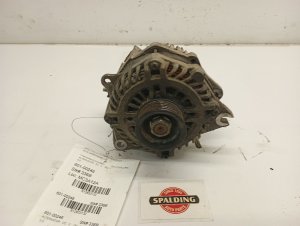
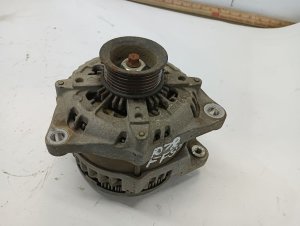
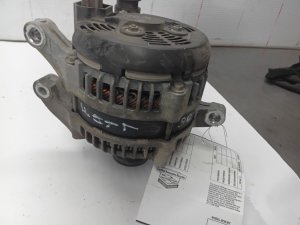
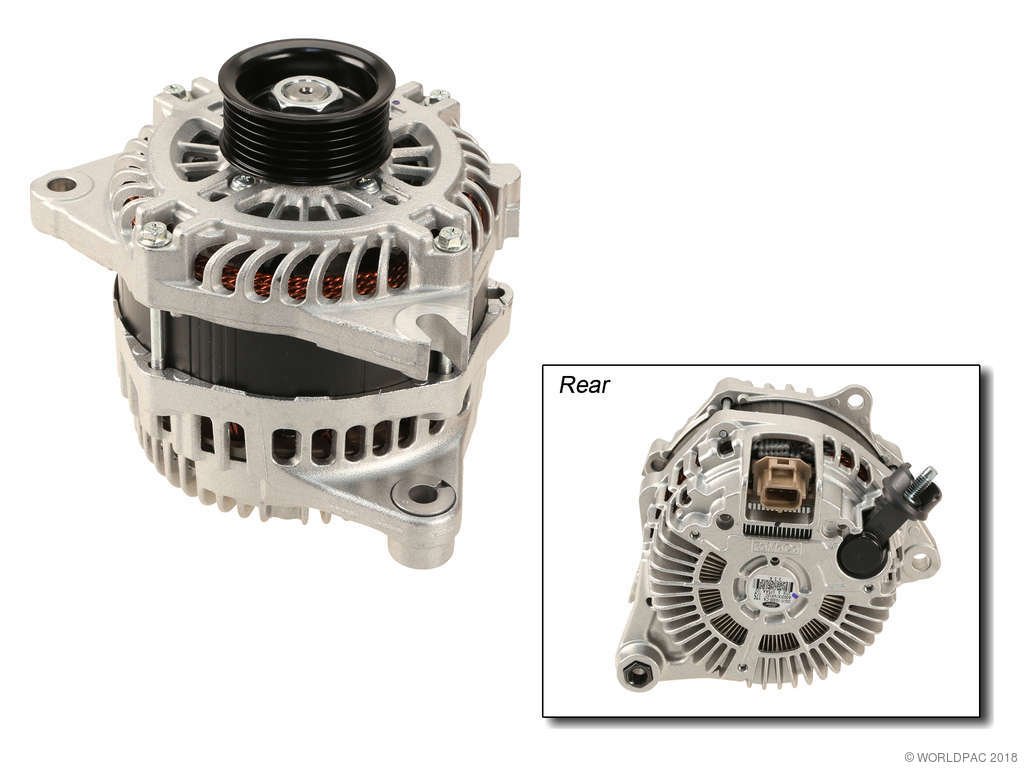
On a 2012-2015 Ford Explorer with the 2.0L EcoBoost engine, code P0626 almost always points to a failed alternator with an internal voltage regulator fault. The onboard computer (PCM) has lost the feedback signal from the alternator. Expect to pay between $250 and $500 for a quality replacement alternator, with DIY replacement being moderately difficult. Using a genuine Motorcraft or OEM-equivalent part is critical to avoid repeat failures.
- P0626 on a 2012-2015 Explorer 2.0L indicates the engine computer (PCM) has detected a high voltage or open circuit fault on the alternator's monitor (GENMON) line.
- The most common fix by far is replacing the alternator with a high-quality OEM or equivalent part due to failure of the internal voltage regulator.
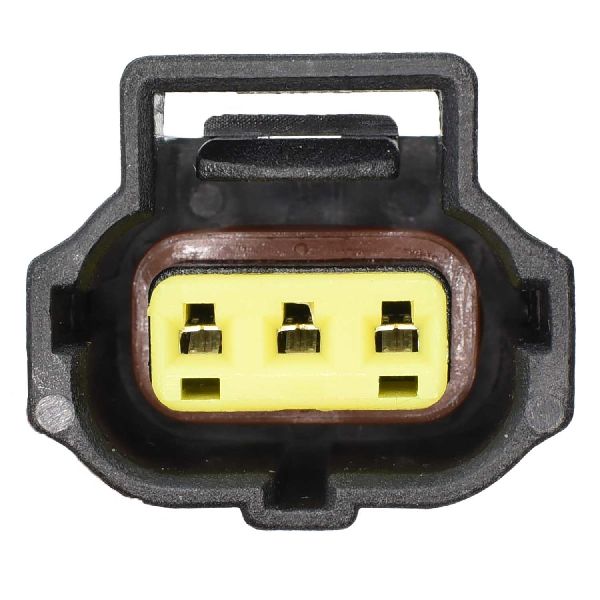
- Always inspect the 3-wire connector and harness at the alternator for damage before replacing parts.
- Avoid cheap, remanufactured alternators, as they often lack the correct communication protocol for Ford's 'Smart Charge' system and can cause the code to return.
What's Unique About the 2012-2015 Ford Explorer
The 2012-2015 Explorer with the 2.0L EcoBoost engine utilizes a 'Smart Charge' system. Unlike older systems, the PCM directly controls the alternator's output using two dedicated pulse-width modulated (PWM) lines: GENCOM (Generator Communication) for commands from the PCM to the alternator, and GENMON (Generator Monitor) for the alternator to report its status back. P0626 is set specifically when the PCM sees a fault on the GENMON feedback line. Because this system is sensitive to communication protocols, using aftermarket or remanufactured alternators that aren't fully compatible can trigger this code, and others like P065B, even if the part is new.
Symptoms You May Notice
- Battery or charging system warning light on the dashboard
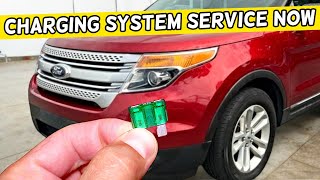
- "Charging System Service Now&quo 🎬 Watch: Diagnosing the Charging System Service Now warningt; message on the instrument panel
- Engine stalling or refusing to start
- Dimming or flickering headlights and interior lights
- Erratic behavior from electrical accessories like the radio or power windows
- A battery that repeatedly dies or goes flat
- A burning smell from the battery due to overcharging
- Replacing the battery without testing the alternator. A new battery will soon be drained by a faulty charging system.
- Replacing other electronic modules that may be acting erratically due to the unstable voltage, without first addressing the P0626 code.
- Installing a cheap, remanufactured alternator that is not compatible with Ford's Smart Charge system, leading to an immediate return of the P0626 or related codes like P065B.
Most Likely Causes
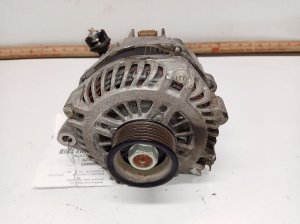
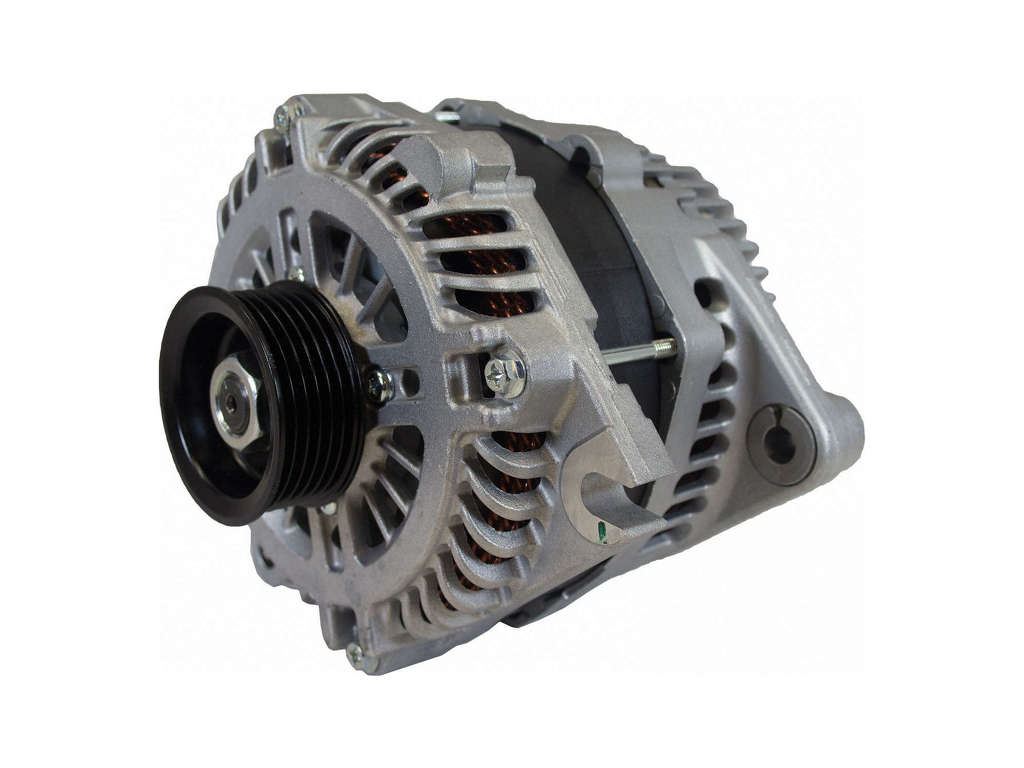
- Faulty Alternator 🔴 High Probability → Shop Alternator The internal voltage regulator, which communicates with the PCM via the GENMON circuit, is the most common failure point within the alternator assembly. On this platform, it's the most frequent cause of P0626.
How to confirm: Test the charging system voltage with the engine running; it should be between 13.5 and 14.8 volts. If the voltage is outside this range or the alternator fails a bench test (available at most auto parts stores), it needs replacement. An advanced scan tool can monitor the GENMON circuit duty cycle; a reading of 98% or higher points to a fault.
Typical fix: Replace the entire alternator assembly. 🎬 See this 2.0L EcoBoost alternator replacement walkthrough It is highly recommended to use an OEM Motorcraft part or a high-quality new unit from a brand like Bosch or Denso to ensure compatibility with the Smart Charge system. Incompatible aftermarket parts are a known cause of repeat codes.
Est. part cost: $250-$500 - Damaged Wiring or Connector 🟡 Medium Probability The wiring harness to the alternator is exposed to engine heat and vibration, potentially causing wires in the 3-pin connector to break, chafe, or melt over time. The connector itself can also become corroded or damaged.
How to confirm: Visually inspect the wiring harness and the 3-pin connector (C102A) at the alternator for any signs of damage, corrosion, or loose connections. Check for continuity and for a short to power on the GENMON circuit (typically the violet wire on Pin 1) between the alternator and the PCM using a multimeter and a wiring diagram.
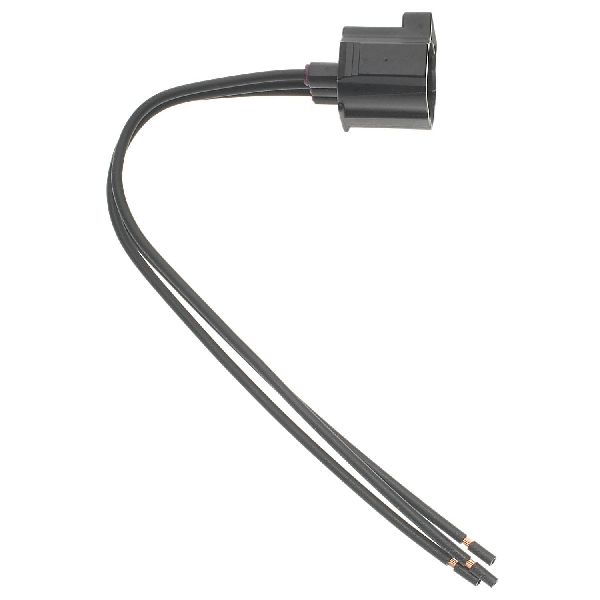
Typical fix: Repair the damaged section of wiring or replace the alternator pigtail connector. The Motorcraft pigtail connector is part number WPT-118.
Est. part cost: $25-$60 - Weak or Faulty Battery ⚪ Low Probability → Shop Vehicle Battery A battery with an internal short or that cannot hold a proper charge can cause erratic behavior in the charging system, sometimes leading the PCM to set this code as a secondary fault. Diagnosis must begin with a known-good, fully charged battery.
How to confirm: Have the battery professionally tested. A simple voltage check is not enough; it needs to be load-tested to confirm its health. Most auto parts stores offer this service for free.
Typical fix: Replace the battery if it fails testing. After replacement, the Battery Management System (BMS) must be reset to ensure the charging system adapts to the new battery correctly.
Est. part cost: $150-$250
Rare But Worth Checking
- Faulty Powertrain Control Module (PCM): → Shop Engine Control Module (ECM) This is the least likely cause. The PCM's internal driver circuit for the alternator can fail, but this should only be considered after the alternator, wiring, and battery have been definitively ruled out as the problem.
- Blown Fuse: Check Fuse 38 (10A) in the under-hood Battery Junction Box, which powers the alternator's voltage regulator. A related fuse, often Fuse 17 (10A), provides power to the 'A' sense circuit.
Diagnosis Steps
- Check for and document any other stored DTCs, paying close attention to P0620, P0625, and P065B.
- Perform a thorough visual inspection of the battery, battery terminals, alternator, and the alternator wiring harness. Look for loose connections, corrosion, or physical damage.
- Check Fuse 38 (10A) in the under-hood fuse box. 🎬 Watch: How to diagnose a blown alternator fuse
- Test the battery to ensure it is fully charged (above 12.2V) and healthy. A weak battery must be charged or replaced before further diagnosis.
- With the engine running, measure the voltage at the battery terminals. A reading between 13.5V and 14.8V is expected. Readings above or below this range suggest a charging system fault.
- Inspect the 3-pin connector (C102A) at the alternator for damage or corrosion. Ensure it is seated securely.
- If wiring appears intact, test the GENMON circuit (Pin 1, Violet wire) for an open or short to power between the alternator connector and the PCM connector (C175B). This requires a digital multimeter and a vehicle-specific wiring diagram.
- If the wiring, fuse, and battery are confirmed to be good, the alternator is the most probable cause. Remove it and have it bench-tested or proceed with replacement.
- After repairs, clear all DTCs and perform a drive cycle. Ensure the Battery Management System (BMS) is reset if the battery was replaced.
Parts You'll Likely Need
- Alternator
(OEM #BB5Z-10346-A)— This is the most common cause for code P0626 on this vehicle, as the internal voltage regulator that communicates with the PCM fails.
Trusted brands: Motorcraft, Bosch (New), Denso (New)
OEM price range: $400-$550
Aftermarket price range: $250-$400 - Alternator Connector Pigtail
(OEM #WPT-118)— The 3-wire connector or its wiring can get damaged from heat and vibration, causing an open or short on the GENMON circuit.
Trusted brands: Motorcraft, Dorman
OEM price range: $40-$60
Aftermarket price range: $20-$35
Related Codes That Often Appear With This One
- P0625 — This code for 'Generator Field 'F' Control Circuit Low' is the direct companion to P0626. They often appear together as they relate to the same control circuit, pointing to a fault in the alternator or its wiring.
- P0620 — A more general 'Generator Control Circuit Malfunction' code that can be triggered by the same internal alternator or wiring faults that cause P0626.
- P065B — This 'Generator Control Circuit Range/Performance' code often appears when an incompatible aftermarket alternator is installed, as the PCM cannot properly control it.
Mechanic-Grade Diagnostic Values
- GENMON (Generator Monitor) PID Duty Cycle — expected: Varies between 3% and 98% with engine running.. Failure: A reading of 98% or higher indicates an open circuit or short to power, which triggers P0626.
- Default (Fail-Safe) Charging Voltage — expected: 13.5V - 14.8V under normal PCM control.. Failure: If a fault exists in the GENMON/GENCOM circuits, the alternator will default to a fixed output of approximately 13.5V - 13.7V.
- GENMON Circuit Voltage at Harness (KOEO) — expected: With the 3-pin alternator connector (C102A) unplugged and Key On Engine Off, voltage at Pin 1 (Violet wire) should be approximately battery voltage.. Failure: Low or no voltage suggests an open wire or a faulty PCM driver. Voltage significantly higher than battery voltage indicates a short to another power source.
- Alternator Field Coil Resistance — expected: A generic good value is between 2.5 and 5.0 Ohms when measured across the field terminals (not applicable on all models).. Failure: A reading of 0 Ω indicates a shorted coil, while an infinite reading (OL) indicates an open coil.
Scan Tool Commands That Help
- Ford IDS (or equivalent high-end scanner): Active Command: GENVDSD (Generator Voltage Desired State) — During pinpoint tests, a technician can command a specific charging voltage (e.g., 14.0V) while monitoring the GENMON PID. This verifies if the PCM can command the alternator and if the alternator responds, helping to isolate the fault between the PCM, wiring, or alternator.
- Ford IDS, FORScan: BMS (Battery Management System) Reset — This service function is mandatory after replacing the vehicle's battery. It resets the battery's age and state-of-charge parameters in the PCM, ensuring the new battery is charged correctly. Failure to reset can lead to under/overcharging and premature battery failure.
- Manual Procedure (No Scan Tool): Manual BMS Reset — If a scan tool is unavailable after battery replacement. With the ignition on (engine off), flash the high beams 5 times, then press the brake pedal 3 times within 10 seconds. The battery light on the dash should flash to confirm the reset.
Wiring & Ground Locations
- C102A — The 3-pin electrical connector located directly on the alternator body.. This is the primary connection for the control circuits. Pin 1 (Violet wire) is the GENMON circuit that triggers P0626. Pin 2 (Blue/Orange wire) is the GENCOM circuit. Damage or corrosion here is a common cause of the code.
- C175B — One of the main multi-pin connectors at the Powertrain Control Module (PCM), which is located at the center rear of the engine compartment.. This connector contains the other end of the GENMON and GENCOM wires running from the alternator. Testing for continuity between C102A and C175B is a key diagnostic step to rule out a wiring break.
- G103 / G104 — Primary engine-to-chassis ground points. G103 is typically located on the left front corner of the engine compartment, on the frame rail or inner fender.. The PCM and alternator rely on a solid, common ground reference. A corroded or loose main engine ground can create a voltage potential difference, causing erratic signals on the sensitive GENMON line and triggering a P0626 code even if the control circuit wiring is intact.
Real Owner Repair Stories
- Ford F150 Forum (Ford F-150 with similar Smart Charge system) — Charging system warning light came on. Codes P0620, P065B, and P0626 were present after replacing the battery and alternator.
❌ Tried (didn't work) Replacing the battery, Replacing the alternator with a remanufactured unit
✅ What actually fixed it The mechanic replaced the alternator pigtail connector (harness side). Despite a visual inspection of the harness showing no issues, the connector itself was faulty. - Ford Truck Enthusiasts Forum (Ford truck with Smart Charge system) — Battery light came on immediately after replacing the original alternator.
❌ Tried (didn't work) Installing a remanufactured alternator from an auto parts store.
✅ What actually fixed it The remanufactured alternator was diagnosed as incompatible or internally faulty. The owner resolved the issue by returning the remanufactured unit and purchasing a new OEM Ford alternator.
"I Checked Everything" — The Actual Cause
- For code P0626, the equivalent of a 'smoke test clean' scenario is when the alternator passes a bench test and wiring continuity checks out, yet the code persists. In one documented case on a similar Ford platform, a technician replaced the alternator twice and the pigtail connector based on a service message, but the P0626 code remained. All wiring tests from the alternator connector to the PCM pins passed. The final, though rare, diagnosis was an internal failure of the PCM driver circuit.
When the Usual Fixes Don't Work
- While the alternator is the most common cause, there are numerous forum reports where replacing the alternator did not fix the P0626 code. In one such case, after replacing both the battery and a remanufactured alternator, codes P0620, P065B, and P0626 all appeared. The ultimate fix was not the alternator, but replacing the 3-wire pigtail connector at the alternator, which had an internal fault not visible on inspection. This highlights the importance of diagnosing the entire circuit, not just assuming the most common component is at fault.
OEM Part Supersession History
BB5Z-10346-A (Ford Engineering PN)→GL-989 (Motorcraft Service PN)— GL-989 is the service part number for the alternator assembly corresponding to the original Ford part number.
Heads up: While physically interchangeable, many remanufactured or non-OEM alternators lack the correct internal voltage regulator compatible with Ford's Smart Charge communication protocol, leading to immediate P0626, P0620, or P065B codes.1U2Z-14S411-TA (Ford Service PN)→WPT-118 (Motorcraft Service PN)— WPT-118 is the current Motorcraft part number for the 3-wire alternator pigtail connector kit.
Model Year Variations Within This Range
- 2012-2015: The 2.0L EcoBoost engine and its associated Smart Charge system were consistent within this model year range for the Explorer. The major change occurred in the 2016 model year refresh, where this engine was replaced by the 2.3L EcoBoost, making this guide specific to the 2012-2015 models.
Diagnostic Flowchart
Other Known Issues on This Vehicle
Issues unrelated to this code that are worth knowing about as an owner of this generation:
- Power Transfer Unit (PTU) Failure 🔴 High — Common on AWD models, typically over 60,000 miles. The 'lifetime' fluid degrades from extreme heat due to proximity to the exhaust, leading to lubrication failure. (Ref: TSB 19-2017 addresses fluid leaks from the PTU seals.)
- Coolant Intrusion into Cylinders 🔴 High — A known design flaw on some 2.0L EcoBoost blocks allows coolant to leak into cylinders, causing misfires and eventual engine failure. (Ref: TSB 19-2346 (and others) address this issue, often requiring a long block replacement.)
- A-Pillar Exterior Trim Detachment 🟠 Medium — Affects all 2011-2019 Explorers. The clips holding the trim on either side of the windshield can fail, allowing the trim piece to detach at speed. (Ref: Ford Safety Recall 24S02)
- MyFord Touch Infotainment System Failures 🟡 Low — Very common on early models of this generation (2012-2015). The system is known for freezing, lagging, and becoming unresponsive.
Used vs. New Parts: Buying Guide for This Vehicle
When a used part is the smart pick: For this repair, a used part is only recommended for the alternator pigtail connector (WPT-118). If you can find a donor vehicle in a junkyard with a clean, un-corroded connector and a few inches of wiring, it is a cost-effective alternative to a new pigtail.
Donor-vehicle mileage cap: roughly under 120000 miles for the part to have meaningful remaining life.
What to inspect on the donor part:
- For a pigtail: Check for brittle plastic, pushed-out pins, or any signs of corrosion (green or white powder) inside the connector.
- Ensure the locking tab on the connector is intact and clicks firmly.
- Inspect the attached wires for any signs of melting, cracking, or previous repairs.
OEM-only on this vehicle (don't cheap out):
- Alternator
Aftermarket brands forum-validated for this vehicle:
- Bosch (New, not remanufactured)
- Denso (New)
Brands owners have reported issues with on this vehicle:
- Generic 'white-box' or store-brand remanufactured alternators are strongly discouraged. Forum and repair data show a very high rate of incompatibility with the Ford Smart Charge system, often causing codes like P0626 or P065B to appear immediately after installation.
Real Owner Stories
Aggregated from forums and TSBs cited above. Mileages and costs reflect what owners reported in those sources.
2015 Ford F150 (Related Smart Charge System)
Symptoms: Battery light illuminated on the dashboard; P0626 code present.
What fixed it: The dealer initially replaced the alternator and pigtail, but the final resolution required a PCM replacement due to a rare internal failure.
Source hint: Ford F150 Forum - 'Battery light' (2015)
Related OBD-II Codes
Frequently Asked Questions
My 2012-2015 Explorer is showing a 'Charging System Service Now' message; is there a specific fuse I should check first?
Can I use a generic store-brand alternator to fix the P0626 code on my EcoBoost Explorer?
Is there a specific wiring part I need if the alternator connector is damaged?
Does the 2012-2015 Ford Explorer require any special steps after replacing the battery to clear charging codes?
Are there any recalls for the 2012-2015 Explorer that I should be aware of while fixing electrical issues?
What voltage should I see at the battery on my 2.0L EcoBoost with the engine running?
Helpful Videos
Used OEM Parts in Stock
New Aftermarket Parts Available



The information in this article is provided for general reference and educational purposes only. Vehicle specifications, procedures, and part compatibility can vary by production date, trim level, and region. Always consult your vehicle's factory service manual and verify part numbers before purchasing or performing repairs. Safety-critical components such as airbags, seat belts, and braking systems should be installed by a qualified professional.
- Ford Explorer:
- 🧭 Diagnostic Flowchart
- 🎬 Helpful Videos
- 🛍️ Shop This Part
- What's Unique About the 2012-2015 Ford Explorer
- Symptoms You May Notice
- Most Likely Causes
- Rare But Worth Checking
- Diagnosis Steps
- Parts You'll Likely Need
- Related Codes That Often Appear With This One
- Mechanic-Grade Diagnostic Values
- Scan Tool Commands That Help
- Wiring & Ground Locations
- Real Owner Repair Stories
- "I Checked Everything" — The Actual Cause
- When the Usual Fixes Don't Work
- OEM Part Supersession History
- Model Year Variations Within This Range
- Other Known Issues on This Vehicle
- Used vs. New Parts: Buying Guide for This Vehicle
- Real Owner Stories
- 2015 Ford F150 (Related Smart Charge System)
- Related OBD-II Codes
- Frequently Asked Questions
- 🎟️ Get 5% Off