

P0626 on 2012-2017 Hyundai Accent: Generator Field Circuit High Causes and Fixes
This code almost always points to a failing alternator with an internal voltage regulator fault. Expect to replace the alternator assembly. A DIY replacement is moderately difficult, while a shop will charge for the part and about 1-2 hours of labor. Before replacement, verify with a multimeter at the battery; a voltage reading over 15V while running is a clear sign of failure.
- P0626 on your Accent points directly to a fault in the alternator's control circuit, most often an over-voltage condition.
- The most likely cause, by far, is a failed internal voltage regulator, which requires replacing the entire alternator assembly.
- Before buying parts, perform a simple voltage test at the battery with the engine running. A reading above 15 volts is a strong confirmation of a bad alternator.
- Always check the wiring and single-plug connector to the alternator for damage before replacing parts.
- Do not ignore this code, as an overcharging condition can destroy your battery and damage other expensive electronics.
What's Unique About the 2012-2017 Hyundai Accent
The 2012-2017 Hyundai Accent (RB generation) uses a modern, ECM-controlled charging system. Unlike older cars where the alternator worked independently, here the ECM actively tells the alternator how much to charge based on the vehicle's electrical demand via the 'F' (Field) terminal. The P0626 code is specific to this control circuit, meaning the problem isn't just that the alternator has failed, but that the communication or control link between the ECM and alternator is broken or reporting an abnormally high voltage.
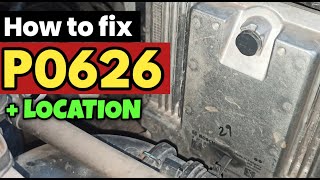
🎬 Watch: A quick breakdown of the P0626 code and its causes.Symptoms You May Notice
- Battery warning light on the dashboard is illuminated
- Check Engine Light is on
- Headlights and interior lights are dim, flickering, or unusually bright
- Engine is hard to start or won't crank
- Engine stalling, especially when electrical loads are high
- Electrical accessories (radio, power windows) behaving erratically
- A whining or grinding noise coming from the engine bay, indicative of a failing alternator bearing
- Swollen battery case or a smell of sulfur (like rotten eggs) from an overcharging battery
- Replacing the battery without testing the alternator. A new battery will soon be damaged by an overcharging alternator or will not be charged by a failing one, leaving you with the same problem.
- Addressing other electrical symptoms (like a faulty radio) without checking for charging system trouble codes first. The P0626 code indicates the root cause is often the charging system itself.
Most Likely Causes
- Failed Alternator / Internal Voltage Regulator 🔴 High Probability → Shop Alternator The voltage regulator is integrated into the alternator and is the most common failure point for this code. When it fails, it can no longer properly control the alternator's output, leading to a high voltage condition or a loss of communication with the ECM. This is a widely reported issue across Hyundai and Kia models sharing this platform.
How to confirm: With the engine running, use a multimeter to test the voltage at the battery terminals. A healthy charging system will read between 13.7 and 14.7 volts. A reading significantly above 14.8V (e.g., 15V+) indicates an overcharging condition, strongly suggesting a faulty regulator/alternator. Many auto parts stores can also bench test the alternator after removal to confirm failure.
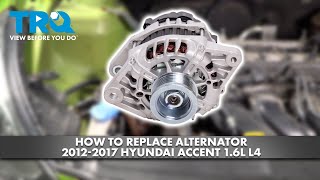
Typical fix: Replace the entire alternator assembly. 🎬 See this step-by-step guide for replacing a faulty alternator. The voltage regulator is not sold as a separate component for this vehicle.
Est. part cost: $150-$400 - Wiring Harness Damage 🟡 Medium Probability The wiring harness, particularly the single field control wire between the ECM and alternator, can become damaged from heat, vibration, or chafing against other components in the crowded engine bay. A short in this wire can cause the high voltage reading.
How to confirm: Visually inspect the wiring harness going to the alternator connector for any signs of breaks, corrosion, or melted insulation. Pay close attention to where the harness might rub against the engine or brackets. Check for continuity on the field control wire between the ECM and alternator plugs with a multimeter.
Typical fix: Repair the damaged section of the wire or replace the connector pigtail. Secure the harness away from heat sources or sharp edges to prevent recurrence.
Est. part cost: $10-$50 - Corroded or Loose Connections ⚪ Low Probability Battery terminals and alternator connections can corrode over time, creating high resistance. While less common for a 'high' circuit code, a poor ground connection can cause erratic behavior in the charging system that the ECM may misinterpret.
How to confirm: Inspect the battery terminals, the main power wire on the alternator (B+ terminal), and the ground connection from the alternator to the chassis. Look for white or green corrosion and ensure all connections are tight.
Typical fix: Clean the terminals and connections thoroughly with a wire brush and ensure they are securely fastened. Apply dielectric grease to prevent future corrosion.
Est. part cost: $5-$15
Rare But Worth Checking
- Faulty Powertrain Control Module (PCM): → Shop Engine Control Module (ECM) This is very rare. The internal driver circuit within the PCM that controls the alternator can fail, but this should only be considered after the alternator and all related wiring have been definitively ruled out.
Diagnosis Steps
- Read the code with an OBD-II scanner and note any other codes present. Freeze frame data can show the conditions under which the code was set.
- Visually inspect the battery terminals for corrosion and tightness. Clean and tighten as necessary.
- Start the engine. With a multimeter, measure the DC voltage across the battery terminals. The reading should be between 13.7 and 14.7 volts. If it's above 15V, the alternator is overcharging and is the prime suspect. If it's below 13V, it's not charging enough.
- Turn the engine off. Inspect the alternator drive belt for proper tension and condition.
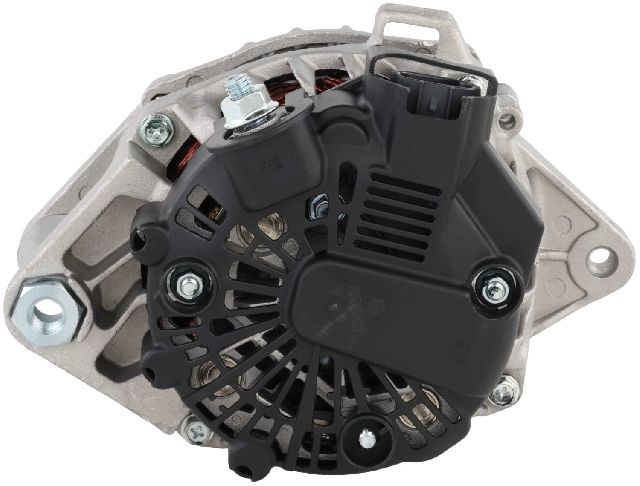
- Disconnect the battery. Inspect the wiring connector at the back of the alternator. It's a single plug with a tab on top. Ensure it is securely plugged in and check for any signs of corrosion, melted plastic, or damaged wires.
- Trace the wiring from the alternator back toward the ECM, looking for any obvious signs of damage, especially where it might rub against engine components.
- If the voltage test in step 3 showed overcharging and all wiring appears intact, the alternator is the confirmed cause and should be replaced.
- If voltage is normal but the code persists, a more advanced diagnosis of the field control signal wire between the alternator and ECM is needed, which may require a wiring diagram and advanced probing.
Parts You'll Likely Need
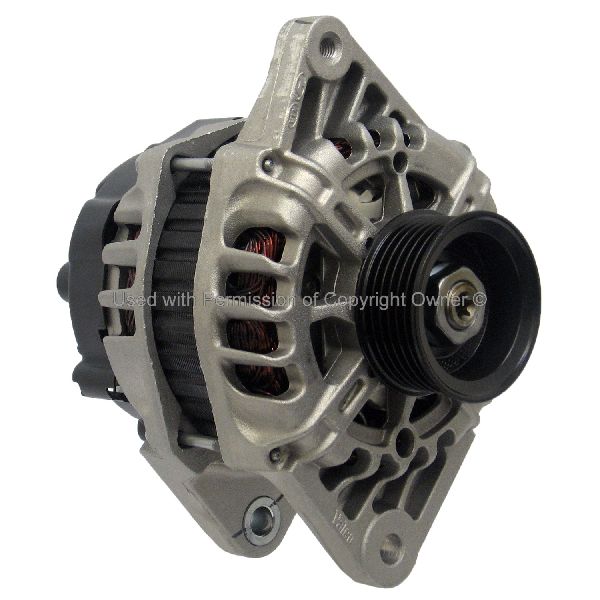
- Alternator
(OEM #37300-2B300)— This is the most common cause of P0626, as the internal voltage regulator fails and cannot be replaced separately.
Trusted brands: Hyundai (OEM), Valeo (Often the OEM supplier), Remy, TYC, TRQ
OEM price range: $450-$560
Aftermarket price range: $150-$350
Related Codes That Often Appear With This One
- P0625 — This code means 'Generator Field/F Terminal Circuit Low'. Seeing both P0625 and P0626 can indicate an intermittent wiring problem or a very erratic voltage regulator.
- P0562 — This code means 'System Voltage Low'. It can appear if the alternator fails and stops charging the battery altogether, leading to a system-wide voltage drop.
- P0620 — This code for 'Generator Control Circuit Malfunction' is a more general charging system fault and can appear alongside P0626 when the ECM detects a problem.
Technical Service Bulletins (TSBs) & Recalls
- TSB 17-EE-003 / 18-EE-003: While not directly for P0626, these bulletins detail the official Hyundai procedure for battery testing with approved testers, which is a critical step in diagnosing any charging system issue.
- TSB 19-EE-006H: This TSB covers general battery maintenance procedures required to ensure battery health, which is relevant as a faulty charging system can quickly damage a battery.
- Service Campaign T1Y (NHTSA 17-01-033): Although for different models (Sonata/Santa Fe), this campaign for a loose alternator regulator screw highlights Hyundai's awareness of potential assembly issues with alternators that can cause charging system faults.
Platform-Specific Known Issues
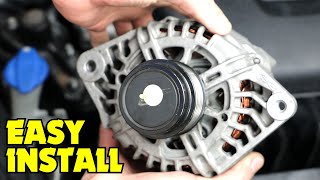
- DIY Replacement Access: On the 1.6L GDI engine, the alternator is located on the front (radiator side) of the engine. Access is tight but manageable. The serpentine belt tension is adjusted via a bolt on the alternator itself, not an automatic tensioner. Several YouTube videos demonstrate the process, which involves removing a few bolts and brackets to create enough clearance to remove the alternator. 🎬 Watch: Detailed walkthrough for replacing the alternator on this specific engine.
Mechanic-Grade Diagnostic Values
- Alternator Field (F-Terminal) Duty Cycle — expected: A Pulse-Width Modulated (PWM) signal that varies with electrical load. The duty cycle increases as load (headlights, blower fan) is applied.. Failure: A signal that is stuck at 0% or 100%, or a signal that does not respond to changes in electrical load. A 0% duty reading specifically triggers P0626 on this platform.
- Voltage Drop - Alternator B+ to Battery Positive Terminal — expected: Less than 0.2 Volts with the engine running and all accessories on.. Failure: A reading above 0.2 Volts indicates high resistance in the main charging wire or connections, which can cause charging issues.
- Voltage Drop - Alternator Case to Battery Negative Terminal — expected: Less than 0.2 Volts with the engine running.. Failure: A reading above 0.2 Volts indicates a poor ground connection for the alternator.
- Alternator AC Ripple Voltage — expected: Less than 0.5 Volts AC (500mV AC) with the engine running.. Failure: A reading above 0.5V AC indicates failing diodes within the alternator's rectifier, requiring alternator replacement.
Scan Tool Commands That Help
- Hyundai GDS (Global Diagnostic System): Actuation Test > Alternator Field Duty — This is a critical bidirectional test to confirm if the alternator's internal regulator is responding to commands from the ECM. The technician can command a specific duty cycle (e.g., 25%, 50%, 75%) and monitor the vehicle's charging voltage with a multimeter. If the voltage does not change according to the commanded duty cycle, it strongly indicates a faulty alternator, assuming the wiring is intact.
- Advanced Aftermarket Scanners (e.g., Launch, Autel): Actuation Test / Active Test > Generator Control / Fuel Pump Relay — Many high-end aftermarket scanners offer bidirectional controls for Hyundai systems. Under the ECM menu, an actuation test for the generator or alternator control allows for similar functionality to the OEM GDS tool, commanding the alternator to charge and verifying its response.
Wiring & Ground Locations
- PCM/ECM — Located in the engine compartment, on the driver's side, near the battery and E/R (Engine/Relay) fuse box.. The PCM is the source of the PWM control signal for the alternator. Checking for corrosion or damage at the PCM connector is a key diagnostic step.
- Alternator Connector (C12-1) — The main electrical connector on the back of the alternator.. This connector carries the 'F' (Field/PWM) and 'L' (Load) signals. For P0626, the wire to inspect is the 'Alternator PWM signal output' which is at pin 51 of the ECM connector [EGGA-AG]. Damage or corrosion here directly causes the code.
- Ground GGG05 — On the left (driver's side) rear of the engine compartment, on the inner fender/chassis.. This is a primary chassis ground point for several engine management components. A poor connection here can cause erratic voltage readings and control module issues.
- Alternator Main Ground — The alternator grounds through its mounting bracket to the engine block. The engine block is then grounded to the chassis and the battery negative terminal via a thick ground strap.. A corroded or loose alternator mounting bolt or a faulty engine-to-chassis ground strap can create high resistance, leading to improper charging and various electrical faults.
Real Owner Repair Stories
- Hyundai-Forums user (2012 Hyundai Accent) — Check engine light on, battery light on, voltage at battery reading 17.5V (severe overcharging).
❌ Tried (didn't work) Initial diagnosis pointed towards alternator but user was seeking confirmation.
✅ What actually fixed it Replacing the alternator assembly resolved the overcharging condition and cleared the P0626 code. The user confirmed the fix after installation. - YouTube repair video comment section (2013 Hyundai Accent) — P0626 code present, battery light flickering, erratic voltage readings.
❌ Tried (didn't work) Cleaning battery terminals.
✅ What actually fixed it The owner replaced the alternator, which fixed the flickering light and cleared the code. The internal voltage regulator was confirmed to be the point of failure.
OEM Part Supersession History
37300-2B300→37300-2B510, 37300-2B500— Standard part evolution, potential internal improvements.
Heads up: These part numbers are generally interchangeable for the 2012-2017 Accent 1.6L. However, always confirm with a VIN at the dealership or parts supplier to ensure the correct amperage and pulley configuration.
Diagnostic Flowchart
Other Known Issues on This Vehicle
Issues unrelated to this code that are worth knowing about as an owner of this generation:
- Carbon Buildup on Intake Valves 🟠 Medium — Common on all GDI (Gasoline Direct Injection) engines, including the 1.6L Gamma. Becomes noticeable after 60,000-100,000 miles, causing rough idle, hesitation, and reduced power.
- Ignition Coil Failure 🟡 Low — Can occur intermittently, leading to engine misfires (e.g., codes P0300-P0304). Not a universal problem but a frequent maintenance item.
- ABS Module Electrical Short / Fire Risk 🔴 High — Subject to a major safety recall. Affects a wide range of Hyundai models from this era, including the 2012-2015 Accent. (Ref: Hyundai Recall 251 (NHTSA 24V-056))
- Soy-Based Wiring Insulation Attracting Rodents 🟡 Low — A widely reported issue across many automakers, including Hyundai, during this period. Frequency depends on where the vehicle is parked.
- Rough Shifting in Automatic Transmission 🟠 Medium — Reported in some 2012-2020 models. Can be caused by failing transmission solenoids or fluid temperature issues.
Used vs. New Parts: Buying Guide for This Vehicle
When a used part is the smart pick: A used alternator from a junkyard can be a cost-effective option if the budget is tight, especially since the replacement labor is not excessively high. It is a gamble on the remaining life of the internal voltage regulator, which is the common failure point.
Donor-vehicle mileage cap: roughly under 75000 miles for the part to have meaningful remaining life.
What to inspect on the donor part:
- Check the date code on the alternator if visible; newer is better.
- Spin the pulley by hand. It should spin smoothly with minimal noise. Any grinding or roughness indicates bad bearings.
- Inspect the plastic connector housing for cracks or heat damage.
- Look for a vehicle that was in a rear-end collision, suggesting the engine and its accessories were likely in good running order prior to the accident.
Aftermarket brands forum-validated for this vehicle:
- Valeo (often the Original Equipment supplier)
- Denso (new or remanufactured)
- Bosch
- Quality-Built
- Remy (remanufactured)
Brands owners have reported issues with on this vehicle:
- Unbranded, 'white-box' parts from online marketplaces with no warranty or reputation. The quality of the internal voltage regulator in these units is highly suspect and can fail quickly or damage vehicle electronics.
Related OBD-II Codes
Frequently Asked Questions
How difficult is it to replace the alternator myself on my 2015 Hyundai Accent?
My mechanic says the voltage regulator failed. Can I just replace that part instead of the whole alternator?
What voltage should I see at my battery with the engine running to know if the alternator is working correctly?
Is there a recall for the P0626 alternator issue on the Hyundai Accent?
I have a 2016 Kia Rio with a P0626 code. Is this article relevant?
Besides the Check Engine and Battery lights, what are other common symptoms of P0626?
Helpful Videos
Used OEM Parts in Stock
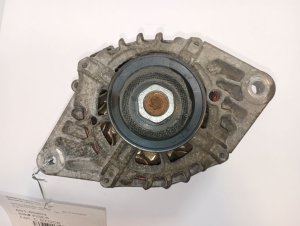
New Aftermarket Parts Available


The information in this article is provided for general reference and educational purposes only. Vehicle specifications, procedures, and part compatibility can vary by production date, trim level, and region. Always consult your vehicle's factory service manual and verify part numbers before purchasing or performing repairs. Safety-critical components such as airbags, seat belts, and braking systems should be installed by a qualified professional.
- Hyundai Accent:
- 🧭 Diagnostic Flowchart
- 🎬 Helpful Videos
- 🛍️ Shop This Part
- What's Unique About the 2012-2017 Hyundai Accent
- Symptoms You May Notice
- Most Likely Causes
- Rare But Worth Checking
- Diagnosis Steps
- Parts You'll Likely Need
- Related Codes That Often Appear With This One
- Technical Service Bulletins (TSBs) & Recalls
- Platform-Specific Known Issues
- Mechanic-Grade Diagnostic Values
- Scan Tool Commands That Help
- Wiring & Ground Locations
- Real Owner Repair Stories
- OEM Part Supersession History
- Other Known Issues on This Vehicle
- Used vs. New Parts: Buying Guide for This Vehicle
- Related OBD-II Codes
- Frequently Asked Questions
- 🎟️ Get 5% Off