

P0626 on 2015 Volkswagen Beetle 2.0L TDI: Generator Field Circuit Causes and Fixes
On a 2015 VW Beetle TDI, code P0626 almost always means the alternator is failing due to an internal voltage regulator fault. The fix is to replace the entire alternator assembly. Expect to pay $400-$750 for a quality part from brands like Bosch or Valeo.
- P0626 on your 2015 Beetle TDI points directly to a charging system problem, not the battery itself.
- The most likely cause by far is a failed internal voltage regulator, which requires replacing the entire alternator.
- Confirm the failure by testing the battery voltage with the engine running; a reading outside the 13.2V-14.8V range is a clear sign of a fault.
- The correct OEM part number for the alternator is 04B903023A.
- Driving the vehicle is not recommended as you risk getting stranded or causing damage to other electronics from incorrect voltage.
What's Unique About the 2015-2015 Volkswagen Beetle
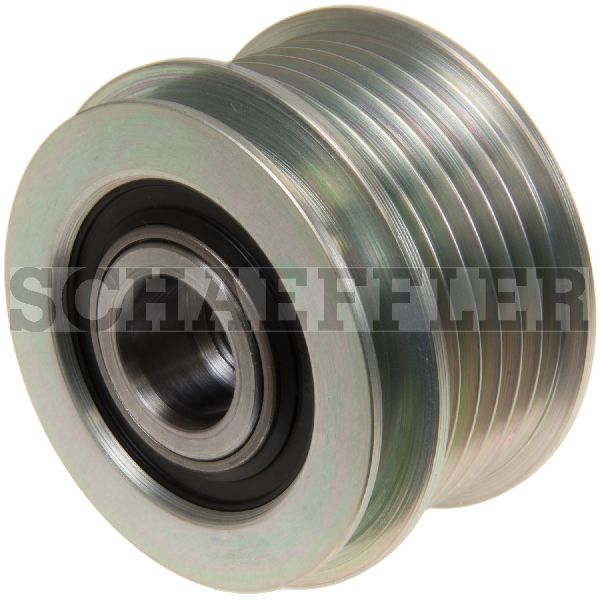
For the 2015 Beetle with the CVCA 2.0L TDI engine, the charging system is not a simple 'on/off' system. The ECM uses a specific communication line (the 'F' terminal) to send a Pulse Width Modulated (PWM) signal to the alternator's internal voltage regulator. While P0626 is a generic code, on this specific platform, it strongly points to the failure of this electronic regulator, which is a known wear item. The alternator's clutched pulley is another common service part on this engine, but its failure causes mechanical noise or belt issues, not an electronic P0626 fault code.
🎬 Watch: How to replace the alternator clutch pulley on a CVCA TDISymptoms You May Notice
- Check Engine Light illuminated
- Battery or Alternator warning light on the dashboard
- Headlights and interior lights dimming, flickering, or being overly bright
- Battery dying and vehicle failing to start
- Engine stalling during operation
- Electrical accessories behaving erratically
- A swollen battery case from overcharging
- Burning smell from the battery area
- Replacing the battery. A bad battery can cause starting issues, but it will not set a P0626 code. The code points to a fault in the charging system's control circuit. Always test the alternator's output before replacing the battery.
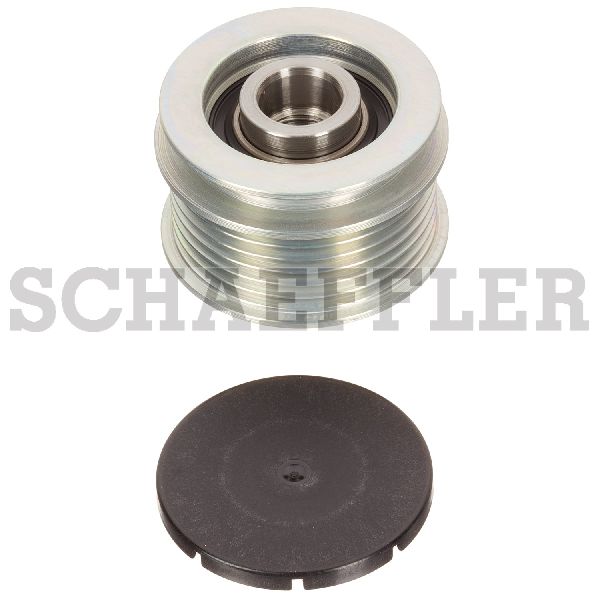
- Replacing the alternator clutch pulley. The one-way clutch pulley is a common maintenance item, often replaced during a timing belt service, but its failure causes mechanical noise or belt issues, not an electronic P0626 fault code.
Most Likely Causes
- Failed Alternator / Internal Voltage Regulator 🔴 High Probability → Shop Alternator The internal voltage regulator is a common failure point on the Valeo or Bosch alternators used in this TDI engine. It is not typically sold separately, so the entire unit is replaced. Failure of the regulator's power transistor or internal short circuits are the most frequent root causes.
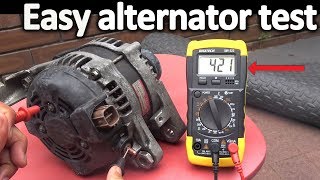
How to confirm: With the engine running, use a multimeter to test the voltage at the battery terminals. A reading above 15.0V (overcharging) or below 13.2V (undercharging) points to a faulty alternator. 🎬 Watch: How to test the voltage regulator and alternator A professional scan tool can also command the alternator and read the feedback on the F-terminal circuit to confirm the fault.
Typical fix: Replace the entire alternator assembly.
Est. part cost: $400-$750 - Wiring or Connector Issue ⚪ Low Probability Wiring can become chafed, melted, or corroded over time due to engine bay heat and vibration. The connector at the alternator is a common spot for issues.
How to confirm: Visually inspect the wiring harness and the two-pin connector at the back of the alternator for any signs of corrosion, damage, or loose connections. Check for continuity on the 'F' terminal wire between the alternator and the ECM. Disconnect the F terminal at the alternator; if high voltage is still present on the harness side with the key on, the wire is shorted to power somewhere.
Typical fix: Repair the damaged section of the wiring harness or clean/replace the connector.
Est. part cost: $10-$50
Rare But Worth Checking
- Powertrain Control Module (PCM) Failure: → Shop Engine Control Module (ECM) This is very rare. The PCM's internal driver circuit for the alternator can fail, but this should only be considered after exhaustively ruling out the alternator and all related wiring.
Diagnosis Steps
- Read all stored DTCs with an OBD-II scanner. Note any other codes that are present, especially P0625 or P0562.
- With the engine off, check the battery voltage with a multimeter. It should be around 12.2V-12.8V.
- Start the engine. Measure the voltage at the battery terminals again. A healthy charging system should read between 13.2V and 14.8V. A reading above 15.0V or below 13.2V strongly indicates a problem with the alternator.
- Turn the engine off and disconnect the battery.
- Visually inspect the wiring harness and the two-pin connector going to the alternator. Look for any frayed wires, melting, corrosion on the pins, or a poor ground connection.
- If wiring looks good and the voltage test failed, the alternator is the most likely culprit and should be replaced. A bench test of the alternator can provide final confirmation before replacement.
Parts You'll Likely Need
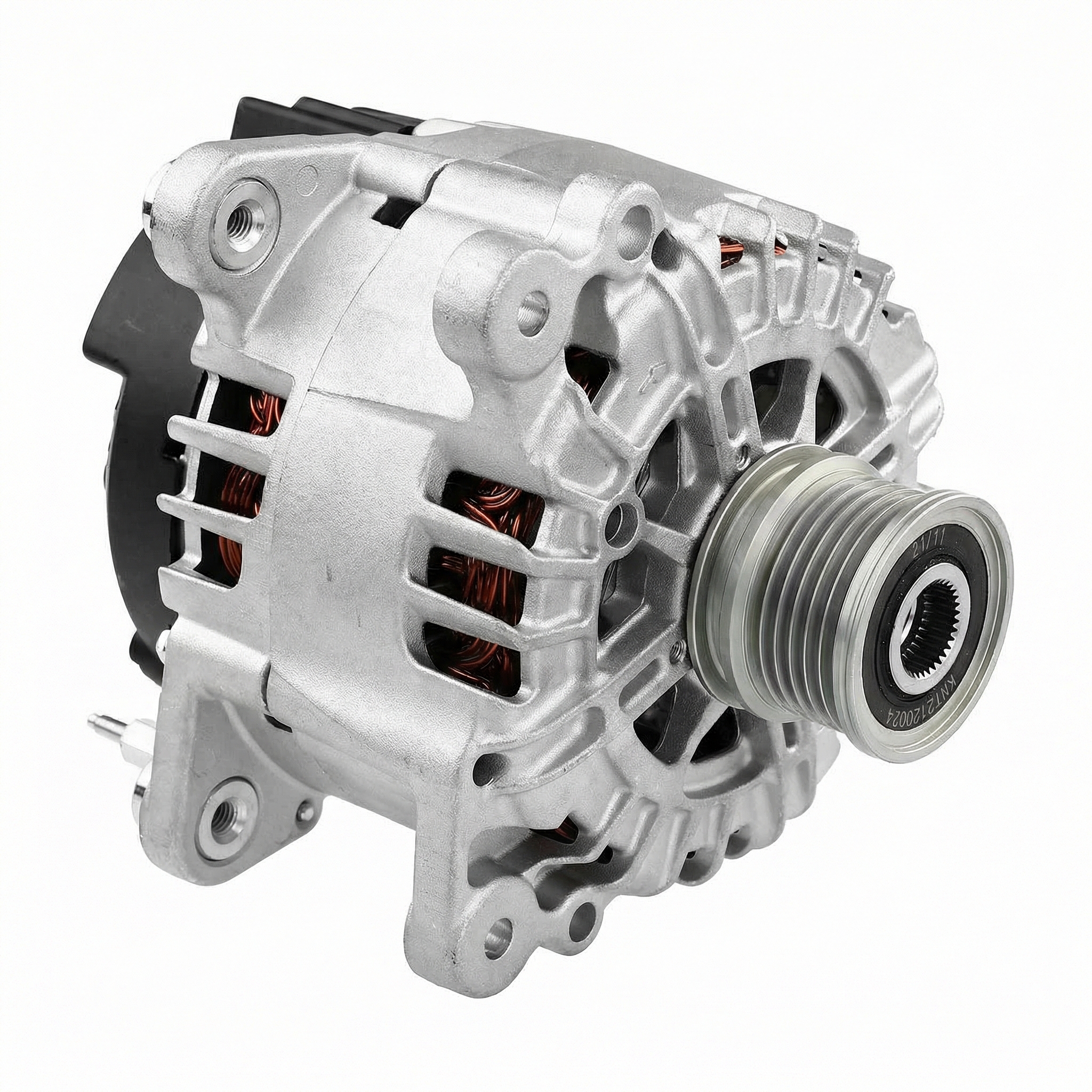
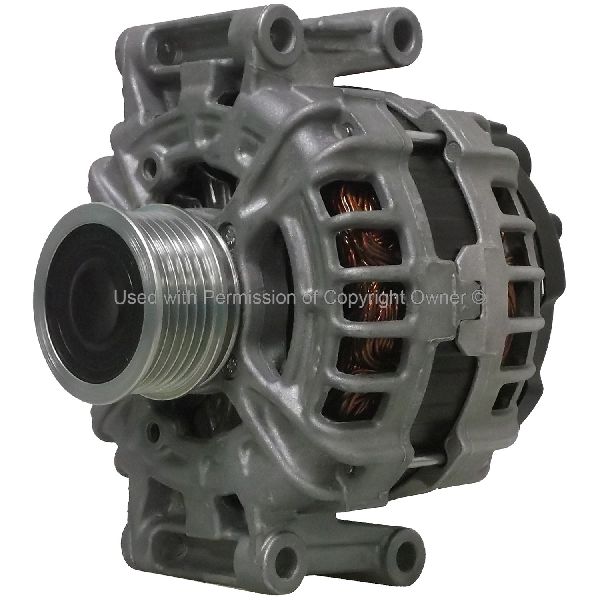
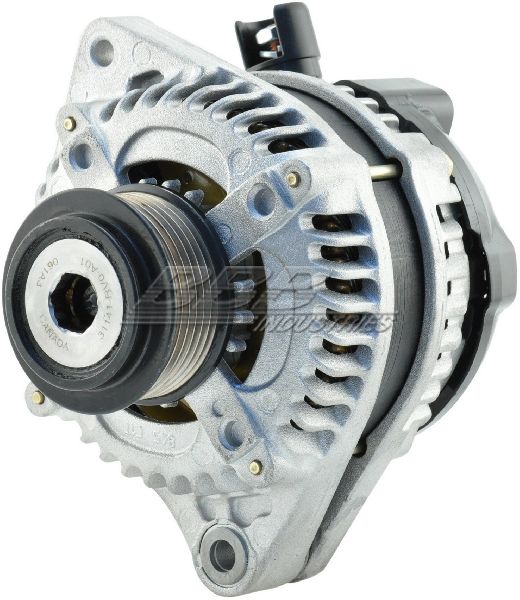
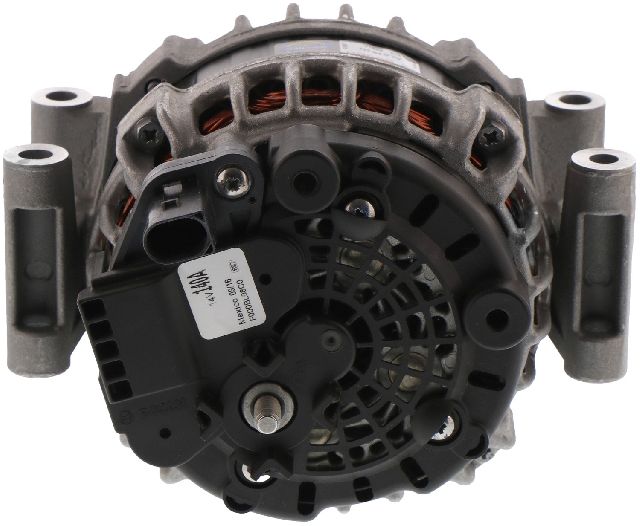
- Alternator
(OEM #04B903023A)— This is the primary cause of code P0626 on this vehicle, as the internal voltage regulator fails and is not serviced separately.
Trusted brands: Valeo, Bosch, Genuine VW
OEM price range: $600-$800
Aftermarket price range: $400-$600
Related Codes That Often Appear With This One
- P0625 — P0625 is 'Generator Field/F Terminal Circuit Low'. Seeing both P0625 and P0626 together can indicate an intermittent wiring problem or a failing voltage regulator sending erratic signals.
- P0562 — P0562 is 'System Voltage Low'. This code may appear with P0626 if the alternator has completely stopped charging, causing the overall vehicle system voltage to drop as the battery drains.
Mechanic-Grade Diagnostic Values
- Alternator LIN Bus Signal Voltage (at alternator connector) — expected: A pulsing digital signal, typically cycling between ~1.0V and ~10.0V depending on the commanded load from the ECM. A static voltage or one that doesn't change with engine load is indicative of a fault.. Failure: A constant high voltage (near battery voltage) indicates a short to power or an internal alternator fault, triggering P0626. A constant low voltage (near 0V) would trigger P0625.
- VCDS Advanced Measuring Blocks - Alternator Status — expected: Look for fields like 'Generator load', 'Specified voltage', and 'Actual voltage'. The specified and actual voltages should closely match. The generator load should increase as electrical consumers (lights, fans, rear defrost) are turned on.. Failure: A significant and persistent mismatch between specified and actual voltage, or a generator load that reads 0% or 100% constantly, points to a communication or regulation fault.
Scan Tool Commands That Help
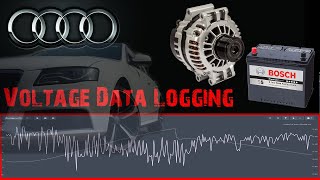
- VCDS (Ross-Tech): Advanced Measuring Blocks in Module 01-Engine or 19-CAN Gateway — This is used to monitor the real-time communication between the ECM and the alternator. You can view the alternator load percentage, specified voltage by the ECM, and the actual output voltage. This is critical for determining if the ECM is commanding a charge and if the alternator is responding correctly, 🎬 See how to data log your voltage system with VCDS helping to differentiate between a wiring, ECM, or alternator fault.
Wiring & Ground Locations
- Alternator 2-Pin Connector — Plugged into the back of the alternator.. This connector carries the critical LIN bus communication wire from the ECM to the alternator's voltage regulator. A corroded pin, damaged wire, or loose connection here will directly cause P0625 or P0626 by disrupting the control signal.
- Main Engine Ground Strap — Typically located on the driver's side of the engine bay, connecting the engine block or transmission case directly to the chassis frame rail, often near a motor mount.. A poor engine ground forces the alternator's return current to find other paths, which can create voltage drops and electrical noise. While it may not directly cause P0626, it can cause a host of erratic electrical issues, including incorrect voltage readings that can confuse the ECM and contribute to charging system faults.
Real Owner Repair Stories
- Ross-Tech Forum User (VW Golf (similar platform)) — Alternator would not charge the battery unless the VCDS scan tool was physically plugged in and communicating with the car, at which point it would start charging.
❌ Tried (didn't work) Initial visual inspection showed no obvious faults.
✅ What actually fixed it The issue was traced to the single LIN bus wire going to the alternator. Although the wire itself had continuity, there was an intermittent fault or interference. The user noted that unplugging the LIN wire caused the alternator to default to a fixed charging voltage when revved above 3000 RPM. This confirmed the alternator itself could generate power but wasn't being controlled properly. The ultimate resolution pointed toward a fault in the LIN bus communication line or the modules connected to it (Alternator, Battery Monitoring Module, Gateway).
OEM Part Supersession History
04B903023A→04B903023AX (remanufactured)— Standard practice for providing a lower-cost, factory-rebuilt option.
Heads up: On some VW models, the vehicle was originally equipped with either a Bosch or a Valeo alternator. While they are physically interchangeable, some dealer systems and technicians insist on replacing with the same brand to avoid any potential communication issues with the LIN bus controller, though this is not a universally confirmed problem.
Diagnostic Flowchart
Other Known Issues on This Vehicle
Issues unrelated to this code that are worth knowing about as an owner of this generation:
- Diesel Particulate Filter (DPF) Clogging 🔴 High — Common, especially on vehicles used for frequent short trips that prevent passive regeneration. Can lead to limp mode and expensive replacement.
- Heater Core Clogging 🟠 Medium — A well-documented issue on this TDI generation, often attributed to coolant breakdown (G13) or casting material from the cooling system. Results in poor or no heat in the cabin. The
Used vs. New Parts: Buying Guide for This Vehicle
When a used part is the smart pick: For this specific repair, a used alternator is a high-risk choice. The internal voltage regulator is the primary failure point and is an electronic wear item. A used part from a junkyard has an unknown history and could fail shortly after installation, repeating the labor-intensive replacement process. A used part should only be considered for a temporary, emergency fix if a new or remanufactured unit is unavailable.
Donor-vehicle mileage cap: roughly under 80000 miles for the part to have meaningful remaining life.
What to inspect on the donor part:
- Check for a clean, dry unit; avoid alternators covered in oil or coolant, which can degrade electronics.
- Spin the pulley by hand. It should spin smoothly with a slight ratcheting feel in one direction due to the clutch pulley. Any grinding or binding is a red flag.
- Inspect the two-pin electrical connector for corrosion, cracks, or broken locking tabs.
- Ask for the donor vehicle's VIN to verify it had the same CVCA engine and to check its service history if possible.
OEM-only on this vehicle (don't cheap out):
- While not strictly 'OEM-only', using a high-quality remanufactured unit from the original supplier (Bosch or Valeo) is strongly recommended over a generic, no-name aftermarket part.
Aftermarket brands forum-validated for this vehicle:
- Bosch (New or Remanufactured)
- Valeo (New or Remanufactured)
Brands owners have reported issues with on this vehicle:
- Generic, unbranded 'white box' alternators from online marketplaces. These often use lower-quality internal components (regulators, diodes, bearings) that can fail prematurely or fail to communicate correctly with the VW's LIN bus system.
Real Owner Stories
Aggregated from forums and TSBs cited above. Mileages and costs reflect what owners reported in those sources.
2015 Volkswagen Jetta 2.0L TDI (CVCA)
Symptoms: The vehicle experienced stalling issues, illustrating the complexity of diagnosing the platform even when specific codes might not be immediately present.
What fixed it: Diagnosis of the charging system and electrical architecture, as the Jetta shares the exact CVCA engine and electrical platform as the Beetle.
Source hint: Ross-Tech Forums - A user with a 2015 Jetta with the CVCA engine describes stalling issues
Related OBD-II Codes
Frequently Asked Questions
Can I just replace the voltage regulator on my 2015 Beetle TDI's Valeo alternator?
My Beetle's battery case looks swollen and smells like it's burning; is this related to P0626?
Is it safe to use a used alternator from a high-mileage donor for my CVCA engine?
Why are my interior lights flickering and my dashboard accessories acting erratically?
Could a simple wiring issue cause P0626 on my Beetle, or is it always the alternator?
Helpful Videos
Used OEM Parts in Stock
New Aftermarket Parts Available


The information in this article is provided for general reference and educational purposes only. Vehicle specifications, procedures, and part compatibility can vary by production date, trim level, and region. Always consult your vehicle's factory service manual and verify part numbers before purchasing or performing repairs. Safety-critical components such as airbags, seat belts, and braking systems should be installed by a qualified professional.
- Volkswagen Beetle:
- 🧭 Diagnostic Flowchart
- 🎬 Helpful Videos
- 🛍️ Shop This Part
- What's Unique About the 2015-2015 Volkswagen Beetle
- Symptoms You May Notice
- Most Likely Causes
- Rare But Worth Checking
- Diagnosis Steps
- Parts You'll Likely Need
- Related Codes That Often Appear With This One
- Mechanic-Grade Diagnostic Values
- Scan Tool Commands That Help
- Wiring & Ground Locations
- Real Owner Repair Stories
- OEM Part Supersession History
- Other Known Issues on This Vehicle
- Used vs. New Parts: Buying Guide for This Vehicle
- Real Owner Stories
- 2015 Volkswagen Jetta 2.0L TDI (CVCA)
- Related OBD-II Codes
- Frequently Asked Questions
- 🎟️ Get 5% Off