

P0627 on 2002-2008 Dodge Ram 1500 3.7L: Causes and Fixes for Fuel Pump Circuit Failure
On a 2002-2008 Dodge Ram, P0627 almost always points to a failed fuel pump relay inside the main fuse box (IPM/TIPM) or a bad in-tank fuel pump. A no-start or stalling condition is the most common symptom. Expect to pay $200-$500 for a new fuel pump or a refurbished TIPM. For 2006-2008 models with a failed TIPM relay, an external bypass kit is a common and affordable temporary fix.
- P0627 on this Ram almost always means the fuel pump isn't getting power.
- The most likely causes are a bad fuel pump or a failed fuel pump relay.
- On 2006-2008 models, the relay is inside the main fuse box (TIPM) and its failure requires repairing or replacing the entire box.
- Do not immediately replace the fuel pump without first verifying it is receiving power during startup.
- A no-start condition combined with no buzzing sound from the fuel tank is a strong indicator of this issue.
What's Unique About the 2002-2008 Dodge Ram 1500
The 2002-2008 Ram 1500 spans a critical change in electrical architecture. Early models (2002-2005) use an Integrated Power Module (IPM) with replaceable relays. Later models (2006-2008) use a Totally Integrated Power Module (TIPM). The TIPM in the 2006-2008 trucks is notoriously prone to internal failure of the fuel pump relay, which is soldered to the main board and not easily replaceable. This design makes a relatively simple relay failure a much more complex and expensive repair, often leading to a P0627 code when other components are actually fine. This issue is so common that external fuel pump relay bypass kits are widely available as a workaround.
Symptoms You May Notice
- Engine cranks but does not start
- Engine stalls intermittently, especially while driving
- Extended cranking time before the engine starts
- Audible whining or buzzing from the fuel tank may be absent when turning the key to 'ON'
- Hesitation or loss of power under acceleration
- Fuel pump continues to run after the engine is turned off, potentially draining the battery
- Replacing the fuel pump when the actual problem is the fuel pump relay inside the TIPM (very common on 2006-2008 models).
- Replacing the PCM when the issue is a simple wiring break or corroded ground connection.
- Replacing the TIPM when the issue was a corroded wire at the fuel pump connector.
Most Likely Causes
- Faulty Fuel Pump Relay (Internal to TIPM/IPM) 🔴 High Probability → Shop Fuel Pump The fuel pump relay in 2006-2008 models is integrated into the TIPM and is a very common failure point due to its design. It cannot be swapped like a traditional relay. This failure can manifest as the pump not turning on (no-start) or not turning off (draining the battery).
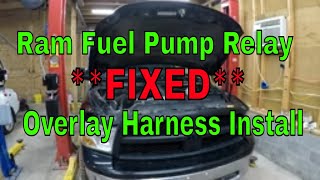
How to confirm: If you do not hear the fuel pump prime (buzz for 2 seconds) when turning the key to the 'ON' position, and you've confirmed the fuse is good, the relay is a likely culprit. A professional may use a bypass cable to test. On 2002-2005 models, you can swap the fuel pump relay (often labeled #58 in the fuse box) with an identical one (e.g., the horn relay) to see if the problem is resolved. For 2006+ models, a common test is to install an external fuel pump relay bypass kit. 🎬 Watch: How to install a fuel pump relay bypass kit.
Typical fix: For 2006-2008 models, the most common fixes are installing an external fuel pump relay bypass harness, having the TIPM professionally repaired, or replacing the entire TIPM. For 2002-2005 models, replace the individual fuel pump relay.
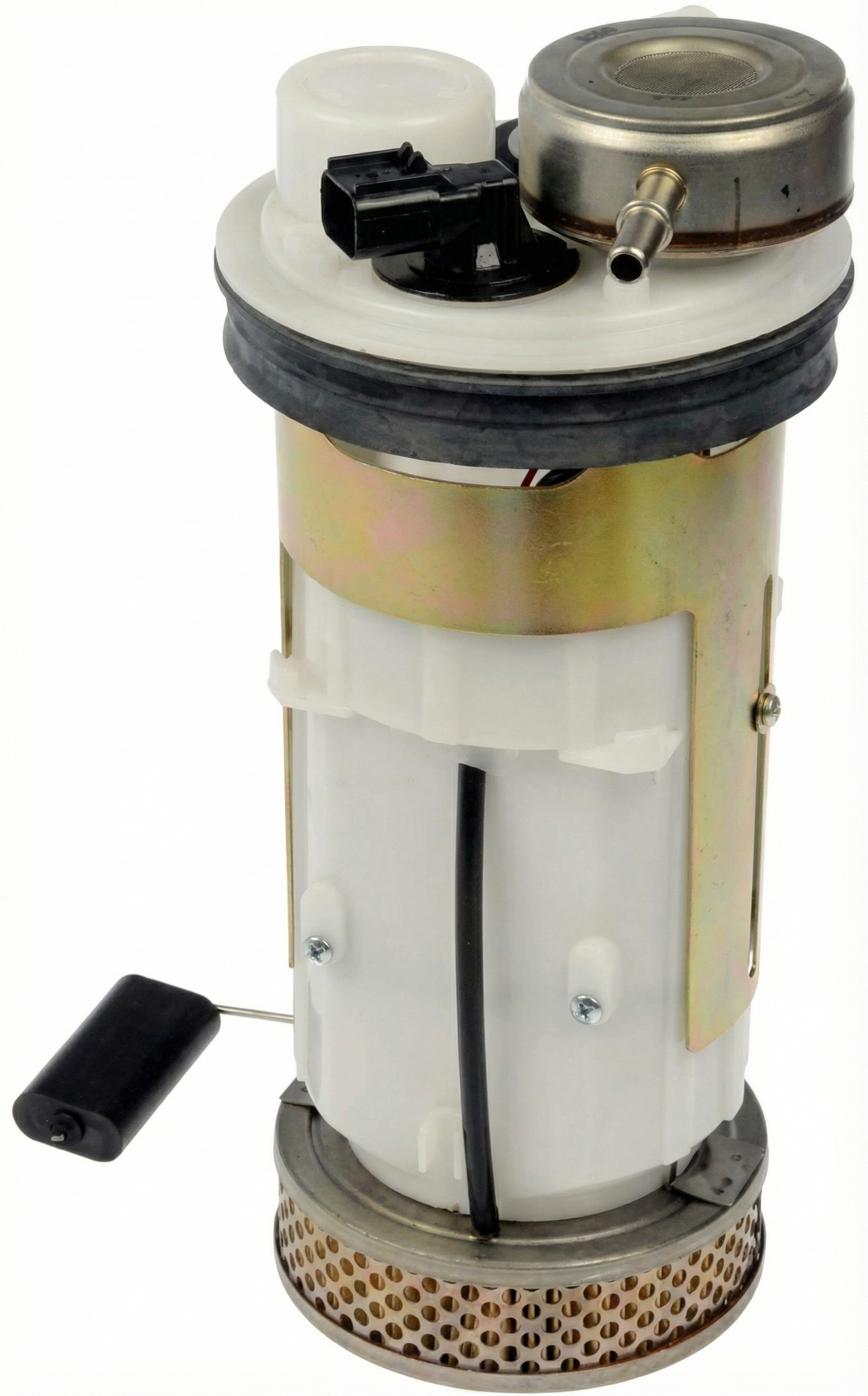
Est. part cost: $25-$50 (bypass kit), $200-$400 (TIPM repair service), $400-$800 (rebuilt TIPM), $10-$20 (pre-2006 relay) - Failed In-Tank Fuel Pump Assembly 🔴 High Probability → Shop Fuel Pump Fuel pumps are a wear item and have a finite lifespan. Failure is common on higher-mileage trucks. A failing pump can also be diagnosed by hitting the bottom of the fuel tank with a mallet; if the truck starts afterward, the pump motor is failing.
How to confirm: After confirming the relay and wiring have power, check for voltage at the fuel pump connector at the top of the fuel tank. If voltage is present for 2-3 seconds when the key is turned, but the pump does not run, the pump has failed. A fuel pressure test will also show zero or very low pressure. The specified fuel pressure for 2002-2003 models is 49-53 PSI.
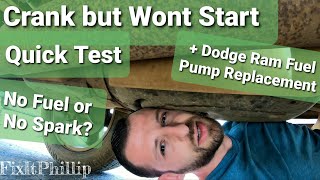
Typical fix: Replace the entire fuel pump module assembly. This requires dropping the fuel tank or lifting the truck bed for access. 🎬 See this walkthrough for testing and replacing the fuel pump.
Est. part cost: $150-$400 - Damaged or Corroded Wiring 🟡 Medium Probability The wiring harness runs along the frame rail to the fuel tank, making it susceptible to corrosion from road salt and physical damage from road debris. The main harness connector at the TIPM (C1 connector) and the connector at the fuel pump are common points for corrosion or pushed-out pins.
How to confirm: Visually inspect the wiring harness from the TIPM/IPM to the fuel tank. Look for chafed, broken, or corroded wires, especially near the fuel tank connector. Check for continuity on the fuel pump control circuit wire (often a Dark Green/White wire designated K31) between the TIPM and the pump. Check for a solid ground at the pump connector.
Typical fix: Repair or replace the damaged section of the wiring harness. Ensure the repair is sealed against moisture. Clean or replace corroded connectors.
Est. part cost: $10-$50
Rare But Worth Checking
- Faulty Powertrain Control Module (PCM): → Shop Engine Control Module (ECM) This is uncommon, but if the relay, pump, and wiring all test good, the PCM's internal driver that grounds the relay control circuit may have failed. This should be the last component to be suspected after all other possibilities are exhausted.
- Clogged Fuel Filter: The fuel filter is integrated into the fuel pump module assembly. While a clogged filter typically causes low pressure codes and drivability issues, a severely blocked filter can over-stress the pump motor, causing it to draw excessive current, which can damage the control relay or the pump's internal wiring, leading to an open circuit and triggering P0627.
Diagnosis Steps
- Turn the ignition key to the 'ON' position (without starting) and listen for a 2-second buzzing sound from the fuel tank area. This is the fuel pump priming. If no sound is heard, proceed to the next steps.
- Check the fuel pump fuse in the power distribution center (fuse box) under the hood. For a 2004 model, this is often fuse #17 (20A). Replace if blown.
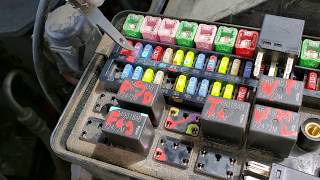
- For 2002-2005 models, swap the fuel pump relay (Relay #58) with an identical relay from a non-essential system (like the horn or fog lamps) and see if the truck starts. 🎬 Watch: 2002-2005 fuel pump fuse and relay circuit explained.
- For 2006-2008 models, the simplest test for a suspected internal relay failure is to install an external fuel pump relay bypass kit. If this resolves the no-start condition, the TIPM relay has failed.
- If the fuse and relay are good (or bypassed), the next step is to check for power at the source. Use a multimeter to verify power is being sent from the TIPM/IPM on the fuel pump control circuit when the key is turned.
- Safely raise the vehicle and locate the fuel pump electrical connector on top of the fuel tank. Disconnect it and inspect for corrosion or damage. The connector can get packed with dirt and mud, preventing a good connection.
- With the help of an assistant, use a multimeter to check for voltage at the connector for 2-3 seconds when the key is first turned to 'ON'.
- If voltage is present at the connector but the pump doesn't run, try striking the bottom of the fuel tank with a rubber mallet. If the truck starts, the fuel pump motor is failing and the assembly needs to be replaced.
- If no voltage is present at the connector, there is an open circuit in the wiring between the TIPM/IPM and the pump, or the TIPM/IPM itself has failed. Trace the wiring (specifically the K31 circuit) and check for continuity.
- If wiring is confirmed to be good and there is no voltage coming from the TIPM/IPM (even with a bypass kit on 2006+ models), the TIPM/IPM is the most likely cause of failure.
Parts You'll Likely Need
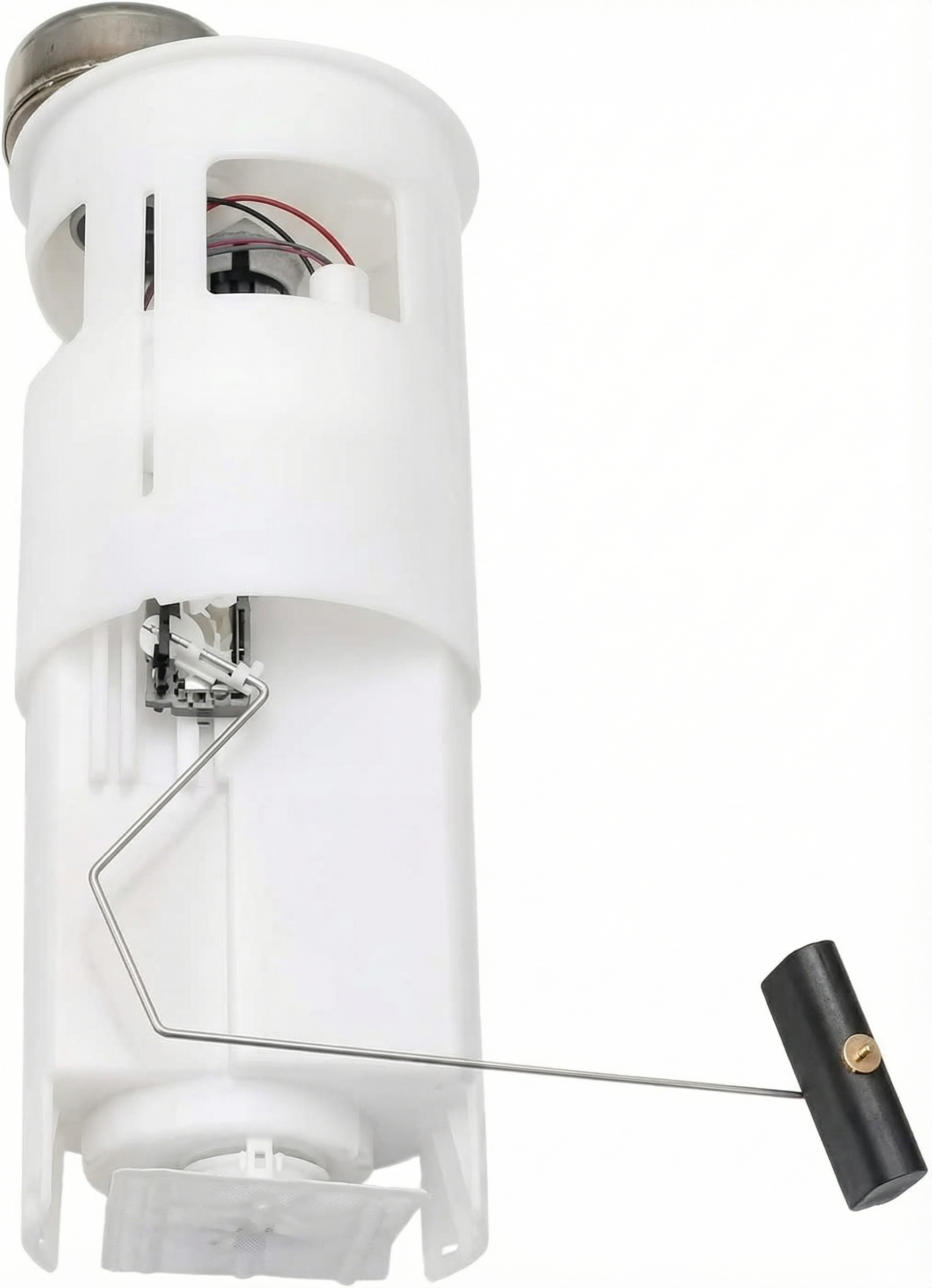
- Fuel Pump Module Assembly
(OEM #68001958AB (supersedes 5104696AB))— This is one of the most common failure points for a P0627 code, especially on higher mileage vehicles. The electric motor inside fails, creating an open circuit.
Trusted brands: Mopar, Bosch, Delphi, Spectra Premium
OEM price range: $350-$500
Aftermarket price range: $150-$300 - Totally Integrated Power Module (TIPM)
(OEM #56049720AI (example for 2006, many variations exist))— For 2006-2008 models, the internal, non-serviceable fuel pump relay is a notorious failure point that causes this code. The entire module often needs to be repaired or replaced.
Trusted brands: Mopar (New or Reman), Dorman (Remanufactured), Circuit Board Medics (Repair Service)
OEM price range: $700-$1200
Aftermarket price range: $300-$600 (Remanufactured) - TIPM Fuel Pump Relay Bypass Cable — A very common and cost-effective solution for 2006+ models where the internal TIPM relay has failed. It creates an external circuit to power the fuel pump, bypassing the faulty internal relay.
Trusted brands: Various aftermarket sellers on eBay/Amazon
OEM price range: N/A
Aftermarket price range: $25-$50
Related Codes That Often Appear With This One
- P062A - Fuel Pump 'A' Control Circuit Range/Performance (often seen with TIPM issues)
Technical Service Bulletins (TSBs) & Recalls
- While no specific TSB for P0627 was found, numerous TSBs exist for TIPM-related electrical issues across the Dodge/Chrysler/Jeep lineup which share the same root cause.
Platform-Specific Known Issues
- The 2006-2008 models are subject to a high rate of TIPM failures, which can cause the P0627 code along with a host of other random electrical issues.
Mechanic-Grade Diagnostic Values
- Fuel Pressure (at fuel rail) — expected: 49-53 PSI (for 2002-2003 models). Failure: 0 PSI or significantly below specification indicates a failed pump or major leak.
- Fuel Level Sender Resistance — expected: ~220 Ohms (Empty) to ~20 Ohms (Full). Failure: An open (infinite resistance) or shorted (0 ohms) reading indicates a failed sending unit, which is part of the pump assembly.
- Fuel Pump Control Circuit (K31) Resistance to Ground — expected: Infinite resistance (Open circuit). Failure: Resistance below 100 Ohms indicates a short to ground in the control circuit wiring.
- Fuel Pump Control Circuit (K31) Continuity — expected: Below 5.0 Ohms. Failure: Resistance above 5.0 Ohms indicates an open or high resistance in the wire between the TIPM and PCM.
Scan Tool Commands That Help
- Chrysler/Dodge Scan Tool (StarSCAN, wiTECH): Fuel Pump Actuation / Fuel System Test — This bidirectional command allows the technician to manually turn the fuel pump on and off directly from the scan tool. It is used to verify if the TIPM, wiring, and fuel pump are capable of functioning when commanded, bypassing the PCM's normal logic. If the pump runs with this command, the issue is more likely on the PCM control side; if it doesn't, the fault lies in the TIPM, wiring, or the pump itself.
Wiring & Ground Locations
- K31 — Wire running between the Powertrain Control Module (PCM) C3 connector and the Totally Integrated Power Module (TIPM) C1 connector.. This is the specific circuit the PCM grounds to request the TIPM to activate the fuel pump relay. An open or short in this wire is a direct cause of P0627.
- TIPM Connector C1 — One of the large multi-pin connectors at the main fuse box (TIPM) under the hood.. This connector contains the fuel pump control circuit (K31) and the power output circuit to the pump. It's a critical point for testing voltage and continuity when diagnosing an open circuit.
- Fuel Pump Connector — On top of the fuel tank, connecting the vehicle harness to the fuel pump module assembly.. This is the final connection point before the pump motor. It is exposed to the elements and prone to corrosion or damage, which can cause an open circuit. It's the primary location to test for voltage delivery to the pump.
- Fuel Pump Ground — Typically located on the frame rail near the fuel tank.. A corroded or broken ground wire will prevent the fuel pump from running even if it receives power, creating an open circuit condition that can trigger P0627.
Real Owner Repair Stories
- DodgeForum.com user (2007 Ram 1500 5.7L) — Died while driving, cranks but will not start. Starter fluid allows it to run for a few seconds, confirming a fuel issue.
❌ Tried (didn't work) Initially assumed a bad TIPM internal relay, as is common.
✅ What actually fixed it The user tested for voltage at the TIPM output pin for the fuel pump (Pin 18 on their model, an Orange/Red wire) and found 12V was being sent correctly during crank. This ruled out the common TIPM failure. The problem was then diagnosed as an open circuit in the wiring harness between the TIPM and the fuel tank, or a failed fuel pump. The key diagnostic step was verifying output at the TIPM before replacing it.
OEM Part Supersession History
5104696AA, 5104696AB→68001958AB— Standard part revision and consolidation by the manufacturer.
Heads up: Part 68001958AB is listed for 2005-2006 models but also supersedes earlier numbers. Always verify fitment with VIN, as there can be variations based on tank size (e.g., 26-gallon vs 35-gallon).
Model Year Variations Within This Range
- 2002-2005: Uses an Integrated Power Module (IPM) where the fuel pump relay is a separate, plug-in component (typically relay #58) that can be easily swapped for diagnosis or replacement.
- 2006-2008: Uses a Totally Integrated Power Module (TIPM) where the fuel pump relay is a non-serviceable component soldered directly to the internal circuit board. Failure requires a TIPM replacement, professional repair service, or an external bypass cable.
Diagnostic Flowchart
Other Known Issues on This Vehicle
Issues unrelated to this code that are worth knowing about as an owner of this generation:
- Cracked Dashboard 🟠 Medium — Extremely common, especially on trucks exposed to sunlight. Cracks often appear across the passenger airbag area and instrument cluster bezel.
- Exhaust Manifold Bolt Breakage 🟠 Medium — Common on the Hemi V8, but also reported on the V6. The steel bolts and cast iron manifold expand at different rates, causing bolts (especially rear-most) to snap, resulting in an exhaust tick noise on cold starts. (Ref: A TSB exists for later model years (2019-2021) acknowledging the issue, but it's a known problem on this generation as well.)
- 45RFE/545RFE Transmission Solenoid Pack Failure 🔴 High — A well-documented issue on trucks equipped with this automatic transmission. Failure of the solenoid pack can cause harsh shifting, getting stuck in one gear (limp mode), or other transmission-related codes.
- HVAC Blend Door Actuator Failure 🟡 Low — Common failure where the plastic gears in the actuator break, causing a clicking noise from the dash and an inability to change airflow direction or temperature. The part is cheap but labor-intensive to replace.
- Body and Frame Rust 🔴 High — Very common in regions that use road salt. Key areas to check are the rear wheel arches, rocker panels, cab corners, and the frame itself.
Used vs. New Parts: Buying Guide for This Vehicle
When a used part is the smart pick: A used IPM from a 2002-2005 model is a reasonable choice, as the individual relays are the common failure point and are easily replaceable. A used fuel pump assembly can be a budget-friendly option if from a low-mileage, non-corroded donor vehicle.
Donor-vehicle mileage cap: roughly under 80000 miles for the part to have meaningful remaining life.
What to inspect on the donor part:
- For a TIPM/IPM: Inspect all connectors for signs of corrosion, melting, or water intrusion. Check for evidence of a previously installed bypass cable, which confirms the donor part was faulty.
- For a Fuel Pump: Check the electrical connector for corrosion. Avoid pumps from vehicles in heavy salt-belt regions if possible. Ensure the plastic top is not cracked or brittle.
OEM-only on this vehicle (don't cheap out):
- Totally Integrated Power Module (TIPM): While reputable rebuilders like Circuit Board Medics are a solid alternative, brand-new, unbranded aftermarket TIPMs are a significant gamble. An OEM or professionally remanufactured unit is strongly recommended to avoid compatibility and quality issues.
Aftermarket brands forum-validated for this vehicle:
- Delphi
- Bosch
- Spectra Premium
- Denso
Brands owners have reported issues with on this vehicle:
- Unbranded, 'white box' fuel pumps from online marketplaces are frequently cited on forums as having high failure rates and incorrect fuel gauge readings.
Real Owner Stories
Aggregated from forums and TSBs cited above. Mileages and costs reflect what owners reported in those sources.
2007 Dodge Ram 1500
Symptoms: The fuel pump kept running with the key off, draining the battery.
What fixed it: The owner installed a $30 external fuel pump relay bypass kit, which resolved the problem.
Cost: $25-$50
Source hint: RamForum.com: TIPM Failure
2003 Dodge Dakota
Symptoms: The truck would not start and was showing code P0627.
What fixed it: The owner swapped the fuel pump relay with an identical one from another circuit in the fuse box.
Source hint: DodgeForum.com: Code P0627
Related OBD-II Codes
Frequently Asked Questions
My 2007 Ram won't start and has code P0627. Can I just swap the fuel pump relay?
I don't hear the fuel pump buzz on my 2004 Ram when I turn the key. What's the first thing I should check?
My mechanic quoted over $1000 to replace the TIPM on my 2008 Ram for a P0627. Is there a cheaper option?
What is the correct fuel pressure for my 2003 Dodge Ram 1500?
I suspect a wiring issue is causing P0627 on my Ram. Where are the most common failure points?
My 2006 Ram's fuel pump keeps running after I turn the truck off and it drained my battery. Is this related to P0627?
Helpful Videos
Used OEM Parts in Stock
New Aftermarket Parts Available


The information in this article is provided for general reference and educational purposes only. Vehicle specifications, procedures, and part compatibility can vary by production date, trim level, and region. Always consult your vehicle's factory service manual and verify part numbers before purchasing or performing repairs. Safety-critical components such as airbags, seat belts, and braking systems should be installed by a qualified professional.
- Dodge Ram 1500:
- 🧭 Diagnostic Flowchart
- 🎬 Helpful Videos
- 🛍️ Shop This Part
- What's Unique About the 2002-2008 Dodge Ram 1500
- Symptoms You May Notice
- Most Likely Causes
- Rare But Worth Checking
- Diagnosis Steps
- Parts You'll Likely Need
- Related Codes That Often Appear With This One
- Technical Service Bulletins (TSBs) & Recalls
- Platform-Specific Known Issues
- Mechanic-Grade Diagnostic Values
- Scan Tool Commands That Help
- Wiring & Ground Locations
- Real Owner Repair Stories
- OEM Part Supersession History
- Model Year Variations Within This Range
- Other Known Issues on This Vehicle
- Used vs. New Parts: Buying Guide for This Vehicle
- Real Owner Stories
- 2007 Dodge Ram 1500
- 2003 Dodge Dakota
- Related OBD-II Codes
- Frequently Asked Questions
- 🎟️ Get 5% Off