

P0627 on 2015-2019 Ford Transit: Fuel Pump Control Circuit Causes and Fixes
On a 2015-2019 Ford Transit, code P0627 is most often caused by a faulty Fuel Pump Driver Module (FPDM), also called a Fuel Pump Control Module (FPCM). A replacement module costs between $50 and $100 and is a common DIY fix. For 2018+ models, the issue is frequently a poor connection at the FPDM wiring harness connector (C433) or a bad ground (G401), as noted in multiple Ford TSBs. For 2015 models, a TSB points directly to replacing the FPDM.
- For a P0627 code on a Ford Transit, suspect the Fuel Pump Driver Module (FPDM) first, especially on a 2015 model.
- Thoroughly inspect the wiring and connector at the FPDM for corrosion or damage before replacing parts.
- Do not drive the vehicle, as the engine could stall at any time, creating a serious safety hazard.
- Replacing the FPDM is a relatively simple and inexpensive DIY job that often solves the problem without needing to replace the in-tank fuel pump.
What's Unique About the 2015-2019 Ford TRANSIT
The Ford Transit is particularly known for issues with its Fuel Pump Driver Module (FPDM) and related wiring, prompting Ford to issue multiple Technical Service Bulletins (TSBs). For 2015 models specifically, TSB 17-0011 points directly to a faulty FPDM as the primary fix for P0627. For 2018-2019 models, a series of TSBs (SSM 50841, 51306, 52483) highlight that P0627 is often caused by an intermittent or partial disconnect in the wiring harness at connector C433 or a poor ground at G401, making a thorough harness inspection critical before replacing parts.
Diagnostic Flowchart
Tap your situation to follow the diagnostic path that matches what you're seeing on this vehicle.
Symptoms You May Notice
- Engine cranks but does not start
- Engine stalls intermittently, sometimes after starting briefly
- Random no-start condition
- Loss of power or hesitation during acceleration
- Illuminated Check Engine Light
- Engine starts then immediately dies
- Replacing the in-tank fuel pump before checking the Fuel Pump Driver Module (FPDM) and its wiring. The FPDM is a much more common failure point, is cheaper, and is easier to access.
Most Likely Causes
- Faulty Fuel Pump Driver Module (FPDM / FPCM) 🔴 High Probability → Shop Fuel Pump This is a well-documented failure point on Ford Transits, as confirmed by TSB 17-0011 which explicitly recommends replacing the module for the 2015 model year. The module's location under the vehicle on the frame rail exposes it to moisture, road salt, and corrosion, leading to internal failure.
How to confirm: After checking fuses, if the wiring appears intact, replacing the FPDM is a common and effective diagnostic step. A professional can use a scan tool to directly command the module and check for a response. An owner of a related F-150 with P0627 confirmed they had power to the module, but no power coming out to the pump, condemning the module.
Typical fix: Replace the Fuel Pump Driver Module. It is located on the vehicle's frame rail, under the driver's side, often near the spare tire. The repair involves removing two 10mm bolts and a single electrical connector.
Est. part cost: $50-$100 - Wiring Harness or Connector Issue 🟡 Medium Probability Multiple TSBs (SSM 52483, 51306, 50841) for 2018 and newer models cite an "intermittent or partial disconnect" as a primary cause. TSB SSM 52483 specifically calls out checking the FPCM connector C433 for full seating, pin push-outs, or damage, and inspecting ground G401. The harness is exposed under the vehicle and can be damaged by road debris, moisture, and corrosion.
How to confirm: Visually inspect the wiring harness and connector C433 leading to the Fuel Pump Driver Module for any signs of damage, corrosion (green crust), or loose pins. Wiggle the connector while monitoring symptoms. Perform a continuity test on the control circuit wire if a wiring diagram is available.
Typical fix: Repair the damaged section of the wire or replace the connector pigtail. Ensure the connection is secure and protected from the elements with dielectric grease and electrical tape. If the connector is loose, ensure it is fully seated and the locking tab is engaged.
Est. part cost: $15-$40 - Blown Fuse ⚪ Low Probability
How to confirm: Check the fuses related to the fuel pump circuit. On a 2015 Transit, there is a 20 amp and a 10 amp fuse in the under-hood fuse box that are related to the fuel pump control modules. The specific fuse number for the Transit should be verified in the owner's manual.
Typical fix: Replace the blown fuse. If the fuse blows again immediately, it indicates a short circuit in the FPDM, pump, or wiring that needs to be diagnosed.
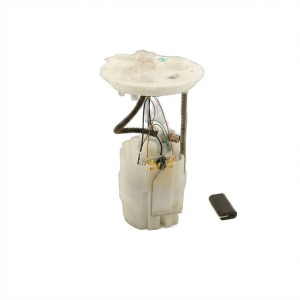
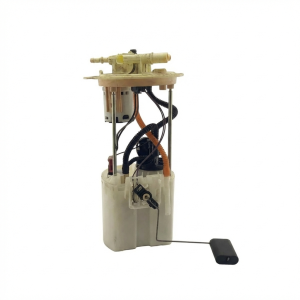
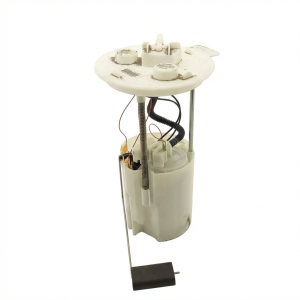
Est. part cost: $1-$5 - Faulty In-Tank Fuel Pump ⚪ Low Probability → Shop Fuel Pump
How to confirm: If the FPDM and wiring are confirmed to be good (e.g., the FPDM is new and has proper power/ground), but the pump still doesn't activate when commanded, the pump itself may have an internal open circuit. This is often misdiagnosed as the first problem.
Typical fix: Replace the in-tank fuel pump assembly. This requires dropping the fuel tank.
Est. part cost: $250-$450
Rare But Worth Checking
- Powertrain Control Module (PCM) Fault: → Shop Engine Control Module (ECM) This is very uncommon. The PCM should only be considered after all other possibilities, including wiring, fuses, the FPDM, and the fuel pump itself, have been definitively ruled out.
Diagnosis Steps
- Scan the vehicle for all stored trouble codes. Note if P0627 appears with other codes like U0109, P025A, or P008A, which strongly points to the FPDM circuit.
- Check for relevant TSBs for your specific model year. TSB 17-0011 is key for 2015 models. TSB SSM 52483 is critical for 2018-2019 models.
- Inspect the fuel pump related fuses. Check the fuse panel location and fuse number in your owner's manual. For a 2015 model, check the 20A and 10A fuses under the hood.
- Locate the Fuel Pump Driver Module (FPDM) on the frame rail under the driver's side of the van, typically above the spare tire crossmember.
- For 2018+ models, pay close attention to the FPDM's electrical connector (C433) and the main ground (G401). Disconnect, inspect for corrosion or pushed-out pins, apply dielectric grease, and reconnect firmly.
- If wiring looks good and you have a 2015 model, the most common repair is to replace the FPDM as per TSB 17-0011. This is also a high-probability fix for other years.
- If the problem persists after replacing the FPDM, perform a continuity and voltage test on the control circuit wiring between the PCM and the FPDM.
- If all wiring and the FPDM are confirmed good, the in-tank fuel pump may be the issue. Test for power at the pump before deciding to replace it.
Parts You'll Likely Need
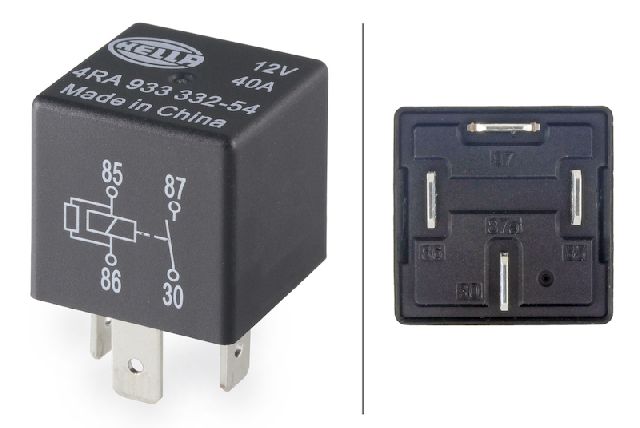
- Fuel Pump Driver Module
(OEM #AA8Z-9D370-B)— This is the most frequent cause of P0627 on the Ford Transit, as identified in mechanic videos and a specific Ford TSB. This part has been superseded by GA8Z-9D370-A.
Trusted brands: Motorcraft, Dorman (601-225), Standard Motor Products, Spectra Premium (FD1026)
OEM price range: $70-$110
Aftermarket price range: $45-$80 - Fuel Pump Driver Module Connector — If the wiring harness connector (C433 on 2018+ models) is corroded or damaged, replacing the pigtail is necessary to ensure a solid connection to the new module.
Trusted brands: Motorcraft, Dorman
OEM price range: $30-$50
Aftermarket price range: $15-$30
Related Codes That Often Appear With This One
- P025A — Often appears with P0627 on 2018+ models due to a shared wiring harness issue, as noted in TSBs SSM 52483, 51306, and 50841.
- P008A — Low Pressure Fuel System Pressure - Too Low. This can be a direct result of the fuel pump not being activated correctly due to the P0627 fault. It is also listed in the same TSBs.
- U0109 — Lost Communication With Fuel Pump Control Module. This code points directly to the FPDM or its circuit and is often seen with P0627, as mentioned in TSBs for 2018+ models.
Technical Service Bulletins (TSBs) & Recalls
- TSB 17-0011: Addresses P0627 on 2015 models by recommending replacement of the Fuel Pump Driver Module.
- SSM 52483: Notes P0627 on 2018-2019 models can be caused by an intermittent or partial wiring disconnect at connector C433 or ground G401.
- SSM 51306: Similar to SSM 52483, points to wiring issues for P0627 on 2018+ models.
- SSM 50841: An earlier version of the bulletin also citing wiring disconnects as the cause for P0627 on 2018+ models.
Platform-Specific Known Issues
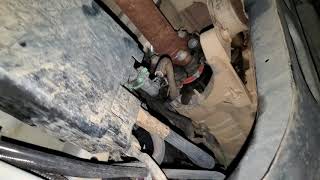
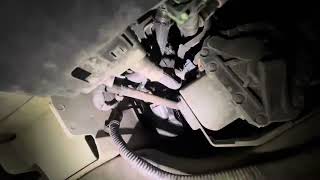
- TSB 17-0011: For 2015 Transit models with 3.5L or 3.7L engines, Ford directly advises replacing the Fuel Pump Driver Module (FPDM) to resolve a P0627 code. The labor time is estimated at 0.4 hours. 🎬 See this 2015 Transit P0627 diagnostic and repair walkthrough.
- TSB SSM 52483: For 2018-2019 models, this bulletin indicates that P0627 (often with other codes) may be due to an intermittent or partial disconnect of the FPCM harness. It specifically instructs technicians to check FPCM connector C433 for being fully seated and to inspect ground G401 before replacing any parts.
Mechanic-Grade Diagnostic Values
- FPCM Circuit Voltage — expected: 12V–14.5V. Failure: Voltage reading above 16V or no voltage present when commanded.
- Fuel Pump Control Module (FPCM) Command Signal — expected: A switched 0–12V signal or a Pulse Width Modulated (PWM) waveform from the PCM.. Failure: No voltage or PWM signal present at the FPCM control pin when the key is on or during cranking.
- Fuel Pump Motor Resistance — expected: Typically 0.2–5 ohms, but varies by application. Refer to factory spec.. Failure: Infinite resistance (open circuit) when measured across the pump motor terminals.
Scan Tool Commands That Help
- Ford IDS (Integrated Diagnostic System): Fuel Pump Adjustment / Module Initialization — This function is used to code or adapt a new or used fuel pump or fuel pump control module to the vehicle's Powertrain Control Module (PCM) and PATS (Passive Anti-Theft System). It may be required after replacing the FPDM or PCM.
- Ford IDS (Integrated Diagnostic System): Data Logger - Live Display — To monitor live data parameters from the FPCM, such as commanded duty cycle and feedback signals, to see if the module is responding correctly to PCM commands.
- High-End Generic Scan Tool (e.g., iCarsoft CR MAX): FPCM Activation Test / Bidirectional Control — To manually command the fuel pump ON and OFF through the FPCM. If the pump activates with the scan tool but not during normal operation, it points to a problem with the command signal from the PCM or the PCM itself. If it doesn't activate, the issue is likely the FPCM, wiring, or the pump.
Wiring & Ground Locations
- G401 — The TSB refers to G401. While a precise diagram for the 2015-2019 Transit is elusive, wiring diagrams for other Ford models show G401 is often a chassis ground point located under the vehicle, near the components it serves. On a similar platform, it was found near the rear of the vehicle. On a Transit Connect, it's listed in ground distribution diagrams without a specific location image.. TSB SSM 52483 specifically calls out inspecting ground G401 for the P0627 code on 2018+ models. A poor or corroded ground at this point can cause intermittent operation or complete failure of the Fuel Pump Control Module.
- C433 — This is the main electrical connector at the Fuel Pump Control Module (FPCM), located on the frame rail under the driver's side.. TSB SSM 52483 identifies this connector as a primary failure point due to intermittent or partial disconnects, corrosion, or pushed-out pins, leading to P0627 and related codes.
- FPPWR / FPRTN Circuits — These are the circuit names for the wires running between the FPDM and the in-tank fuel pump. FPPWR is the Fuel Pump Power circuit, and FPRTN is the Fuel Pump Return (ground) circuit.. Ford's workshop manual lists an open or short in the FPPWR or FPRTN circuits as a direct cause for P0627. A continuity test on these specific wires can pinpoint a harness issue.
- Customer Connection Point (CCP) — Located under the driver's seat, providing fused high-current 12V power studs.. While not directly part of the stock fuel pump circuit, aftermarket modifications or upfitter installations often tap into the CCP. Improper connections here could potentially interfere with vehicle electronics or grounds, though it's not a primary cause of P0627.
Real Owner Repair Stories
- Ford F150 Forum (2015 Ford F-150 3.5L (platform mate)) — Stranded, truck won't start. It started, then died when put in drive. Restarted, ran very rough, and would die with any throttle input.
❌ Tried (didn't work) Initial user was stranded and seeking advice.
✅ What actually fixed it The forum administrator provided the official diagnostic procedure from the Ford Workshop Manual, which points to checking the FPPWR and FPRTN circuits for opens/shorts, or a damaged fuel pump/FPCM. Another user on a similar Ford platform confirmed their identical symptoms were caused by a failed FPCM due to corrosion from its mounting location.
OEM Part Supersession History
AA8Z-9D370-B→GA8Z-9D370-A— Part revision and consolidation by the manufacturer.AA8Z-9D370-A, AA8Z-9D370-D→GA8Z-9D370-A— Part revision and consolidation by the manufacturer.8U5Z-9345-B, 8U5Z-9345-C, 8U5Z-9345-D→GA8Z-9D370-A— Part revision and consolidation by the manufacturer. These are older numbers from related platforms that now use the same module.
Model Year Variations Within This Range
- 2015: The primary diagnostic focus per TSB 17-0011 is the direct replacement of the Fuel Pump Driver Module itself.
- 2018-2019: The primary diagnostic focus per TSB SSM 52483 is on inspecting the wiring harness connector C433 and ground G401 for intermittent connection issues before replacing any parts.
Helpful Videos
Used OEM Parts in Stock
New Aftermarket Parts Available


The information in this article is provided for general reference and educational purposes only. Vehicle specifications, procedures, and part compatibility can vary by production date, trim level, and region. Always consult your vehicle's factory service manual and verify part numbers before purchasing or performing repairs. Safety-critical components such as airbags, seat belts, and braking systems should be installed by a qualified professional.
- Ford TRANSIT:
- 🧭 Diagnostic Flowchart
- 🎬 Helpful Videos
- 🛍️ Shop This Part
- What's Unique About the 2015-2019 Ford TRANSIT
- Symptoms You May Notice
- Most Likely Causes
- Rare But Worth Checking
- Diagnosis Steps
- Parts You'll Likely Need
- Related Codes That Often Appear With This One
- Technical Service Bulletins (TSBs) & Recalls
- Platform-Specific Known Issues
- Mechanic-Grade Diagnostic Values
- Scan Tool Commands That Help
- Wiring & Ground Locations
- Real Owner Repair Stories
- OEM Part Supersession History
- Model Year Variations Within This Range
- 🎟️ Get 5% Off