

P0627 on 2020-2024 Ford Transit: Fuel Pump Control Circuit Causes and Fixes
On a 2020-2024 Ford Transit, code P0627 is most often caused by a loose or damaged electrical connector at the Fuel Pump Control Module (FPCM), as documented in Ford Technical Service Bulletins. The fix is typically inspecting and repairing the wiring, which is a low parts-cost repair. This is a known issue also affecting F-150, Expedition, and other platform mates.
- For a 2020-2024 Ford Transit, P0627 is very likely an electrical connection issue, not a failed fuel pump.
- Always check Ford TSB SSM 52483 first. The fix is often as simple as cleaning and securing the FPCM connector (C433) and ground (G401).
- Do not drive the vehicle. The risk of the engine stalling in traffic is high.
- This code is almost always found with other codes like P025A and U0109, which confirms the diagnosis points toward the FPCM circuit.
- Do not replace the expensive in-tank fuel pump assembly until you have thoroughly inspected the FPCM, its connector, and its ground wire.
What's Unique About the 2020-2024 Ford TRANSIT
Ford has issued multiple Technical Service Bulletins (TSBs), including SSM 52483, which directly address this code on 2020-2024 Transits. The bulletins state that P0627, often along with other fuel system codes, is likely due to an intermittent or partial disconnect of the FPCM electrical connector or a bad ground. This makes the issue a known pattern for this vehicle, pointing technicians directly to a specific connector (C433) and ground point (G401) as the primary suspects, rather than a random part failure. This exact issue is also common on platform mates like the F-150 and Expedition.
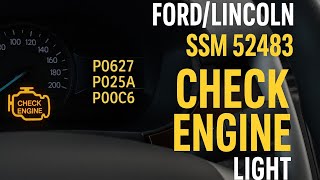
🎬 Watch: Fixing these codes on a similar Ford fuel system.Diagnostic Flowchart
Tap your situation to follow the diagnostic path that matches what you're seeing on this vehicle.
Symptoms You May Notice
- Check Engine Light is on
- Engine cranks but does not start
- Engine starts and then immediately stalls
- Engine stalling intermittently while driving, sometimes after hitting a bump
- Hesitation or loss of power during acceleration
- Fuel pump is not audible (no humming sound) from the rear of the vehicle when the key is turned to the 'ON' position.
- Replacing the in-tank fuel pump. The P0627 code specifically points to a fault in the *control circuit*, not the pump motor itself. Many owners and technicians replace the expensive and difficult-to-access fuel pump when the actual issue is the much cheaper and easier-to-access FPCM, connector, or wiring.
Most Likely Causes
- Loose or Damaged FPCM Connector (C433) 🔴 High Probability This is a well-documented issue cited in Ford TSB SSM 52483. The connector's location on the frame rail under the vehicle exposes it to moisture, road salt, and vibration, leading to intermittent connections, pushed-out pins, or corrosion (white/green powder).
How to confirm: Locate the FPCM on the driver's side frame rail, often just ahead of the rear axle. Visually inspect connector C433 for looseness, pushed-out pins, or corrosion. Perform a 'wiggle test' on the connector and harness with the engine running or while monitoring scan tool data to see if the fault can be induced.
Typical fix: Disconnect the connector, inspect for damage, clean the pins with electrical contact cleaner, apply dielectric grease to seal out moisture, and ensure it is fully seated and the locking tab clicks into place. If pins are damaged, the connector pigtail may need to be replaced. 🎬 See this guide on repairing a corroded fuel pump connector.
Est. part cost: $5-$40 - Poor Ground Connection (G401) 🟡 Medium Probability The TSB also points to a faulty ground as a potential cause. Like the connector, the ground point is on the chassis and susceptible to rust and corrosion, which creates high resistance in the circuit and can cause the module to lose communication.
How to confirm: Locate ground G401 on the frame, as specified in the service manual. Disassemble the ground lug from the chassis, clean all contact surfaces (the lug, the frame, and the bolt) to bare metal, and re-secure the connection tightly. A voltage drop test from the FPCM ground wire to the battery negative terminal can confirm a bad ground (should be < 0.5V).
Typical fix: Clean and secure the ground connection. Applying a corrosion-inhibiting spray after tightening is recommended.
Est. part cost: $1-$15 - Faulty Fuel Pump Control Module (FPCM) ⚪ Low Probability → Shop Fuel Pump While less common than connection issues, the module itself can fail due to electrical stress or internal component breakdown. Technicians often replace this part when the issue is simply a bad connection.
How to confirm: After confirming the connector and ground are perfect, test the FPCM. This involves verifying 12V power and ground at the module and checking for a command signal from the PCM. A bi-directional scan tool can be used to command the pump on and monitor the module's output.
Typical fix: Replace the Fuel Pump Control Module. It is typically held to the frame rail with two bolts.
Est. part cost: $60-$150
Rare But Worth Checking
- Damaged Wiring Harness: Check for chafing or breaks in the wiring between the PCM and the FPCM, especially where the harness runs along the frame or near suspension components. A wire could be broken internally with no visible damage to the insulation.
- Faulty Powertrain Control Module (PCM): → Shop Engine Control Module (ECM) A failed PCM is extremely rare and should only be considered after all other possibilities, including all wiring, connectors, grounds, and modules, have been exhaustively tested and ruled out.
Diagnosis Steps
- Connect an OBD-II scanner and confirm P0627 is present. Check for other codes like P025A, U0109, and P008A, as their presence strongly suggests the TSB-related issue.
- Review Ford TSB SSM 52483, which provides specific diagnostic guidance for this exact problem on 2018-2024 Transits.
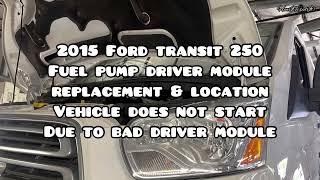
- Locate the Fuel Pump Control Module (FPCM) on the driver's side frame rail. On the Transit, it is typically located up underneath the chassis, about midway back. 🎬 Watch: How to locate and replace the Transit's control module.
- Carefully inspect the FPCM electrical connector (designated C433 in service info) for any signs of looseness, damage, moisture, or corrosion (green/white powder).
- Perform a 'wiggle test' by manipulating the connector and harness while the vehicle is running (if possible) or while monitoring live data to see if the fault is intermittent.
- Disconnect the battery. Disconnect connector C433 and inspect the pins and terminals for damage or corrosion. Clean the terminals with a dedicated electrical contact cleaner and apply a small amount of dielectric grease before reconnecting firmly, ensuring the lock tab engages.
- Locate and inspect ground G401 on the frame. Disassemble the connection, clean the contact points on the wire terminal and chassis to bare metal, and re-secure it tightly.
- If the problem persists, use a multimeter to check for 12V power and a good ground at the FPCM connector with the key on.
- If power and ground are good, the next step is to test the FPCM itself, which may require a specialized scan tool to command the pump on and monitor the module's output.
- If the FPCM is confirmed to be faulty, replace it.
- As a final step if all else fails, inspect the entire wiring harness between the PCM and FPCM for damage, paying close attention to areas where it might rub against the frame or other components.
Parts You'll Likely Need
- Fuel Pump Control Module
(OEM #GA8Z-9D370-A (supersedes AA8Z-9D370-B))— If the connector and ground are confirmed good, the module itself is the next most likely component to have failed.
Trusted brands: Motorcraft
OEM price range: $70-$120
Aftermarket price range: $50-$90 - FPCM Connector Pigtail
(OEM #WPT-1165 (Verify fitment))— If the connector housing or pins are damaged by corrosion or heat beyond cleaning or repair, a new pigtail will need to be spliced into the harness.
Trusted brands: Motorcraft, Dorman, Standard Motor Products
OEM price range: $30-$50
Aftermarket price range: $20-$40
Related Codes That Often Appear With This One
- P025A — Stands for 'Fuel Pump Module 'A' Control Circuit/Open'. This code is frequently stored with P0627 as they both relate to the FPCM circuit, and is explicitly mentioned in TSB SSM 52483.
- U0109 — Stands for 'Lost Communication With Fuel Pump Control Module'. This code indicates a complete communication breakdown and is also listed in the TSB as being caused by the same connector/wiring issue.
- P008A — Stands for 'Low Pressure Fuel System Pressure - Too Low'. This can be a direct result of the FPCM not commanding the fuel pump to run, causing a loss of fuel pressure. It is also mentioned in TSB SSM 52483.
Technical Service Bulletins (TSBs) & Recalls
- SSM 52483: Points to an intermittent/partial disconnect of the FPCM connector (C433) or bad grounds (G401) as the cause for P0627, P025A, P025B, P00C6, P008A, and/or U0109.
- SSM 51306: An earlier version of the bulletin covering 2018-2023 models with the same issue.
- SSM 50841: An even earlier version for 2018-2022 models, indicating this has been a known issue for some time.
Platform-Specific Known Issues
- TSB SSM 52483: Ford has identified that 2018-2024 Transit models may exhibit P0627 and other fuel-related codes due to an intermittent or partial disconnect of the FPCM harness connector (C433) or a poor ground (G401). The bulletin advises checking these specific points before replacing any parts.
Mechanic-Grade Diagnostic Values
- Voltage at FPCM power supply wire (Brown/Purple wire) — expected: Battery voltage (approx. 12.6V) with key on. Failure: No or low voltage indicates a power supply issue from the battery/fuse.
- Voltage at FPCM ground wires (Black wire and White/Brown wire) — expected: Less than 0.5V (voltage drop test). Failure: Voltage significantly higher than 0V indicates a poor ground connection at G401.
- Voltage at FPCM output to fuel pump (Gray/Yellow wire) — expected: Varies based on PCM command; should show voltage when pump is commanded on.. Failure: No voltage when the pump is commanded on (via scan tool or during key-on prime) points to a faulty FPCM or a break in the output wire.
Scan Tool Commands That Help
- Ford IDS (Integrated Diagnostic System): Module Programming > Programmable Module Installation (PMI) > PCM — This function is used after replacing the PCM to load the correct software and vehicle configuration. It is a necessary final step if the PCM is condemned.
- Ford IDS (Integrated Diagnostic System): Datalogger > Self-Test > Read CMDTCs — This is the standard function to retrieve all diagnostic trouble codes, including P0627 and any related codes like U0109 or P025A, from the PCM.
- Professional Scan Tool (e.g., iCarsoft, Autel): Active Test / Bi-Directional Control > Fuel Pump Command — This allows the technician to manually command the fuel pump on and off to verify if the FPCM and the pump itself are functional, bypassing the PCM's normal control logic. This helps isolate the fault to the control circuit versus the components.
Wiring & Ground Locations
- C433 — The main electrical harness connector at the Fuel Pump Control Module (FPCM). On the Ford Transit, the FPCM is typically mounted to the driver's side frame rail, sometimes above the spare tire area.. This is the primary point of failure identified in Ford's TSBs. A loose, corroded, or damaged connection at C433 directly causes an open in the control circuit, triggering P0627 and related codes.
- G401 — A chassis ground point located on the frame, usually near the FPCM.. This is the specific ground point for the FPCM. Corrosion or looseness at this ground lug will interrupt the module's circuit, causing it to lose power or communication and log faults like P0627 and U0109.
Real Owner Repair Stories
- fordtransitusaforum.com (Multiple owners of 2018-2024 Ford Transit vans) — Intermittent stalling, engine cranking but not starting, especially after rain or in humid weather.
❌ Tried (didn't work) Replacing the fuel pump, Replacing the FPCM module without checking the connector first
✅ What actually fixed it Finding the FPCM connector (C433) on the frame rail, unplugging it, cleaning the pins of visible green or white corrosion, applying dielectric grease, and firmly re-seating the connector until it clicks. Some owners added a zip-tie for extra security. This confirms the fix described in Ford's TSBs.
OEM Part Supersession History
AA8Z-9D370-B→GA8Z-9D370-A— Part revision and update by the manufacturer. The new part number is the current replacement for a wide range of Ford vehicles.
Heads up: GA8Z-9D370-A also replaces numerous other part numbers including 8U5Z-9345-B, 8U5Z-9345-C, 8U5Z-9345-D, AA8Z-9345-A, AA8Z-9D370-A, and AA8Z-9D370-D.WPT-1165→AU2Z-14S411-BGA— WPT-1165 is the service pigtail part number, while AU2Z-14S411-BGA is the underlying base part number for the connector wire assembly.
Heads up: This connector is listed for many applications, including heated seats on other Ford models. It is critical to verify the connector keying and pin count match the vehicle's FPCM harness before ordering.
Helpful Videos
![[2/3] Ford Transit Not Starting - Fuel Pump Control Module Fix! 2015 Ford Transit Van 350 3.7L- Rd.↓](https://img.youtube.com/vi/swpfU356yAM/mqdefault.jpg)

Used OEM Parts in Stock
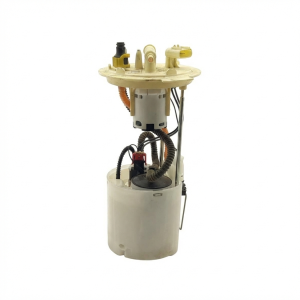
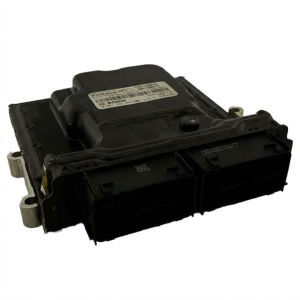
New Aftermarket Parts Available

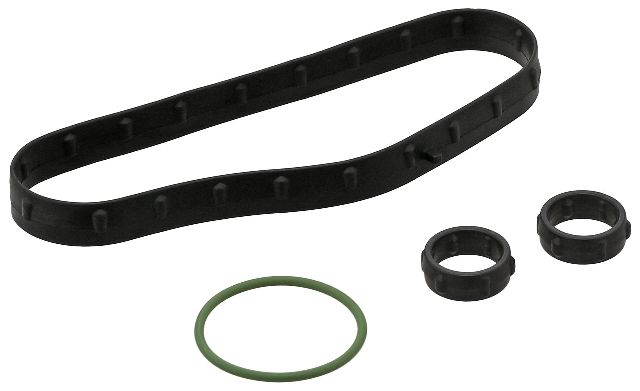

The information in this article is provided for general reference and educational purposes only. Vehicle specifications, procedures, and part compatibility can vary by production date, trim level, and region. Always consult your vehicle's factory service manual and verify part numbers before purchasing or performing repairs. Safety-critical components such as airbags, seat belts, and braking systems should be installed by a qualified professional.
- Ford TRANSIT:
- 🧭 Diagnostic Flowchart
- 🎬 Helpful Videos
- 🛍️ Shop This Part
- What's Unique About the 2020-2024 Ford TRANSIT
- Symptoms You May Notice
- Most Likely Causes
- Rare But Worth Checking
- Diagnosis Steps
- Parts You'll Likely Need
- Related Codes That Often Appear With This One
- Technical Service Bulletins (TSBs) & Recalls
- Platform-Specific Known Issues
- Mechanic-Grade Diagnostic Values
- Scan Tool Commands That Help
- Wiring & Ground Locations
- Real Owner Repair Stories
- OEM Part Supersession History
- 🎟️ Get 5% Off