

OBD-II Code P0630: VIN Not Programmed or Incompatible
The Ultimate 2026 Guide to What P0630 Means, Why It Triggers, and How to Fix It
- Code P0630 indicates a missing or mismatched 17-digit VIN in the engine computer, which triggers the anti-theft system and prevents the engine from starting.
- Replacing an ECM/PCM without performing a $150-$350 dealer-level VIN programming procedure is the number one cause of this failure.
- Using aftermarket tools like FORScan to change tire sizes or axle ratios frequently causes a module data mismatch, triggering P0630 on 2016-2020 Ford F-150s.
- Fixing P0630 requires a J2534 Pass-Thru device or OEM-level scanner to write the VIN; a standard $50 OBD-II reader cannot perform this repair.
What Does P0630 Mean?

P0630 means the Engine Control Module (ECM) or Powertrain Control Module (PCM) lacks a valid 17-digit Vehicle Identification Number (VIN). The stored VIN is missing, corrupted, or mismatches the physical vehicle. The anti-theft system interprets this mismatch as a theft attempt and disables the engine.
Technical definition: The SAE/OBD-II definition is 'VIN Not Programmed or Incompatible - ECM/PCM'. The module's non-volatile memory contains a blank, garbled, or incorrect VIN, failing the security 'handshake' required to validate the module. 🎬 Watch: A quick overview of the P0630 code and its meaning. Without validation, the system disables fuel injectors and spark plugs.
Can I Drive With P0630?
No — Do Not Drive. Driving with code P0630 is strongly discouraged. The engine usually cranks but won't start because the anti-theft system is engaged. If the car does start, it enters a reduced-power 'limp mode,' limiting speed unpredictably and making highway driving dangerous. Continuing to drive risks stranding you without warning.
Common Causes
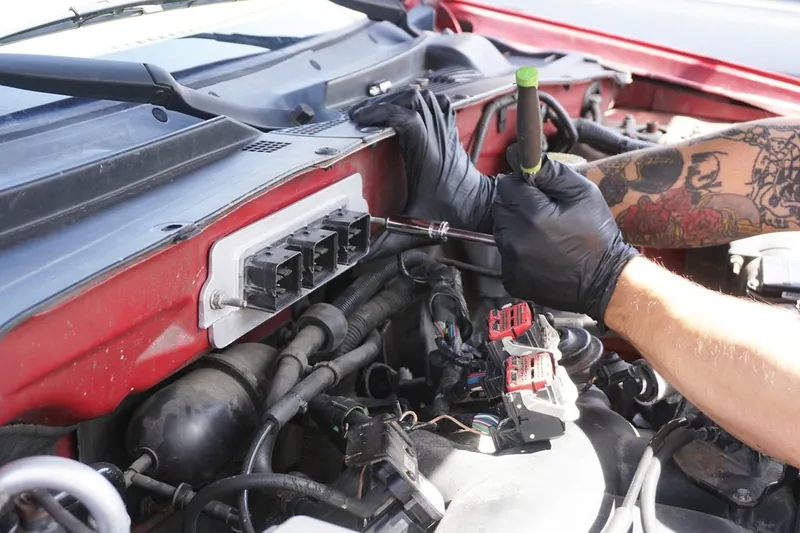
- Replaced ECM/PCM Without Reprogramming (Very Common) — Installing a new or used computer without programming the vehicle's specific 17-digit VIN creates an immediate mismatch, triggering the anti-theft system.
- Failed or Incomplete Programming Attempt (Common) — An interrupted ECM/PCM flash—caused by a disconnected tool, power loss, or incompatible software—leaves the VIN data corrupted or blank.
- Aftermarket Modifications and Tuning (Common) — Using tools like FORScan to alter tire size or axle ratios causes a data mismatch between the PCM and the Body Control Module (BCM).
- Corrupted ECM/PCM Memory from Voltage Issues (Less Common) — A severe voltage drop from a dead battery or a spike from an improper jump-start scrambles the computer's non-volatile memory, erasing the stored VIN.
- Immobilizer System Communication Failure (Less Common) — A CAN bus network failure prevents the ECM/PCM from completing the security handshake with the immobilizer or BCM, blocking VIN verification.
- Wiring or Connector Issues (Less Common) — Corroded pins or damaged wires in the ECM/PCM connector prevent the computer from reading its own memory or communicating on the network.
- Internal ECM/PCM Failure (Rare) — A failed memory chip or cracked solder joint inside the computer permanently prevents VIN storage or retrieval.
Symptoms

- Engine Cranks But Will Not Start — The starter engages, but the computer disables fuel and spark due to the VIN mismatch.
- Check Engine Light and Flashing Security Light — The dashboard illuminates the Check Engine Light alongside a flashing anti-theft indicator. 🎬 Watch: Fixing the P0630 check engine light on a Ford F-150.
- Reduced Power or 'Limp Mode' — If the engine starts, the computer restricts engine power and limits vehicle speed to prevent damage.
- Failed Emissions Test — Emissions equipment cannot read a valid VIN from the OBD-II port, resulting in an automatic failure.
- Transmission Shift Issues — The PCM fails to load the correct transmission strategy, causing harsh shifts or locking the transmission in a single gear.
- Automatic Scan Tool Cannot Identify Vehicle (scan-tool only — no driver-felt sign) — Diagnostic scanners fail to auto-detect the vehicle, requiring manual VIN entry.
Diagnostic Flowchart

Tap your situation to follow the diagnostic path that matches what you're seeing on this code.
DIY vs Professional
- Reprogramming the Existing ECM/PCM 🟢 Beginner
Tools: J2534 Pass-Thru device, 13V+ stable power supply, laptop, OEM software subscription. - Restoring Factory 'As-Built' Data 🟢 Beginner
Tools: OBDLink EX adapter, laptop, FORScan software. - Replacing and Programming a New ECM/PCM 🟢 Beginner
Tools: Dealer-level diagnostic tools, security access credentials. - Repairing Damaged Wiring or Connectors 🟢 Beginner
Tools: Digital multimeter, wiring diagrams, soldering iron, heat shrink tubing. - Replacing a Faulty Battery 🟢 Beginner
Tools: Socket set, OBD-II memory saver.
Used vs. New Parts: Buying Guide
When a used part is worth it: A used ECM/PCM makes sense for older vehicles where a new OEM part is prohibitively expensive, provided you have a guaranteed method for reprogramming it. Pre-programmed remanufactured PCMs offer a plug-and-play solution.
Donor-vehicle mileage cap: roughly under 120000 miles for the part to have meaningful remaining life.
Donor quality checklist:
- Verify the part number matches exactly.
- Buy from a reputable dismantler offering a warranty.
- Visually inspect the module for corrosion on the pins.
Decision logic:
- If The fix is a simple reprogram of the existing module → Do not buy any part; pay $150-$350 for the programming labor only.
- If Vehicle is under 8 years/80k miles → Check for emissions warranty coverage on the failed PCM before buying anything.
- If You want a plug-and-play solution with minimal risk → Buy a remanufactured PCM pre-programmed to your VIN by the seller.
- If Budget is the top priority and you have access to professional programming tools → A used, non-programmed PCM from a junkyard is the cheapest option, but carries the highest risk.
Warranty tradeoff: Used junkyard parts have a 30-day warranty. Remanufactured modules come with a 1-year to lifetime warranty. New OEM parts carry a 1-2 year warranty when installed by a dealer.
Worst-case if a used part fails: $300-$600 if a used part is faulty or cannot be programmed, requiring you to pay for diagnostic labor and another module.
What Happens If You Wait — Timeline
- Immediate: Code P0630 sets. The engine cranks but will not start as the immobilizer disables fuel and ignition. (MPG impact: 100% (Vehicle is inoperable)% · Added cost: $75-$200 for a tow to a repair facility.)
- Immediate (Alternate Scenario): The engine starts but enters severe limp mode, drastically reducing power and speed. (MPG impact: Not applicable (vehicle is unsafe)% · Added cost: $150-$350 for professional diagnosis and reprogramming.)
- Days to Weeks: The vehicle fails state emissions and safety inspections, preventing registration renewal. (MPG impact: 100% (Vehicle remains inoperable)% · Added cost: Potential fines for expired registration.)
- Long-Term (Months): The vehicle remains completely inoperable. No progressive mechanical damage occurs, but the vehicle loses all utility. (MPG impact: 100% (Vehicle remains inoperable)% · Added cost: No additional progressive damage costs.)
Cost of Not Fixing It
- Immediate: Vehicle is disabled (cranks but won't start) or in severe limp mode, making it undrivable. (Added cost: $75-$200 for a tow to a repair shop.)
- Short-Term (Days to Weeks): Guaranteed failure of state emissions or safety inspections, preventing registration renewal. (Added cost: $150-$1500+ for the required repair, plus potential fines for expired registration.)
- Long-Term (Months): The vehicle remains completely inoperable until the programming issue is professionally repaired. (Added cost: No additional progressive damage costs.)
When This Code Triggers (Freeze-Frame Conditions)
- DTC Set: P0630 (Code sets immediately at key-on.)
- Ignition Status: ON (The VIN check occurs the moment the ignition is turned on.)
- Engine RPM: 0 (The security check completes before the engine starts (Key On, Engine Off).)
- Vehicle Speed: 0 mph (The vehicle is stationary during the initial module check.)
- Battery Voltage: >10V (Voltage below 10V during cranking corrupts the memory and triggers the code.)
Related Codes
- P0631 — VIN Not Programmed - TCM. Indicates a failed programming event affecting both engine and transmission modules.
- P0633 — Immobilizer Key Not Programmed. The computer rejects the key's security chip. Often appears alongside P0630.
- P0632 — Odometer Not Programmed. Confirms a total module programming failure where mileage and VIN data were lost.
- U0422 — Invalid Data Received From BCM. Confirms a VIN mismatch between the PCM and BCM, common on modified Fords.
Climate & Environmental Factors
- Extreme Cold: Drops battery voltage below 10V during startup, corrupting the PCM's non-volatile memory and erasing the VIN.
- High Humidity / Water Intrusion: Accelerates corrosion on PCM connector pins, disrupting CAN bus data signals required for VIN verification.
How to Talk to a Mechanic About This Code
Say this: "My car has a P0630 code and a no-start condition. I believe the VIN needs to be programmed into the PCM. Can you confirm you have the equipment, like a J2534 tool or dealer-level scanner, to perform a VIN write for a [Your Car's Make and Model]?"
This language signals that you understand P0630 is a programming issue. It filters out shops that can't perform the fix and prevents you from paying for unnecessary diagnostics on the starter or fuel system.
Avoid saying:
- 'My car cranks but won't start.'
- 'The internet said I need a new computer.'
- 'Just fix the check engine light.'
Questions to ask before authorizing the repair:
- What is your price for a VIN write or PCM programming service, assuming the module itself is good?
- Does that price include any required security or key relearn procedures?
- What is your process if the programming fails? Am I still charged the full amount?
- Can you first read the VIN currently in the module to confirm it's blank or mismatched before you begin?
Where to Take It: Dealer vs Independent vs Chain
- Dealer:
A safe but expensive bet. They are guaranteed to have the right tools and access to factory software.
Best for: Vehicles still under an emissions or powertrain warranty, Complex, brand-specific programming issues, When you need a guaranteed fix
Downsides: Highest labor rates, often 1.5-2x more than independent shops., May default to expensive module replacement instead of attempting a reprogram. (Typical cost: +50% vs. baseline) - Independent Shop:
Excellent choice, IF they are properly equipped. Look for shops that advertise 'module programming' or 'ECU flashing'.
Best for: Out-of-warranty vehicles where cost is a major factor, Shops that specialize in diagnostics or specific car makes
Downsides: Not all independent shops have the expensive equipment required for module programming. (Typical cost: +0% vs. baseline) - Chain Shop:
AVOID. These shops are not equipped for the specialized software and security procedures required to fix a P0630 code.
Best for: Simple services like oil changes, tires, and brakes.
Downsides: Technicians lack the training or tools for module programming., High risk of misdiagnosis, leading to recommendations for unnecessary parts. (Typical cost: -10% vs. baseline)
When to Walk Away From the Repair
If the total estimated repair cost exceeds 50% of the car's current private-party value, consider selling or trading it in instead of fixing it.
- Car worth $3000, fix is $250: Fix it. A simple reprogram is a small fraction of the car's value and restores full function.
- Car worth $4000, fix is $1800: Walk away. The cost to replace and program a new PCM is nearly half the car's value.
- Car worth $15000, fix is $1800: Fix it. While expensive, the repair cost is well below the 50% threshold and is necessary for the vehicle to function.
What Scan Tool You Need for This Code
Minimum: A tool that can read the stored VIN from the ECU/PCM.
A basic $20 code reader only shows the P0630 code. It CANNOT read the VIN stored in the computer. Without this, you cannot confirm if the VIN is blank, wrong, or corrupted.
Budget: BlueDriver Pro (~$100) — Reads the VIN from the engine computer, allowing you to compare the stored VIN to your car's physical VIN plate. It cannot write a VIN or fix the code.
Mid-range: Foxwell NT510 Elite / FORScan with OBDLink EX Adapter (~$160) — FORScan restores 'As-Built' data to resolve module conflicts on Fords. The Foxwell NT510 Elite offers bidirectional controls to diagnose communication issues but cannot write a VIN.
Professional: Autel MaxiCOM MK808 / J2534 Pass-Thru Device (e.g., Topdon RLink) (~$500-1200 for scanner, $224+ for J2534 device) — These tools FIX the problem. The Autel MK808 has VIN write capabilities for some vehicles. A J2534 Pass-Thru device allows you to use the car manufacturer's software to program the module.
Rent vs buy: Do not rent. Auto parts store rental tools are basic readers and are useless for diagnosing or fixing P0630. Pay a professional or invest in a J2534 device and OEM software subscription.
How to Clear the Code After You Fix It
- Complete the VIN programming procedure first.
- Use a professional OBD-II scan tool to perform a 'Clear All Codes' function. The VIN programming procedure often clears P0630 automatically.
- Perform a 'Key Cycle' by turning the ignition off for 30 seconds, then back on to confirm the code does not return.
- Complete a full OBD-II drive cycle to run all emissions readiness monitors.
Drive cycle (~20 minutes): A generic drive cycle includes: a cold start, a few minutes of idling, a period of city driving with stops, and several minutes of steady-state highway driving (e.g., 55 mph for 5 minutes).
Readiness monitors affected: Comprehensive Component Monitor (CCM), Misfire Monitor
Before emissions retest: drive at least 50 miles to fully set monitors.
Watch out for:
- Attempting to clear the code with a basic scanner without reprogramming the VIN fails instantly.
- Disconnecting the battery does not clear this code.
- Going for an emissions test immediately after the repair results in a 'Not Ready' failure.
Will This Fail Emissions / State Inspection?
Yes — this code typically fails an OBD-II emissions inspection.
- California: An automatic smog check failure. The test equipment cannot proceed without reading a valid VIN from the OBD-II port.
- New York: An active P0630 code and illuminated Check Engine Light results in an immediate failure of the NYS DMV inspection.
- Texas: In the 17 counties requiring emissions testing, an active P0630 code causes the vehicle to fail the OBD-II portion of the annual inspection.
Most Commonly Affected Vehicles
- Ford F-150 (2016-2020) — Triggered by modifications like changing tire size with FORScan. The official fix (SSM 53495) is restoring BCM 'As-Built' data.
- Hyundai Santa Fe / Genesis (2005-2012) — Occurs after ECM replacement. Requires a scan tool (like GDS) to perform the 'VIN Writing' procedure.
- Honda Odyssey / Accord / Fit (2011-2020) — Requires the Honda Diagnostic System (HDS) to rewrite the VIN. If accompanied by P062F, the PCM requires replacement.
- Toyota Prius / Camry / Corolla (2004-2025) — Per TSB EG045-04, the VIN must be written to a replacement ECM using a diagnostic tester to prevent this code.
- Dodge / Ram Ram 1500 / Charger (2003-2012) — Appears after using aftermarket tuners. Flash the PCM back to the stock factory tune before correcting the VIN.
- Chevrolet / GMC Silverado / Sierra (1999-2025) — Replacing the PCM without dealer programming using a Tech2 or GDS2 triggers this code and activates the anti-theft system.
- Volkswagen / Audi Jetta / A4 (2005-2025) — Replacing the ECM without programming the VIN triggers this code and causes a no-start condition via the immobilizer.
- Jeep Wrangler (2007-2018) — Seen after PCM replacement or using aftermarket programmers for larger tires. The PCM and TIPM must be synchronized.
Manufacturer-Specific Notes
- Ford: Using FORScan to change tire sizes triggers P0630. Per SSM 53495, restore the factory 'As-Built' data to the BCM and PCM, then perform a module relearn.
- Honda: Requires the dealer-level Honda Diagnostic System (HDS) to rewrite the VIN. If P062F appears alongside P0630, the PCM has an internal memory failure and requires replacement.
- Chrysler/Dodge/Jeep: Common after installing aftermarket tuners. Requires a 'Proxy Alignment' using a capable scan tool to re-synchronize all vehicle modules on the network.
- Toyota: Per TSB EG045-04, the VIN must be written into a new ECM using a diagnostic tester. The tester automatically clears all DTCs after the VIN is written.
Real Owner Stories
2019 Ford F-150 with aftermarket modifications
After a dealer reset the PCM, the truck threw a P0630 code. The truck had larger-than-stock tires programmed via FORScan.
Outcome: The owner changed the tire size parameter back to the factory setting, performed a PCM relearn, and cleared the code. They then successfully reapplied the larger tire size.
Lesson: If P0630 appears after a dealer service on a modified Ford, restore the conflicting parameter (like tire size) to stock, relearn the module, and re-apply the change.
2018 Ford F-150 with a lift kit and 35" tires
A dealership performed a PCM software update for a recall. The truck immediately threw codes P0630 and U0422 (Invalid Data from BCM).
Outcome: The dealer's PCM flash caused a data mismatch with the BCM, which still held the modified tire size data. The fix requires restoring 'As-Built' data to sync the modules.
Lesson: Official dealer PCM updates overwrite custom settings, creating module conflicts. Restore your vehicle to 'As-Built' factory data before accepting a PCM flash.
2005 Lotus Elise with a weak battery
After attempting to start the car with a nearly dead battery, the car threw a P0630 code and disabled the high-lift cam profile.
Outcome: Starting with very low voltage corrupted the VIN memory in the Toyota-sourced ECU. The fix required reflashing the ECU to rewrite the VIN.
Lesson: A severe voltage drop during cranking corrupts the PCM's memory. Ensure your battery is healthy before diagnosing a P0630 code.
Tuned Ford with a replaced PCM
A shop installed a new PCM with standard Ford software into a car with a custom engine tune, triggering P0630.
Outcome: The correct procedure is to flash the entire system back to factory 'As-Built' data to clear the P0630, then re-apply the custom tune to all modules simultaneously.
Lesson: When replacing a PCM on a tuned vehicle, the entire software ecosystem must match. Flash all modules back to stock before installing a new PCM.
How to Prevent This Code From Triggering
- Use a high-quality battery maintainer (When storing the vehicle for more than two weeks) — Prevents the battery from discharging. A severe voltage drop during startup corrupts the PCM's memory, erasing the VIN.
- Follow proper jump-starting procedures (Whenever jump-starting is necessary) — Improper jump-starting creates voltage spikes that permanently damage the sensitive memory chips inside the PCM.
- Use an automotive surge protector when welding (During any welding on the vehicle's chassis or exhaust) — Welding creates massive electrical surges. A surge protector absorbs these spikes, protecting the PCM from permanent memory loss.
- Always back up module data before tuning (Before using tools like FORScan or handheld tuners) — Saving the factory 'As-Built' data provides a guaranteed recovery path if a modification causes a module mismatch and triggers P0630.
Frequently Asked Questions
What does P0630 mean in simple terms?
It means your car's main computer lacks a valid 17-digit Vehicle Identification Number (VIN). The anti-theft system interprets this as a security threat and disables the engine. You must reprogram the computer to fix it.
I used a tuner to change my tire size and now I have a P0630 code. What happened?
Changing parameters like tire size causes a data mismatch between the Powertrain Control Module and Body Control Module. Use a tool like FORScan to restore the original 'As-Built' data and clear the code. Re-apply your changes carefully after synchronizing the modules.
Can I drive my car with a P0630 code?
No, the car usually will not start. If it does start, it enters a reduced-power limp mode that limits speed unpredictably. Driving in this state is unsafe and risks stranding you.
Can P0630 hide or mask other diagnostic trouble codes?
Yes. A computer that cannot verify its identity often suspends other self-diagnostic routines. You must resolve the P0630 code first to ensure the computer can accurately detect and report other engine issues.
What is the cheapest and most common fix for P0630?
The cheapest fix is reprogramming your existing engine computer with the correct VIN. This requires a professional scan tool or J2534 device but avoids the cost of buying new parts. Expect to pay $150 to $350 for the programming labor.
Do I have to go to the dealer to fix a P0630 code?
No, but you need a shop or mobile locksmith equipped with a J2534 Pass-Thru device or OEM-level scanner. A basic $50 code reader cannot write a VIN to the computer. Well-equipped independent shops can perform this service for less than a dealer.
Will disconnecting the battery fix a P0630 code?
No. The VIN is stored in non-volatile memory, meaning it survives power loss. Disconnecting the battery will not restore a missing or corrupted VIN.
Key Takeaways
- Code P0630 indicates a missing or mismatched 17-digit VIN in the engine computer, which triggers the anti-theft system and prevents the engine from starting.
- Replacing an ECM/PCM without performing a $150-$350 dealer-level VIN programming procedure is the number one cause of this failure.
- Using aftermarket tools like FORScan to change tire sizes or axle ratios frequently causes a module data mismatch, triggering P0630 on 2016-2020 Ford F-150s.
- Fixing P0630 requires a J2534 Pass-Thru device or OEM-level scanner to write the VIN; a standard $50 OBD-II reader cannot perform this repair.
Helpful Videos

The information in this article is provided for general reference and educational purposes only. Vehicle specifications, procedures, and part compatibility can vary by production date, trim level, and region. Always consult your vehicle's factory service manual and verify part numbers before purchasing or performing repairs. Safety-critical components such as airbags, seat belts, and braking systems should be installed by a qualified professional.
- 🧭 Diagnostic Flowchart
- 🎬 Helpful Videos
- What Does P0630 Mean?
- Can I Drive With P0630?
- Common Causes
- Symptoms
- DIY vs Professional
- Used vs. New Parts: Buying Guide
- What Happens If You Wait — Timeline
- Cost of Not Fixing It
- When This Code Triggers (Freeze-Frame Conditions)
- Related Codes
- Climate & Environmental Factors
- How to Talk to a Mechanic About This Code
- Where to Take It: Dealer vs Independent vs Chain
- When to Walk Away From the Repair
- What Scan Tool You Need for This Code
- How to Clear the Code After You Fix It
- Will This Fail Emissions / State Inspection?
- Most Commonly Affected Vehicles
- Manufacturer-Specific Notes
- Real Owner Stories
- 2019 Ford F-150 with aftermarket modifications
- 2018 Ford F-150 with a lift kit and 35" tires
- 2005 Lotus Elise with a weak battery
- Tuned Ford with a replaced PCM
- How to Prevent This Code From Triggering
- Frequently Asked Questions
- What does P0630 mean in simple terms?
- I used a tuner to change my tire size and now I have a P0630 code. What happened?
- Can I drive my car with a P0630 code?
- Can P0630 hide or mask other diagnostic trouble codes?
- What is the cheapest and most common fix for P0630?
- Do I have to go to the dealer to fix a P0630 code?
- Will disconnecting the battery fix a P0630 code?
- Key Takeaways
- 🎟️ Get 5% Off