

OBD-II Code P0633: Immobilizer Key Not Programmed
What P0633 means, why it triggers, and how to fix it
- Code P0633 triggers a hard immobilizer lockout, meaning your engine will either not crank at all or will stall exactly two seconds after starting.
- The most common cause is a loss of key memory in the vehicle's computer, frequently happening immediately after a dead battery or a jump-start.
- Do not replace the engine computer (PCM) first; over 80% of P0633 codes are resolved by paying a locksmith $100-$250 to perform a 15-minute key relearn procedure.
- Always check your main vehicle battery voltage with a multimeter; any reading below 12.4V must be fixed before attempting to reprogram keys.
What Does P0633 Mean?
P0633 means your car's main computer, the Powertrain Control Module (PCM), does not recognize the electronic code from your ignition key. Modern car keys contain a transponder chip that sends a unique signal to the anti-theft system. If this signal is missing, incorrect, or the PCM's memory is erased, the vehicle activates the immobilizer and prevents the engine from running.
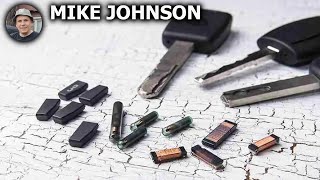
Technical definition: The official SAE/OBD-II definition for code P0633 is "Immobilizer Key Not Programmed – ECM/PCM". This indicates the 🎬 Watch: How to program your immobilizer key for engine management. Engine Control Module (ECM) or Powertrain Control Module (PCM) has no valid transponder key signals stored in its memory, or it received a signal from an unauthorized key.
Can I Drive With P0633?
No — Do Not Drive. Your vehicle will not start or will stall immediately because the anti-theft system does not recognize the key and has disabled the engine. You must have the vehicle towed or call a mobile locksmith for repair.
Common Causes
- Unprogrammed or Erased Key Memory (Very Common) — The most frequent cause. This happens when a new key is cut but not electronically paired to the vehicle, or when the vehicle's computer unexpectedly loses its memory of the existing keys.
- Low Battery Voltage or Jump-Start Spikes (Very Common) — A dead car battery or a severe voltage spike during a jump-start frequently corrupts the key data stored in the PCM or Wireless Control Module (WCM), causing them to forget valid keys.
- Aftermarket Remote Starter Interference (Common) — Improperly installed or failing bypass modules used in aftermarket remote start systems frequently block or scramble the factory key's transponder signal.
- Replaced PCM/ECM Without Key Relearn (Common) — Installing a new or used engine computer requires a 'SKIM initialization' or key relearn procedure. Without it, the new PCM will not recognize the vehicle's existing keys.
- Defective Wireless Control Module (WCM/SKIM) (Less Common) — Highly common on Chrysler, Dodge, and Jeep vehicles. The module fails internally, preventing it from reading keys or communicating the security clearance to the PCM.
- Faulty Immobilizer Antenna Ring (Less Common) — The antenna ring around the ignition switch reads the key's chip. Damaged wiring, a loose connector, or a failed internal coil prevents signal reception.
- Faulty Powertrain Control Module (PCM) (Rare) — The PCM itself fails internally and loses its ability to store key data. This is a worst-case scenario and is usually accompanied by multiple network communication codes.
Symptoms
- Engine will not start or crank — The most common symptom is a complete no-start condition. The engine will not crank, or it cranks but refuses to fire.
- Engine starts then stalls after 2 seconds — The engine starts and runs for exactly two seconds before the immobilizer system shuts off the fuel injectors.
- Flashing security or anti-theft light — A dashboard light shaped like a key, padlock, or red dot blinks rapidly, indicating an active anti-theft lockout.
- Key fob remote functions fail — The lock and unlock buttons on the key fob stop working because the security module is in a fault state.
Diagnostic Flowchart
Tap your situation to follow the diagnostic path that matches what you're seeing on this code.
Common Fixes & Costs
- Reprogramming Existing Key(s) — Parts: $0, Labor: $100-$250, ~0.5 hr book time (Professional)
- Replacing and Programming a New Transponder Key — Parts: $75-$250, Labor: $100-$250, ~0.8 hr book time (Professional)
- Replacing Key Fob Battery
— Parts: $5-$15, Labor: $0, ~0.1 hr book time
(DIY)
: OEM - Replacing Wireless Control Module (WCM/SKIM)
— Parts: $150-$400, Labor: $100-$200, ~1.2 hr book time
(Professional)
: OEM - Replacing Ignition Switch/Antenna Ring — Parts: $50-$200, Labor: $150-$300, ~1.5 hr book time (Intermediate)
- Replacing and Programming the PCM — Parts: $500-$1100, Labor: $100-$200, ~1.0 hr book time (Professional)
Used vs. New Parts: Buying Guide
When a used part is worth it: Buying a used PCM or WCM/SKIM module is not recommended for DIY repair. These modules are VIN-locked. It only makes sense if you use a specialized service that can 'virginize' and pre-program the used module to your vehicle's VIN.
Donor-vehicle mileage cap: roughly under 50000 miles for the part to have meaningful remaining life.
Donor quality checklist:
- Match the part number exactly.
- Ensure the donor vehicle's VIN is known for reprogramming.
- Avoid modules from flood-damaged vehicles.
Decision logic:
- If The part is a security module like a PCM or WCM/SKIM → Buy a new OEM part or a professionally remanufactured, pre-programmed unit.
- If The part is a non-electronic component like an ignition antenna ring → A used part is acceptable if the part number matches and it is physically intact.
- If You are a DIYer without professional programming tools → Do not buy used electronic security modules. The cost of professional programming negates any savings.
Warranty tradeoff: Used parts typically have a 30-90 day warranty. New OEM parts have a 1-year warranty. Reputable remanufacturers often offer a lifetime warranty on pre-programmed modules.
Worst-case if a used part fails: $300-$600 if a used electronic module fails, including the part cost, repeat diagnostic fees, and failed programming attempts.
What Happens If You Wait — Timeline
- Immediate: A hard fault occurs. The engine will not crank, or it stalls within 2 seconds. The security light flashes. The vehicle is disabled. (MPG impact: N/A (Vehicle is undrivable)% · Added cost: $75 - $250 (Cost of towing to a repair facility).)
- 1-5 Days (If fault is intermittent): The vehicle starts sometimes and not others, risking being stranded. The underlying cause, such as a failing WCM, is degrading. (MPG impact: N/A% · Added cost: $50 - $300 (Potential cost of alternative transportation and eventual towing).)
- 1-3 Weeks (If caused by parasitic draw): If a faulty module creates a parasitic draw, the main battery is repeatedly drained. This deep cycling permanently damages the battery. (MPG impact: N/A% · Added cost: $150 - $300 (Cost of a new vehicle battery).)
- Long-Term: The vehicle remains permanently disabled. P0633 does not cause escalating mechanical damage because the engine cannot run. (MPG impact: N/A% · Added cost: N/A)
Cost of Not Fixing It
- Immediate: The vehicle will not start or will stall within two seconds, rendering it completely undrivable. (Added cost: Towing costs ($75-$250) to a repair shop or dealership.)
- Days to Weeks: Delaying the repair can lead to a dead main battery if the underlying fault is causing a parasitic electrical draw. (Added cost: $150-$300 for a new vehicle battery if it is drained completely and damaged.)
- Long-Term: The vehicle remains permanently disabled. The problem is a hard fault that prevents engine operation and will not resolve itself. (Added cost: N/A)
Diagnosis Steps
- Try a Spare Key
If the spare key starts the car, your primary key has a dead transponder chip. If neither key works, the vehicle's immobilizer system is the problem.
Tools: Spare programmed key (Beginner) - Check Main Vehicle Battery Voltage
Test the main battery with a multimeter. A reading below 12.4V causes control modules to lose memory. Charge or replace the battery before proceeding with any key programming.
Tools: Multimeter (Beginner) - Check Key Fob Battery
Replace the coin battery inside the key fob. While a dead fob battery usually only affects door locks, it causes transponder read failures on push-to-start proximity systems.
Tools: Small screwdriver, new CR2032 (or similar) battery (Beginner) - Scan for All System Codes
Use an advanced OBD-II scanner to read the BCM and WCM/SKIM modules. Fix any 'U' (Network) communication codes first, as the immobilizer cannot verify the key if the network is down.
Tools: Advanced OBD-II Scanner (Intermediate) - Inspect Immobilizer Antenna Ring
Remove the steering column trim and visually inspect the antenna ring around the ignition lock for broken wires, corrosion, or loose connectors.
Tools: Screwdrivers, trim removal tools, flashlight (Intermediate) - [ADVANCED] Monitor Immobilizer Status PID
Access the live data stream for the immobilizer module using a pro scanner. Watch the 'Key Status' PID. If it stays 'Not OK' when a key is inserted, the module isn't reading the transponder.
Tools: Advanced OBD-II Scanner (Advanced) - [ADVANCED] Check Antenna Ring Resistance
Disconnect the antenna ring and measure resistance across its pins with a multimeter. A reading outside the typical 300-500 Ω range (or an 'OL' open circuit) confirms a bad antenna.
Tools: Multimeter, vehicle-specific service manual (Advanced) - [PRO TIP] CAN Bus Network Health Check
Measure voltage on CAN-High (Pin 6) and CAN-Low (Pin 14) at the OBD-II port. Both should rest at ~2.5V. A shorted network prevents the immobilizer from authorizing the engine start.
Tools: Multimeter or Oscilloscope (Professional) - [PRO TIP] Parasitic Draw Test
If P0633 appears intermittently after the car sits, test for a parasitic draw. A faulty WCM draining more than 50mA will repeatedly kill the battery and corrupt key memory.
Tools: Multimeter with milliamp function (Professional)
When This Code Triggers (Freeze-Frame Conditions)
- Ignition Status: ON / START (The code sets during the key-on or cranking sequence when the immobilizer handshake fails.)
- Engine Speed: 0 RPM or < 200 RPM (Occurs before the engine starts or just as it attempts to crank.)
- Battery Voltage: 9.5V - 14.5V (Low voltage during cranking frequently triggers the memory loss that causes this code.)
- Immobilizer Status: FAIL / NO MATCH (This manufacturer-specific PID confirms the key transponder was rejected by the PCM/WCM.)
Related Codes
- P0513 — Stands for "Incorrect Immobilizer Key". P0633 means the PCM has no key on file; P0513 means the PCM reads the key, but the code doesn't match the expected value.
- B10D7 — A Chrysler/Dodge/Jeep code for "Key Not Programmed". Seeing this BCM code alongside P0633 confirms a system-wide programming failure.
- U0100 — Stands for "Lost Communication With ECM/PCM". This code is a higher priority than P0633. Always fix U-codes first, as the immobilizer cannot verify the key if the network is down.
- B2229 — Means "SKIM Mismatch" or "PATS Transceiver Signal Not Received". Indicates a disagreement between the VIN stored in the PCM and the immobilizer module, common when installing used parts.
Climate & Environmental Factors
- Low Temperatures: Cold weather reduces battery voltage. A weak battery failing to provide stable voltage during a cold start causes the WCM or PCM to lose its key memory, triggering P0633.
- High Humidity / Water Exposure: Moisture infiltrates electronic components, causing corrosion or short circuits in the immobilizer antenna ring, WCM, or PCM wiring.
How to Talk to a Mechanic About This Code
Say this: "My car won't start and is showing a flashing security light. I have a P0633 code, indicating an immobilizer key issue. Please start by checking for any communication codes (U-codes) and verifying the immobilizer antenna ring before quoting replacement modules."
This guides the technician toward a logical diagnostic path, starting with simple failures. It prevents them from immediately quoting an expensive PCM replacement without ruling out cheaper components.
Avoid saying:
- 'My car won't start.' (too vague)
- 'Just fix it, I don't care what it costs.'
- 'My key isn't working, I need a new computer.'
Questions to ask before authorizing the repair:
- Did you try a key relearn or reprogramming procedure first?
- Were there any communication (U-codes) or body (B-codes) stored along with the P0633?
- Did you test the signal from the ignition's antenna ring?
- If a module needs to be replaced, what is the warranty on the new part and the labor?
Where to Take It: Dealer vs Independent vs Chain
- Dealer:
A necessary but expensive option. Use for warranty work or if the problem requires replacing and programming a new PCM.
Best for: Vehicles under warranty, Very new models (2024+) with secure gateway access, Complex diagnostics after a locksmith has failed
Downsides: Highest cost, often 40-60% more than a locksmith., Requires towing the vehicle to their location. (Typical cost: +50% vs. baseline) - Independent Shop:
Use with caution. Ask them specifically if they can perform immobilizer key programming for your vehicle's make and model before towing it there.
Best for: General diagnostics and wiring repairs.
Downsides: May not have the expensive, specialized equipment for key programming., Expertise with security systems varies widely. (Typical cost: +0% vs. baseline) - Chain Shop:
AVOID for this code. They are not equipped to handle electronic security repairs.
Best for: Tires, brakes, and oil changes.
Downsides: Almost never have the tools or training for immobilizer diagnostics., High potential for misdiagnosis. (Typical cost: -10% vs. baseline)
When to Walk Away From the Repair
If the total estimated repair cost exceeds 50% of your car's current private-party value, consider not fixing it. Since P0633 makes the car undrivable, the 'as-is' value is significantly lower.
- Car worth $5000, fix is $200: Fix it. A simple key reprogram is a small fraction of the car's value.
- Car worth $4000, fix is $1500: Borderline. This repair (e.g., a new PCM) is a significant percentage of the car's value. Get a second opinion.
- Car worth $2500, fix is $1500: Walk away. The repair cost is over 60% of the vehicle's value.
What Scan Tool You Need for This Code
Minimum: A code reader that can see Body Control Module (BCM) and security system codes (B-codes, U-codes), not just Powertrain (P-codes).
A basic code reader only shows 'P0633'. It cannot see related security codes essential for diagnosis, and no basic scanner can perform the key programming required to fix this code.
Budget: BlueDriver Pro (~$120) — Reads P0633 and scans for enhanced codes in the BCM to confirm communication issues. It CANNOT program keys or fix the issue.
Mid-range: Foxwell NT604 Elite (~$150) — Offers full system diagnostics to see codes from the immobilizer, body, and powertrain modules. It still lacks the ability to program keys.
Professional: Autel MaxiCOM MK808 (~$450) — The entry-level for DIY key programming. It has IMMO functions to guide you through a key relearn procedure for many common vehicle makes.
Rent vs buy: Do not rent. Auto parts store rental scanners cannot fix this issue. For a one-time P0633 fix, it is more cost-effective to pay a locksmith ($150-$250) than to buy a professional-level scanner ($450+).
How to Clear the Code After You Fix It
- Perform the key programming/relearn procedure with a professional scan tool.
- Use the scan tool to clear P0633 and any related security codes (B-codes, U-codes).
- Cycle the ignition off and on, then start the vehicle to confirm the fix.
Drive cycle (~15 minutes): A specific drive cycle is not required. The code clears immediately after successful programming. A 15-minute test drive ensures no other issues are present.
Readiness monitors affected: Clearing the code resets all emissions monitors. The Catalyst and Evaporative System monitors will take the longest to become ready.
Before emissions retest: drive at least 50 miles to fully set monitors.
Watch out for:
- Clearing the code with a basic scanner will not fix the problem; the code returns instantly because the key remains unprogrammed.
- Disconnecting the battery will not clear the code and often causes the problem in the first place.
Will This Fail Emissions / State Inspection?
Yes — this code typically fails an OBD-II emissions inspection.
- California: An illuminated Check Engine Light results in an automatic failure. All readiness monitors must be set to 'Ready'.
- New York: An active P0633 code causes the vehicle to fail the OBD-II emissions portion of the inspection.
- Texas: In emissions-testing counties, an active P0633 code results in an inspection failure.
Most Commonly Affected Vehicles
- Dodge / Ram 1500, 2500, 3500, Grand Caravan (2002-2018) — Extremely common after battery disconnection or jump-starts. The Sentry Key Immobilizer Module (SKIM/WCM) is highly sensitive to voltage fluctuations. TSB 08-007-08 REV. A addresses WCM failures.
- Jeep Grand Cherokee, Wrangler, Liberty (2005-2014) — The Wireless Control Module (WCM) frequently loses programming due to a weak battery. For 2024+ models, key programming requires authorized secure gateway access.
- Chrysler Town & Country, Pacifica, PT Cruiser (2004-2016) — Often occurs when the immobilizer module fails or after replacing the PCM.
- Ford F-150, Focus, Mustang (2004-2014) — Ford's PATS system triggers this code due to a failed transponder or faulty antenna ring. The instrument cluster houses the PATS logic on many models; its failure causes P0633.
- Chevrolet / GMC Silverado, Sierra, Tahoe (2007-2013) — Caused by a failing ignition switch or Body Control Module (BCM) communication issues. A 30-minute security relearn procedure sometimes resolves it.
- Volkswagen / Audi Jetta, Golf, A4 (2005-2015) — The immobilizer is integrated into the instrument cluster. Replacing the cluster requires online dealer adaptation, making this a dealer-only repair.
- Hyundai Elantra, Sonata (2011-2016) — Issues arise from the SMARTRA unit or voltage spikes during battery replacement, causing a loss of communication with the ECM.
- Nissan Altima, Maxima, Titan (2007-2015) — The Nissan Anti-Theft System (NATS) sets this code after a battery dies, requiring key reprogramming via the CONSULT diagnostic tool.
Manufacturer-Specific Notes
- Chrysler / Dodge / Jeep: The WCM/SKIM module frequently locks up due to electrostatic discharge or voltage drops. TSB 08-007-08 REV. A requires replacing the WCM and reprogramming the keys.
- Ford: You can program a third key yourself if you have two existing programmed keys. If you have one or zero working keys, you must go to a dealer or locksmith.
- General Motors (Chevrolet/GMC): GM vehicles feature a 30-minute "security relearn" procedure (cycling the key ON for 10 minutes, three times) that can resolve the code after replacing a BCM or ignition switch.
- Volkswagen / Audi: The immobilizer system is integrated into the instrument cluster. A replaced cluster must be adapted online by a dealer; a used cluster cannot be adapted.
Real Owner Stories
2012 Dodge Grand Caravan, 115K miles - The Classic Battery Swap Fail
Owner replaced the original vehicle battery. Immediately after installing the new battery, the engine cranked but would not start, and the red security light flashed.
Outcome: A mobile locksmith identified P0633 and performed a 'SKIM key relearn' procedure in 15 minutes for $180. The van started immediately.
Lesson: On Chrysler/Dodge/Jeep vehicles, disconnecting the battery causes the security module to lose key programming. A locksmith is cheaper and faster than towing to a dealer.
2008 Ford F-150, 140K miles - The Misdiagnosis Runaround
Truck intermittently failed to start with a rapidly flashing 'theft' light. All keys produced the same result.
Outcome: The dealership diagnosed a faulty instrument cluster, which houses the PATS control module on this model. They replaced and programmed the cluster for $950, permanently resolving the issue.
Lesson: Don't assume the PCM is the cause. On many Fords, the immobilizer logic is in the instrument cluster. A misdiagnosis is costly.
2014 Jeep Wrangler, 80K miles - The Aftermarket Interference
Vehicle suddenly would not start, security light on, code P0633 present. This occurred months after installing an aftermarket remote starter.
Outcome: The original remote start installer discovered the remote start's 'bypass module' had failed, blocking the signal from the regular key. Replacing the bypass module under warranty fixed the Jeep.
Lesson: If you have an aftermarket remote start and experience P0633, suspect the aftermarket bypass module first.
How to Prevent This Code From Triggering
- Use a Computer Memory Saver During Battery Changes (Any time the main vehicle battery is disconnected.) — Plugs into the OBD-II port to provide low-level power to the PCM and WCM, preventing them from losing their programmed key data.
- Maintain Main Battery Health (Monthly check) — A weak battery providing low voltage is a primary cause of module data corruption. Ensure voltage is above 12.4V at rest.
- Exercise Caution with Jump-Starts (During any jump-start event) — Improper jump-starting creates voltage spikes that instantly corrupt sensitive electronics like the PCM or WCM.
- Use High-Quality OEM or Reputable Aftermarket Keys (When getting new keys) — Cheap key clones have transponder chips that fail prematurely, leading to intermittent recognition problems.
Frequently Asked Questions
Can I fix P0633 myself?
You can perform basic checks like testing the main battery and trying a spare key. However, the final repair almost always requires a professional locksmith or dealership to reprogram the key. DIY key programming is impossible without expensive, specialized scan tools.
What are common misdiagnoses for P0633?
A common mistake is immediately replacing the expensive PCM. The fault is usually a corrupted memory state, a dead key battery, or a faulty immobilizer antenna ring. Always check for network communication codes (U-codes) before replacing parts.
I installed a remote starter and now have a P0633 code. Are they related?
Yes. Aftermarket remote starters use a bypass module to trick the factory anti-theft system. If this module fails or is installed incorrectly, it blocks your actual key's signal and triggers P0633.
Will disconnecting the battery clear the P0633 code?
No. Disconnecting the battery will not fix the problem and cannot bypass the immobilizer. In fact, on many vehicles, a disconnected battery is the exact event that causes the computer to lose its key memory in the first place.
I just replaced my car battery and now the car won't start and I have code P0633. What happened?
During the battery change, the vehicle's main computer (PCM) lost the memory of your programmed keys due to the power interruption. The security system no longer recognizes your key. You must hire a professional to reprogram the keys to the vehicle.
Should I go to a dealership or a locksmith to fix P0633?
An automotive locksmith is usually 40-60% cheaper and can come to your location, saving you a $100+ towing fee. Dealerships charge higher labor rates and require the car to be towed in. However, 2024+ models may require dealership secure gateway access.
Can I buy a used PCM online to save money?
No. A used PCM is permanently programmed to the donor vehicle's VIN and security system. Installing it will trigger a permanent P0633 code until it is professionally 'virginized' and reprogrammed to your specific car.
What is the difference between a 'crank no start' and a 'no crank no start' with this code?
A 'crank no start' means the starter turns the engine, but the immobilizer cuts the fuel and spark. A 'no crank no start' means the immobilizer completely disables the starter motor circuit. Both are standard security responses depending on your vehicle's manufacturer.
Key Takeaways
- Code P0633 triggers a hard immobilizer lockout, meaning your engine will either not crank at all or will stall exactly two seconds after starting.
- The most common cause is a loss of key memory in the vehicle's computer, frequently happening immediately after a dead battery or a jump-start.
- Do not replace the engine computer (PCM) first; over 80% of P0633 codes are resolved by paying a locksmith $100-$250 to perform a 15-minute key relearn procedure.
- Always check your main vehicle battery voltage with a multimeter; any reading below 12.4V must be fixed before attempting to reprogram keys.
Helpful Videos
Shop the Parts Behind P0633
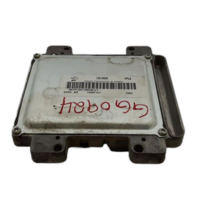
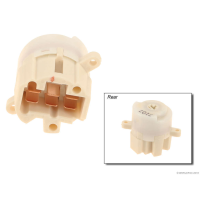
Below are the parts most often responsible for code P0633, ranked by how frequently each one is the actual culprit (per the diagnosis above). Tap any to see what we have for your vehicle.




The information in this article is provided for general reference and educational purposes only. Vehicle specifications, procedures, and part compatibility can vary by production date, trim level, and region. Always consult your vehicle's factory service manual and verify part numbers before purchasing or performing repairs. Safety-critical components such as airbags, seat belts, and braking systems should be installed by a qualified professional.
- 🧭 Diagnostic Flowchart
- 🎬 Helpful Videos
- 🛍️ Shop This Part
- What Does P0633 Mean?
- Can I Drive With P0633?
- Common Causes
- Symptoms
- Common Fixes & Costs
- Used vs. New Parts: Buying Guide
- What Happens If You Wait — Timeline
- Cost of Not Fixing It
- Diagnosis Steps
- When This Code Triggers (Freeze-Frame Conditions)
- Related Codes
- Climate & Environmental Factors
- How to Talk to a Mechanic About This Code
- Where to Take It: Dealer vs Independent vs Chain
- When to Walk Away From the Repair
- What Scan Tool You Need for This Code
- How to Clear the Code After You Fix It
- Will This Fail Emissions / State Inspection?
- Most Commonly Affected Vehicles
- Manufacturer-Specific Notes
- Real Owner Stories
- 2012 Dodge Grand Caravan, 115K miles - The Classic Battery Swap Fail
- 2008 Ford F-150, 140K miles - The Misdiagnosis Runaround
- 2014 Jeep Wrangler, 80K miles - The Aftermarket Interference
- How to Prevent This Code From Triggering
- Frequently Asked Questions
- Can I fix P0633 myself?
- What are common misdiagnoses for P0633?
- I installed a remote starter and now have a P0633 code. Are they related?
- Will disconnecting the battery clear the P0633 code?
- I just replaced my car battery and now the car won't start and I have code P0633. What happened?
- Should I go to a dealership or a locksmith to fix P0633?
- Can I buy a used PCM online to save money?
- What is the difference between a 'crank no start' and a 'no crank no start' with this code?
- Key Takeaways
- 🎟️ Get 5% Off