

OBD-II Code P0638: Throttle Actuator Control Range/Performance
What P0638 means, why it triggers, and how to fix it
- Clean the throttle body first; carbon buildup is the number one cause of P0638 and costs under $20 in supplies to fix yourself.
- Do not drive the vehicle, as it enters a 30-45 mph 'limp mode' that makes highway driving dangerous and risks a $1,500 catalytic converter failure.
- Test the Throttle Position Sensor (TPS) voltage to ensure it sweeps smoothly from 0.5V to 4.5V before spending $300+ on a new throttle body assembly.
- Perform a mandatory throttle relearn procedure using a scan tool after cleaning or replacing the unit, or the P0638 code will return immediately.
What Does P0638 Mean?

The P0638 code means the Powertrain Control Module (PCM) detected a problem with the electronic throttle. The computer commanded the throttle plate to a specific position, but the sensors report it is elsewhere. This mismatch triggers the Check Engine Light.
Technical definition: SAE/OBD-II defines P0638 as "Throttle Actuator Control Range/Performance (Bank 1)". This indicates the actual throttle position does not match the PCM's commanded position. While it specifies 'Bank 1', most engines have only one throttle body. On high-performance engines with two, P0638 refers to the bank with cylinder #1, while P0639 indicates Bank 2.
Can I Drive With P0638?
No — Do Not Drive. Do not drive. The vehicle enters a reduced power 'limp mode,' capping speeds at 30-45 mph and making highway driving unsafe. Continuing to drive with an incorrect air-fuel mixture overheats the catalytic converter, risking an $800 to $2,500 repair.
Common Causes

- Dirty or Clogged Throttle Body (Very Common) — Carbon and oil build up around the throttle plate, making it sticky and preventing smooth movement to the commanded position.
- Faulty Throttle Body Assembly (Common) — The internal electric motor or plastic gears wear out, break, or short internally, preventing the plate from reaching its target even when clean.
- Faulty Throttle Position Sensor (TPS) (Common) — The TPS reports the exact throttle plate position. A bad sensor sends incorrect voltage, tricking the computer into seeing a movement problem.
- Wiring or Connector Issues (Common) — Frayed wires, corroded connectors, or internal wire breaks disrupt electrical signals. Harnesses under tension often break internally where damage is invisible.
- Weak or Failing Battery (Less Common) — The electronic throttle actuator requires stable voltage. A weak battery provides inconsistent power, causing the actuator to fail its commanded position.
- Poor Electrical Ground (Less Common) — A corroded engine-to-chassis ground strap causes inconsistent voltage to the throttle control system, leading to erratic behavior.
- Faulty PCM or Software Glitch (Rare) — The vehicle's main computer suffers from software glitches, corrupted CAN bus messages, or internal hardware failure, misinterpreting throttle signals.
Symptoms

- Reduced Engine Power / Limp Mode — The computer intentionally limits engine power, capping vehicle speed at 30-45 mph to prevent damage.
- Check Engine Light is On — The light illuminates immediately and stays on until the code is cleared and the problem is fixed.
- Poor Acceleration or Hesitation — The car stutters or responds very slowly to the gas pedal because the throttle isn't opening correctly.
- Rough Idle or Stalling — The engine idles erratically, surges, or stalls completely at stops due to restricted low-speed airflow.
- Increased Fuel Consumption — Inaccurate airflow control creates an inefficient air-fuel mixture, noticeably dropping gas mileage.
- Starting Problems — The vehicle requires long cranking times or fails to start if the throttle plate is stuck closed.
Diagnostic Flowchart
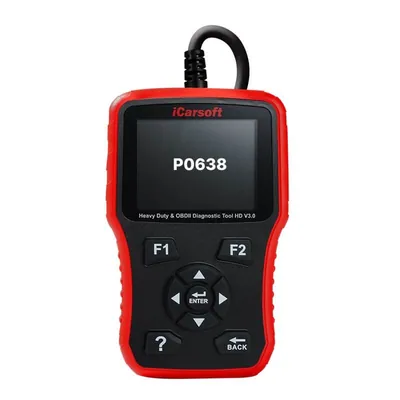
Tap your situation to follow the diagnostic path that matches what you're seeing on this code.
Common Fixes & Costs
- Clean the Throttle Body — Parts: $10-$20, Labor: $75-$150, ~0.8 hr book time (DIY)
- Replace Throttle Body Assembly — Parts: $200-$500, Labor: $100-$200, ~1.2 hr book time (Professional)
- Replace Throttle Position Sensor (TPS) — Parts: $40-$150, Labor: $75-$150, ~1 hr book time (Intermediate)
- Repair Wiring or Connectors — Parts: $10-$50, Labor: $100-$300, ~2.5 hr book time (Professional)
- PCM Reprogramming or Replacement — Parts: $0-$1000, Labor: $100-$300, ~1.5 hr book time (Professional)
DIY vs Professional
- Clean the Throttle Body — Beginner: Yes
Tools: Socket set, throttle body cleaner, rags. - Replace Throttle Body Assembly — Beginner: Yes, with caution.
Tools: Socket set, new throttle body, OBD-II scanner. - Repair Wiring or Connectors — Beginner: No.
Tools: Multimeter, wiring diagrams, soldering iron. - PCM Reprogramming or Replacement — Beginner: No.
Tools: OEM-level scan tools.
Used vs. New Parts: Buying Guide
When a used part is worth it: A used OEM throttle body is cost-effective on older vehicles where a new part exceeds 20% of the car's value.
Donor-vehicle mileage cap: roughly under 80000 miles for the part to have meaningful remaining life.
Donor quality checklist:
- Verify donor mileage is under 80,000.
- Match the part number exactly.
- Inspect for physical damage or heavy corrosion.
Decision logic:
- If Vehicle is < 8 years old or < 80K miles → Buy new. The risk of premature failure outweighs the savings.
- If Vehicle is > 10 years old AND budget is the primary concern → A used part from a low-mileage donor is an acceptable risk.
- If The specific part has a high known failure rate (e.g., Ford Focus) → Buy a new, redesigned aftermarket part to avoid inheriting the same flaw.
Warranty tradeoff: Used parts offer 30-90 day warranties that do not cover repeat labor costs if the part fails.
Worst-case if a used part fails: $300 if a used part fails, requiring repeat labor and a second replacement part.
What Happens If You Wait — Timeline
- 0-2 weeks: Check Engine Light illuminates. Occasional hesitation or brief rough idle occurs when cold. (MPG impact: 0-5%% · Added cost: $0)
- 2-6 weeks: Vehicle frequently enters 'limp mode,' limiting speed to 30-45 mph. Stalling at stops becomes common. (MPG impact: 5-15%% · Added cost: $50 in wasted fuel)
- 2-4 months: Incorrect air-fuel mixtures overheat the catalytic converter. The engine runs rough continuously. (MPG impact: 15-25%% · Added cost: $800-$1500 (Catalytic converter damage begins))
- 4+ months: Complete catalytic converter failure. Sustained poor combustion fouls spark plugs and destroys oxygen sensors. (MPG impact: >25%% · Added cost: $1500-$3000+)
Cost of Not Fixing It
- 0-1 month: Unsafe driving conditions due to 'limp mode,' poor acceleration, and stalling. (Added cost: $50)
- 1-6 months: The imbalanced air-fuel mixture overheats the catalytic converter, leading to permanent failure. (Added cost: $1200-$2500)
- 6+ months: Sustained poor combustion fouls spark plugs and damages oxygen sensors. (Added cost: $300-$1000)
Diagnosis Steps

- Read Codes and Analyze Freeze Frame Data
Use an OBD-II scanner to confirm P0638. Look for TPS (P0121/P0122) or misfire codes. Analyze freeze frame data to identify the exact RPM and speed when the fault occurred.
Tools: OBD-II Scanner (Beginner) - Visually Inspect the System
Inspect the throttle body and wiring. Look for frayed wires, corrosion, or loose pins. With the engine running, gently wiggle the harness near the throttle body connector to check for internal wire breaks.
Tools: Flashlight (Beginner) - Clean the Throttle Body
Disconnect the air intake tube. Use dedicated throttle body cleaner and a soft brush to remove carbon buildup from the plate and bore. Have a helper turn the key to 'ON' (engine off) and press the gas pedal to open the plate.
Tools: Screwdriver/Socket set, Throttle body cleaner, Rags, Soft brush (Intermediate) - Perform a Throttle Body Relearn Procedure
After cleaning, calibrate the PCM to the new closed position. Use a scan tool with a relearn function or follow the vehicle's manual key-turn sequence. Skipping this guarantees the code returns.
Tools: OBD-II Scanner (with relearn function) (Intermediate) - Test the Throttle Position Sensor (TPS) Voltage
With the key on (engine off), back-probe the TPS signal wire. Slowly open the throttle plate; voltage must increase smoothly from 0.5V to 4.5V. Any dropouts indicate a faulty sensor.
Tools: Multimeter, Vehicle-specific wiring diagram (Advanced) - Check Actuator Motor Resistance
Disconnect the throttle body connector. Measure resistance between the two actuator motor terminals. A reading outside the typical 0.3 to 100 ohms range indicates a failed internal motor.
Tools: Multimeter (Advanced) - Analyze Live Data and Test Bidirectional Control
Monitor 'Commanded' vs. 'Actual' Throttle Position PIDs on a scanner; they must match. Use bidirectional controls to command the throttle to 25%, 50%, and 75%. If it fails to move accurately, replace the assembly.
Tools: Advanced Bidirectional OBD-II Scanner (Advanced) - Check for Bad Grounds
Perform a voltage drop test on the main engine-to-chassis ground strap. With the engine running, place multimeter probes on the negative battery terminal and the engine block. A reading above 0.2V requires cleaning the ground.
Tools: Multimeter, Wire brush (Intermediate)
When This Code Triggers (Freeze-Frame Conditions)
- Engine Coolant Temp: 180-200°F (Fully warmed up)
- RPM: 1500-2500 (Cruise / steady throttle or light acceleration)
- Engine Load: 30-60% (Maintaining speed on a highway or accelerating moderately)
- Vehicle Speed: 35-60 mph (Highway or city cruising speeds)
Related Codes
- P0121 — Indicates an illogical signal from the TPS. If present with P0638, the TPS is the primary culprit.
- P0122 — Means TPS voltage is below the expected minimum, causing P0638 because the PCM cannot see the throttle's true position.
- P2112 — A more specific version of P0638 confirming the throttle plate is physically stuck closed.
- P0639 — The identical fault to P0638, but for Bank 2 on V-style engines equipped with dual throttle bodies.
Climate & Environmental Factors
- Humidity / Moisture: High humidity accelerates internal throttle body corrosion, triggering P0638 frequently in older European vehicles.
How to Talk to a Mechanic About This Code
Say this: "I have a P0638 code and the car is in limp mode. Please start by cleaning the throttle body and checking the related wiring and grounds before quoting a full replacement."
Directs the mechanic to start with the least expensive fix and prevents them from immediately quoting a costly replacement without proper diagnosis.
Avoid saying:
- 'My check engine light is on, can you just fix it?'
- 'The car is acting weird, I think it's the throttle.'
- 'Just do whatever you think is best.'
Questions to ask before authorizing the repair:
- Did you clean the throttle body and did the code return?
- Did you test the throttle position sensor voltage and actuator motor resistance?
- Did you check the wiring harness for intermittent faults?
- Does the quoted price include the mandatory throttle relearn procedure?
Where to Take It: Dealer vs Independent vs Chain
- Dealer:
Best for: Vehicles under warranty., Ford models with extended throttle body warranties., Complex diagnoses requiring PCM software updates.
Downsides: Highest labor rates., Defaults to replacing the entire assembly rather than repairing wiring. (Typical cost: +50% vs. baseline) - Independent Shop:
Best fit. An experienced independent mechanic effectively diagnoses and repairs common causes at a fair price.
Best for: Out-of-warranty vehicles., Straightforward diagnosis, cleaning, or replacement.
Downsides: May lack access to the latest manufacturer-specific PCM software. (Typical cost: +0% vs. baseline) - Chain Shop:
Avoid for initial diagnosis. Acceptable only for a pre-diagnosed throttle body replacement.
Best for: Simple part replacements if you have already diagnosed the issue.
Downsides: High pressure to upsell., Lacks expertise for wiring or intermittent electronic faults. (Typical cost: -10% vs. baseline)
When to Walk Away From the Repair
If the estimated repair cost exceeds 50% of the car's current private-party value, consider selling it.
- Car worth $4000, fix is $800: Fix it. The repair cost is well below the 50% threshold.
- Car worth $3000, fix is $1500: Borderline. Consider the car's overall condition before proceeding.
- Car worth $2000, fix is $1500: Walk away. The repair cost is 75% of the car's value.
What Scan Tool You Need for This Code
Minimum: A scanner that reads codes and views live data for throttle position.
A $20 reader only confirms the code. Proper diagnosis requires viewing 'Commanded' vs. 'Actual' throttle position. A complete repair requires a 'Throttle Relearn' function.
Budget: BlueDriver Pro (~$90) — Reads codes and provides live data graphing for throttle position PIDs. Lacks the throttle relearn function.
Mid-range: Foxwell NT510 Elite (~$180) — Includes a dedicated 'Throttle Body Alignment' function critical for relearning after cleaning or replacement.
Professional: Autel MaxiCOM MK808S (~$390) — Offers full bidirectional control to command the throttle actuator open and closed, plus robust relearn procedures.
Rent vs buy: Buy a mid-range scanner with a relearn function (like Foxwell). Shops charge $100-$150 just for the relearn procedure, making the scanner pay for itself immediately.
How to Clear the Code After You Fix It
- Use an OBD-II scan tool to clear the P0638 code.
- Ensure the fuel tank is between 1/4 and 3/4 full.
- Perform a complete drive cycle to allow readiness monitors to run.
Drive cycle (~30 minutes): Start with a cold engine. Idle for 3 minutes with A/C on. Drive for 15 minutes at a steady 55-60 mph. Perform 15 minutes of stop-and-go city driving.
Readiness monitors affected: Catalyst Monitor, Evaporative System Monitor, Oxygen (O2) Sensor Monitor
Before emissions retest: drive at least 100 miles to fully set monitors.
Watch out for:
- Disconnecting the battery clears the code but resets all readiness monitors to 'Not Ready', guaranteeing an emissions failure.
- The code returns immediately if a throttle relearn procedure is skipped.
Will This Fail Emissions / State Inspection?
Yes — this code typically fails an OBD-II emissions inspection.
- California: An illuminated Check Engine Light is an automatic failure. All readiness monitors must be 'Ready' before re-testing.
- New York: Fails inspection if the Check Engine Light is on or if more than one readiness monitor is 'Not Ready'.
- Texas: Fails automatically with an active code. You must complete a drive cycle after clearing codes to pass.
Most Commonly Affected Vehicles
- Volkswagen Jetta, Golf, Passat (2006-2016) — Extremely common. Caused by tension on the wiring harness leading to internal wire breaks near the throttle body connector. On TDI models, the 'anti-shudder valve' triggers this code.
- Ford Focus, Fusion, Escape (2008-2018) — High electronic throttle body failure rates requiring complete replacement. Check with a dealer for extended warranty coverage (Program 13N03) before paying for repairs.
- Audi A3, A4, Q5 (2005-2015) — Shares platforms with VW; highly prone to wiring harness tension issues and internal throttle body motor failures.
- Dodge/Chrysler/Jeep Charger, Grand Cherokee, Ram 1500 (2007-2017) — Issues stem directly from internal gear wear within the throttle body assembly.
- Chevrolet Cruze, Silverado (2008-2016) — On trucks like the 2008 Silverado, check the specific 15-amp 'ECM throttle control' fuse before replacing any parts.
- Subaru Outback, Legacy (2005-2009) — Intermittent faults occur after extended highway driving due to heat-sensitive internal electronic failures in the throttle body.
Manufacturer-Specific Notes
- Volkswagen/Audi: The wiring harness to the throttle body breaks internally due to tension. Wiggling the harness is a mandatory diagnostic step.
- Ford: High failure rate for the entire electronic throttle body assembly. Check for extended warranty coverage before replacing.
- Hyundai/Kia: Requires a strict scan-tool relearn procedure after cleaning. Failing to do this causes P0638 to return immediately.
- Chevrolet: Trucks like the Silverado feature a dedicated 15-amp 'ECM throttle control' fuse that blows during voltage spikes.
Real Owner Stories
2013 VW Jetta 2.5L with P0638
Car entered limp mode with codes P0638 and P0112. Replacing the throttle body did not fix the issue.
What they tried:
- Replaced throttle body assembly.
Outcome: The actual cause was a broken wire inside the harness, 4 inches from the plug. High tension caused internal wire fatigue invisible from the outside.
Lesson: On VWs, wiggle the harness while monitoring live data to rule out internal wire breaks before buying a $300 throttle body.
2009 VW Jetta TDI with P0638
Flashing glow plug light and code P0638 for 'Throttle Body Actuator Implausible Signal'.
What they tried:
- Cleaned the anti-shudder valve.
- Attempted VCDS adaptation, which failed.
Outcome: Replaced the valve for $421. The old part had a seized internal shaft. The new valve allowed the adaptation to complete successfully.
Lesson: If a relearn procedure fails after cleaning, the part has an internal mechanical failure and requires replacement.
How to Prevent This Code From Triggering
- Clean the throttle body periodically (Every 40,000 miles) — Removes carbon buildup that causes the throttle plate to stick, preventing the #1 cause of P0638.
- Maintain battery health (Annually) — The throttle actuator requires stable voltage. Replace batteries dropping below 12.4V at rest to prevent actuator errors.
Frequently Asked Questions
Can I fix P0638 myself?
Yes, if the cause is a dirty throttle body. Cleaning it requires basic tools and often solves the problem. Diagnosing wiring issues or replacing the PCM requires a professional.
What happens if I ignore the P0638 code?
Ignoring it leaves your car in a low-power 'limp mode,' capping speeds at 45 mph. Prolonged driving causes poor fuel economy and stalling. The incorrect air-fuel mixture will eventually destroy the catalytic converter.
Does the P0638 code clear itself?
No, the code does not clear itself. You must repair the underlying mechanical or electrical problem first. Afterward, clear the code from the computer's memory using an OBD-II scanner.
How much does it cost to fix P0638 in 2024?
A professional throttle body cleaning costs between $100 and $200. A full throttle body replacement ranges from $350 to $700, depending on the vehicle. For example, a 2024 VW Jetta replacement averages $650.
Can a weak battery cause a P0638 code?
Yes, a weak battery causes this code. The electronic throttle actuator requires stable voltage, and the PCM needs at least 8.3V during cranking. If voltage drops too low, the actuator fails to reach its commanded position.
What happens if you don't do a throttle relearn?
Failing to perform the relearn procedure leaves the PCM calibrated to the old, dirty throttle position. This causes a high or rough idle, stalling, and poor acceleration. The P0638 code will often return immediately.
What is the difference between P0638 and P0639?
They indicate the exact same problem, but for different engine banks. P0638 is for Bank 1 (the side with cylinder #1), while P0639 is for Bank 2. Most cars only have one throttle body and only show P0638.
Key Takeaways
- Clean the throttle body first; carbon buildup is the number one cause of P0638 and costs under $20 in supplies to fix yourself.
- Do not drive the vehicle, as it enters a 30-45 mph 'limp mode' that makes highway driving dangerous and risks a $1,500 catalytic converter failure.
- Test the Throttle Position Sensor (TPS) voltage to ensure it sweeps smoothly from 0.5V to 4.5V before spending $300+ on a new throttle body assembly.
- Perform a mandatory throttle relearn procedure using a scan tool after cleaning or replacing the unit, or the P0638 code will return immediately.
Shop the Parts Behind P0638
Below are the parts most often responsible for code P0638, ranked by how frequently each one is the actual culprit (per the diagnosis above). Tap any to see what we have for your vehicle.


The information in this article is provided for general reference and educational purposes only. Vehicle specifications, procedures, and part compatibility can vary by production date, trim level, and region. Always consult your vehicle's factory service manual and verify part numbers before purchasing or performing repairs. Safety-critical components such as airbags, seat belts, and braking systems should be installed by a qualified professional.
- 🧭 Diagnostic Flowchart
- 🛍️ Shop This Part
- What Does P0638 Mean?
- Can I Drive With P0638?
- Common Causes
- Symptoms
- Common Fixes & Costs
- DIY vs Professional
- Used vs. New Parts: Buying Guide
- What Happens If You Wait — Timeline
- Cost of Not Fixing It
- Diagnosis Steps
- When This Code Triggers (Freeze-Frame Conditions)
- Related Codes
- Climate & Environmental Factors
- How to Talk to a Mechanic About This Code
- Where to Take It: Dealer vs Independent vs Chain
- When to Walk Away From the Repair
- What Scan Tool You Need for This Code
- How to Clear the Code After You Fix It
- Will This Fail Emissions / State Inspection?
- Most Commonly Affected Vehicles
- Manufacturer-Specific Notes
- Real Owner Stories
- 2013 VW Jetta 2.5L with P0638
- 2009 VW Jetta TDI with P0638
- How to Prevent This Code From Triggering
- Frequently Asked Questions
- Can I fix P0638 myself?
- What happens if I ignore the P0638 code?
- Does the P0638 code clear itself?
- How much does it cost to fix P0638 in 2024?
- Can a weak battery cause a P0638 code?
- What happens if you don't do a throttle relearn?
- What is the difference between P0638 and P0639?
- Key Takeaways
- 🎟️ Get 5% Off